
|
시장보고서
상품코드
2116476
유럽의 밴 렌탈 시장 : 점유율 분석, 업계 동향과 통계, 성장 예측(2026-2031년)Europe Van Rental - Market Share Analysis, Industry Trends & Statistics, Growth Forecasts (2026 - 2031) |
||||||
 Mordor Intelligence
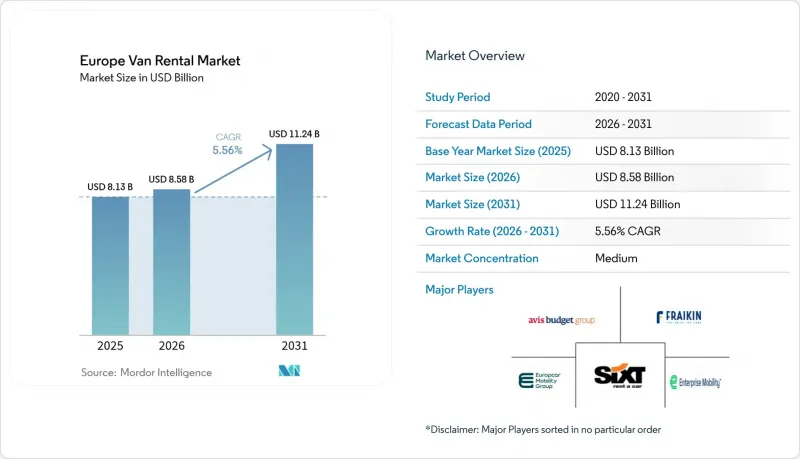
Mordor Intelligence에 의하면, 유럽 밴 렌탈 시장 규모는 2025년 81억 3,000만 달러에서 2026년에는 85억 8,000만 달러로 확대되어 2026년부터 2031년까지 CAGR 5.56%로 성장을 지속하여, 2031년에는 112억 4,000만 달러에 이를 것으로 예측됩니다.
본 보고서는 밴 유형(승용 밴 및 화물 밴), 대여 기간(시간 단위 대여, 일 단위 대여 등), 용도(개인용 및 상업용), 예약 채널(온라인 플랫폼 및 대여 카운터), 고객 유형(개인 소비자, 법인 고객 등), 국가(독일, 영국 등)별로 분류되어 있습니다. 시장 전망은 금액(미화) 기준으로 제시됩니다.
유럽 밴 렌탈 시장 동향 및 인사이트
전자상거래 주도형 라스트 마일 배송의 급증
유럽 전역에서 전자상거래의 부상은 물류 전략을 혁신하고 있습니다. 각 기업은 수요 변동에 대응하기 위해 유연한 솔루션을 채택하고 있습니다. 예를 들어, 단기 밴 렌탈은 감가상각 위험을 수반하는 장기적인 차량 투자 없이도 물류 기업이 계절적 수요 급증에 대응하는 데 도움이 되고 있습니다. 이러한 추세는 아마존과 같은 대기업에서 두드러지게 나타나며, 해당 기업의 당일 배송 서비스는 속도와 신뢰성에 대한 기대치를 높이고 있습니다. DHL 익스프레스와 같은 물류 기업들은 밴 렌탈 이용을 확대하고 있으며, 이는 업계가 보다 기동성이 높은 배송 모델로 전환되고 있음을 반영합니다. 이러한 변화는 적응력과 대응력이 중요한 경쟁 우위가 되는 소매 물류의 변화하는 상황을 여실히 보여주고 있습니다. 자라나 H&M 등 물류 분야 외의 소매업체들도 소비자에게 직접 주문한 상품을 배송하기 위해 렌탈 차량을 활용하고 있습니다. 유럽의 밴 렌탈 시장은 창고 공간이 제한된 혼잡한 도심에서 사업을 전개하는 운송업체에 즉각적인 확장성을 제공합니다. 배송 경로가 밀집된 지역에서는 경로 정확도를 높이고 공회전 시간을 줄여주는 텔레매틱스 기능을 탑재한 화물 밴에 대한 수요가 더욱 높아지고 있습니다.
기업의 ESG 목표가 전기 밴 리스를 뒷받침
유니레버나 네슬레와 같은 대형 다국적 기업들은 물류 업체에 스코프 3 배출량 감축을 요구하고 있으며, 이는 전기 밴공급 능력에 대한 새로운 수요를 창출하고 있습니다. 기업의 조달 부서는 차량 구매로 인한 재정적 부담을 피하면서 무공해 운송을 실현할 수 있는 렌탈을 선호하고 있습니다. 신형 전기 밴의 납기 기간이 8-12개월이 소요되기 때문에 차량의 전동화는 다소 지연되는 경향이 있으나, 렌탈 사업자들은 메르세데스-벤츠 등 제조업체와의 프레임워크 계약을 통해 우선적인 배정을 확보하고 있습니다. 북유럽 시장에서는 탄소세와 친환경 공공 조달 규정에 힘입어 추가적인 지원이 이루어지고 있으며, 전기 밴은 단순한 홍보 전략의 선택지가 아니라 규정 준수를 위한 필수 요건이 되고 있습니다.
초기 비용/전기 밴 공급 부족
규제 압력과 환경 인센티브가 강화되고 있음에도 불구하고, 유럽 렌터카 시장은 전기 밴으로의 전환 과정에서 과제에 직면해 있습니다. 디젤 차량에 비해 여전히 고가인 전기 모델은 차량 인도까지의 대기 시간이 길어지는 등의 장벽에 직면해 있습니다. 이러한 지연은 배터리 공급 제약, 반도체 부족, 충전 인프라 미비에서 기인하며, 이 모든 요인이 차량 교체를 방해하고 있습니다. 게다가 보험료 상승이 총 소유 비용을 더욱 끌어올리고 있어, 전기 밴은 렌터카 사업자에게 매력적이지 않은 선택지가 되고 있습니다. 또한, 이들 업체는 거점 내 충전소 투자나 전기차 운전과 관련된 운전자 교육 등 추가적인 과제에도 직면해 있습니다. 배터리 가격 하락으로 비용 격차는 서서히 좁혀지고 있지만, 공급 부족 문제가 지속되면서 전기 밴 도입 속도는 둔화되고 있으며, 이는 정책 입안자들의 예측을 밑돌고 있습니다. 그 결과, 유럽 밴 렌탈 업계의 전동화 진척도는 기대에 미치지 못하고 있으며, 이러한 전환을 가속화하기 위해서는 제조, 인프라, 정책 각 분야에서 협력적인 노력이 필요함을 여실히 보여주고 있습니다.
부문 분석
화물용 밴은 2025년 매출의 70.05%를 차지하며, 유럽 밴 렌탈 시장에서 가장 큰 점유율을 기록하고 있습니다. 이러한 수요는 아마존(Amazon)이나 잘란도(Zalando)와 같은 라스트 마일 배송 업체에서 비롯된 것으로, 이들 기업은 렌탈 서비스를 유연한 배송 역량으로 활용하고 있습니다. 실시간 텔레매틱스를 탑재한 화물용 밴은 경로 최적화를 가능하게 하고, 가동률을 향상시키며, 배송당 비용을 절감합니다. 한편, 승합밴은 관광업의 회복과 단체 여행 수요 증가에 힘입어 2031년까지 연평균 성장률(CAGR) 5.86%라는 가장 높은 성장률을 보일 것으로 예측됩니다. 인디 캠퍼스(Indy Campers)에 따르면, 2024년에는 지중해 국가 전체에서 승용 밴 예약이 34% 증가했으며, 이러한 추세는 가족 여행과 야외 활동에 의해 주도되고 있습니다. 화물용 밴의 규모의 경제는 앞으로도 줄어들지 않을 것으로 보이지만, 승용 모델의 성장 속도가 가속화되면서 유럽 밴 렌탈 시장의 다양성이 높아지고, 계절별 수요의 균형이 개선되고 있습니다.
승용차 수요는 기업의 셔틀 계약이나 공항 픽업 서비스에도 긍정적인 영향을 미치고 있지만, 전문 운전기사 부족으로 인해 풀서비스형 서비스 제공에는 한계가 있습니다. 사업자들은 모바일 체크인 및 보험 패키지로 뒷받침되는 셀프 드라이브 플랜을 확대함으로써 이러한 부족분을 보완하고 있습니다. 화물 차량 분야에서는 전기화가 큰 과제로 대두되고 있습니다. 저공해 구역의 확대로 인해 아마존의 각 배송 파트너사들은 공급이 확보되는 대로 전기 밴으로의 전환을 추진하고 있습니다. 조기 도입 기업들은 할증 요금 적용 및 도심 접근성 개선과 같은 이점을 누리며 경쟁 우위를 확립하고 있습니다.
2025년에는 1일 단위 렌탈이 전체의 43.78%를 차지하며, 이는 단기적인 전자상거래 수요의 피크와 유연한 이용 용량이 필요한 관광 활용 사례를 반영한 것입니다. 주말 레저 드라이브와 연계된 프로모션 및 온라인을 통한 즉시 예약 확인 덕분에 1일 단위 렌탈은 항상 주목을 받고 있습니다. 그러나 2031년까지 연평균 성장률(CAGR) 5.93%로 가장 빠른 성장세를 보이고 있는 것은 장기 리스입니다. 이는 기업이 월별 지출을 일정 수준으로 유지하기 위해 유지보수 비용을 포함한 계약을 체결하고 있기 때문입니다. 예측 가능한 비용 구조는 운영 경비 예산과 부합하며, 자산 경량화 전략을 뒷받침하고 있습니다. 단기 대여를 지원하는 앱에 의해 촉진되는 시간 단위 대여는 여전히 틈새 시장이지만, 주차 공간 부족이나 정체 요금으로 인해 개인이 밴을 소유하기 어려운 인구 밀집 도시에서는 증가 추세를 보이고 있습니다. 유럽의 밴 렌탈 시장에서 주 단위 및월단위 계약은 건설 프로젝트나 계절별 소매 캠페인에서 발생하는 일시적인 수요를 충족시키며, 사업자의 차량 가동률 균형을 유지하고 있습니다.
수익 측면에서는 일당 요금이 높기 때문에 여전히 일 단위 대여가 주류를 이루고 있지만, 장기 리스의 이익률은 차량 교체 주기가 길어 매력적입니다. 사업자들은 고정 요금과 주행 거리 상한을 결합한 구독 모델을 도입하고 있으며, 투명성을 추구하는 중소기업들로부터 지지를 얻고 있습니다. 전동화는 장기 계약과 잘 어울리며, 렌탈 사업자는 수년에 걸친 이용료를 통해 높은 자본 비용을 회수할 충분한 시간을 확보할 수 있습니다. 반면, 일 단위 렌탈 이용자의 경우 초기 비용이 저렴하다는 이유로 여전히 디젤 차량을 선호하고 있습니다.
기타 혜택:
- 엑셀 형식 시장 예측(ME) 시트
- 3개월간의 애널리스트 지원
자주 묻는 질문
목차
제1장 서론
제2장 조사 방법
제3장 주요 요약
제4장 시장 구도
제5장 시장 규모와 성장 예측
제6장 경쟁 구도
제7장 시장 기회와 향후 전망
JHS 26.08.28According to Mordor Intelligence, the european van rental market size is expected to grow from USD 8.13 billion in 2025 to USD 8.58 billion in 2026 and is forecast to reach USD 11.24 billion by 2031 at 5.56% CAGR over 2026-2031.
This report is Segmented by Van Type (Passenger Vans and Cargo Vans), Rental Duration (Hourly Rentals, Daily Rentals, and More), Application (Personal and Commercial), Booking Channel (Online Platforms and Rental Counters), Customer Type (Individual Consumers, Corporate Clients, and More), and Country (Germany, United Kingdom, and More). The Market Forecasts are Provided in Terms of Value (USD).
Europe Van Rental Market Trends and Insights
Surge in E-Commerce-Driven Last-Mile Delivery
The rise of e-commerce across Europe is reshaping logistics strategies. Providers are adopting flexible solutions to manage fluctuating demand. Short-notice van rentals, for instance, help logistics companies handle seasonal peaks without long-term fleet investments that risk depreciation. This trend is evident with major players like Amazon, whose same-day delivery services have raised expectations for speed and reliability. Logistics firms, such as DHL Express, have increased rental van usage, reflecting the industry's shift toward more agile delivery models. These changes highlight the evolving retail logistics landscape, where adaptability and responsiveness are key competitive advantages. Retailers outside the logistics sphere, including Zara and H&M, also utilize rental pools to fulfill direct-to-consumer orders. The European van rental market yields immediate scalability for carriers operating inside crowded urban hubs where depot space is scarce. High-density delivery routes further reinforce the demand for cargo vans equipped with telematics that enhance route accuracy and reduce idle time.
Corporate ESG Targets Pushing Electric-Van Leasing
Large multinationals, such as Unilever and Nestle, require logistics vendors to curb Scope 3 emissions, triggering a fresh demand for electric van capacity . Corporate procurement teams favor rentals that deliver zero-tailpipe transport without locking balance sheets into vehicle purchases. Fleet electrification is hindered by 8-12 month lead times for new e-vans, yet rental operators secure priority allocations via frame agreements with manufacturers like Mercedes-Benz. Northern European markets provide extra impetus through carbon taxes and green public procurement rules, making electric vans a compliance must-have rather than a public-relations choice.
Up-Front Cost / Limited Supply of Electric Vans
Despite mounting regulatory pressures and environmental incentives, Europe's rental market is facing challenges in its transition to electric vans. Electric models, still pricier than their diesel counterparts, face hurdles like extended delivery wait times. These delays stem from constraints in battery supply, shortages in semiconductors, and a sparse charging infrastructure, all of which hinder fleet renewals. Moreover, rising insurance premiums further escalate the total cost of ownership, making electric vans a less appealing choice for rental operators. These operators also face additional challenges, including investing in depot charging stations and training drivers for electric vehicle operations. While declining battery prices are slowly bridging the cost divide, ongoing availability issues are stalling the pace of electric van adoption, falling short of policymakers' projections. Consequently, the electrification trajectory for Europe's van rental sector is lagging behind expectations, underscoring the need for synchronized efforts in the manufacturing, infrastructure, and policy realms to accelerate this transition.
Other drivers and restraints analyzed in the detailed report include:
- SME Cap-Ex Avoidance Via Flexible Rentals
- Tourism Rebound Boosting Passenger Van Demand
- Cross-Border Licensing Age Inconsistencies
For complete list of drivers and restraints, kindly check the Table Of Contents.
Segment Analysis
Cargo vans accounted for 70.05% of 2025 revenue, representing the largest share of the European van rental market. Demand stems from last-mile shippers, such as Amazon and Zalando, which treat rentals as elastic delivery capacity. Cargo units equipped with live telematics enable route optimization, enhancing uptime and reducing per-drop costs. Meanwhile, passenger vans are projected to post the strongest growth, at a 5.86% CAGR, through 2031, tied to the resurgence of tourism and group travel preferences. Indie Campers confirmed a 34% rise in passenger van bookings across Mediterranean countries in 2024, a trend driven by family trips and outdoor pursuits. Cargo's scale advantage is unlikely to fade; yet, the elevated growth pace of passenger models adds diversity and enhances seasonal balancing within the European van rental market.
Passenger demand also benefits corporate shuttle contracts and airport transfers, although the scarcity of professional drivers limits the availability of fully serviced offerings. Operators counteract the shortage by expanding self-drive packages, which are supported by mobile check-in and insurance bundles. For cargo fleets, electrification looms large; the expansion of Low Emission Zones nudges Amazon's delivery partners to switch to electric vans once supply permits. Early adopters enjoy premium rates and improved access to the city center, locking in a competitive edge.
Daily rentals accounted for 43.78% in 2025, reflecting short-cycle e-commerce peaks and tourist use cases that require flexible capacity. Promotions tied to weekend leisure drives and instant online confirmation keep daily hires top of mind. However, long-term leasing shows the fastest expansion at 5.93% CAGR through 2031 as corporations secure maintenance-inclusive contracts that flatten monthly outlays. Predictable cost lines align with operating expense budgets and support asset-light strategies. Hourly hires, facilitated by micro-duration apps, remain niche but rising inside dense cities, where parking scarcity and congestion charges deter personal van ownership. The European van rental market share for weekly and monthly agreements fills interim needs for construction projects and seasonal retail campaigns, balancing vehicle utilization for operators.
In revenue terms, daily hires still dominate due to their higher rate per day, but the margin structure on long-term leases is attractive because of lower vehicle churn. Operators deploy subscription models that blend fixed payments with mileage caps, appealing to SMEs seeking transparency. Electrification aligns well with long-term contracts, providing rental providers with ample time to recover higher capital costs through multi-year fees. At the same time, daily renters still favor diesel due to its lower upfront price.
Complete Report Scope:
- By Van Type
- Passenger Vans
- Cargo Vans
- By Rental Duration
- Hourly Rentals
- Daily Rentals
- Weekly Rentals
- Monthly Rentals
- Long-Term Leasing (12-24 months)
- By Application
- Personal Application
- Commercial Application
- By Booking Channel
- Online Platforms
- Rental Counters
- By Customer Type
- Individual Consumers
- Corporate Clients
- Travel Agencies
- Government & Institutional Users
- By Country
- Germany
- United Kingdom
- France
- Italy
- Spain
- Rest of Europe
List of Companies Covered in this Report:
- Europcar Mobility Group
- Sixt SE
- Enterprise Holdings, Inc.
- Avis Budget Group
- Hertz Corporation
- Fraikin
- Ryder System, Inc.
- Petit Forestier
- Auto Europe
- Blacksheep
- Vimianos Travel and Hospitality Pvt. Ltd.
- Roadsurfer
- Indie Campers
Additional Benefits:
- The market estimate (ME) sheet in Excel format
- 3 months of analyst support
TABLE OF CONTENTS
1 Introduction
- 1.1 Study Assumptions and Market Definition
- 1.2 Scope of the Study
2 Research Methodology
3 Executive Summary
4 Market Landscape
- 4.1 Market Overview
- 4.2 Market Drivers
- 4.2.1 Surge in E-Commerce-Driven Last-Mile Delivery
- 4.2.2 Medium-sized Enterprise (SME) Cap-Ex Avoidance Via Flexible Rentals
- 4.2.3 Tourism Rebound Boosting Passenger Van Demand
- 4.2.4 Corporate Environmental, Social, and Governance (ESG) Targets Pushing Electric-Van Leasing
- 4.2.5 CO2-Based Tolling and Low Emission Zones (LEZs) Accelerating E-Van Rentals
- 4.2.6 App-Enabled Micro-Duration Rentals Unlock Urban Demand
- 4.3 Market Restraints
- 4.3.1 Up-Front Cost / Limited Supply of Electric Vans
- 4.3.2 Worsening Professional-Driver Shortage
- 4.3.3 Cross-Border Licensing Age Inconsistencies
- 4.3.4 Forthcoming Diesel Van Purchase Taxes (E.G., NL 2025)
- 4.4 Value / Supply-Chain Analysis
- 4.5 Regulatory Landscape
- 4.6 Technological Outlook
- 4.7 Porter's Five Forces
- 4.7.1 Competitive Rivalry
- 4.7.2 Threat of New Entrants
- 4.7.3 Bargaining Power of Suppliers
- 4.7.4 Bargaining Power of Buyers
- 4.7.5 Threat of Substitutes
5 Market Size and Growth Forecasts (Value in USD)
- 5.1 By Van Type
- 5.1.1 Passenger Vans
- 5.1.2 Cargo Vans
- 5.2 By Rental Duration
- 5.2.1 Hourly Rentals
- 5.2.2 Daily Rentals
- 5.2.3 Weekly Rentals
- 5.2.4 Monthly Rentals
- 5.2.5 Long-Term Leasing (12-24 months)
- 5.3 By Application
- 5.3.1 Personal Application
- 5.3.2 Commercial Application
- 5.4 By Booking Channel
- 5.4.1 Online Platforms
- 5.4.2 Rental Counters
- 5.5 By Customer Type
- 5.5.1 Individual Consumers
- 5.5.2 Corporate Clients
- 5.5.3 Travel Agencies
- 5.5.4 Government & Institutional Users
- 5.6 By Country
- 5.6.1 Germany
- 5.6.2 United Kingdom
- 5.6.3 France
- 5.6.4 Italy
- 5.6.5 Spain
- 5.6.6 Rest of Europe
6 Competitive Landscape
- 6.1 Market Concentration
- 6.2 Strategic Moves
- 6.3 Market Share Analysis
- 6.4 Company Profiles (Includes Global level Overview, Market level overview, Core Segments, Financials as available, Strategic Information, Market Rank/Share for key companies, Products & Services, and Recent Developments)
- 6.4.1 Europcar Mobility Group
- 6.4.2 Sixt SE
- 6.4.3 Enterprise Holdings, Inc.
- 6.4.4 Avis Budget Group
- 6.4.5 Hertz Corporation
- 6.4.6 Fraikin
- 6.4.7 Ryder System, Inc.
- 6.4.8 Petit Forestier
- 6.4.9 Auto Europe
- 6.4.10 Blacksheep
- 6.4.11 Vimianos Travel and Hospitality Pvt. Ltd.
- 6.4.12 Roadsurfer
- 6.4.13 Indie Campers