

|
시장보고서
상품코드
2116503
조제 약국 : 시장 점유율 분석, 업계 동향 및 통계, 성장 예측(2026-2031년)Compounding Pharmacy - Market Share Analysis, Industry Trends & Statistics, Growth Forecasts (2026 - 2031) |
||||||
 Mordor Intelligence
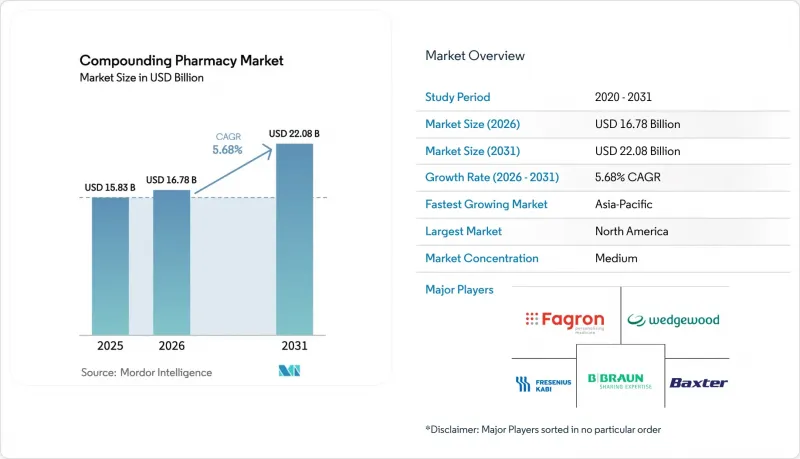
에 의하면, 조제 약국 시장 규모는 2025년 158억 3,000만 달러로 평가되었습니다. 2026년에는 167억 8,000만 달러로 확대되어 2026년부터 2031년에 걸쳐 CAGR 5.68%로 성장을 지속하여, 2031년에는 220억 8,000만 달러에 이를 것으로 예측됩니다.
본 보고서는 투여 경로(경구, 외용 등), 치료 분야(통증 관리, 호르몬 대체 요법 등), 무균성(무균, 비무균),연령대(성인, 고령자, 소아), 최종 사용자(병원 및 클리닉 등), 지역(북미, 유럽, 아시아태평양, 중동 및 아프리카, 남미)별로 분류되어 있습니다. 시장 예측은 금액(미 달러) 기준으로 제시되어 있습니다.
세계의 조제 약국 시장 동향 및 인사이트
의약품 부족 발생 빈도 증가
FDA 보고서에 따르면, 2024년에는 113건의 의약품 부족 사태가 발생했으며, 283건의 부족 사태를 회피했음에도 불구하고 15건의 신규 등록이 있었기 때문에 공급망의 구조적 취약성이 부각되었습니다. 이에 대응하여 병원 측은 항암제, 진통제, 마취제 및 비경구 영양제의 대체품이 될 수 있는 조제 의약품을 사전에 비축하는 조치를 취함으로써, 503B 파트너를 중요한 인프라로 탈바꿈시켰습니다. 18-24개월에 달하는 장기적인 품귀 현상이 지속되면서 제조업체들의 수억 달러 규모의 투자가 촉진되었습니다. 현재 제조업체들은 시판 의약품과 조제 의약품 모두에 대해 종단간 관리를 목표로 하고 있습니다. 이러한 동향은 복합조제 약국 시장의 선순환 기반을 형성하고 있으며, 기초 수요 증가가 공장 규모의 무균 제조 능력과 지속적인 품질 향상을 뒷받침하고 있습니다.
비만 치료제 공급 부족을 배경으로 한 GLP-1 작용제의 대규모 조제
2024년 세마글루타이드 및 칠제파티드의 시판 공급이 부족해졌을 때, 조제업체들은 의약품 부족에 대한 특례 조치 하에 그 공백을 메우며 로봇 충전 라인을 확장했습니다. 이후 규제 시행이 재개되자, 이러한 설비는 다른 주사제 제조에 전용되었습니다. GLP-1 제네릭 의약품으로 인한 수익은 감소 추세에 있지만, 이 사건은 해당 부문의 기동성을 입증하는 것이며, 보험사 및 통합 의료 네트워크는 조제업체를 향후 블록버스터 의약품 부족에 대한 신속한 대응을 위한 완충 장치로 인식하게 되었습니다. GLP-1 붐이 한창일 때 실시된 설비 및 품질 관리 시스템 업그레이드는 현재 암 치료용 바이오의약품 및 중환자 치료용 점적제의 처리 능력을 향상시키고 있으며, 조제 약국 시장의 장기적인 성장 전망을 공고히 하고 있습니다.
FDA 및 USP 규정 준수 비용의 급증
2024년에 발효되는 개정판 USP 797 및 800 규정에 따라 ISO 표준을 준수하는 클린룸, 환경 모니터링 및 직원 교육의 업그레이드가 의무화되어 자본 투자 장벽이 높아졌으며, 많은 독립 기업들에게는 도저히 감당할 수 없는 수준이 되었습니다. 프레제니우스 카비(Fresenius Kabi)는 규정 준수를 유지하기 위해 노스캐롤라이나주 윌슨에 9,000만 달러를 투자했으며, B. 브라운(B. Braun)은 펜실베이니아주 공장에 7,000만 달러를 배정했습니다. FDA의 검사 빈도 증가(503B 시설의 경우 분기별)도 운영비 부담을 가중시키고 있습니다. 환자 안전성은 향상되고 있지만, 공급업체 수의 감소로 인해 의약품 부족이 심화되어 복합조제 약국 시장의 성장세가 둔화될 위험이 있습니다.
부문별 분석
경구 제제 부문은 2025년 조제 약국 시장 규모의 38.81%를 차지했으며, 이는 입원 암 환자, 중환자실(ICU) 및 외과 지원 분야에서 이 부문이 차지하는 주도적인 위치를 반영합니다. 병원의 503B 파트너에 대한 업무 위탁과 자동 조제 장치의 보급이 맞물려, 비경구 제제의 예측 연평균 성장률(CAGR)은 7.38%를 나타낼 것으로 전망됩니다. 경구 제제는 만성기 외래 치료에서 계속해서 주도적인 위치를 유지하고 있지만, 시판 제약사들이 용량 및 강도 라인을 확충하고 있어 성장률은 4%로 둔화되고 있습니다. 알레르기 및 호르몬 장애와 관련된 용도에서 비강 스프레이와 설하정에 대한 수요가 증가하고 있습니다. 그러나 비경구 제제의 성장은 무균성과 높은 정밀도가 복합조제 약국 시장에서 수익을 고도로 복잡한 서비스를 제공하는 사업자로 기울게 하고 있음을 보여줍니다.
미국 정맥내·장내영양학회(ASPEN)는 폐쇄형 정맥내 영양의 사용이 패혈증 발생률 감소로 이어지고 있다고 지적하고 있으며, 이는 조제 업무의 외부 위탁에 대한 임상 현장의 선호를 뒷받침하는 것입니다. 소아 병원에서는 복약 순응도를 높이기 위해 향이 첨가된 경구 현탁액이 사용되고 있는 반면, 수의사들은 고양이의 복약 순응도를 향상시키기 위해 경피 흡수형 젤을 선택하고 있습니다. 그러나 자본 집약적인 비경구 투여 워크플로우로 인해 거래량이 소수의 사업자에게 집중되고 있어 신규 진입 장벽이 높아지는 동시에, 이 부문이 복합조제 약국 시장 전체 점유율에 미치는 영향력이 확고해지고 있습니다.
통증 관리는 2025년 매출의 31.23%를 차지하며, 오피오이드를 피하고자 하는 환자를 위해 NSAID와 마취제를 배합한 조제 외용 진통제가 주력 제품으로 자리 잡았습니다. 한편, 호르몬 대체 요법은 FDA의 라벨 개정으로 인해 박스 경고가 삭제되고, 개인 맞춤형 에스트로겐·프로게스테론 요법이 표준화됨에 따라 7.86%라는 가장 높은 연평균 성장률(CAGR)을 나타낼 전망입니다. 캐나다 데이터에 따르면, 2017년 이후 92건의 호르몬 제제 공급 부족이 기록되었으며, 만성적인 공급 불균형이 환자들을 조제업자로 몰고 가고 있음이 부각되고 있습니다.
피부과 분야도 이에 뒤이어, 환자 개개인에게 최적의 코르티코스테로이드 농도나 하이드로퀴논 배합을 조제할 수 있는 조제 능력이 성장의 견인차 역할을 하고 있습니다. 종양학 분야의 조제는 취급량은 적지만 이익률이 높은 틈새 시장이며, 로봇을 활용한 무균 조제 라인에 의해 뒷받침되고 있습니다. 소아과 및 수의학 분야에서는 체중에 따른 투여량이나 맛의 맞춤화를 통해 개별 대응이 이루어지고 있으며, 대사 장애용 영양 보조제는 조제 약국 업계에서 규모는 작지만 확고한 입지를 다지고 있습니다.
지역별 분석
북미는 2025년 매출의 37.44%를 차지했으며, 미국의 광범위한 503B 네트워크, 캐나다의 호르몬 제제 공급 부족, 그리고 멕시코의 성숙해 가는 API 허브를 통해 그 입지를 공고히 하고 있습니다. 박스터의 팔메디움(Pharmidium) 인수, 파글론(Faglon)의 위치타(Wichita) 투자, 네프론(Nephron)의 사우스캐롤라이나주 10억 단위 규모의 메가사이트 등은 지역 내 경쟁 역학을 재정의하고 있는 자본 통합의 대표적인 사례입니다. 캐나다 의약품 부족 데이터베이스에 따르면, 호르몬 제제의 연간 부족량이 두 자릿수를 기록하고 있어, 갱년기 관리 분야에서 조제업자에 대한 의존도가 장기화되고 있습니다. 멕시코에서 수출되는 저비용 API는 북미의 완제품 제조 공장을 뒷받침하고 있지만, 미국의 수입 심사가 엄격하기 때문에 부가가치는 국내에 머물고 있습니다.
아시아태평양은 중국의 규제 현대화, 인도의 API 우위, 그리고 투여량의 개별화를 추구하는 일본의 초고령화 사회의 뒷받침을 받아 9.26%라는 가장 높은 연평균 성장률(CAGR)을 보이고 있습니다. 호주의 민간 보험사는 엄격한 품질 관리 체계 하에서 조제된 생체동등성 호르몬의 비용을 부담하고 있습니다. 한편, 중국 국가의약품감독관리국은 GMP 기준의 통일을 강화하고 있어 진입 장벽을 높이는 동시에 국내 조제 업체에 대한 신뢰를 높이고 있습니다. 인도의 특정 항암제 수출 규제는 일시적으로 전 세계 공급을 위축시키고 있으며, 지역별 API 흐름과 전 세계 조제 능력 간의 상호 의존 관계가 부각되고 있습니다.
유럽에서는 국가마다 서로 다른 규정이 모자이크처럼 존재하기 때문에 사업 확장은 복잡해지고 있지만, 전문 지식을 갖춘 기존 사업자에게는 유리하게 작용하고 있습니다. 독일의 전통적인 ‘아포테크(약국)’ 문화는 독립적인 조제를 뒷받침하는 반면, 영국의 국민보건서비스(NHS)는 일원화된 입찰을 통해 수요를 통합하고 있습니다. 유럽의약품청(EMA) 부속서 1의 개정에 따라 무균 프로토콜이 강화되면서, 소규모 병원 부문은 외부 위탁으로 전환되고 있습니다. 중동 및 아프리카는 여전히 모색 단계에 있지만, 걸프협력회의(GCC) 회원국들이 국가 계획에 의약품 자급자족 목표를 포함시키고 있어 매력적인 시장으로 부상하고 있습니다. 남미에서는 브라질의 만성 질환 부담과 아르헨티나의 유리한 환율 추세가 견인해 꾸준한 성장이 나타나고 있지만, 환급 제도의 불일치로 인해 복합조제 약국 시장의 선도국들에 비해 보급에는 여전히 제약이 따르고 있습니다.
기타 혜택 :
- 엑셀 형식 시장 예측(ME) 시트
- 3개월간의 애널리스트 지원
자주 묻는 질문
목차
제1장 서론
제2장 조사 방법
제3장 개요
제4장 시장 구도
제5장 시장 규모 및 성장 예측
제6장 경쟁 구도
제7장 시장 기회 및 향후 전망
KTH 26.08.31According to Mordor Intelligence, the compounding pharmacy market size is expected to grow from USD 15.83 billion in 2025 to USD 16.78 billion in 2026 and is forecast to reach USD 22.08 billion by 2031 at 5.68% CAGR over 2026-2031.
This report is Segmented by Route of Administration (Oral, Topical, and More), Therapeutic Area (Pain Management, Hormone Replacement Therapy, and More), Sterility (Sterile, Non-Sterile), Age Group (Adult, Geriatric, Pediatric), End User (Hospitals & Clinics, and More), and Geography (North America, Europe, Asia-Pacific, MEA, South America). Market Forecasts are Provided in Terms of Value (USD).
Global Compounding Pharmacy Market Trends and Insights
Rising Drug-Shortage Frequency
The FDA reported 113 active shortages in 2024, with 15 new listings despite 283 averts, underscoring the structural fragility of the supply chain. Hospitals responded by pre-stocking compounded substitutes for oncology analgesics, anesthetics, and parenteral nutrition, transforming 503B partners into critical infrastructure. Longer shortage durations often stretching 18-24 months have spurred multi-hundred-million-dollar investments by manufacturers that now seek end-to-end control of both commercial and compounded output. These dynamics anchor a positive feedback loop for the compounding pharmacy market, where rising baseline demand sustains factory-scale sterile capacity and continuous quality upgrades.
Large-Scale Compounding of GLP-1 Agonists Amid Obesity-Drug Gaps
When commercial supplies of semaglutide and tirzepatide tightened in 2024, compounders filled the vacuum under drug-shortage exemptions, scaling robotic filling lines that later repurposed to other injectables once enforcement resumed. Although revenue from GLP-1 copies is receding, the episode validated the sector's agility, prompting payers and integrated delivery networks to view compounders as rapid-response buffers for future blockbuster gaps. The equipment and quality-system upgrades implemented during the GLP-1 surge now enhance throughput for oncology biologics and critical-care infusions, reinforcing long-term growth prospects for the compounding pharmacy market.
Escalating FDA & USP Compliance Costs
Revised USP 797 and 800 rules, effective 2024, forced upgrades to ISO-classified cleanrooms, environmental monitoring, and staff training, raising capital thresholds well beyond the reach of many independents. Fresenius Kabi invested USD 90 million in Wilson, North Carolina, and B. Braun allotted USD 70 million to its Pennsylvania plant to stay compliant. Heightened FDA inspection cadence, quarterly for 503B sites, adds further operating expense. While patient safety improves, a shrinking number of suppliers risks deepening shortages and dampening growth momentum for the compounding pharmacy market.
Other drivers and restraints analyzed in the detailed report include:
- Growing Demand for Personalized Doses & Dosage Forms
- Expansion of 503B Outsourcing Facilities for Hospital Supply
- Rising Insurer Refusal to Reimburse Compounded Prescriptions
For complete list of drivers and restraints, kindly check the Table Of Contents.
Segment Analysis
The oral formulation segment accounted for 38.81% of the compounding pharmacy market size in 2025, reflecting its primacy in inpatient oncology, ICU, and surgical support. Hospital outsourcing to 503B partners, coupled with the widespread adoption of automated compounding devices, drives a 7.38% forecast CAGR for parenteral preparations. Oral formats retain leadership in chronic outpatient therapy but face slower 4% growth trajectories as commercial producers broaden their dose-strength lines. Demand for nasal sprays and sublingual troches is increasing in applications related to allergies and hormonal disorders. Yet, parenteral gains illustrate how sterility and precision tilt revenue toward high-complexity service providers within the compounding pharmacy market.
The American Society for Parenteral and Enteral Nutrition attributes lower sepsis rates to the use of closed-system parenteral nutrition, reinforcing the clinical preference for outsourced admixtures. Pediatric hospitals use flavored oral suspensions to enhance adherence, while veterinary prescribers choose transdermal gels to improve feline compliance. Nonetheless, capital-intensive parenteral workflows concentrate volume among fewer players, raising barriers for new entrants and cementing the segment's influence over overall compounding pharmacy market share.
Pain management generated 31.23% of 2025 revenue, banking on compounded topical analgesics that blend NSAIDs with anesthetics for opioid-averse patients. However, hormone replacement therapy is poised to deliver the fastest 7.86% CAGR, buoyed by the FDA's label revision that removed boxed warnings and normalized customized estrogen-progesterone regimens. Canadian data cite 92 recorded hormone shortages since 2017, underscoring a chronic supply imbalance that funnels patients to compounders.
Dermatology follows close behind, driven by compounding's ability to formulate patient-specific corticosteroid strengths and hydroquinone combinations. Oncology admixtures represent a lower-volume but higher-margin niche abetted by robotic aseptic lines. Pediatric and veterinary care is tailored via weight-based dosing and flavor customization, while nutritional supplements for metabolic disorders carve out a small but defensible niche within the compounding pharmacy industry.
Complete Report Scope:
- By Route of Administration
- Oral
- Capsules
- Tablets
- Granules / Powder
- Syrups & Suspensions
- Topical
- Creams & Ointments
- Gels
- Lotions
- Pastes
- Parenteral
- Small-Volume Parenteral
- Large-Volume Parenteral
- Prefilled Syringes
- Ophthalmic Injectables
- Nasal
- Sprays
- Drops
- Other Route of Administration
- Oral
- By Therapeutic Area
- Pain Management
- Hormone Replacement Therapy (HRT)
- Dermal Disorders / Dermatology
- Nutritional Supplements
- Oncology / Specialty Drugs
- Pediatrics
- Veterinary
- Others
- By Sterility
- Sterile
- High-Risk Sterile
- Medium-Risk Sterile
- Low-Risk Sterile
- Non-Sterile
- Hazardous Non-Sterile
- Non-Hazardous Non-Sterile
- Sterile
- By Age Group
- Adult
- Geriatric
- Pediatric
- By End User
- Hospitals & Clinics
- Specialty Clinics
- Retail / Community Dispensing
- Other End Users
- By Geography
- North America
- United States
- Canada
- Mexico
- Europe
- Germany
- United Kingdom
- France
- Italy
- Spain
- Rest of Europe
- Asia-Pacific
- China
- Japan
- India
- Australia
- South Korea
- Rest of Asia-Pacific
- Middle East & Africa
- GCC
- South Africa
- Rest of Middle East & Africa
- South America
- Brazil
- Argentina
- Rest of South America
- North America
Geography Analysis
North America maintained 37.44% of 2025 revenue, fortified by the United States' extensive 503B network, Canada's hormone shortages, and Mexico's maturing API hubs. Baxter's acquisition of PharMEDium, Fagron's investment in Wichita, and Nephron's 1 billion-unit South Carolina megasite exemplify the capital consolidation redefining regional competitive dynamics. Canada's shortage database logged two-digit annual deficits in hormone products, prolonging reliance on compounders for menopausal care. Mexico's lower-cost API exports support North American finished-dose plants, though U.S. import scrutiny keeps value capture stateside.
Asia-Pacific presents the fastest 9.26% CAGR, propelled by China's regulatory modernization, India's API dominance, and Japan's super-aged demographics craving dose customization. Australia's private insurers fund compounded bioidentical hormones under strict quality frameworks, while China's National Medical Products Administration tightens GMP parity, raising entry barriers yet boosting trust in domestic compounders. India's export restrictions on certain oncology agents temporarily squeeze global supply, revealing interdependence between regional API flows and worldwide compounding capacity.
Europe's mosaic of country-specific rules complicates scaling but rewards knowledgeable incumbents. Germany's historic Apotheke culture supports independent compounding, whereas the UK's National Health Service bundles demand through centralized tenders. EMA's Annex 1 revision elevates sterility protocols, nudging smaller hospital units toward outsourcing. The Middle East and Africa remain exploratory but attractive as Gulf Cooperation Council states embed pharmaceutical self-sufficiency goals in national plans. South American growth is steady, led by Brazil's chronic-disease burden and Argentina's favorable currency dynamics, although reimbursement inconsistencies still cap uptake compared to the compounding pharmacy market leaders.
- Avella Specialty Pharmacy
- B. Braun
- Baxter
- CAPS (Central Admixture)
- Dougherty's Pharmacy
- Empower Pharmacy
- Fagron
- Fresenius
- Leiters Health
- Nephron Pharmaceuticals
- Olympia Pharmacy
- Pencol Compounding
- PharMEDium Services
- QuVa Pharma
- Rx3 Compounding
- SCA Pharma
- Triangle Compounding
- US Compounding Inc.
- Vertisis Custom Pharmacy
- Wedgewood Pharmacy
Additional Benefits:
- The market estimate (ME) sheet in Excel format
- 3 months of analyst support
TABLE OF CONTENTS
1 Introduction
- 1.1 Study Assumptions & Market Definition
- 1.2 Scope of the Study
2 Research Methodology
3 Executive Summary
4 Market Landscape
- 4.1 Market Overview
- 4.2 Market Drivers
- 4.2.1 Rising Drug-Shortage Frequency
- 4.2.2 Growing Demand for Personalized Doses & Dosage Forms
- 4.2.3 Expansion of 503B Outsourcing Facilities for Hospital Supply
- 4.2.4 Uptake of Sterile Automated Compounding Technologies
- 4.2.5 Consumer-Led Bio-Identical Hormone Therapy Boom
- 4.2.6 Large-Scale Compounding of GLP-1 Agonists Amid Obesity-Drug Gaps
- 4.3 Market Restraints
- 4.3.1 Escalating FDA & USP Compliance Costs
- 4.3.2 PBM Steering Limiting Independent Pharmacy Access
- 4.3.3 API Supply Bottlenecks for Specialty Actives
- 4.3.4 Rising Insurer Refusal to Reimburse Compounded Prescriptions
- 4.4 Value / Supply-Chain Analysis
- 4.5 Regulatory Landscape
- 4.6 Technological Outlook
- 4.7 Porter's Five Forces Analysis
- 4.7.1 Threat of New Entrants
- 4.7.2 Bargaining Power of Buyers
- 4.7.3 Bargaining Power of Suppliers
- 4.7.4 Threat of Substitutes
- 4.7.5 Competitive Rivalry
5 Market Size & Growth Forecasts
- 5.1 By Route of Administration
- 5.1.1 Oral
- 5.1.1.1 Capsules
- 5.1.1.2 Tablets
- 5.1.1.3 Granules / Powder
- 5.1.1.4 Syrups & Suspensions
- 5.1.2 Topical
- 5.1.2.1 Creams & Ointments
- 5.1.2.2 Gels
- 5.1.2.3 Lotions
- 5.1.2.4 Pastes
- 5.1.3 Parenteral
- 5.1.3.1 Small-Volume Parenteral
- 5.1.3.2 Large-Volume Parenteral
- 5.1.3.3 Prefilled Syringes
- 5.1.3.4 Ophthalmic Injectables
- 5.1.4 Nasal
- 5.1.4.1 Sprays
- 5.1.4.2 Drops
- 5.1.5 Other Route of Administration
- 5.1.1 Oral
- 5.2 By Therapeutic Area
- 5.2.1 Pain Management
- 5.2.2 Hormone Replacement Therapy (HRT)
- 5.2.3 Dermal Disorders / Dermatology
- 5.2.4 Nutritional Supplements
- 5.2.5 Oncology / Specialty Drugs
- 5.2.6 Pediatrics
- 5.2.7 Veterinary
- 5.2.8 Others
- 5.3 By Sterility
- 5.3.1 Sterile
- 5.3.1.1 High-Risk Sterile
- 5.3.1.2 Medium-Risk Sterile
- 5.3.1.3 Low-Risk Sterile
- 5.3.2 Non-Sterile
- 5.3.2.1 Hazardous Non-Sterile
- 5.3.2.2 Non-Hazardous Non-Sterile
- 5.3.1 Sterile
- 5.4 By Age Group
- 5.4.1 Adult
- 5.4.2 Geriatric
- 5.4.3 Pediatric
- 5.5 By End User
- 5.5.1 Hospitals & Clinics
- 5.5.2 Specialty Clinics
- 5.5.3 Retail / Community Dispensing
- 5.5.4 Other End Users
- 5.6 By Geography
- 5.6.1 North America
- 5.6.1.1 United States
- 5.6.1.2 Canada
- 5.6.1.3 Mexico
- 5.6.2 Europe
- 5.6.2.1 Germany
- 5.6.2.2 United Kingdom
- 5.6.2.3 France
- 5.6.2.4 Italy
- 5.6.2.5 Spain
- 5.6.2.6 Rest of Europe
- 5.6.3 Asia-Pacific
- 5.6.3.1 China
- 5.6.3.2 Japan
- 5.6.3.3 India
- 5.6.3.4 Australia
- 5.6.3.5 South Korea
- 5.6.3.6 Rest of Asia-Pacific
- 5.6.4 Middle East & Africa
- 5.6.4.1 GCC
- 5.6.4.2 South Africa
- 5.6.4.3 Rest of Middle East & Africa
- 5.6.5 South America
- 5.6.5.1 Brazil
- 5.6.5.2 Argentina
- 5.6.5.3 Rest of South America
- 5.6.1 North America
6 Competitive Landscape
- 6.1 Market Concentration
- 6.2 Market Share Analysis
- 6.3 Company Profiles (includes Global level Overview, Market level overview, Core Segments, Financials as available, Strategic Information, Market Rank/Share for key companies, Products & Services, and Recent Developments)
- 6.3.1 Avella Specialty Pharmacy
- 6.3.2 B. Braun SE
- 6.3.3 Baxter International Inc.
- 6.3.4 CAPS (Central Admixture)
- 6.3.5 Dougherty's Pharmacy
- 6.3.6 Empower Pharmacy
- 6.3.7 Fagron NV
- 6.3.8 Fresenius Kabi AG
- 6.3.9 Leiters Health
- 6.3.10 Nephron Pharmaceuticals
- 6.3.11 Olympia Pharmacy
- 6.3.12 Pencol Compounding
- 6.3.13 PharMEDium Services
- 6.3.14 QuVa Pharma
- 6.3.15 Rx3 Compounding
- 6.3.16 SCA Pharma
- 6.3.17 Triangle Compounding
- 6.3.18 US Compounding Inc.
- 6.3.19 Vertisis Custom Pharmacy
- 6.3.20 Wedgewood Pharmacy
7 Market Opportunities & Future Outlook
- 7.1 White-Space & Unmet-Need Assessment


