

|
시장보고서
상품코드
2116616
미국의 인슈어테크 시장 : 점유율 분석, 업계 동향과 통계, 성장 예측(2026-2031년)United States Insurtech - Market Share Analysis, Industry Trends & Statistics, Growth Forecasts (2026 - 2031) |
||||||
 Mordor Intelligence
Mordor Intelligence에 의하면, 미국 인슈어테크 시장 규모는 2025년에 3,102억 달러로 평가되었고 2026년 3,271억 7,000만 달러에서 2031년까지 4,269억 6,000만 달러에 이를 것으로 예측되며, 예측 기간(2026-2031년) CAGR은 5.47%를 나타낼 전망입니다.
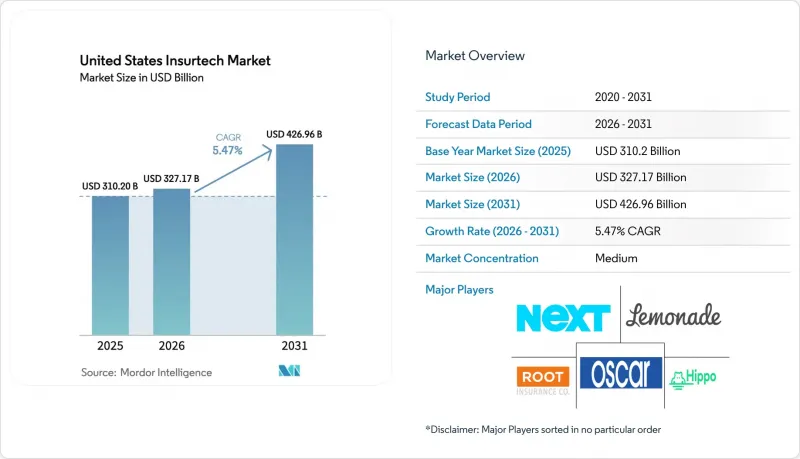
본 보고서는 비즈니스 모델(보험사, 이네이블러, 판매업체), 보험 유형(생명보험, 손해보험), 판매 채널(소비자 직접 판매, 중개업체, 임베디드형), 지역(남부, 서부, 중서부, 북동부)별로 분류되어 있습니다. 시장 전망은 금액(달러) 기준으로 제시되어 있습니다.
미국 인슈어테크 시장 동향 및 인사이트
데이터 분석 및 AI에 대한 수요
미국 자동차 보험사의 88%와 주택 보험사의 70%는 이미 손해 우선순위 지정 및 사기 방지를 위해 AI 도구를 도입하거나 시범 운영 중이며, 이에 따라 NAIC는 2024년에 ‘제3자 데이터 및 모델 태스크포스’를 설립했습니다. 실시간 위험 평가를 통해 견적에서 계약 체결까지의 주기가 몇 주에서 몇 분으로 단축되어 인수 정확도가 향상되고 있습니다. 법인 대상 보험사는 보험금 청구 증가 및 인력 부족에 대처하기 위해 ‘에이전트형’ AI를 요구하며, 영업 비용률을 25% 미만으로 억제하는 것을 목표로 하고 있습니다. 그러나 콜로라도주의 알고리즘 편향 관련 법률 및 유사한 법안으로 인해 규정 준수 비용이 증가하고 있어, 모델의 공정성을 감사할 수 있는 충분한 자본력을 갖춘 플랫폼이 유리한 입장에 있습니다. 따라서 미국의 인슈어테크 시장에서는 예측 정확도를 유지하면서 설명 가능성을 입증할 수 있는 기업이 높이 평가받고 있습니다.
디지털 퍼스트 소비자 구매 행동
현재, 모바일에 최적화된 고객 경험이 보험사의 존재 가치를 좌우하고 있습니다. 40세 미만 보험 계약자의 72%가 스마트폰을 통해 신규 보험 계약을 체결하고 있습니다. 텔레매틱스를 활용한 자동차 보험은 리스크를 동적으로 평가하기 때문에 자동차 보험료 상승에 따라 이용량에 따른 보험이 매력적으로 다가오고 있습니다. 차량 관리 사업자는 GPS 진단 데이터를 보험사의 API와 연동하여 실시간으로 보험료를 협상함으로써, 소비자 직접 판매 채널을 셀프 서비스형 경험으로 전환하고 있습니다. 내장형 결제 흐름을 통해 소매업체는 원클릭으로 화물 보험이나 여행 보험을 세트 판매할 수 있게 되어, 고객 확보 비용을 최대 60% 절감하고 있습니다. 이러한 변화로 인해 고객 경험 지표가 가격 자체보다 더 중요시되면서, 미국 인슈어테크 시장의 직접 디지털 전략이 더욱 강화되고 있습니다.
데이터 개인정보 보호 및 사이버 침해 위험
1억 명의 개인정보가 유출된 체인지 헬스케어(Change Healthcare) 해킹 사건은 상호 연결된 보험 청구 워크플로의 취약성을 여실히 드러냈습니다. 글로브 라이프(Globe Life)의 고객 포털에서 발생한 유사한 사건은 캘리포니아주 소비자 개인정보 보호법에 따른 규제 당국의 신속한 조사를 초래했으며, 수백만 달러 규모의 벌금이 부과될 가능성을 여실히 보여주었습니다. 감시가 강화됨에 따라 인슈어테크 기업들은 제로 트러스트 아키텍처, 다단계 인증, 그리고 연간 운영비의 최대 10%가 소요되는 연례 침투 테스트를 실시해야만 합니다. 사이버 복원력 분야에서 선도적인 입지를 차지한 기업에 대한 투자자들의 심리는 여전히 긍정적이지만, 개인정보 보호 측면에서 뒤처져 있다고 평가되는 플랫폼에 대해서는 평가액이 저평가되어 있다는 인식이 형성되고 있습니다.
부문 분석
2025년, 미국 인슈어테크 시장 점유율의 45.12%를 보험사용 플랫폼이 차지하고 있으며, 이는 자본력과 보험금 청구 인프라의 중요성이 여전히 높음을 반영합니다. 이네이블러 벤더는 절대적인 매출 규모는 작지만 연평균 성장률(CAGR) 5.74%로 가장 빠른 성장세를 기록하고 있으며, 이는 자산 부담이 적은 SaaS 툴킷이 신속한 현대화를 추구하는 기존 기업들로부터 지지를 받고 있음을 시사합니다. API 오케스트레이션,로우코드 제품 팩토리, 사기 분석 엔진이 ‘플러그 앤 플레이’의 필수 요소로 자리 잡음에 따라, 미국 인슈어테크 시장 중 이네이블러 부문 시장 규모는 현재 약 144억 달러에서 2031년까지 201억 달러 이상으로 확대될 것으로 예측됩니다.
전략적 거래 역시 이러한 추세를 뒷받침하고 있습니다. 뮌헨 재보험(Munich Re)은 2025년 3월, Next Insurance를 26억 달러에 인수한다고 발표하며 풀스택 사업에 진출했습니다. 한편, 트래블러스(Travelers)는 코르버스(Corvus) 인수 합의를 통해 사이버 보험 전문 분야에 진출했습니다. 이러한 움직임으로 인해 보험사와 이네이블러 간의 경계가 모호해지면서, 고객 데이터 및 인수 알고리즘 관리로 초점이 옮겨가고 있습니다. 각 이네이블러 기업들은 멀티테넌트 아키텍처를 활용해 다수의 보험사에 동시에 서비스를 제공하며, 뛰어난 한계 이익을 창출하고 있을 뿐만 아니라, 미국 인슈어테크 시장에서 필수적인 파트너로서의 입지를 확고히 하고 있습니다.
기타 혜택:
- 엑셀 형식 시장 예측(ME) 시트
- 3개월간의 애널리스트 지원
자주 묻는 질문
목차
제1장 서론
제2장 조사 방법
제3장 주요 요약
제4장 시장 구도
제5장 시장 규모와 성장 예측
제6장 경쟁 구도
제7장 시장 기회와 향후 전망
JHS 26.08.28According to Mordor Intelligence, the United States insurtech market size was valued at USD 310.2 billion in 2025 and estimated to grow from USD 327.17 billion in 2026 to reach USD 426.96 billion by 2031, at a CAGR of 5.47% during the forecast period (2026-2031).
This report is Segmented by Business Model (Carrier, Enabler, and Distributor), Insurance Line (Life Insurance, Non-Life Insurance), Distribution Channel (Direct To Consumer, Intermediate, and Embedded), and Region (South, West, Midwest, and Northeast). The Market Forecasts are Provided in Terms of Value (USD).
United States Insurtech Market Trends and Insights
Demand for Data Analytics & AI
88% of US auto insurers and 70% of home insurers already deploy or pilot AI tools for loss triage and fraud prevention, prompting the NAIC to form a Third-Party Data and Models Task Force in 2024. Real-time risk assessment compresses quote-to-bind cycles from weeks to minutes, sharpening underwriting precision. Commercial carriers seek "agentic" AI to cope with rising claim severity and talent shortages, targeting operational expense ratios below 25%. However, Colorado's algorithmic-bias statute and similar bills increase compliance costs, favoring well-capitalized platforms able to audit model fairness. The United States insurtech market, therefore, rewards firms that can prove explainability while sustaining predictive accuracy.
Digital-First Consumer Purchasing
Mobile-optimised journeys now dictate insurer relevance: policyholders under 40 finalise 72% of new covers on smartphones. Telematics-driven auto policies price risk dynamically, making usage-based insurance attractive as vehicle premiums rise. Fleet operators integrate GPS diagnostics with carrier APIs to negotiate real-time premiums, pushing direct-to-consumer channels toward self-service experiences. Embedded checkout flows let retailers bundle parcel protection or travel cover in a single click, reducing acquisition costs by as much as 60%. These shifts elevate customer-experience metrics above price alone and reinforce direct digital strategies within the United States insurtech market.
Data-Privacy & Cyber-Breach Risk
The Change Healthcare intrusion compromising 100 million individuals underscores the vulnerability of interconnected claims workflows. Similar incidents at Globe Life's customer portal prompted swift regulatory review under California's Consumer Privacy Act, highlighting the possibility of multimillion-dollar fines. Heightened scrutiny obliges insurtechs to implement zero-trust architectures, multi-factor authentication, and annual penetration testing that can absorb up to 10% of operating expenditure. Investor sentiment remains positive toward cyber-resilience leaders, but valuation discounts emerge for platforms perceived as lagging on privacy assurance.
Other drivers and restraints analyzed in the detailed report include:
- Regulatory Sandbox & Open-API Mandates
- Embedded-Insurance via Open Banking
- Legacy-System Integration Costs
For complete list of drivers and restraints, kindly check the Table Of Contents.
Segment Analysis
Carrier platforms accounted for 45.12% of the United States insurtech market share in 2025, reflecting the enduring importance of capital strength and claims infrastructure. Enabler vendors, though smaller in absolute revenue, register the fastest progress with a 5.74% CAGR, suggesting that asset-light SaaS toolkits resonate with incumbents seeking rapid modernisation. The United States insurtech market size attributed to Enablers is projected to advance from roughly USD 14.4 billion today to more than USD 20.1 billion by 2031, as API orchestration, low-code product factories, and fraud analytics engines become plug-and-play essentials.
Strategic deals validate the trend: Munich Re entered full-stack operations by announcing a USD 2.6 billion purchase of Next Insurance in March 2025, while Travelers moved into cyber-specialty with its agreement to acquire Corvus. Such moves blur the carrier-enabler divide, shifting focus toward control of customer data and underwriting algorithms. Enablers leverage multi-tenant architecture to serve numerous carriers simultaneously, yielding superior marginal economics and positioning them as indispensable partners throughout the United States insurtech market.
Complete Report Scope:
- By Business Model
- Carrier
- Enabler
- Distributor
- By Insurance Line
- Life
- Non-Life
- By Distribution Channel
- Direct to Consumer
- Intermediate
- Embedded
- By Geography
- South
- West
- Midwest
- NorthEast
List of Companies Covered in this Report:
- Lemonade
- Root Insurance
- Hippo
- Next Insurance
- Metromile
- Oscar Health
- Bright Health
- Clover Health
- Gusto
- Pie Insurance
- Ethos Life
- Kin Insurance
- Clearcover
- Branch Insurance
- Insurify
- Policygenius
- Bold Penguin
- Trov
- Sidecar Health
- American Well
Additional Benefits:
- The market estimate (ME) sheet in Excel format
- 3 months of analyst support
TABLE OF CONTENTS
1 Introduction
- 1.1 Study Assumptions & Market Definition
- 1.2 Scope of the Study
2 Research Methodology
3 Executive Summary
4 Market Landscape
- 4.1 Market Overview
- 4.2 Market Drivers
- 4.2.1 Demand for data analytics & AI
- 4.2.2 Digital-first consumer purchasing
- 4.2.3 Regulatory sandbox & open-API mandates
- 4.2.4 Embedded-insurance via open banking
- 4.2.5 Climate-risk parametric products
- 4.2.6 Usage-Based & Behavior-Based Pricing (UBI/BBI)
- 4.3 Market Restraints
- 4.3.1 Data-privacy & cyber-breach risk
- 4.3.2 Legacy-system integration costs
- 4.3.3 Actuarial data-science talent gap
- 4.3.4 Scrutiny on algorithmic bias
- 4.4 Value / Supply-Chain Analysis
- 4.5 Technological Outlook
- 4.6 Regulatory Landscape
- 4.7 Funding & Investment Activity
- 4.8 Impact of Insurtech on US Insurance Industry
- 4.9 Porter's Five Forces
- 4.9.1 Bargaining Power of Suppliers
- 4.9.2 Bargaining Power of Buyers
- 4.9.3 Threat of New Entrants
- 4.9.4 Threat of Substitutes
- 4.9.5 Competitive Rivalry
5 Market Size & Growth Forecasts
- 5.1 By Business Model
- 5.1.1 Carrier
- 5.1.2 Enabler
- 5.1.3 Distributor
- 5.2 By Insurance Line
- 5.2.1 Life
- 5.2.2 Non-Life
- 5.3 By Distribution Channel
- 5.3.1 Direct to Consumer
- 5.3.2 Intermediate
- 5.3.3 Embedded
- 5.4 By Geography
- 5.4.1 South
- 5.4.2 West
- 5.4.3 Midwest
- 5.4.4 NorthEast
6 Competitive Landscape
- 6.1 Market Concentration
- 6.2 Strategic Moves
- 6.3 Market Share Analysis
- 6.4 Company Profiles (includes Global level Overview, Market level overview, Core Segments, Financials as available, Strategic Information, Market Rank/Share, Products & Services, Recent Developments)
- 6.4.1 Lemonade
- 6.4.2 Root Insurance
- 6.4.3 Hippo
- 6.4.4 Next Insurance
- 6.4.5 Metromile
- 6.4.6 Oscar Health
- 6.4.7 Bright Health
- 6.4.8 Clover Health
- 6.4.9 Gusto
- 6.4.10 Pie Insurance
- 6.4.11 Ethos Life
- 6.4.12 Kin Insurance
- 6.4.13 Clearcover
- 6.4.14 Branch Insurance
- 6.4.15 Insurify
- 6.4.16 Policygenius
- 6.4.17 Bold Penguin
- 6.4.18 Trov
- 6.4.19 Sidecar Health
- 6.4.20 American Well
7 Market Opportunities & Future Outlook
- 7.1 White-space & Unmet-Need Assessment


