

|
시장보고서
상품코드
2116617
중동 및 아프리카의 인슈어테크 시장 : 점유율 분석, 업계 동향과 통계, 성장 예측(2026-2031년)Middle East And Africa Insurtech - Market Share Analysis, Industry Trends & Statistics, Growth Forecasts (2026 - 2031) |
||||||
 Mordor Intelligence
Mordor Intelligence에 의하면, 중동 및 아프리카 인슈어테크 시장 규모는 2025년에 120억 9,000만 달러로 평가되었고 2026년 130억 6,000만 달러에서 2031년까지 192억 3,000만 달러에 이를 것으로 예측되며, 예측 기간(2026-2031년) CAGR은 8.03%를 나타낼 전망입니다.
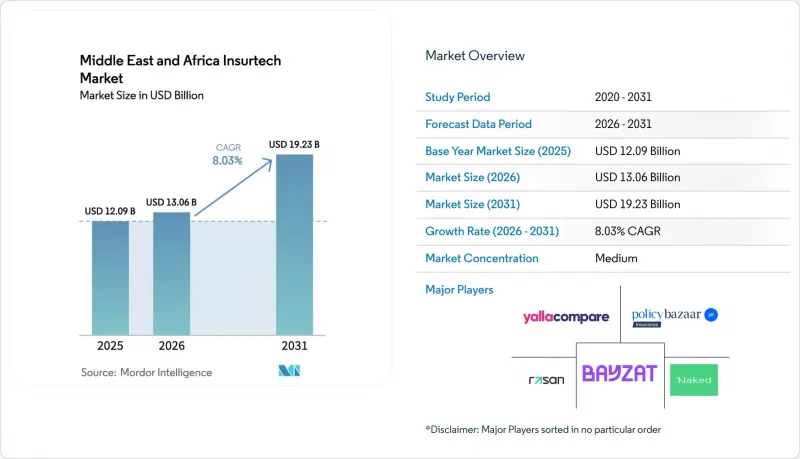
본 보고서는 제품 라인(생명보험, 건강보험, 손해보험, 특수보험), 판매 채널(소비자 직접 판매, 애그리게이터, 디지털 브로커 등), 최종 사용자(개인, 중소기업, 대기업, 정부),및 지역(UAE, 사우디아라비아, 남아프리카공화국, 나이지리아, 기타 중동 및 아프리카)별로 분류되어 있습니다. 시장 예측은 금액(달러) 기준으로 제시되어 있습니다.
중동 및 아프리카 인슈어테크 시장 동향과 인사이트
자동차 보험 및 건강 보험 의무화 확대
걸프 국가들의 규제 당국은 국민 모두를 대상으로 한 보험 및 제3자 자동차 배상 책임 보험을 의무화하고 있으며, 이로 인해 수백만 명의 거주자가 디지털 등록 시스템을 이용하도록 요구받고 있습니다. UAE의 고용주는 취업 비자 갱신 시 직원의 보험 가입을 증명해야 하는 반면, 사우디아라비아에서는 자동차 배상 책임 보험 증서의 유효 기간 만료 시 벌금이 부과됩니다. 에미레이트 ID를 스캔하고 급여 데이터를 확보하여 몇 초 만에 보험료를 산출하는 인슈어테크 앱이 기존 대리점이 남긴 판매망의 공백을 메우고 있습니다. 자동화된 규정 준수 점검이 정부 데이터베이스에 정보를 제공함으로써 보험 증권 발급의 마찰이 줄어들고, 갱신률은 90% 이상으로 끌어올려졌습니다. 기존 보험 중개인들은 상용차 보험을 유지하기 위해 이러한 API와의 연동을 서두르고 있지만, 셀프 서비스의 확산에 따라 이익률 압박에 직면하고 있습니다. 따라서 규제 주도적인 확장은 기술을 활용하는 보험사에게 안정적인 보험료 하한선과 예측 가능한 보험금 청구 패턴을 제공합니다. 규제 적용 범위가 확대됨에 따라, 중동 및 아프리카의 인슈어테크 시장에서는 2027년까지 추가로 500만 건의 개인 보험 계약이 클라우드 플랫폼으로 이전될 전망입니다.
낮은 보험 보급률과 스마트폰 보급률
아프리카 국가들의 보험 보급률은 평균 3% 미만인 반면, 스마트폰 보급률은 60%를 초과합니다. 나이지리아는 이러한 격차를 상징적으로 보여주는데, 보험 보급률은 0.5%인 반면, 휴대전화 접근률은 84%에 달할 전망입니다. 이로 인해 일 단위 또는 주 단위로 요금이 책정되는 종량제 마이크로 보험 계약이 가능해졌습니다. 케냐와 가나의 모바일 머니 결제 시스템은 보험료 및 보험금 지급을 즉시 처리하며, 대면식 대리점과 비교해 고객 확보 비용 및 서비스 제공 비용을 최소 40% 절감하고 있습니다. 텔레매틱스, 농작물 센서, 건강 관리용 웨어러블 기기에서 수집된 실시간 이용 데이터를 통해 위험 선별이 개선되어, 손실률이 높은 지역에서도 합산비율을 낮출 수 있습니다. 소셜 미디어와의 연동도 무료 마케팅 수단으로 기능하며, 추천을 통한 신규 계약 건수는 첫 달에 두 자릿수 성장세를 보이고 있습니다. 예측 기간 동안 이러한 추세에 힘입어 지점망의 고정 비용을 들이지 않고도 아프리카의 디지털 보험 계약 건수가 4배로 증가할 가능성이 있습니다. 따라서 스마트폰이 가져다주는 혜택은 중동 및 아프리카 인슈어테크 시장의 근본적인 원동력으로 계속 작용하고 있습니다.
MEA 지역의 규제 분절화
아프리카 54개국 및 중동 16개국의 관할 구역에서는 자본 요건, 보고 요건, 소비자 정보 공개 요건이 서로 일치하지 않습니다. 인슈어테크 기업은 각 지역에 대응하는 컴플라이언스 팀을 병행하여 유지해야 하며, 이로 인해 간접비가 증가하여 여러 시장으로의 진출이 지연되고 있습니다. 나이지리아의 2024년 보험법은 데이터의 현지 보관을 의무화하고 있는 반면, 남아프리카공화국의 ‘트윈 피크스(Twin Peaks)’ 프레임워크는 업무 운영 감독에 중점을 두고 있어 보험 약관의 통일 문제가 복잡해지고 있습니다. 샌드박스 패스포트는 어느 정도 도움이 되지만, 본격적인 사업 운영을 포괄하는 경우는 드물어 시범 사업 종료 후의 사업 확장이 저해되고 있습니다. 상호인정 조약이 없기 때문에 국경을 넘는 통합형 상품은 보험사가 유효한 라이선스 취득을 위해 분주히 움직이는 와중에 결제 단계에서 정체되고 맙니다. 투자자들은 장기적인 승인 주기를 감당하기 위한 추가 자금 조달을 요구하고 있으며, 이로 인해 프리머니 평가액이 하락하고 있습니다. 이러한 마찰로 인해 중동 및 아프리카의 인슈어테크 시장에서 본래라면 더 높았을 잠재적 연평균 성장률(CAGR)에서 약 1.4퍼센트 포인트가 차감되고 있습니다.
부문 분석
건강보험은 걸프 지역 전체의 외국인 거주자 및 시민에 대한 가입 의무화에 힘입어 2025년 매출의 33.68%를 차지했습니다. 디지털 가입 포털, 원격 의료와의 연계, AI를 활용한 트리아지 챗봇을 통해 업무 효율이 향상되어, 보험사는 가격 상한선을 준수하면서도 이익률을 유지할 수 있게 되었습니다. 생명보험은 28.35%를 차지했으며, 주택담보대출 시장의 급성장과 가족 대상 타카풀을 포함한 샤리아 준수 저축 플랜의 혜택을 받고 있습니다. 손해보험, 특히 자동차보험은 라이드셰어링 사업자들이 보험료를 절감하기 위해 주행 거리에 따른 텔레매틱스 시스템을 도입함에 따라 성장했습니다.
전문 보험 분야는 가장 빠르게 성장하는 분야로, 연평균 성장률(CAGR)이 10.96%로 성장을 지속하고, 있습니다. 사우디아라비아와 케냐에서 새로운 정보 유출 통지법이 시행됨에 따라 사이버 보험 매출이 급증하고 있는 반면, 해상 파라메트릭 보험은 홍해에서의 해운 지연에 대한 헤지 수단으로 기능하고 있습니다. 반려동물 보험은 순종 개를 기르는 사우디아라비아와 아랍에미리트의 도시 가구들 사이에서 지지를 얻고 있으며, 파라메트릭형 여행 보험은 항공사의 예약 시스템에 통합되어 있습니다. 중동 및 아프리카의 인슈어테크 시장에서 전문 보험 시장 규모는 타겟을 명확히 한 위험 이전 솔루션에 대한 수요를 반영하여, 2026년 12억 3,000만 달러에서 2031년까지 23억 5,000만 달러로 두 배로 증가할 것으로 예측됩니다.
기타 혜택:
- 엑셀 형식 시장 예측(ME) 시트
- 3개월간의 애널리스트 지원
자주 묻는 질문
목차
제1장 서론
제2장 조사 방법
제3장 주요 요약
제4장 시장 구도
제5장 시장 규모와 성장 예측
제6장 경쟁 구도
제7장 시장 기회와 향후 전망
JHS 26.08.28According to Mordor Intelligence, the Middle East and Africa Insurtech market size was valued at USD 12.09 billion in 2025 and estimated to grow from USD 13.06 billion in 2026 to reach USD 19.23 billion by 2031, at a CAGR of 8.03% during the forecast period (2026-2031).
This report is Segmented by Product Line (Life Insurance, Health Insurance, Property & Casualty, Specialty Lines), Distribution Channel (Direct-To-Consumer, Aggregators, Digital Brokers, and More), End User (Retail, SME, Large Enterprise, Government), and Geography (UAE, Saudi Arabia, South Africa, Nigeria, Rest of MEA). The Market Forecasts are Provided in Terms of Value (USD).
Middle East And Africa Insurtech Market Trends and Insights
Mandatory Motor & Health Insurance Expansion
Gulf regulators require universal health cover and third-party motor liability, forcing millions of residents onto digital enrollment rails. Employers in the UAE must prove employee coverage when renewing work visas, while Saudi Arabia levies fines for lapsed motor liability certificates. Insurtech apps that scan Emirates IDs, pull payroll data, and price premiums in seconds are filling distribution gaps left by legacy agents. Automated compliance checks feed government databases, reducing policy-issuance friction and pushing renewal ratios above 90%. Traditional brokers are hurriedly linking to these APIs to defend commercial fleets, yet face margin pressure as self-service adoption grows. The rule-driven expansion, therefore, provides a stable premium floor and predictable claims patterns for tech-enabled carriers. As enforcement broadens, the Middle East and Africa Insurtech market is likely to shift an additional 5 million individual policies onto cloud platforms by 2027.
Low Insurance Penetration & Smartphone Adoption
African countries average sub-3% insurance density against smartphone penetration surpassing 60%. Nigeria embodies the gap-0.5% insurance but 84% mobile-phone access-allowing pay-as-you-go micro-policies priced in daily or weekly increments. Mobile money rails in Kenya and Ghana route premiums and claims instantly, cutting acquisition and servicing expenses by at least 40% versus in-person agents. Real-time usage data captured from telematics, crop sensors, and health wearables improves risk selection, narrowing combined ratios even in high-loss provinces. Social media integration also acts as free marketing, with referrals lifting month-one new-business volumes by double digits. Over the forecast horizon, these dynamics could lift Africa's digital policy fourfold without the fixed cost of branch networks. The smartphone dividend thus remains a foundational driver of the Middle East and Africa Insurtech market.
Regulatory Fragmentation Across MEA
Fifty-four African and sixteen Middle Eastern jurisdictions apply incompatible capital, reporting, and consumer-disclosure requirements. Insurtechs must maintain parallel compliance teams, inflating overhead and delaying multi-market launches. Nigeria's 2024 Insurance Act forces local data residency, while South Africa's twin-peaks framework leans on conduct-of-business supervision, complicating uniform policy wording. Sandbox passports help but rarely cover full-scale operations, leaving post-pilot scaling hamstrung. Without mutual-recognition treaties, cross-border embedded products stall at checkout as carriers scramble for valid licenses. Investors demand extra runway financing to cover lengthy approval cycles, depressing pre-money valuations. The resulting friction subtracts roughly 1.4 percentage points from the otherwise higher potential CAGR in the Middle East and Africa Insurtech market.
Other drivers and restraints analyzed in the detailed report include:
- Pro-Innovation Regulatory Sandboxes
- Growing VC & Insurer Partnerships
- Poor Data Quality for AI Models
For complete list of drivers and restraints, kindly check the Table Of Contents.
Segment Analysis
Health insurance generated 33.68% of 2025 revenue, buoyed by mandatory coverage for expatriates and citizens across Gulf states. Digital enrollment portals, telemedicine tie-ins, and AI triage chatbots raise operational efficiency, letting carriers comply with price caps while preserving margins. Life insurance at 28.35% benefits from booming mortgage markets and Sharia-compliant savings plans that embed family Takaful. Property and casualty lines, especially motor, grew as ride-hailing fleets adopted pay-per-mile telematics to trim premiums.
Specialty lines form the fastest-rising pocket, charting 10.96% CAGR. Cyber sales jump after new breach-notification statutes in Saudi Arabia and Kenya, while marine parametric cover hedges Red Sea shipping delays. Pet insurance finds traction among urban Saudi and Emirati households owning pedigree breeds, and parametric travel cover is embedded inside airline booking engines. The Middle East and Africa Insurtech market size for specialty policies is expected to double from USD 1.23 billion in 2026 to USD 2.35 billion by 2031, reflecting the appetite for targeted risk transfer solutions.
Complete Report Scope:
- By Product Line (Insurance Type)
- Life Insurance
- Health Insurance
- Property & Casualty (Motor, Home, Commercial, Liability)
- Specialty Lines (Cyber, Pet, Marine, Travel)
- By Distribution Channel
- Direct-to-Consumer (Digital)
- Aggregators / Marketplaces
- Digital Brokers / MGAs
- Embedded Insurance Platforms
- Traditional Agents / Brokers (digitally enabled)
- Bancassurance (digitally enabled)
- Other Channels
- By End User
- Retail / Individual
- SME / Commercial
- Large Enterprise / Corporate
- Government / Public Sector
- By Region
- Middle East
- United Arab Emirates
- Saudi Arabia
- South Africa
- Nigeria
- Rest of Middle East And Africa
- Middle East
List of Companies Covered in this Report:
- Rasan (Tameeni / Treza)
- Bayzat
- Policybazaar.ae
- Beema (UAE)
- Lami Technologies
- Yallacompare
- Aqeed
- Souqalmal
- Turaco
- MicroEnsure
- Casava
- Naked Insurance
- Tawuniya
- GIG Gulf (ex-AXA Gulf)
- InsuranceMarket.ae
- Discovery Insure
- Old Mutual iWYZE
- Hollard
- BIMA (Milvik)
- Klaim.ai
Additional Benefits:
- The market estimate (ME) sheet in Excel format
- 3 months of analyst support
TABLE OF CONTENTS
1 Introduction
- 1.1 Study Assumptions & Market Definition
- 1.2 Scope of the Study
2 Research Methodology
3 Executive Summary
4 Market Landscape
- 4.1 Market Overview
- 4.2 Market Drivers
- 4.2.1 Mandatory motor & health insurance expansion
- 4.2.2 Low insurance penetration & smartphone adoption
- 4.2.3 Pro-innovation regulatory sandboxes
- 4.2.4 Growing VC & insurer partnerships
- 4.2.5 Takaful-ready API platforms
- 4.2.6 Cross-border "reinsurance-as-a-service" hubs
- 4.3 Market Restraints
- 4.3.1 Regulatory fragmentation across MEA
- 4.3.2 Poor data quality for AI models
- 4.3.3 Reinsurer capacity squeeze for MGAs
- 4.3.4 Power/connectivity outages in frontier markets
- 4.4 Value / Supply-Chain Analysis
- 4.5 Regulatory Landscape
- 4.6 Technological Outlook
- 4.7 Porter's Five Forces
- 4.7.1 Threat of New Entrants
- 4.7.2 Bargaining Power of Buyers
- 4.7.3 Bargaining Power of Suppliers
- 4.7.4 Threat of Substitutes
- 4.7.5 Competitive Rivalry
5 Market Size & Growth Forecasts
- 5.1 By Product Line (Insurance Type)
- 5.1.1 Life Insurance
- 5.1.2 Health Insurance
- 5.1.3 Property & Casualty (Motor, Home, Commercial, Liability)
- 5.1.4 Specialty Lines (Cyber, Pet, Marine, Travel)
- 5.2 By Distribution Channel
- 5.2.1 Direct-to-Consumer (Digital)
- 5.2.2 Aggregators / Marketplaces
- 5.2.3 Digital Brokers / MGAs
- 5.2.4 Embedded Insurance Platforms
- 5.2.5 Traditional Agents / Brokers (digitally enabled)
- 5.2.6 Bancassurance (digitally enabled)
- 5.2.7 Other Channels
- 5.3 By End User
- 5.3.1 Retail / Individual
- 5.3.2 SME / Commercial
- 5.3.3 Large Enterprise / Corporate
- 5.3.4 Government / Public Sector
- 5.4 By Region
- 5.4.1 Middle East
- 5.4.1.1 United Arab Emirates
- 5.4.1.2 Saudi Arabia
- 5.4.1.3 South Africa
- 5.4.1.4 Nigeria
- 5.4.1.5 Rest of Middle East And Africa
- 5.4.1 Middle East
6 Competitive Landscape
- 6.1 Market Concentration
- 6.2 Strategic Moves
- 6.3 Market Share Analysis
- 6.4 Company Profiles (includes Global level Overview, Market level overview, Core Segments, Financials as available, Strategic Information, Market Rank/Share, Products & Services, Recent Developments)
- 6.4.1 Rasan (Tameeni / Treza)
- 6.4.2 Bayzat
- 6.4.3 Policybazaar.ae
- 6.4.4 Beema (UAE)
- 6.4.5 Lami Technologies
- 6.4.6 Yallacompare
- 6.4.7 Aqeed
- 6.4.8 Souqalmal
- 6.4.9 Turaco
- 6.4.10 MicroEnsure
- 6.4.11 Casava
- 6.4.12 Naked Insurance
- 6.4.13 Tawuniya
- 6.4.14 GIG Gulf (ex-AXA Gulf)
- 6.4.15 InsuranceMarket.ae
- 6.4.16 Discovery Insure
- 6.4.17 Old Mutual iWYZE
- 6.4.18 Hollard
- 6.4.19 BIMA (Milvik)
- 6.4.20 Klaim.ai
7 Market Opportunities & Future Outlook
- 7.1 Embedded Insurance Solutions and Seamless Customer Integration
- 7.2 AI and IoT Advancements and Enhanced Risk Management Strategies


