

|
시장보고서
상품코드
2116763
안티센스 및 RNAi 치료제 시장 : 점유율 분석, 업계 동향과 통계, 성장 예측(2026-2031년)Antisense And RNAi Therapeutics - Market Share Analysis, Industry Trends & Statistics, Growth Forecasts (2026 - 2031) |
||||||
 Mordor Intelligence
Mordor Intelligence에 의하면, 2026년 안티센스 및 RNAi 치료제 시장 규모는 56억 6,000만 달러로 추정되고 있어 2025년 47억 9,000만 달러에서 확대해, 2031년에는 130억 8,000만 달러에 이를 것으로 예측됩니다.
2026년부터 2031년까지 연평균 성장률(CAGR)은 18.22%를 나타낼 것으로 전망됩니다.
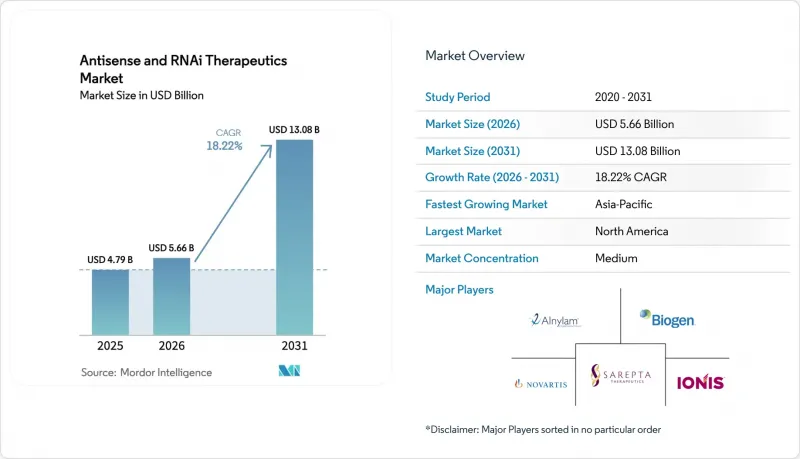
본 보고서는 분자 유형(siRNA, 안티센스 올리고뉴클레오티드), 투여 경로(정맥 내, 피하, 척수강 내, 기타), 치료 분야(희귀 유전 질환, 신경학,종양학, 심혈관 및 대사 질환, 감염증, 안과 질환, 기타) 및 지역(북미, 유럽, 기타)별로 분류되어 있습니다. 시장 전망은 금액(달러) 기준으로 제시되어 있습니다.
전 세계 안티센스 및 RNAi 치료제 시장 동향과 인사이트
유전성 질환 유병률 증가
유전체 시퀀싱 기술의 지속적인 발전으로 7,000개 이상의 희귀질환에서 치료 가능한 돌연변이가 확인되고 있으며, 이를 통해 치료제 개발 기업에는 명확한 분자 표적과 예측 가능한 환자군이 제공되고 있습니다. 그 결과 발생하는 임상적 수요로 인해, 과거에는 상업적으로 매력적이지 않다고 여겨졌던 프로그램으로 연구개발(R&D) 포트폴리오의 재편이 진행되고 있습니다. 선진국 시장에서 연간 경제적 부담이 8,000억 달러를 초과한다는 점과 맞물려, ‘미충족 의료 수요’라는 이야기는 지속적인 자본 유입과 정책적 관심을 확실히 확보하고 있습니다. 신속 심사 제도 덕분에 개발 주기는 현재 8-9년으로 단축되는 것이 일반적이며, 보험사들이 치료 가능성에 대해 보상하려는 태도를 보이고 있어 출시 시 높은 가격에 대한 우려도 점차 누그러지고 있습니다. 또한 환자 지원 단체의 노력에 힘입어 조기 진단 및 보험 적용 결정의 효율화가 촉진되면서, 치료법의 보급이 더욱 가속화되고 있습니다.
희귀질환 치료 성과 향상
2024년에 발표된 직접 비교 임상시험 결과에 따르면, 척수성 근위축증에서 안티센스 올리고뉴클레오티드는 40-60%의 기능 개선을 가져온 반면, 표준 치료에서는 15-25%에 그쳤습니다. 이러한 효과의 큰 차이는 처방 지침의 재구성을 촉진하고, 대증 요법에서 질환 수정 요법으로의 전환을 가속화하고 있습니다. 임상적 지속성과 삶의 질 향상이 명확한 경우, 지급 기관은 QALY당 비용이 15만 달러를 크게 상회하는 임계치도 점점 더 용인하는 추세입니다. 이러한 기준을 충족함으로써 확고한 시장 출시 전략이 수립되고, 혁신 기업과 보험사 간의 건설적인 위험 분담 체계가 조성됩니다.
고액의 치료비와 환급 압력
연간 치료비가 30만 미달러를 초과하는 경우, 특히 예산 유연성이 낮은 지역에서는 의료 기술 평가가 엄격해집니다. 지불 기관은 실제 치료 성과를 바탕으로 환급액을 조정하기 위해 증거 개발 조항이나 환급 조항을 부과하고 있습니다. 이에 대해 제약 기업은 적응증에 기반한 가격 책정, 장기 분할 납부 옵션, 위험 분담 계약 등을 제안하고 있습니다. 이러한 협상에는 막대한 자원이 필요하기 때문에 중소규모 기업에게는 부담이 되며, 경제적으로 취약한 지역에서 시장 출시가 지연될 가능성이 있습니다.
부문 분석
siRNA는 간에서의 노크다운 효과 입증, 대량 생산에 적합한 GalNAc 화학, 그리고 의료진의 충분한 이해가 배경이 되어 2025년에는 안티센스 및 RNAi 치료제 시장에서 64.92%의 점유율을 차지했습니다. 한편, 안티센스 올리고뉴클레오티드는 더 단순한 합성법, 낮은 면역원성, 그리고 siRNA가 혈액-뇌 장벽 통과에 어려움을 겪었던 신경계 분야에서 고군분투 끝에 거둔 성공을 바탕으로 연평균 성장률(CAGR) 20.33%를 나타낼 것으로 예측됩니다. 안티센스·RNAi 치료제 시장 규모에서 현재 주도적인 위치를 차지하고 있는 것은 대사성 질환 및 희귀 간 질환을 기반으로 하는 siRNA 프로그램이지만, 플랫폼의 범용성은 변화하고 있습니다.
임상 이해관계자들 사이에서는 안티센스 프로그램이 스플라이싱을 조절하거나, 결핍된 단백질의 생성을 촉진하거나, 혹은 유해한 기능 획득형 전사 산물을 노크다운할 수 있다는 점이 이제 널리 인식되고 있습니다. FDA에 대한 신청 동향에서도 뇌 및 근육 질환 분야에서는 이미 안티센스가 우위를 점하고 있는 반면, siRNA는 여전히 간, 눈 및 특정 암 치료 프로그램에서 지배적인 위치를 차지하고 있습니다. 제조 측면의 경제성도 변화하고 있습니다. 안티센스는 정제 공정이 적어 상업적 규모에서 1그램당 비용을 절감할 수 있습니다. siRNA의 간외 투여가 뒤처지는 가운데, 안티센스 프로그램은 신경근 질환 및 심장 질환 파이프라인에서 점유율을 서서히 확대할 가능성이 있습니다.
지역별 분석
2025년, 북미는 안티센스 및 RNAi 치료제 시장에서 42.58%의 점유율을 차지했습니다. 이는 풍부한 자금원, 숙련된 규제 대응 실무, 그리고 올리고뉴클레오티드 제조가 밀집된 클러스터에 힘입은 결과입니다. FDA의 획기적 치료제 지정 및 희귀질환 치료제(오펀 드럭)에 대한 우대 조치가 프로그램의 신속한 진전을 뒷받침하고 있지만, 지불 기관은 여전히 연간 6자리 수에 달하는 치료비를 엄격하게 검토하고 있어 기업들을 성과 연계형 계약으로 이끌고 있습니다. 산학 협력을 통해 인간을 대상으로 한 1상 임상시험이 가속화되고 있지만, 유전자 침묵화의 안전성에 대해서는 여전히 대중의 경계심이 남아 있습니다.
유럽은 견실한 과학적 근거와 비용 대비 효과 요건을 융합한 균형 잡힌 자세를 보이고 있습니다. EMA에 의한 일원화된 승인은 중복을 줄여주지만, 국가별 보험급여 신청 서류 작성은 시장 진입의 장벽이 되고 있습니다. 독일, 프랑스, 영국은 도입률이 높은 거점으로 자리 잡고 있으며, 각국이 첫 번째 제품 출시를 주도할 전문센터를 육성하고 있습니다. 브렉시트로 인한 독자적인 규제 경로로 인해 이중 신청이 불가피하지만, 상호 승인 제도가 물류상의 복잡성을 완화하고 있습니다.
아시아태평양은 연평균 성장률(CAGR) 20.19%를 기록하며, 일본, 한국, 중국의 혁신 주도형 개혁에 힘입어 눈부신 성장을 이루고 있습니다. 일본의 ‘사키가케’ 제도는 전 세계적으로 개발된 의약품 시장 접근을 효율화하고 있는 반면, 중국의 ‘건강중국 2030’ 계획에서는 국내 RNA 플랫폼 개발을 위한 자금이 배정되고 있습니다. 이 지역에서 급속히 규모를 확대하고 있는 수탁 개발·제조 기관(CDMO)은 생산 비용을 절감하는 동시에, 유럽과 미국공급 제약에 대한 전략적 헤지 기능을 수행하고 있어, 아시아태평양을 수요의 중심지이자 수출 거점으로 자리매김하고 있습니다.
기타 혜택:
- 엑셀 형식 시장 예측(ME) 시트
- 3개월간의 애널리스트 지원
자주 묻는 질문
목차
제1장 서론
제2장 조사 방법
제3장 주요 요약
제4장 시장 구도
제5장 시장 규모와 성장 예측
제6장 경쟁 구도
제7장 시장 기회와 향후 전망
JHS 26.08.28According to Mordor Intelligence, antisense & RNAi therapeutics market size in 2026 is estimated at USD 5.66 billion, growing from 2025 value of USD 4.79 billion with 2031 projections showing USD 13.08 billion, growing at 18.22% CAGR over 2026-2031.
This report is Segmented by Molecule Type (siRNA, Antisense Oligonucleotides), Route of Administration (Intravenous, Sub-Cutaneous, Intrathecal, Others), Therapeutic Area (Rare Genetic Disorders, Neurology, Oncology, Cardiometabolic, Infectious Diseases, Ocular Diseases, Others), and Geography (North America, Europe, and More). The Market Forecasts are Provided in Terms of Value (USD).
Global Antisense And RNAi Therapeutics Market Trends and Insights
Rise in Prevalence of Genetic Disorders
Continuously improving genome sequencing is identifying treatable mutations in more than 7,000 rare diseases, giving therapeutic developers clear molecular targets and predictable patient pools . The resulting clinical demand reshapes R&D portfolios toward programs that were once deemed commercially unattractive. Combined with an annual economic burden that surpasses USD 800 billion in developed markets, the unmet-need narrative has secured sustained capital inflows and policy attention. Accelerated review pathways now regularly shorten development cycles to eight or nine years, and payer willingness to reward curative potential has tempered concerns about premium launch prices. Patient-advocacy pressure further amplifies adoption by encouraging earlier diagnosis and streamlined coverage decisions.
Better Therapeutic Outcomes for Rare Diseases
Head-to-head trial readouts published in 2024 showed antisense oligonucleotides delivering 40-60% functional gains in spinal muscular atrophy compared with 15-25% on standard regimens. These magnitude-of-effect differences are reshaping prescribing guidelines and catalyzing the shift from symptomatic to disease-modifying strategies. Payers increasingly accept cost-per-QALY thresholds well above USD 150,000 when clinical durability and life-quality improvements are evident. Meeting these benchmarks generates confident launch trajectories and fosters constructive risk-sharing frameworks between innovators and insurers.
High Treatment Cost and Reimbursement Pressure
Annual therapy prices that exceed USD 300,000 trigger heightened health-technology assessments, especially where budgets are inflexible. Payers impose evidence-development clauses and claw-back terms to align reimbursement with real-world performance. Manufacturers respond with indication-based pricing, longer installment payment options, and risk-sharing contracts. The resource intensity of these negotiations can stretch smaller firms, potentially slowing launches in less affluent regions.
Other drivers and restraints analyzed in the detailed report include:
- Surge in R&D Funding and Robust Pipeline
- Orphan-Drug and Fast-Track Regulatory Incentives
- Delivery-Related Off-Target and Immune Effects
For complete list of drivers and restraints, kindly check the Table Of Contents.
Segment Analysis
siRNA held 64.92% Antisense & RNAi Therapeutics market share in 2025 due to proven hepatic knockdown efficacy, scale-ready GalNAc chemistry, and comfortable physician familiarity. Meanwhile, antisense oligonucleotides are projected to post a 20.33% CAGR, leveraging simpler synthesis, lower immunogenicity, and hard-won wins in neurological arenas where siRNA struggled to cross the blood-brain barrier. The Antisense & RNAi Therapeutics market size leadership presently rests with siRNA programs anchored in metabolic and rare liver diseases, yet platform versatility is shifting.
Clinical stakeholders now recognize that antisense programs can modulate splicing, up-regulate deficient protein production, or knock down toxic gain-of-function transcripts. FDA application trends already favor antisense in brain and muscle conditions, while siRNA still dominates liver, eye, and select oncology programs. Manufacturing economics are also tilting: antisense requires fewer purification steps, trimming per-gram costs at commercial scale. If extra-hepatic delivery for siRNA lags, antisense programs could capture incremental share in neuromuscular and cardiac pipelines.
Complete Report Scope:
- By Molecule Type
- siRNA
- Antisense Oligonucleotides (ASO)
- By Route of Administration
- Intravenous
- Sub-cutaneous
- Intrathecal
- Others
- By Therapeutic Area
- Rare Genetic Disorders
- Neurology
- Oncology
- Cardiometabolic
- Infectious Diseases
- Ocular Diseases
- Others
- By Geography
- North America
- United States
- Canada
- Mexico
- Europe
- Germany
- United Kingdom
- France
- Italy
- Spain
- Rest of Europe
- Asia-Pacific
- China
- Japan
- India
- Australia
- South Korea
- Rest of Asia-Pacific
- Middle East and Africa
- GCC
- South Africa
- Rest of Middle East and Africa
- South America
- Brazil
- Argentina
- Rest of South America
- North America
Geography Analysis
North America held 42.58% share of the Antisense & RNAi Therapeutics market in 2025, buoyed by deep capital pools, seasoned regulatory practice, and dense clusters of oligonucleotide manufacturing. FDA breakthrough awards and orphan-drug incentives catalyze swift program progression, but payers continue to scrutinize six-digit annual therapy costs, nudging companies toward outcomes-linked contracts. Academic-industry alliances accelerate first-in-human trials, yet public opinion remains watchful regarding gene-silencing safety.
Europe follows with a balanced stance, blending robust science with cost-effectiveness mandates. Centralized EMA approvals cut duplication, but country-by-country reimbursement dossiers add market-entry friction. Germany, France, and the United Kingdom anchor high-adoption nodes, each cultivating specialist centers that pilot first-wave launches. Brexit's separate regulatory path forces dual submissions, though mutual reliance schemes soften logistic complexity.
Asia-Pacific is the breakout story, paced by a 20.19% CAGR and pro-innovation reforms in Japan, South Korea, and China. Japan's Sakigake pathway streamlines access for globally developed assets, while China's Healthy China 2030 plan earmarks funds for homegrown RNA platforms. The region's rapidly scaling contract-development and manufacturing organizations lower production costs and create strategic hedges against Western supply constraints, positioning Asia-Pacific as both demand center and export hub.
- Alnylam Pharmaceuticals
- Ionis Pharmaceuticals
- Novartis
- Biogen
- Sarepta Therapeutics
- Arrowhead Pharmaceuticals
- Silence Therapeutics
- AstraZeneca
- Pfizer
- Sanofi
- Dicerna (Novo Nordisk)
- Intellia Therapeutics
- Avidity Biosciences
- Dyne Therapeutics
- OliX Pharmaceuticals
- Sirnaomics
- Arbutus Biopharma
- Benitec Biopharma
- Isarna Therapeutics
- Gene Signal International
Additional Benefits:
- The market estimate (ME) sheet in Excel format
- 3 months of analyst support
TABLE OF CONTENTS
1 Introduction
- 1.1 Study Assumptions & Market Definition
- 1.2 Scope of the Study
2 Research Methodology
3 Executive Summary
4 Market Landscape
- 4.1 Market Overview
- 4.2 Market Drivers
- 4.2.1 Rise in prevalence of genetic disorders
- 4.2.2 Better therapeutic outcomes for rare diseases
- 4.2.3 Surge in R&D funding & robust pipeline
- 4.2.4 Orphan-drug & fast-track regulatory incentives
- 4.2.5 Breakthrough GalNAc & LNP delivery platforms
- 4.2.6 Extra-hepatic antibody-siRNA conjugates open new disease areas
- 4.3 Market Restraints
- 4.3.1 High treatment cost & reimbursement pressure
- 4.3.2 Delivery-related off-target / immune effects
- 4.3.3 Oligonucleotide API capacity bottlenecks & IP litigation
- 4.3.4 Short shelf-life and stability issues
- 4.4 Regulatory Landscape
- 4.5 Porter's Five Forces Analysis
- 4.5.1 Threat of New Entrants
- 4.5.2 Bargaining Power of Buyers
- 4.5.3 Bargaining Power of Suppliers
- 4.5.4 Threat of Substitutes
- 4.5.5 Intensity of Competitive Rivalry
5 Market Size & Growth Forecasts (Value, USD)
- 5.1 By Molecule Type
- 5.1.1 siRNA
- 5.1.2 Antisense Oligonucleotides (ASO)
- 5.2 By Route of Administration
- 5.2.1 Intravenous
- 5.2.2 Sub-cutaneous
- 5.2.3 Intrathecal
- 5.2.4 Others
- 5.3 By Therapeutic Area
- 5.3.1 Rare Genetic Disorders
- 5.3.2 Neurology
- 5.3.3 Oncology
- 5.3.4 Cardiometabolic
- 5.3.5 Infectious Diseases
- 5.3.6 Ocular Diseases
- 5.3.7 Others
- 5.4 By Geography
- 5.4.1 North America
- 5.4.1.1 United States
- 5.4.1.2 Canada
- 5.4.1.3 Mexico
- 5.4.2 Europe
- 5.4.2.1 Germany
- 5.4.2.2 United Kingdom
- 5.4.2.3 France
- 5.4.2.4 Italy
- 5.4.2.5 Spain
- 5.4.2.6 Rest of Europe
- 5.4.3 Asia-Pacific
- 5.4.3.1 China
- 5.4.3.2 Japan
- 5.4.3.3 India
- 5.4.3.4 Australia
- 5.4.3.5 South Korea
- 5.4.3.6 Rest of Asia-Pacific
- 5.4.4 Middle East and Africa
- 5.4.4.1 GCC
- 5.4.4.2 South Africa
- 5.4.4.3 Rest of Middle East and Africa
- 5.4.5 South America
- 5.4.5.1 Brazil
- 5.4.5.2 Argentina
- 5.4.5.3 Rest of South America
- 5.4.1 North America
6 Competitive Landscape
- 6.1 Market Concentration
- 6.2 Market Share Analysis
- 6.3 Company Profiles (includes Global level Overview, Market level overview, Core Segments, Financials as available, Strategic Information, Market Rank/Share for key companies, Products & Services, and Recent Developments)
- 6.3.1 Alnylam Pharmaceuticals
- 6.3.2 Ionis Pharmaceuticals
- 6.3.3 Novartis AG
- 6.3.4 Biogen Inc.
- 6.3.5 Sarepta Therapeutics
- 6.3.6 Arrowhead Pharmaceuticals
- 6.3.7 Silence Therapeutics
- 6.3.8 AstraZeneca plc
- 6.3.9 Pfizer Inc.
- 6.3.10 Sanofi S.A.
- 6.3.11 Dicerna (Novo Nordisk)
- 6.3.12 Intellia Therapeutics
- 6.3.13 Avidity Biosciences
- 6.3.14 Dyne Therapeutics
- 6.3.15 OliX Pharmaceuticals
- 6.3.16 Sirnaomics
- 6.3.17 Arbutus Biopharma
- 6.3.18 Benitec Biopharma
- 6.3.19 Isarna Therapeutics
- 6.3.20 Gene Signal International
7 Market Opportunities & Future Outlook
- 7.1 White-space & Unmet-need Assessment


