
|
시장보고서
상품코드
2118014
상기도 감염 치료 : 시장 점유율 분석, 업계 동향 및 통계, 성장 예측(2026-2031년)Upper Respiratory Tract Infection Treatment - Market Share Analysis, Industry Trends & Statistics, Growth Forecasts (2026 - 2031) |
||||||
 Mordor Intelligence
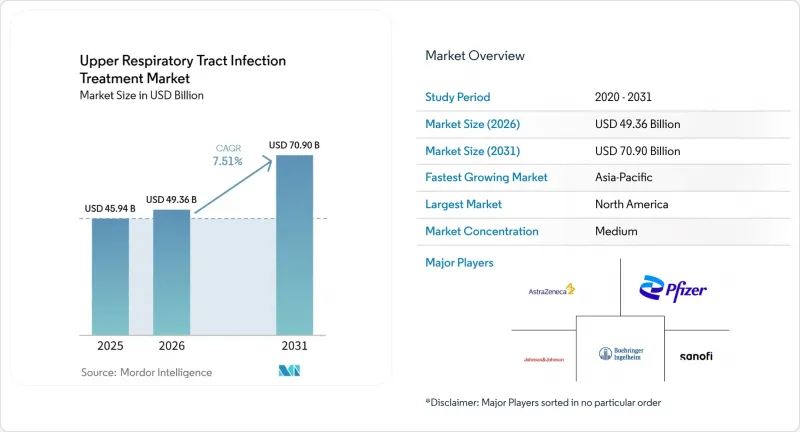
Mordor Intelligence에 의하면, 상기도 감염 치료 시장 규모는 2025년에 459억 4,000만 달러로 평가되었습니다. 2026년에 493억 6,000만 달러에 달하고, 2031년까지 709억 달러에 이를 것으로 예측되며, 2026년부터 2031년에 걸쳐 CAGR 7.51%로 성장할 전망입니다.
본 보고서는 감염증의 유형(세균성 감염증 등), 치료법(항생제 등), 투여 경로(경구 등), 연령대(소아 등), 유통 채널(소매 약국 등), 적응증(감기 등), 지역(북미, 유럽, 아시아태평양 등)별로 분류되어 있습니다. 시장 전망은 금액(달러) 기준으로 제시되어 있습니다.
세계의 상기도 감염 치료 시장 동향 및 인사이트
바이러스성 상기도 감염의 부담 증가
최근 몇 년간 동남아시아와 사하라 이남 아프리카에서 가장 높은 유병률이 기록되었습니다. 이 지역에서는 더 많은 소비자가 정식 약국 채널을 이용하고 있어, 치료 수요가 큰 기반이 되고 있습니다. 라이노바이러스는 감기와 관련된 상기도 감염의 약 50%를 유발하지만, 이를 특이적으로 표적으로 하는 승인된 항바이러스제는 존재하지 않습니다. 상기도 감염 치료 시장에는 이 흔한 질환의 원인에 대한 치료제를 기업이 개발할 수 있는 명확한 공백 영역이 존재합니다. 라이노바이러스 외에도 RSV, 인플루엔자, COVID-19가 유행함에 따라 증상 관리에 대한 수요는 기존의 겨울철 기간을 넘어 확대될 가능성이 있습니다.
증상 완화를 위한 일반의약품(OTC) 자가 관리의 확대
상기도 감염 치료 시장은 소비자가 일상적인 증상을 파악하고 의사의 진료를 받지 않고도 적절한 완화 조치를 취할 수 있다는 점에서 장점이 있습니다. 디지털 증상 체크기나 가정용 검사 키트 덕분에 증상이 나타난 후 제품을 구매하기까지 걸리는 시간이 단축되었습니다. 이러한 도구는 소비자가 자가 관리로 대처할 수 있는 경우와 임상적 평가가 필요한 경우를 판단하는 데 도움이 됩니다. 충혈 완화제, 항히스타민제, 진통제를 조합한 복합 제제는 여러 증상의 완화를 원하는 사람들에게 여전히 유용합니다. 제조업체는 보다 명확한 표시와 연령에 맞는 제형을 채택함으로써, 소비자가 충분한 정보를 바탕으로 구매 결정을 내릴 수 있도록 지원할 수 있습니다. 상기도 감염 치료 시장은 소매점에서의 접근성 확대로도 혜택을 보고 있지만, 일반의약품(OTC)은 임상 지침 및 안전 요건을 계속 준수해야 합니다.
항생제 내성과 적정 사용의 제약
항생제 내성으로 인해 상기도 감염 치료에서 광범위 항생제의 역할은 제한되고 있습니다. 세계보건기구(WHO) 보고서에 따르면, 2023년부터 2024년에 걸쳐 전 세계적으로 검사를 통해 확인된 세균 감염증 6건 중 1건이 1차 선택 항생제에 내성을 보였습니다. WHO의 동남아시아 지역 및 동지중해 지역에서는 그 비율이 감염증 3건 중 1건에 달했습니다. 이로 인해 감염 부담이 크고 처방전 사용이 증가하고 있는 지역에서 항생제의 임상적 유용성이 제한되고 있습니다. 또한 신중한 진단의 필요성이 커지는 한편, 임상적으로 적절한 경우에는 항생제 이외의 대안을 모색해야 할 필요성도 높아지고 있습니다. 상기도 감염 치료 시장은 증상 관리를 개선하는 동시에 책임감 있는 항생제 사용을 지원하는 치료법으로 이에 대응해야 합니다.
부문별 분석
2025년, 바이러스성 감염증은 상기도 감염 치료 시장의 51.81%를 차지했으며, 2031년까지 연평균 성장률(CAGR) 8.62%를 나타낼 것으로 예측됩니다. 이 점유율은 라이노바이러스, RSV, 인플루엔자에 의한 감염증 발생 빈도가 높음을 반영합니다. 바이러스성 감염증에 대한 상기도 감염 치료 시장 규모는 증상 완화에 대한 수요와 항바이러스제 개발에 의해 뒷받침되고 있습니다. 세균성 감염증은 세균성 부비동염이나 연쇄상구균성 인두염 등의 질환에 항생제가 사용되기 때문에 여전히 중요한 위치를 차지하고 있습니다. 진균성 감염증 시장 규모는 비교적 작으며, 보다 전문적인 임상적 요구를 충족시키고 있습니다.
일반적인 감기의 약 50%에 관여하는 것으로 추정되는 라이노바이러스에 대해, 이를 특이적으로 표적으로 하는 승인된 치료법은 존재하지 않습니다. 이러한 공백은 항바이러스제 개발 기업들에게 명확한 연구 개발 분야를 제공합니다. 또한, 바이러스성 치료 접근법은 겹치는 호흡기 바이러스 유행기에도 대응해야 합니다. 감염증은 발병 초기 단계에서 임상적으로 유사할 수 있으므로, 치료법 선택에 앞서 적절한 진단을 내리는 것이 중요합니다. 명확하게 정의된 바이러스성 적응증에 대한 치료제를 개발하는 기업은 기존 제품 카테고리뿐만 아니라 의료적 수요 측면에서도 경쟁력을 발휘할 수 있습니다. 상기도 감염 치료 시장은 여전히 항바이러스제의 발전, 진단의 명확화, 그리고 대증 요법에 대한 접근성에 의존하고 있습니다.
2025년에는 항생제가 매출의 30.90%를 차지했습니다. 항생제는 세균성 부비동염, 연쇄상구균성 인두염 및 혼합 원인 치료 프로토콜에서 여전히 중요한 역할을 하고 있습니다. 또한, 항생제의 사용은 감염이 바이러스성일 가능성이 높은 경우 치료를 자제하도록 권장하는 적정 사용 프로그램의 대상이 되고 있습니다. NSAID(비스테로이드성 항염증제)는 2031년까지 연평균 성장률(CAGR) 9.59%를 나타낼 것으로 예측됩니다. NSAID는 발열과 염증을 완화하는 약물로, 바이러스성 상기도 감염의 초기 대응 수단으로서 주목받고 있습니다. 항바이러스제, 항히스타민제, 진해제, 거담제 및 충혈 완화제는 각각 서로 다른 증상과 치료 요구를 충족시킵니다. 이러한 광범위한 치료법 덕분에 상기도 감염 치료 시장은 다양한 증례와 환자의 요구에 부응할 수 있게 되었습니다.
2025년에 발표된 3상 임상시험에서는 급성 상기도 감염증에 대한 해열 효과 측면에서 펠비프로펜이 록소프로펜에 뒤지지 않는 것으로 나타났습니다. 동 시험에서는 두 치료법 모두 동등한 안전성 프로파일이 보고되었습니다. 이러한 결과는 속효성을 갖춘 NSAID 제제에 대한 추가 연구를 뒷받침하는 것입니다. 제약 기업은 또한 적응증, 안전성 프로파일, 환자의 연령에 따라 제품을 차별화해야 합니다. 세균성 질환이 명확하게 확인된 경우, 항생제 개발 기업에게는 여전히 기회가 남아 있습니다. 따라서 상기도 감염 치료 업계는 책임감 있는 대증 요법을 더욱 중시하는 치료 조합으로 전환되고 있습니다.
지역별 분석
2025년, 북미는 매출의 38.70%를 차지하며 상기도 감염 치료 시장에서 가장 규모가 큰 지역 점유율을 기록했습니다. 이 지역에서는 일반의약품(OTC) 이용률이 높고, 소매 약국 네트워크가 확립되어 있으며, 브랜드 의약품 및 제네릭 의약품에 대한 접근성도 광범위합니다. 또한, 원격의료 도입으로 일상적인 호흡기 증상 평가도 지원되고 있습니다. 항균제 적정 사용 노력에 따라 치료법 선택이 변화하고 있으며, 피할 수 있는 항균제 사용이 감소하고 있습니다. 이에 따라 임상적으로 적절한 경우, 증상 완화 제품이나 항바이러스제에 대한 수요가 발생할 여지가 생기고 있습니다.
유럽에서는 각국 시장마다 보험 급여 제도나 일반의약품(OTC) 규제가 달라 처방 환경이 다양합니다. 독일에서는 제네릭 의약품의 기반이 탄탄한 반면, 프랑스에서는 감기약에 대한 일반의약품 지출이 두드러집니다. 영국 국민보건서비스(NHS)의 항생제 적정 사용 프로그램 또한 처방 행태에 영향을 미치고 있습니다. GSK가 ‘알렉스비’의 적응증을 18세 이상 성인으로 확대해 달라고 유럽의약품청(EMA)에 제출한 신청은 2025년 6월에 접수되었습니다. 유럽의 상기도 감염 치료 시장 규모는 성숙한 약국 접근성과 제품 안전성에 대한 지속적인 감시에 따라 좌우됩니다.
아시아태평양은 2031년까지 연평균 성장률(CAGR) 11.26%를 나타낼 것으로 예측되며, 이는 지역별 성장률 중 가장 높은 수치입니다. 이러한 성장은 인구 규모, 정식 의약품 유통 채널에 대한 접근성 향상, 그리고 현지 기업과 다국적 기업 공급업체가 혼재되어 있음을 반영합니다. Cipla, Sun Pharma, Dr. Reddy's 등 인도의 제약사들은 호흡기 계열 제네릭 의약품을 통해 가격에 민감한 수요를 충족시키고 있습니다. 중국과 아랍에미리트(UAE)의 소아용 지침 또한 표준화된 치료 경로의 지역적 중요성이 확대되고 있음을 보여줍니다. 중동 및 아프리카는 비교적 작은 기반에서 성장하고 있으며, GCC(걸프협력회의)의 소아용 지침과 남아프리카공화국의 민간 및 공공 부문에서 수요가 시장 활동을 뒷받침하고 있습니다. 남미는 브라질과 아르헨티나가 주도하고 있으나, 환율 변동과 의료비 지출 제약으로 인해 단기적으로는 고부가가치 제품의 도입이 제한되고 있습니다.
기타 혜택 :
- 엑셀 형식 시장 예측(ME) 시트
- 3개월간 애널리스트 지원
자주 묻는 질문
목차
제1장 서론
제2장 조사 방법
제3장 개요
제4장 시장 구도
제5장 시장 규모 및 성장 예측
제6장 경쟁 구도
제7장 시장 기회 및 향후 전망
KTH 26.09.02According to Mordor Intelligence, the upper respiratory tract infection treatment market size is projected to be USD 45.94 billion in 2025, USD 49.36 billion in 2026, and reach USD 70.90 billion by 2031, growing at a CAGR of 7.51% from 2026 to 2031.
This report is Segmented by Infection Type (Bacterial Infections, and More), Treatment Type (Antibiotics, and More), Route of Administration (Oral, and More), Age Group (Pediatric, and More), Distribution Channel (Retail Pharmacies, and More), Indication (Common Cold, and More), and Geography (North America, Europe, Asia-Pacific, and More). Market Forecasts are Provided in Terms of Value (USD).
Global Upper Respiratory Tract Infection Treatment Market Trends and Insights
Rising Burden of Viral Upper Respiratory Infections
South-East Asia and sub-Saharan Africa recorded the highest incidence rates in the recent past. These regions provide a large base of treatment need as more consumers use formal pharmacy channels. Rhinoviruses cause an estimated 50% of cold-related upper respiratory infections, yet no licensed antiviral specifically targets them. The upper respiratory tract infection treatment market has a clear gap where companies can develop treatments for this common cause of illness. The circulation of RSV, influenza, and COVID-19 alongside rhinoviruses can extend demand for symptom management beyond the traditional winter period.
OTC Self-Care Expansion for Symptom Relief
The upper respiratory tract infection treatment market benefits consumers can identify routine symptoms and obtain suitable relief without a physician visit. Digital symptom checkers and at-home tests have shortened the path between symptom onset and product purchase. These tools can help consumers decide when self-care is suitable and when clinical assessment is needed. Combination products that include decongestants, antihistamines, and analgesics remain relevant for people seeking relief from several symptoms. Manufacturers can use clearer labels and age-appropriate formats to support informed purchase decisions. The upper respiratory tract infection treatment market also gains from wider retail availability, although OTC products must remain aligned with clinical guidance and safety requirements.
Antibiotic Resistance and Stewardship Constraints
Antibiotic resistance limits the role of broad-spectrum antibiotics in the treatment of upper respiratory tract infections. The World Health Organization reported that 1 in 6 laboratory-confirmed bacterial infections globally in 2023-2024 were resistant to first-line antibiotics. The rate reached 1 in 3 infections in the WHO South-East Asia and Eastern Mediterranean Regions. This limits the clinical utility of antibiotics in regions with substantial infection burden and growing prescription use. It also increases the need for careful diagnosis and for non-antibiotic options where they are clinically appropriate. The upper respiratory tract infection treatment market must respond with therapies that improve symptom care while supporting responsible antimicrobial use.
Other drivers and restraints analyzed in the detailed report include:
- Stewardship Shift Away from Unnecessary Antibiotic Use
- Faster Reformulation Cycles for Nonprescription Cold and Flu Products
- Self-Limiting Disease Nature Limits Premium Rx Uptake
For complete list of drivers and restraints, kindly check the Table Of Contents.
Segment Analysis
Viral infections held 51.81% of the upper respiratory tract infection treatment market in 2025 and are forecast to grow at 8.62% CAGR through 2031. Their position reflects the high frequency of rhinovirus, RSV, and influenza infections. The upper respiratory tract infection treatment market size for viral infections is supported by demand for symptom relief as well as antiviral development. Bacterial infections remain important because antibiotics are used for conditions such as bacterial sinusitis and streptococcal pharyngitis. Fungal infections are smaller and serve a more specialized clinical need.
No licensed therapy specifically targets rhinovirus despite its role in an estimated 50% of common colds. This gap gives antiviral developers a defined area for research and development. Viral treatment approaches must also respond to overlapping respiratory virus seasons. Infections may be clinically similar at the onset, which makes an appropriate diagnosis important before treatment selection. Companies that develop therapies for well-defined viral indications can compete on medical need rather than only on established product categories. The upper respiratory tract infection treatment market remains dependent on antiviral progress, diagnostic clarity, and access to symptomatic care.
Antibiotics held 30.90% of revenue in 2025. Antibiotics retain a substantial role in bacterial sinusitis, streptococcal pharyngitis, and mixed-etiology protocols. Their use is also subject to stewardship programs that discourage treatment where infection is likely viral. NSAIDs are forecast to grow at 9.59% CAGR through 2031. NSAIDs address fever and inflammation and are gaining attention as an initial response for viral upper respiratory tract infections. Antivirals, antihistamines, cough suppressants, expectorants, and decongestants address different symptoms and care requirements. This range of treatments allows the upper respiratory tract infection treatment market to serve varied episodes and patient needs.
A Phase 3 trial published in 2025 found that pelubiprofen was non-inferior to loxoprofen for fever reduction in acute upper respiratory tract infections. The trial reported a comparable safety profile for the 2 treatments. These results support further work on NSAID formulations that offer a rapid onset. Treatment makers must also distinguish products by indication, safety profile, and patient age. Antibiotic developers retain opportunities when bacterial disease is clearly identified. The upper respiratory tract infection treatment industry is therefore moving toward a treatment mix that places more weight on responsible symptomatic care.
Complete Report Scope:
- By Infection Type
- Bacterial Infections
- Viral Infections
- Fungal Infections
- By Treatment Type
- Antibiotics
- Antivirals
- Antifungals
- Decongestants
- Expectorants
- Antihistamines
- Cough Suppressants
- NSAIDs
- By Route of Administration
- Oral
- Intravenous
- Inhalation
- Topical
- By Age Group
- Pediatric
- Adult
- Geriatric
- By Distribution Channel
- Retail Pharmacies
- Hospital Pharmacies
- Online Pharmacies
- By Indication
- Common Cold
- Sinusitis
- Pharyngitis
- Laryngitis
- Other Indications
- By Geography
- North America
- United States
- Canada
- Mexico
- Europe
- Germany
- United Kingdom
- France
- Italy
- Spain
- Rest of Europe
- Asia-Pacific
- China
- Japan
- India
- Australia
- South Korea
- Rest of Asia-Pacific
- Middle East and Africa
- GCC
- South Africa
- Rest of Middle East and Africa
- South America
- Brazil
- Argentina
- Rest of South America
- North America
Geography Analysis
North America held 38.70% of revenue in 2025, the largest regional share in the upper respiratory tract infection treatment market. The region has high OTC use, established retail pharmacy networks, and broad access to branded and generic treatments. Telehealth adoption can also support the assessment of routine respiratory symptoms. Stewardship efforts are changing treatment selection and reducing avoidable antibiotic use. This creates room for symptom relief products and antivirals when clinically appropriate.
Europe has a varied prescription environment because reimbursement and OTC rules differ across national markets. Germany has a strong generic medicine base, while France has meaningful spending on OTC cold remedies. The United Kingdom's NHS stewardship programs also shape prescribing behavior. GSK's European application to expand Arexvy to adults aged 18 years and older was accepted by the EMA in June 2025. The upper respiratory tract infection treatment market size in Europe is influenced by mature pharmacy access and continuing oversight of product safety.
Asia-Pacific is forecast to grow at 11.26% CAGR through 2031, the fastest regional rate. This expansion reflects population scale, higher access to formal pharmaceutical channels, and a mix of local and multinational suppliers. India's manufacturers, including Cipla, Sun Pharma, and Dr. Reddy's, serve price-sensitive demand with respiratory generics. Pediatric guidelines in China and the UAE also show the wider regional importance of standardized care pathways. The Middle East and Africa grow from a smaller base, with GCC pediatric guidance and South African private and public demand supporting activity. South America is supported by Brazil and Argentina, though currency volatility and healthcare spending constraints limit near-term adoption of premium products.
- Abbott Laboratories
- Abbvie
- Alcon
- AstraZeneca
- Bayer
- Boehringer Ingelheim
- Chiesi Farmaceutici
- Cipla
- Dr. Reddy's Laboratories Ltd.
- GlaxoSmithKline
- Johnson & Johnson
- Merck
- Mylan
- Novartis
- Pfizer
- Roche
- Sanofi
- Sun Pharmaceuticals Industries
- Teva Pharmaceutical Industries
- Viatris
Additional Benefits:
- The market estimate (ME) sheet in Excel format
- 3 months of analyst support
TABLE OF CONTENTS
1 Introduction
- 1.1 Study Assumptions & Market Definition
- 1.2 Scope of the Study
2 Research Methodology
3 Executive Summary
4 Market Landscape
- 4.1 Market Overview
- 4.2 Market Drivers
- 4.2.1 Rising Burden of Viral Upper Respiratory Infections
- 4.2.2 OTC Self-Care Expansion for Symptom Relief
- 4.2.3 Stewardship Shift Away from Unnecessary Antibiotic Use
- 4.2.4 Faster Reformulation Cycles for Nonprescription Cold and Flu Products
- 4.2.5 Telemedicine-Linked Prescribing for Seasonal URI Episodes
- 4.2.6 Pediatric Care Standardization in School-Age Respiratory Outbreaks
- 4.3 Market Restraints
- 4.3.1 Antibiotic Resistance and Stewardship Constraints
- 4.3.2 Weak Efficacy Perception for Some OTC Decongestants
- 4.3.3 Self-Limiting Disease Nature Limits Premium Rx Uptake
- 4.3.4 Regulatory Scrutiny on Ingredient Safety and Label Claims
- 4.4 Value-Chain Analysis
- 4.5 Regulatory Landscape
- 4.6 Technological Outlook
- 4.7 Porter's Five Forces
- 4.7.1 Threat of New Entrants
- 4.7.2 Bargaining Power of Suppliers
- 4.7.3 Bargaining Power of Buyers
- 4.7.4 Threat of Substitutes
- 4.7.5 Competitive Rivalry
5 Market Size & Growth Forecasts (Value in USD)
- 5.1 By Infection Type
- 5.1.1 Bacterial Infections
- 5.1.2 Viral Infections
- 5.1.3 Fungal Infections
- 5.2 By Treatment Type
- 5.2.1 Antibiotics
- 5.2.2 Antivirals
- 5.2.3 Antifungals
- 5.2.4 Decongestants
- 5.2.5 Expectorants
- 5.2.6 Antihistamines
- 5.2.7 Cough Suppressants
- 5.2.8 NSAIDs
- 5.3 By Route of Administration
- 5.3.1 Oral
- 5.3.2 Intravenous
- 5.3.3 Inhalation
- 5.3.4 Topical
- 5.4 By Age Group
- 5.4.1 Pediatric
- 5.4.2 Adult
- 5.4.3 Geriatric
- 5.5 By Distribution Channel
- 5.5.1 Retail Pharmacies
- 5.5.2 Hospital Pharmacies
- 5.5.3 Online Pharmacies
- 5.6 By Indication
- 5.6.1 Common Cold
- 5.6.2 Sinusitis
- 5.6.3 Pharyngitis
- 5.6.4 Laryngitis
- 5.6.5 Other Indications
- 5.7 By Geography
- 5.7.1 North America
- 5.7.1.1 United States
- 5.7.1.2 Canada
- 5.7.1.3 Mexico
- 5.7.2 Europe
- 5.7.2.1 Germany
- 5.7.2.2 United Kingdom
- 5.7.2.3 France
- 5.7.2.4 Italy
- 5.7.2.5 Spain
- 5.7.2.6 Rest of Europe
- 5.7.3 Asia-Pacific
- 5.7.3.1 China
- 5.7.3.2 Japan
- 5.7.3.3 India
- 5.7.3.4 Australia
- 5.7.3.5 South Korea
- 5.7.3.6 Rest of Asia-Pacific
- 5.7.4 Middle East and Africa
- 5.7.4.1 GCC
- 5.7.4.2 South Africa
- 5.7.4.3 Rest of Middle East and Africa
- 5.7.5 South America
- 5.7.5.1 Brazil
- 5.7.5.2 Argentina
- 5.7.5.3 Rest of South America
- 5.7.1 North America
6 Competitive Landscape
- 6.1 Market Concentration
- 6.2 Market Share Analysis
- 6.3 Company Profiles {(includes Global level Overview, Market level overview, Core Segments, Financials as available, Strategic Information, Market Rank/Share for key companies, Products & Services, and Recent Developments)}
- 6.3.1 Abbott Laboratories
- 6.3.2 AbbVie Inc.
- 6.3.3 Alcon Inc.
- 6.3.4 AstraZeneca plc
- 6.3.5 Bayer AG
- 6.3.6 Boehringer Ingelheim International GmbH
- 6.3.7 Chiesi Farmaceutici S.p.A.
- 6.3.8 Cipla Limited
- 6.3.9 Dr. Reddy's Laboratories Ltd.
- 6.3.10 GlaxoSmithKline plc
- 6.3.11 Johnson and Johnson
- 6.3.12 Merck and Co., Inc.
- 6.3.13 Mylan N.V.
- 6.3.14 Novartis AG
- 6.3.15 Pfizer Inc.
- 6.3.16 Roche Holding AG
- 6.3.17 Sanofi
- 6.3.18 Sun Pharmaceutical Industries Ltd.
- 6.3.19 Teva Pharmaceutical Industries Ltd.
- 6.3.20 Viatris Inc.
7 Market Opportunities & Future Outlook
- 7.1 White-space & unmet-need assessment