

|
시장보고서
상품코드
2118132
아프리카의 유기 퇴비 시장 : 시장 점유율 분석, 업계 동향 및 통계, 성장 예측(2026-2031년)Africa Organic Compost - Market Share Analysis, Industry Trends & Statistics, Growth Forecasts (2026 - 2031) |
||||||
 Mordor Intelligence
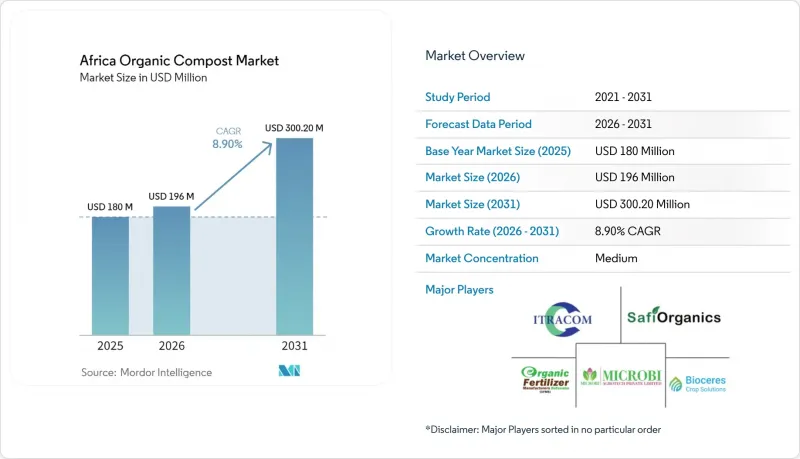
Mordor Intelligence에 의하면, 아프리카의 유기 퇴비 시장 규모는 2025년에 1억 8,000만 달러로 평가되었고, 2026년 1억 9,600만 달러에서 2031년까지 3억 20만 달러로 성장할 전망이며, 2026-2031년 CAGR 8.90%를 나타낼 것으로 예측됩니다.
본 보고서는 제품 유형별(윈드로우 퇴비, 통기식 정지형 퇴비, 기타), 원료별(도시 유기 폐기물, 농업 잔재물, 기타), 형태별(과립형 퇴비, 분말형 퇴비, 기타), 용도별(밭작물, 과일 및 채소, 기타), 지역별(남아프리카, 케냐, 기타)로 분류되어 있습니다. 시장 전망은 금액(달러) 기준으로 제시되어 있습니다.
아프리카의 유기 퇴비 시장 동향 및 인사이트
집약적 농업 지역에서의 토양 유기물 감소 심화
아프리카 집약 농업 지역에서의 토양 유기물 감소는 해당 지역의 유기 퇴비 시장 성장을 견인하는 중요한 요인이 되고 있습니다. 국제농업개발기금(IFAD)에 따르면, 2024년에는 아프리카 경작지의 약 75-80%가 열화될 것으로 예측되며, 토양은 1헥타르당 연간 30-60kg의 필수 영양소를 잃을 것으로 예측됩니다. 이러한 지속적인 영양분 손실은 토양의 비옥도, 보습력, 생물 활성을 저하시켜 궁극적으로 장기적인 작물 생산성에 부정적인 영향을 미칩니다. 그 결과, 농업 종사자들은 토양 유기물을 회복하고, 토양 구조를 개선하며, 기후 변화와 관련된 생산상의 문제에 대한 회복력을 높이기 위해 유기 퇴비에 대한 의존도를 높이고 있으며, 이는 시장의 지속적인 성장에 기여하고 있습니다.
농업적 수확량 회복 증거에 뒷받침된 퇴비를 이용한 토양 복원
농업학적 조사에 따르면, 퇴비를 이용한 토양 재생이 생산성에 측정 가능한 이점을 가져다주는 것으로 밝혀졌으며, 이는 아프리카 유기 퇴비 시장의 성장을 견인하고 있습니다. 『Compost Science and Utilization』지에 게재된 Teka 등의 연구 “에티오피아 건조 지대에서 지렁이 퇴비가 토양 비옥도와 작물 생산성에 미치는 영향”(2024년)에서는 10t/ha의 지렁이 퇴비를 시비한 결과, 처리하지 않은 대조 구역에 비해 곡물 수확량이 1.5배 증가한 것으로 보고되었습니다. 또한 토양 유기탄소, 총질소, 이용 가능 인의 함량도 향상되었습니다. 이처럼 과학적으로 입증된 수확량과 토양 건전성의 향상은 아프리카 농업 시스템에서 유기 퇴비의 보다 광범위한 채택을 촉진하고 있습니다.
원료의 오염과 퇴비 품질의 편차
원료의 오염과 퇴비 품질의 편차는 아프리카 유기 퇴비 시장의 주요 과제이며, 특히 유기 폐기물이 혼합된 도시 폐기물에서 조달되는 경우 두드러집니다. 2025년 『Frontiers in Sustainable Food Systems』 저널에 게재된 연구에 따르면, 불충분한 발생원별 분리 수거와 폐기물 관리, 위생, 농업 관련 기관 간의 협력 부족이 아프리카 국가들의 고품질 퇴비 생산을 저해하고 있는 것으로 지적되었습니다. 오염된 원료에는 플라스틱, 병원체 및 기타 불순물이 혼입되어 있을 가능성이 있으며, 이로 인해 퇴비의 효과가 저하되고 품질 기준 준수가 어려워집니다. 이러한 문제들은 처리 비용 상승, 구매자의 신뢰 하락, 지역 전체에서의 퇴비 제품 상업적 보급 제한으로 이어지고 있습니다.
부문 분석
2025년, 아프리카 유기 퇴비 시장에서 윈드로우 퇴비가 38.0%로 가장 큰 점유율을 차지했습니다. 이 방법은 광범위한 유기 원료 처리에 대응할 수 있는 적응성과 다양한 운영 규모에 적합하다는 점 때문에 여전히 주류를 이루고 있습니다. 윈드로우식 퇴비화는 비교적 단순한 인프라만으로도 충분하며, 지자체, 농업, 상업용 퇴비화 사업에서 활용될 수 있어 널리 채택되고 있습니다. 대량의 유기물을 처리할 수 있는 능력 덕분에 여러 최종 용도 부문에서 널리 활용되고 있습니다. 이러한 특성으로 인해 윈드로우 퇴비는 아프리카의 많은 퇴비화 시설에서 여전히 선호되는 제품 유형으로서의 위상을 유지하고 있습니다.
지렁이 퇴비는 2026-2031년 연평균 성장률(CAGR) 13.2%라는 가장 높은 성장률을 보일 것으로 예측됩니다. 이러한 성장은 영양분 이용 효율과 생물 활성을 높이는 부가가치가 높은 유기질 토양 개량제에 대한 수요 증가에 힘입은 것입니다. 지렁이 퇴비는 토양 구조 개선, 영양분 이용 효율 향상, 지속 가능한 재배 방식에 주력하는 생산자들 사이에서 지지를 얻고 있습니다. 이 제품은 토양 건강 관리가 점점 더 중요시되고 있는 집약형 농업 시스템에서 특히 매력적입니다. 재생형 농업 실천에 대한 인식 제고와 고품질 유기 자재에 대한 수요 증가로 인해, 아프리카 농업 시장에서 지렁이 퇴비의 채택이 더욱 촉진될 것으로 예측됩니다.
2025년에는 도시 지역의 유기성 폐기물이 33.0%로 가장 큰 비중을 차지했습니다. 이러한 1위 기록은 도시 지역에서 지속적으로 발생하는 유기성 폐기물과, 이를 퇴비 생산을 위한 대규모 원료로 활용할 수 있다는 점에 기인합니다. 도시 지역의 유기성 폐기물은 퇴비 생산자에게 농업용 자재로 가공할 수 있는 대량의 생분해성 물질을 제공합니다. 폐기물 재활용, 매립지 감소, 자원 회수에 대한 관심이 높아지고 있는 것은 퇴비 제조에서 도시 폐기물 흐름의 중요성을 더욱 강화하고 있습니다. 이러한 요인들로 인해 시장 내 주요 원료 범주로서 도시 폐기물의 우위는 앞으로도 유지될 전망입니다.
농업 잔여물은 2026-2031년 아프리카 유기 퇴비 시장 규모에서 11.1%라는 가장 높은 연평균 성장률(CAGR)을 나타낼 전망입니다. 생산자들이 농업 지역 근처에서 쉽게 구할 수 있는 대체 원료를 모색함에 따라 농업 잔여물의 중요성은 점점 더 커지고 있습니다. 작물 잔여물은 폐기 처리 문제를 해결하면서 토양 개량 제품으로 전환함으로써 부가가치 창출의 기회를 제공합니다. 또한, 그 이용 확대는 유기물을 생산 시스템에 재도입함으로써 순환형 농업의 실천을 촉진합니다. 지속 가능한 자원 이용에 대한 관심이 높아지는 가운데, 농업 잔여물은 해당 지역의 향후 퇴비 생산에서 더욱 중요한 역할을 할 것으로 예측됩니다.
기타 혜택
- 엑셀 형식 시장 예측(ME) 시트
- 3개월간 애널리스트의 지원
자주 묻는 질문
목차
제1장 서론
제2장 조사 방법
제3장 주요 요약
제4장 시장 구도
제5장 시장 규모 및 성장 예측
제6장 경쟁 구도
제7장 시장 기회 및 향후 전망
AJY 26.09.03According to Mordor Intelligence, the Africa organic compost market size was valued at USD 180.0 million in 2025 and is projected to grow from USD 196.0 million in 2026 to USD 300.20 million by 2031, registering a CAGR of 8.90% during 2026-2031.
This report is Segmented by Product Type (Windrow Compost, Aerated Static Pile Compost, and More), by Feedstock Source (Municipal Organic Waste, Agricultural Residues, and More), by Form (Granular Compost, Powdered Compost, and More), by Application (Row Crops, Fruits and Vegetables, and More), and by Geography (South Africa, Kenya, and More). The Market Forecasts are Provided in Terms of Value (USD).
Africa Organic Compost Market Trends and Insights
Rising Soil Organic Matter Depletion Across Intensively Farmed Zones
The depletion of soil organic matter in Africa's intensively cultivated agricultural regions is a significant factor driving the growth of the organic compost market in the region. According to the International Fund for Agricultural Development (IFAD), in 2024, approximately 75-80% of Africa's cultivated land is projected to be degraded, with soils losing 30-60 kg of essential nutrients per hectare annually. This ongoing nutrient loss diminishes soil fertility, water retention capacity, and biological activity, ultimately impacting long-term crop productivity. Consequently, farmers are increasingly turning to organic compost to restore soil organic matter, improve soil structure, and enhance resilience to climate-related production challenges, thereby contributing to the market's sustained growth.
Compost-Based Soil Restoration Supported by Agronomic Yield Recovery Evidence
Compost-based soil restoration is gaining traction as agronomic studies highlight its measurable productivity benefits, driving growth in the African organic compost market. A study titled "Effect of Vermicompost on Soil Fertility and Crop Productivity in the Drylands of Ethiopia" by Teka et al. (2024), published in Compost Science and Utilization, reported that applying 10 t ha-1 of vermicompost led to a 1.5-fold increase in grain yield compared to untreated control plots. Additionally, it enhanced soil organic carbon, total nitrogen, and available phosphorus levels. These scientifically validated improvements in yield and soil health are promoting the broader adoption of organic compost in African farming systems.
Feedstock Contamination and Inconsistent Compost Quality
Feedstock contamination and inconsistent compost quality are key challenges in the Africa organic compost market, especially when organic waste is sourced from mixed municipal streams. A 2025 study published in Frontiers in Sustainable Food Systems highlights that inadequate source segregation and poor coordination among waste management, sanitation, and agricultural institutions hinder the production of high-quality compost in African countries. Contaminated feedstocks may introduce plastics, pathogens, and other impurities, reducing compost effectiveness and complicating compliance with quality standards. These issues lead to higher processing costs, diminished buyer confidence, and limited commercial adoption of compost products across the region.
Other drivers and restraints analyzed in the detailed report include:
- Municipal Organic Waste Diversion Policies Creating Reliable Feedstock Streams
- Smallholder Input Affordability Versus Imported Synthetic Fertilizer Volatility
- Weak Collection, Sorting, and Logistics Infrastructure
For complete list of drivers and restraints, kindly check the Table Of Contents.
Segment Analysis
Windrow accounted for the largest at 38.0% of the Africa Organic Compost Market share in 2025. This method remains dominant due to its adaptability for processing a wide range of organic feedstocks and its suitability for various operational scales. Windrow composting is widely adopted as it requires relatively simple infrastructure and can be utilized in municipal, agricultural, and commercial composting operations. Its ability to handle large volumes of organic material makes it widely used across multiple end-use sectors. These attributes continue to position windrow compost as the preferred product type in many African composting facilities.
Vermicompost is projected to grow at the fastest CAGR of 13.2% from 2026 to 2031. This growth is driven by increasing demand for value-added organic soil amendments that enhance nutrient availability and biological activity. Vermicompost is gaining traction among growers focused on improving soil structure, nutrient efficiency, and sustainable cultivation practices. The product is particularly appealing for intensive agricultural systems where soil health management is a growing priority. Rising awareness of regenerative farming practices and the increasing demand for premium organic inputs are projected to further drive the adoption of vermicompost in African agricultural markets.
Municipal organic waste accounted for the largest share, at 33.0%, in 2025. This leading position is attributed to the consistent generation of organic waste from urban areas and its availability as a large-scale feedstock for compost production. Municipal organic waste provides compost producers with a significant amount of biodegradable material that can be processed into agricultural inputs. The growing focus on waste diversion, landfill reduction, and resource recovery further reinforces the importance of municipal waste streams in compost manufacturing. These factors continue to support its dominance as the primary feedstock category in the market.
Agricultural residues are forecast to grow at the fastest CAGR of 11.1% for the Africa organic compost market size from 2026 to 2031. Agricultural residues are becoming increasingly significant as producers explore alternative feedstocks that are readily available near farming regions. Crop residues present opportunities for value creation by converting them into soil-enhancing products while addressing disposal challenges. Their expanding use also promotes circular agricultural practices by reintegrating organic matter into production systems. With rising interest in sustainable resource utilization, agricultural residues are projected to play a more prominent role in future compost production across the region.
Complete Report Scope:
- By Product Type
- Windrow Compost
- Aerated Static Pile Compost
- In-Vessel Compost
- Vermicompost
- Bokashi Compost
- By Feedstock Source
- Municipal Organic Waste
- Agricultural Residues
- Animal Manure
- Food Processing Waste
- Green Waste
- By Form
- Granular Compost
- Powdered Compost
- Pelletized Compost
- Liquid Compost
- By Application
- Row Crops
- Horticulture
- Fruits and Vegetables
- Turf and Landscaping
- Nursery and Greenhouse
- By Geography
- South Africa
- Kenya
- Nigeria
- Morocco
- Egypt
- Ethopia
- Rest of Africa
List of Companies Covered in this Report:
- ITRACOM Holdings Ltd.
- Safi Organics Limited
- Organic Fertilizer Manufacturers Botswana (Proprietary) Limited
- Micro Biological Fertilizer International Limited
- Hello Nature International S.r.l. (Italpollina S.p.A.)
- T. Stanes and Company Limited
- Bioceres Crop Solutions Corp. (Bioceres Group Limited)
- Miegos Fertilizers (Outgreens Group)
- Integrated Recycling and Compost Plant Limited
- PolyOrganics (Pty) Ltd.
- Agri Organics (Pty) Ltd.
- Reliance Compost (Pty) Ltd.
Additional Benefits:
- The market estimate (ME) sheet in Excel format
- 3 months of analyst support
TABLE OF CONTENTS
1 Introduction
- 1.1 Study Assumptions and Market Definition
- 1.2 Scope of the Study
2 Research Methodology
3 Executive Summary
4 Market Landscape
- 4.1 Market Overview
- 4.2 Market Drivers
- 4.2.1 Rising soil organic matter depletion across intensively farmed zones
- 4.2.2 Compost-based soil restoration supported by agronomic yield recovery evidence
- 4.2.3 Municipal organic waste diversion policies creating reliable feedstock streams
- 4.2.4 Smallholder input affordability versus imported synthetic fertilizer volatility
- 4.2.5 Expansion of certified organic horticulture and export crop value chains
- 4.2.6 Carbon soil health and circular economy financing for compost producers
- 4.3 Market Restraints
- 4.3.1 Feedstock contamination and inconsistent compost quality
- 4.3.2 Weak collection, sorting, and logistics infrastructure
- 4.3.3 Long payback cycles for industrial composting assets
- 4.3.4 Farmer preference for fast-acting nutrient inputs in cash crop systems
- 4.4 Value Chain Analysis
- 4.5 Regulatory Landscape
- 4.6 Technological Outlook
- 4.7 Porter's Five Forces Analysis
- 4.7.1 Bargaining Power of Suppliers
- 4.7.2 Bargaining Power of Buyers
- 4.7.3 Threat of New Entrants
- 4.7.4 Threat of Substitutes
- 4.7.5 Intensity of Competitive Rivalry
5 Market Size and Growth Forecasts (Value)
- 5.1 By Product Type
- 5.1.1 Windrow Compost
- 5.1.2 Aerated Static Pile Compost
- 5.1.3 In-Vessel Compost
- 5.1.4 Vermicompost
- 5.1.5 Bokashi Compost
- 5.2 By Feedstock Source
- 5.2.1 Municipal Organic Waste
- 5.2.2 Agricultural Residues
- 5.2.3 Animal Manure
- 5.2.4 Food Processing Waste
- 5.2.5 Green Waste
- 5.3 By Form
- 5.3.1 Granular Compost
- 5.3.2 Powdered Compost
- 5.3.3 Pelletized Compost
- 5.3.4 Liquid Compost
- 5.4 By Application
- 5.4.1 Row Crops
- 5.4.2 Horticulture
- 5.4.3 Fruits and Vegetables
- 5.4.4 Turf and Landscaping
- 5.4.5 Nursery and Greenhouse
- 5.5 By Geography
- 5.5.1 South Africa
- 5.5.2 Kenya
- 5.5.3 Nigeria
- 5.5.4 Morocco
- 5.5.5 Egypt
- 5.5.6 Ethopia
- 5.5.7 Rest of Africa
6 Competitive Landscape
- 6.1 Market Concentration
- 6.2 Strategic Moves
- 6.3 Market Share Analysis
- 6.4 Company Profiles (Includes Global Level Overview, Market Level Overview, Core Segments, Financials as Available, Strategic Information, Market Rank/Share for Key Companies, Products and Services, and Recent Developments)
- 6.4.1 ITRACOM Holdings Ltd.
- 6.4.2 Safi Organics Limited
- 6.4.3 Organic Fertilizer Manufacturers Botswana (Proprietary) Limited
- 6.4.4 Micro Biological Fertilizer International Limited
- 6.4.5 Hello Nature International S.r.l. (Italpollina S.p.A.)
- 6.4.6 T. Stanes and Company Limited
- 6.4.7 Bioceres Crop Solutions Corp. (Bioceres Group Limited)
- 6.4.8 Miegos Fertilizers (Outgreens Group)
- 6.4.9 Integrated Recycling and Compost Plant Limited
- 6.4.10 PolyOrganics (Pty) Ltd.
- 6.4.11 Agri Organics (Pty) Ltd.
- 6.4.12 Reliance Compost (Pty) Ltd.


