|
시장보고서
상품코드
2119056
부직포 벽지 : 시장 점유율 분석, 산업 동향 및 통계 데이터, 성장 예측(2026-2031년)Non-Woven Wallpaper - Market Share Analysis, Industry Trends & Statistics, Growth Forecasts (2026 - 2031) |
||||||
 Mordor Intelligence
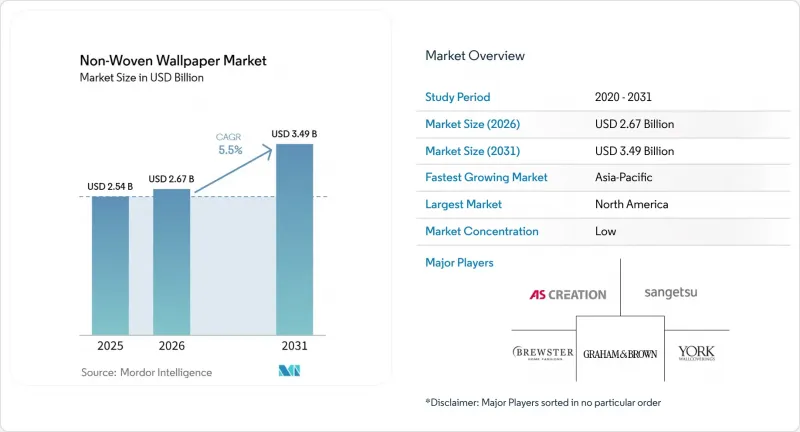
Mordor Intelligence에 의하면, 부직포 벽지 시장 규모는 2025년 25억 4,000만 달러로 평가되었습니다. 2026년에는 26억 7,000만 달러로 확대되어 2031년까지 34억 9,000만 달러에 이를 것으로 예측되며, 2026년부터 2031년까지 연평균 복합 성장률(CAGR)은 5.5%를 나타낼 전망입니다.
본 보고서는 제품 형태(프린트, 무지, 텍스처, 엠보스,메탈릭, 벽화/파노라마), 시공 유형(기존/자체 접착형), 용도(신축, 리모델링), 최종 사용자(주택, 상업시설), 유통 채널(B2C, B2B) 및 지역별로 분류되어 있습니다. 시장 전망은 금액(달러) 기준으로 제시되어 있습니다.
세계의 부직포 벽지 시장 동향과 고찰
‘페이스트 더 월(Paste the Wall)’ 시공법과 DIY의 보급
‘페이스트 더 월(벽에 풀 바르기)’ 방식의 벽지 시공은 벽지 사용 시 두 가지 일반적인 장벽, 즉 침수 시간과 바탕 손상 위험을 줄여주었습니다. 풀은 벽지가 아닌 벽에 직접 도포되므로 작업 시간이 단축되고, 경험이 부족한 시공자에게도 공정이 쉬워집니다. 치수 안정성으로 인해 기포나 수축이 억제되어 무늬 맞추기가 더 쉬워집니다. 임대 주택의 경우, 벽면을 적시지 않고 벽지를 제거할 수 있는 ‘드라이 스트리퍼블(건식 박리)’ 방식이 중요합니다. 또한, EMICODE 및 EN 15102의 성능 요건에 따라, 거주 중인 건물에 이러한 시스템을 선정할 때 설계자나 시공자는 더 높은 신뢰성을 얻을 수 있습니다. 이 인증 라벨은 소비자, 시공자, 건축가가 실내 공기 오염에 대해 최대한의 안전성을 제공하고, 최적의 건강 보호를 확보하며, 높은 환경 적합성을 갖춘 자재를 선택할 때의 지침이 됩니다.
리모델링 및 임대 주택에서의 박리형 벽지 수요
2025년에는 부직포 벽지 시장의 62%를 리모델링 및 개보수가 차지하여, 본 보고서에서 가장 큰 용도 분야가 되었습니다. 미국의 리모델링 및 수리 지출은 2027년 중반까지 연간 5,190억 달러에 달할 것으로 예측되며, 이는 인테리어 자재 수요에 대한 광범위한 기반이 됩니다. 미국에는 4,500만 호 이상의 임대 주택이 있어, 입주자가 이사할 때 떼어내어 제거할 수 있는 인테리어 자재에 대한 지속적인 수요를 창출하고 있습니다. 이러한 임대 주택 수요 기반은 자가 주택의 리모델링 지출에 비해 주택 구매 활동과의 직접적인 연관성이 약합니다. 따라서 떼어내고 다시 붙일 수 있는 부직포 벽지는 주택 거래가 둔화되더라도 지속되는 수요층을 충족시킬 수 있습니다. 임대 거주자들은 외관뿐만 아니라 간편한 시공과 깔끔하게 떼어낼 수 있는 점을 중요시하는 경우가 많기 때문에 부직포 벽지 시장도 이러한 동향의 혜택을 받고 있습니다.
범용 제품과 비교한 높은 비용
부직포 벽지는 1제곱미터당 범용 비닐 벽지에 비해 40-60%의 가격 프리미엄이 붙습니다. 이러한 가격 차이로 인해 남아시아, 동남아시아, 아프리카, 남미 등 가격에 민감한 지역에서의 보급이 제한되고 있습니다. 부직포 기재에는 셀룰로오스, 폴리에스터 및 결합제가 사용되며, 그 제조에는 비닐 캘린더 가공보다 더 엄격한 섬유 형성 관리가 필요합니다. 2회 도장 마감 페인트와 벽지를 비교하는 구매자는 디자인이나 내구성을 충분히 중시하지 않고, 높은 가격을 수용하지 않을 수 있습니다. 무지 롤 벽지의 경우에도 온라인으로 판매되며, 가격 경쟁이 치열한 주문형 디지털 프린트 비닐 제품과 직접적인 경쟁에 직면해 있습니다. 예측 기간 동안 중국의 수출용 생산 능력 확대로 인해 범용 기판과의 가격 차이가 축소될 가능성이 있습니다.
부문별 분석
2025년, 프린트 제품은 부직포 벽지 시장 점유율의 38%를 차지했으며, 이는 주거용 및 상업용 가격대에 걸친 폭넓은 디자인 라이브러리를 반영합니다. 벽화 및 파노라마 제품은 2026년부터 2031년까지 연평균 성장률(CAGR) 6.3%를 나타낼 것으로 예측되며, 이는 모든 제품 유형 중 가장 높은 성장률입니다. 디자이너들은 호텔 로비, 의료시설 및 고부가가치 주거 프로젝트에서 대형 단일 패널 벽화를 채택하고 있습니다. 무지 제품은 DIY 구매자를 위한 보급형 옵션이며, 도장 밑바탕으로도 계속 사용되고 있습니다. 텍스처 처리나 엠보싱 처리가 된 제품은 복잡한 인쇄 아트워크가 필요하지 않아, 표면의 질감을 중시하는 중가대 수요를 충족시키고 있습니다. 메탈릭 제품은 중동 및 동남아시아의 호스피탈리티 프로젝트에서 여전히 규모는 작지만 프리미엄 선택지로 자리 잡고 있습니다.
Designtex사는 2026년 4월, 호스피탈리티 및 의료시설 인테리어를 위해 바이오 소재를 50% 함유한 비비닐 기재를 사용한 ‘Borealis’를 출시했습니다. 이 컬렉션은 부직포 벽지 시장에서 디자인 개발과 소재 선택 간의 상호 관계를 보여줍니다. 상업용 구매자들은 연소 특성, 내세척성, 치수 안정성 등 EN 15102 규격의 요구 사항도 고려하고 있습니다. 부직포 제품은 종이 벽지와 비교하여 섬유의 응집성 덕분에 이러한 성능 요구 사항을 충족할 수 있습니다. 디지털 인쇄를 통해 소량 생산 및 맞춤화의 폭이 넓어져, 표준적인 반복 패턴이 필요 없는 프로젝트에도 대응할 수 있습니다. 따라서 공급업체는 시각적 다양성과 입증된 성능 양면을 통해 경쟁력을 발휘할 수 있습니다.
2025년에는 기존 및 비접착성 벽지가 75.0%를 차지하며 시공형 카테고리를 주도했습니다. 접착성이 있는 ‘필 앤 스틱(Peel & Stick)’ 유형의 부직포 벽지는 2026년부터 2031년까지 연평균 성장률(CAGR) 6.6%를 나타낼 것으로 예측됩니다. 이 유형은 영구적인 시공 없이도 벽 장식을 바꿀 수 있어 임대 주택에 적합합니다. 미국에는 4,500만 호 이상의 임대 주택이 있으며, 이는 떼어낼 수 있는 장식 제품에 있어 거대한 잠재 시장입니다. 유럽과 북미에서는 리모델링 공사에서 여전히 기존 시공 방식이 중요하게 여겨지고 있어, 전문 시공업체나 경험이 풍부한 DIY 애호가들이 접착식 제품을 계속 사용하고 있습니다. 부직포 벽지 시장은 부직포 기재가 기존 유형과 자가 접착 유형 모두에서 구할 수 있기 때문에 두 가지 시공 방식 모두에 대응할 수 있습니다.
자체 접착식 제품은 당초 주택용 DIY 상품으로 등장했으나, 현재는 소매점이나 전시 공간에서도 사용되고 있습니다. 전시 내용을 자주 변경하는 경우, 건식 시공이 가능하고 깨끗하게 떼어낼 수 있는 제품이 선호됩니다. 이러한 제품은 간단한 설명서만 있어도 구매 전 망설임을 줄일 수 있으므로, 온라인 소매와 매우 잘 어울립니다. 자가 접착식 제품의 온라인 판매 점유율이 확대되더라도, 특히 벽의 바탕 처리가 필요한 경우나 무늬를 정확하게 맞추어야 하는 경우 등에서는 시공업자의 역할이 여전히 중요합니다. 숙련된 바탕 처리가 요구되기 때문에 신흥 지역에서의 보급에는 여전히 제약이 있습니다. 벽의 바탕 처리나 떼어내는 방법을 명확하게 설명하는 공급업체는 반품을 줄이고 고객의 신뢰를 높일 수 있습니다.
지역별 분석
2025년, 북미는 부직포 벽지 시장 점유율의 33.7%를 차지했습니다. 이 지역은 노후화된 주택 재고와 대규모 임차인층의 혜택을 받고 있으며, 이러한 요인들이 리모델링 수요와 제거 가능한 벽지 수요를 모두 뒷받침하고 있습니다. 고급 상업용 제품 외에도, 자체 접착형 제품에 초점을 맞춘 온라인 DIY 카테고리도 성장하고 있습니다. 캘리포니아주의 ‘타이틀 24’ 요건과 주 정부의 저 VOC 규제로 인해 공급업체들은 저배출 코팅 개발을 촉진하고 있습니다. 이러한 요건은 자재 인증이 문서화된 부직포 시스템에 유리하게 작용할 가능성이 있습니다. 따라서 이 지역에서는 주택 부문의 활발한 수요와 상업 프로젝트의 사양 요건이 결합되어 있습니다.
아시아태평양은 2031년까지 연평균 성장률(CAGR) 6.2%를 나타낼 것으로 예측되며, 본 조사 대상 지역 중 가장 빠르게 성장하는 지역이 될 것입니다. 중국에서는 신축 중심 수요에서 개보수 및 리모델링으로의 전환이 진행되고 있는 반면, 인도에서는 도시 지역의 주택 기반이 확대되고 있습니다. 인도의 경우, 1·2급 도시 중산층 구매자들이 실내 마감 품질을 높여감에 따라 상당한 성장이 예상됩니다. 한국, 동남아시아, 일본, 호주에서는 디자인을 중시하는 인테리어, 호텔·리조트 시설 건설, 주택 리모델링을 통해 추가적인 수요가 창출되고 있습니다.
기타 혜택 :
- 엑셀 형식 시장 예측(ME) 시트
- 3개월간의 애널리스트 지원
자주 묻는 질문
목차
제1장 서론
제2장 분석 방법
제3장 주요 요약
제4장 시장 구도
제5장 시장 규모 및 성장률 예측
제6장 경쟁 구도
제7장 시장 기회 및 향후 전망
KTH 26.09.04According to Mordor Intelligence, the non-woven wallpaper market size is projected to expand from USD 2.54 billion in 2025 to USD 2.67 billion in 2026, and to USD 3.49 billion by 2031, registering a CAGR of 5.5% between 2026 and 2031.
This report is Segmented by Product Format (Printed, Plain, Textured, Embossed, Metallic, and Mural/Panoramic), Installation Type (Traditional and Self-Adhesive), Application (New Construction and Renovation), End User (Residential and Commercial), Distribution Channel (B2C and B2B), and Geography. Market Forecasts are in Terms of Value (USD).
Global Non-Woven Wallpaper Market Trends and Insights
Paste-the-Wall Installation and DIY Adoption
Paste-the-wall wallpaper installation has reduced two common barriers to wallpaper use: soaking time and the risk of substrate damage. Adhesive is applied directly to the wall rather than to the wallpaper, reducing handling time and making the process easier for less experienced installers. Dimensional stability can reduce bubbling and shrinkage, making pattern alignment more manageable. Dry-strippable removal is important in rental homes because it allows occupants to remove wall decoration without wetting the wall surface. EMICODE and EN 15102 performance requirements also give designers and installers greater confidence when selecting these systems for occupied buildings. The label guides consumers, craftsmen, and architects in deciding which materials offer maximum safety against indoor air pollution, ensure optimal health protection, and provide high environmental compatibility.
Renovation and Rental Demand for Removable Wallcoverings
Renovation and remodeling accounted for 62% of the non-woven wallpaper market in 2025, making it the largest application area in the supplied research. United States renovation and repair spending is projected to reach USD 519 billion annually through mid-2027, which provides a broad base for demand for interior surface materials The United States has more than 45 million renter-occupied housing units, creating recurring demand for decoration that can be removed when occupants move . This renter base is less directly tied to home purchase activity than owner-occupied renovation spending. Peel-and-stick non-woven wallpaper can therefore serve a demand pool that continues even when housing transactions slow. The non-woven wallpaper market also benefits from this trend, as rental users often value simple installation and clean removal alongside appearance.
Higher Cost Versus Commodity Alternatives
Non-woven wallpaper carries a 40-60% price premium over commodity vinyl wallpaper per square meter. This gap limits adoption in price-sensitive parts of South and Southeast Asia, Africa, and South America. Non-woven substrates use cellulose, polyester, and binders, and their production requires more controlled fiber formation than vinyl calendering. Buyers comparing wallpaper with a 2-coat paint finish may not always place enough value on design or durability to accept the higher price. Plain rolls also face direct competition from digital print-on-demand vinyl products sold online at closely competing price points. Export-grade production capacity in China could narrow the premium over commodity substrates during the forecast period.
Other drivers and restraints analyzed in the detailed report include:
- Digital Printing and Customization Expanding Design Choice
- Commercial Demand for Durable Low-Emission Products
- Raw-Material Volatility and Supply Chain Exposure
For complete list of drivers and restraints, kindly check the Table Of Contents.
Segment Analysis
Printed formats held 38% of the non-woven wallpaper market share in 2025, reflecting broad design libraries across residential and contract price points. Mural and panoramic products are forecast to grow at a 6.3% CAGR from 2026 to 2031, the highest rate among product formats. Designers use large single-panel murals in hospitality lobbies, healthcare settings, and higher-value residential projects. Plain products remain an entry-level option for DIY buyers and a paint-over base. Textured and embossed products serve mid-priced demand where buyers want surface interest without complex printed artwork. Metallic formats remain a smaller premium option in Middle Eastern and Southeast Asian hospitality projects.
Designtex launched Borealis in April 2026 on a non-vinyl substrate with 50% biobased content for hospitality and healthcare interiors . The collection reflects the overlap between design development and material choices in the non-woven wallpaper market. Commercial buyers also consider EN 15102 requirements, including fire behavior, washability, and dimensional stability. Fiber cohesion can help non-woven products meet these performance needs relative to paper formats. Digital printing enables smaller production runs and more customization, which supports projects that do not require a standard repeat pattern. Suppliers can therefore compete through both visual range and documented performance.
Traditional and non-self-adhesive wallpaper accounted for 75.0% and led the installation-type category in 2025. Self-adhesive, peel-and-stick non-woven wallpaper is forecast to grow at a 6.6% CAGR from 2026 to 2031. The format aligns with rental housing, as users can update walls without a permanent installation. More than 45 million renter-occupied housing units in the United States provide a substantial addressable base for removable decoration. Traditional installation remains important for renovation work in Europe and North America, where professional installers and experienced DIY users continue to use paste-applied products. The non-woven wallpaper market can serve both methods, as non-woven substrates are available in both conventional and self-adhesive formats.
Self-adhesive products began as residential DIY items but are now also used in retail and exhibition spaces. Frequent display changes favor products that can be installed dry and removed cleanly. These products have a strong relationship with online retail because simple instructions can reduce hesitation before purchase. A larger online share for self-adhesive products does not eliminate the role of installers, particularly where walls need preparation or patterns require close alignment. The requirement for skilled preparation can still limit adoption in emerging regions. Suppliers that clearly explain the conditions for wall preparation and removal can reduce returns and improve customer confidence.
Complete Report Scope:
- By Product Format
- Printed Non-Woven Wallpaper
- Plain Non-Woven Wallpaper
- Textured Non-Woven Wallpaper
- Embossed Non-Woven Wallpaper
- Metallic Non-Woven Wallpaper
- Mural and Panoramic Non-Woven Wallpaper
- By Installation Type
- Traditional/Non Self-Adhesive
- Self-Adhesive / Peel-and-Stick Wallpaper
- By Application
- New Construction
- Renovation and Remodeling
- By End User
- Residential
- Living Room
- Kitchen
- Bedroom
- Bathroom
- Kids Room
- Other Areas
- Commercial
- Residential
- By Distribution Channel
- B2C Channels
- Hypermarkets and Supermarkets
- Specialty Stores
- Home Centers
- Online
- Local Shops
- Other Distribution Channels
- B2B Channels (Contractors and Installers, Interior Designers and Architects, Project Procurement and Institutional Sales)
- B2C Channels
- By Geography
- North America
- Canada
- United States
- Mexico
- South America
- Brazil
- Peru
- Chile
- Argentina
- Rest of South America
- Europe
- United Kingdom
- Germany
- France
- Spain
- Italy
- BENELUX (Belgium, Netherlands, Luxembourg)
- NORDICS (Denmark, Finland, Iceland, Norway, Sweden)
- Rest of Europe
- Asia-Pacific
- India
- China
- Japan
- Australia
- South Korea
- South-East Asia
- Rest of Asia-Pacific
- Middle East & Africa
- United Arab Emirates
- Saudi Arabia
- South Africa
- Nigeria
- Rest of Middle East & Africa
- North America
Geography Analysis
North America held 33.7% of the non-woven wallpaper market share in 2025. The region benefits from an aging housing stock and a large renter base, which supports both renovation and demand for removable wall coverings. Premium contract products exist alongside a growing online DIY category focused on self-adhesive formats. California Title 24 requirements and state low-VOC rules have encouraged suppliers to formulate lower-emission coatings. These requirements can favor non-woven systems with documented material credentials. The region, therefore, combines strong residential demand with specification requirements in commercial projects.
Asia-Pacific is forecasted to grow at a 6.2% CAGR through 2031, making it the fastest-growing geography in the supplied research. China is shifting from new-construction-led demand toward renovation and refurbishment, while India has an expanding urban residential base. India is projected to grow significantly as mid-income buyers in tier-1 and tier-2 cities improve interior finishes. South Korea, Southeast Asia, Japan, and Australia add further demand through design-focused interiors, hospitality construction, and housing renovation.
- A.S. Creation Tapeten AG
- Asian Paints Limited
- Arte International
- Brewster Home Fashions LLC
- Eijffinger BV
- F. Schumacher and Co.
- Graham and Brown Limited
- Grandeco Wallfashion Group NV
- Komar Products GmbH
- Marburger Tapetenfabrik J. B. Schaefer GmbH and Co. KG
- Omexco NV
- Osborne and Little Limited
- Rasch GmbH and Co. KG
- Sanderson Design Group plc
- Sangetsu Corporation
- The Romo Group
- Vescom B.V.
- York Wallcoverings, Inc.
- Zambaiti Parati S.p.A.
- Wallquest, Inc.
Additional Benefits:
- The market estimate (ME) sheet in Excel format
- 3 months of analyst support
TABLE OF CONTENTS
1 Introduction
- 1.1 Study Assumptions & Market Definition
- 1.2 Scope of the Study
2 Research Methodology
3 Executive Summary
4 Market Landscape
- 4.1 Market Overview
- 4.2 Market Drivers
- 4.2.1 Paste-the-Wall Installation and DIY Adoption
- 4.2.2 Renovation and Rental Demand for Removable Wallcoverings
- 4.2.3 Digital Printing and Customization Expanding Design Variety
- 4.2.4 Commercial Demand for Durable Low-Emission Products
- 4.2.5 Certified PVC-Free and Recyclable Materials Supporting Sustainable Procurement
- 4.2.6 AI-Assisted Design and On-Demand Printing Shortening Product Development Cycles
- 4.3 Market Restraints
- 4.3.1 Higher Material Cost Compared With Paint and Commodity Vinyl Wallpaper
- 4.3.2 Raw-Material Price Volatility Across Cellulose, Polyester, and Specialty Coatings
- 4.3.3 Skilled Installation Requirements for Pattern Matching and Substrate Preparation
- 4.3.4 Limited Collection and Recycling Infrastructure for Composite Wallcoverings
- 4.4 Industry Value Chain Analysis
- 4.5 Porter's Five Forces Analysis
- 4.5.1 Threat of New Entrants
- 4.5.2 Bargaining Power of Suppliers
- 4.5.3 Bargaining Power of Buyers
- 4.5.4 Threat of Substitutes
- 4.5.5 Competitive Rivalry
- 4.6 Insights into the Latest Trends and Innovations in the Industry
- 4.7 Insights into the Recent Developments (New Product Launches, Strategic Initiatives, Investments, Partnerships, JVs, Expansion, M&As, etc.) in the Industry
5 Market Size & Growth Forecasts
- 5.1 By Product Format
- 5.1.1 Printed Non-Woven Wallpaper
- 5.1.2 Plain Non-Woven Wallpaper
- 5.1.3 Textured Non-Woven Wallpaper
- 5.1.4 Embossed Non-Woven Wallpaper
- 5.1.5 Metallic Non-Woven Wallpaper
- 5.1.6 Mural and Panoramic Non-Woven Wallpaper
- 5.2 By Installation Type
- 5.2.1 Traditional/Non Self-Adhesive
- 5.2.2 Self-Adhesive / Peel-and-Stick Wallpaper
- 5.3 By Application
- 5.3.1 New Construction
- 5.3.2 Renovation and Remodeling
- 5.4 By End User
- 5.4.1 Residential
- 5.4.1.1 Living Room
- 5.4.1.2 Kitchen
- 5.4.1.3 Bedroom
- 5.4.1.4 Bathroom
- 5.4.1.5 Kids Room
- 5.4.1.6 Other Areas
- 5.4.2 Commercial
- 5.4.1 Residential
- 5.5 By Distribution Channel
- 5.5.1 B2C Channels
- 5.5.1.1 Hypermarkets and Supermarkets
- 5.5.1.2 Specialty Stores
- 5.5.1.3 Home Centers
- 5.5.1.4 Online
- 5.5.1.5 Local Shops
- 5.5.1.6 Other Distribution Channels
- 5.5.2 B2B Channels (Contractors and Installers, Interior Designers and Architects, Project Procurement and Institutional Sales)
- 5.5.1 B2C Channels
- 5.6 By Geography
- 5.6.1 North America
- 5.6.1.1 Canada
- 5.6.1.2 United States
- 5.6.1.3 Mexico
- 5.6.2 South America
- 5.6.2.1 Brazil
- 5.6.2.2 Peru
- 5.6.2.3 Chile
- 5.6.2.4 Argentina
- 5.6.2.5 Rest of South America
- 5.6.3 Europe
- 5.6.3.1 United Kingdom
- 5.6.3.2 Germany
- 5.6.3.3 France
- 5.6.3.4 Spain
- 5.6.3.5 Italy
- 5.6.3.6 BENELUX (Belgium, Netherlands, Luxembourg)
- 5.6.3.7 NORDICS (Denmark, Finland, Iceland, Norway, Sweden)
- 5.6.3.8 Rest of Europe
- 5.6.4 Asia-Pacific
- 5.6.4.1 India
- 5.6.4.2 China
- 5.6.4.3 Japan
- 5.6.4.4 Australia
- 5.6.4.5 South Korea
- 5.6.4.6 South-East Asia
- 5.6.4.7 Rest of Asia-Pacific
- 5.6.5 Middle East & Africa
- 5.6.5.1 United Arab Emirates
- 5.6.5.2 Saudi Arabia
- 5.6.5.3 South Africa
- 5.6.5.4 Nigeria
- 5.6.5.5 Rest of Middle East & Africa
- 5.6.1 North America
6 Competitive Landscape
- 6.1 Market Concentration Overview
- 6.2 Strategic Moves
- 6.3 Market Share Analysis
- 6.4 Company Profiles (includes Global level Overview, Market level overview, Core Segments, Financials as available, Strategic Information, Market Rank/Share for key companies, Products & Services, and Recent Developments)
- 6.4.1 A.S. Creation Tapeten AG
- 6.4.2 Asian Paints Limited
- 6.4.3 Arte International
- 6.4.4 Brewster Home Fashions LLC
- 6.4.5 Eijffinger BV
- 6.4.6 F. Schumacher and Co.
- 6.4.7 Graham and Brown Limited
- 6.4.8 Grandeco Wallfashion Group NV
- 6.4.9 Komar Products GmbH
- 6.4.10 Marburger Tapetenfabrik J. B. Schaefer GmbH and Co. KG
- 6.4.11 Omexco NV
- 6.4.12 Osborne and Little Limited
- 6.4.13 Rasch GmbH and Co. KG
- 6.4.14 Sanderson Design Group plc
- 6.4.15 Sangetsu Corporation
- 6.4.16 The Romo Group
- 6.4.17 Vescom B.V.
- 6.4.18 York Wallcoverings, Inc.
- 6.4.19 Zambaiti Parati S.p.A.
- 6.4.20 Wallquest, Inc.
7 Market Opportunities & Future Outlook
- 7.1 PVC-Free Commercial Wallcovering Substitution
- 7.2 Recyclable and Mono-Material Product Development