

|
시장보고서
상품코드
2119080
남미의 수경재배 : 시장 점유율 분석, 산업 동향 및 통계 데이터, 성장 예측(2026-2031년)South America Hydroponics - Market Share Analysis, Industry Trends & Statistics, Growth Forecasts (2026 - 2031) |
||||||
 Mordor Intelligence
Mordor Intelligence에 따르면 남미의 수경재배(Hydroponics) 시장은 2025년에 1억 5,940만 달러 규모이며, 2026년 1억 7,600만 달러에서 2031년까지 3억 280만 달러로 성장하며, 2026-2031년 예측 기간의 CAGR 11.46%를 기록할 것으로 전망되고 있습니다.
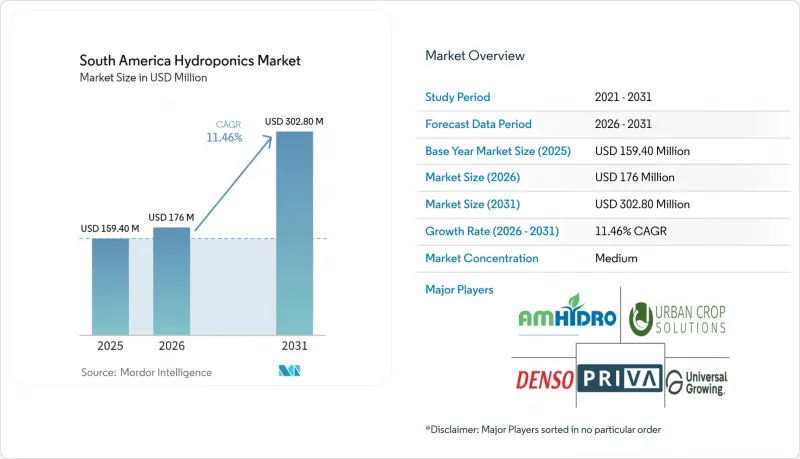
이 보고서는 시스템 유형(일체형 시스템, 액체 시스템, 점적 관개 시스템), 재배 방식(상업용 온실, 수직 농장, 실내 농장, 컨테이너 농장), 작물 유형(잎채소, 허브, 토마토,오이, 딸기 등) 및 지역(브라질, 아르헨티나, 칠레 등)별로 분류되어 있습니다. 시장 예측은 금액(달러) 기준으로 제시되어 있습니다.
남미 수경재배 시장의 동향 및 인사이트
무농약 신선 농산물에 대한 수요 증가
농약을 사용하지 않은 신선한 채소에 대한 소비자의 선호도가 높아지면서 남미 전역에서 수경 재배 도입이 가속화되고 있습니다. 특히 품질이 안정적이고 추적 가능한 농산물을 요구하는 소매업체 및 외식업체에서 이러한 경향이 두드러집니다. 수경 재배는 토양 유래 해충에 대한 노출을 최소화하면서, 통제된 환경에서 연중 생산을 가능하게 합니다. 브라질 보건규제청(ANVISA)의 농약 잔류 분석 프로그램(PARA)에 따르면 분석된 3,084건의 식품 샘플 중 20.6%가 농약 규정을 위반한 것으로 나타나, 소비자와 소매업체가 식품 안전성과 잔류물이 없는 농산물을 중요시하고 있음을 여실히 보여주고 있습니다. 이러한 추세가 해당 지역 전체에서 수경 재배된 잎채소와 허브에 대한 수요를 견인하고 있습니다. 출처: 브라질 보건규제청(ANVISA), 농약 잔류 분석 프로그램(PARA), 2025년.
물 부족과 효율적인 물 이용의 필요성
물 부족으로 인해 생산자들이 물 이용 효율을 극대화하는 생산 시스템을 모색함에 따라 남미 전역에서 수경 재배의 사업적 타당성이 강화되고 있습니다. 수경 재배는 양액을 순환시키기 때문에 기존의 토양 농업에 비해 물 손실을 대폭 줄이면서도 관리된 환경에서 작물의 안정적인 생육을 보장할 수 있습니다. 유엔 식량농업기구(FAO)의 'AQUASTAT 물 데이터 스냅숏 2025'에 따르면담수 자원에 대한 압박은 계속해서 증가하고 있으며, 2024년에 갱신된 AQUASTAT 데이터에 따르면 취수량이 재생 가능한 담수 공급량을 정기적으로 초과하는 국가들에서 물 스트레스가 ‘높음’ 또는 ‘매우 높음’인 것으로 나타났습니다. 이러한 추세는 해당 지역 전체에서 물 이용 효율이 높은 수경 재배 시스템에 대한 투자를 촉진하고 있습니다.
제어 환경 농업에 대한 전문 지식 부족
통제 환경 농업 분야의 기술적 전문 지식 부족이 여전히 남미 전역에서 수경 재배의 보급을 제약하고 있습니다. 수경 재배에는 영양 관리, pH 조절, 수질 관리, 기후 제어 및 병해 예방에 관한 전문적인 기술이 필요하지만, 이러한 요소들은 기존의 농업 관행과는 크게 다릅니다. 아르헨티나 국립농업기술연구소(INTA)(2025년)에 따르면 이 기관은 ‘남극 수경 재배 모듈(MAPHI)’ 전용 운영자 교육 과정을 실시하여 수경 재배 시스템의 운영, 영양액 조제 및 설비 관리에 관한 인력 양성을 진행했습니다. 이러한 전문적인 교육의 필요성은 숙련된 운영자 부족을 반영하고 있으며, 이는 도입 위험을 높이고 해당 지역 전체에서 상업용 수경 재배의 확장을 지연시키고 있습니다.
부문 분석
2025년, 남미 수경재배 시장 점유율에서 일체형 시스템이 48.2%로 가장 큰 비중을 차지했습니다. 이러한 시스템은 안정적인 뿌리 지지대를 제공하며, 해당 지역 전체에 정착된 온실 재배와 호환성이 있으며, 여전히 선호되는 생산 방식입니다. 락울, 코코넛 코이어, 펄라이트와 같은 재배용 배지를 사용함으로써, 생산자는 통제된 조건에서 채소와 과일을 재배하면서 생산 위험을 줄일 수 있습니다. 이러한 유연성 덕분에 대규모 인프라 변경 없이 단계적인 확장이 가능하므로 애그리게이트 시스템은 신뢰할 수 있는 작물 수확량, 효율적인 영양소 관리, 그리고 연중 안정적인 생산을 추구하는 상업적 생산자에게 적합합니다.
점적 관개 시스템은 2026-2031년에 15.1%라는 가장 높은 연평균 성장률(CAGR)을 기록할 것으로 예측됩니다. 이러한 시스템은 제어된 점적 에미터를 통해 영양액을 뿌리 영역에 직접 공급하여, 물과 비료의 손실을 최소화하면서 작물의 생산성을 향상시킵니다. 자동 시비 시스템과의 호환성, 정밀한 영양분 관리, 그리고 토마토, 오이, 피망, 딸기, 허브 등 고부가가치 작물에 대한 적응성이 상업 생산자들의 도입을 촉진하고 있습니다. 온실 인프라, 절수형 재배 기술 및 정밀농업에 대한 투자 증가가 남미 전역에서 점적 관개 시스템의 지속적인 확장을 지원할 것으로 예상됩니다.
기타 혜택:
- Excel 형식의 시장 예측(ME) 시트
- 3개월간의 애널리스트 지원
자주 묻는 질문
목차
제1장 서론
제2장 분석 방법
제3장 개요
제4장 시장 구도
제5장 시장 규모·성장률 예측
제6장 경쟁 구도
제7장 시장 기회와 향후 전망
KSA 26.09.02According to Mordor Intelligence, the South America hydroponics market was valued at USD 159.40 million in 2025 and is projected to grow from USD 176.0 million in 2026 to USD 302.80 million by 2031, at a CAGR of 11.46% during the forecast period from 2026 to 2031.
This report is Segmented by System Type (Aggregate Systems, Liquid Systems, and Drip Systems), by Farming Type (Commercial Greenhouses, Vertical Farms, Indoor Farms, and Container Farms), by Crop Type (Leafy Vegetables, Herbs, Tomatoes, Cucumbers, Strawberries, and More), and by Geography (Brazil, Argentina, Chile, and More). The Market Forecasts are Provided in Terms of Value (USD).
South America Hydroponics Market Trends and Insights
Rising Demand for Pesticide-Free Fresh Produce
Growing consumer preference for pesticide-free fresh vegetables is accelerating hydroponic adoption across South America, particularly among retailers and food service operators seeking consistent, traceable produce. Hydroponic cultivation minimizes exposure to soil-borne pests while enabling year-round production in controlled environments. According to the Brazilian Health Regulatory Agency (ANVISA) Pesticide Residue Analysis Program (PARA), 20.6% of the 3,084 food samples analyzed showed non-compliance with pesticide regulations, highlighting consumer and retailer focus on food safety and residue-free produce. This trend is driving demand for hydroponically grown leafy vegetables and herbs across the region. Source: Brazilian Health Regulatory Agency (ANVISA), Pesticide Residue Analysis Program (PARA), 2025.
Water Scarcity and Efficient Water Use Requirements
Water scarcity is strengthening the business case for hydroponic farming across South America as growers seek production systems that maximize water efficiency. Hydroponic cultivation recirculates nutrient solutions, significantly reducing water losses compared to conventional soil-based agriculture while ensuring consistent crop growth under controlled conditions. According to the Food and Agriculture Organization of the United Nations (FAO) AQUASTAT Water Data Snapshot 2025, pressure on freshwater resources continues to increase, with updated 2024 AQUASTAT data showing high or very high water stress in countries where water withdrawals regularly exceed renewable freshwater supplies. This trend is driving investment in water-efficient hydroponic production systems across the region.
Limited Controlled Environment Agronomy Expertise
Limited technical expertise in controlled-environment agriculture continues to constrain hydroponic adoption across South America. Hydroponic production requires specialized skills in nutrient management, pH regulation, water quality, climate control, and disease prevention, which differ substantially from conventional farming practices. According to the National Institute of Agricultural Technology (INTA), Argentina (2025), the organization conducted a dedicated Operator Training Course for the Antarctic Hydroponic Production Module (MAPHI) to train personnel in hydroponic system operation, nutrient solution preparation, and equipment management. The need for such specialized training reflects a shortage of skilled operators, which increases implementation risks and slows commercial hydroponic expansion across the region.
Other drivers and restraints analyzed in the detailed report include:
- Urban Agriculture and Short Supply Chain Expansion
- Commercial Greenhouse Adoption in Brazil and Chile
- Currency Volatility and Imported Equipment Dependence
For complete list of drivers and restraints, kindly check the Table Of Contents.
Segment Analysis
Aggregate systems accounted for the largest 48.2% of the South America Hydroponics Market Share in 2025. These systems remain the preferred production method because they provide stable root support and are compatible with established greenhouse operations across the region. Growing media such as rockwool, coconut coir, and perlite allow producers to cultivate vegetables and fruits under controlled conditions while reducing production risks. Their flexibility enables gradual expansion without major infrastructure changes, making aggregate systems suitable for commercial growers seeking dependable crop performance, efficient nutrient management, and consistent year-round production.
Drip systems are projected to register the fastest CAGR of 15.1% during 2026-2031. These systems deliver nutrient solutions directly to the root zone through controlled drip emitters, minimizing water and fertilizer losses while improving crop productivity. Their compatibility with automated fertigation systems, precise nutrient management, and adaptability to high-value crops such as tomatoes, cucumbers, peppers, strawberries, and herbs are driving adoption among commercial growers. Increasing investments in greenhouse infrastructure, water-efficient cultivation technologies, and precision agriculture are expected to support the continued expansion of drip systems across South America.
Complete Report Scope:
- By System Type
- Aggregate Systems
- Liquid Systems
- Drip Systems
- By Farming Type
- Commercial Greenhouses
- Vertical Farms
- Indoor Farms
- Container Farms
- By Crop Type
- Leafy Vegetables
- Herbs
- Tomatoes
- Cucumbers
- Strawberries
- Other Crop Types
- By Geography
- Brazil
- Argentina
- Chile
- Rest of South America
List of Companies Covered in this Report:
- Grupo HidroGood
- H2H Hidroponia
- Hidroponia FIL
- Ramos Hidroponicos
- Mundo Hidroponia
- Universal Growing
- Vequa Hidroponia
- HidroBio S.A.
- AmHydro, LLC
- Urban Crop Solutions N.V.
- Certhon Build B.V. (DENSO Corporation)
- Priva Holding B.V.
Additional Benefits:
- The market estimate (ME) sheet in Excel format
- 3 months of analyst support
TABLE OF CONTENTS
1 Introduction
- 1.1 Study Assumptions and Market Definition
- 1.2 Scope of the Study
2 Research Methodology
3 Executive Summary
4 Market Landscape
- 4.1 Market Overview
- 4.2 Market Drivers
- 4.2.1 Rising demand for pesticide-free fresh produce
- 4.2.2 Water scarcity and efficient water use requirements
- 4.2.3 Urban agriculture and short supply chain expansion
- 4.2.4 Climate volatility driving protected cultivation
- 4.2.5 Commercial greenhouse adoption in Brazil and Chile
- 4.2.6 Declining technology costs improving the accessibility of controlled-environment agriculture
- 4.3 Market Restraints
- 4.3.1 High initial capital requirement
- 4.3.2 Energy intensity of climate-controlled systems
- 4.3.3 Limited controlled environment agronomy expertise
- 4.3.4 Currency volatility and imported equipment dependence
- 4.4 Regulatory Landscape
- 4.5 Technological Outlook
- 4.6 Value and Supply-Chain Analysis
- 4.7 Porter's Five Forces Analysis
- 4.7.1 Threat of New Entrants
- 4.7.2 Bargaining Power of Suppliers
- 4.7.3 Bargaining Power of Buyers
- 4.7.4 Threat of Substitutes
- 4.7.5 Intensity of Competitive Rivalry
5 Market Size and Growth Forecasts (Value)
- 5.1 By System Type
- 5.1.1 Aggregate Systems
- 5.1.2 Liquid Systems
- 5.1.3 Drip Systems
- 5.2 By Farming Type
- 5.2.1 Commercial Greenhouses
- 5.2.2 Vertical Farms
- 5.2.3 Indoor Farms
- 5.2.4 Container Farms
- 5.3 By Crop Type
- 5.3.1 Leafy Vegetables
- 5.3.2 Herbs
- 5.3.3 Tomatoes
- 5.3.4 Cucumbers
- 5.3.5 Strawberries
- 5.3.6 Other Crop Types
- 5.4 By Geography
- 5.4.1 Brazil
- 5.4.2 Argentina
- 5.4.3 Chile
- 5.4.4 Rest of South America
6 Competitive Landscape
- 6.1 Strategic Moves
- 6.2 Market Share Analysis
- 6.3 Company Profiles (Includes Global Level Overview, Market Level Overview, Core Segments, Financials as Available, Strategic Information, Market Rank/Share for Key Companies, Products and Services, and Recent Developments)
- 6.3.1 Grupo HidroGood
- 6.3.2 H2H Hidroponia
- 6.3.3 Hidroponia FIL
- 6.3.4 Ramos Hidroponicos
- 6.3.5 Mundo Hidroponia
- 6.3.6 Universal Growing
- 6.3.7 Vequa Hidroponia
- 6.3.8 HidroBio S.A.
- 6.3.9 AmHydro, LLC
- 6.3.10 Urban Crop Solutions N.V.
- 6.3.11 Certhon Build B.V. (DENSO Corporation)
- 6.3.12 Priva Holding B.V.


