

|
시장보고서
상품코드
2119344
TSaaS(Technology Scouting as a Service) : 시장 점유율 분석, 업계 동향 및 통계, 성장 예측(2026-2031년)Technology Scouting-as-a-Service - Market Share Analysis, Industry Trends & Statistics, Growth Forecasts (2026 - 2031) |
||||||
 Mordor Intelligence
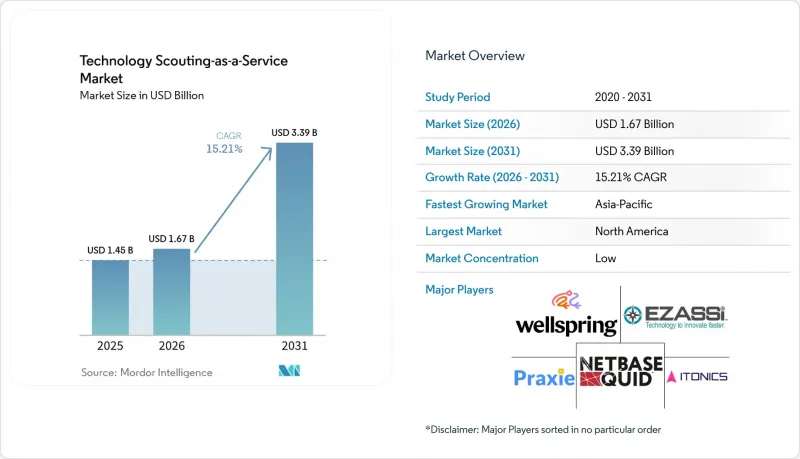
Mordor Intelligence에 의하면, TSaaS(Technology Scouting as a Service) 시장 규모는 2025년에 14억 5,000만 달러로 평가되었습니다. 2026년 16억 7,000만 달러에서 2031년까지 33억 9,000만 달러에 이를 것으로 예상되며, 예측 기간(2026-2031년) CAGR은 15.21%를 나타낼 전망입니다.
본 보고서는 제공 모델(소프트웨어 구독, 관리형 스카우팅 서비스 및 하이브리드형 소프트웨어 서비스), 최종 사용자(기업의 연구개발·엔지니어링 부서 등), 기업 규모(대기업 및 중소기업),기술·아키텍처(4G 및 LTE 등), 지역별로 분류되어 있습니다. 시장 예측은 금액(미 달러) 기준으로 제시되어 있습니다.
세계의 TSaaS(Technology Scouting as a Service) 시장 동향 및 인사이트
혁신 주기의 단축을 요구하는 기업의 압력
제품 및 연구개발 책임자가 투자 결정을 위해 외부 정보를 보다 신속하게 필요로 하는 상황에서는 기술 스카우팅 서비스 시장이 혜택을 받게 됩니다. 개발 일정이 단축됨에 따라 팀이 특허, 문헌, 스타트업 조사를 개별적으로 수행할 수 있는 시간이 줄어들고 있습니다. 이 서비스 모델은 혁신 리더에게 주요 전략 재검토 기간 중에도 외부 정보 수집을 지속할 수 있는 체계적인 방법을 제공합니다. 이를 통해 사내 개발 프로그램을 보완할 수 있는 기술을 조기에 식별할 수 있습니다. 또한, 장기적인 개발 프로그램에 자원을 투입하기 전에 팀이 외부 대안을 비교 검토하는 데에도 도움이 됩니다. 그 결과, 구독 서비스나 지속적인 조사 의뢰는 일회성 프로젝트가 아닌 지속적인 혁신 활동의 일부가 될 가능성이 있습니다.
특허, 간행물, 스타트업을 아우르는 AI 지원형 디스커버리
AI는 제공업체가 방대하고 파편화된 기술 정보 소스를 검색하는 방식을 변화시키고 있습니다. 2026년 6월, PatSnap은 ‘Hiro’를 확장하여 174개 관할 구역에 걸친 2억 800만 건 이상의 특허, 2억 1,500만 건의 비특허 문헌, 그리고 16억 건의 법적 데이터 포인트를 대상으로 하는 대화형 검색 기능을 추가했습니다. 이러한 규모 덕분에 초기 기술 랜드스케이프를 작성하는 데 필요한 시간을 단축할 수 있습니다. 따라서 ‘TSaaS(Technology Scouting as a Service)’ 시장에서는 특정 상업적 과제에 대해 검색 결과를 체계화할 수 있는 시스템의 가치가 점점 더 높아지고 있습니다. 중복된 엔티티나 불완전한 기록은 결과물의 신뢰성을 저해할 수 있으므로, 검색 기능만으로는 불충분합니다. 데이터 대조 및 검토 프로세스가 탄탄한 제공업체야말로 AI를 활용한 조사를 기업 팀에게 더욱 유용하게 만들 수 있습니다.
기밀성 및 데이터 주권 요건
기밀성이 높은 클라이언트의 문의는 클라우드를 통해 제공되는 기술 스카우팅 서비스의 이용을 제한할 수 있습니다. 기술적 격차에 대한 독자적인 조사는 기업의 제품 우선순위, 제휴에 대한 관심, 그리고 연구 방향을 드러낼 우려가 있습니다. IBM은 2026년 6월, 조사 대상이었던 고위 경영진의 68%가 관할 구역을 넘나드는 데이터 상주 요건을 중대한 운영상의 과제로 간주하고 있다고 보고했습니다. 따라서 기술 스카우팅 서비스(TSaaS) 시장은 여러 관할 구역에서 사업을 영위하는 고객에게 명확한 데이터 관리 체계를 제공해야 합니다. 고객이 관리하는 암호화, 지역별 데이터 저장, 그리고 투명한 접근 규칙은 조달에 대한 우려를 완화할 수 있습니다. 기밀성이 높은 검색 및 관련 산출물이 어떻게 처리되고 있는지 설명할 수 없는 공급업체는 기업 대상 판매 주기가 길어질 가능성이 있습니다.
부문별 분석
2025년 기준, 소프트웨어 구독은 ‘기술 스카우팅 서비스(TSaaS)’ 시장 점유율의 42.14%를 차지했습니다. 이는 기존 기술 예산 범위 내에 포함되며, 조달 팀에 예측 가능한 연간 라이선싱 모델을 제공합니다. 또한, 이 형식을 통해 조사, 지적 재산, 혁신 담당자는 의문이 생겼을 때 직접 정보를 검색할 수 있습니다. 이러한 이점은 독점 데이터, 검색 도구, 모니터링 기능에 대한 지속적인 접근이 지닌 가치를 반영합니다. 이 제공 모델에서 ‘서비스형 기술 스카우팅(Technology Scouting as a Service)’ 시장 규모는 스카우팅을 지속적인 사내 기능으로 활용하는 조직들에 의해 뒷받침되고 있습니다. 그러나 사용자는 명확한 검색 조건을 설정하고 결과를 평가하기 위해 여전히 충분한 사내 전문 지식을 필요로 합니다. 이 때문에 소규모 혁신 팀의 경우, 완전한 셀프 서비스형 서비스의 매력이 제한적입니다.
매니지드 스카우팅 서비스는 2026년부터 2031년까지 연평균 성장률(CAGR) 16.42%로 확대될 것으로 예측되며, 이 부문 내에서 가장 높은 성장률을 보이고 있습니다. 이는 조사 포털에 대한 접근보다는 의사 결정에 직접적으로 연결되는 결과물을 필요로 하는 구매자의 요구를 충족시키는 것입니다. 이러한 고객은 기술 환경 분석, 파트너 심사 및 타겟팅된 검증을 위해 외부 분석가를 활용할 수 있습니다. 하이브리드형 소프트웨어 및 서비스는 조직이 플랫폼 접근권과 명확하게 정의된 조사 요소를 모두 요구할 때 여전히 유효합니다. 정부 및 국방 분야 사용자는 조달 규정에 따라 서비스 범위가 명확히 정해져 있는 경우, 이러한 형태를 선호할 가능성이 있습니다. 자동화된 검색을 통해 초기 탐색 작업의 상당 부분이 처리됨에 따라, 제공 형태는 애널리스트의 지원을 중시하는 방향으로 전환되고 있습니다. 셀프 서비스와 관리형 옵션을 모두 유지하는 공급업체는 내부 역량이 서로 다른 구매자에 대응할 수 있습니다.
2025년, 기업의 연구 개발(R&D) 및 엔지니어링 부서는 ‘기술 스카우팅 서비스(TSaaS)’ 시장의 38.42%를 차지했습니다. 이 팀들은 개발 우선순위와 관련된 특허, 연구 활동 및 기술적 선택지를 파악하기 위해 외부 인텔리전스를 활용하고 있습니다. 사내 지적 재산(IP) 팀 및 제품 팀과의 오랜 협력을 통해, 이 서비스는 일상적인 조사 과정의 일부로 정착될 가능성이 있습니다. 이로 인해 지속적인 이용이 촉진되며, 워크플로우에 통합된 후에는 공급업체를 변경하기 어려워집니다. 기업의 혁신 및 전략 팀도 포트폴리오 계획 및 기회 선정을 지원하기 위해 스카우팅 결과를 활용하고 있습니다. 조달 및 공급망 부서는 회복탄력성(resilience) 프로그램에서 잠재적 공급업체 및 자재에 대한 가시성 향상이 요구됨에 따라 새로운 사용자층으로 부상하고 있습니다. ‘서비스형 기술 스카우팅(Technology Scouting as a Service)’ 시장은 이러한 부서들에게 기술 선정을 위한 공통된 근거를 제공합니다.
기업 벤처 캐피털 및 M&A 팀은 2031년까지 연평균 성장률(CAGR) 17.36%를 나타낼 것으로 예측됩니다. 이 팀들은 초기 단계 기업에 대한 신호, 선도 기술 정보, 그리고 경쟁사의 거래 동향에 대한 신속한 접근이 필요합니다. 목표 기업을 간과하거나 지적 재산권 위험을 놓치는 것은 인수나 제휴 결정에 직접적인 영향을 미칠 수 있습니다. 따라서 이러한 팀들은 스타트업 모니터링과 특허·기술 분석을 결합한 도구를 중요하게 여깁니다. 스카우팅이 거래 워크플로우에 통합되면 이러한 요구 사항은 더 높은 부가가치를 지닌 계약으로 이어집니다. 정부 및 국방 기관은 기밀 지정이나 조달 요건으로 인해 표준 플랫폼의 이용이 제한될 가능성이 있으므로, 여전히 특수한 사용자 그룹으로 남아 있습니다. 대학 및 연구 기관도 고객 기반의 하나이지만, 그 예산이나 서비스 요건은 기업 사용자와는 다릅니다.
지역별 분석
2025년, 북미는 전 세계 ‘서비스형 기술 스카우팅(TaaS)’ 시장 매출의 38.14%를 차지했습니다. 미국에는 기업의 연구개발(R&D) 부서, 기업 벤처 프로그램, 그리고 기술 집약적 산업이 다수 존재합니다. 이러한 사용자들은 외부 기술 옵션을 파악하기 위한 체계적인 방법을 점점 더 필요로 하고 있습니다. 생명과학 및 정보통신기술(ICT)은 두 부문 모두 방대한 양의 연구 데이터와 지적 재산을 관리하고 있기 때문에 중요한 수요 원천이 되고 있습니다. 캐나다는 혁신 프로그램과 국경을 초월한 연구개발(R&D) 협력을 통해 기여하고 있습니다. 멕시코는 제조 기술의 업그레이드를 통해 잠재적인 수요를 창출하고 있습니다. 북미 ‘Technology Scouting-as-a-Service’ 시장 점유율은 확고한 기업 예산과 성숙한 혁신 프로세스를 반영하고 있습니다.
유럽은 독일, 영국, 프랑스의 기업 연구 개발(R&D) 프로그램에 힘입어 지역별 시장 중 2위의 규모를 자랑합니다. 이들 국가의 구매자들은 데이터 거버넌스, 지적 재산권 심사, 국경을 초월한 라이선싱 문제에 특히 중점을 두고 있습니다. 이에 따라 조사 방법을 문서화하고 고객의 검색 활동을 보호할 수 있는 제공업체에 대한 수요가 뒷받침되고 있습니다. 이탈리아, 스페인 및 기타 유럽 국가에서는 최대 규모의 다국적 기업에 국한되지 않고 오픈 이노베이션의 활용이 확대되고 있습니다. 아시아태평양은 2031년까지 연평균 성장률(CAGR) 21.42%를 나타낼 것으로 예측되며, 이는 지역별로는 가장 높은 성장률입니다. 중국의 국경을 초월한 기술 조달 활동에 대해서는 산둥성의 전략적 신흥 산업 분야 특허 양도 데이터를 분석한 2026년 조사에서 밝혀졌습니다. 일본의 지적재산권 실무와 인도 및 한국의 기술 생태계 발전 또한 이 지역 수요를 뒷받침하고 있습니다.
호주의 자원 및 청정 기술 분야 활동은 ‘기술 스카우팅 서비스(TSaaS)’ 시장에서 지역적 기회를 확대되고 있습니다. 남미는 여전히 초기 단계에 있지만, 브라질의 오픈 이노베이션 프로그램과 아르헨티나의 연구 기관이 수요의 점진적인 성장을 뒷받침하고 있습니다. 중동에서도 아랍에미리트, 사우디아라비아, 카타르의 국부펀드 및 산업 다각화 프로그램을 통한 투자 수요가 증가하고 있습니다. 이러한 프로그램에서 기술 이전은 보다 광범위한 경제 개발 계획의 일환으로 자리 잡고 있습니다. 아프리카에서의 수익은 현재로서는 소규모이지만, 남아프리카공화국, 이집트, 나이지리아에서는 기업 및 공공 부문 수요원이 확대되고 있습니다. 이 지역 전반에 걸쳐 공급업체는 현지 데이터, 언어, 조달 요구 사항에 맞추어 조사 범위와 서비스 모델을 조정해야 합니다.
기타 혜택 :
- 엑셀 형식 시장 예측(ME) 시트
- 3개월간의 애널리스트 지원
자주 묻는 질문
목차
제1장 서론
제2장 조사 방법
제3장 개요
제4장 시장 구도
제5장 시장 규모 및 성장 예측
제6장 경쟁 구도
제7장 시장 기회 및 향후 전망
KTH 26.09.02According to Mordor Intelligence, the technology scouting-as-a-Service market size was valued at USD 1.45 billion in 2025 and estimated to grow from USD 1.67 billion in 2026 to reach USD 3.39 billion by 2031, at a CAGR of 15.21% during the forecast period (2026-2031).
This report is Segmented by Delivery Model (Software Subscription, Managed Scouting Service, and Hybrid Software and Services), End User (Corporate R&D and Engineering, and More), Enterprise Size (Large Enterprises, and Small and Medium-Sized Enterprises), Technology and Architecture (4G and LTE, and More), and Geography. The Market Forecasts are Provided in Terms of Value (USD).
Global Technology Scouting-as-a-Service Market Trends and Insights
Enterprise Pressure to Shorten Innovation Cycles
The Technology Scouting-as-a-Service Market benefits when product and R&D leaders need faster external evidence for investment decisions. Shorter development schedules leave less time for teams to conduct separate patent, literature, and startup searches. The service model gives innovation leaders a structured way to keep external scanning active between major strategy reviews. This can support earlier identification of technologies that may complement an internal development program. It can also help teams compare external options before committing resources to a lengthy build program. As a result, subscriptions and repeat research assignments can become part of ongoing innovation operations rather than a one-time project.
AI-Assisted Discovery Across Patents, Publications, and Startups
AI is changing how providers search large and disconnected sources of technology evidence. In June 2026, PatSnap expanded Hiro to include conversational search across more than 208 million patents, 215 million non-patent literature records, and 1.6 billion legal data points from 174 jurisdictions. This scale can reduce the time required to create an initial technology landscape. The Technology Scouting-as-a-Service Market, therefore, places increasing value on systems that can organize results for a specific commercial question. Search capability alone is not enough, as duplicate entities and incomplete records can undermine the reliability of the outputs. Providers with stronger data matching and review processes can make AI-supported research more useful for enterprise teams.
Confidentiality and Data-Sovereignty Requirements
Confidential client questions can limit the use of cloud-delivered technology scouting services. A proprietary search for technical gaps can reveal a company's product priorities, partnership interests, and research direction. IBM reported in June 2026 that 68% of surveyed senior executives saw cross-jurisdictional data residency requirements as a material operational challenge. The Technology Scouting-as-a-Service Market must therefore provide clear data controls for clients operating across multiple jurisdictions. Customer-controlled encryption, regional data storage, and transparent access rules can reduce procurement concerns. Providers that cannot explain how sensitive searches and associated outputs are handled may face longer enterprise sales cycles.
Other drivers and restraints analyzed in the detailed report include:
- Rising External R&D and Open Innovation Activity
- Need to De-Risk Build-Versus-Buy and Partnership Decisions
- Difficulty Validating Technical Readiness and Commercial Fit
For complete list of drivers and restraints, kindly check the Table Of Contents.
Segment Analysis
Software subscription held 42.14% of the Technology Scouting-as-a-Service Market share in 2025. It fits within established technology budgets and provides procurement teams with a predictable annual licensing model. The format also allows research, IP, and innovation staff to search for information directly when a question arises. Its lead reflects the value of continuing access to proprietary data, search tools, and monitoring functions. The Technology Scouting-as-a-Service Market size for this delivery model is supported by organizations that use scouting as an ongoing internal capability. However, users still need enough internal expertise to create clear searches and assess the results. This limits the appeal of a fully self-service offer for smaller innovation teams.
Managed scouting service is forecast to expand at a 16.42% CAGR from 2026 to 2031, the fastest rate within this segmentation. It meets the needs of buyers who need decision-ready output rather than access to a research portal. These clients can use external analysts for technology landscaping, partner screening, and targeted validation. Hybrid software and services remain relevant where an organization wants platform access alongside a defined research component. Government and defense users may favor this arrangement when procurement rules require a clear scope of services. The delivery mix is moving toward analyst-supported work as automated search handles more of the initial discovery task. Providers that keep both self-service and managed options can serve buyers with different internal capabilities.
Corporate R&D and engineering held 38.42% of the Technology Scouting-as-a-Service Market share in 2025. These teams use external intelligence to understand patents, research activity, and technological alternatives related to their development priorities. Long-standing links with internal IP and product teams can make the service part of a regular research process. This supports recurring use and makes switching providers more difficult when workflows are embedded. Corporate innovation and strategy teams also use scouting outputs to support portfolio planning and opportunity selection. Procurement and supply chain organizations are emerging users because resilience programs require greater visibility into potential suppliers and materials. The Technology Scouting-as-a-Service Market gives these groups a common evidence base for technology choices.
Corporate venture capital and M&A teams are forecast to grow at a 17.36% CAGR through 2031. They need rapid access to early-stage company signals, prior-art information, and competitive deal activity. A missed target or an unrecognized intellectual property risk can directly affect an acquisition or partnership decision. These teams, therefore, place value on tools that combine startup monitoring with patent and technology analysis. Their demand can support higher-value contracts when scouting is integrated into transaction workflows. Government and defense organizations remain a specialized user group because classification and procurement requirements can restrict the use of standard platforms. Universities and research institutions offer an additional customer base, although their budgets and service requirements differ from those of corporate users.
Complete Report Scope:
- By Delivery Model
- Software Subscription
- Managed Scouting Service
- Hybrid Software and Services
- By End User
- Corporate R&D and Engineering
- Corporate Innovation and Strategy
- Corporate Venture Capital and M&A
- Procurement and Supply-Chain Organizations
- Government and Defense Organizations
- Universities and Research Institutions
- By Enterprise Size
- Large Enterprises
- Small and Medium-Sized Enterprises
- By Technology and Architecture
- 4G and LTE
- 5G Non-Standalone
- 5G Standalone
- Others Technologies
- By Geography
- North America
- United States
- Canada
- Mexico
- South America
- Brazil
- Argentina
- Chile
- Rest of South America
- Europe
- Germany
- United Kingdom
- France
- Italy
- Spain
- Rest of Europe
- Asia-Pacific
- China
- Japan
- India
- South Korea
- Australia
- Rest of Asia-Pacific
- Middle East
- United Arab Emirates
- Saudi Arabia
- Qatar
- Rest of Middle East
- Africa
- South Africa
- Egypt
- Nigeria
- Rest of Africa
- North America
Geography Analysis
North America accounted for 38.14% of the global Technology Scouting-as-a-Service Market revenue in 2025. The United States has a large base of corporate R&D functions, corporate venture programs, and technology-intensive industries. These users increasingly need a structured way to identify external technology options. Life sciences and information and communications technology are important sources of demand because both sectors manage large volumes of research and intellectual property. Canada contributes through innovation programs and cross-border R&D links. Mexico adds potential demand through manufacturing technology upgrades. North America's Technology Scouting-as-a-Service Market share reflects established enterprise budgets and mature innovation processes.
Europe is the second-largest regional market, supported by corporate R&D programs in Germany, the United Kingdom, and France. Buyers in these countries place particular emphasis on data governance, intellectual property review, and cross-border licensing questions. This supports demand for providers that can document research methods and protect client search activity. Italy, Spain, and other European countries are expanding their use of open innovation beyond the largest multinationals. Asia-Pacific is forecast to grow at a 21.42% CAGR through 2031, the fastest regional rate. China's cross-border technology sourcing activity is documented in a 2026 study of patent transfer data from Shandong Province's strategic emerging industries. Japan's intellectual property practices and the development of technology ecosystems in India and South Korea add to regional demand.
Australia's resource and clean technology activity broadens the regional opportunity for the Technology Scouting-as-a-Service Market. South America remains at an earlier stage, with Brazil's open-innovation programs and Argentina's research institutions supporting gradual growth in demand. The Middle East is also seeing growing demand for investment from sovereign wealth funds and industrial diversification programs in the United Arab Emirates, Saudi Arabia, and Qatar. These programs place technology transfer within wider economic development plans. Africa currently contributes modest revenue, but South Africa, Egypt, and Nigeria offer developing sources of enterprise and public-sector demand. Across these regions, providers need to adapt their research coverage and service model to local data, language, and procurement needs.
- Wellspring International, Inc.
- Ezassi, Inc.
- Praxie, Inc.
- ITONICS GmbH
- NetBase Quid, Inc.
- Questel SAS
- Qmarkets Ltd.
- Clarivate Plc
- IP.com, LLC
- The Lens
- Research Solutions, Inc.
- PatSnap Pte. Ltd.
- Findest B.V.
- NineSigma, Inc.
- yet2.com, Inc.
- Wazoku Limited
- Inpart Limited
- PreScouter, Inc.
- GreyB Services Private Limited
- TechScout, Inc.
- Novable SRL
- Linknovate GmbH
- Traction Technology, Inc.
- HYPE Innovation GmbH
Additional Benefits:
- The market estimate (ME) sheet in Excel format
- 3 months of analyst support
TABLE OF CONTENTS
1 INTRODUCTION
- 1.1 Study Assumptions and Market Definition
- 1.2 Scope of the Study
2 RESEARCH METHODOLOGY
3 EXECUTIVE SUMMARY
4 MARKET LANDSCAPE
- 4.1 Market Overview
- 4.2 Market Drivers
- 4.2.1 Enterprise Pressure to Shorten Innovation Cycles
- 4.2.2 AI-Assisted Discovery Across Patents, Publications, and Startups
- 4.2.3 Rising External R&D and Open Innovation Activity
- 4.2.4 Need to De-Risk Build-versus-Buy and Partnership Decisions
- 4.2.5 Expansion of Cross-Industry Technology Transfer
- 4.2.6 Demand for Continuous Weak-Signal and Competitive Monitoring
- 4.3 Market Restraints
- 4.3.1 Confidentiality and Data-Sovereignty Requirements
- 4.3.2 Difficulty Validating Technical Readiness and Commercial Fit
- 4.3.3 Fragmented Data Rights and Inconsistent Entity Resolution
- 4.3.4 Long Conversion Cycles from Scouting to Paid Partnerships
- 4.4 Impact of Macroeconomic Factors on the Market
- 4.5 Industry Value-Chain Analysis
- 4.6 Technology Outlook
- 4.7 Regulatory Landscape
- 4.8 Porter's Five Forces Analysis
- 4.8.1 Threat of New Entrants
- 4.8.2 Bargaining Power of Suppliers
- 4.8.3 Bargaining Power of Buyers
- 4.8.4 Threat of Substitutes
- 4.8.5 Intensity of Competitive Rivalry
5 MARKET SIZE AND GROWTH FORECASTS (VALUE)
- 5.1 By Delivery Model
- 5.1.1 Software Subscription
- 5.1.2 Managed Scouting Service
- 5.1.3 Hybrid Software and Services
- 5.2 By End User
- 5.2.1 Corporate R&D and Engineering
- 5.2.2 Corporate Innovation and Strategy
- 5.2.3 Corporate Venture Capital and M&A
- 5.2.4 Procurement and Supply-Chain Organizations
- 5.2.5 Government and Defense Organizations
- 5.2.6 Universities and Research Institutions
- 5.3 By Enterprise Size
- 5.3.1 Large Enterprises
- 5.3.2 Small and Medium-Sized Enterprises
- 5.4 By Technology and Architecture
- 5.4.1 4G and LTE
- 5.4.2 5G Non-Standalone
- 5.4.3 5G Standalone
- 5.4.4 Others Technologies
- 5.5 By Geography
- 5.5.1 North America
- 5.5.1.1 United States
- 5.5.1.2 Canada
- 5.5.1.3 Mexico
- 5.5.2 South America
- 5.5.2.1 Brazil
- 5.5.2.2 Argentina
- 5.5.2.3 Chile
- 5.5.2.4 Rest of South America
- 5.5.3 Europe
- 5.5.3.1 Germany
- 5.5.3.2 United Kingdom
- 5.5.3.3 France
- 5.5.3.4 Italy
- 5.5.3.5 Spain
- 5.5.3.6 Rest of Europe
- 5.5.4 Asia-Pacific
- 5.5.4.1 China
- 5.5.4.2 Japan
- 5.5.4.3 India
- 5.5.4.4 South Korea
- 5.5.4.5 Australia
- 5.5.4.6 Rest of Asia-Pacific
- 5.5.5 Middle East
- 5.5.5.1 United Arab Emirates
- 5.5.5.2 Saudi Arabia
- 5.5.5.3 Qatar
- 5.5.5.4 Rest of Middle East
- 5.5.6 Africa
- 5.5.6.1 South Africa
- 5.5.6.2 Egypt
- 5.5.6.3 Nigeria
- 5.5.6.4 Rest of Africa
- 5.5.1 North America
6 COMPETITIVE LANDSCAPE
- 6.1 Market Concentration
- 6.2 Strategic Moves
- 6.3 Market Share Analysis
- 6.4 Company Profiles (includes Global Level Overview, Market Level Overview, Core Segments, Financials as available, Strategic Information, Market Rank/Share, Products and Services, Recent Developments)
- 6.4.1 Wellspring International, Inc.
- 6.4.2 Ezassi, Inc.
- 6.4.3 Praxie, Inc.
- 6.4.4 ITONICS GmbH
- 6.4.5 NetBase Quid, Inc.
- 6.4.6 Questel SAS
- 6.4.7 Qmarkets Ltd.
- 6.4.8 Clarivate Plc
- 6.4.9 IP.com, LLC
- 6.4.10 The Lens
- 6.4.11 Research Solutions, Inc.
- 6.4.12 PatSnap Pte. Ltd.
- 6.4.13 Findest B.V.
- 6.4.14 NineSigma, Inc.
- 6.4.15 yet2.com, Inc.
- 6.4.16 Wazoku Limited
- 6.4.17 Inpart Limited
- 6.4.18 PreScouter, Inc.
- 6.4.19 GreyB Services Private Limited
- 6.4.20 TechScout, Inc.
- 6.4.21 Novable SRL
- 6.4.22 Linknovate GmbH
- 6.4.23 Traction Technology, Inc.
- 6.4.24 HYPE Innovation GmbH
7 MARKET OPPORTUNITIES AND FUTURE OUTLOOK
- 7.1 White-Space and Unmet-Need Assessment


