
|
시장보고서
상품코드
2119364
SIM 카드 교체 사기 방지 소프트웨어 : 시장 점유율 분석, 업계 동향 및 통계, 성장 예측(2026-2031년)SIM Swap Fraud Prevention Software - Market Share Analysis, Industry Trends & Statistics, Growth Forecasts (2026 - 2031) |
||||||
 Mordor Intelligence
Mordor Intelligence에 의하면, SIM 카드 교체 사기 방지 소프트웨어 시장 규모는 2025년에 12억 4,000만 달러로 평가되었습니다. 2026년 15억 달러에서 2031년까지 39억 7,000만 달러에 이를 것으로 예상되며, 예측 기간(2026-2031년) CAGR은 19.34%를 나타낼 전망입니다.
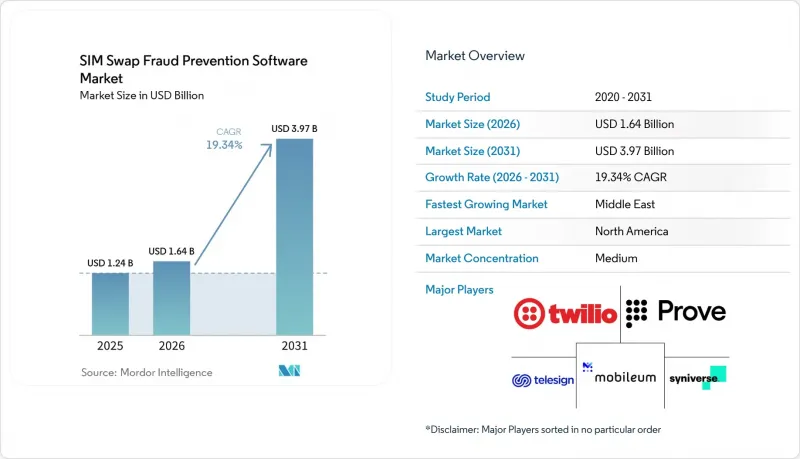
본 보고서는 구성 요소(소프트웨어, 서비스), 도입 형태(클라우드, 기타), 용도(계정 탈취 방지, 기타), 최종 사용자(이동통신 사업자, 가상 이동통신 사업자, 기타), 조직 규모(중소기업, 대기업) 및 지역별로 분류되어 있습니다. 시장 예측은 금액(달러)으로 표시되어 있습니다.
세계의 SIM 카드 교체 사기 방지 소프트웨어 시장 동향 및 인사이트
증가하는 계정 탈취 및 SIM 스왑 사고
SIM 스왑 활동 및 계정 탈취로 인한 손실은 보안 팀에게 모바일 ID 관리를 강화해야 할 직접적인 이유를 제공합니다. 영국에서 SIM 스왑 건수는 2024년에 1,055% 증가한 후, 2025년에는 전년 대비 38% 증가했습니다. 한편, 계정 탈취 신고 건수는 7만 8,000건을 넘어 사기 위험 사례의 18%를 차지했습니다. Cifas는 2025년 증가의 원인 중 하나로 공격 기법의 자동화가 진전된 점을 꼽고 있습니다. 이로 인해 대규모 사례에서는 수동 심사의 효과가 떨어지고 있습니다. 이 소프트웨어 카테고리는 사용자가 고위험 행동을 실행하기 전에 휴대전화 번호가 변경되었는지 여부를 평가함으로써 이 문제에 대응하고 있습니다. FBI 보고서에 따르면, 2024년 미국에서 SIM 스왑 공격으로 인한 피해자 1인당 평균 손실액은 2만 6,460달러였습니다. 이러한 손실 수준은 사기 건수뿐만 아니라, 방지할 수 있었던 손실을 바탕으로 투자 판단을 내리는 것의 타당성을 뒷받침하고 있습니다.
모바일 뱅킹과 고액 디지털 거래의 확대
모바일 뱅킹의 보급으로 인해 전화번호는 고액 거래에서 중요한 인증 수단이 되었습니다. 연방준비제도이사회(FRB)의 금융 서비스 조사에 따르면, 2025년 4분기에는 미국 금융 기관의 23%가 계좌 탈취 사기의 피해를 입었으며, 이는 전년 동기 대비 7% 증가한 수치입니다. 실시간 결제 시스템은 부정 송금을 식별하고 취소하는 데 소요되는 시간을 단축할 수 있습니다. 바티 에어텔,릴라이언스 지오, 그리고 보다폰 아이디어는 2025년에 은행 및 소매 업계의 기업 사용자를 대상으로 연합형 SIM 스왑 및 번호 검증 API에 대한 접근을 제공할 것이라고 발표했습니다. 이러한 API를 통해 금융 기관은 결제가 완료된 후가 아니라 인증 과정에서 최근의 SIM 변경 여부를 확인할 수 있게 됩니다. 이는 휴대전화 번호가 고객의 신원과 밀접하게 연결된 결제 경로에서의 도입을 촉진하는 것입니다. SIM 카드 교체 사기 방지 소프트웨어 시장은 이러한 변화의 혜택을 받고 있습니다. 모바일 중심의 결제 프로세스가 진행될 때마다 통신사 수준의 위험 점검에 대한 새로운 수요가 발생하기 때문입니다.
가입자 데이터에 관한 개인정보 보호 및 동의 제한
SIM 교체 이력은 기밀성이 높은 가입자 정보이므로, 이에 접근할 때는 개인정보 보호 및 통신 관련 규정을 준수해야 합니다. GSMA는 ‘프라이버시 바이 디자인(Privacy by Design)’ 실천이 Open Gateway 서비스의 핵심이며, 데이터 보호 의무가 API 도입을 좌우한다고 밝혔습니다. 법적 근거는 시장에 따라 다르며, 동의, 정당한 이익, 계약상 필요성 등이 있습니다. Orange사의 SIM 스왑 API 문서에는 SIM 카드가 최근에 교체되었는지 여부를 감지하는 서비스가 기재되어 있습니다. 데이터 소재지 관련 규정에 따라 가입자 데이터의 이동이 제한되는 경우, 국경을 넘는 이용에는 추가 심사가 필요할 수 있습니다. 법무, 컴플라이언스, 보안 각 팀이 각 이용 사례에 대해 합의해야 하는 경우, 이러한 플랫폼의 판매 주기가 길어질 가능성이 있습니다.
부문별 분석
2025년, SIM 카드 교체 사기 방지 소프트웨어 시장에서 소프트웨어의 점유율은 81.23%를 차지했습니다. 기업들은 리스크 규칙, 의사결정 로직, API 오케스트레이션, 워크플로 제어를 설정 가능한 시스템에 통합한 소프트웨어 플랫폼을 선호하여 도입하고 있습니다. 이러한 도입 환경은 핵심 뱅킹 시스템, 고객 ID 플랫폼 및 사기 방지 업무와 연동될 수 있습니다. 또한 플랫폼 접근 방식을 채택함으로써 조직은 여러 고객 여정에 걸쳐 동일한 SIM 변경 신호를 적용할 수 있습니다. 소프트웨어 부문은 구매자가 정책 설정이나 알림을 직접 제어하고자 할 때 이점이 있습니다. 따라서 SIM 카드 교체 사기 방지 소프트웨어 시장은 통신 사업자의 데이터를 기반으로 고위험 사건에 대해 즉각적인 의사 결정을 내리는 제품을 중심으로 구성되어 있습니다.
서비스 부문은 2031년까지 연평균 성장률(CAGR) 22.71%로 확대될 것으로 예측됩니다. 이러한 성장은 모바일 네트워크 사업자와의 연결 및 다양한 환경에서의 통신 사업자 API 적용과 같은 실무적인 작업을 반영한 것입니다. 구매자는 통신 사업자와의 계약, 개인정보 보호 검토, 데이터 상주 위치 매핑, API 버전 변경 및 워크플로 설계와 관련하여 지원이 필요할 수 있습니다. 관리형 서비스는 통신 통합 전문 인력이 없는 팀을 지원할 수 있습니다. 2026년 7월, Vonage는 ‘Protection Suite for Okta’를 출시했습니다. 이는 SIM 스왑 감지 및 네트워크 검증된 OTP 전달을 활용하는 사전 구축된 커넥터입니다. 이러한 서비스는 소프트웨어 제공업체가 연결성과 도입 지원을 단일 고객 제안으로 패키지화할 수 있음을 보여줍니다.
2025년, SIM 카드 교체 사기 방지 소프트웨어 시장에서 클라우드 배포는 79.14%의 점유율을 차지하며 연평균 성장률(CAGR) 22.83%를 기록해 가장 빠르게 성장하는 부문이 되었습니다. 클라우드 시스템에서는 공격 기법의 변화에 따라 규칙 업데이트나 위험 모델 변경을 신속하게 적용할 수 있습니다. 이는 SIM 스왑 수법이 자동화되어, 사기 방지 팀이 긴 릴리스 주기를 기다리지 않고 통제 조치를 수정해야 하는 경우에 중요합니다. 이 접근 방식은 은행, 결제 제공업체, 고객 신원 확인 서비스와의 API 기반 연결도 지원합니다. 클라우드 제공을 통해 종량제 가격 책정이나 인프라 요구 사항 감소를 원하는 구매자도 플랫폼을 이용할 수 있게 됩니다. SIM 카드 교체 사기 방지 소프트웨어 시장은 이 모델을 통해 디지털 채널 전반에 걸쳐 통신 사업자의 인사이트력을 실시간으로 활용할 수 있게 되어 혜택을 보고 있습니다.
On-Premise 배포는 엄격한 데이터 주권이나 내부 보안 요구 사항을 가진 구매자에게 계속해서 유용합니다. 일부 통신사 및 규제 대상 기관은 가입자 데이터의 외부 이동을 제한하고 있습니다. 하이브리드 설계에서는 통신사 신호를 로컬에서 처리하면서, 특정 위험 점수 산정 및 관리 업무에는 클라우드 서비스를 활용할 수 있습니다. 이러한 구조를 통해 조직은 로컬 관리와 운영 속도의 균형을 맞출 수 있습니다. EU의 사이버 복원력 법 및 NIS2와 관련된 보안 요건으로 인해 데이터 보호와 안전한 디지털 인프라에 대한 관심이 높아지고 있습니다. 가입자 데이터의 저장 위치가 조달 결정의 요소가 되는 경우, 하이브리드 및 On-Premise 구성은 여전히 중요합니다.
지역별 분석
2025년, 북미는 SIM 카드 교체 사기 방지 소프트웨어 시장 점유율의 38.14%를 차지했습니다. 이 지역에서는 모바일 뱅킹의 보급, 공식적인 인증 규정, 그리고 선진적인 벤더 생태계가 결합되어 있습니다. FCC-23-95에 따르면, 무선 통신 사업자는 SIM 변경이나 번호 이동 시 안전한 인증을 사용해야 할 의무가 있으며, 이는 보다 강력한 관리 조치에 대한 투자를 촉진하고 있습니다. 2026년 2월, Aduna는 AT&T, T-Mobile, Verizon을 대상으로 한 SIM 스왑 감지 및 번호 검증 서비스를 미국 전역에 제공한다고 발표했으며, 단일 플랫폼을 통해 3억 건 이상의 연결을 지원했습니다. 이러한 광범위한 대응을 통해 개발자는 인증 워크플로우에 통신 사업자의 신호를 추가할 수 있는 명확한 로드맵을 확보할 수 있습니다. 캐나다 역시 심각한 부정 사용 문제에 직면해 있으며, 제공된 조사에 따르면 2025년에 3만 3,854건의 부정 사례가 발생하여 5억 4,400만 캐나다 달러의 손실이 발생한 것으로 보고되었습니다. 유럽 역시 계속해서 중요한 수익원으로 자리 잡고 있습니다. 이는 통신사, 규제 당국, 금융 기관이 가입자 데이터 관리에 더욱 중점을 두고 있기 때문입니다.
제시된 조사 결과에 따르면, 프랑스는 4대 통신사가 CAMARA 산하에서 KYC Match 및 SIM 스왑 API를 공동으로 출시한 최초의 국가가 되었습니다. 그리스는 2026년 3월 GSMA Open Gateway 서비스를 시작하여 사기 방지 및 고객 보안에 대한 국가적 지원을 확대했습니다. 크로아티아 데이터 보호 당국은 2025년 11월, 가입자 데이터 접근에 미비한 점이 있었다는 이유로 한 통신 사업자에게 450만 유로의 벌금을 부과했습니다. 이러한 사건들로 인해 규정 준수 관리는 해당 지역 내 도입의 결정 요인 중 하나가 되었습니다. 모바일 우선 금융 서비스와 방대한 모바일 가입자 기반이 아시아태평양을 뒷받침하고 있습니다. 인도의 주요 통신사 3곳은 2025년에 기업용 개발자를 대상으로 연합형 SIM 스왑 및 번호 검증 API에 대한 접근을 도입했습니다. 은행들이 모바일 주도형 계좌 접근 및 결제에 통신사의 인증 절차를 적용함에 따라, 아시아태평양의 SIM 카드 교체 사기 방지 소프트웨어 시장은 혜택을 볼 가능성이 있습니다.
중동 시장은 2031년까지 연평균 성장률(CAGR) 22.81%로 확대될 것으로 예측됩니다. 디지털 경제 촉진 프로그램과 걸프 국가 시장 전반에 걸친 네트워크 API 생태계 구축이 수요를 뒷받침하고 있습니다. Ooredoo와 Vodafone Qatar는 2025년에 CAMARA 표준을 준수하는 사기 방지 API를 출시했습니다. 남미와 아프리카는 여전히 초기 단계 시장이지만, 이 지역의 모바일 금융 시스템으로 인해 합리적인 가격의 감지 도구에 대한 강력한 수요가 발생하고 있습니다. 에콰도르와 파라과이는 2025년에 GSMA Open Gateway 서비스를 시작하여 표준화된 통신 사업자 기능의 활용 범위를 확대했습니다. 브라질에서 SIM 스왑 및 번호 검증 API의 월간 거래량이 50만 건에 달한다는 사실은 통신사 수준의 검증이 실용적인 규모로 활용 가능함을 보여줍니다. 클라우드 기반 서비스는 은행, 핀테크 기업 및 소규모 디지털 비즈니스의 도입 요건을 완화할 수 있으므로, 이러한 지역에서 특히 유용할 것으로 보입니다.
기타 혜택 :
- 엑셀 형식 시장 예측(ME) 시트
- 3개월간의 애널리스트 지원
자주 묻는 질문
목차
제1장 서론
제2장 조사 방법
제3장 개요
제4장 시장 구도
제5장 시장 규모 및 성장 예측
제6장 경쟁 구도
제7장 시장 기회 및 향후 전망
KTH 26.09.02According to Mordor Intelligence, the SIM swap fraud prevention software market size was valued at USD 1.24 billion in 2025 and estimated to grow from USD 1.50 billion in 2026 to reach USD 3.97 billion by 2031, at a CAGR of 19.34% during the forecast period (2026-2031).
This report is Segmented by Component (Software, and Services), Deployment Mode (Cloud, and More), Application (Account Takeover Prevention, and More), End User (Mobile Network Operators, Mobile Virtual Network Operators, and More), Organization Size (Small and Medium-Sized Enterprises, and Large Enterprises), and Geography. The Market Forecasts are Provided in Terms of Value (USD).
Global SIM Swap Fraud Prevention Software Market Trends and Insights
Escalating Account Takeover and SIM Swap Incidents
SIM swap activity and account takeover losses are giving security teams a direct reason to improve mobile identity controls. UK SIM swap cases rose 38% year over year in 2025, after a 1,055% increase in 2024, while account takeover filings exceeded 78,000 and represented 18% of fraud-risk events. Cifas linked the 2025 rise partly to more automated attack methods, which make manual review less effective at scale. This software category responds by assessing whether a mobile number changed before a user completes a high-risk action. The FBI reported an average loss of USD 26,460 per victim from SIM swap attacks in the United States during 2024. These loss levels support spending decisions based on avoided losses rather than on fraud volumes alone.
Expansion of Mobile Banking and High-Value Digital Transactions
Mobile banking has made the phone number an important authentication asset for high-value transactions. Account takeover fraud affected 23% of U.S. financial institutions in the fourth quarter of 2025, a 7% year-over-year increase, according to the Federal Reserve Financial Services survey. Real-time payment systems can reduce the time available to identify and reverse a fraudulent transfer. Bharti Airtel, Reliance Jio, and Vodafone Idea announced access to federated SIM Swap and Number Verification APIs for enterprise users in banking and retail in 2025. Those APIs allow a financial institution to check a recent SIM change during authentication rather than after a payment has been made. This supports adoption in payment corridors where mobile numbers remain closely tied to customer identity. The SIM Swap Fraud Prevention Software Market benefits from this shift, as each mobile-led payment journey can create a new need for carrier-level risk checks.
Privacy and Consent Constraints for Subscriber Data
SIM-change history is sensitive subscriber information, so access to it must meet privacy and telecom rules. The GSMA has stated that privacy-by-design practices are central to Open Gateway services and that data protection obligations shape API deployment. Legal grounds can differ between markets, including consent, legitimate interest, and contractual necessity. Orange's SIM Swap API documentation describes a service that detects whether a SIM card has been replaced recently. Cross-border use can require additional reviews where data residency rules limit the movement of subscriber data. These platforms can face longer sales cycles when legal, compliance, and security teams must agree on each use case.
Other drivers and restraints analyzed in the detailed report include:
- Regulatory Requirements for Stronger Subscriber Authentication
- Adoption of Carrier-Grade Network APIs
- Fragmented International KYC and SIM-Change Standards
For complete list of drivers and restraints, kindly check the Table Of Contents.
Segment Analysis
Software accounted for 81.23% of the SIM Swap Fraud Prevention Software Market share in 2025. Enterprises favor software platforms that combine risk rules, decision logic, API orchestration, and workflow controls into a configurable system. These deployments can connect with core banking systems, customer identity platforms, and fraud operations. A platform approach also allows organizations to apply the same SIM-change signal across several customer journeys. The software segment benefits when a buyer wants direct control over policy settings and alerts. The SIM Swap Fraud Prevention Software Market is therefore centered on products that turn carrier data into an immediate decision for a high-risk event.
Services are projected to expand at a 22.71% CAGR through 2031. Their growth reflects the practical work involved in connecting to mobile network operators and applying carrier APIs across different environments. Buyers may need support with operator agreements, privacy reviews, data residency mapping, API version changes, and workflow design. Managed services can help teams without specialist telecom integration resources. In July 2026, Vonage launched the Protection Suite for Okta, a prebuilt connector that uses SIM-swap detection and network-verified OTP delivery. Such offerings show how software providers can package connectivity and implementation support into a single customer proposition.
Cloud deployment commanded 79.14% of the SIM Swap Fraud Prevention Software Market share in 2025, and its alsop the fastest segment with a CAGR of 22.83%. Cloud systems can quickly distribute rule updates and risk-model changes as attack methods shift. This is relevant when SIM swap schemes are automated, and fraud teams need to revise controls without lengthy release cycles. The approach also supports API-based connections with banks, payment providers, and customer identity services. Cloud delivery can make the platform accessible to buyers seeking consumption-based pricing and lower infrastructure requirements. The SIM Swap Fraud Prevention Software Market benefits from this model, as it enables carrier intelligence to be applied in real time across digital channels.
On-premises deployment continues to serve buyers with strict data sovereignty or internal security requirements. Some telecom operators and regulated institutions limit the external movement of subscriber data. Hybrid designs can process carrier signals locally while using cloud services for selected risk-scoring and administrative tasks. This structure gives organizations a way to balance local control with operational speed. The EU Cyber Resilience Act and NIS2-related security expectations strengthen attention to data protection and secure digital infrastructure. Hybrid and on-premises configurations remain important where the location of subscriber data is part of the procurement decision.
Complete Report Scope:
- By Component
- Software
- Services
- By Deployment Mode
- Cloud
- On-Premises
- Hybrid
- By Application
- Account Takeover Prevention
- Transaction Authentication
- Digital Onboarding and Customer Enrollment
- Password Reset and Account Recovery Protection
- Mobile Number Porting and SIM Replacement Monitoring
- Other Applications
- By End User
- Mobile Network Operators
- Mobile Virtual Network Operators
- Banks and Financial Institutions
- Fintech and Digital Payment Providers
- E-Commerce and Retail Companies
- Government and Public Sector Organizations
- Healthcare Organizations
- Other End Users
- By Organization Size
- Small and Medium-Sized Enterprises
- Large Enterprises
- By Geography
- North America
- United States
- Canada
- Mexico
- South America
- Brazil
- Argentina
- Chile
- Rest of South America
- Europe
- Germany
- United Kingdom
- France
- Italy
- Spain
- Rest of Europe
- Asia-Pacific
- China
- Japan
- India
- South Korea
- Australia
- Rest of Asia-Pacific
- Middle East
- United Arab Emirates
- Saudi Arabia
- Qatar
- Rest of Middle East
- Africa
- South Africa
- Egypt
- Nigeria
- Rest of Africa
- North America
Geography Analysis
North America held 38.14% of the SIM Swap Fraud Prevention Software Market share in 2025. The region combines widespread use of mobile banking, formal authentication rules, and an advanced vendor ecosystem. FCC-23-95 requires wireless providers to use secure authentication for SIM changes and port-outs, which supports investment in stronger controls. In February 2026, Aduna announced U.S. coverage for SIM Swap Detection and Number Verification across AT&T, T-Mobile, and Verizon, covering more than 300 million connections through a single platform. This type of coverage gives developers a clearer route to add carrier signals to authentication workflows. Canada also faces a material fraud challenge, with the supplied research reporting 33,854 fraud cases and CAD 544 million in losses during 2025. Europe remains another significant revenue area because operators, regulators, and financial institutions have placed greater emphasis on subscriber data controls.
France was the first country where 4 major operators jointly launched KYC Match and SIM Swap APIs under CAMARA, according to the supplied research. Greece launched GSMA Open Gateway services in March 2026, expanding national support for fraud prevention and customer security. Croatia's data protection authority imposed a EUR 4.5 million fine on a telecommunications operator in November 2025 for failures in accessing subscriber data. These events make compliance controls part of the regional buying case. Mobile-first financial services and a large base of mobile subscribers support the Asia-Pacific. India's 3 largest operators introduced access to federated SIM Swap and Number Verification APIs for enterprise developers in 2025. The SIM Swap Fraud Prevention Software Market in Asia-Pacific can benefit as banks apply carrier checks to mobile-led account access and payments.
The Middle East is projected to expand at a 22.81% CAGR through 2031. Digital economy programs and the rollout of network API ecosystems across Gulf markets support demand. Ooredoo and Vodafone Qatar released CAMARA-standardized anti-fraud APIs in 2025. South America and Africa remain early-stage markets, but their mobile financial systems create a strong need for affordable detection tools. Ecuador and Paraguay launched GSMA Open Gateway services in 2025, widening the availability of standardized operator capabilities. Brazil's monthly volume of 500,000 SIM-swap and number-verification API transactions indicates that carrier-level verification can be used at a meaningful scale. Cloud-based services may be particularly relevant in these regions because they can lower deployment requirements for banks, fintech companies, and smaller digital businesses.
- TeleSign Corporation
- Prove Identity, Inc.
- Twilio Inc.
- Infobip Ltd.
- Syniverse Technologies, LLC
- Mobileum Inc.
- Boku, Inc.
- Sinch AB
- Vonage Holdings Corp.
- Callsign Limited
- 1Kosmos Inc.
- Trulioo Information Services Inc.
- Authlete, Inc.
- Tru.ID Limited
- Giesecke+Devrient Mobile Security GmbH
- Thales S.A.
- Tyntec GmbH
- Mitek Systems, Inc.
- Aeris Communications, Inc.
- netnumber, Inc.
- Subex Limited
- Entersekt Technologies (Pty) Ltd
- XConnect Limited
- Socure, Inc.
Additional Benefits:
- The market estimate (ME) sheet in Excel format
- 3 months of analyst support
TABLE OF CONTENTS
1 INTRODUCTION
- 1.1 Study Assumptions and Market Definition
- 1.2 Scope of the Study
2 RESEARCH METHODOLOGY
3 EXECUTIVE SUMMARY
4 MARKET LANDSCAPE
- 4.1 Market Overview
- 4.2 Market Drivers
- 4.2.1 Escalating Account Takeover and SIM Swap Incidents
- 4.2.2 Expansion of Mobile Banking and High-Value Digital Transactions
- 4.2.3 Regulatory Requirements for Stronger Subscriber Authentication
- 4.2.4 Adoption of Carrier-Grade Network APIs
- 4.2.5 eSIM and Digital Provisioning Complexity
- 4.2.6 Cross-Industry Demand for Silent Mobile Identity Verification
- 4.3 Market Restraints
- 4.3.1 Privacy and Consent Constraints for Subscriber Data
- 4.3.2 Fragmented International KYC and SIM-Change Standards
- 4.3.3 Limited Awareness and Budgets Among MVNOs and SMEs
- 4.3.4 Complex Revenue-Sharing Between MNOs and Identity Aggregators
- 4.4 Impact of Macroeconomic Factors on the Market
- 4.5 Industry Value-Chain Analysis
- 4.6 Technology Outlook
- 4.7 Regulatory Landscape
- 4.8 Porter's Five Forces Analysis
- 4.8.1 Threat of New Entrants
- 4.8.2 Bargaining Power of Suppliers
- 4.8.3 Bargaining Power of Buyers
- 4.8.4 Threat of Substitutes
- 4.8.5 Intensity of Competitive Rivalry
5 MARKET SIZE AND GROWTH FORECASTS (VALUE)
- 5.1 By Component
- 5.1.1 Software
- 5.1.2 Services
- 5.2 By Deployment Mode
- 5.2.1 Cloud
- 5.2.2 On-Premises
- 5.2.3 Hybrid
- 5.3 By Application
- 5.3.1 Account Takeover Prevention
- 5.3.2 Transaction Authentication
- 5.3.3 Digital Onboarding and Customer Enrollment
- 5.3.4 Password Reset and Account Recovery Protection
- 5.3.5 Mobile Number Porting and SIM Replacement Monitoring
- 5.3.6 Other Applications
- 5.4 By End User
- 5.4.1 Mobile Network Operators
- 5.4.2 Mobile Virtual Network Operators
- 5.4.3 Banks and Financial Institutions
- 5.4.4 Fintech and Digital Payment Providers
- 5.4.5 E-Commerce and Retail Companies
- 5.4.6 Government and Public Sector Organizations
- 5.4.7 Healthcare Organizations
- 5.4.8 Other End Users
- 5.5 By Organization Size
- 5.5.1 Small and Medium-Sized Enterprises
- 5.5.2 Large Enterprises
- 5.6 By Geography
- 5.6.1 North America
- 5.6.1.1 United States
- 5.6.1.2 Canada
- 5.6.1.3 Mexico
- 5.6.2 South America
- 5.6.2.1 Brazil
- 5.6.2.2 Argentina
- 5.6.2.3 Chile
- 5.6.2.4 Rest of South America
- 5.6.3 Europe
- 5.6.3.1 Germany
- 5.6.3.2 United Kingdom
- 5.6.3.3 France
- 5.6.3.4 Italy
- 5.6.3.5 Spain
- 5.6.3.6 Rest of Europe
- 5.6.4 Asia-Pacific
- 5.6.4.1 China
- 5.6.4.2 Japan
- 5.6.4.3 India
- 5.6.4.4 South Korea
- 5.6.4.5 Australia
- 5.6.4.6 Rest of Asia-Pacific
- 5.6.5 Middle East
- 5.6.5.1 United Arab Emirates
- 5.6.5.2 Saudi Arabia
- 5.6.5.3 Qatar
- 5.6.5.4 Rest of Middle East
- 5.6.6 Africa
- 5.6.6.1 South Africa
- 5.6.6.2 Egypt
- 5.6.6.3 Nigeria
- 5.6.6.4 Rest of Africa
- 5.6.1 North America
6 COMPETITIVE LANDSCAPE
- 6.1 Market Concentration
- 6.2 Strategic Moves
- 6.3 Market Share Analysis
- 6.4 Company Profiles (includes Global Level Overview, Market Level Overview, Core Segments, Financials as available, Strategic Information, Market Rank/Share, Products and Services, Recent Developments)
- 6.4.1 TeleSign Corporation
- 6.4.2 Prove Identity, Inc.
- 6.4.3 Twilio Inc.
- 6.4.4 Infobip Ltd.
- 6.4.5 Syniverse Technologies, LLC
- 6.4.6 Mobileum Inc.
- 6.4.7 Boku, Inc.
- 6.4.8 Sinch AB
- 6.4.9 Vonage Holdings Corp.
- 6.4.10 Callsign Limited
- 6.4.11 1Kosmos Inc.
- 6.4.12 Trulioo Information Services Inc.
- 6.4.13 Authlete, Inc.
- 6.4.14 Tru.ID Limited
- 6.4.15 Giesecke+Devrient Mobile Security GmbH
- 6.4.16 Thales S.A.
- 6.4.17 Tyntec GmbH
- 6.4.18 Mitek Systems, Inc.
- 6.4.19 Aeris Communications, Inc.
- 6.4.20 netnumber, Inc.
- 6.4.21 Subex Limited
- 6.4.22 Entersekt Technologies (Pty) Ltd
- 6.4.23 XConnect Limited
- 6.4.24 Socure, Inc.
7 MARKET OPPORTUNITIES AND FUTURE OUTLOOK
- 7.1 White-Space and Unmet-Need Assessment

(주말 및 공휴일 제외)


