|
시장보고서
상품코드
2119638
아시아태평양의 포름산 : 시장 점유율 분석, 업계 동향과 통계, 성장 예측(2026-2031년)Asia Pacific Formic Acid - Market Share Analysis, Industry Trends & Statistics, Growth Forecasts (2026 - 2031) |
||||||
 Mordor Intelligence
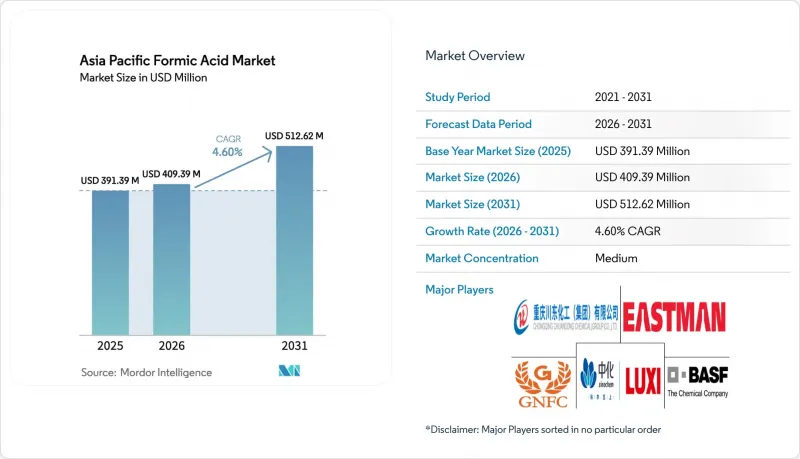
Mordor Intelligence에 따르면 아시아태평양의 포름산 시장 규모는 2025년에 3억 9,139만 달러로 평가되며, 2026년 4억 939만 달러에서 2031년까지 5억 1,262만 달러에 달할 것으로 예측되며, 예측 기간(2026-2031년) 동안 CAGR은 4.60%가 될 전망입니다.
본 보고서는 등급별(75%, 80%, 85%, 90%, 94%, 99%), 용도별(동물 사료, 가죽 무두질, 섬유 염색·마감, 의약품·화학제품 중간체, 기타), 그리고 지역별(중국, 인도,일본, 한국, 인도네시아, 태국, 말레이시아, 베트남 및 기타 아시아태평양)별로 분류되어 있습니다. 시장 예측은 금액(달러) 기준으로 제시되어 있습니다.
아시아태평양 포름산 시장의 동향 및 인사이트
가축 생산의 급증으로 사료 및 사일리지용 산 첨가제 수요 견인
2034년까지 아시아태평양의 축산 생산량은 전 세계 농업 성장 증가분의 54%를 차지할 것으로 예측되며, 그중 인도만으로도 그 증가분의 40% 가까이를 공급할 것으로 전망됩니다. 중저소득국에서 단백질이 풍부한 사료의 보급으로 평균 사료 소비량이 증가하고 있으며, 통합형 축산 기업들은 병원체 부하를 억제하고 항생제 사용을 줄이기 위해 포름산을 채택할 수밖에 없는 상황입니다. 중국에서 돼지고기와 가금류로 중점을 전환함에 따라 가축 생산 효율이 향상되고 있음에도 불구하고, 톤당 포름산 첨가제 수요는 유지되고 있습니다. 인도의 주요 사료 제조업체들은 현재 2025년에 제정될 수출용 생물안전 기준을 충족하기 위해 포름산을 포함한 유기산 혼합물을 지정하고 있습니다. GNFC와 RCF의 생산능력이 제한적이어서 지역 내 공급은 여전히 부족하며, 중국과 말레이시아의 수출업체들이 그 부족분을 보충하고 있습니다. 공급망 담당자에 따르면, 통합형 축산 기업들이 산 첨가제의 사용을 사망률 및 사료 전환율의 측정 가능한 감소와 연계하게 됨에 따라, 고순도 등급에 대한 가격 민감도는 완화되고 있다고 합니다.
중국·인도·아세안 지역의 가죽·섬유 산업 생산능력 확대
아시아 가죽 산업의 중심지에서는 유럽 및 북미 시장을 겨냥한 프리미엄 완제품으로의 전환이 진행되고 있으며, 이에 따라 가죽 무두질 공장에서는 산세척 및 크롬 마스킹 처리에 85-90%의 테크니컬 등급 포름산을 표준적으로 사용하고 있습니다. 2025년 중국과 인도에서 도입된 환경 규제로 인해 폐수 내 크롬 및 황산염의 허용치가 낮아지면서, 황산에서 포름산으로의 대체가 진행되었습니다. 동아시아의 포름산 생산 시설에서 진행된 계절적 유지보수가 2025년 가죽 생산의 급증과 겹치면서 국지적인 공급 부족이 발생했고, 현물 가격은 전 분기 대비 8% 상승했습니다. 방글라데시와 베트남의 섬유 염색 공장에서는 반응성 염료의 생산능력을 확대하고 ZDHC Roadmap to Zero의 화학제품 목록을 준수하기 위해 고정욕에서 포름산 사용을 우선시했습니다. 이해 관계자들에 따르면, 품질을 중시하는 구매자들은 가죽 표면의 팽윤이나 염색 색조 불균형을 초래하는 pH 변동을 엄격하게 평가하기 때문에 수요의 탄력성은 제한적이라고 합니다.
사료 및 제혁 업계에서의 저렴한 유기산 대체
프로피온산 및 아세트산은 고정비를 상쇄할 수 있는 통합형(베르분트) 시설에서 조달할 경우, 톤당 10-15%의 비용 측면에서 포름산보다 저렴합니다. 중국의 대형 사료 통합 기업은 2025년에 체중 증가 비용을 절감하기 위해 프로피온산을 주성분으로 하는 혼합물의 시범 도입을 시작했습니다. 또한 방글라데시의 가죽 무두질 업체들은 pH를 대폭 조정하는 데 아세트산을 사용하고, 마무리에 포름산을 사용하는 이중산 피클링 시스템으로 전환하고 있습니다. 태국과 인도네시아에서 라텍스 응고제로 목초액을 활용하는 현장 검증이 진행되고 있는 것은 소규모 농가 차원에서 또 하나의 대체 수단을 추가하는 것을 의미합니다. 원자재 가격 격차가 더욱 확대되면 대체 움직임이 가속화되어, 최종 시장의 수요량이 증가하고 있음에도 불구하고 프리미엄 등급의 성장이 주춤할 가능성이 있습니다.
부문 분석
2025년, 아시아태평양의 포름산 시장에서 85% 등급은 64.51%의 점유율을 차지하고 있으며, 주요 소비 클러스터가 생산능력을 확대함에 따라 2031년까지 연평균 성장률(CAGR) 4.08%로 성장할 것으로 예측됩니다. 통합형 대기업은 생산 과정에서 순도 수준을 전환할 수 있지만, 85% 등급은 가죽 가공업체, 염색업체, 고무 가공업체가 요구하는 수율, 부식 억제, pH 안정성의 균형 측면에서 여전히 최적의 선택지입니다. 중국과 베트남의 가죽 수출업체들은 일관된 포름산 산 처리로 더 부드럽고 결이 풍성한 마감 처리된 가죽에 대해 높은 단가를 받을 수 있어 수요가 더욱 견조해지고 있습니다. BASF가 2025년 6월에 출시한 탄소발자국이 낮은 85% 등급 제품은 지속가능성을 중시하는 조달의 모범이 되어, 향후 3년 동안 프리미엄 마이크로 부문을 개척할 가능성이 있습니다.
순도 75% 및 80% 등급은 가격에 민감한 고무 응고 용도나 범용 섬유 제품에 공급되고 있지만, 목초액이나 혼합 산으로의 대체가 진행되면서 시장 점유율이 줄어들고 있습니다. 고순도 90%, 94%, 99% 등급은 일본과 한국의 전자기기 세정, 의약품 중간체, 수소 저장 시범 프로젝트의 수요를 충족시키고 있지만, 판매량은 여전히 비교적 적은 상황입니다. 2030년 이후 틈새 시장에서 상용화가 예상되는 가운데, 일본의 연료전지 개발 기업이 직접식 포름산 연료전지의 양극에 순도 94%를 지정하고 있어 성장 전망은 밝아지고 있습니다. 2027년까지 Luxi Chemical사가 연간 40만 MT 규모의 생산 라인을 가동함에 따라 프리미엄 등급의 공급 안정성은 향상되겠지만, 수출 주도형 지역에서는 생산능력뿐만 아니라 지속가능성에 대한 노력 여부가 구매자의 선택을 좌우하게 될 것입니다.
기타 혜택:
- 엑셀 형식의 시장 예측(ME) 시트
- 3개월간의 애널리스트 지원
자주 묻는 질문
목차
제1장 소개
제2장 조사 방법
제3장 주요 요약
제4장 시장 구도
제5장 시장 규모와 성장 예측
제6장 경쟁 구도
제7장 시장 기회와 향후 전망
KSM 26.09.03According to Mordor Intelligence, the Asia Pacific formic acid market size was valued at USD 391.39 million in 2025 and is estimated to grow from USD 409.39 million in 2026 to reach USD 512.62 million by 2031, at a CAGR of 4.60% during the forecast period (2026-2031).
This report is Segmented by Grade Type (75%, 80%, 85%, 90%, 94%, and 99%), Application (Animal Feed, Leather Tanning, Textile Dyeing and Finishing, Intermediary in Pharmaceuticals and Chemicals, and Other Applications), and Geography (China, India, Japan, South Korea, Indonesia, Thailand, Malaysia, Vietnam, and Rest of Asia Pacific). The Market Forecasts are Provided in Terms of Value (USD).
Asia Pacific Formic Acid Market Trends and Insights
Livestock Boom Driving Demand for Feed and Silage Acidifiers
Asia Pacific livestock output is forecast to deliver 54% of incremental global agricultural growth by 2034, and India alone is projected to supply nearly 40% of that expansion. Protein-rich diets in lower-middle-income countries are raising average feed intensity, compelling integrators to adopt formic acid to curb pathogenic load and reduce antibiotic use. China's pivot toward pork and poultry sustains per-ton acidifier demand even as herd efficiency rises. Large Indian feed mills now specify organic-acid blends that include formic acid to meet export-oriented biosafety standards issued in 2025. Regional supply remains tight because GNFC and RCF operate modest capacities, allowing Chinese and Malaysian exporters to fill the gap. Supply chain managers report that price sensitivity has eased for high-purity grades as integrators link acidifier use to measurable reductions in mortality and feed conversion.
Leather and Textile Capacity Additions in China-India-ASEAN
Asian leather hubs are upgrading to premium finished goods destined for Europe and North America, prompting tanneries to standardize on 85-90% technical-grade formic acid for pickling and chrome masking. Environmental regulations introduced in China and India in 2025 mandated lower effluent chromium and sulfate thresholds, driving substitution away from sulfuric toward formic acid. Seasonal maintenance at East Asian formic acid units coincided with the 2025 leather production surge, causing localized tightness that lifted spot prices 8% quarter-on-quarter. Textile dyeing units in Bangladesh and Vietnam expanded capacity for reactive dyes, favoring formic acid in the fixation bath to comply with the ZDHC Roadmap to Zero chemicals list. Stakeholders indicate that demand elasticity is limited because quality-conscious buyers penalize pH drift that leads to leather grain swelling or dye shade variability.
Substitution by Cheaper Organic Acids in Feed and Tanning
Propionic and acetic acids undercut formic acid by 10-15% per ton when sourced from integrated Verbund sites able to amortize fixed costs. Large feed integrators in China began trialing propionic-dominant blends in 2025 to lower cost of gain, and Bangladeshi tanners have shifted to dual-acid pickling systems that use acetic acid for bulk pH adjustment with formic acid finishing. Wood vinegar's field validation as a latex coagulant in Thailand and Indonesia adds another substitution lever at the smallholder level. If raw-material spreads widen further, substitution could accelerate, capping premium-grade growth despite rising end-market volumes.
Other drivers and restraints analyzed in the detailed report include:
- Surging Rubber/Latex Chemical Consumption in Southeast Asia
- Pilot Projects Using Formic Acid as Liquid H2-Carrier Fuel
- Volatile Methanol/CO Feedstock Costs
For complete list of drivers and restraints, kindly check the Table Of Contents.
Segment Analysis
The 85% grade commanded 64.51% of the Asia Pacific formic acid market in 2025, and it is projected to grow at a 4.08% CAGR through 2031 as key consuming clusters widen capacity. Integrated giants can switch purity levels mid-run, but 85% remains the sweet spot between yield, corrosion control, and pH stability demanded by tanners, dyers, and rubber processors. Demand resilience is strengthened because leather exporters in China and Vietnam receive higher unit prices for softer, fuller grain finished with consistent formic-acid pickling. BASF's June 2025 launch of low-product-carbon-footprint 85% grade created a template for sustainability-driven procurement that may carve out a premium micro-segment over the next three years.
Purity bands at 75% and 80% serve price-sensitive rubber coagulation and commodity textile lines, but substitution by wood vinegar and blended acids is shaving share. High-purity 90%, 94%, and 99% grades fulfill electronics cleaning, pharmaceutical intermediates, and hydrogen-storage pilot demands in Japan and South Korea, yet volumes remain comparatively small. Growth visibility is rising as Japanese fuel-cell developers specify 94% purity for direct formic acid fuel-cell anodes, expecting niche commercialization post-2030. With Luxi Chemical bringing a 400,000 MT/y line onstream by 2027, supply security for premium grades improves, though sustainability credentials rather than capacity alone will shape buyer choice in export-driven belts.
Complete Report Scope:
- By Grade Type
- 85%
- 75%
- 80%
- 90%
- 94%
- 99%
- By Application
- Animal Feed
- Leather Tanning
- Textile Dyeing and Finishing
- Intermediary in Pharmaceuticals and Chemicals
- Other Applications
- By Geography
- China
- India
- Japan
- South Korea
- Indonesia
- Thailand
- Malaysia
- Vietnam
- Rest of Asia Pacific
List of Companies Covered in this Report:
- Addcon Group GmbH
- Anhui Asahi Kasei Chemical Co., Ltd.
- BASF
- Chongqing Chuandong Chemical (Group) Co., Ltd.
- Eastman Chemical Company
- Feicheng Acid Chemicals Co., Ltd.
- Gujarat Narmada Valley Fertilizers & Chemicals Limited
- Helm
- Kemira Oyj
- Luxi Group
- MKS Marmara Entegre Kimya
- Perstorp
- Rashtriya Chemicals and Fertilizers Limited
- Shandong Acid Technology Co., Ltd.
- Sintas Kurama Perdana
- Wanhua
- Wuhan Ruisunny Chemical Co., Ltd.
Additional Benefits:
- The market estimate (ME) sheet in Excel format
- 3 months of analyst support
TABLE OF CONTENTS
1 Introduction
- 1.1 Study Assumptions and Market Definition
- 1.2 Scope of the Study
2 Research Methodology
3 Executive Summary
4 Market Landscape
- 4.1 Market Overview
- 4.2 Market Drivers
- 4.2.1 Livestock Boom Driving Demand for Feed and Silage Acidifiers
- 4.2.2 Leather and Textile Capacity Additions in China-India-ASEAN
- 4.2.3 Surging Rubber/Latex Chemical Consumption in Southeast Asia
- 4.2.4 Pilot Projects Using Formic Acid as Liquid H2-Carrier Fuel
- 4.2.5 Make-In-India Incentives for Domestic Capacity Expansion
- 4.3 Market Restraints
- 4.3.1 Substitution by Cheaper Organic Acids in Feed and Tanning
- 4.3.2 Volatile Methanol/CO Feedstock Costs
- 4.3.3 Rising Compliance Costs for Corrosive-Chemical Handling
- 4.4 Value Chain Analysis
- 4.5 Porter's Five Forces
- 4.5.1 Bargaining Power of Suppliers
- 4.5.2 Bargaining Power of Buyers
- 4.5.3 Threat of New Entrants
- 4.5.4 Threat of Substitutes
- 4.5.5 Degree of Competition
5 Market Size and Growth Forecasts (Value)
- 5.1 By Grade Type
- 5.1.1 85%
- 5.1.2 75%
- 5.1.3 80%
- 5.1.4 90%
- 5.1.5 94%
- 5.1.6 99%
- 5.2 By Application
- 5.2.1 Animal Feed
- 5.2.2 Leather Tanning
- 5.2.3 Textile Dyeing and Finishing
- 5.2.4 Intermediary in Pharmaceuticals and Chemicals
- 5.2.5 Other Applications
- 5.3 By Geography
- 5.3.1 China
- 5.3.2 India
- 5.3.3 Japan
- 5.3.4 South Korea
- 5.3.5 Indonesia
- 5.3.6 Thailand
- 5.3.7 Malaysia
- 5.3.8 Vietnam
- 5.3.9 Rest of Asia Pacific
6 Competitive Landscape
- 6.1 Market Concentration
- 6.2 Strategic Moves
- 6.3 Market Share/Ranking Analysis
- 6.4 Company Profiles (includes Global level Overview, Market level overview, Core Segments, Financials as available, Strategic Information, Market Rank/Share for key companies, Products and Services, and Recent Developments)
- 6.4.1 Addcon Group GmbH
- 6.4.2 Anhui Asahi Kasei Chemical Co., Ltd.
- 6.4.3 BASF
- 6.4.4 Chongqing Chuandong Chemical (Group) Co., Ltd.
- 6.4.5 Eastman Chemical Company
- 6.4.6 Feicheng Acid Chemicals Co., Ltd.
- 6.4.7 Gujarat Narmada Valley Fertilizers & Chemicals Limited
- 6.4.8 Helm
- 6.4.9 Kemira Oyj
- 6.4.10 Luxi Group
- 6.4.11 MKS Marmara Entegre Kimya
- 6.4.12 Perstorp
- 6.4.13 Rashtriya Chemicals and Fertilizers Limited
- 6.4.14 Shandong Acid Technology Co., Ltd.
- 6.4.15 Sintas Kurama Perdana
- 6.4.16 Wanhua
- 6.4.17 Wuhan Ruisunny Chemical Co., Ltd.
7 Market Opportunities and Future Outlook
- 7.1 White-space and Unmet-Need Assessment