
|
시장보고서
상품코드
2120507
지붕 타일 : 시장 점유율 분석, 업계 동향 및 통계, 성장 예측(2026-2031년)Roofing Tiles - Market Share Analysis, Industry Trends & Statistics, Growth Forecasts (2026 - 2031) |
||||||
 Mordor Intelligence
Mordor Intelligence에 의하면, 지붕 타일 시장 규모는 2026년에 130억 1,000만 달러로 추정되며, 예측 기간(2026-2031년) CAGR 5.51%로 확대되어 2031년에는 171억 9,000만 달러에 이를 전망입니다.
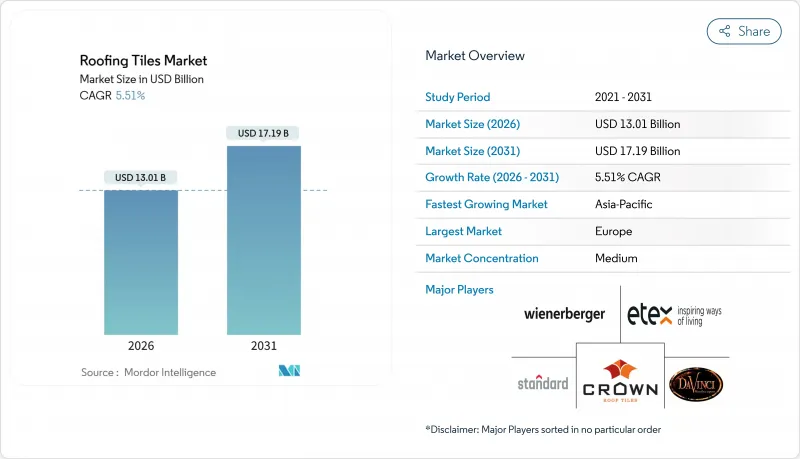
본 보고서는 소재 유형(콘크리트, 점토, 기타), 건설 활동(개보수·지붕 교체, 신축), 최종 용도 분야(주거용, 비주거용) 및 지역(아시아태평양, 북미, 유럽, 남미, 중동 및 아프리카)별로 분류되어 있습니다. 시장 전망은 금액(달러) 기준으로 제시되어 있습니다.
세계의 지붕 타일 시장 동향 및 인사이트
도시화의 진전과 신축 건설 활동의 확대
인도, 인도네시아, 베트남, 필리핀에서는 도시 인구 증가와 공공 인프라 정비에 따른 신규 주택단지 개발로 인해 주택 착공 건수가 증가하고 있습니다. 지방 도시로의 노동력 이동으로 인해 열섬 현상이 완화되면서, 정부의 에너지 인센티브 대상이 되는 내후성이 뛰어난 지붕 자재에 대한 수요가 높아지고 있습니다. 사우디아라비아와 아랍에미리트(UAE)의 개발업자들은 각국의 에너지 효율 기준을 충족하기 위해 메가 프로젝트에 고 SRI 지붕瓦 시스템을 채택하고 있습니다. 질량이 20-30% 낮은 경량 콘크리트 프로파일을 통해 신흥 시장의 목조 건축물에 적용이 가능해지면서, 대상 시장 기반이 확대되고 있습니다. 각 제조업체는 운송 비용을 최소화하고 탄소 국경 조정에 대응하기 위해 동남아시아에서 현지 생산을 확대되고 있습니다.
노후화된 주택 재고가 지붕 교체 수요를 견인
전후 호황기에 설치된 북미와 유럽의 지붕은 내구 연한에 다다르고 있으며, 자외선이 강한 지역이나 연안 지역에서는 지붕 교체 주기가 15-18년으로 단축되고 있습니다. 프랑스의 ‘기후·복원력 법’은 2030년까지 연간 37만 건의 주택 개보수를 목표로 하고 있으며, 많은 프로젝트에는 겨울철 열 손실을 최대 40%까지 줄이는 지붕 개보수가 포함되어 있습니다. 미국에서는 2023년에 주택 소유자들이 지붕 공사에 458억 달러를 지출했습니다. 우박 피해가 잦은 주의 보험사들은 보상을 유지하기 위해 클래스 4의 내충격 성능을 의무화하고 있습니다. 캘리포니아주의 ‘타이틀 24’와 같은 제도 덕분에 측정 가능한 에너지 절약 효과를 가져오고, 전력 회사의 리베이트 대상이 되는 ‘쿨 루프’ 타일에 대한 수요가 증가하고 있습니다.
비용 경쟁력이 뛰어난 아스팔트 슁글과 금속 패널
아스팔트 슁글은 콘크리트나 점토 기와에 비해 시공 비용을 40-50% 낮출 수 있어, 미국 주택용 지붕재 시장에서 여전히 큰 점유율을 차지하고 있습니다.
부문 분석
콘크리트 기와(콘크리트 타일)는 비용 효율성과 높은 압축 강도로 인해 2025년 지붕 타일 시장에서 47.05%의 점유율을 차지했습니다. 한편, 점토 기와는 역사적 보존 구역에서 수요와 해안 지역의 고급 주택 수요를 배경으로 연평균 성장률(CAGR) 6.74%로 성장하고 있습니다. 위너베르거(Wienerberger)사의 헝가리에 위치한 탄소 중립 공장은 연간 300만 m²를 생산하며, 저탄소 기와 생산에 대한 투자를 뒷받침하고 있습니다. 에디리언스(Edilians)와 같은 점토 기와 공급업체들은 380가지 이상의 색상 변형을 제공하여, 역사 지구가 지역의 전통적인 미관을 훼손하지 않으면서 SRI 요건을 충족할 수 있도록 지원하고 있습니다. BRAVA사의 재생 폴리에틸렌 제품 라인을 포함한 합성 복합재는 50년 보증을 내세우며, 염해 환경에서 틈새 시장 점유율을 개척하고 있습니다. 기존 제품보다 15-20% 가벼운 재생 골재 콘크리트 기와를 사용하면 지붕 하부 보강 없이도 목조 지붕에 설치할 수 있습니다.
2025년에는 구조적 하중 제한이 비교적 완화됨에 따라 콘크리트 기와가 주로 공동 주택 및 상업시설 프로젝트에 사용되는 반면, 점토 기와는 주로 고급 주택 수요를 충족하는 데 사용되었습니다. 생산 라인이 저탄소 가마 및 태양광 발전 대응 방식으로 개조됨에 따라, 점토 기와가 가장 빠른 성장을 이룰 것으로 예측됩니다. 각 제조업체는 금속 기와나 섬유 시멘트 기와로 사업을 다각화하고 있지만, 이러한 소재를 합쳐도 2026년까지는 판매량이 적은 수준을 유지할 것입니다.
지역별 분석
2025년, 유럽은 지붕 타일 시장에서 40.02%의 점유율을 유지했습니다. 이는 EU가 의무화한 쿨루프 규제와 적극적인 개보수 할당 목표에 힘입은 결과입니다. 프랑스만 해도 2030년까지 매년 37만 호의 주택 개보수를 의무화하고 있으며, 에디리안스(Edilians) 등 주요 기업들은 에너지 효율과 문화재 보호 기준을 동시에 충족하는 SRI 80 이상의 점토 기와를 공급하고 있습니다. 북유럽의 개보수 프로그램에서는 추가적인 구조 보강 없이 목조 주택을 개보수할 수 있도록 경량 기와가 선호되고 있습니다. 한편, 스페인과 포르투갈에서는 SRI 수치가 높은 점토 기와를 미주와 중동으로 수출하고 있습니다. 2024년 위너베르거(Wienerberger)사가 테레알(Teleal)사를 6억 유로에 인수함에 따라 업계 재편이 진행되었고, 서유럽 전역의 유통망이 확대되었습니다.
인도, 인도네시아, 베트남, 필리핀이 주택 및 인프라 건설 계획을 확대함에 따라, 아시아태평양은 2031년까지 연평균 성장률(CAGR) 7.19%를 기록하며 가장 빠르게 성장하는 지역이 되고 있습니다. 인도네시아의 도시화율은 2030년까지 71%를 나타낼 것으로 예측되며, 인도의 정부 프로그램이 주택 착공의 견조한 성장을 뒷받침하고 있습니다. 일본과 한국에서는 내진 기준에 따라 태양광 발전 셀이 통합된 경량 점토 프로파일의 채택이 확대되고 있습니다. 중국에서는 부동산 부문의 레버리지 축소로 인해 수요가 여전히 저조하지만, 해안 지역의 개보수 공사가 도시 지역의 열섬 현상을 완화하는 고SRI 기와 수요를 뒷받침하고 있습니다.
북미 수요는 텍사스주, 플로리다주, 콜로라도주의 주요 보험사들이 내충격 성능을 갖춘 지붕을 의무화하고 있는 점이 뒷받침하고 있습니다. 캘리포니아주의 ‘타이틀 24’는 경사가 가파른 지붕에 SRI 기준치를 의무화하고 있어, 열섬 현상이 발생하는 지역에서 기와로의 전환을 촉진하고 있습니다. 캐나다에서는 금리 인하로 인해 온타리오주와 브리티시컬럼비아주에서 단독주택 착공 건수가 회복되었습니다. 한편, 멕시코에서는 니어쇼어링 추세가 쿨루프 사양의 콘크리트 기와를 선호하는 신규 상업용 지붕 건설을 뒷받침하고 있습니다. 남미에서의 보급은 여전히 회복세를 보이고 있는 브라질의 주택 부문에 집중되어 있습니다.
기타 혜택 :
- 엑셀 형식 시장 예측(ME) 시트
- 3개월간의 애널리스트 지원
자주 묻는 질문
목차
제1장 서론
제2장 조사 방법
제3장 주요 요약
제4장 시장 구도
제5장 시장 규모 및 성장 예측
제6장 경쟁 구도
제7장 시장 기회 및 향후 전망
KTH 26.09.10According to Mordor Intelligence, the roofing tiles market size is estimated at USD 13.01 billion in 2026, and is expected to reach USD 17.19 billion by 2031, at a CAGR of 5.51% during the forecast period (2026-2031).
This report is Segmented by Material Type (Concrete, Clay, and Other Types), Construction Activity (Renovation and Replacement and New Construction), End-Use Sector (Residential and Non-Residential), and Geography (Asia-Pacific, North America, Europe, South America, and Middle East and Africa). Market Forecasts are Provided in Terms of Value (USD).
Global Roofing Tiles Market Trends and Insights
Rising Urbanization and New-Build Activity
Residential starts in India, Indonesia, Vietnam, and the Philippines are expanding as urban populations grow and public infrastructure programs unlock greenfield housing. Workforce migration into secondary cities supports demand for weather-resilient roofs that mitigate heat-island effects and qualify for government energy incentives. Developers in Saudi Arabia and the UAE are specifying high-SRI tile systems for mega-projects to satisfy national energy-efficiency frameworks. Lightweight concrete profiles with 20-30% lower mass are enabling use on wood-framed structures in emerging markets, widening the addressable base. Manufacturers are localizing production in Southeast Asia to minimize freight costs and navigate carbon-border policies.
Aging Housing Stock Fuels Reroofing
North American and European roofs installed during post-war booms are reaching end-of-life, compressing the reroof cycle to 15-18 years in high-UV or coastal zones. France's Climate & Resilience Act targets 370,000 annual home renovations through 2030, and many projects include roof upgrades that reduce winter heat loss by up to 40%. In the United States, homeowners spent USD 45.8 billion on roofing projects in 2023, with insurers in hail-prone states requiring Class 4 impact ratings to retain coverage. Programs such as California Title 24 boost demand for cool-roof tiles that deliver measurable energy savings and qualify for utility rebates.
Cost-Competitive Asphalt Shingles and Metal Panels
Asphalt shingles retain a major share of U.S. residential roofing because installed costs remain 40-50% lower than those of concrete or clay tiles.
Other drivers and restraints analyzed in the detailed report include:
- Concrete-Tile Substitution After Extreme-Weather Losses
- Mandatory Cool-Roof Codes in Heat-Island Cities
- Skilled-Labor Shortages Raise Installation Costs
For complete list of drivers and restraints, kindly check the Table Of Contents.
Segment Analysis
Concrete commanded a 47.05% roofing tiles market share in 2025 due to cost efficacy and compressive strength, yet clay is growing at a 6.74% CAGR on heritage-zone preference and premium coastal demand. Wienerberger's CO2-neutral plant in Hungary produces 3 million m2 annually and underscores investment in low-carbon tile production. Clay suppliers such as Edilians offer more than 380 colors, helping historic districts comply with SRI requirements without altering vernacular aesthetics. Synthetic composites, including BRAVA's recycled-polyethylene lines, are carving niche share in salt-spray environments with 50-year warranties. Recycled-aggregate concrete tiles, 15-20% lighter than legacy products, enable installation on wood-framed roofs without deck reinforcement.
Concrete tiles were used largely in multifamily and commercial projects in 2025 because structural load limits are more generous, while clay tiles primarily served premium residential demand. Clay is projected to capture the fastest growth as production lines retrofit to low-carbon kilns and photovoltaic-ready formats. Manufacturers are diversifying into metal and fiber-cement tiles, yet these materials combined capture low volumes through 2026.
Complete Report Scope:
- By Material Type
- Concrete
- Clay
- Other Types (Synthetic / Composite, Metal, etc.)
- By Construction Activity
- Renovation and Replacement
- New Construction
- By End-use Sector
- Residential
- Non-residential
- Commercial
- Infrastructure
- Industrial and Institutional
- By Geography
- Asia-Pacifc
- China
- India
- Japan
- South Korea
- ASEAN Countries
- Rest of Asia-Pacific
- North America
- United States
- Canada
- Mexico
- Europe
- Germany
- United Kingdom
- France
- Italy
- NORDIC Countries
- Rest of Europe
- South America
- Brazil
- Argentina
- Rest of South America
- Middle East and Africa
- Saudi Arabia
- United Arab Emirates
- South Africa
- Egypt
- Rest of Middle East and Africa
- Asia-Pacifc
Geography Analysis
Europe sustained a 40.02% share of the roofing tiles market in 2025, upheld by EU-mandated cool-roof codes and aggressive renovation quotas. France alone mandates 370,000 annual home retrofits through 2030, and leaders such as Edilians supply clay tiles with SRI more than 80 that satisfy both energy and heritage criteria. Nordic retrofit programs prefer lightweight tiles to upgrade timber-framed dwellings without extra structural reinforcement, while Spain and Portugal export high-SRI clay tiles to the Americas and Middle East. Consolidation advanced when Wienerberger acquired Terreal for EUR 600 million in 2024, broadening distribution across Western Europe.
Asia-Pacific is the fastest-growing region at 7.19% CAGR through 2031 as India, Indonesia, Vietnam, and the Philippines expand housing and infrastructure pipelines. Urbanization in Indonesia is projected to hit 71% by 2030, and government programs in India underpin strong residential starts. Seismic codes in Japan and South Korea drive adoption of lightweight clay profiles that integrate photovoltaic cells. Chinese demand remains muted amid property deleveraging, but retrofit activity in coastal provinces supports high-SRI tiles that mitigate urban heat.
North American demand is propelled by leading insurers in Texas, Florida, and Colorado that require impact-rated roofs. California Title 24 mandates SRI thresholds on steep-slope roofs, driving tile substitution in heat-island areas. Canada's single-family starts rebounded in Ontario and British Columbia after rate cuts, while Mexico's nearshoring trend fuels new commercial roofs that favor cool-roof concrete tiles. South American uptake remains concentrated in Brazil's recovering residential sector.
- BRAVA
- CeDUR
- Crown Roof Tiles
- Eagle Roofing Products
- Etex Group
- Hangzhou Singer Building Materials Co., Ltd.
- IKO Industries, Inc.
- Imerys
- KPG Roofings
- LA ESCANDELLA
- LUDOWICI ROOF TILES
- MCA Clay Roof Tile
- Standard Industries Inc. (BMI Group)
- Vande Hey Raleigh
- Verea Clay Tile
- Westlake DaVinci Roofscapes LLC
- Wienerberger AG
Additional Benefits:
- The market estimate (ME) sheet in Excel format
- 3 months of analyst support
TABLE OF CONTENTS
1 Introduction
- 1.1 Study Assumptions and Market Definition
- 1.2 Scope of the Study
2 Research Methodology
3 Executive Summary
4 Market Landscape
- 4.1 Market Overview
- 4.2 Market Drivers
- 4.2.1 Rising Urbanisation and New-Build Activity in APAC And Africa
- 4.2.2 Ageing Housing Stock Drives Reroofing Demand in North America and Europe
- 4.2.3 Concrete-Tile Substitution for Asphalt After Extreme-Weather Insurance Losses
- 4.2.4 Mandatory Cool-Roof Codes in Heat-Island Cities (e.g., CA Title 24, EU EPBD)
- 4.2.5 3-D-Printed Lightweight Tiles Shorten Installation Time and Cut Logistics Costs
- 4.2.6 Carbon-Border Levies Accelerate Adoption of Low-Carbon Kiln Technology
- 4.3 Market Restraints
- 4.3.1 Cost-Competitive Asphalt Shingles and Metal Panels
- 4.3.2 Skilled-Labour Shortages Raise Installation Costs
- 4.3.3 Volatile Energy Prices Disrupt Clay-Kiln Economics
- 4.3.4 Water-Extraction Limits in Drought-Prone Regions
- 4.4 Value / Supply-Chain Analysis
- 4.5 Regulatory Landscape
- 4.6 Technological Outlook
- 4.7 Porter's Five Forces
- 4.7.1 Bargaining Power of Suppliers
- 4.7.2 Bargaining Power of Buyers
- 4.7.3 Threat of New Entrants
- 4.7.4 Threat of Substitutes
- 4.7.5 Degree of Competition
5 Market Size and Growth Forecasts (Value)
- 5.1 By Material Type
- 5.1.1 Concrete
- 5.1.2 Clay
- 5.1.3 Other Types (Synthetic / Composite, Metal, etc.)
- 5.2 By Construction Activity
- 5.2.1 Renovation and Replacement
- 5.2.2 New Construction
- 5.3 By End-use Sector
- 5.3.1 Residential
- 5.3.2 Non-residential
- 5.3.2.1 Commercial
- 5.3.2.2 Infrastructure
- 5.3.2.3 Industrial and Institutional
- 5.4 By Geography
- 5.4.1 Asia-Pacifc
- 5.4.1.1 China
- 5.4.1.2 India
- 5.4.1.3 Japan
- 5.4.1.4 South Korea
- 5.4.1.5 ASEAN Countries
- 5.4.1.6 Rest of Asia-Pacific
- 5.4.2 North America
- 5.4.2.1 United States
- 5.4.2.2 Canada
- 5.4.2.3 Mexico
- 5.4.3 Europe
- 5.4.3.1 Germany
- 5.4.3.2 United Kingdom
- 5.4.3.3 France
- 5.4.3.4 Italy
- 5.4.3.5 NORDIC Countries
- 5.4.3.6 Rest of Europe
- 5.4.4 South America
- 5.4.4.1 Brazil
- 5.4.4.2 Argentina
- 5.4.4.3 Rest of South America
- 5.4.5 Middle East and Africa
- 5.4.5.1 Saudi Arabia
- 5.4.5.2 United Arab Emirates
- 5.4.5.3 South Africa
- 5.4.5.4 Egypt
- 5.4.5.5 Rest of Middle East and Africa
- 5.4.1 Asia-Pacifc
6 Competitive Landscape
- 6.1 Market Concentration
- 6.2 Strategic Moves
- 6.3 Market Share(%)/Ranking Analysis
- 6.4 Company Profiles (includes Global level Overview, Market level overview, Core Segments, Financials as available, Strategic Information, Market Rank/Share for key companies, Products and Services, and Recent Developments)
- 6.4.1 BRAVA
- 6.4.2 CeDUR
- 6.4.3 Crown Roof Tiles
- 6.4.4 Eagle Roofing Products
- 6.4.5 Etex Group
- 6.4.6 Hangzhou Singer Building Materials Co., Ltd.
- 6.4.7 IKO Industries, Inc.
- 6.4.8 Imerys
- 6.4.9 KPG Roofings
- 6.4.10 LA ESCANDELLA
- 6.4.11 LUDOWICI ROOF TILES
- 6.4.12 MCA Clay Roof Tile
- 6.4.13 Standard Industries Inc. (BMI Group)
- 6.4.14 Vande Hey Raleigh
- 6.4.15 Verea Clay Tile
- 6.4.16 Westlake DaVinci Roofscapes LLC
- 6.4.17 Wienerberger AG
7 Market Opportunities and Future Outlook
- 7.1 White-space and Unmet-need Assessment