

|
시장보고서
상품코드
2120635
레시틴 : 시장 점유율 분석, 업계 동향 및 통계, 성장 예측(2026-2031년)Lecithin - Market Share Analysis, Industry Trends & Statistics, Growth Forecasts (2026 - 2031) |
||||||
 Mordor Intelligence
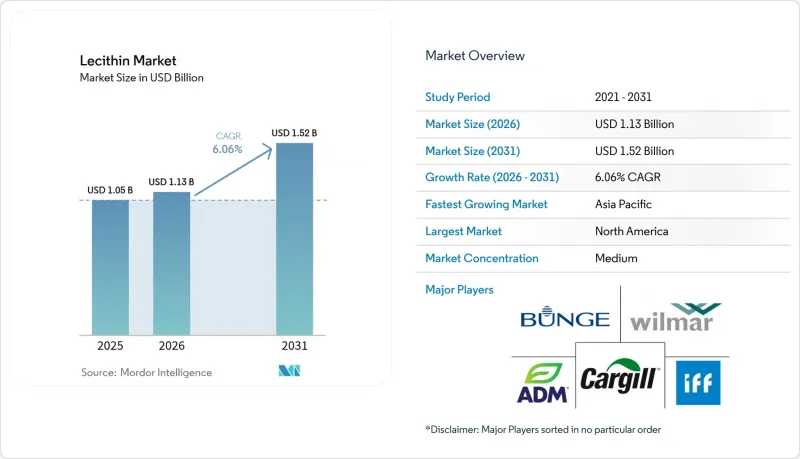
Mordor Intelligence에 의하면, 레시틴 시장 규모는 2025년 10억 5,000만 달러로 평가되었습니다. 2026년에는 11억 3,000만 달러로 확대되어 2031년까지 15억 2,000만 달러에 이를 것으로 예상되고 2026-2031년에 걸쳐 CAGR 6.06%로 성장할 전망입니다.

본 보고서는 공급원별(대두, 해바라기, 유채·카놀라, 계란, 기타), 등급별(식품 등급, 의약품 등급, 산업용 등급), 형태별(액체, 분말·과립),성질별(일반, 유기농), 용도별(식품 및 음료, 동물사료, 영양 보충제, 의약품, 기타), 지역별(북미, 유럽, 아시아태평양, 기타)로 분류되어 있습니다. 시장 예측은 금액(미 달러) 기준으로 제시되어 있습니다.
세계의 레시틴 시장 동향 및 인사이트
가공식품 및 편의식품에서의 유화제·안정제 사용 증가
신속하고 바로 섭취할 수 있는 식품에 대한 소비자 수요가 가공식품 및 편의식품에서 레시틴 등의 유화제 및 안정제 사용 증가를 주도하고 있습니다. 이러한 성분들은 식감, 유통기한, 관능적 매력을 향상시키는 데 중요한 역할을 하며, 변화하는 가계 지출 추세와 부합합니다. 예를 들어, 영국 환경·식품·농촌(Defra)에 따르면, 2024년 말 기준 영국 평균 가구는 식품 및 무알코올 음료에 주당 70.50파운드를 지출했으며, 이는 2023년 말의 63.50파운드에서 11% 증가한 수치입니다. 이러한 변화는 잦은 집밥 요리보다는 가성비가 뛰어난 편의성을 우선시하는 더욱 엄격해진 가계 예산을 반영하고 있습니다. 산업용 유화제 ‘Topcithin’ 시리즈를 출시한 카길(Cargill)이나 제빵 및 제과 제품의 안정화를 위해 대두 유래 레시틴을 공급하는 ADM과 같은 대형 제조업체들은 클린 라벨 솔루션을 통해 이러한 수요에 부응하고 있습니다. 이러한 제품들은 풍미를 해치지 않으면서 소스나 스프레드 등의 제품에서 지방의 균일한 분산을 보장합니다. 또한, 해바라기나 대두 유래의 비유전자변형 원료를 조달함으로써 유럽 및 북미의 투명한 표시 관련 규제 요건도 준수하고 있습니다. 이러한 동향은 아시아태평양의 가공식품 시장의 급속한 성장과 전 세계적인 클린 라벨 흐름에 힘입어 레시틴의 채택을 촉진하고 있습니다.
동물 영양 및 배합 사료 부문에서의 확산 확대
동물 영양 및 배합 사료 분야로의 레시틴 침투가 진행되고 있어, 가축, 가금류, 수산 양식용 사료에서 레시틴의 채택을 뒷받침하고 있습니다. 레시틴의 천연 유화 특성과 인지질이 풍부한 조성은 지방의 소화율, 영양소 흡수, 사료 효율을 높여 현대 사료 시스템에서 선호되는 원료가 되고 있습니다. 경쟁하는 동물 영양 산업의 배합 기술자들은 클린 라벨 및 지속가능성 요건을 충족하면서 사료의 성능을 향상시켜야 한다는 압박에 직면해 있습니다. 이로 인해 사료용 레시틴을 공급하는 루이 드레퓌스 컴퍼니(Louis Dreyfus Company)나 동물사료용 대두 레시틴 제품으로 잘 알려진 세페트라(Cefetra)와 같은 공급업체로부터 식물성 레시틴에 대한 수요가 증가하고 있습니다. 레시틴은 에너지 이용을 촉진하고 기호성을 향상시켜, 성장률과 가축의 건강을 최적화하려는 배합 사료 제조업체의 목표와 부합합니다. 산업적 사료 생산 능력의 확대와 고성능 첨가제 포트폴리오로의 전환에 따라, 전 세계적으로 표준 사료 배합 및 특수 영양 혼합물에 레시틴을 포함시키는 추세가 더욱 가속화되고 있습니다. 또한, 레시틴은 지용성 비타민과 사료용 유지의 안정성을 높여 제품의 일관성과 유통 기한을 보장합니다. 축산 농업 종사자들 사이에서 동물 복지와 생산성 향상에 대한 인식이 높아지고 있는 점도 레시틴의 채택을 뒷받침하고 있습니다. 전 세계적으로 정밀 사료 급여 및 사료 강화 전략의 도입이 진행되고 있는 만큼, 동물 영양 시장에서 레시틴에 대한 수요는 계속해서 견조하게 증가할 것으로 예측됩니다.
원료 공급 상황 및 가격 변동
원료 공급 상황과 가격 변동은 레시틴 제조업체에게 여전히 과제로 남아 있습니다. 생산이 여전히 유채종자의 압유 공정에 크게 의존하고 있기 때문에 대두나 유채와 같은 주요 원료에 영향을 미치는 농업 주기, 기상 이변, 지정학적 사건의 영향을 받기 쉽기 때문입니다. 미국 농무부(USDA) 보고서에 따르면, 중서부 핵심 생산 지역의 가뭄 영향으로 2024-2025년에 걸쳐 미국의 대두 재고 대 사용 비율이逼迫하고 있으며, 이로 인해 대두박 및 대두유 가격이 상승하여 레시틴 추출의 이익률을 압박하고 있습니다. 이로 인해 사료 원료 제조업체들은 더욱 좁아진 이익 폭 속에서 사업을 운영할 수밖에 없는 상황입니다. 게다가 미국, 유럽연합(EU), 브라질의 바이오연료 의무화로 인해 대량의 대두유와 유채유가 바이오디젤 생산에 전용되면서, 레시틴 추출에 활용할 수 있는 원유가 제한되고, 식품 원료 공급망 전반에 걸친 가격 변동이 심화되고 있습니다. 수직 통합이나 헤지 능력이 제한적인 가공업체들은 유지종자 비용이 급등하는 시기에 심각한 이익률 압박에 직면하여, 생산 능력 확대, 제품 혁신, 혹은 장기 공급 계약에 대한 투자 능력이 제한되고 있습니다. 에너지 정책과 기후 변화가 원료 수급 동향에 점점 더 큰 영향을 미치는 가운데, 원료 가격 변동의 예측 어려움은 비용, 공급 신뢰성, 세계 경쟁 균형을 도모하려는 제조업체에게 여전히 중대한 장애물로 작용하고 있습니다.
부문별 분석
2025년, 대두 레시틴은 레시틴 시장에서 가장 큰 점유율을 차지하여 총 수량의 64.72%를 차지했습니다. 이러한 우위는 견실한 대두 압착 능력, 확립된 공급망, 비용 면에서의 우위에서 기인하며, 사료, 산업 용도료, 일반 제빵 제품 등 가격에 민감한 용도에서 선호되는 유화제로 자리 잡고 있습니다. 대체품의 등장에도 불구하고, 대두 레시틴은 입수하기 쉽고 배합 담당자들의 지지도 두터워 대규모 식품 생산에서 여전히 주류 원료로 자리 잡고 있습니다. 한편, 해바라기 레시틴은 알레르기 유발 물질을 포함하지 않는다는 점, 비유전자변형(비GMO) 인증, 중성적인 풍미 등이 뒷받침되어 2031년까지 연평균 성장률(CAGR) 7.61%를 나타낼 것으로 예측됩니다. 이러한 특성은 원료의 투명성과 ‘클린 라벨’의 간결성을 중시하는 고급 식품, 영양 보조 식품, 화장품의 배합 개발자들에게 지지를 받고 있습니다. 이러한 변화는 특히 원료에 대한 면밀한 검토와 제3자 인증이 구매 결정에 영향을 미치는 선진국 시장에서 알레르기 유발 물질이 관리된 원료나 ‘-무첨가’ 원료에 대한 소비자 수요 증가와 일치합니다.
유채·카놀라 레시틴은 캐나다나 북유럽 등지에서 틈새 시장이지만 안정적인 입지를 차지하고 있으며, 균형 잡힌 지방산 구성과 낮은 에르카산 함량이 높이 평가받고 있습니다. 그러나 그 공급은 지역에 따른 카놀라의 수확 주기 및 생산량 변동에 의해 제약을 받고 있습니다. 인산지질 함량이 높고 우수한 유화 성능으로 알려진 계란 레시틴은 고가대로 거래되며, 의약품 및 화장품 부문에서 선호되고 있습니다. 그러나 비용, 알레르기 유발 물질에 대한 우려, 복잡한 공급망이 그 보급을 제한하고 있습니다. 쌀겨나 옥수수 유래 레시틴과 같은 다른 원료는 인지질 수율이 낮고 추출 인프라가 제한적이어서 여전히 미미한 비중을 차지하고 있습니다. 규제 요건 또한 시장을 더욱 형성하고 있는데, 미국 농무부(USDA)의 유기농 인증에서는 대두 및 해바라기 레시틴에 대해 비유전자변형(비GMO) 종자 조달과 무용매 추출이 의무화되어 있는 반면, 달걀 레시틴은 엄격한 살균 처리와 알레르기 유발 물질 표시 기준을 충족해야 합니다. 이러한 요인들은 레시틴 시장 전반에 걸쳐 배합 전략 및 규정 준수 관련 고려 사항에 지속적으로 영향을 미치고 있습니다.
2025년에는 식품용 레시틴이 전 세계 매출의 대부분을 차지했으며, 제빵, 제과, 유제품, 음료, 편의 식품 분야에서의 광범위한 사용으로 시장 점유율 56.58%를 기록했습니다. 유화, 경화 방지 효과, 식감 조절과 같은 주요 기능은 제품의 품질을 유지하고 유통 기한을 연장하는 데 필수적입니다. 아메리칸 레시틴 컴퍼니를 비롯한 주요 기업들은 복잡한 식품 시스템 내의 특정 기능적 요구 사항을 충족하기 위해 맞춤형 인지질 프로파일을 제공하여 일관된 식감과 수분 관리를 보장하고 있습니다. 가공 식품의 감각적 특성 향상 및 효율적인 배합에 대한 소비자 수요가 계속해서 채택을 촉진하고 있습니다. 또한, 안전성과 순도에 관한 엄격한 규제 기준을 준수함으로써 전 세계 밸류체인 전반에 걸친 광범위한 활용이 뒷받침되고 있습니다. 산업용 레시틴은 이를 보완하는 형태로 도료, 코팅, 윤활제, 가죽 가공 등 비식품 산업에서도 활용되고 있습니다. 이러한 부문에서는 규제 요건이 그리 엄격하지는 않지만, 그 유화성과 습윤성이 높이 평가받고 있습니다. 이러한 다층적인 등급 체계를 통해 생산자는 특정 성능 요건이나 규정 준수 요건을 충족하면서 다양한 시장에서 수익을 극대화할 수 있습니다.
의약품 등급 레시틴은 지질 나노입자 등 지질계 캐리어로의 사용 확대에 힘입어 2031년까지 연평균 성장률(CAGR) 8.91%라는 견실한 성장이 예상됩니다. 이러한 캐리어는 생체 이용률을 향상시키고, 부작용을 경감시키며, 표적에 맞춘 약물 방출을 가능하게 합니다. 의약품 용도의 고순도 레시틴 제조에는 낮은 과산화물 지수, 관리된 중금속 함량, 규정된 인지질 조성 등 엄격한 사양 준수가 요구됩니다. 이로 인해 식품용이나 산업용 등급에 비해 제조의 복잡성과 비용이 증가합니다. 고령화를 배경으로 한 만성 질환 치료에 대한 수요 증가와 치료 효과를 높이기 위한 종양학 부문에서의 지질 나노입자 제제 채택이 이 부문을 더욱 강화하고 있습니다. 또한, 백신 개발 기업들은 안정화 인지질로 고품질 레시틴 분획을 배합한 지질 나노입자(LNP)를 점점 더 많이 활용하고 있으며, 이는 첨단 바이오의약품 용도에서의 그 중요성이 부각되고 있음을 보여줍니다. 이러한 요인들이 복합적으로 작용하여 시장의 성장 궤도를 형성하고, 공급업체의 전략에 영향을 미치고 있습니다.
지역별 분석
북미는 전 세계 레시틴 수요에서 가장 큰 점유율을 차지하고 있으며, 2025년에는 35.15%를 차지했습니다. 이러한 우위는 확립된 클린 라벨 생태계, 높은 영양 보조제 소비량, 식품, 의약품, 화장품 제형에서 레시틴 사용을 뒷받침하는 견고한 규제 체계에 의해 지탱되고 있습니다. 카길(Cargill)과 같은 원료 공급업체들은 이러한 구조적 우위를 활용하여, 표준화되고 라벨 표시를 고려한 유화제를 필요로 하는 제빵, 제과, 음료, 뉴트라슈티컬(영양 기능성 식품) 제조업체에 제품을 공급하고 있습니다. 이 지역에서 기능성 식품 및 보충제의 보급이 확대되고 있는 것이 고순도 및 특수 등급 레시틴에 대한 수요를 뒷받침하고 있습니다. 또한, GRAS(일반적으로 안전하다고 인정되는) 지위 및 식품 첨가물 승인에 관한 규제의 명확화가 시장 침투를 촉진하여, 수량과 금액 양면에서 북미의 주도적 위치를 공고히 하고 있습니다.
아시아태평양은 가장 빠르게 성장하는 지역으로, 2031년까지의 연평균 성장률(CAGR)은 8.32%로 예측됩니다. 중국, 인도, 베트남 등 국가들의 가처분 소득 증가, 도시화, 가공식품 및 편의식품 소비 확대가 기능성 원료에 대한 수요를 견인하고 있습니다. 식품 배합에서 식감, 안정성, 유통기한 개선에 레시틴이 수행하는 역할은 이 지역에서 레시틴이 중요한 원료로서의 지위를 확립하게 했습니다. 윌마 인터내셔널(Wilmar International) 등의 기업은 유채종자의 압착과 지역 내 가공 능력을 통합함으로써 이점을 얻고 있으며, 제빵 및 제과·유제품 제조업체에 대한 현지 공급을 확보하고 있습니다. 이 지역의 성장은 단백질 섭취량 증가, 현대적인 소매업의 확대, 포장 식품의 보급으로의 전환을 반영하고 있으며, 세계 레시틴 시장에서 주요 성장 동력으로서의 역할을 확고히 하고 있습니다.
유럽은 프리미엄 레시틴 제품에 초점이 맞추어진 성숙한 시장입니다. 엄격한 알레르기 유발 물질 표시, 유기농 인증 요건, 클린 라벨에 대한 선호로 인해, 비유전자변형이며 알레르기 유발 물질이 관리된 레시틴, 특히 해바라기나 유채 유래 제품에 대한 수요가 주도되고 있습니다. 이러한 제품들은 제과, 초콜릿, 영유아용 식품, 영양 보조제 등의 부문에서 더 높은 가격대로 거래되고 있습니다. 한편, 남미는 주요 대두 생산 거점에 인접해 있다는 이점을 활용하여 국내 시장과 수출 시장에 대한 안정적인 레시틴 공급을 확보하고 있습니다. 중동 및 아프리카에서는 지속적으로 성장하는 제빵, 제과, 유제품 부문이 비즈니스 기회를 제공하고 있지만, 가격 민감도, 인프라 측면의 과제, 저비용 유화제와의 경쟁으로 인해 레시틴의 채택은 제한적인 상황입니다.
기타 혜택
- 엑셀 형식 시장 예측(ME) 시트
- 3개월간의 애널리스트 지원
자주 묻는 질문
목차
제1장 서론
제2장 조사 방법
제3장 주요 요약
제4장 시장 역학
제5장 시장 규모 및 성장 예측
제6장 경쟁 구도
제7장 시장 기회 및 향후 전망
KTH 26.09.04According to Mordor Intelligence, the lecithin market size is expected to increase from USD 1.05 billion in 2025 to USD 1.13 billion in 2026 and reach USD 1.52 billion by 2031, growing at a CAGR of 6.06% over 2026-2031.
This report is Segmented by Source (Soy, Sunflower, Rapeseed/Canola, Egg, Other Sources), Grade (Food, Pharmaceutical, Industrial), Form (Liquid, Powder and Granules), Nature (Conventional, Organic), Application (Food and Beverage, Animal Feed, Dietary Supplements, Pharmaceuticals, and More), and Geography (North America, Europe, Asia-Pacific, and More). The Market Forecasts are Provided in Terms of Value (USD).
Global Lecithin Market Trends and Insights
Rising use of emulsifiers and stabilizers across processed and convenience foods
Consumer demand for quick, ready-to-eat options is driving the increased use of emulsifiers and stabilizers, such as lecithin, in processed and convenience foods. These ingredients play a critical role in improving texture, shelf life, and sensory appeal, aligning with shifting household spending patterns. For example, the average UK household spent GBP 70.50 per week on food and non-alcoholic drinks in FYE 2024, an 11% increase from GBP 63.50 in FYE 2023, according to the Department for Environment, Food & Rural Affairs . This shift reflects tighter budgets prioritizing value-driven convenience over frequent home cooking. Leading manufacturers such as Cargill, with its Topcithin range for industrial emulsions, and ADM, offering soy-based lecithins for bakery and confectionery stabilization, are addressing this demand with clean-label solutions. These products ensure uniform fat dispersion in items like sauces and spreads without altering flavor profiles. Additionally, non-GMO sourcing from sunflower or soy aligns with regulatory requirements in Europe and North America for transparent labeling. This trend supports lecithin adoption, driven by Asia-Pacific's rapid processed food growth and global clean-label momentum.
Stronger penetration in animal nutrition and compound feed formulations
The increasing penetration of lecithin in animal nutrition and compound feed formulations is driving its adoption across livestock, poultry, and aquaculture diets. Lecithin's natural emulsifying properties and phospholipid-rich profile enhance fat digestibility, nutrient absorption, and feed efficiency, making it a preferred ingredient in modern feed systems. Formulators in the competitive animal nutrition industry are under pressure to improve feed performance while meeting clean-label and sustainability requirements. This has led to rising demand for plant-derived lecithin from suppliers such as Louis Dreyfus Company, offering feed-grade lecithin, and Cefetra, known for soybean lecithin products tailored for animal feed. Lecithin supports energy utilization and improves palatability, aligning with compound feed producers' objectives to optimize growth rates and herd health. Expanding industrial feed production capacity and a shift toward high-performance additive portfolios are further integrating lecithin into standard feed rations and specialized nutrition blends globally. Additionally, lecithin stabilizes fat-soluble vitamins and feed oils, ensuring product consistency and shelf life. Growing awareness among livestock producers about animal welfare and productivity benefits reinforces its adoption. The increasing integration of precision feeding and feed fortification strategies worldwide is expected to sustain strong demand growth for lecithin in the animal nutrition market.
Volatility in raw material availability and pricing
Volatility in raw material availability and pricing continues to challenge lecithin manufacturers, as production remains heavily dependent on oilseed crushing operations and is therefore susceptible to agricultural cycles, weather disruptions, and geopolitical events affecting key feedstocks like soybeans and rapeseed. The USDA reports that U.S. soybean stocks-to-use ratios have tightened for 2024-2025 due to droughts in critical Midwest growing regions, driving up soybean meal and oil prices and compressing lecithin extraction margins. This has forced ingredient manufacturers to operate within narrower profitability windows. Additionally, biofuel mandates in the United States, European Union, and Brazil divert significant quantities of soybean and rapeseed oil toward biodiesel production, limiting the crude oil available for lecithin extraction and exacerbating price volatility across food ingredient supply chains. Processors with limited vertical integration or hedging capabilities face acute margin pressures during periods of elevated oilseed costs, restricting their ability to invest in capacity expansion, product innovation, or long-term supply agreements. As energy policies and climate variability increasingly shape feedstock dynamics, raw material unpredictability remains a critical obstacle for manufacturers striving to balance costs, supply reliability, and global competitiveness.
Other drivers and restraints analyzed in the detailed report include:
- Rapid expansion of demand from plant-based, vegan, and alternative protein foods
- Growing consumer preference for clean-label, non-GMO, and naturally sourced ingredients
- Intense competition from alternative emulsifiers and multifunctional surfactants
For complete list of drivers and restraints, kindly check the Table Of Contents.
Segment Analysis
Soy lecithin held the largest share of the lecithin market in 2025, accounting for 64.72% of the total volume. Its dominance is attributed to robust soybean crush capacity, well-established supply chains, and cost advantages, making it the preferred emulsifier for price-sensitive applications such as animal feed, industrial coatings, and commodity bakery products. Despite the emergence of alternatives, soy lecithin remains a staple in large-scale food production due to its widespread availability and strong position among formulators. Meanwhile, sunflower lecithin is projected to grow at a 7.61% CAGR through 2031, driven by its allergen-free positioning, non-GMO certification, and neutral flavor. These attributes appeal to premium food, dietary supplement, and cosmetic formulators who prioritize ingredient transparency and clean-label simplicity. This shift aligns with increasing consumer demand for allergen-managed and "free from" ingredients, particularly in developed markets where ingredient scrutiny and third-party certifications influence purchasing decisions.
Rapeseed/canola lecithin occupies a niche yet stable position in regions like Canada and Northern Europe, valued for its balanced fatty acid profile and lower erucic acid content. However, its supply is constrained by regional canola harvest cycles and production variability. Egg lecithin, recognized for its high phosphatidylcholine content and superior emulsification performance, commands premium pricing and is favored in pharmaceuticals and cosmetics. Broader adoption is limited by cost, allergen concerns, and complex supply chains. Other sources, such as rice bran and corn lecithins, remain marginal due to lower phospholipid yields and limited extraction infrastructure. Regulatory requirements further shape the market, with USDA organic certification necessitating non-GMO seed sourcing and solvent-free extraction for soy and sunflower lecithin, while egg lecithin must meet strict pasteurization and allergen labeling standards. These factors continue to influence formulation strategies and compliance considerations across the lecithin market.
In 2025, food-grade lecithin dominated global revenue, capturing 56.58% of the market share due to its extensive use in bakery, confectionery, dairy, beverage, and convenience food applications. Its key functionalities, such as emulsification, anti-staling, and texture modification, are essential for maintaining product quality and extending shelf life. Leading suppliers, including American Lecithin Company, offer tailored phospholipid profiles to address specific functional needs in complex food systems, ensuring consistent texture and moisture control. Consumer demand for enhanced sensory attributes in processed foods and efficient formulations continues to drive adoption. Additionally, compliance with stringent regulatory standards for safety and purity supports its widespread use across global supply chains. Industrial-grade lecithin complements this by serving non-food industries, such as paints, coatings, lubricants, and leather processing, where its emulsification and wetting properties are valued, albeit with less stringent regulatory requirements. This tiered grading system enables producers to maximize returns across diverse markets while meeting specific performance and compliance needs.
Pharmaceutical-grade lecithin is expected to grow at a strong 8.91% CAGR through 2031, fueled by its increasing use in lipid-based carriers like liposomes. These carriers improve bioavailability, reduce side effects, and enable targeted drug release. Producing high-purity lecithin for pharmaceutical applications requires adherence to stringent specifications, including low peroxide values, controlled heavy metal content, and defined phospholipid composition, which increases production complexity and costs compared to food and industrial grades. The rising demand for chronic disease therapies, driven by aging populations, and the adoption of liposomal formulations in oncology to enhance therapeutic outcomes further strengthen this segment. Additionally, vaccine developers increasingly utilize lipid nanoparticles (LNPs) incorporating high-quality lecithin fractions as stabilizing phospholipids, underscoring their importance in advanced biopharmaceutical applications. These factors collectively shape the market's growth trajectory and influence supplier strategies.
Complete Report Scope:
- By Source
- Soy
- Sunflower
- Rapeseed/Canola
- Egg
- Other Sources
- By Grade
- Food Grade
- Pharmaceutical Grade
- Industrial Grade
- By Form
- Liquid
- Powder and Granules
- By Nature
- Conventional
- Organic
- By Application
- Food and Beverage
- Bakery and Confectionery
- Dairy Products
- Beverages
- Other Food and Beverage
- Animal Feed
- Dietary Supplements
- Pharmaceuticals
- Cosmetics and Personal Care
- Other Applications
- Food and Beverage
- By Geography
- North America
- United States
- Canada
- Mexico
- Rest of North America
- Europe
- Germany
- United Kingdom
- Italy
- France
- Spain
- Netherlands
- Poland
- Belgium
- Sweden
- Rest of Europe
- Asia-Pacific
- China
- India
- Japan
- Australia
- Indonesia
- South Korea
- Thailand
- Singapore
- Rest of Asia-Pacific
- South America
- Brazil
- Argentina
- Colombia
- Chile
- Peru
- Rest of South America
- Middle East and Africa
- South Africa
- Saudi Arabia
- United Arab Emirates
- Nigeria
- Egypt
- Morocco
- Turkey
- Rest of Middle East and Africa
- North America
Geography Analysis
North America holds the largest share of global lecithin demand, accounting for 35.15% in 2025. This dominance is driven by a well-established clean-label ecosystem, high dietary supplement consumption, and robust regulatory frameworks that support lecithin's application in food, pharmaceutical, and cosmetic formulations. Ingredient suppliers, such as Cargill, leverage these structural advantages to serve bakery, confectionery, beverage, and nutraceutical manufacturers seeking standardized, label-friendly emulsifiers. The region's strong adoption of functional foods and supplements fuels demand for high-purity and specialty lecithin grades. Additionally, regulatory clarity on GRAS status and food additive approvals enhances market penetration, reinforcing North America's leadership in both volume and value terms.
Asia-Pacific is the fastest-growing region, with an 8.32% CAGR projected through 2031. Rising disposable incomes, urbanization, and increased consumption of processed and convenience foods in countries like China, India, and Vietnam are driving demand for functional ingredients. Lecithin's role in improving texture, stability, and shelf life in food formulations positions it as a key ingredient in the region. Companies such as Wilmar International benefit from integrated oilseed crushing and regional processing capabilities, ensuring localized supply for bakery, confectionery, and dairy producers. The region's growth reflects a shift toward higher protein intake, modern retail expansion, and packaged food adoption, solidifying its role as a major growth engine for the global lecithin market.
Europe represents a mature market with a focus on premium lecithin products. Stringent allergen labeling, organic certification requirements, and clean-label preferences drive demand for non-GMO, allergen-managed lecithin, particularly sunflower and rapeseed-based variants. These products command higher price points in segments like bakery, chocolate, infant nutrition, and dietary supplements. Meanwhile, South America benefits from proximity to major soybean production hubs, ensuring a steady lecithin supply for domestic and export markets. In the Middle East and Africa, expanding bakery, confectionery, and dairy sectors present opportunities, though adoption is limited by price sensitivity, infrastructure challenges, and competition from lower-cost emulsifiers.
- Archer Daniels Midland Company
- Cargill Incorporated
- Bunge Limited
- International Flavors & Fragrances, Inc.
- Wilmar International
- Lipoid GmbH
- Sternchemie GmbH and Co KG
- VAV Life Sciences Pvt Ltd
- American Lecithin Company
- The Scoular Company
- Ciranda Inc.
- Sonic Biochem
- Lecico GmbH
- Clarkson Specialty Lecithins
- Fishmer Lecithin
- AAK
- GIIAVA Industrial Biotech
- SternWywiol Gruppe
- Emerson Resources
- Austrade Ingredients
Additional Benefits:
- The market estimate (ME) sheet in Excel format
- 3 months of analyst support
TABLE OF CONTENTS
1 INTRODUCTION
- 1.1 Study Assumptions and Market Definition
- 1.2 Scope of the Study
2 RESEARCH METHODOLOGY
3 EXECUTIVE SUMMARY
4 MARKET DYNAMICS
- 4.1 Market Overview
- 4.2 Market Drivers
- 4.2.1 Rising use of emulsifiers and stabilizers across processed and convenience foods
- 4.2.2 Stronger penetration in animal nutrition and compound feed formulations
- 4.2.3 Rapid expansion of demand from plant-based, vegan, and alternative protein foods
- 4.2.4 Growing consumer preference for clean-label, non-GMO, and naturally sourced ingredients
- 4.2.5 Increasing incorporation into natural and organic cosmetic formulations
- 4.2.6 Expanding use in functional foods and fortified beverages for texture enhancement and nutrient delivery
- 4.3 Market Restraints
- 4.3.1 Volatility in raw material availability and pricing
- 4.3.2 Consumer skepticism toward genetically modified ingredient sources
- 4.3.3 Intense competition from alternative emulsifiers and multifunctional surfactants
- 4.3.4 Shorter shelf stability of liquid lecithin formats compared to dry variants
- 4.4 Supply Chain Analysis
- 4.5 Regulatory Landscape
- 4.6 Technological Outlook
- 4.7 Porter's Five Forces Analysis
- 4.7.1 Threat of New Entrants
- 4.7.2 Bargaining Power of Suppliers
- 4.7.3 Bargaining Power of Buyers
- 4.7.4 Threat of Substitutes
- 4.7.5 Intensity of Competitive Rivalry
5 MARKET SIZE AND GROWTH FORECASTS (VALUE)
- 5.1 By Source
- 5.1.1 Soy
- 5.1.2 Sunflower
- 5.1.3 Rapeseed/Canola
- 5.1.4 Egg
- 5.1.5 Other Sources
- 5.2 By Grade
- 5.2.1 Food Grade
- 5.2.2 Pharmaceutical Grade
- 5.2.3 Industrial Grade
- 5.3 By Form
- 5.3.1 Liquid
- 5.3.2 Powder and Granules
- 5.4 By Nature
- 5.4.1 Conventional
- 5.4.2 Organic
- 5.5 By Application
- 5.5.1 Food and Beverage
- 5.5.1.1 Bakery and Confectionery
- 5.5.1.2 Dairy Products
- 5.5.1.3 Beverages
- 5.5.1.4 Other Food and Beverage
- 5.5.2 Animal Feed
- 5.5.3 Dietary Supplements
- 5.5.4 Pharmaceuticals
- 5.5.5 Cosmetics and Personal Care
- 5.5.6 Other Applications
- 5.5.1 Food and Beverage
- 5.6 By Geography
- 5.6.1 North America
- 5.6.1.1 United States
- 5.6.1.2 Canada
- 5.6.1.3 Mexico
- 5.6.1.4 Rest of North America
- 5.6.2 Europe
- 5.6.2.1 Germany
- 5.6.2.2 United Kingdom
- 5.6.2.3 Italy
- 5.6.2.4 France
- 5.6.2.5 Spain
- 5.6.2.6 Netherlands
- 5.6.2.7 Poland
- 5.6.2.8 Belgium
- 5.6.2.9 Sweden
- 5.6.2.10 Rest of Europe
- 5.6.3 Asia-Pacific
- 5.6.3.1 China
- 5.6.3.2 India
- 5.6.3.3 Japan
- 5.6.3.4 Australia
- 5.6.3.5 Indonesia
- 5.6.3.6 South Korea
- 5.6.3.7 Thailand
- 5.6.3.8 Singapore
- 5.6.3.9 Rest of Asia-Pacific
- 5.6.4 South America
- 5.6.4.1 Brazil
- 5.6.4.2 Argentina
- 5.6.4.3 Colombia
- 5.6.4.4 Chile
- 5.6.4.5 Peru
- 5.6.4.6 Rest of South America
- 5.6.5 Middle East and Africa
- 5.6.5.1 South Africa
- 5.6.5.2 Saudi Arabia
- 5.6.5.3 United Arab Emirates
- 5.6.5.4 Nigeria
- 5.6.5.5 Egypt
- 5.6.5.6 Morocco
- 5.6.5.7 Turkey
- 5.6.5.8 Rest of Middle East and Africa
- 5.6.1 North America
6 COMPETITIVE LANDSCAPE
- 6.1 Market Concentration
- 6.2 Strategic Moves
- 6.3 Market Ranking Analysis
- 6.4 Company Profiles (includes Global level Overview, Market level overview, Core Segments, Financials as available, Strategic Information, Market Rank/Share for key companies, Products and Services, and Recent Developments)
- 6.4.1 Archer Daniels Midland Company
- 6.4.2 Cargill Incorporated
- 6.4.3 Bunge Limited
- 6.4.4 International Flavors & Fragrances, Inc.
- 6.4.5 Wilmar International
- 6.4.6 Lipoid GmbH
- 6.4.7 Sternchemie GmbH and Co KG
- 6.4.8 VAV Life Sciences Pvt Ltd
- 6.4.9 American Lecithin Company
- 6.4.10 The Scoular Company
- 6.4.11 Ciranda Inc.
- 6.4.12 Sonic Biochem
- 6.4.13 Lecico GmbH
- 6.4.14 Clarkson Specialty Lecithins
- 6.4.15 Fishmer Lecithin
- 6.4.16 AAK
- 6.4.17 GIIAVA Industrial Biotech
- 6.4.18 SternWywiol Gruppe
- 6.4.19 Emerson Resources
- 6.4.20 Austrade Ingredients


