|
시장보고서
상품코드
2121231
인공 장기 및 바이오닉스 : 시장 점유율 분석, 업계 동향 및 통계, 성장 예측(2026-2031년)Artificial Organs And Bionics - Market Share Analysis, Industry Trends & Statistics, Growth Forecasts (2026 - 2031) |
||||||
 Mordor Intelligence
Mordor Intelligence에 의하면, 2026년 인공 장기 및 바이오닉스 시장 규모는 342억 6,000만 달러로 추정되고 2025년 319억 9,000만 달러에서 확대해, 2031년에는 483억 달러에 이를 것으로 예측됩니다.
2026-2031년 동안의 연평균 성장률(CAGR)은 7.11%가 될 것으로 전망됩니다.
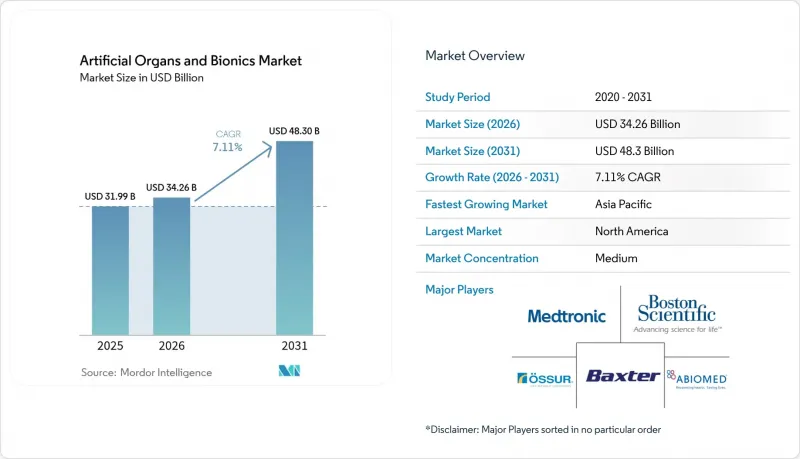
본 보고서는 기기 유형별(인공 장기(인공 심장, 인공 신장 등) 및 바이오닉스(시각 바이오닉스, 청각 바이오닉스 등)), 기술별(이식형 기기, 웨어러블·체외형 기기), 최종 사용자별(병원·외과 센터, 재택 간호, 기타),지역별(북미, 유럽, 기타)로 분류되어 있습니다. 시장 예측은 금액(미화) 기준으로 제시되어 있습니다.
세계의 인공 장기 및 바이오닉스 시장 동향 및 인사이트
만성 장기 부전 및 장애 발생률 증가
퇴행성 질환 증가로 인해 심장 보조 기기, 신장 대체 기기, 신경 의지의 잠재적 시장 규모가 확대되고 있습니다. EU에서는 4,900만 명이 심혈관 질환을 앓고 있으며, 이는 기계적 순환 보조 시스템에 대한 수요를 촉진하고 있습니다. 일본에서 진행 중인 인슐린 생성 iPS 세포 임상시험은 국내 1형 당뇨병 환자 13만 9,000명에게 바이오 인공 췌장 개발의 탄력을 실어주고 있습니다. 고령화에 따라 뇌졸중과 관련된 운동 기능 장애가 증가하고 있으며, 의사소통 및 이동 능력을 회복시키는 뇌-컴퓨터 인터페이스 도입을 위한 기반이 마련되고 있습니다. 미국 재향군인부는 2025 회계연도에 의지 관련 25개 프로젝트를 지원하고 있으며, 이는 장기적인 수요가 지속될 것임을 시사합니다.
기증 장기 부족
10만 3,000명 이상의 미국인이 이식을 기다리고 있으며, 일본에서는 장기 부전 환자 중 뇌사 기증자로부터 이식을 받을 수 있는 비율이 3% 이하에 그치고 있어 대체 수단에 대한 수요가 높아지고 있습니다. 2025년 FDA가 승인한 돼지 장기 임상시험은 이종 이식으로의 전환을 상징하는 것입니다. Carmat Aeson 인공심장 등 이식 전까지의 가교 역할을 하는 기기는 유럽 환자 30명의 생명을 평균 156일간 유지해 왔습니다. 중국이 개발한 45그램짜리 소아용 인공심장은 소아 심장 보조 분야에서 시급한 수요를 충족시키고 있습니다.
고액의 수술비 및 의료기기 비용
로봇 보조 무릎 관절 치환술 비용은 5만 1,000달러에 달하기도 하며, 민간 보험사는 의족에 대한 보험 적용 한도를 설정하는 경우가 많아 환자는 10만 단위의 본인 부담금을 감당해야 합니다. 콜로라도주의 메디케어 수준 급여법은 보험 적용 의무와 관련된 진척 상황이 지역에 따라 제각각임을 보여주고 있습니다. 수술 및 경과 관찰을 포함한 인공심장 치료의 총 비용은 1인당 50만 달러를 초과하기도 하며, 그 이용은 자원이 풍부한 의료 센터로 제한되어 있습니다. 신흥 시장에서는 환급률이 의료기기 가격을 따라잡지 못하고 있어, 비용 측면의 장벽이 더욱 두드러집니다.
부문별 분석
2025년에는 인공 장기가 인공 장기 및 바이오닉스 시장의 69.58%를 차지했습니다. 이는 이식 장기 부족으로 인해 심실 보조 기기 및 신흥 바이오 인공 신장에 대한 수요가 지속되었기 때문입니다. 바이오닉스 부문은 현재 발화 및 미세 운동 제어가 가능한 소형화된 뇌-컴퓨터 인터페이스에 힘입어 2031년까지 연평균 성장률(CAGR) 8.05%로 성장할 것으로 전망됩니다. 심장용 기기에 한정된 인공장기 및 바이오닉스 시장 규모는 티타늄제 인공심장 전체에 대한 FDA의 ‘브레이크스루(Breakthrough)’ 지정에 힘입어 연평균 성장률(CAGR) 7.52%로 확대될 것으로 예측됩니다.
신장 보조 시스템 부문에서는 Roivios가 ‘브레이크스루’ 지정을 획득하고 미국 내 피보탈 임상시험 준비를 진행 중이어서 임상 측면에서의 모멘텀이 두드러집니다. 바이오 프린팅을 통한 간 구조물 및 유전자 편집된 돼지 간은 초기 단계의 연구가 진행 중이며, 파이프라인의 두께를 보여주고 있습니다. 신경 바이오닉스 부문의 성장은 사용자의 의도에 밀리초 단위로 적응하는 AI 기반 제어 알고리즘에 의해 더욱 가속화되고 있습니다. 이러한 혁신들이 결합되어 인공 장기 및 바이오닉스 시장 전체의 장기적인 수익 전망이 확고해지고 있습니다.
지역별 분석
북미는 확립된 FDA의 패스트 트랙 제도와 견실한 벤처 자금 조달을 배경으로, 2025년 인공 장기 및 바이오닉스 시장에서 38.25%의 점유율을 유지했습니다. 2024년에 발표된 거래액은 20억 달러를 넘어섰으며, 그 절반은 심장 및 신경 의수·의족 스타트업에 투자되었습니다. 이 지역의 성숙한 보험 환급 인프라는 계속해서 조기 도입을 뒷받침하고 있지만, 지불 주체가 비용 대비 효과를 면밀히 검토함에 따라 가격에 대한 민감도는 높아지고 있습니다.
아시아태평양은 연평균 성장률(CAGR) 10.30%로 가장 빠르게 성장하는 지역이며, 그 원동력은 모든 혈액형에서 2년의 보존 기간을 유지하는 일본의 범용 인공 혈액입니다. 중국의 ‘뇌·척수 트리플 통합 인터페이스’ 덕분에 하반신 마비 환자가 몇 주 이내에 지상에서 보행 능력을 회복할 수 있게 되었으며, 중국 기업들은 신경 보철 부문에서 최첨단 위치를 차지하고 있습니다. 소아용 의료기기의 혁신도 주목할 만합니다. 어린 유아용으로 설계된 45그램의 인공 심장은 중요한 틈새 시장을 채워주며, 이 지역에서의 임상적 리더십을 강화하고 있습니다.
유럽은 Carmat 등의 기업을 통해 기술적 리더십을 유지하고 있습니다. 이 회사의 Aeson 인공 심장은 이식 전까지의 가교 요법으로 CE 마크를 획득했습니다. 독일의 이식 센터에서는 완전 매개형 인공 심장을 이식받은 환자가 재택 치료로 전환된 첫 사례가 보고되어, 실제 임상에서의 유효성이 더욱 확대되었습니다. 장기 보존 관류 시스템에 대한 병행적인 노력으로 기증 장기의 수급 격차가 더욱 좁혀졌으며, 유럽은 인공 장기 및 바이오닉스 시장에서 높은 혁신성을 자랑하는 분야로서 확고한 입지를 계속 다지고 있습니다.
기타 혜택
- 엑셀 형식 시장 예측(ME) 시트
- 3개월간의 애널리스트 지원
자주 묻는 질문
목차
제1장 서론
제2장 조사 방법
제3장 주요 요약
제4장 시장 구도
제5장 시장 규모 및 성장 예측
제6장 경쟁 구도
제7장 시장 기회 및 향후 전망
KTH 26.09.04According to Mordor Intelligence, artificial organs and bionics market size in 2026 is estimated at USD 34.26 billion, growing from 2025 value of USD 31.99 billion with 2031 projections showing USD 48.3 billion, growing at 7.11% CAGR over 2026-2031.

This report is Segmented by Device Type (Artificial Organs [Artificial Heart, Artificial Kidney, and More] and Bionics [Vision Bionics, Ear Bionics, and More]), Technology (Implantable Devices and Wearable Devices), End User (Hospitals & Surgical Centres, Home-Care and More), and Geography (North America, Europe, and More). The Market Forecasts are Provided in Terms of Value (USD).
Global Artificial Organs And Bionics Market Trends and Insights
Rising Incidence of Chronic Organ Failure & Disabilities
Degenerative ailments are swelling the addressable pool for cardiac assist devices, renal replacements, and neuro-prosthetics. Cardiovascular disease affects 49 million people in the EU, energising demand for mechanical circulatory support systems. Japan's insulin-producing iPS-cell trials underscore momentum behind a bioartificial pancreas for 139,000 local type 1 diabetes patients. Ageing populations translate into rising stroke-related motor deficits, setting the stage for brain-computer interfaces that restore communication and mobility. The U.S. Department of Veterans Affairs is backing 25 prosthetics-oriented projects in FY 2025, signalling continuing long-term demand.
Scarcity of Donor Organs
More than 103,000 Americans wait for transplants; in Japan, fewer than 3% of organ-failure patients receive brain-dead donations, reinforcing demand for alternatives. FDA-sanctioned pig-organ trials in 2025 are emblematic of the shift toward xenotransplantation. Bridge-to-transplant devices such as the Carmat Aeson artificial heart have kept 30 European patients alive for an average of 156 days. China's 45-gram pediatric artificial heart answers an acute need in children's cardiac support.
High Procedure & Device Cost
Robotic knees can reach USD 51,000, and private insurers often cap prosthetic reimbursement, leaving patients exposed to six-figure out-of-pocket bills. Colorado's Medicare-parity law illustrates patchy progress on coverage mandates. Total artificial heart therapy, including surgery and follow-up, can surpass USD 500,000 per person, restricting uptake to high-resource centers. The cost barrier is sharper in emerging markets, where reimbursement rates lag device prices.
Other drivers and restraints analyzed in the detailed report include:
- Rapid Biomaterial, Micro-Electronics & 3-D Bio-Printing Advances
- Defence-Funded Limb-Restoration Programmes (Post-2024)
- Biocompatibility Issues & Device Malfunctions
For complete list of drivers and restraints, kindly check the Table Of Contents.
Segment Analysis
Artificial organs commanded 69.58% of the artificial organs and bionics market in 2025 as transplant shortages sustained demand for ventricular assist devices and emerging bioartificial kidneys. Bionics is tracking an 8.05% CAGR to 2031, aided by miniaturised brain-computer interfaces that now facilitate speech and fine-motor control. The artificial organs and bionics market size for heart devices alone is projected to expand at 7.52% CAGR, supported by FDA breakthrough tags for titanium total artificial hearts.
Clinical momentum is evident in renal assist systems where Roivios obtained breakthrough designation and is preparing U.S. pivotal trials. Bio-printed liver constructs and gene-edited pig livers are progressing through early-phase studies, signalling pipeline depth. Neuro-bionics growth is amplified by AI-driven control algorithms that adapt in milliseconds to user intent. Collectively, these innovations anchor long-term revenue visibility across the artificial organs and bionics market.
Complete Report Scope:
- By Device Type
- Artificial Organs
- Artificial Heart
- Artificial Kidney
- Artificial Lungs
- Artificial Liver
- Artificial Pancreas
- Others
- Bionics
- Vision Bionics
- Ear Bionics
- Orthopedic Bionics
- Cardiac Bionics
- Neural Bionics
- Artificial Organs
- By Technology
- Implantable Devices
- Wearable / Extracorporeal Devices
- By End User
- Hospitals & Surgical Centres
- Specialty & Rehabilitation Clinics
- Home-care & Ambulatory Settings
- Military & Veterans Care Systems
- Geography
- North America
- United States
- Canada
- Mexico
- Europe
- Germany
- United Kingdom
- France
- Italy
- Spain
- Rest of Europe
- Asia-Pacific
- China
- Japan
- India
- South Korea
- Australia
- Rest of Asia-Pacific
- Middle East and Africa
- GCC
- South Africa
- Rest of Middle East and Africa
- South America
- Brazil
- Argentina
- Rest of South America
- North America
Geography Analysis
North America retained 38.25% share of the artificial organs and bionics market in 2025 on the back of an established FDA fast-track framework and robust venture funding. Investors topped USD 2 billion in disclosed U.S. deals during 2024, half of which went to cardiac and neuro-prosthesis start-ups. The region's mature reimbursement infrastructure continues to favour early adoption, yet price sensitivity is rising as payers scrutinise cost-effectiveness.
Asia-Pacific is the fastest-growing region with a 10.30% CAGR, catalysed by Japan's universal artificial blood that maintains two-year shelf life across all blood types. China's triple-integrated brain-spine interface enabled paraplegic patients to regain over-ground walking within weeks, positioning domestic players at the cutting edge of neuro-prosthetics. Pediatric device innovation is also notable: a 45-gram artificial heart designed for small children filled a vital niche, reinforcing regional clinical leadership.
Europe sustains a technology leadership role through companies such as Carmat, whose Aeson artificial heart received CE marking as a bridge-to-transplant therapy. German transplant centres reported the first fully implantable artificial-heart discharge to home care, broadening real-world validation. Parallel initiatives in organ-preservation perfusion systems further tighten the supply-demand gap for donor organs, keeping Europe firmly inside the high-innovation quadrant of the artificial organs and bionics market.
- Abbott Laboratories
- Abiomed
- Asahi Kasei Medical
- Baxter
- Berlin Heart
- Boston Scientific
- Cochlear
- CYBERDYNE
- Ekso Bionics
- Edward Lifesciences
- Getinge
- MED-EL
- Medtronic
- Ossur
- Ottobock
- Second Sight Medical Products
- SynCardia Systems
- Sonova
- Zimmer Biomet
Additional Benefits:
- The market estimate (ME) sheet in Excel format
- 3 months of analyst support
TABLE OF CONTENTS
1 Introduction
- 1.1 Study Assumptions & Market Definition
- 1.2 Scope of the Study
2 Research Methodology
3 Executive Summary
4 Market Landscape
- 4.1 Market Overview
- 4.2 Market Drivers
- 4.2.1 Rising Incidence Of Chronic Organ Failure & Disabilities
- 4.2.2 Scarcity Of Donor Organs
- 4.2.3 Rapid Biomaterial, Micro-Electronics & 3-D Bio-Printing Advances
- 4.2.4 Defence-Funded Limb-Restoration Programmes (Post-2024)
- 4.2.5 Fast-Track Regulatory Pathways (FDA BTD, EU MDR Art 117)
- 4.3 Market Restraints
- 4.3.1 High Procedure & Device Cost
- 4.3.2 Biocompatibility Issues & Device Malfunctions
- 4.3.3 Supply-Chain Fragility Of Rare-Earth Sensors & Chips
- 4.4 Technological Outlook
- 4.5 Porter's Five Forces
- 4.5.1 Threat of New Entrants
- 4.5.2 Bargaining Power of Buyers
- 4.5.3 Bargaining Power of Suppliers
- 4.5.4 Threat of Substitutes
- 4.5.5 Intensity of Rivalry
5 Market Size & Growth Forecasts (Value, USD)
- 5.1 By Device Type
- 5.1.1 Artificial Organs
- 5.1.1.1 Artificial Heart
- 5.1.1.2 Artificial Kidney
- 5.1.1.3 Artificial Lungs
- 5.1.1.4 Artificial Liver
- 5.1.1.5 Artificial Pancreas
- 5.1.1.6 Others
- 5.1.2 Bionics
- 5.1.2.1 Vision Bionics
- 5.1.2.2 Ear Bionics
- 5.1.2.3 Orthopedic Bionics
- 5.1.2.4 Cardiac Bionics
- 5.1.2.5 Neural Bionics
- 5.1.1 Artificial Organs
- 5.2 By Technology
- 5.2.1 Implantable Devices
- 5.2.2 Wearable / Extracorporeal Devices
- 5.3 By End User
- 5.3.1 Hospitals & Surgical Centres
- 5.3.2 Specialty & Rehabilitation Clinics
- 5.3.3 Home-care & Ambulatory Settings
- 5.3.4 Military & Veterans Care Systems
- 5.4 Geography
- 5.4.1 North America
- 5.4.1.1 United States
- 5.4.1.2 Canada
- 5.4.1.3 Mexico
- 5.4.2 Europe
- 5.4.2.1 Germany
- 5.4.2.2 United Kingdom
- 5.4.2.3 France
- 5.4.2.4 Italy
- 5.4.2.5 Spain
- 5.4.2.6 Rest of Europe
- 5.4.3 Asia-Pacific
- 5.4.3.1 China
- 5.4.3.2 Japan
- 5.4.3.3 India
- 5.4.3.4 South Korea
- 5.4.3.5 Australia
- 5.4.3.6 Rest of Asia-Pacific
- 5.4.4 Middle East and Africa
- 5.4.4.1 GCC
- 5.4.4.2 South Africa
- 5.4.4.3 Rest of Middle East and Africa
- 5.4.5 South America
- 5.4.5.1 Brazil
- 5.4.5.2 Argentina
- 5.4.5.3 Rest of South America
- 5.4.1 North America
6 Competitive Landscape
- 6.1 Market Concentration
- 6.2 Market Share Analysis
- 6.3 Company Profiles (includes Global level Overview, Market level overview, Core Business Segments, Financials, Headcount, Key Information, Market Rank, Market Share, Products and Services, and analysis of Recent Developments)
- 6.3.1 Abbott Laboratories
- 6.3.2 Abiomed
- 6.3.3 Asahi Kasei Medical
- 6.3.4 Baxter International
- 6.3.5 Berlin Heart
- 6.3.6 Boston Scientific Corporation
- 6.3.7 Cochlear Ltd
- 6.3.8 CYBERDYNE
- 6.3.9 Ekso Bionics
- 6.3.10 Edwards Lifesciences
- 6.3.11 Getinge AB
- 6.3.12 MED-EL
- 6.3.13 Medtronic plc
- 6.3.14 Ossur
- 6.3.15 Ottobock
- 6.3.16 Second Sight Medical
- 6.3.17 SynCardia Systems
- 6.3.18 Sonova
- 6.3.19 Zimmer Biomet
7 Market Opportunities & Future Outlook
- 7.1 White-Space & Unmet-Need Assessment