
|
시장보고서
상품코드
2121366
북미의 BIM : 시장 점유율 분석, 업계 동향과 통계, 성장 예측(2026-2031년)North America Building Information Modelling - Market Share Analysis, Industry Trends & Statistics, Growth Forecasts (2026 - 2031) |
||||||
 Mordor Intelligence
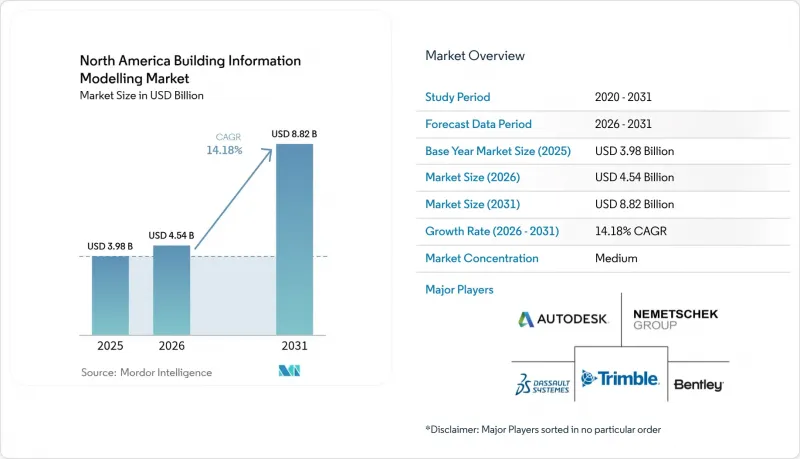
Mordor Intelligence에 따르면 북미의 BIM 시장 규모는 2025년에 39억 8,000만 달러로 평가되며, 2026년 45억 4,000만 달러에서 2031년까지 88억 2,000만 달러에 달할 것으로 예측됩니다.
예측 기간(2026-2031년) 동안 연평균 성장률(CAGR)은 14.18%에 달할 것으로 전망됩니다.
이 보고서는 구성 요소(소프트웨어·서비스), 배포 방식(온프레미스·클라우드), 용도(상업, 주거, 산업, 인프라), 프로젝트 수명주기 단계(건설 전/설계, 건설, 운영·유지보수), 국가(미국, 캐나다, 멕시코)별로 분류되어 있습니다. 시장 예측은 금액(달러) 기준으로 제시되어 있습니다.
북미 BIM 시장의 동향 및 인사이트
생성형 AI를 활용한 설계 최적화가 워크플로우 자동화를 가속화
주요 BIM 툴에 통합된 생성형 AI 기능은 구조 모델 및 에너지 모델을 자동으로 반복 처리하여 프로젝트 납기를 최대 30% 단축합니다. Autodesk Forma와 Graphisoft Archicad 28에는 건축 기준법 적합성 확인을 신속하게 처리하는 AI 기반 문서 작성 기능이 탑재되어 있으며, 경쟁력 향상을 목표로 하는 멕시코 기업의 85%가 이 장점을 높이 평가하고 있습니다. 현재 기계학습이 과거 프로젝트 데이터를 분석하여 에너지 집약도를 개선하는 자재 선택을 권장하고 있습니다. 각 벤더사는 클라우드 추론 엔진을 채택하고 있으며, 소형 노트북에서도 첨단 계산 처리를 활용할 수 있게 되었습니다. 조기 도입 기업으로부터는 컨셉 단계에서 간섭 검출이 이루어지기 때문에 건설 중 RFI(정보 문의)가 감소했다는 보고가 있습니다. 다만, 이러한 이점을 누리기 위해서는 기업이 추가 교육 시간을 예산에 반영해야 합니다.
정부의 BIM 의무화가 규정 준수 중심의 도입을 촉진
미국 연방조달청(GSA)은 모든 주요 공공 건축 프로젝트에서 모델 기반 제출을 의무화하고 있으며, 이로 인해 시공사는 완전한 BIM 워크플로우 도입을 요구받고 있습니다. 캐나다 연방 정부의 ‘협업 조달(Collaborative Procurement)’ 프레임워크에서는 500만 캐나다 달러를 초과하는 프로젝트에 대해 BIM 산출물 제출 기준이 설정되어 있습니다. 일부 주 및 주 정부에서는 문서화된 BIM 실행 계획에 대해 세금 환급을 제공하는 등 이러한 규정을 보완하는 조치를 취하고 있지만, 지역별 규제의 일관성이 부족하여 여전히 개선이 요구되고 있습니다. 양국에서 ISO 19650을 준수하면 문서의 품질이 향상되고 허가 심사가 신속해집니다. 끊임없이 변화하는 의무 요건을 충족하지 못하는 시공사는 공공 자금 지원 프로젝트에서 배제될 우려가 있으며, 그 결과 규정 준수 감사 및 모델 검증에 대한 서비스 수요가 증가하고 있습니다.
초기 교육 비용과 문화 변화에 드는 높은 비용이 중소기업의 도입을 제약하고 있습니다.
BIM 워크스테이션 가격은 1만 달러에 달하기도 하며, 고급 사용자 교육 비용은 직원 1인당 5,000달러를 초과합니다. 소규모 건설업체는 이러한 지출을 감당할 여력이 없는 경우가 많아, 최상위 건설업체를 제외한 다른 업체로의 기술 보급이 지연되고 있습니다. 또한 각 전문직 종사자들이 익숙한 2D 도면에 의존하고 있으므로 새로운 워크플로우에 대한 거부감도 여전히 남아 있습니다. 여러 관계자가 공유 모델을 편집할 때에는 전문직 배상 책임 보험과 관련된 복잡한 문제가 발생하고, 법적 심사가 필요해짐에 따라 시간과 비용이 추가로 소요됩니다. 공적 보조금을 통해 비용의 일부는 상쇄되지만, 많은 중소기업은 여전히 디지털 투자보다 단기적인 현금 흐름을 우선시하고 있습니다.
부문 분석
소프트웨어는 2025년 북미 BIM 시장 점유율의 81.65%를 차지하며, 지금까지 디지털 건설 워크플로의 기반이 되어 왔습니다. AI를 활용한 간섭 감지 등 지속적인 기능 업그레이드로 인해 라이선스 갱신이 촉진되고, 구독 유지가 지원되고 있습니다. 그러나 도입의 복잡성으로 인해 조직이 배포, 통합, 교육을 외부에 위탁하는 경향이 있으며, 서비스 부문은 연평균 성장률(CAGR) 14.72%로 소프트웨어 부문을 상회하고 있습니다. 컨설팅 업무는 프로젝트별 모델링부터 전사적 디지털 로드맵 수립에 이르기까지 광범위하여, 기술만으로는 완전한 가치를 제공할 수 없다는 점이 부각되고 있습니다.
맞춤형 교육 프로그램에 대한 수요는 사내 실행 역량을 제한하고 있는 기술 격차를 여실히 드러내고 있습니다. 인증 과정에서는 ISO 19650 준수, 데이터 교환 프로토콜, 공통 데이터 환경(CDE) 거버넌스에 대해 교육하고 있습니다. 또한 소유주가 온프레미스 및 클라우드 솔루션 간에 전환함에 따라 데이터 일관성을 유지하기 위해 벤더에 의존하지 않는 전문 지식이 필요해짐에 따라 유지보수 계약도 확대되고 있습니다. 그 결과, 라이선스는 계속해서 북미 BIM 시장의 기반을 유지할 것으로 보이며, 서비스 수익은 2031년까지 소프트웨어와의 격차를 좁힐 것으로 예측됩니다.
2025년 시점에도 주요 건설 도급업체의 확립된 IT 정책으로 인해 온프레미스형 시스템은 북미 BIM 시장 규모의 63.15%를 차지했습니다. 이러한 환경에서는 기밀성이 높은 지적 재산을 직접 관리할 수 있을 뿐만 아니라, 기존 파일 서버와 원활하게 통합할 수 있습니다. 그러나 원격 협업 수요의 증가와 진입 장벽을 낮추는 구독형 가격 정책에 힘입어 클라우드 플랫폼은 연평균 성장률(CAGR) 15.32%로 확대되고 있습니다. 기업이 데이터 저장을 온프레미스에서 유지하면서, 렌더링이나 조정에는 클라우드 엔진을 활용하는 하이브리드형 접근 방식이 인기를 끌고 있습니다.
각 클라우드 벤더들은 소유자의 우려를 해소하기 위해 제로 트러스트 보안 및 지역별 데이터센터를 강조하고 있습니다. 실시간 모델 연동을 통해 건축가, 엔지니어, 시공사가 공동으로 파일을 작성할 수 있게 되어, 설계 반복 횟수를 단축하고 하류 공정에서의 오류를 줄일 수 있습니다. 지불 방식의 유연성은 설비 투자보다 운영비를 선호하는 중소기업에게 큰 매력으로 작용하고 있습니다. 향후에는 물리적 서버의 유지 관리 비용과 이를 담당하는 인력 비용이 완전 호스팅 환경으로의 추가적인 전환을 촉진할 것으로 예상됩니다.
기타 혜택:
- 엑셀 형식의 시장 예측(ME) 시트
- 3개월간의 애널리스트 지원
자주 묻는 질문
목차
제1장 서론
제2장 조사 방법
제3장 개요
제4장 시장 구도
제5장 시장 규모와 성장 예측
제6장 경쟁 구도
제7장 시장 기회와 향후 전망
KSA 26.09.04According to Mordor Intelligence, the North America building information modelling market size was valued at USD 3.98 billion in 2025 and estimated to grow from USD 4.54 billion in 2026 to reach USD 8.82 billion by 2031, at a CAGR of 14.18% during the forecast period (2026-2031).
This report is Segmented by Component (Software and Services), Deployment Mode (On-Premise and Cloud), Application (Commercial, Residential, Industrial, and Infrastructure), Project Lifecycle Phase (Pre-Construction/Design, Construction, and Operation and Maintenance), and Country (United States, Canada, and Mexico). The Market Forecasts are Provided in Terms of Value (USD).
North America Building Information Modelling Market Trends and Insights
Generative AI-Powered Design Optimization Accelerates Workflow Automation
Generative AI features embedded in leading BIM tools automatically iterate structural and energy models, cutting project delivery time by up to 30%. Autodesk Forma and Graphisoft Archicad 28 include AI-driven documentation that speeds code checks, a benefit appreciated by 85% of Mexican firms pursuing competitiveness. Machine learning now scans historic project data to recommend material choices that improve energy intensity. Vendors employ cloud inference engines so even small laptops can harness advanced computation. Early adopters report fewer RFIs during construction because clash detection is executed at the concept stage, although firms must budget additional training hours to realize these gains.
Government BIM Mandates Create Compliance-Driven Adoption
The U.S. General Services Administration requires model-based submissions for all major public builds, pushing contractors toward full BIM workflows. Canada's federal Collaborative Procurement framework sets BIM deliverable thresholds for projects above CAD 5 million. Several states and provinces supplement these rules with tax rebates on documented BIM execution plans, although inconsistent local codes still impose re-work. ISO 19650 alignment in both countries raises documentation quality and accelerates permit reviews. Contractors that cannot meet evolving mandates face exclusion from publicly financed opportunities, driving service demand for compliance audits and model validation.
High Upfront Training and Cultural Change Costs Constrain SME Adoption
A BIM workstation can cost USD 10,000, while advanced user training surpasses USD 5,000 per employee. Smaller contractors often lack reserves for such outlays, slowing technology penetration beyond tier-one builders. Resistance to new workflows also persists because trades rely on familiar 2D drawings. Professional indemnity complexities arise when multiple parties edit a shared model, prompting legal reviews that add time and expense. Public grants partially offset costs, but many SMEs still prioritize near-term cash flow over digital investment.
Other drivers and restraints analyzed in the detailed report include:
- Rising Retrofit Demand Drives Decarbonization-Focused Applications
- Cloud-Native Collaboration Democratizes SME Access
- Fragmented Building Codes Across United States Create Implementation Complexity
For complete list of drivers and restraints, kindly check the Table Of Contents.
Segment Analysis
Software retained 81.65% of the North America Building Information Modelling market share in 2025 and has historically underpinned digital construction workflows. Continuous upgrades, such as AI-driven clash detection, sustain license renewals and support subscriptions. However, services are outstripping software with a 14.72% CAGR because implementation complexity drives organizations to outsource deployment, integration, and training. Consulting engagements range from project-specific modeling to enterprise-wide digital roadmaps, highlighting that technology alone cannot deliver full value.
Demand for tailored education programs illustrates the skills gap that limits internal execution capacity. Certification courses teach ISO 19650 compliance, data exchange protocols, and common data environment governance. Maintenance contracts also expand as owners migrate between on-premise and cloud solutions, requiring vendor-agnostic expertise to preserve data integrity. Consequently, services revenue is projected to narrow the gap with software by 2031, even though licenses will remain the foundation of the North America Building Information Modelling market.
On-premise systems still commanded 63.15% of the North America Building Information Modelling market size in 2025 due to established IT policies at large contractors. These environments offer direct control over sensitive intellectual property and integrate smoothly with legacy file servers. Yet cloud platforms are expanding at a 15.32% CAGR, propelled by rising remote collaboration demands and subscription pricing that lowers entry barriers. The hybrid approach, in which companies retain vault storage on-site while using cloud engines for rendering and coordination, is gaining popularity.
Cloud vendors emphasize zero-trust security and regional data centers to address owner concerns. Real-time model federation lets architects, engineers, and builders co-author files, shortening design iterations and reducing errors downstream. Payment flexibility is a compelling draw for SMEs that prefer operating expenses over capital expenditure. Over time, the cost of maintaining physical servers and the talent to administer them is expected to propel further migration toward fully hosted environments.
Complete Report Scope:
- By Component
- Software
- Design Authoring
- Model Review and Coordination
- Simulation and Analysis
- Project Management
- Services
- Consulting
- Implementation and Integration
- Training and Certification
- Support and Maintenance
- Software
- By Deployment Mode
- On-Premise
- Cloud
- By Application
- Commercial
- Office
- Retail
- Healthcare
- Education
- Residential
- Single-Family
- Multi-Family
- Industrial
- Manufacturing
- Energy and Utilities
- Infrastructure
- Transportation
- Public Safety and Government Facilities
- Commercial
- By Project Lifecycle Phase
- Pre-Construction/Design
- Construction
- Operation and Maintenance
- By Country
- United States
- Canada
- Mexico
List of Companies Covered in this Report:
- Autodesk Inc.
- Bentley Systems Incorporated
- Trimble Inc.
- Nemetschek SE
- Dassault Systemes SE
- Hexagon AB
- Topcon Positioning Systems Inc.
- RIB Software GmbH
- Asite Solutions Ltd
- AVEVA Group plc
- Clearedge3D Inc.
- Bimeye AB
- Procore Technologies Inc.
- GRAPHISOFT SE
- Bluebeam Inc.
- Vectorworks Inc.
- Allplan GmbH
- GRAITEC Innovation SAS
- Tekla Corporation
- Innovaya LLC
- Beck Technology Ltd.
- Trimble Viewpoint Inc.
Additional Benefits:
- The market estimate (ME) sheet in Excel format
- 3 months of analyst support
TABLE OF CONTENTS
1 INTRODUCTION
- 1.1 Study Assumptions and Market Definition
- 1.2 Scope of the Study
2 RESEARCH METHODOLOGY
3 EXECUTIVE SUMMARY
4 MARKET LANDSCAPE
- 4.1 Market Overview
- 4.2 Market Drivers
- 4.2.1 Generative AI-Powered Design Optimisation
- 4.2.2 Government BIM Mandates and Incentives in the United States and Canada
- 4.2.3 Rising Retrofit Demand to Decarbonise Existing Building Stock
- 4.2.4 Cloud-Native Collaboration Boosting SME Adoption
- 4.2.5 Insurance Premium Discounts for BIM-Centric Risk Models
- 4.2.6 Digital-Twin Convergence With Smart-City Funding
- 4.3 Market Restraints
- 4.3.1 High Upfront Training and Cultural Change Costs
- 4.3.2 Fragmented Building Codes Across United States States
- 4.3.3 Cyber-Security Concerns Around Cloud BIM Repositories
- 4.3.4 IP Ownership Disputes in Multi-Stakeholder Models
- 4.4 Industry Value Chain Analysis
- 4.5 Regulatory Landscape
- 4.6 Technological Outlook
- 4.7 Porter's Five Forces Analysis
- 4.7.1 Bargaining Power of Suppliers
- 4.7.2 Bargaining Power of Buyers
- 4.7.3 Threat of New Entrants
- 4.7.4 Threat of Substitutes
- 4.7.5 Intensity of Competitive Rivalry
- 4.8 Impact of Macroeconomic Factors
5 MARKET SIZE AND GROWTH FORECASTS (VALUES)
- 5.1 By Component
- 5.1.1 Software
- 5.1.1.1 Design Authoring
- 5.1.1.2 Model Review and Coordination
- 5.1.1.3 Simulation and Analysis
- 5.1.1.4 Project Management
- 5.1.2 Services
- 5.1.2.1 Consulting
- 5.1.2.2 Implementation and Integration
- 5.1.2.3 Training and Certification
- 5.1.2.4 Support and Maintenance
- 5.1.1 Software
- 5.2 By Deployment Mode
- 5.2.1 On-Premise
- 5.2.2 Cloud
- 5.3 By Application
- 5.3.1 Commercial
- 5.3.1.1 Office
- 5.3.1.2 Retail
- 5.3.1.3 Healthcare
- 5.3.1.4 Education
- 5.3.2 Residential
- 5.3.2.1 Single-Family
- 5.3.2.2 Multi-Family
- 5.3.3 Industrial
- 5.3.3.1 Manufacturing
- 5.3.3.2 Energy and Utilities
- 5.3.4 Infrastructure
- 5.3.4.1 Transportation
- 5.3.4.2 Public Safety and Government Facilities
- 5.3.1 Commercial
- 5.4 By Project Lifecycle Phase
- 5.4.1 Pre-Construction/Design
- 5.4.2 Construction
- 5.4.3 Operation and Maintenance
- 5.5 By Country
- 5.5.1 United States
- 5.5.2 Canada
- 5.5.3 Mexico
6 COMPETITIVE LANDSCAPE
- 6.1 Market Concentration
- 6.2 Strategic Moves
- 6.3 Market Share Analysis
- 6.4 Company Profiles (includes Global Level Overview, Market Level Overview, Core Segments, Financials as Available, Strategic Information, Market Rank/Share for Key Companies, Products and Services, and Recent Developments)
- 6.4.1 Autodesk Inc.
- 6.4.2 Bentley Systems Incorporated
- 6.4.3 Trimble Inc.
- 6.4.4 Nemetschek SE
- 6.4.5 Dassault Systemes SE
- 6.4.6 Hexagon AB
- 6.4.7 Topcon Positioning Systems Inc.
- 6.4.8 RIB Software GmbH
- 6.4.9 Asite Solutions Ltd
- 6.4.10 AVEVA Group plc
- 6.4.11 Clearedge3D Inc.
- 6.4.12 Bimeye AB
- 6.4.13 Procore Technologies Inc.
- 6.4.14 GRAPHISOFT SE
- 6.4.15 Bluebeam Inc.
- 6.4.16 Vectorworks Inc.
- 6.4.17 Allplan GmbH
- 6.4.18 GRAITEC Innovation SAS
- 6.4.19 Tekla Corporation
- 6.4.20 Innovaya LLC
- 6.4.21 Beck Technology Ltd.
- 6.4.22 Trimble Viewpoint Inc.
7 MARKET OPPORTUNITIES AND FUTURE OUTLOOK
- 7.1 White-Space and Unmet-Need Assessment