|
시장보고서
상품코드
2121533
북미의 서비스 로봇 : 시장 점유율 분석, 업계 동향과 통계, 성장 예측(2026-2031년)North America Service Robots - Market Share Analysis, Industry Trends & Statistics, Growth Forecasts (2026 - 2031) |
||||||
 Mordor Intelligence
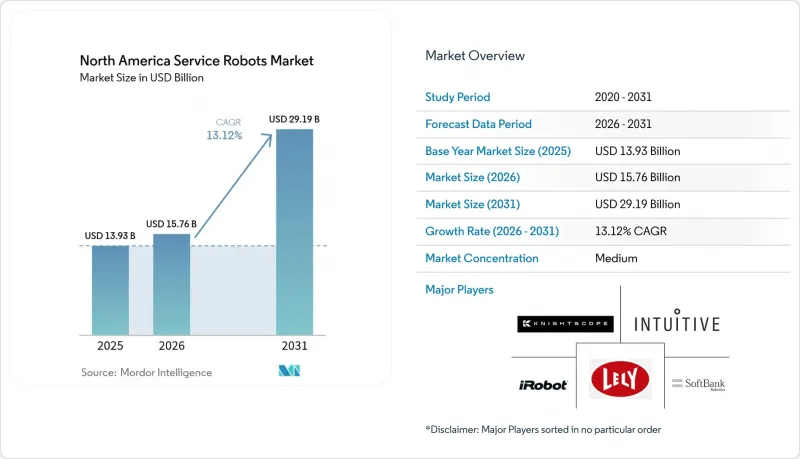
Mordor Intelligence에 의하면, 북미 서비스 로봇 시장 규모는 2025년에 139억 3,000만 달러로 평가되었고, 2026년 157억 6,000만 달러에서 성장하여 2031년까지 291억 9,000만 달러에 이를 것으로 추정되고 있습니다.
예측 기간(2026-2031년) 동안의 연평균 성장률(CAGR)은 13.12%를 기록할 전망입니다.
본 보고서는 로봇의 유형(업무용 서비스 로봇, 자율 이동 로봇 등), 용도(물류 및 창고 자동화, 헬스케어 및 의료 지원 등), 환경(지상형 로봇, 공중 서비스 로봇 등), 구성 요소(하드웨어, 소프트웨어, 서비스) 및 지역별로 분류되어 있습니다. 시장 예측은 금액(달러) 기준으로 제시되어 있습니다.
북미 서비스 로봇 시장 동향 및 인사이트
인건비 급등이 자동화 도입을 가속화
2024년 말까지 창고 및 병원의 임금은 전년 대비 6.8% 상승하여 물류 사업자와 의료 제공업체의 이익률을 압박하고 있습니다. 자율 주행 플랫폼의 투자 회수 기간은 현재 18개월로, 2022년 대비 절반으로 단축됨에 따라 모든 규모의 시설에서 로봇 군 도입이 확산되고 있습니다. 아마존의 ‘프로테우스(Proteus)’ 로봇은 미국 내 350곳의 풀필먼트 센터에서 팔레트 수작업 이동의 40%를 줄임으로써, 중견 기업에서의 도입 경제성을 입증했습니다. Locus Robotics사의 보고서에 따르면, 2024년에 수주한 프로젝트의 68%는 직원 500명 미만의 기업으로, 중소기업으로의 확산이 확인되었습니다. 온타리오주의 창고에서도 유사한 임금 급등 현상이 나타나, 지게차 시급이 22% 상승함에 따라 투자 대비 효과 계산상 무인 운반차(AGV) 도입이 유리한 상황이 되었습니다.
인공지능(AI)과 머신 비전의 발전
트랜스포머 기반 비전 모델 덕분에 내비게이션 오류율이 0.5% 미만으로 감소하여, 혼잡한 통로에서도 안전한 이동이 가능해졌습니다. Google DeepMind의 RT-2 아키텍처는 6,000개 물체에 대한 제로샷 조작을 입증하여, 작업별 훈련 시간을 대폭 단축했습니다. Diligent Robotics의 Moxi는 이러한 진보를 활용하여 2024년에는 코드 한 줄도 수정하지 않은 채 미국 내 140개 병원에서 운영되었습니다. John Deere사의 ‘Blue River See and Spray’는 8,000대의 트랙터에서 제초제 사용량을 77% 줄여, 야외에서 AI의 유용성을 입증했습니다. 경쟁 우위는 기계적 공차에서 지속적인 모델 업데이트를 제공하는 데이터 파이프라인으로 이동하고 있습니다.
초기 설비 투자 부담이 큽니다.
창고 로봇의 단가는 35,000-75,000달러인 반면, 수술용 시스템의 평균 가격은 250만 달러에 달하고, 많은 소규모 기관에게는 가격이 너무 높습니다. 2024년 조사에 따르면, 지방 병원의 43%가 로봇 도입 기준을 충족하지 못하는 수준의 자본 예산만 확보하고 있는 것으로 보고되었습니다. ‘로봇-어즈-어-서비스(RaaS)’ 모델은 지출을 운영비로 전환하지만, 여전히 예측 가능한 처리량에 의존하기 때문에 물류 분야 외에서는 매력이 제한적입니다. 25만-50만 달러 가격대의 농업용 플랫폼은 보조금 프로그램을 통해 비용의 최대 50%가 지원되지 않는 한, 2,000에이커가 넘는 농장에서만 도입이 현실적입니다. 따라서 자본 측면의 장벽이 수요를 억제하고 있으며, 특히 자원이 제한적인 지방의 농업 사업자에서 이러한 경향이 두드러집니다.
부문 분석
2025년 매출의 61.74%는 전문가용 시스템이 차지하고 있으며, 이는 수술용, 방위용 및 검사용 로봇이 주도하고 있습니다. 높은 가격에도 불구하고, 병원들은 메디케어의 상환액 균등화를 활용하기 위해 다빈치 시스템을 도입했습니다. 그러나 북미 서비스 로봇 시장은 연평균 성장률(CAGR) 13.95%로 가장 빠르게 성장하고 있는 카테고리인 함대 규모의 자율 이동 로봇으로 이동하고 있습니다. Locus Robotics의 도입 대수는 자본 지출을 절감하는 구독형 가격 모델에 힘입어 2024년에는 300개소에서 4만 대를 돌파했습니다. iRobot사의 ‘룸바’와 같은 개인용 로봇은 미국 내 가구 보급률이 18%에 달하며 시장이 포화 상태에 가까워지고 있습니다. AI 기술의 발전으로 운영자가 완전 무인 솔루션으로 전환함에 따라 반자율형 모델의 점유율은 하락하고 있습니다. 500곳의 시설에서 서로 다른 공급업체의 로봇을 통합 관리하는 Zebra사의 ‘FetchCore’가 보여주듯이, 다중 공급업체의 로봇 군단을 총괄하는 소프트웨어 생태계가 이제 경쟁 우위를 결정짓는 요소가 되었습니다.
자율형 로봇 군은 추가 인력 없이 24시간 가동이 가능하도록 함으로써 비용 구조를 혁신하고 있습니다. 로봇 군의 가동률은 98%를 초과하며, 이러한 신뢰성 기준 덕분에 중견 기업의 창고에서는 수작업 단계를 완전히 건너뛰고 자율형 시스템을 도입하는 추세입니다. 또한 각 벤더사는 병목 현상을 파악하고 유지보수를 예측하는 사용 현황 분석 기능도 판매하고 있으며, 이를 통해 소프트웨어 전환 비용이 점차 정착되고 있습니다. 북미 서비스 로봇 시장에서 자율 이동 시스템의 규모가 확대됨에 따라, 로봇 분야의 전문적인 리더십은 하드웨어뿐만 아니라 절차 승인 및 운영 관련 데이터의 통합에 달려 있을 것입니다.
2025년, 북미 서비스 로봇 시장에서 물류 및 창고 자동화가 29.21%의 점유율을 차지했습니다. 주요 전자상거래 사업자의 보급률은 60%를 넘어 시장의 성숙도를 보여주고 있습니다. 성장은 배송 및 라스트 마일 서비스로 이동하고 있으며, 연평균 성장률(CAGR)은 14.12%를 나타낼 것으로 예측됩니다. 미국에서는 보도에서 배송 차량을 도입한 지자체가 불과 100곳에 불과하여, 여전히 큰 성장 여지가 남아 있습니다. 의료 분야의 활용 사례는 꾸준히 확대되고 있으며, Aethon사의 TUG는 400개 병원에서 의약품 및 린넨 운반에 활용되고 있습니다. 농업 분야에서는 정밀 살포 및 자율 착유를 통해 수확량 향상이 기대되지만, 주별 보조금 제도가 불균일하여 보급은 제한적입니다. 보안 로봇은 주차장이나 캠퍼스를 순찰하고 있지만, 공공 감시에 대한 우려로 인해 도입 속도는 완만합니다. 이러한 다양한 활용 사례가 확산됨에 따라 북미 서비스 로봇 시장의 총 잠재 규모가 확대되고 있으며, 수익원도 기존의 창고 업무 외에도 다양화되고 있습니다.
배송용 로봇의 장기적인 성장은 통행권 및 책임 소재를 명확히 하는 조례의 제정에 달려 있습니다. 또한, 로봇 함대의 밀도가 높아짐에 따라 소프트웨어의 지속적인 수익도 증가합니다. 대조적으로, 창고 분야의 추가적인 성장은 현재 관절형 암, ASRS, AMR을 통합된 오케스트레이션 하에 통합함으로써 발생하고 있으며, 이 분야에서는 기업 고객들이 벤더에 의존하지 않는 플랫폼을 원하고 있습니다. 따라서 용도의 다양성은 규제에 따른 급격한 수요 급증과 꾸준하고 점진적인 성장 흐름 간의 균형을 맞추며, 북미 서비스 로봇 산업의 전망을 뒷받침하고 있습니다.
기타 혜택:
- 엑셀 형식 시장 예측(ME) 시트
- 3개월간 애널리스트 지원
자주 묻는 질문
목차
제1장 서론
제2장 조사 방법
제3장 주요 요약
제4장 시장 구도
제5장 시장 규모와 성장 예측
제6장 경쟁 구도
제7장 시장 기회와 향후 전망
LSH 26.09.09According to Mordor Intelligence, the North America service robots market size was valued at USD 13.93 billion in 2025 and estimated to grow from USD 15.76 billion in 2026 to reach USD 29.19 billion by 2031, at a CAGR of 13.12% during the forecast period (2026-2031).
This report is Segmented by Robot Type (Professional Service Robots, Autonomous Mobile Robots, and More), Application (Logistics and Warehouse Automation, Healthcare and Medical Assistance, and More), Environment (Ground-Based Robots, Aerial Service Robots, and More), Component (Hardware, Software, Services), and Geography. The Market Forecasts are Provided in Terms of Value (USD).
North America Service Robots Market Trends and Insights
Rising Labor Costs Accelerating Automation Adoption
Warehouse and hospital wages climbed 6.8% year over year by late 2024, shrinking margins for logistics operators and healthcare providers. Autonomous mobile platforms now pay back in 18 months, half the 2022 period, prompting widespread fleet roll-outs in facilities of every size. Amazon's Proteus robots eliminated 40% of manual pallet moves across 350 U.S. fulfillment centers, validating the economics for mid-market adopters. Locus Robotics reported that 68% of its 2024 wins were firms with fewer than 500 employees, confirming penetration into small enterprises. Similar wage spikes in Ontario warehouses raised hourly forklift pay 22%, tipping return-on-investment math toward autonomous guided vehicles.
Advances in Artificial Intelligence and Machine Vision
Transformer-based vision models are reducing navigation error rates below 0.5%, allowing safe travel in crowded corridors. Google DeepMind's RT-2 architecture demonstrated zero-shot manipulation of 6,000 objects, slashing task-specific training time. Diligent Robotics' Moxi leveraged these gains to serve 140 U.S. hospitals in 2024 without line-of-code reprogramming. John Deere's Blue River See and Spray reduced herbicide use by 77% across 8,000 tractors, demonstrating the utility of AI outdoors. Competitive advantage is shifting from mechanical tolerances to data pipelines that provide continuous model updates.
High Initial Capital Investment Requirements
Warehouse robots cost USD 35,000-75,000 per unit, while surgical systems average USD 2.5 million; prices are too steep for many small organizations. Forty-three percent of rural hospitals reported capital budgets below robotics thresholds in a 2024 survey. Robot-as-a-service models shift spending to operating expenses but still depend on predictable throughput, limiting their appeal outside logistics. Agricultural platforms priced at USD 250,000-500,000 remain viable only for farms exceeding 2,000 acres, unless subsidy programs defray up to 50% of the costs. Capital hurdles, therefore, temper demand, especially among resource-constrained rural operators.
Other drivers and restraints analyzed in the detailed report include:
- Growing Demand for Contactless Services Post-Pandemic
- Aging Population Driving Healthcare Service Robots
- Safety and Liability Concerns in Human-Robot Interaction
For complete list of drivers and restraints, kindly check the Table Of Contents.
Segment Analysis
Professional systems accounted for 61.74% of 2025 revenue, driven by surgical, defense, and inspection robots. Despite high prices, hospitals added da Vinci systems to capitalize on Medicare reimbursement parity. However, the North America service robots market is shifting toward fleet-scale autonomous mobile robots, the fastest-growing category at a 13.95% CAGR. Locus Robotics' installed base surpassed 40,000 units across 300 sites in 2024, driven by subscription pricing that reduces capital expenses. Personal robots such as iRobot's Roomba face saturation with 18% U.S. household penetration. Semi-autonomous models are losing ground as AI gains push operators toward fully unmanned solutions. Software ecosystems that orchestrate multi-vendor fleets now define competitive advantage, as evidenced by Zebra's FetchCore, which manages mixed robots across 500 facilities.
Autonomous fleets reshape cost structures by enabling 24-hour utilization without incremental labor. Fleet uptime exceeds 98%, a reliability threshold that convinces mid-market warehouses to leapfrog manual mechanization entirely. Vendors also sell usage analytics that identify bottlenecks and predict maintenance, entrenching software switching costs. As the North America service robots market size for autonomous mobile systems rises, professional robot leadership will hinge on procedural clearances and peri-operative data integration rather than hardware alone.
Logistics and warehouse automation accounted for a 29.21% share of the North America service robots market in 2025. Penetration among large e-commerce operators exceeded 60%, signaling maturity. Growth is shifting towards delivery and last-mile services, projected to achieve a 14.12% CAGR. Only 100 U.S. municipalities host sidewalk delivery fleets, leaving a substantial runway. Healthcare applications continue to expand steadily, with Aethon's TUG in 400 hospitals, moving medicines and linens. Agricultural use cases unlock yield gains via precision spraying and autonomous milking, but depend on uneven state credits. Security robots patrol parking lots and campuses, yet public surveillance scrutiny moderates' adoption speed. The dispersion of use cases expands the total addressable North America service robots market size while diversifying revenue beyond traditional warehouses.
Long-term growth in delivery robotics hinges on ordinances that clarify right-of-way and liability. Fleet density also lifts software recurring revenue. By contrast, incremental warehouse gains now come from integrating articulated arms, ASRS, and AMRs under unified orchestration, an area where enterprise customers demand vendor-agnostic platforms. Application diversity, therefore, balances rapid, regulation-led spikes with steady, incremental growth streams, underpinning the North America service robots industry outlook.
Complete Report Scope:
- By Robot Type
- Professional Service Robots
- Personal and Domestic Service Robots
- Autonomous Mobile Robots
- Semi-Autonomous Service Robots
- By Application
- Logistics and Warehouse Automation
- Healthcare and Medical Assistance
- Agriculture and Farming
- Defense and Public Safety
- Delivery and Last-Mile Services
- By Environment
- Ground-Based Robots
- Aerial Service Robots
- Marine Service Robots
- By Component
- Hardware
- Software
- Services
- By Geography
- United States
- Canada
- Mexico
List of Companies Covered in this Report:
- iRobot Corporation
- Intuitive Surgical Inc.
- SoftBank Robotics Group Corp.
- Fetch Robotics Inc.
- Lely Holding S.A R.L.
- Knightscope Inc.
- Blue River Technology Inc.
- Savioke Inc.
- Starship Technologies Holdings Inc.
- Blue Ocean Robotics ApS
- Diligent Robotics Inc.
- Locus Robotics Corp.
- Clearpath Robotics Inc.
- Autonomous Solutions Inc.
- Miso Robotics Inc.
- Bear Robotics Inc.
- Neato Robotics Inc.
- Aethon Inc.
- Aerobotix Inc.
- Eco Robotics SA
Additional Benefits:
- The market estimate (ME) sheet in Excel format
- 3 months of analyst support
TABLE OF CONTENTS
1 INTRODUCTION
- 1.1 Study Assumptions and Market Definition
- 1.2 Scope of the Study
2 RESEARCH METHODOLOGY
3 EXECUTIVE SUMMARY
4 MARKET LANDSCAPE
- 4.1 Market Overview
- 4.2 Market Drivers
- 4.2.1 Rising Labor Costs Accelerating Automation Adoption
- 4.2.2 Advances in Artificial Intelligence and Machine Vision
- 4.2.3 Growing Demand for Contactless Services Post-Pandemic
- 4.2.4 Aging Population Driving Healthcare Service Robots
- 4.2.5 State-Level Incentive Programs for Agricultural Robotics in the United States
- 4.2.6 Warehouse Safety Regulations Favoring Human-Robot Collaboration
- 4.3 Market Restraints
- 4.3.1 High Initial Capital Investment Requirements
- 4.3.2 Safety and Liability Concerns in Human-Robot Interaction
- 4.3.3 Limited Insurance Underwriting Framework for Service Robot Deployment
- 4.3.4 Skilled Robot Maintenance Technician Shortage in Rural Areas
- 4.4 Industry Value Chain Analysis
- 4.5 Regulatory Landscape
- 4.6 Technological Outlook
- 4.7 Impact of Macroeconomic Factors
- 4.8 Porter's Five Forces Analysis
- 4.8.1 Threat of New Entrants
- 4.8.2 Bargaining Power of Suppliers
- 4.8.3 Bargaining Power of Buyers
- 4.8.4 Threat of Substitutes
- 4.8.5 Competitive Rivalry
5 MARKET SIZE AND GROWTH FORECASTS (VALUE)
- 5.1 By Robot Type
- 5.1.1 Professional Service Robots
- 5.1.2 Personal and Domestic Service Robots
- 5.1.3 Autonomous Mobile Robots
- 5.1.4 Semi-Autonomous Service Robots
- 5.2 By Application
- 5.2.1 Logistics and Warehouse Automation
- 5.2.2 Healthcare and Medical Assistance
- 5.2.3 Agriculture and Farming
- 5.2.4 Defense and Public Safety
- 5.2.5 Delivery and Last-Mile Services
- 5.3 By Environment
- 5.3.1 Ground-Based Robots
- 5.3.2 Aerial Service Robots
- 5.3.3 Marine Service Robots
- 5.4 By Component
- 5.4.1 Hardware
- 5.4.2 Software
- 5.4.3 Services
- 5.5 By Geography
- 5.5.1 United States
- 5.5.2 Canada
- 5.5.3 Mexico
6 COMPETITIVE LANDSCAPE
- 6.1 Market Concentration
- 6.2 Strategic Moves
- 6.3 Market Share Analysis
- 6.4 Company Profiles (includes Global Level Overview, Market Level Overview, Core Segments, Financials as Available, Strategic Information, Market Rank/Share for Key Companies, Products and Services, and Recent Developments)
- 6.4.1 iRobot Corporation
- 6.4.2 Intuitive Surgical Inc.
- 6.4.3 SoftBank Robotics Group Corp.
- 6.4.4 Fetch Robotics Inc.
- 6.4.5 Lely Holding S.A R.L.
- 6.4.6 Knightscope Inc.
- 6.4.7 Blue River Technology Inc.
- 6.4.8 Savioke Inc.
- 6.4.9 Starship Technologies Holdings Inc.
- 6.4.10 Blue Ocean Robotics ApS
- 6.4.11 Diligent Robotics Inc.
- 6.4.12 Locus Robotics Corp.
- 6.4.13 Clearpath Robotics Inc.
- 6.4.14 Autonomous Solutions Inc.
- 6.4.15 Miso Robotics Inc.
- 6.4.16 Bear Robotics Inc.
- 6.4.17 Neato Robotics Inc.
- 6.4.18 Aethon Inc.
- 6.4.19 Aerobotix Inc.
- 6.4.20 Eco Robotics SA
7 MARKET OPPORTUNITIES AND FUTURE OUTLOOK
- 7.1 White-Space and Unmet-Need Assessment