

|
시장보고서
상품코드
2121620
석유 및 가스 안보 : 시장 점유율 분석, 업계 동향과 통계, 성장 예측(2026-2031년)Oil And Gas Security - Market Share Analysis, Industry Trends & Statistics, Growth Forecasts (2026 - 2031) |
||||||
 Mordor Intelligence
Mordor Intelligence에 의하면, 석유 및 가스 안보 시장 규모는 2025년 303억 8,000만 달러에서 2026년에는 318억 7,000만 달러로 성장하고, 2026-2031년 CAGR 4.92%로 성장을 지속하여 2031년에는 405억 5,000만 달러에 달할 것으로 예측됩니다.
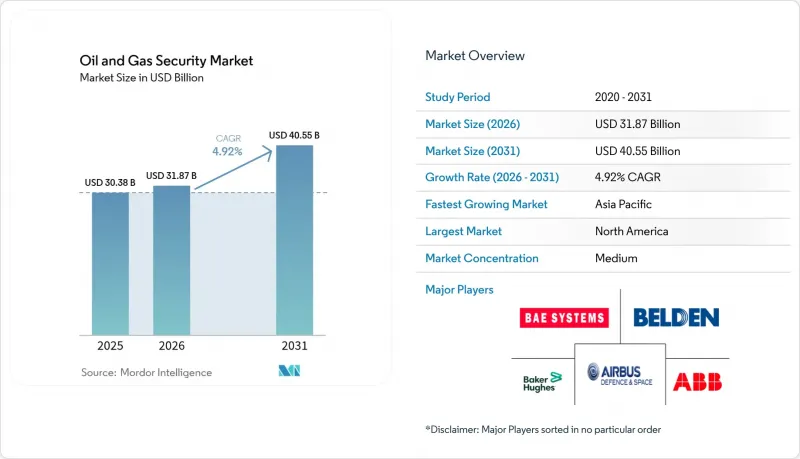
본 보고서는 보안 유형(네트워크 및 사이버 보안, 감시, 스크리닝 및 감지, 기타), 구성 요소(하드웨어, 소프트웨어 플랫폼, 서비스), 운영 단계(업스트림, 중류, 하류),배포 방식(On-Premise, 클라우드, 하이브리드/엣지 클라우드), 용도(탐사·생산 현장, 해양 플랫폼 및 FPSO 등), 그리고 지역별로 분류되어 있습니다.
전 세계 석유 및 가스 안보 시장 동향 및 인사이트
OT와 IT의 융합이 진행되면서 사이버 위험이 높아지고 있습니다.
과거에는 기업 네트워크에서 격리되어 있던 운영 자산이 현재는 클라우드나 엔터프라이즈 시스템에 연결되면서 공격 대상 영역이 확대되고 있습니다. 이러한 연동에 기인한 사고로 인해 공격자는 IT에서 보안상 중요한 OT로 침입 경로를 전환할 수 있게 되었으며, 물리적 혼란이 발생할 가능성이 높아지고 있습니다. 미국 정부 기관의 보고에 따르면, 기술 수준이 낮은 그룹조차 산업용 제어 시스템에 대한 공격을 성공시키고 있어, 세분화의 취약성과 다단계 인증의 미비점이 드러나고 있습니다. 이에 따라 네트워크 구역화, 제로 트러스트 정책, 실시간 이상 감지는 모범 사례에서 기본 요건으로 전환되고 있습니다. 기업들이 생산을 중단하지 않고 현대화를 추진함에 따라 복잡성은 증가하고 있으며, 단계적 도입이나 병렬 아키텍처가 불가피해지고 있습니다. IT 보안, 엔지니어링, 생산 각 팀을 연계하는 거버넌스 강화는 예측 기간 동안 지출의 중요한 요소가 될 것입니다.
파이프라인에 대한 TSA 및 IEC의 필수 사이버 규제
개정된 미국 교통안전청(TSA) 지침에 따라 파이프라인 사업자는 통제 조치의 검증, 취약점 해소 및 정해진 기간 내 침해 보고를 의무적으로 이행해야 합니다. 동시에, IEC 62443이 전 세계 제어 시스템의 표준으로 부상하고 있으며, 일본의 CERT 등 지역 단체들이 구현 지침을 제공합니다. 유럽의 NIS2 지침은 사고 발생 후 24시간 이내에 공개하도록 의무화함으로써 추가적인 책임을 부과하고 있습니다. 위반 시 부과되는 금전적 벌금 및 가동 중단 명령의 가능성으로 인해, 보안 대책은 선택적 지출에서 운영상 필수 사항으로 그 위상이 변화하고 있습니다. 사업자들이 턴키 방식의 규정 준수 프로그램을 요구하는 가운데, 거버넌스와 기술적 도입 모두에 정통한 벤더에 대한 수요가 높아지고 있습니다.
레거시 SCADA 업그레이드에 따른 비용 초과
많은 플랫폼은 네트워크 노출을 염두에 두고 설계되지 않은 20년 전의 감시 제어 시스템에 여전히 의존하고 있습니다. 기업들은 세분화, 다중 요소 인증, 암호화된 원격 측정 데이터 전송에 필요한 공수와 다운타임 비용을 일상적으로 과소평가하는 경향이 있습니다. 도입 도중에 호환성 문제가 드러나면, 업그레이드 비용이 당초 예산의 2-3배로 늘어나는 경우가 흔합니다. 자산의 수명 주기가 길어짐에 따라 자본 배분이 어려워지고 있으며, 사업자들은 단기적인 생산성 저하와 장기적인 복원력 사이의 균형을 맞추어야 하는 상황에 직면해 있습니다. 학술 연구에 따르면, 부서 간 의사소통이 불충분한 것이 실행의 추가 지연과 비용 증가를 초래하는 것으로 밝혀졌습니다.
부문 분석
2025년에는 모니터링 플랫폼이 매출 점유율의 30.10%를 차지할 것으로 예상되며, 이는 시장이 오랫동안 경계 방어와 상황 인식에 중점을 두어 왔음을 뒷받침합니다. 영상 분석, 드론, 접근 제어와 관련된 석유 및 가스 안보 시장 규모는 여전히 크지만, 예산이 디지털 방어에 재분배됨에 따라 연간 성장률은 완만해지고 있습니다. 연평균 성장률(CAGR) 7.85%로 확대되고 있는 네트워크 및 사이버 보안 솔루션은 파이프라인에 대한 규제 의무화와 현장 자산을 표적으로 하는 랜섬웨어 증가를 반영하고 있습니다. 콜로니얼 파이프라인에 대한 공격과 같은 사건은 운영 중단이 울타리 침입이 아니라 노트북에서 비롯될 수 있음을 부각시켜, 침입 감지 및 보안 원격 액세스 게이트웨이에 대한 투자를 촉진하고 있습니다.
예측 기간 동안, 카메라 영상과 사이버 텔레메트리를 융합한 통합 지휘 센터가 단일 목적의 도입을 능가하는 성장을 보일 것으로 예측됩니다. 이러한 융합을 통해 물리적 배지와 네트워크 로그인 정보를 연계함으로써 오탐이 감소합니다. 카메라, 방화벽, 컨트롤러에서 발생하는 이벤트를 횡단적으로 태그 지정하여 통합 화면에 표시할 수 있는 벤더는 석유 및 가스 안보 시장에서 점유율을 확대할 가능성이 높습니다. 그 결과, 감시는 여전히 필수적이지만 보다 광범위한 사이버-물리 플랫폼에 통합되는 경향이 강해지고 있어, 단일 기기의 판매 대수는 정체될 것으로 예상되는 반면, 소프트웨어 분석 수익은 증가할 전망입니다.
2025년에도 하드웨어는 석유 및 가스 안보 시장 점유율의 52.10%를 차지하고 있으며, 그 범위에는 위험 구역용으로 견고하게 제작된 방화벽, 본질안전형 카메라, 내진동 서버 등이 포함됩니다. 그러나 사업자들이 기술 격차를 메우기 위해 연중무휴 24시간 모니터링 및 사고 대응을 외부에 위탁함에 따라, 관리형 서비스 부문은 연평균 성장률(CAGR) 9.05%로 성장을 지속하고, 있습니다. 서비스 계약과 연계된 석유 및 가스 안보 시장 규모는 확대되고 있습니다. 이는 신규 사이트마다 정교한 분석, 위협 인텔리전스 피드, 정기적인 레드팀 평가가 요구되기 때문입니다.
서비스의 성장은 독립적인 검증과 문서화가 요구되는 규제 감사와도 밀접한 관련이 있습니다. 사내에 충분한 체제를 갖추지 못한 기업들은 OT 자산을 전문으로 하는 MSSP(관리형 보안 서비스 제공업체)에 의존하고 있으며, 이러한 제공업체들은 자산 감지, 취약점 관리, 규정 준수 보고를 다년 계약에 포함하고 있습니다. 하드웨어 벤더는 장비와 서비스를 패키지화한 성과 기반 모델을 통해 대응하고 있으며, 이를 통해 수익의 평준화와 고객 락인(lock-in)을 심화시키고 있습니다.
지역별 분석
북미는 2025년 석유 및 가스 안보 시장에서 35.90%의 점유율을 유지했습니다. 이는 TSA(교통안전청)의 의무적 지침과 콜로니얼 파이프라인 랜섬웨어 사건에서 얻은 교훈이 여전히 영향을 미치고 있는 데 기인합니다. 캐나다의 위협 평가에서는 생산 거점 및 중류 허브를 표적으로 삼는 국가 지원형 행위자가 지적되었으며, 이에 따라 민관 협력을 통한 합동 훈련 및 OT 세분화에 대한 보조금이 시행되고 있습니다. 멕시코만 및 노스슬로프의 해상 자산에 대해서는 구형 방화벽이나 패치가 적용되지 않은 HMI가 연방 감사에서 지적됨에 따라, 사이버 보안의 긴급 업그레이드가 요구되고 있습니다.
아시아태평양에서는 중국이 국경 지역의 간선 파이프라인과 저장 용량 확장을 추진하며, OT 보안과 베이징이 의무화한 주권 클라우드를 융합함으로써 2031년까지 연평균 성장률(CAGR)이 8.75%로 가장 높은 성장세를 기록하고 있습니다. 일본에서는 석유 및 가스를 중요 사회 인프라로 분류하는 경제 안보 관련 규정이 법제화되어, 사업자는 규제 당국에 보안 계획을 제출해야 할 의무가 있습니다. 인도는 정유시설의 처리 능력과 LNG 터미널을 확대하고 있으며, 방갈로르와 하이데라바드에 위치한 현지 보안 운영 센터를 통해 관리형 서비스를 이용하고 있습니다. 호주와 한국은 남중국해의 지역적 긴장 고조를 감안하여 새로운 LNG 수출 프로젝트에 OT 보안 조항을 포함시키고 있습니다. 유럽의 현대화 추진은 주요 에너지 사업체에 대해 24시간 체제의 사고 보고와 연례 감사를 의무화하는 NIS2 프레임워크를 중심으로 진행되고 있습니다. 독일, 프랑스, 네덜란드의 LNG 수입 시설 확충은 규모와 복잡성이 증가하고 있어, 해상에서 터미널로 이어지는 통신 링크의 암호화가 필요해지고 있습니다. 중동 및 아프리카에서는 지역 사이버 포럼에서 보고된 공격 건수가 206% 증가한 데 따라 자금 투자가 가속화되고 있습니다. 라틴아메리카는 아직 발전 단계에 있지만, 브라질, 아르헨티나, 가이아나가 생산을 확대하고 IEC 62443 준수를 목표로 함에 따라 투자가 점차 증가하고 있습니다.
기타 혜택:
- 엑셀 형식 시장 예측(ME) 시트
- 3개월간의 애널리스트 지원
자주 묻는 질문
목차
제1장 서론
제2장 조사 방법
제3장 주요 요약
제4장 시장 구도
제5장 시장 규모와 성장 예측
제6장 경쟁 구도
제7장 시장 기회와 향후 동향
LSH 26.09.02According to Mordor Intelligence, the oil and gas security market size is expected to grow from USD 30.38 billion in 2025 to USD 31.87 billion in 2026 and is forecast to reach USD 40.55 billion by 2031 at 4.92% CAGR over 2026-2031.
This report is Segmented by Security Type (Network and Cyber Security, Surveillance, Screening and Detection, and More), Component (Hardware, Software Platforms, and Services), Operation Stage (Upstream, Midstream, and Downstream), Deployment Mode (On-Premise, Cloud, and Hybrid/Edge-Cloud), Application (Exploration and Production Sites, Offshore Platforms and FPSOs, and More), and Geography.
Global Oil And Gas Security Market Trends and Insights
Growing OT-IT Convergence Elevating Cyber-Risk
Operational assets, once isolated from corporate networks, now connect to cloud and enterprise systems, broadening attack surfaces. Incidents prompted by this linkage allow adversaries to pivot from IT into safety-critical OT, increasing the likelihood of physical disruption. United States agencies report that even low-skill groups successfully target industrial control systems, exposing weak segmentation and minimal multifactor authentication. Network zoning, zero-trust policies, and real-time anomaly detection are therefore moving from best practice to baseline expectation. Complexity grows as firms modernize without halting production, forcing staged rollouts and parallel architectures. Improved governance that aligns IT security, engineering, and production teams forms a critical piece of spend over the forecast horizon.
Mandatory TSA and IEC Cyber Rules for Pipelines
Revised Transportation Security Administration directives compel pipeline operators to verify controls, close gaps, and report breaches in set time windows. IEC 62443 is simultaneously emerging as the global control-system benchmark, with regional groups such as Japan's CERT delivering implementation guidance. Europe's NIS2 directive layers additional duties by mandating incident disclosure within 24 hours. Monetary penalties and potential shutdown orders for non-compliance raise security from discretionary spending to operational necessity. Vendors versed in both governance and technical deployment are in demand as operators seek turnkey compliance programs.
Legacy SCADA Upgrades Cost Overruns
Many platforms still rely on 20-year-old supervisory control systems never architected for network exposure. Firms routinely underestimate the engineering and downtime expense needed for segmentation, multifactor authentication, and encrypted telemetry. Upgrades often cost two to three times the original budget when compatibility hurdles surface mid-deployment. Extended asset lifecycles make capital allocation difficult, forcing operators to weigh short-term productivity loss against long-term resilience. Academic studies find that ineffective cross-department communication further delays execution and inflates cost.
Other drivers and restraints analyzed in the detailed report include:
- AI-Driven Predictive Security Analytics Adoption
- Energy-Price Volatility Boosting Insurance Requirements
- Shortage of OT-Security Talent in Remote Basins
For complete list of drivers and restraints, kindly check the Table Of Contents.
Segment Analysis
Surveillance platforms commanded 30.10% revenue share in 2025, confirming the market's long-standing focus on perimeter and situational awareness. The oil and gas security market size tied to video analytics, drones, and access control remains significant, but annual growth moderates as budgets reallocate toward digital defenses. Network and cybersecurity solutions, advancing at an 7.85% CAGR, reflect mandatory pipeline rules and the rise in ransomware aimed at field assets. Incidents such as the Colonial Pipeline attack emphasized that an operational halt can stem from a laptop rather than a fence breach, nudging capital toward intrusion detection and secure remote-access gateways.
In the forecast window, integrated command centers that fuse camera feeds with cyber telemetry are expected to outpace single-purpose deployments. This convergence reduces false positives by correlating physical badges with network logins. Vendors able to cross-tag events from cameras, firewalls, and controllers into a unified screen are likely to capture an expanding slice of the oil and gas security market. Consequently, surveillance remains vital but increasingly embedded within broader cyber-physical platforms, moderating standalone unit sales while lifting software analytics revenue.
Hardware still comprised 52.10% of the oil and gas security market share in 2025, spanning firewalls ruggedized for hazardous zones, intrinsically safe cameras, and vibration-resistant servers. However, the managed-services segment posts a 9.05% CAGR as operators contract 24 X 7 monitoring and incident response to offset skill gaps. The oil and gas security market size attached to service retainers is increasing because each new site demands advanced analytics, threat intelligence feeds, and periodic red-team assessments.
Service growth is also tied to regulatory audits, which require independent validation and documentation. Firms lacking internal capacity rely on MSSPs that specialise in OT assets; these providers bundle asset discovery, vulnerability management, and compliance reporting into multi-year agreements. Hardware vendors are reacting through outcome-based models that package equipment and services, thereby smoothing revenue and deepening customer lock-in.
Complete Report Scope:
- By Security Type
- Network and Cyber Security
- Surveillance
- Screening and Detection
- Command and Control
- Physical Access Control
- Other Types
- By Component
- Hardware
- Software Platforms
- Services (Managed and Professional)
- By Operation Stage
- Upstream (Exploration and Production)
- Midstream (Pipelines and Storage)
- Downstream (Refining and Distribution)
- By Deployment Mode
- On-premise
- Cloud
- Hybrid/Edge-Cloud
- By Application
- Exploration and Production Sites
- Offshore Platforms and FPSOs
- Pipeline Monitoring
- Refineries and Petrochem Plants
- LNG and Gas Processing
- Retail and Distribution Terminals
- By Geography
- North America
- United States
- Canada
- Mexico
- South America
- Brazil
- Argentina
- Chile
- Rest of South America
- Europe
- Germany
- United Kingdom
- France
- Italy
- Spain
- Russia
- Rest of Europe
- Asia-Pacific
- China
- India
- Japan
- South Korea
- Malaysia
- Singapore
- Australia
- Rest of Asia-Pacific
- Middle East and Africa
- Middle East
- United Arab Emirates
- Saudi Arabia
- Turkey
- Rest of Middle East
- Africa
- South Africa
- Nigeria
- Egypt
- Rest of Africa
- Middle East
- North America
Geography Analysis
North America maintained a 35.90% stake in the oil and gas security market in 2025, supported by mandatory TSA directives and the lingering lessons of the Colonial Pipeline ransomware event. Canada's threat assessments cite state-sponsored actors targeting production and midstream hubs, prompting coordinated public-private drills and grants for OT segmentation. Offshore assets in the Gulf of Mexico and the North Slope face calls for urgent cyber upgrades following federal audits that flagged outdated firewalls and unpatched HMIs.
Asia-Pacific records the fastest CAGR at 8.75% through 2031 as China extends trunk pipelines and storage capacity into border regions, blending OT security with sovereign cloud mandates from Beijing. Japan legislated economic-security rules that classify oil and gas as critical social infrastructure, compelling operators to file security plans with regulators. India expands refinery capacity and LNG terminals, sourcing managed services from local security operations centers in Bengaluru and Hyderabad. Australia and South Korea embed OT security clauses into new LNG export projects after noting rising regional tension in the South China Sea. Europe's modernization drive centers on the NIS2 framework that mandates 24-hour incident reporting and annual audits for essential energy entities. LNG import build-outs across Germany, France, and the Netherlands add scale and complexity, necessitating encrypted maritime-to-terminal links. The Middle East and Africa experience stepped-up funding after a 206% rise in documented attacks, showcased at regional cyber forums. Latin America remains nascent but sees incremental investment as Brazil, Argentina, and Guyana grow production and seek alignment with IEC 62443.
- ABB Ltd.
- Airbus Defence and Space
- BAE Systems plc
- Baker Hughes Cyber-Security Services
- Belden Inc.
- Check Point Software Technologies Ltd.
- Cisco Systems Inc.
- Claroty Ltd.
- Dragos Inc.
- Fortinet Inc.
- Honeywell International Inc.
- Huawei Technologies Co. Ltd.
- Johnson Controls International plc
- Kaspersky Lab JSC
- Microsoft Corp.
- Nozomi Networks Inc.
- Palo Alto Networks Inc.
- Parsons Corp.
- Rockwell Automation Inc.
- Schneider Electric SE
- Siemens AG
- Tenable OT Security
- Thales Group
- Trend Micro Inc.
- Waterfall Security Solutions Ltd.
Additional Benefits:
- The market estimate (ME) sheet in Excel format
- 3 months of analyst support
TABLE OF CONTENTS
1 INTRODUCTION
- 1.1 Study Assumptions and Market Definition
- 1.2 Scope of the Study
2 RESEARCH METHODOLOGY
3 EXECUTIVE SUMMARY
4 MARKET LANDSCAPE
- 4.1 Market Overview
- 4.2 Market Drivers
- 4.2.1 Growing OT and IT convergence elevating cyber-risk
- 4.2.2 Mandatory TSA and IEC cyber rules for pipelines
- 4.2.3 AI-driven predictive security analytics adoption
- 4.2.4 Energy-price volatility boosting insurance requirements
- 4.2.5 Autonomous offshore assets needing edge-to-core security
- 4.3 Market Restraints
- 4.3.1 Legacy SCADA upgrades cost overruns
- 4.3.2 Shortage of OT-security talent in remote basins
- 4.3.3 Cloud-based data-sovereignty conflicts
- 4.3.4 ESG divestments curbing long-term capex
- 4.4 Industry Value Chain Analysis
- 4.5 Regulatory Landscape
- 4.6 Technological Outlook
- 4.7 Industry Attractiveness - Porter's Five Forces Analysis
- 4.7.1 Threat of New Entrants
- 4.7.2 Bargaining Power of Buyers
- 4.7.3 Bargaining Power of Suppliers
- 4.7.4 Threat of Substitutes
- 4.7.5 Intensity of Competitive Rivalry
- 4.8 Impact of Macroeconomic Factors on the Market
5 MARKET SIZE AND GROWTH FORECASTS (VALUES)
- 5.1 By Security Type
- 5.1.1 Network and Cyber Security
- 5.1.2 Surveillance
- 5.1.3 Screening and Detection
- 5.1.4 Command and Control
- 5.1.5 Physical Access Control
- 5.1.6 Other Types
- 5.2 By Component
- 5.2.1 Hardware
- 5.2.2 Software Platforms
- 5.2.3 Services (Managed and Professional)
- 5.3 By Operation Stage
- 5.3.1 Upstream (Exploration and Production)
- 5.3.2 Midstream (Pipelines and Storage)
- 5.3.3 Downstream (Refining and Distribution)
- 5.4 By Deployment Mode
- 5.4.1 On-premise
- 5.4.2 Cloud
- 5.4.3 Hybrid/Edge-Cloud
- 5.5 By Application
- 5.5.1 Exploration and Production Sites
- 5.5.2 Offshore Platforms and FPSOs
- 5.5.3 Pipeline Monitoring
- 5.5.4 Refineries and Petrochem Plants
- 5.5.5 LNG and Gas Processing
- 5.5.6 Retail and Distribution Terminals
- 5.6 By Geography
- 5.6.1 North America
- 5.6.1.1 United States
- 5.6.1.2 Canada
- 5.6.1.3 Mexico
- 5.6.2 South America
- 5.6.2.1 Brazil
- 5.6.2.2 Argentina
- 5.6.2.3 Chile
- 5.6.2.4 Rest of South America
- 5.6.3 Europe
- 5.6.3.1 Germany
- 5.6.3.2 United Kingdom
- 5.6.3.3 France
- 5.6.3.4 Italy
- 5.6.3.5 Spain
- 5.6.3.6 Russia
- 5.6.3.7 Rest of Europe
- 5.6.4 Asia-Pacific
- 5.6.4.1 China
- 5.6.4.2 India
- 5.6.4.3 Japan
- 5.6.4.4 South Korea
- 5.6.4.5 Malaysia
- 5.6.4.6 Singapore
- 5.6.4.7 Australia
- 5.6.4.8 Rest of Asia-Pacific
- 5.6.5 Middle East and Africa
- 5.6.5.1 Middle East
- 5.6.5.1.1 United Arab Emirates
- 5.6.5.1.2 Saudi Arabia
- 5.6.5.1.3 Turkey
- 5.6.5.1.4 Rest of Middle East
- 5.6.5.2 Africa
- 5.6.5.2.1 South Africa
- 5.6.5.2.2 Nigeria
- 5.6.5.2.3 Egypt
- 5.6.5.2.4 Rest of Africa
- 5.6.5.1 Middle East
- 5.6.1 North America
6 COMPETITIVE LANDSCAPE
- 6.1 Market Concentration
- 6.2 Strategic Moves
- 6.3 Market Share Analysis
- 6.4 Company Profiles (includes Global level Overview, Market level overview, Core Segments, Financials as available, Strategic Information, Market Rank/Share for key companies, Products and Services, and Recent Developments)
- 6.4.1 ABB Ltd.
- 6.4.2 Airbus Defence and Space
- 6.4.3 BAE Systems plc
- 6.4.4 Baker Hughes Cyber-Security Services
- 6.4.5 Belden Inc.
- 6.4.6 Check Point Software Technologies Ltd.
- 6.4.7 Cisco Systems Inc.
- 6.4.8 Claroty Ltd.
- 6.4.9 Dragos Inc.
- 6.4.10 Fortinet Inc.
- 6.4.11 Honeywell International Inc.
- 6.4.12 Huawei Technologies Co. Ltd.
- 6.4.13 Johnson Controls International plc
- 6.4.14 Kaspersky Lab JSC
- 6.4.15 Microsoft Corp.
- 6.4.16 Nozomi Networks Inc.
- 6.4.17 Palo Alto Networks Inc.
- 6.4.18 Parsons Corp.
- 6.4.19 Rockwell Automation Inc.
- 6.4.20 Schneider Electric SE
- 6.4.21 Siemens AG
- 6.4.22 Tenable OT Security
- 6.4.23 Thales Group
- 6.4.24 Trend Micro Inc.
- 6.4.25 Waterfall Security Solutions Ltd.
7 MARKET OPPORTUNITIES AND FUTURE TRENDS
- 7.1 White-Space and Unmet-Need Assessment


