|
시장보고서
상품코드
2121639
북미의 페인트 및 코팅 : 시장 점유율 분석, 업계 동향과 통계, 성장 예측(2026-2031년)North America Paints And Coatings - Market Share Analysis, Industry Trends & Statistics, Growth Forecasts (2026 - 2031) |
||||||
 Mordor Intelligence
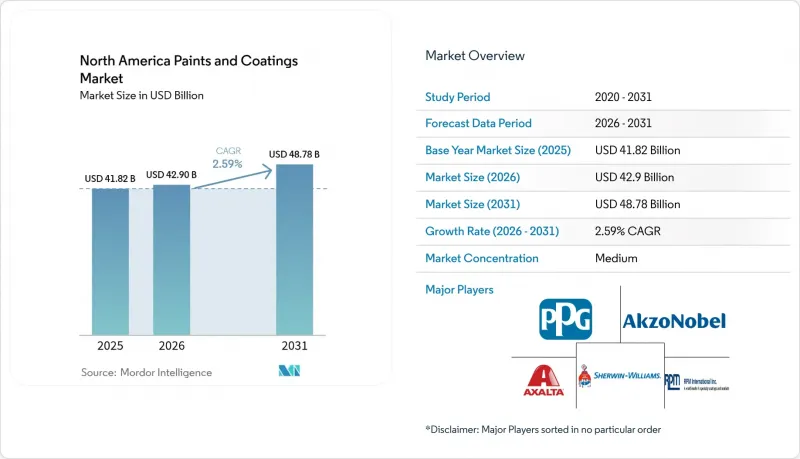
Mordor Intelligence에 따르면 북미의 페인트 및 코팅 시장 규모는 2026년에 429억 달러로 추정되며, 2025년 418억 2,000만 달러에서 확대되어 2031년에는 487억 8,000만 달러에 달할 것으로 예측됩니다.
2026년부터 2031년까지의 연평균 성장률(CAGR)은 2.59%가 될 것으로 전망됩니다.
본 보고서는 수지 유형(아크릴, 알키드, 에폭시, 폴리우레탄, 기타 수지), 기술(수성, 용제형, UV 경화형 코팅), 최종사용자 산업(건축, 자동차, 보호 코팅, 일반 산업, 운송, 포장) 및 지역(미국, 캐나다, 멕시코)별로 분류되어 있습니다. 시장 전망은 금액(달러) 기준으로 제시되어 있습니다.
북미 페인트 및 코팅 시장 동향 및 인사이트
상업 및 공공 시설 건설의 급증
2024년에는 상업 분야의 지출이 1,800억 달러에 달했으며, 이는 엄격한 실내 공기질 요건을 충족하는 고품질 건축용 코팅에 대한 수요 확대와 직결되었습니다. 항균 마감 처리가 기본 사양으로 자리 잡으면서, 의료 시설 건설만으로도 코팅을 많이 사용하는 프로젝트의 규모는 120억 달러에 달했습니다. 물류 거점, 데이터센터, 교육 시설의 개보수 주기로 인해 난연성 및 정전기 소산성 도료에 대한 고수익 수주가 지속되고 있습니다. 사우스 코스트 대기질 관리 구역의 VOC(휘발성 유기 화합물) 50g/L 상한 규제 등 저배출 규제로 인해, 첨단 수성 제품 라인에 대한 선호도가 더욱 높아지고 있습니다. 따라서 이러한 요인으로 인해 북미 페인트·코팅 시장의 건축 분야 수요는 견조한 추세를 보일 것으로 확실시됩니다.
저VOC 수성 기술로의 급속한 전환
현재 미국 18개 주에서 연방 기준보다 엄격한 VOC 제한을 시행하고 있어, 모든 용도 분야에서 수성 도료의 채택이 가속화되고 있습니다. 건축용 제품은 15-20%의 가격 프리미엄이 붙어 있어, 용제 투입량이 급증하더라도 이익률에 대한 압박을 완화하고 있습니다. 하이브리드 화학 기술은 보호 용도 분야에서 물 세척의 편의성과 용제 수준의 내구성을 동시에 실현하여, 공급업체가 장기 산업용 계약을 수주하는 데 기여하고 있습니다. 규제 흐름에 따라 더 높은 사양이 사실상 정착되면서 북미 페인트·코팅 시장의 평균 판매 가격을 끌어올리고 있습니다.
변동이 심한 석유화학 원료 가격
분기마다 25%씩 변동하는 이산화티타늄 가격과 30% 급등하는 아크릴 모노머 가격이 조달 예산을 불안정하게 만들어 중소기업의 계약 마진을 압박하고 있습니다. 멕시코만 연안의 기상 재해와 정유소의 유지보수 주기로 인한 공급망 혼란이 가격 변동을 더욱 증폭시키고 있으며, 2024년 허리케인 ‘베릴’이 텍사스의 석유화학 시설에 미친 영향은 이 부문이 가동 중단에 얼마나 취약한지를 여실히 드러냈습니다. 헤지 프로그램을 도입하고 수지 자체 생산능력을 보유한 제조업체는 수익성을 지킬 수 있었으며, 이로 인해 북미 페인트·코팅 시장에서 업계 재편이 가속화되고 있습니다.
부문 분석
아크릴계 시스템은 건축용 및 자동차용 마감 도료에서 비용, 내후성, 발색 유지력의 균형이 뛰어나 2025년에는 북미 페인트 및 코팅 시장 점유율의 37.12%를 차지했습니다. 또한, 이 하위 부문은 바이오 기반 원료의 혁신을 통해 초기 성과를 거두었으며, 성능을 희생하지 않고도 지속가능성 요건을 충족하고 있습니다. 절대적인 규모는 작지만, 폴리우레탄계 도료는 OEM 조립 분야에서 높은 내마모성에 대한 수요를 배경으로 2031년까지 연평균 성장률(CAGR) 2.95%로 가장 높은 성장세를 기록하고 있습니다. 에폭시 수지는 초기 비용에 대한 우려보다 내화학성이 우선시되는 선박 및 인프라 용도에서 여전히 필수적인 존재입니다. VOC 규제가 강화됨에 따라 알키드 수지의 대체가 진행되고 있지만, 변성 알키드·수성 하이브리드 수지는 틈새 시장인 트림 및 프라이머 용도에서 그 중요성을 계속 유지하고 있습니다. 아크릴의 탄력성과 폴리우레탄의 경도를 융합한 블렌드 화학은 북미 페인트·코팅 시장에서 차별화된 제품을 제공하기 위한 유망한 분야로 떠오르고 있습니다.
산업용 유지보수 및 자산 보호 프로젝트에서는 실리콘 및 불소수지의 틈새 시장이 극도의 고온 및 화학제품 노출을 이유로 프리미엄 가격을 유지하고 있지만, 총 매출에서 차지하는 비중은 여전히 미미합니다. 폴리에스테르 수지는 분체 도료 분야에서 입지를 공고히 하고 있으며, VOC 제로라는 주장을 뒷받침하는 동시에 알루미늄 압출 성형품에 대해 25년간의 파사드 보증을 제공하고 있습니다. 따라서 시설 소유자가 총 운영 비용을 산정할 때, 수지 선택에 있어 상품 가격보다 수명주기 가치를 중시하는 경향이 있습니다. 여러 기술 분야에 걸친 연구개발 역량을 갖춘 공급업체는 신규 진입자가 쉽게 모방할 수 없는 서비스 측면의 경쟁 우위를 누리고 있으며, 이로 인해 북미 페인트 및 코팅 업계 전반에 걸쳐 경쟁 양극화가 더욱 심화되고 있습니다.
기타 혜택:
- 엑셀 형식의 시장 예측(ME) 시트
- 3개월간의 애널리스트 지원
자주 묻는 질문
목차
제1장 소개
제2장 조사 방법
제3장 주요 요약
제4장 시장 구도
제5장 시장 규모와 성장 예측
제6장 경쟁 구도
제7장 시장 기회와 향후 전망
KSM 26.09.07According to Mordor Intelligence, the North America paints and Coatings Market size in 2026 is estimated at USD 42.9 billion, growing from 2025 value of USD 41.82 billion with 2031 projections showing USD 48.78 billion, growing at 2.59% CAGR over 2026-2031.
This report is Segmented by Resin Type (Acrylics, Alkyd, Epoxy, Polyurethane, and Other Resin Types), Technology (Water-Borne, Solvent-Borne, and UV-Cured Coating), End-User Industry (Architectural, Automotive, Protective Coating, General Industrial, Transportation, and Packaging), and Geography (United States, Canada, and Mexico). The Market Forecasts are Provided in Terms of Value (USD).
North America Paints And Coatings Market Trends and Insights
Surge in Commercial and Institutional Construction
Commercial outlays reached USD 180 billion in 2024, translating directly into greater demand for premium architectural coatings that meet strict indoor-air requirements. Healthcare builds alone represented USD 12 billion in coating-intensive projects as antimicrobial finishes became baseline specifications. Renovation cycles across logistics hubs, data centers, and educational facilities sustain high-margin orders for fire-retardant and static-dissipative paints. Low-emission mandates such as the South Coast Air Quality Management District cap of 50 g/L VOC further shift preference toward advanced water-borne lines. The driver, therefore, locks in steady architectural pull for the North American paints and coatings market.
Rapid Shift to Low-VOC Water-borne Technologies
Eighteen U.S. states now enforce VOC limits below federal thresholds, accelerating water-borne adoption across all usage classes. Architectural variants fetch 15-20% price premiums, cushioning margin pressure even as solvent inputs spike. Hybrid chemistries marry water clean-up with solvent-level endurance in protective segments, helping suppliers capture long-cycle industrial contracts. The regulatory tide effectively institutionalizes higher specification, lifting average selling prices within the North American paints and coatings market.
Volatile Petrochemical Raw-material Prices
Titanium dioxide swings of 25% per quarter and acrylic-monomer spikes of 30% keep procurement budgets unstable, eroding contractual margins for smaller players. Supply chain disruptions from Gulf Coast weather events and refinery maintenance cycles amplify price volatility, with Hurricane Beryl's 2024 impact on Texas petrochemical facilities demonstrating the sector's vulnerability to operational disruptions. Manufacturers with hedging programs and integrated resin capacity can shield profitability, hastening consolidation within the North American paints and coatings market.
Other drivers and restraints analyzed in the detailed report include:
- OEM Demand for High-performance Powder Coatings
- AI-driven Color-matching Platforms Accelerating Repaint Cycles
- Stringent and Diverging VOC Regulations Across North America
For complete list of drivers and restraints, kindly check the Table Of Contents.
Segment Analysis
Acrylic systems occupied 37.12% of the North American paints and coatings market share in 2025, benefiting from balanced cost, weatherability, and color retention across architectural and automotive finishes. The sub-segment also captures early wins from bio-based feedstock innovation, meeting sustainability mandates without sacrificing performance. While smaller in absolute terms, polyurethane grades log the fastest 2.95% CAGR through 2031 on demand for high-abrasion durability in OEM assemblies. Epoxies stay indispensable in marine and infrastructure applications where chemical resistance outweighs initial cost concerns. Alkyd displacement accelerates as VOC norms tighten, yet modified alkyd-water hybrids prolong relevance in niche trim and primer roles. Blended chemistries that marry acrylic elasticity with polyurethane hardness present fertile ground for differentiated offerings inside the North American paints and coatings market.
In industrial maintenance and asset-protection projects, silicone and fluoropolymer niches command premium pricing due to extreme heat or chemical exposures, although their aggregate revenue share remains modest. Polyester resins gain ground in powder lines, reinforcing the zero-VOC narrative while delivering 25-year facade warranties for aluminum extrusions. Resin choice therefore centers less on commodity cost and more on life-cycle value as facility owners calculate total operating expense. Suppliers with cross-technology R&D capacity enjoy a service moat that newcomers struggle to replicate, reinforcing competitive stratification throughout the North American paints and coatings industry.
Complete Report Scope:
- By Resin Type
- Acrylics
- Alkyd
- Epoxy
- Polyester
- Polyurethane
- Other Resin Types
- By Technology
- Water-borne
- Solvent-borne
- Powder Coating
- UV-cured Coating
- By End-user Industry
- Architectural
- Automotive
- Wood
- Protective Coating
- General Industrial
- Transportation
- Packaging
- By Country
- United States
- Canada
- Mexico
List of Companies Covered in this Report:
- 3M
- Akzo Nobel N.V.
- Axalta Coating Systems
- BASF
- Beckers Group
- Behr Process LLC
- Benjamin Moore & Co.
- Cloverdale Paint Inc.
- Dunn-Edwards Corporation
- Hempel A/S
- Jotun
- Kansai Paint Co., Ltd
- Nippon Paint Holdings Co., Ltd.
- PPG Industries, Inc.
- RPM International Inc.
- The Sherwin-Williams Company
Additional Benefits:
- The market estimate (ME) sheet in Excel format
- 3 months of analyst support
TABLE OF CONTENTS
1 Introduction
- 1.1 Study Assumptions and Market Definition
- 1.2 Scope of the Study
2 Research Methodology
3 Executive Summary
4 Market Landscape
- 4.1 Market Overview
- 4.2 Market Drivers
- 4.2.1 Surge in Commercial and Institutional Construction
- 4.2.2 Rapid Shift to Low-VOC Water-borne Technologies
- 4.2.3 OEM Demand for High-performance Powder Coatings
- 4.2.4 AI-driven Color-matching Platforms Accelerating Repaint Cycles
- 4.2.5 Reshoring of US Manufacturing Boosting Anti-corrosion Demand
- 4.3 Market Restraints
- 4.3.1 Volatile Petrochemical Raw-material Prices
- 4.3.2 Stringent and Diverging VOC Regulations Across US/Canada/Mexico
- 4.3.3 Skilled-applicator Labor Shortage in Industrial Coatings
- 4.4 Value Chain Analysis
- 4.5 Porter's Five Forces
- 4.5.1 Bargaining Power of Suppliers
- 4.5.2 Bargaining Power of Buyers
- 4.5.3 Threat of New Entrants
- 4.5.4 Threat of Substitutes
- 4.5.5 Rivalry Among Existing Firms
5 Market Size and Growth Forecasts (Value)
- 5.1 By Resin Type
- 5.1.1 Acrylics
- 5.1.2 Alkyd
- 5.1.3 Epoxy
- 5.1.4 Polyester
- 5.1.5 Polyurethane
- 5.1.6 Other Resin Types
- 5.2 By Technology
- 5.2.1 Water-borne
- 5.2.2 Solvent-borne
- 5.2.3 Powder Coating
- 5.2.4 UV-cured Coating
- 5.3 By End-user Industry
- 5.3.1 Architectural
- 5.3.2 Automotive
- 5.3.3 Wood
- 5.3.4 Protective Coating
- 5.3.5 General Industrial
- 5.3.6 Transportation
- 5.3.7 Packaging
- 5.4 By Country
- 5.4.1 United States
- 5.4.2 Canada
- 5.4.3 Mexico
6 Competitive Landscape
- 6.1 Market Concentration
- 6.2 Strategic Moves
- 6.3 Market Share (%)/Ranking Analysis
- 6.4 Company Profiles (includes Global level Overview, Market level overview, Core Segments, Financials as available, Strategic Information, Market Rank/Share for key companies, Products and Services, and Recent Developments)}
- 6.4.1 3M
- 6.4.2 Akzo Nobel N.V.
- 6.4.3 Axalta Coating Systems
- 6.4.4 BASF
- 6.4.5 Beckers Group
- 6.4.6 Behr Process LLC
- 6.4.7 Benjamin Moore & Co.
- 6.4.8 Cloverdale Paint Inc.
- 6.4.9 Dunn-Edwards Corporation
- 6.4.10 Hempel A/S
- 6.4.11 Jotun
- 6.4.12 Kansai Paint Co., Ltd
- 6.4.13 Nippon Paint Holdings Co., Ltd.
- 6.4.14 PPG Industries, Inc.
- 6.4.15 RPM International Inc.
- 6.4.16 The Sherwin-Williams Company
7 Market Opportunities and Future Outlook
- 7.1 White-space and Unmet-Need Assessment