

|
시장보고서
상품코드
2122822
탈모증 치료 시장 : 시장 점유율 분석, 업계 동향 및 통계, 성장 예측(2026-2031년)Alopecia Treatment (Hair Loss) - Market Share Analysis, Industry Trends & Statistics, Growth Forecasts (2026 - 2031) |
||||||
 Mordor Intelligence
Mordor Intelligence에 의하면, 탈모증 치료 시장 규모는 2025년에 36억 7,000만 달러로 평가되었고, 2026년 38억 7,000만 달러에서 2031년까지 50억 5,000만 달러에 이를 것으로 예측되며, 예측 기간(2026-2031년) CAGR은 5.46%를 나타낼 전망입니다.
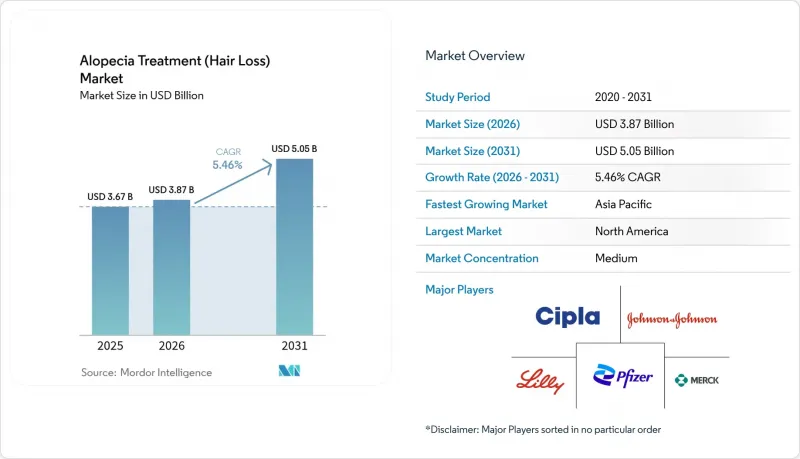
본 보고서는 질환 유형별(남성형 탈모증, 원형 탈모증, 흉터성 탈모증 등), 성별별(남성 및 여성), 투여 경로별(경구, 정맥 내, 기타 투여 경로 등), 최종 사용자별(병원 등), 지역별(북미, 유럽, 아시아태평양 등)로 분류되어 있습니다. 시장 전망은 금액(달러) 기준으로 제시되어 있습니다.
세계의 탈모증 치료 시장 동향 및 인사이트
JAK 억제제 및 신규 외용제의 처방약 승인 급증
바리시티닙, 리트레시티닙, 데우톡실로티닙의 잇따른 승인으로 자가면역성 탈모증 치료에 대한 기대가 새롭게 고조되었습니다. 주요 임상시험에서 성인의 30%가 24주 이내에 두피의 80% 이상에서 모발 회복률을 달성한 것으로 나타났으며, 이는 코르티코스테로이드나 국소 면역 요법으로는 달성할 수 없었던 획기적인 성과입니다. 2034-2041년 특허 보호 기간 덕분에 선행 기업들이 보호받고 있으며, 흉터성 탈모증 등의 추가 적응증 개발이 촉진되고 있습니다. 미국, 캐나다 및 주요 EU 국가들의 보험 환급 제도에서 중증 원형 탈모증이 ‘미용 목적이 아닌 의학적 질환’으로 인식됨에 따라 치료 접근성이 개선되고, 탈모증 치료 시장이 확대되고 있습니다. 제약사들은 경구용 JAK 억제제가 5년 이내에 중증 탈모증 시장 부문의 15-20%를 차지할 것으로 예측했습니다.
AI를 활용한 맞춤형 진단 및 치료 계획
AI를 활용한 두피 이미지 분석을 통해 주관적인 평가 대신 픽셀 단위의 정량화가 가능해졌습니다. 47만 장의 이미지로 구성된 훈련 데이터셋에서 FDA에 등록된 플랫폼은 환자에게 최적의 치료법을 매칭하고 복약 순응도를 추적함으로써 모발 재생 성과를 77.7% 향상시켰습니다. 진료소에서는 이러한 도구를 유전자 검사 및 호르몬 검사와 통합하여, 시행착오로 인한 비용이 많이 드는 주기를 줄이는 엄선된 치료 프로토콜을 구축하고 있습니다. 5,000만 달러를 넘는 벤처 투자는 알고리즘을 통한 의사 결정 지원이 3년 이내에 표준화될 것이라는 확신을 뒷받침하며, 특히 지방 지역을 아우르는 원격 피부과 네트워크에서 이러한 경향이 두드러집니다.
부작용에 대한 우려(성기능, 전신, 면역)
FDA는 복합 외용 피나스테리드와 관련된 32건의 이상반응 보고를 기록했으며, 여기에는 지속적인 발기부전 및 기분 장애도 포함되어 있었습니다. 이에 따라 경고문이 발부되고 약국에 대한 감독이 강화되었습니다. 경구용 JAK 억제제에는 감염증 및 심혈관계 위험에 대한 박스 경고가 첨부되어 있어, 일부 임상의들은 위험이 낮은 환자군에서 외용제나 주사제를 대체 요법으로 선호하는 경향이 있습니다. 이러한 안전성 프로파일로 인해 상담에 소요되는 시간이 늘어나 치료 시작이 지연될 가능성이 있으며, 이는 탈모증 치료 시장의 성장을 둔화시키는 요인이 되고 있습니다.
부문 분석
2025년, 남성형 탈모증은 탈모증 치료 시장 점유율의 36.62%를 유지했습니다. 이는 평생 유병률이 높고, 저비용의 미녹시딜 및 제네릭 피나스테리드를 구할 수 있기 때문인 것으로 보입니다. 기존 제품이 여전히 1차 치료법으로 자리 잡고 있어, 이 부문의 탈모증 치료 시장 규모는 꾸준히 확대될 전망입니다. 그러나 시장에 큰 변화가 다가오고 있습니다. 페라주 파마슈티컬스(Perage Pharmaceuticals)의 PP405는 미토콘드리아의 피루브산 수송체를 표적으로 삼아 초기 임상시험에서 비연모의 수를 6배로 증가시켰으며, 전략적 투자자로부터 1,400만 달러의 자금 조달에 성공했습니다. 원형 탈모증 치료에 혁명을 일으킨 것과 동일한 JAK 억제제의 혜택을 받고 있는 전두 탈모증은 연평균 성장률(CAGR) 7.12%로 성장을 지속하고, 있으며, 2031년까지 매출 격차를 좁힐 가능성이 있습니다. 파이프라인 검토에 따르면, 남성형 탈모증만 해도 100개 이상의 후보 약물이 거론되고 있으며, 이는 작용기전에 특화된 치료법으로의 전환을 시사합니다.
부수적인 효과로, 자가면역성 탈모증의 하위 유형에 대한 보다 상세한 분류가 진행되고 있습니다. 임상의들은 현재 표면적인 증상이 아닌 인터페론 시그니처나 사이토카인의 우세성을 바탕으로 환자를 계층화하고, 이에 따라 면역 조절제를 최적화하고 있습니다. 과거에는 상담이나 외용 스테로이드로만 대처되던 견인성 탈모증에 대해서도, 기기를 이용한 부하 경감 및 재생 의학의 보조 요법이 임상시험에서 유망한 결과를 보이고 있어 새로운 관심이 집중되고 있습니다. 이러한 동향을 종합해 보면, 탈모증 치료 시장은 정밀한 표현형 분석과 다각적인 치료법의 조합을 특징으로 하게 될 것입니다.
2025년 매출액 중 남성 소비자가 62.14%를 차지했습니다. 이는 임상적 유병률이 높고, 치료에 대한 문화적 수용이 정착되어 있기 때문입니다. 그러나 연평균 성장률(CAGR) 6.62%를 기록하며 가장 빠르게 성장하고 있는 계층은 여성입니다. AI를 활용한 패턴 인식을 통해 여성형 탈모증에 전형적인 정수리 부위를 보존하는 확산성 발병 양상이 밝혀지면서 조기 진단이 촉진되고 있습니다. 데톡실로티닙의 임상 데이터에 따르면, 50세 미만 여성에서 더 높은 반응률이 나타났으며, 성별에 따른 투여량에 관한 연구가 진행 중입니다(clinicaltrials.gov). 안전성 프로파일이 개선됨에 따라, 마이크로캡슐화된 외용 제제는 전신 노출을 피함으로써, 기존에 우려되던 기형 유발성 문제를 극복하고 있습니다.
원격 피부과 진료도 접근성 격차를 줄여주고 있습니다. 눈에 띄지 않는 EC 키트를 통해 처방약, 건강기능식품, 저출력 레이저 기기가 집까지 배송되므로, 과거 여성 환자들을 외면하게 만들었던 사회적 편견이 완화되고 있습니다. 인플루언서 주도의 인식 제고 캠페인을 통해 탈모는 단순한 미용상의 고민에서 치료 가능한 의학적 상태로 인식이 변화하고 있으며, 탈모증 치료 시장은 남녀 간 격차 해소로 나아가고 있습니다.
지역별 분석
북미는 2025년 매출의 41.88%를 차지했습니다. 이는 FDA의 ‘획기적 치료제 지정(Breakthrough Designation)’에 따라 2년 이내에 3종의 경구용 JAK 억제제 승인이 가속화된 덕분입니다. 현재 보험 적용 결정에 있어 중증 원형 탈모증은 보험 적용 대상인 염증성 질환으로 분류되어 환자의 경제적 부담이 경감되고 있습니다. 펠라주 파마슈티컬스에 대한 1,400만 달러의 투자로 대표되는 견실한 벤처 자금이 활기찬 파이프라인을 뒷받침하고 있습니다. 국경을 넘는 의료 이용은 여전히 일반적입니다. 미국 거주자들은 저렴한 모발 이식 수술을 받기 위해 멕시코로 여행하고, 캐나다 환자들은 미국의 원격 약국에서 처방전 없이 구입할 수 있는 외용약을 구매하고 있어, 탈모증 치료 시장에서 지역 간 통합이 진행되고 있습니다.
아시아태평양은 중국의 2억 5,000만 명의 탈모증 환자와 중산층의 의료비 지출 증가를 배경으로 6.32%라는 가장 높은 연평균 성장률(CAGR)을 기록하고 있습니다. 킨토르 제약(Kintor Pharmaceutical)의 프로크살타미드 외용제가 후기 임상시험 심사 단계로 진입한 것은 중국이 혁신의 현지화를 추진하고 있음을 반영합니다. 일본에서는 2023년, 난치성 사례를 대상으로 리트레시티닙의 신속 승인이 이루어졌습니다. 한편, 한국은 국내 레이저 캡 제조를 통해 의료기기 분야에서 주도권을 확립하고 있습니다. 인도의 제네릭 의약품은 전신 요법의 비용을 절감하여, 과거에는 고가였던 치료를 더 폭넓은 환자층이 이용할 수 있게 하고 있습니다. 규제 조화가 향상됨에 따라, 크로스 라이선싱 계약이 세계 브랜드의 현지 보험 적용 목록 진입을 뒷받침할 것입니다.
유럽에서는 안전성과 혁신의 균형을 중시하는 유럽의약품청(EMA)의 집중 심사를 통해 완만한 성장을 유지하고 있습니다(ema.europa.eu). 각국의 의료 제도에서는 엄격한 비용 대비 효과 평가를 거쳐 비용의 일부가 상환되므로, 예측 가능하기는 하지만 도입 속도는 완만합니다. 독일과 영국에는 줄기세포 및 엑소좀 연구를 선도하는 산학 협력 클러스터가 존재합니다. 남유럽 국가들에서는 미용 성형 관광에 대한 수요가 증가하고 있지만, 경제적 제약으로 인해 고가의 생물학적 제제 도입이 제한되고 있어, 탈모증 치료 시장은 소득 수준에 따라 양극화된 상태가 지속되고 있습니다.
기타 혜택 :
- 엑셀 형식 시장 예측(ME) 시트
- 3개월간의 애널리스트 지원
자주 묻는 질문
목차
제1장 서론
제2장 조사 방법
제3장 주요 요약
제4장 시장 구도
제5장 시장 규모 및 성장 예측
제6장 경쟁 구도
제7장 시장 기회 및 향후 전망
AJY 26.09.07According to Mordor Intelligence, the alopecia treatment market size was valued at USD 3.67 billion in 2025 and estimated to grow from USD 3.87 billion in 2026 to reach USD 5.05 billion by 2031, at a CAGR of 5.46% during the forecast period (2026-2031).
This report is Segmented by Disease Type (Androgenic Alopecia, Alopecia Areata, Scarring (Cicatricial) Alopecia, and More), Gender (Male and Female), Route of Administration (Oral, Intravenous, Other Route of Administrations, and More), End User (Hospital, and More), and Geography (North America, Europe, Asia-Pacific, and More). The Market Forecasts are Provided in Terms of Value (USD).
Global Alopecia Treatment (Hair Loss) Market Trends and Insights
Surge In Rx Approvals of JAK Inhibitors & Novel Topicals
Successive approvals of baricitinib, ritlecitinib, and deutuxolitinib have reset therapeutic expectations for autoimmune alopecia. Pivotal trials showed that 30% of adults achieved at least 80% scalp hair coverage within 24 weeks, a milestone unreachable with corticosteroids or topical immunotherapy. Patent coverage through 2034-2041 protects first movers and encourages additional indications such as cicatricial alopecia. Reimbursement frameworks in the United States, Canada, and major EU states now recognize severe alopecia areata as a medical-not cosmetic-condition, improving access and expanding the alopecia treatment market. Manufacturers project that oral JAK inhibitors could capture 15-20% of the severe alopecia segment within five years.
AI-Driven Personalised Diagnostics & Treatment Planning
AI-enabled scalp-image analysis replaces subjective grading with pixel-level quantification. In a 470,000-image training set, an FDA-listed platform produced 77.7% better hair-growth outcomes by matching patients to optimal regimens and tracking compliance. Clinics integrate these tools with genetic and hormonal panels, creating curated protocols that cut costly trial-and-error cycles. Venture investments exceeding USD 50 million highlight confidence that algorithmic decision support will become standard within three years, particularly in tele-dermatology networks that serve rural areas.
Adverse-Event Concerns (Sexual, Systemic, Immune)
The FDA recorded 32 adverse-event reports tied to compounded topical finasteride, including persistent erectile dysfunction and mood disorders, prompting warning letters and heightened pharmacy oversight. Oral JAK inhibitors carry boxed warnings for infections and cardiovascular risks, leading some clinicians to favor topical or injectable alternatives in lower-risk populations. These safety profiles increase counseling time and may delay initiation, tempering growth in the alopecia treatment market.
Other drivers and restraints analyzed in the detailed report include:
- Rise of Regenerative Therapies (PRP, Stem-Cells, Exosomes)
- Rapid Uptake of Low-Level-Laser and At-Home Devices
- High Procedure Cost & Limited Insurance Coverage
For complete list of drivers and restraints, kindly check the Table Of Contents.
Segment Analysis
Androgenic alopecia maintained 36.62% of alopecia treatment market share in 2025, anchored by lifelong prevalence and the availability of low-cost minoxidil and generic finasteride. The alopecia treatment market size for this segment is set to expand steadily as legacy products remain first-line therapy. Yet disruption is imminent. Pelage Pharmaceuticals' PP405 increased non-vellus hair counts sixfold in early trials by targeting mitochondrial pyruvate carriers, attracting USD 14 million from strategic investors. Alopecia totalis, benefiting from the same JAK class that revolutionized alopecia areata care, is pacing a 7.12% CAGR and could narrow the revenue gap by 2031. Pipeline reviews list more than 100 candidates against androgenic alopecia alone, signifying a shift toward mechanism-specific interventions.
Second-order effects include greater segmentation of autoimmune subtypes. Clinicians now stratify patients by interferon signature and cytokine dominance rather than surface presentation, tailoring immunomodulators accordingly. Traction alopecia-once addressed only by counseling and topical steroids-gains new interest as device-based offloading and regenerative adjuncts show promise in trials. Collectively, these trends point to an alopecia treatment market that will be defined by precision phenotyping and multi-modal combinations.
Male consumers accounted for 62.14% of 2025 revenue owing to higher clinical prevalence and established cultural acceptance of treatment. However, women represent the fastest-growing cohort at 6.62% CAGR. AI-guided pattern recognition reveals diffuse, vertex-sparing presentations typical of female pattern hair loss, driving earlier diagnosis. Clinical data from deutuxolitinib showed stronger response rates in women under 50, prompting gender-specific dosing studies [clinicaltrials.gov]. As safety profiles improve, topical micro-encapsulated formulas avoid systemic exposure, overcoming historical teratogenicity concerns.
Tele-dermatology also narrows access gaps: discreet e-commerce kits deliver prescriptions, supplements, and low-level-laser devices to the doorstep, reducing stigma that once deterred female patients. Influencer-led education campaigns elevate hair loss from cosmetic worry to treatable medical condition, pushing the alopecia treatment market toward gender parity.
Complete Report Scope:
- By Disease Type
- Androgenic Alopecia
- Alopecia Areata
- Scarring (Cicatricial) Alopecia
- Traction Alopecia
- Alopecia Totalis
- By Gender
- Male
- Female
- By Route of Administration
- Oral
- Topical
- Injectable
- By Distribution Channel
- Hospitals
- Retail Pharmacies & Drug Stores
- Online Pharmacies & E-pharmacy Platforms
- By End-User
- Dermatology & Aesthetic Clinics
- Homecare Settings
- Geography
- North America
- United States
- Canada
- Mexico
- Europe
- Germany
- United Kingdom
- France
- Italy
- Spain
- Rest of Europe
- Asia-Pacific
- China
- Japan
- India
- Australia
- South Korea
- Rest of Asia-Pacific
- Middle East & Africa
- GCC
- South Africa
- Rest of Middle East & Africa
- South America
- Brazil
- Argentina
- Rest of South America
- North America
Geography Analysis
North America held 41.88% of 2025 revenue because FDA breakthrough designations accelerated three oral JAK inhibitor approvals within two years. Coverage determinations now classify severe alopecia areata as a reimbursable inflammatory disorder, easing patient cost burdens. Robust venture funding, exemplified by Pelage Pharmaceuticals' USD 14 million infusion, supports a vibrant pipeline. Cross-border care remains common: U.S. residents travel to Mexico for lower-cost transplant surgery, while Canadian patients purchase compounded topicals from U.S. tele-pharmacies, tightening regional integration inside the alopecia treatment market.
Asia-Pacific delivers the fastest 6.32% CAGR, anchored by China's 250 million hair-loss population and rising middle-class healthcare spending. Kintor Pharmaceutical's proxalutamide topical advanced into late-stage review, reflecting China's push to localize innovation. Japan fast-tracked ritlecitinib in 2023 for intractable cases, while South Korea drives device leadership with domestic laser-cap manufacturing. Indian generics reduce systemic therapy costs, making once-premium treatments accessible to a broader cohort. As regulatory convergence improves, cross-licensing will help global brands enter local formularies.
Europe sustains moderate growth through centralized EMA reviews that balance safety with innovation [ema.europa.eu]. National health systems reimburse partial costs after rigorous cost-effectiveness appraisals, producing predictable but slower uptake. Germany and the United Kingdom host academic-industry clusters that pioneer stem-cell and exosome research. Southern European countries see stronger demand for cosmetic surgery tourism, although economic constraints limit adoption of high-priced biologics, keeping the alopecia treatment market stratified by income.
- Aclaris Therapeutics
- Cipla
- Concert Pharmaceuticals
- Daiichi Sankyo
- GlaxoSmithKline
- HCell
- Johnson & Johnson
- Merck
- Sun Pharmaceuticals Industries
- Pfizer
- Eli Lilly and Company
- Dr. Reddy's Laboratories
- Histogen Inc.
- Taisho Pharmaceutical Holdings
- Follica Inc.
- Sol-Gel Technologies
- Cosmo Pharmaceuticals
- Intas Pharmaceuticals
- Capillus LLC
- Bosley Inc.
- Abbvie
Additional Benefits:
- The market estimate (ME) sheet in Excel format
- 3 months of analyst support
TABLE OF CONTENTS
1 Introduction
- 1.1 Study Assumptions & Market Definition
- 1.2 Scope of the Study
2 Research Methodology
3 Executive Summary
4 Market Landscape
- 4.1 Market Overview
- 4.2 Market Drivers
- 4.2.1 Increasing Prevalence of Alopecia
- 4.2.2 Surge In Rx Approvals Of JAK-Inhibitors & Novel Topicals
- 4.2.3 Rapid Uptake of Low-Level-Laser & At-Home Devices
- 4.2.4 AI-Driven Personalised Diagnostics & Treatment Planning
- 4.2.5 Rise Of Regenerative Therapies (PRP, Stem-Cells, Exosomes)
- 4.2.6 Growing Male Grooming & Tele-Dermatology Adoption
- 4.3 Market Restraints
- 4.3.1 Patent Cliff for Minoxidil / Finasteride Brands
- 4.3.2 Adverse-Event Concerns (Sexual, Systemic, Immune)
- 4.3.3 High Procedure Cost & Limited Insurance Coverage
- 4.3.4 Counterfeit & Unregulated Online Products
- 4.4 Regulatory Landscape
- 4.5 Porter's Five Forces Analysis
- 4.5.1 Threat of New Entrants
- 4.5.2 Bargaining Power of Buyers/Consumers
- 4.5.3 Bargaining Power of Suppliers
- 4.5.4 Threat of Substitute Products
- 4.5.5 Intensity of Competitive Rivalry
5 Market Size & Growth Forecasts (Value, USD)
- 5.1 By Disease Type
- 5.1.1 Androgenic Alopecia
- 5.1.2 Alopecia Areata
- 5.1.3 Scarring (Cicatricial) Alopecia
- 5.1.4 Traction Alopecia
- 5.1.5 Alopecia Totalis
- 5.2 By Gender
- 5.2.1 Male
- 5.2.2 Female
- 5.3 By Route of Administration
- 5.3.1 Oral
- 5.3.2 Topical
- 5.3.3 Injectable
- 5.4 By Distribution Channel
- 5.4.1 Hospitals
- 5.4.2 Retail Pharmacies & Drug Stores
- 5.4.3 Online Pharmacies & E-pharmacy Platforms
- 5.5 By End-User
- 5.5.1 Dermatology & Aesthetic Clinics
- 5.5.2 Homecare Settings
- 5.6 Geography
- 5.6.1 North America
- 5.6.1.1 United States
- 5.6.1.2 Canada
- 5.6.1.3 Mexico
- 5.6.2 Europe
- 5.6.2.1 Germany
- 5.6.2.2 United Kingdom
- 5.6.2.3 France
- 5.6.2.4 Italy
- 5.6.2.5 Spain
- 5.6.2.6 Rest of Europe
- 5.6.3 Asia-Pacific
- 5.6.3.1 China
- 5.6.3.2 Japan
- 5.6.3.3 India
- 5.6.3.4 Australia
- 5.6.3.5 South Korea
- 5.6.3.6 Rest of Asia-Pacific
- 5.6.4 Middle East & Africa
- 5.6.4.1 GCC
- 5.6.4.2 South Africa
- 5.6.4.3 Rest of Middle East & Africa
- 5.6.5 South America
- 5.6.5.1 Brazil
- 5.6.5.2 Argentina
- 5.6.5.3 Rest of South America
- 5.6.1 North America
6 Competitive Landscape
- 6.1 Market Concentration
- 6.2 Market Share Analysis
- 6.3 Company Profiles (includes Global-level Overview, Market-level Overview, Core Segments, Financials, Strategic Information, Market Rank/Share, Products & Services, Recent Developments)
- 6.3.1 Aclaris Therapeutics Inc.
- 6.3.2 Cipla Inc.
- 6.3.3 Concert Pharmaceuticals Inc.
- 6.3.4 Daiichi Sankyo Inc.
- 6.3.5 GlaxoSmithKline PLC
- 6.3.6 HCell Inc.
- 6.3.7 Johnson & Johnson
- 6.3.8 Merck & Co. Inc.
- 6.3.9 Sun Pharmaceutical Industries Ltd.
- 6.3.10 Pfizer Inc.
- 6.3.11 Eli Lilly and Company
- 6.3.12 Dr. Reddy's Laboratories
- 6.3.13 Histogen Inc.
- 6.3.14 Taisho Pharmaceutical Holdings
- 6.3.15 Follica Inc.
- 6.3.16 Sol-Gel Technologies
- 6.3.17 Cosmo Pharmaceuticals
- 6.3.18 Intas Pharmaceuticals
- 6.3.19 Capillus LLC
- 6.3.20 Bosley Inc.
- 6.3.21 AbbVie Inc.
7 Market Opportunities & Future Outlook
- 7.1 White-space & Unmet-Need Assessment


