
|
시장보고서
상품코드
2123069
미국의 부동산 관리 시장 : 점유율 분석, 업계 동향과 통계, 성장 예측(2026-2031년)US Property Management - Market Share Analysis, Industry Trends & Statistics, Growth Forecasts (2026 - 2031) |
||||||
 Mordor Intelligence
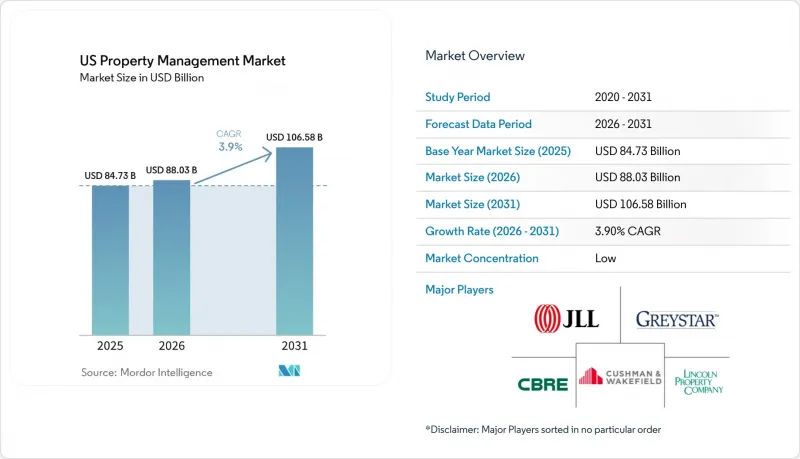
Mordor Intelligence에 의하면, 미국 부동산 관리 서비스 시장 규모는 2025년에 847억 3,000만 달러로 평가되었고 2026년 880억 3,000만 달러에서 2031년까지 1,065억 8,000만 달러에 이를 것으로 예측되며, 예측 기간(2026-2031년) CAGR은 3.9%를 나타낼 전망입니다.
본 보고서는 부동산 유형별(상업용, 주거용, 산업·물류용, 기타), 서비스 유형별(마케팅·임대, 부동산 평가·실사, 임차인·거주자 대상 서비스, 유지보수·시설 관리, 기타), 지역별(북동부, 중서부,남동부, 서부, 남서부)로 분류되어 있습니다. 시장 예측은 금액(달러) 기준으로 제시되어 있습니다.
미국 부동산 관리 시장 동향 및 인사이트
단독주택 임대(SFR) 포트폴리오의 확대
기관 투자자에 의한 단독주택 보유는 2010년대 초반의 압류 부동산 일괄 임베디드에서 2024년까지 정교한 ‘빌드 포 렌트(임대 목적의 건설)’ 프로그램으로 발전했습니다. GAO(미국 정부감사원)의 조사에 따르면, 2015년 시점에서 17만-30만 가구의 보유가 확인되었으며, 펀드에 의한 인수가 가속화됨에 따라 현재는 그 규모가 더욱 확대되고 있습니다. 예를 들어, American Homes 4 Rent는 2024년에 61,336세대를 관리하며 17억 2,900만 달러의 임대 수익을 기록했습니다. 규모가 확대됨에 따라 개별 집주인이 제공하기 어려운 표준화된 임대 계약, 유지보수, 규정 준수 절차에 대한 수요가 높아지고 있습니다. 그 결과, 주택 전문 업체와 통합형 REIT 플랫폼은 미국 부동산 관리 서비스 시장에서 가격 결정력과 지속적인 수익을 확보하고 있습니다.
A급 상업용 부동산에 대한 수요 증가
하이브리드 근무 모델을 지원하기 위해 고용주들이 편의 시설이 잘 갖춰진 공간을 찾는 가운데, 고급 오피스 건물이 임차인들의 관심을 다시 끌고 있습니다. CBRE의 기록에 따르면, 2024년 임대 수익은 18% 증가했으며, 그중 뉴욕의 오피스 임대 수익은 28%나 급증했습니다. 트로피 빌딩(고급 빌딩) 소유주들은 컨시어지 팀, 스마트 빌딩 플랫폼, 엄선된 임차인 경험을 도입하여 공급의 차별화를 꾀하고 있습니다. 이러한 부가가치 서비스에는 일반적으로 막대한 관리 예산이 필요하기 때문에 전문 기업은 더 높은 수수료를 청구할 수 있게 됩니다. 또한, 성과 벤치마킹 및 편의 시설 업그레이드는 에너지 관리 및 업무 공간 컨설팅 분야의 교차 판매 기회도 창출하고 있습니다. 그 결과, 미국 부동산 관리 서비스 시장에서 A급 포트폴리오에 주력하는 관리 회사들은 지속적인 수익 성장을 누리고 있습니다.
금리 상승에 따른 거래 둔화
2023년 하반기 이후 지속되는 높은 차입 비용으로 인해 부동산 매각 및 신규 개발이 일시적으로 정체되고 있습니다. CBRE는 기존 포트폴리오가 비교적 안정적임에도 불구하고 투자액이 급감했다고 지적하고 있습니다. 거래 감소는 온보딩 수수료나 건설 관리 수수료로 수익을 창출하는 관리 회사에게 있어, 자산 인수나 신축 자산 수탁 건수의 감소를 의미합니다. 거래 유입에 의존하는 중소규모 기업들은 단기적으로 수익 측면에서 압박을 받고 있습니다. 다만, 정기적인 관리 계약이 그 영향을 완화하고 있기 때문에 금리가 정상화될 때까지는 성장 속도가 둔화되겠지만, 미국 부동산 관리 서비스 시장 전체로는 계속해서 확대되고 있습니다.
부문 분석
2025년 수익 중 주거용 부동산이 49.35%를 차지하며, 미국 부동산 관리 서비스 시장에서 가장 큰 점유율을 기록하고 있습니다. 기관 투자자 대상의 단독주택 임대 부동산 및 공동주택 포트폴리오는 임대료 수입을 바탕으로 예측 가능한 지속적인 수수료를 창출하는 한편, 편의 시설이 잘 갖춰진 커뮤니티는 주차장, 수납 공간,스마트 홈 구독 서비스 등을 통해 부가적인 수익을 창출하고 있습니다. 상업용 부동산은 연평균 성장률(CAGR) 4.82%를 나타낼 것으로 예측되며, A급 오피스 및 체험형 소매 시설의 임대 수요가 회복됨에 따라 주거 부문과의 격차를 좁혀갈 전망입니다.
주거 부문은 2024년에 시설 개보수에 4억 2,520만 달러를 투자한 Invitation Homes와 같은 REIT의 집중 보유로 혜택을 보고 있습니다. 규모 확대에 따라 공급업체와의 가격 협상력, 기술 도입, 대응 속도가 향상되어 기관 투자자들에게 전문적인 관리가 필수 조건으로 자리 잡고 있습니다. 상업용 부동산의 성장은 기업의 ‘품질 지향으로의 전환’과 기존 빌딩에 통합된 새로운 유연한 업무 공간 모델에 의해 주도되고 있습니다. 산업용 및 물류용 자산은 전자상거래 기업들이 소비자와 가까운 입지를 추구하며 전문적인 유지보수 및 보안 프로토콜에 의존하고 있기 때문에 추가 상승 여력을 제공합니다. 이러한 동향들이 맞물려 미국 부동산 관리 서비스 시장에서 균형 잡힌 성장세가 유지되고 있습니다.
기타 혜택:
- 엑셀 형식 시장 예측(ME) 시트
- 3개월간의 애널리스트 지원
자주 묻는 질문
목차
제1장 서론
제2장 조사 방법
제3장 주요 요약
제4장 시장 구도
제5장 시장 규모와 성장 예측
제6장 경쟁 구도
제7장 시장 기회와 향후 전망
JHS 26.09.09According to Mordor Intelligence, the US property management services market size was valued at USD 84.73 billion in 2025 and estimated to grow from USD 88.03 billion in 2026 to reach USD 106.58 billion by 2031, at a CAGR of 3.9% during the forecast period (2026-2031).
This report is Segmented by Property Type (Commercial, Residential, Industrial & Logistics, and More), by Service Type (Marketing & Leasing, Property Evaluation & Due Diligence, Tenant & Resident Services, Maintenance & Facility Management, and More), and by Geography (Northeast, Midwest, Southeast, West and Southwest). The Market Forecasts are Provided in Terms of Value (USD).
US Property Management Market Trends and Insights
Expansion of Single-Family Rental (SFR) Portfolios
Institutional ownership of single-family homes grew from bulk foreclosure purchases in the early 2010s to sophisticated build-for-rent programs by 2024. The GAO traced holdings of 170,000-300,000 homes by 2015, with larger footprints today as funds accelerate acquisitions. American Homes 4 Rent, for example, managed 61,336 homes and generated USD 1.729 billion rental revenue in 2024. Scale drives demand for standardized leasing, maintenance, and compliance processes that individual landlords rarely provide. Consequently, residential specialists and integrated REIT platforms gain pricing power and recurring revenue inside the US property management services market.
Rising Demand from Class-A Commercial Real Estate
Premium office assets are regaining tenant attention as employers seek high-amenity space to support hybrid work models. CBRE recorded 18% leasing revenue growth in 2024, including a 28% jump in office leasing in New York. Owners of trophy buildings deploy concierge teams, smart-building platforms, and curated tenant experiences to differentiate supply. These value-added services typically require large management budgets, allowing professional firms to command higher fees. Performance benchmarking and amenity upgrades also create cross-selling potential for energy management and workplace consulting. The result is durable revenue growth for managers focused on Class-A portfolios within the US property management services market.
Interest-Rate-Driven Transaction Slowdown
Elevated borrowing costs since late 2023 have caused a pause in property sales and ground-up development. CBRE noted that investment volume fell sharply even as existing portfolios remained relatively stable. Less trading means fewer property takeovers and new-build assignments for managers who earn onboarding and construction-management fees. Smaller firms that rely on deal flow face near-term revenue stress. Nonetheless, recurring management contracts cushion the impact, allowing the broader US property management services market to continue expanding, albeit at a slower clip until rates normalize.
Other drivers and restraints analyzed in the detailed report include:
- Aging U.S. Housing Stock Needs Professional Maintenance
- Growing Institutional Outsourcing by Pension/SWF Investors
- State & City Rent-Control Legislation
For complete list of drivers and restraints, kindly check the Table Of Contents.
Segment Analysis
Residential properties accounted for 49.35% of 2025 revenue, making them the largest slice of the US property management services market share. Institutional single-family rentals and multifamily portfolios deliver predictable, recurring fees based on rent rolls, while amenity-rich communities drive ancillary income from parking, storage, and smart-home subscriptions. Commercial properties are projected to register a 4.82% CAGR and will narrow the gap as leasing rebounds in Class-A offices and experiential retail.
The residential segment benefits from concentrated holdings by REITs such as Invitation Homes, which invested USD 425.2 million in property upgrades in 2024. Scale improves vendor pricing, technology adoption, and response times, reinforcing professional management as table stakes for institutional owners. Commercial growth is fueled by corporate flight to quality and new flexible-workspace models integrated into traditional buildings. Industrial and logistics assets add further upside as e-commerce firms seek proximity to consumers and rely on specialized maintenance and security protocols. Together, these dynamics sustain balanced momentum in the US property management services market.
Complete Report Scope:
- By Property Type
- Commercial
- Residential
- Industrial & Logistics
- Institutional & Mixed-Use
- By Service Type
- Marketing & Leasing
- Property Evaluation & Due Diligence
- Tenant & Resident Services (Renting, Leasing, etc.)
- Maintenance, Repair & Facility Management
- Lease Administration & Compliance
- Other Services (Compliance, Legal Services, Renewals, etc.)
- By Geography
- Northeast
- Midwest
- Southeast
- West
- Southwest
List of Companies Covered in this Report:
- Greystar Real Estate Partners
- CBRE Group, Inc.
- Lincoln Property Company
- Jones Lang LaSalle (JLL)
- Cushman & Wakefield plc
- Pinnacle Property Management Services
- Equity Residential
- AvalonBay Communities, Inc.
- Invitation Homes Inc.
- FPI Management
- RPM Living
- FirstService Residential
- UDR, Inc.
- Aimco
- WinnCompanies
- Brookfield Properties U.S.
- Colliers International U.S.
- CoStar Group, Inc.
- Cushman & Wakefield Asset Services
- Knightvest Capital Management
Additional Benefits:
- The market estimate (ME) sheet in Excel format
- 3 months of analyst support
TABLE OF CONTENTS
1 Introduction
- 1.1 Study Assumptions & Market Definition
- 1.2 Scope of the Study
2 Research Methodology
3 Executive Summary
4 Market Landscape
- 4.1 Market Overview
- 4.2 Market Drivers
- 4.2.1 Rising demand from Class-A commercial real estate
- 4.2.2 Expansion of single-family rental (SFR) portfolios
- 4.2.3 Growing institutional outsourcing by pension/SWF investors
- 4.2.4 Adoption of AI-enabled leasing & service tech
- 4.2.5 Aging U.S. housing stock needs professional maintenance
- 4.2.6 ESG & green-lease compliance pressure
- 4.3 Market Restraints
- 4.3.1 Interest-rate-driven transaction slowdown
- 4.3.2 State & city rent-control legislation
- 4.3.3 Skilled trade-labor shortages raising OPEX
- 4.3.4 Owners' shift to DIY prop-tech platforms
- 4.4 Value / Supply-Chain Analysis
- 4.5 Regulatory Landscape (HUD, FHFA, State landlord-tenant laws)
- 4.6 Technological Outlook (IoT sensors, AI leasing bots, SaaS PM suites)
- 4.7 Industry Attractiveness - Porter's Five Forces Analysis
- 4.7.1 Threat of New Entrants
- 4.7.2 Bargaining Power of Owners/Tenants
- 4.7.3 Bargaining Power of Suppliers/Sub-contractors
- 4.7.4 Threat of Substitutes
- 4.7.5 Competitive Rivalry Intensity
5 Market Size & Growth Forecasts(Value, In USD Billion)
- 5.1 By Property Type
- 5.1.1 Commercial
- 5.1.2 Residential
- 5.1.3 Industrial & Logistics
- 5.1.4 Institutional & Mixed-Use
- 5.2 By Service Type
- 5.2.1 Marketing & Leasing
- 5.2.2 Property Evaluation & Due Diligence
- 5.2.3 Tenant & Resident Services (Renting, Leasing, etc.)
- 5.2.4 Maintenance, Repair & Facility Management
- 5.2.5 Lease Administration & Compliance
- 5.2.6 Other Services (Compliance, Legal Services, Renewals, etc.)
- 5.3 By Geography
- 5.3.1 Northeast
- 5.3.2 Midwest
- 5.3.3 Southeast
- 5.3.4 West
- 5.3.5 Southwest
6 Competitive Landscape
- 6.1 Market Concentration
- 6.2 Strategic Moves & Funding Activities
- 6.3 Market Share Analysis
- 6.4 Company Profiles (includes Global level Overview, Market level overview, Core Segments, Financials as available, Strategic Information, Products & Services, and Recent Developments)
- 6.4.1 Greystar Real Estate Partners
- 6.4.2 CBRE Group, Inc.
- 6.4.3 Lincoln Property Company
- 6.4.4 Jones Lang LaSalle (JLL)
- 6.4.5 Cushman & Wakefield plc
- 6.4.6 Pinnacle Property Management Services
- 6.4.7 Equity Residential
- 6.4.8 AvalonBay Communities, Inc.
- 6.4.9 Invitation Homes Inc.
- 6.4.10 FPI Management
- 6.4.11 RPM Living
- 6.4.12 FirstService Residential
- 6.4.13 UDR, Inc.
- 6.4.14 Aimco
- 6.4.15 WinnCompanies
- 6.4.16 Brookfield Properties U.S.
- 6.4.17 Colliers International U.S.
- 6.4.18 CoStar Group, Inc.
- 6.4.19 Cushman & Wakefield Asset Services
- 6.4.20 Knightvest Capital Management
7 Market Opportunities & Future Outlook
- 7.1 White-space & Unmet-Need Assessment