|
시장보고서
상품코드
2123372
항균 포장 시장 : 점유율 분석, 업계 동향과 통계, 성장 예측(2026-2031년)Antimicrobial Packaging - Market Share Analysis, Industry Trends & Statistics, Growth Forecasts (2026 - 2031) |
||||||
 Mordor Intelligence
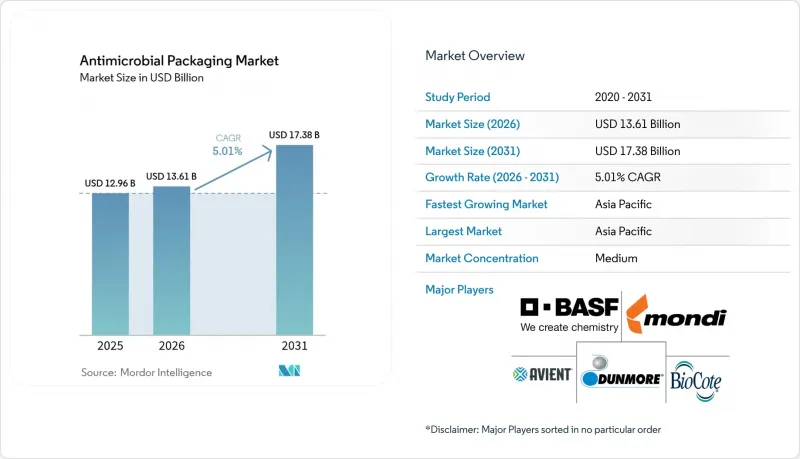
Mordor Intelligence에 의하면, 항균 포장 시장 규모는 2025년에 129억 6,000만 달러로 평가되었고 2026년 136억 1,000만 달러에서 2031년까지 173억 8,000만 달러에 이를 것으로 추정되고 있어 예측 기간(2026-2031년) CAGR은 5.01%를 나타낼 전망입니다.
본 보고서는 소재별(플라스틱, 바이오폴리머 등), 항균제 유형별(유기산, 박테리오신 및 효소 등),기술별(활성 표면 코팅 등), 포장 형태별(파우치 및 백, 필름 및 랩 등), 최종 사용자 산업별(식품 및 음료, 헬스케어 및 의료기기 등), 그리고 지역별로 분류되어 있습니다. 시장 예측은 금액(달러) 기준으로 제시되어 있습니다.
세계 항균 포장 시장 동향 및 인사이트
COVID-19 이후의 엄격한 식품 안전 규제
식품 접촉 재료에 대한 감독 체계를 전 세계적으로 재검토함에 따라 항균 솔루션의 채택이 확대되고 있습니다. 미국의 인간용 식품 프로그램은 현재 기존의 PFAS 관련 신고 사항을 재평가하고 있으며, 이는 더 안전한 항균 대체재 도입의 길을 열어주고 있습니다. 한편, 유럽 규제 당국은 리스테리아 모노사이토제네스(Listeria monocytogenes)와 같은 지속성 병원균에 대한 우려를 동시에 지적하며, 가공업체들에게 미생물에 대한 추가적인 차단 기능을 갖춘 포장재의 채택을 촉구하고 있습니다. 이러한 규제 동향이 맞물리면서, 안전성과 ‘클린 라벨’에 대한 기대를 모두 충족시키는 천연 유래 제제에 대한 투자가 가속화되고 있습니다. 효능과 재활용 가능성을 입증할 수 있는 공급업체에게 있어 규제 강화는 항균 포장 시장에서의 확실한 성장 경로로 이어집니다.
온라인 식료품(E-Grocery) 콜드체인 투자 가속화
온라인 식료품에 대한 폭발적인 수요는 온도 관리형 물류에 전례 없는 부담을 주고 있습니다. 아시아태평양에서는 현재 수천 개의 마이크로 풀필먼트 창고가 장거리 라스트 마일 배송에서도 품질을 유지할 수 있는 포장을 필요로 하고 있습니다. 냉장 기능이 저하될 경우, 항균층이 중요한 2차 안전 장치로 작용하여 품질 결함으로 인한 클레임을 줄여줍니다. 새롭게 등장하고 있는 스마트팩은 시간·온도 표시기와 내장된 항균제를 결합하여 플랫폼이 데이터를 기반으로 신선도를 관리할 수 있도록 합니다. 당일 배송 시간대가 단축됨에 따라 소매업체들은 특히 위험도가 높은 신선식품의 경우 항균 기능을 조달의 필수 조건으로 삼는 경향이 강해지고 있습니다. 이러한 전자상거래의 성장세는 항균 포장 시장의 단기적인 성장을 확고히 하고 있습니다.
나노금속에 관한 EU 살생물제 규정(BPR)의 장벽
유럽의 살생물제 규정(BPR)에 따르면, 나노 은이나 나노 구리가 식품 접촉 용도로 도입되기 전에 종합적인 자료 제출이 의무화되어 있습니다. 식품이나 사료에 대한 직접 사용이 승인된 나노 금속은 아직 존재하지 않기 때문에 혁신적인 기업들은 수년에 걸친 독성 시험 프로그램을 수행해야 하는 상황에 직면해 있습니다. 광범위한 데이터 요건으로 인해 시장 출시까지의 기간이 길어지고 있어, 일부 기업들은 규제 승인 절차를 더 신속하게 통과할 수 있는 식물 유래 활성 성분으로 초점을 옮기고 있습니다. 이러한 장벽으로 인해 항균 포장 시장에서 금속 기반 솔루션의 단기적 성장은 둔화되고 있습니다.
부문 분석
현재 항균 포장 시장 규모를 지탱하고 있는 것은 플라스틱이며, 확장성이 높은 압출 성형 라인과 견고한 차단 성능 덕분에 2025년에는 매출 점유율의 59.74%를 차지할 것으로 전망됩니다. 그러나 2030년까지 완전한 재활용성을 의무화하는 정책 목표에 힘입어 바이오 폴리머는 연평균 성장률(CAGR) 8.05%를 기록하며 소재 중 가장 빠른 성장세를 보이고 있습니다. 키토산이나 에센셜 오일로 기능이 강화된 폴리젖산 및 폴리하이드록시알카노에이트의 혼합물은 현재 석유화학계 필름과 동등한 미생물 살균률을 실현하면서도, 사용 후 퇴비화 처리도 가능합니다.
항균 효과를 저해하지 않으면서 바이오폴리머 잔여물을 회수하는 폐쇄형 회수 체계에 대한 투자가 가속화되고 있습니다. 또한, 페놀 성분이 풍부한 다당류로 코팅된 종이 섬유는 재활용성을 유지하면서도 광범위한 세균 억제 효과를 발휘한다는 사실이 연구를 통해 입증되었습니다. 이러한 진보에 힘입어 바이오폴리머는 계속해서 플라스틱 시장 점유율을 잠식할 것이며, 항균 포장 시장 전체에서 공급업체의 제품 포트폴리오를 재편해 나갈 것으로 확실시됩니다.
유기산은 규제 측면에서의 높은 인지도와 비용 효율성 덕분에 2025년 매출의 45.12%를 차지하고 있습니다. 한편, 박테리오신과 효소는 7.29%의 연평균 성장률(CAGR)로 확대되고 있으며, 이는 소비자가 인식하기 쉽고 표기에 유리한 첨가제로 전환되는 추세를 반영하고 있습니다. 시너지 효과를 발휘하는 시스템에서는 박테리오신과 나노 은을 결합함으로써 살균 효율을 2배로 높이는 동시에 금속 사용량을 억제하고 있습니다.
사이클로덱스트린 케이지 내에 봉입된 에센셜 오일은 수증기 방출을 제어함으로써 수분 함량이 높은 농산물에서 부패균의 번식을 억제합니다. 살균제에 대한 규제가 강화되는 가운데, 식물 유래 약제는 전략적 중요성이 커지고 있으며, 천연 활성 성분은 항균 포장 시장에서 향후 차별화의 핵심 요소가 될 것입니다.
지역별 분석
아시아태평양은 세계 시장에서 선두를 차지하고 있으며, 2025년에는 매출의 40.74%를 차지하고, 2031년까지의 연평균 성장률(CAGR)도 8.44%로 가장 높은 성장세를 보이고 있습니다. 중국의 ‘식품안전법’ 개정과 인도의 FSSAI 위생 기준에 따라 미생물학적 안전 대책이 의무화되면서 첨단 포장 기술에 대한 투자가 촉진되고 있습니다. 일본의 가공업체들은 고급 수산물 수출품에 스마트 인디케이터와 서방형 항균제를 적용하여 단위당 이익률을 높이고 있습니다. 항균제 내성에 대응하기 위한 지역 정부의 이니셔티브이 도입을 더욱 뒷받침하고 있으며, 항균 포장 시장에서 아시아태평양의 견인력을 강화하고 있습니다.
이에 이어 유럽에서는 재활용 가능성과 재생 소재 함유율 준수를 의무화하는 ‘EU 포장 및 포장 폐기물 규정(BPR)’이 시장 동향을 형성하고 있습니다. 독일과 프랑스는 바이오 유래 유효 성분에 대한 연구 개발을 주도하고 있는 반면, 지중해 연안의 수출업체들은 국경을 넘는 농산물 운송 중 유통 기한을 확보하기 위해 항균성 판지 상자를 채택하고 있습니다. BPR은 나노 금속 소재의 도입을 지연시키는 한편, 식물 유래 혁신을 가속화하고 있어 유럽은 기술적 리더십의 중심적 지위를 유지하고 있습니다.
북미에서는 FDA의 감독 체계와 견조한 의료 수요에 힘입어 꾸준한 성장을 유지하고 있습니다. 미국에서는 PFAS 대체재에 대한 보조금이 투입되고 있으며, 이는 간접적으로 천연 활성 성분을 활용한 항균 포장 시장 규모 확대에 기여하고 있습니다. 캐나다의 연구 기관에서는 수산물 공급망을 대상으로 효소 칵테일이 배합된 셀룰로오스계 필름의 시범 운영을 진행하고 있습니다. 멕시코에서는 니어쇼어링 동향을 활용하여 국내 브랜드 및 미국 소매업체를 대상으로 항균 파우치 생산을 확대되고 있습니다.
기타 혜택:
- 엑셀 형식 시장 예측(ME) 시트
- 3개월간의 애널리스트 지원
자주 묻는 질문
목차
제1장 서론
제2장 조사 방법
제3장 주요 요약
제4장 시장 구도
제5장 시장 규모와 성장 예측
제6장 경쟁 구도
제7장 시장 기회와 향후 전망
JHS 26.09.07According to Mordor Intelligence, the antimicrobial packaging market size was valued at USD 12.96 billion in 2025 and estimated to grow from USD 13.61 billion in 2026 to reach USD 17.38 billion by 2031, at a CAGR of 5.01% during the forecast period (2026-2031).
This report is Segmented by Material (Plastics, Biopolymers, and More), Antimicrobial Agent Type (Organic Acids, Bacteriocins and Enzymes, and More), Technology (Active Surface Coating, and More), Pack Type (Pouches and Bags, Films and Wraps, and More), End-User Industry (Food and Beverages, Healthcare and Medical Devices, and More), and by Geography. The Market Forecasts are Provided in Terms of Value (USD).
Global Antimicrobial Packaging Market Trends and Insights
Stringent Post-COVID Food-Safety Regulations
The global reset of food-contact oversight is amplifying uptake of antimicrobial solutions. The United States Human Foods Program now reassesses legacy PFAS notifications, creating an opening for safer antimicrobial alternatives. European agencies simultaneously flag persistent pathogens such as Listeria monocytogenes, compelling processors to adopt packaging that adds an extra microbial barrier. These converging mandates accelerate investment in naturally-derived agents that fulfil both safety and "clean-label" expectations. For suppliers able to document efficacy and recyclability, regulatory tightening translates into clear growth runway within the antimicrobial packaging market.
Acceleration of E-Grocery Cold-Chain Investments
Explosive demand for online groceries places unprecedented stress on temperature-controlled logistics. In Asia-Pacific, thousands of micro-fulfilment warehouses now require packaging that maintains quality over extended last-mile journeys. When refrigeration falters, antimicrobial layers serve as a critical secondary safeguard, reducing spoilage claims. Emerging smart packs pair time-temperature indicators with embedded antimicrobials, giving platforms data-driven control over freshness. As same-day delivery windows shrink, retailers increasingly make antimicrobial functionality a procurement prerequisite, particularly for high-risk perishables. This e-commerce momentum solidifies near-term gains for the antimicrobial packaging market.
EU Biocide Regulation (BPR) Hurdles for Nano-Metals
Europe's Biocidal Products Regulation requires exhaustive dossiers before nano-silver or nano-copper can enter food-contact channels. With no nano-metal yet authorised for direct food or feed applications, innovators face multi-year toxicology programs. Wide-ranging data demands inflate time-to-market, prompting some firms to pivot toward plant-based actives that clear regulatory pathways more swiftly. The deterrent effect narrows near-term growth for metallic solutions inside the antimicrobial packaging market.
Other drivers and restraints analyzed in the detailed report include:
- Breakthroughs in Controlled-Release Nano-Silver Films
- Inclusion of Antimicrobial Features in ESG Scorecards
- Price Volatility in Silver and Copper Feedstocks
For complete list of drivers and restraints, kindly check the Table Of Contents.
Segment Analysis
Plastics currently anchor the antimicrobial packaging market size, capturing 59.74% revenue share in 2025 due to scalable extrusion lines and robust barrier performance. Yet policy targets that mandate full recyclability by 2030 propel biopolymers to an 8.05% CAGR, the fastest among materials. Poly-lactic acid and polyhydroxyalkanoate blends enhanced with chitosan or essential oils now match microbial kill rates seen in petrochemical films while supporting compostable end-of-life routes.
Investment is accelerating in closed-loop collection schemes that recover biopolymer offcuts without sacrificing antimicrobial potency. Research also evidences that paper fibres coated with phenolic-rich polysaccharides retain recyclability and deliver broad-spectrum bacterial inhibition. These advances ensure biopolymers will continue eroding plastic share, reshaping supplier portfolios throughout the antimicrobial packaging market.
Organic acids command 45.12% of 2025 revenue owing to regulatory familiarity and cost efficiency. However, bacteriocins and enzymes accelerate at 7.29% CAGR, mirroring consumer migration to recognizable, label-friendly additives. Synergistic systems marry bacteriocins with nano-silver, doubling kill efficiency while curbing metal dosage.
Essential oils protected within cyclodextrin cages provide controlled vapor release that suppresses spoilage organisms in high-moisture produce. As biocide scrutiny intensifies, plant-derived agents gain strategic heft, positioning natural actives as pivotal to future differentiation in the antimicrobial packaging market.
Complete Report Scope:
- By Material
- Plastics
- Biopolymers
- Paper and Paperboard
- Glass
- Metals
- By Antimicrobial Agent Type
- Organic Acids
- Bacteriocins and Enzymes
- Silver and Copper Nanoparticles
- Essential Oils and Plant Extracts
- By Technology
- Active Surface Coating
- Controlled-Release Systems
- By Pack Type
- Pouches and Bags
- Films and Wraps
- Trays and Lids
- Carton Packages
- By End-user Industry
- Food and Beverages
- Meat, Poultry and Seafood
- Bakery and Confectionery
- Fruits and Vegetables
- Healthcare and Medical Devices
- Personal Care and Cosmetics
- Animal Feed and Pet Food
- Other End-User Industry
- Food and Beverages
- By Geography
- North America
- United States
- Canada
- Mexico
- Europe
- Germany
- United Kingdom
- France
- Italy
- Spain
- Russia
- Rest of Europe
- Asia-Pacific
- China
- India
- Japan
- South Korea
- Australia and New Zealand
- Rest of Asia-Pacific
- Middle East and Africa
- Middle East
- United Arab Emirates
- Saudi Arabia
- Turkey
- Rest of Middle East
- Africa
- South Africa
- Nigeria
- Egypt
- Rest of Africa
- Middle East
- South America
- Brazil
- Argentina
- Rest of South America
- North America
Geography Analysis
Asia-Pacific tops the global leaderboard, holding 40.74% revenue in 2025 and registering the highest 8.44% CAGR to 2031. China's Food Safety Law amendments and India's FSSAI hygiene codes mandate microbiological safeguards that funnel capital toward advanced packs. Japanese converters add smart indicators and controlled-release antimicrobials to premium seafood exports, elevating unit margins. Regional government initiatives to counter antimicrobial resistance further incentivise adoption, reinforcing Asia-Pacific's pull on the antimicrobial packaging market.
Europe follows, its trajectory shaped by the EU Packaging and Packaging Waste Regulation that forces recyclability and recycled-content compliance. Germany and France spearhead R&D into bio-based actives, whereas Mediterranean exporters deploy antimicrobial cartons to secure shelf life during cross-border produce shipments. While the BPR slows nano-metal roll-outs, it simultaneously accelerates botanical innovation, keeping Europe central to technology leadership.
North America sustains steady gains anchored by FDA oversight and robust healthcare demand. The United States channels grant funding toward PFAS alternatives, indirectly uplifting antimicrobial packaging market size for natural actives. Canadian institutes pilot cellulose-based films infused with enzyme cocktails, targeting seafood supply chains. Mexico, leveraging near-shoring trends, scales antimicrobial pouch production for both domestic brands and US retailers.
- Amcor Plc
- Mondi Group
- Sealed Air Corporation
- BASF SE
- Avient Corporation
- BioCote Limited
- Sciessent LLC
- Microban International
- Covestro AG
- Takex Labo Co., Ltd.
- Dunmore Corporation
- Sonoco Products Company
- Constantia Flexibles
- Toppan Printing Co., Ltd.
- Toyochem Co., Ltd.
- Nissen Chemitec Corporation
- Parx Materials N.V.
- Tekni-Plex Inc.
- Plastipak Holdings Inc.
Additional Benefits:
- The market estimate (ME) sheet in Excel format
- 3 months of analyst support
TABLE OF CONTENTS
1 INTRODUCTION
- 1.1 Study Assumptions and Market Definition
- 1.2 Scope of the Study
2 RESEARCH METHODOLOGY
3 EXECUTIVE SUMMARY
4 MARKET LANDSCAPE
- 4.1 Market Overview
- 4.2 Market Drivers
- 4.2.1 Stringent post-COVID food-safety regulations
- 4.2.2 Acceleration of e-grocery cold-chain investments
- 4.2.3 Breakthroughs in controlled-release nano-silver films
- 4.2.4 Inclusion of antimicrobial features in ESG scorecards
- 4.2.5 Shift to reusable medical-device trays in hospitals
- 4.2.6 Adoption of edible, antimicrobial coatings for fresh-produce export
- 4.3 Market Restraints
- 4.3.1 EU biocide regulation (BPR) hurdles for nano-metals
- 4.3.2 Price volatility in silver and copper feedstocks
- 4.3.3 Consumer push-back on synthetic preservatives in packaging
- 4.3.4 Scale-up challenges for bio-based antimicrobial polymers
- 4.4 Supply-Chain Analysis
- 4.5 Regulatory Landscape
- 4.6 Technological Outlook
- 4.7 Porter's Five Forces
- 4.7.1 Threat of New Entrants
- 4.7.2 Bargaining Power of Buyers
- 4.7.3 Bargaining Power of Suppliers
- 4.7.4 Threat of Substitutes
- 4.7.5 Intensity of Competitive Rivalry
5 MARKET SIZE AND GROWTH FORECASTS (VALUE)
- 5.1 By Material
- 5.1.1 Plastics
- 5.1.2 Biopolymers
- 5.1.3 Paper and Paperboard
- 5.1.4 Glass
- 5.1.5 Metals
- 5.2 By Antimicrobial Agent Type
- 5.2.1 Organic Acids
- 5.2.2 Bacteriocins and Enzymes
- 5.2.3 Silver and Copper Nanoparticles
- 5.2.4 Essential Oils and Plant Extracts
- 5.3 By Technology
- 5.3.1 Active Surface Coating
- 5.3.2 Controlled-Release Systems
- 5.4 By Pack Type
- 5.4.1 Pouches and Bags
- 5.4.2 Films and Wraps
- 5.4.3 Trays and Lids
- 5.4.4 Carton Packages
- 5.5 By End-user Industry
- 5.5.1 Food and Beverages
- 5.5.1.1 Meat, Poultry and Seafood
- 5.5.1.2 Bakery and Confectionery
- 5.5.1.3 Fruits and Vegetables
- 5.5.2 Healthcare and Medical Devices
- 5.5.3 Personal Care and Cosmetics
- 5.5.4 Animal Feed and Pet Food
- 5.5.5 Other End-User Industry
- 5.5.1 Food and Beverages
- 5.6 By Geography
- 5.6.1 North America
- 5.6.1.1 United States
- 5.6.1.2 Canada
- 5.6.1.3 Mexico
- 5.6.2 Europe
- 5.6.2.1 Germany
- 5.6.2.2 United Kingdom
- 5.6.2.3 France
- 5.6.2.4 Italy
- 5.6.2.5 Spain
- 5.6.2.6 Russia
- 5.6.2.7 Rest of Europe
- 5.6.3 Asia-Pacific
- 5.6.3.1 China
- 5.6.3.2 India
- 5.6.3.3 Japan
- 5.6.3.4 South Korea
- 5.6.3.5 Australia and New Zealand
- 5.6.3.6 Rest of Asia-Pacific
- 5.6.4 Middle East and Africa
- 5.6.4.1 Middle East
- 5.6.4.1.1 United Arab Emirates
- 5.6.4.1.2 Saudi Arabia
- 5.6.4.1.3 Turkey
- 5.6.4.1.4 Rest of Middle East
- 5.6.4.2 Africa
- 5.6.4.2.1 South Africa
- 5.6.4.2.2 Nigeria
- 5.6.4.2.3 Egypt
- 5.6.4.2.4 Rest of Africa
- 5.6.4.1 Middle East
- 5.6.5 South America
- 5.6.5.1 Brazil
- 5.6.5.2 Argentina
- 5.6.5.3 Rest of South America
- 5.6.1 North America
6 COMPETITIVE LANDSCAPE
- 6.1 Market Concentration
- 6.2 Strategic Moves and Developments
- 6.3 Market Share Analysis
- 6.4 Company Profiles (includes Global level Overview, Market level overview, Core Segments, Financials as available, Strategic Information, Market Rank/Share for key companies, Products and Services, and Recent Developments)
- 6.4.1 Amcor Plc
- 6.4.2 Mondi Group
- 6.4.3 Sealed Air Corporation
- 6.4.4 BASF SE
- 6.4.5 Avient Corporation
- 6.4.6 BioCote Limited
- 6.4.7 Sciessent LLC
- 6.4.8 Microban International
- 6.4.9 Covestro AG
- 6.4.10 Takex Labo Co., Ltd.
- 6.4.11 Dunmore Corporation
- 6.4.12 Sonoco Products Company
- 6.4.13 Constantia Flexibles
- 6.4.14 Toppan Printing Co., Ltd.
- 6.4.15 Toyochem Co., Ltd.
- 6.4.16 Nissen Chemitec Corporation
- 6.4.17 Parx Materials N.V.
- 6.4.18 Tekni-Plex Inc.
- 6.4.19 Plastipak Holdings Inc.
7 MARKET OPPORTUNITIES AND FUTURE OUTLOOK
- 7.1 White-space and Unmet-need Assessment