
|
시장보고서
상품코드
2123570
스마트락 시장 : 시장 점유율 분석, 업계 동향 및 통계, 성장 예측(2026-2031년)Smart Lock - Market Share Analysis, Industry Trends & Statistics, Growth Forecasts (2026 - 2031) |
||||||
 Mordor Intelligence
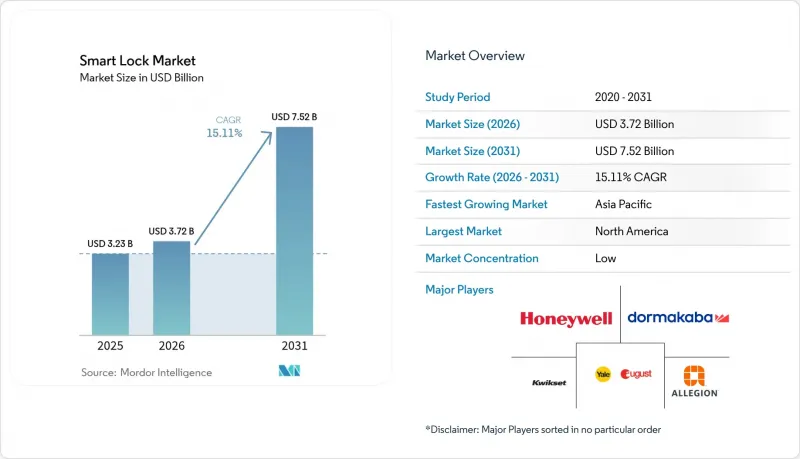
Mordor Intelligence에 의하면, 스마트락 시장 규모는 2025년에 32억 3,000만 달러로 평가되었고, 2026년 37억 2,000만 달러에서 2031년까지 75억 2,000만 달러에 이를 것으로 예측되며, 예측 기간(2026-2031년) CAGR은 15.11%를 나타낼 전망입니다.
본 보고서는 잠금 유형별(데드볼트, 레버 핸들, 기타), 통신 기술별(블루투스, Wi-Fi, 기타), 인증 방식별(PIN 코드·키패드, 생체 인증(지문, 얼굴), 기타), 최종 사용자별(주거용, 상업용 사무실, 기타), 지역별로 분류되어 있습니다. 시장 전망은 금액(달러) 기준으로 제시되어 있습니다.
세계의 스마트락 시장 동향 및 인사이트
스마트 홈 생태계의 급속한 확산
기기 통합 관리에 대한 수요가 증가함에 따라, 스마트락 도입은 커넥티드 홈에서 최우선 업그레이드 항목 중 하나가 되었습니다. Yale, Schlage, Level 각사의 ‘Matter-over-Thread’ 도입으로 벤더 종속성이 해소되었으며, 배터리 수명이 12개월 이상으로 연장되었습니다. 미국 가구의 70%는 이미 음성 비서를 도입하고 있으며, 이는 음성 제어를 통한 잠금 기능의 보급을 가속화하고 있습니다. 2026년까지 예정된 Thread 1.4의 채택으로 신제품은 추가 허브 없이도 기존 네트워크에 연결될 수 있게 되어, 생태계의 정착도가 더욱 높아질 것입니다.
도시 지역의 주거 침입 범죄 증가와 안전에 대한 우려
도시 지역의 범죄 양상으로 인해 주택 소유자의 경계심이 높아지고 있으며, 데이터에 따르면 침입자의 83%가 침입 전에 보안 체계를 사전 조사하는 것으로 나타났습니다. 스마트 잠금 장치와 영상 확인 기능을 통합함으로써, 기존 시스템에서 흔히 발생하는 15초 간의 경보 대응 시간 지연을 해소할 수 있습니다. Lockly의 얼굴 인식 엔진은 현재 허가되지 않은 얼굴을 1.5초 만에 감지하고, 실시간 경보를 전송함으로써 기회를 노리는 범죄를 미연에 방지합니다. 생체 인증과 PIN 코드를 결합한 다중 요소 인증은 익명성이 침입을 조장하기 쉬운 고밀도 고층 주거 단지에서 다층적인 보호를 실현합니다.
사이버 보안 및 해킹 취약점
주목받은 정보 유출 사건으로 인해, 주류 모델에서 생체 인증 우회 및 복제 가능한 NFC 태그의 문제가 드러났습니다. 한 소비자 단체의 테스트에 따르면, 칩 탑재형 기기의 85.7%에서 적어도 하나의 중대한 결함이 발견되었습니다. 각 벤더사는 현재 종단 간암호화 및 2단계 인증을 통한 로그인 기능을 제공하고 있지만, 하드웨어 설계의 편차로 인해 일관된 패치 적용을 유지하기가 어렵습니다. ‘연결성 및 표준 연합(CSA)’ 내 산업 단체들은 기본 요건 초안을 작성 중이지만, 구현 방식에 큰 차이가 있어 사이버 위험은 여전히 높은 수준을 유지하고 있습니다.
부문 분석
데드볼트는 2025년 매출의 45.12%를 차지했으며, 이는 물리적 견고성에 대한 주택 소유자들의 폭넓은 신뢰를 반영합니다. 이 점유율은 하드웨어 형태의 스마트 잠금 장치 시장 규모에서 가장 큰 비중을 차지합니다. 레버 핸들식 시스템은 호텔 및 사무실의 ADA(미국 장애인법) 준수 요구에 힘입어 15.18%라는 최고 수준의 연평균 성장률(CAGR)을 달성하고 있으며, 이는 조작의 용이성이 얼마나 유동 인구가 많은 환경에서 환영받고 있는지를 보여줍니다.
눈에 띄지 않는 업그레이드를 원하는 소비자 수요로 인해, 기존 하우징 내에 전자 부품을 숨기는 후장착용 실린더에 대한 관심이 높아지고 있습니다. Level의 보이지 않는 메커니즘이 그 대표적인 예입니다. 자물쇠 스타일의 스마트 기기는 실외 산업용 사례에 대응하고 있지만, 내후성 대책에 드는 비용으로 인해 여전히 틈새 시장에 머물러 있습니다. 지속적인 소형화로 인해 카테고리 경계가 모호해질 가능성은 있지만, 스마트 잠금 장치 시장에서는 2031년까지 데드볼트가 압도적인 존재감을 유지할 것으로 예측됩니다.
블루투스는 2025년에 61.68%의 점유율을 차지했으며, 스마트락 연결 방식별 시장 점유율에서 1위를 기록하고 있습니다. 스마트폰과 자물쇠의 페어링이 간편하기 때문에 라우터 접속이 불안정한 임대 주택에 적합합니다. 그러나 통신 범위나 메시 네트워크의 제한으로 인해 공동 주택에는 그다지 적합하지 않습니다.
Zigbee-Thread 스택은 Matter 인증과 Silicon Labs의 초저전력 SoC에 힘입어 연평균 성장률(CAGR) 16.74%를 나타낼 것으로 전망됩니다. Wi-Fi는 배터리 소모가 우려되지만, 직접적인 원격 조작을 우선시하는 ‘클라우드 퍼스트’ 방식의 도입에서 계속해서 채택되고 있습니다. 신기술인 초광대역(UWB)은 핸즈프리로 고정밀 조작을 가능하게 하지만, 출하 대수가 확대되기 전까지는 ‘기타’ 범주에 분류됩니다. 전체 프로토콜에 걸쳐 표준화가 진행됨에 따라 세분화가 해소되고 있으며, 이러한 추세는 스마트 잠금 장치 시장 전체의 보급 곡선을 끌어올릴 것으로 보입니다.
지역별 분석
북미는 스마트 홈의 조기 도입, 유리한 건축 기준, 커넥티드 보안에 대한 최대 10%의 보험 할인 덕분에 2025년 매출의 37.05%를 차지했습니다. 미국에서는 개발업자들이 스마트 잠금 장치를 표준 설비로 간주하고 있어 리모델링 수요를 견인하고 있습니다. 캐나다도 이에 뒤이어 유사한 건축 기준과 광대역 보급률을 활용하고 있습니다.
아시아태평양은 급속한 도시 인구 이동과 중산층의 가처분 소득 증가를 반영하여 15.42%라는 가장 높은 연평균 성장률(CAGR)을 보일 것으로 전망됩니다. 중국은 스마트 홈 제품 출하 대수에서 1위를 차지하고 있는 반면, 인도의 주택 자동화 시장은 39.79%의 성장이 예상되며, 스마트 잠금 장치는 소비자들의 업그레이드 후보 목록에서 상위권을 차지하고 있습니다. 일본에서는 고령화 사회가 진행됨에 따라, 고령자의 자립 생활을 지원하는 비접촉식 도어 솔루션에 대한 수요가 높아지고 있습니다.
유럽에서는 에너지 효율에 관한 지침과 엄격한 개인정보 보호 규제를 배경으로 꾸준한 진전이 나타나고 있습니다. 고도의 암호화 요건은 개발 비용을 상승시키는 한편, GDPR(EU 개인정보보호규정)을 준수하는 차별화된 제품 제공을 촉진하고 있습니다. 중동 및 아프리카는 현재 시장 규모는 작지만, 신규 부동산 프로젝트에 통합된 스마트 시티 투자의 혜택을 받고 있어, 스마트락 시장의 향후 기준을 높일 수 있는 도약적인 보급 경로가 마련되고 있습니다.
기타 혜택
- 엑셀 형식 시장 예측(ME) 시트
- 3개월간 애널리스트 지원
자주 묻는 질문
목차
제1장 서론
제2장 조사 방법
제3장 주요 요약
제4장 시장 구도
제5장 시장 규모 및 성장 예측
제6장 경쟁 구도
제7장 시장 기회 및 향후 전망
AJY 26.09.11According to Mordor Intelligence, the smart lock market size was valued at USD 3.23 billion in 2025 and estimated to grow from USD 3.72 billion in 2026 to reach USD 7.52 billion by 2031, at a CAGR of 15.11% during the forecast period (2026-2031).
This report is Segmented by Lock Type (Deadbolt, Lever Handle, and More), Communication Technology (Bluetooth, Wi-Fi, and More), Authentication Method (Pin-Code / Keypad, Biometric (Fingerprint, Face), and More), End User (Residential, Commercial Offices, and More) and by Geography. The Market Forecasts are Provided in Terms of Value (USD).
Global Smart Lock Market Trends and Insights
Rapid Adoption of Smart-Home Ecosystems
Growing preference for unified device control makes smart lock integration one of the first upgrades in connected homes. Matter-over-Thread launches by Yale, Schlage, and Level are removing vendor lock-in and extending battery life to more than 12 months. Voice assistants already reside in 70% of United States households, which accelerates voice-enabled locking. Scheduled Thread 1.4 adoption by 2026 will let new products join existing networks without additional hubs, further tightening ecosystem stickiness.
Rising Burglary and Safety Concerns in Urban Areas
Urban crime patterns have raised homeowner vigilance, and data show 83% of burglars survey security setups before entry. Integrating a smart lock with video verification closes the 15-second alarm response gap common in legacy systems. Lockly's facial recognition engine now flags unauthorized faces in 1.5 seconds, sending real-time alerts that deter opportunistic crime. Multi-factor combinations of biometrics and PINs add layered protection for dense residential high-rises where anonymity often aids break-ins.
Cyber-Security and Hacking Vulnerabilities
High-profile breaches have exposed biometric bypasses and cloneable NFC tags in mainstream models. Tests by one consumer association found 85.7% of chip-activated units exhibited at least one critical flaw. Vendors now ship end-to-end encryption and two-factor log-ins, yet fragmented hardware designs make universal patching hard to maintain. Industry groups within the Connectivity Standards Alliance are drafting baseline requirements, but wide variation in implementation keeps cyber-risk elevated.
Other drivers and restraints analyzed in the detailed report include:
- Smartphone and IoT Proliferation Enabling Remote Access
- Building-Code Push for Keyless Energy-Efficient Doors
- Up-Front Device and Installation Cost Premium
For complete list of drivers and restraints, kindly check the Table Of Contents.
Segment Analysis
Deadbolts retained 45.12% of 2025 revenue, reflecting widespread homeowner confidence in their physical robustness. This share equates to the largest slice of the smart lock market size for hardware formats. Lever handle systems achieved the leading 15.18% CAGR due to ADA compliance needs in hotels and offices, demonstrating how ease-of-operation appeals to high-traffic settings.
Consumers seeking discreet upgrades have driven interest in retrofit cylinders that hide electronics inside existing housings, exemplified by Level's invisible mechanism. Padlock-style smart devices service out-door industrial use cases but remain niche because of weather-proofing costs. Continuous miniaturization will likely blur category boundaries, though deadbolts are expected to keep a commanding presence through 2031 in the smart lock market.
Bluetooth held 61.68% share in 2025, translating into the top position within the smart lock market share for connectivity. Its phone-to-lock pairing simplicity favors rental properties where router access is uncertain. Range and mesh limitations, however, make it less suited to multi-unit dwellings.
The Zigbee-Thread stack is projected for a 16.74% CAGR, propelled by Matter certification and Silicon Labs' ultra-low-power SoCs. Wi-Fi continues in cloud-first deployments that prioritize direct remote control despite battery drain. Emerging ultra-wideband adds hands-free precision but sits within the "Others" bucket until shipping volumes scale. Across protocols, standardization is shrinking fragmentation, a trend that will raise the overall smart lock market adoption curve.
Complete Report Scope:
- By Lock Type
- Deadbolt
- Lever Handle
- Padlock
- Others
- By Communication Technology
- Bluetooth
- Wi-Fi
- Zigbee
- Others
- By Authentication Method
- Pin-Code / Keypad
- Biometric (Fingerprint, Face)
- RFID / NFC Card
- Others
- By End-user
- Residential
- Commercial Offices
- Hospitality and Short-term Rentals
- Industrial and Infrastructure
- By Geography
- North America
- United States
- Canada
- Mexico
- South America
- Brazil
- Argentina
- Rest of South America
- Europe
- Germany
- United Kingdom
- France
- Italy
- Spain
- Rest of Europe
- Asia-Pacific
- China
- Japan
- India
- South Korea
- Southeast Asia
- Rest of Asia-Pacific
- Middle East and Africa
- Middle East
- Saudi Arabia
- United Arab Emirates
- Turkey
- Rest of Middle East
- Africa
- South Africa
- Nigeria
- Egypt
- Rest of Africa
- Egypt
- Rest of Africa
- Middle East
- North America
Geography Analysis
North America secured 37.05% of 2025 revenue due to early smart-home adoption, favorable codes, and insurance discounts of up to 10% for connected security. The United States drives renovation demand as developers view smart locks as standard amenity packages. Canada follows, leveraging similar building norms and broadband penetration.
Asia-Pacific is set for the highest 15.42% CAGR, reflecting rapid urban migration and growing middle-class disposable income. China leads smart-home shipments, while India's residential automation pipeline shows a 39.79% expansion outlook that positions smart locks near the top of consumer upgrade lists. Japan's aging demographic attracts contactless door solutions supporting senior independence.
Europe posts steady progression anchored by energy-efficiency directives and strong privacy oversight. Advanced encryption requirements raise development costs yet promote differentiated offerings that comply with GDPR. The Middle East and Africa, though smaller today, benefit from smart-city investments baked into greenfield real-estate projects, enabling leapfrog adoption paths that raise the future baseline of the smart lock market.
- ASSA ABLOY (Yale, August)
- Allegion plc (Schlage)
- Spectrum Brands Holdings (Kwikset)
- dormakaba Group
- Honeywell International
- SALTO Systems
- U-TEC (ULTRALOQ)
- Lockly
- Master Lock
- Nuki Home Solutions
- Netatmo (Legrand)
- SimpliSafe
- Samsung SDS
- Aqara (Xiaomi)
- Eufy Security (Anker)
- Level Home
- Tedee
- Hanman International
- Panasonic Life Solutions
- Xiaomi Mi Smart Home
Additional Benefits:
- The market estimate (ME) sheet in Excel format
- 3 months of analyst support
TABLE OF CONTENTS
1 INTRODUCTION
- 1.1 Study Assumptions and Market Definition
- 1.2 Scope of the Study
2 RESEARCH METHODOLOGY
3 EXECUTIVE SUMMARY
4 MARKET LANDSCAPE
- 4.1 Market Overview
- 4.2 Market Drivers
- 4.2.1 Rapid adoption of smart-home ecosystems
- 4.2.2 Rising burglary and safety concerns in urban areas
- 4.2.3 Smartphone and IoT proliferation enabling remote access
- 4.2.4 Building-code push for keyless energy-efficient doors
- 4.2.5 Airbnb-style rentals demanding automated guest access
- 4.2.6 Home-insurance premium discounts for connected locks
- 4.3 Market Restraints
- 4.3.1 Cyber-security and hacking vulnerabilities
- 4.3.2 Up-front device and installation cost premium
- 4.3.3 Battery-life / maintenance anxieties among consumers
- 4.3.4 Inter-protocol interoperability gaps in retrofit projects
- 4.4 Supply-Chain Analysis
- 4.5 Regulatory Landscape
- 4.6 Technological Outlook
- 4.7 Porter's Five Forces
- 4.7.1 Bargaining Power of Suppliers
- 4.7.2 Bargaining Power of Buyers
- 4.7.3 Threat of New Entrants
- 4.7.4 Threat of Substitutes
- 4.7.5 Intensity of Competitive Rivalry
- 4.8 Assesment of Macroeconomic Factors on the market
5 MARKET SIZE AND GROWTH FORECASTS (VALUE)
- 5.1 By Lock Type
- 5.1.1 Deadbolt
- 5.1.2 Lever Handle
- 5.1.3 Padlock
- 5.1.4 Others
- 5.2 By Communication Technology
- 5.2.1 Bluetooth
- 5.2.2 Wi-Fi
- 5.2.3 Zigbee
- 5.2.4 Others
- 5.3 By Authentication Method
- 5.3.1 Pin-Code / Keypad
- 5.3.2 Biometric (Fingerprint, Face)
- 5.3.3 RFID / NFC Card
- 5.3.4 Others
- 5.4 By End-user
- 5.4.1 Residential
- 5.4.2 Commercial Offices
- 5.4.3 Hospitality and Short-term Rentals
- 5.4.4 Industrial and Infrastructure
- 5.5 By Geography
- 5.5.1 North America
- 5.5.1.1 United States
- 5.5.1.2 Canada
- 5.5.1.3 Mexico
- 5.5.2 South America
- 5.5.2.1 Brazil
- 5.5.2.2 Argentina
- 5.5.2.3 Rest of South America
- 5.5.3 Europe
- 5.5.3.1 Germany
- 5.5.3.2 United Kingdom
- 5.5.3.3 France
- 5.5.3.4 Italy
- 5.5.3.5 Spain
- 5.5.3.6 Rest of Europe
- 5.5.4 Asia-Pacific
- 5.5.4.1 China
- 5.5.4.2 Japan
- 5.5.4.3 India
- 5.5.4.4 South Korea
- 5.5.4.5 Southeast Asia
- 5.5.4.6 Rest of Asia-Pacific
- 5.5.5 Middle East and Africa
- 5.5.5.1 Middle East
- 5.5.5.1.1 Saudi Arabia
- 5.5.5.1.2 United Arab Emirates
- 5.5.5.1.3 Turkey
- 5.5.5.1.4 Rest of Middle East
- 5.5.5.2 Africa
- 5.5.5.2.1 South Africa
- 5.5.5.2.2 Nigeria
- 5.5.5.2.3 Egypt
- 5.5.5.2.4 Rest of Africa
- 5.5.5.2.5 Egypt
- 5.5.5.2.6 Rest of Africa
- 5.5.5.1 Middle East
- 5.5.1 North America
6 COMPETITIVE LANDSCAPE
- 6.1 Market Concentration
- 6.2 Strategic Moves
- 6.3 Market Share Analysis
- 6.4 Company Profiles (includes Global level Overview, Market level overview, Core Segments, Financials as available, Strategic Information, Market Rank/Share for key companies, Products and Services, and Recent Developments)
- 6.4.1 ASSA ABLOY (Yale, August)
- 6.4.2 Allegion plc (Schlage)
- 6.4.3 Spectrum Brands Holdings (Kwikset)
- 6.4.4 dormakaba Group
- 6.4.5 Honeywell International
- 6.4.6 SALTO Systems
- 6.4.7 U-TEC (ULTRALOQ)
- 6.4.8 Lockly
- 6.4.9 Master Lock
- 6.4.10 Nuki Home Solutions
- 6.4.11 Netatmo (Legrand)
- 6.4.12 SimpliSafe
- 6.4.13 Samsung SDS
- 6.4.14 Aqara (Xiaomi)
- 6.4.15 Eufy Security (Anker)
- 6.4.16 Level Home
- 6.4.17 Tedee
- 6.4.18 Hanman International
- 6.4.19 Panasonic Life Solutions
- 6.4.20 Xiaomi Mi Smart Home
7 MARKET OPPORTUNITIES AND FUTURE OUTLOOK
- 7.1 White-space and Unmet-Need Assessment