|
시장보고서
상품코드
2123662
수술기구 추적 시장 : 시장 점유율 분석, 업계 동향 및 통계, 성장 예측(2026-2031년)Surgical Instrument Tracking - Market Share Analysis, Industry Trends & Statistics, Growth Forecasts (2026 - 2031) |
||||||
 Mordor Intelligence
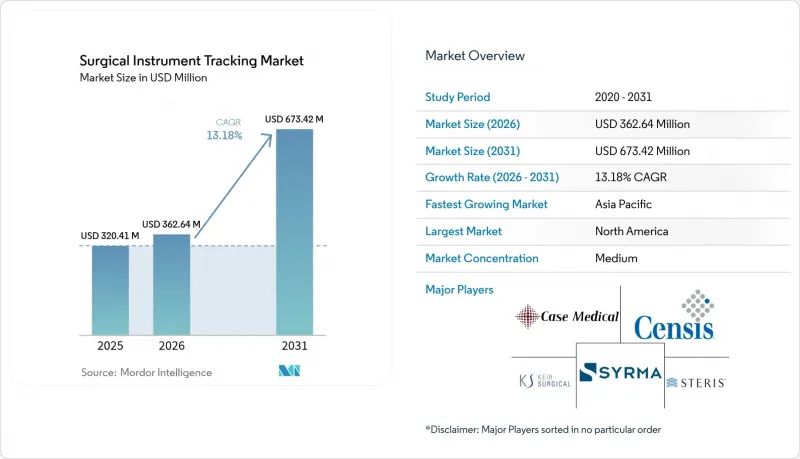
Mordor Intelligence에 의하면, 수술기구 추적 시장 규모는 2025년에 3억 2,041만 달러로 평가되었고, 2026년 3억 6,264만 달러에서 2031년까지 6억 7,342만 달러에 이를 것으로 추정되며, 예측 기간(2026-2031년) CAGR은 13.18%를 나타낼 전망입니다.
본 보고서는 기술별(바코드, RFID), 구성 요소별(소프트웨어, 하드웨어, 서비스), 최종 사용자별(병원, 외래수술센터(ASC), 기타), 지역별(북미, 유럽, 아시아태평양, 중동 및 아프리카, 남미)로 분류되어 있습니다. 시장 예측은 금액(달러)으로 표시되어 있습니다.
세계의 수술기구 추적 시장 동향 및 인사이트
FDA의 UDI 및 EU의 MDR 의무화 준수 기한
병원과 의료기기 제조업체는 현재 미국과 EU에서 중복되는 UDI 관련 기한에 직면해 있습니다. EU에서는 EUDAMED가 2026년 1분기까지 재사용 기기의 데이터베이스 등록을 의무화하고 있습니다. 규정 미준수는 시장 진입을 저해하므로, 규제 데이터 수집과 GUDID 및 EUDAMED와의 데이터 교환 모두에서 추적 시스템이 필수적입니다. 조달 부서는 검증된 감사 추적 기록, 세계 고유 식별자(UDI) 대응 능력, 두 데이터베이스와의 연동 기능을 갖춘 공급업체를 우선적으로 고려하고 있으며, 이로 인해 규정 준수 대응 범위가 가장 넓은 공급업체로 경쟁의 무대가 좁혀지고 있습니다.
의료 공급망에서의 RFID-IoT의 급속한 확산
IoT 연결을 통해 RFID 태그는 단순한 수동 식별자에서 위치 정보, 사용 횟수, 멸균 상태를 실시간으로 전송하는 노드로 진화하고 있습니다. Innovative Perioperative Technologies는 AT&T의 세계 SIM을 활용하여 병원 네트워크 전체에 예측 유지보수 대시보드를 제공합니다. 안테나 설계의 발전으로 금속이 많은 수술실에서의 신호 손실이 해소되었으며, 미들웨어 통합을 통해 데이터가 ERP 플랫폼으로 전송되어 자동 재주문이 가능해졌습니다. 현재 의료 기관에서는 단순한 바코드 대체뿐만 아니라, 운영 인텔리전스 향상을 이유로 프로젝트 도입을 정당화하고 있습니다.
초기 하드웨어 및 소프트웨어의 높은 비용
태그, 리더기, 미들웨어, 시스템 통합을 포함한 RFID의 전면적인 도입에는 1개 지점당 10만 달러가 넘는 비용이 소요될 수 있으며, 이는 소규모 병원에게는 장벽이 됩니다. 그러나 Emerald의 벤치마크 조사에 따르면, 기구 분실 방지 및 트레이 수 감소를 통해 18-24개월 내에 투자 회수가 가능하다는 사실이 밝혀졌습니다. 가치가 높은 정형외과 및 심장외과 세트부터 단계적으로 도입을 진행함으로써, 자본 비용을 여러 예산 주기에 분산시키면서 단계적인 ROI를 입증할 수 있습니다.
부문 분석
많은 시설이 멸균 처리를 위해 기존 프린터와 스캐너를 계속 사용했기 때문에 2025년 매출액 중 바코드 스캔이 59.26%를 차지했습니다. 그러나 RFID의 연평균 성장률(CAGR) 14.05%는 바코드로는 실현할 수 없는 자동 계수, 일괄 판독, IoT 통합으로의 전환을 뒷받침하고 있습니다. RFID는 포장된 트레이를 통해 판독이 가능하며, 멸균 처리 통과 이력을 몇 초 만에 기록할 수 있어 바쁜 수술실에서 중요한 KPI인 처리 시간을 단축합니다. 저가형 기구에는 바코드를, 고가형 세트에는 RFID를 채택하는 하이브리드 워크플로우를 통해 병원은 완전 자동화를 준비하면서 비용과 속도의 균형을 맞출 수 있습니다. 재사용형 기구에 RFID 트랜스폰더를 삽입하는 것에 관한 FDA 지침으로 인해 검증 기간은 길어지지만, 승인되면 접착 라벨로는 얻을 수 없는 수명 주기 데이터를 활용할 수 있게 됩니다.
현재 2세대 초고주파(UHF) 태그는 반복적인 오토클레이브 처리를 견디고 1미터가 넘는 판독 범위를 유지할 수 있어 판독 오류가 감소하고 있습니다. 이러한 변화는 예산에 민감한 환경에서는 바코드가 여전히 적합하지만, 수술기구 추적 시장이 결국 RFID를 표준으로 수렴해 나갈 것임을 시사합니다. 듀얼 기술 스캐너와 클라우드 독립형 미들웨어를 갖춘 공급업체는 이러한 과도기적 상황에 대응하는 데 가장 유리한 위치에 있습니다.
지역별 분석
북미는 2025년에도 초기 단계에 있는 UDI(의료기기 식별자) 시행과 ‘네버 이벤트’에 대한 보험사의 보상 거부에 힘입어 매출 점유율 41.52%로 1위를 유지했습니다. 병원들은 추적 프로젝트 예산 수립 시, 감사에 대비하거나 소송을 피하기 위한 필요성을 일상적으로 이유로 들고 있습니다. 또한, 이 지역에는 최첨단 하드웨어 혁신 기업과 클라우드 기반 EHR 벤더가 집중되어 있어 통합 주기를 단축하고 있습니다. 수술실용 팩(OR 팩)에 대한 디지털 관리 이력(체인 오브 카스디) 기록을 의무화하는 미국의 새로운 주법으로 인해 수요는 더욱 제도화되고 있습니다.
유럽에서는 EU MDR 일정에 따라 착실히 진전이 이루어지고 있습니다. 예산은 빠듯하지만, EUDAMED에 의료기기 식별자를 업로드해야 할 의무가 부과됨에 따라 기기 등록의 최소 요건이 확립되었습니다. GDPR(EU 개인정보보호규정) 규제로 인해 데이터 보관 장소 및 암호화에 대한 공급업체에 대한 심사가 강화되고 있으며, 벤더들은 EU 내에 데이터센터를 구축하고 여러 국가의 도입 요건을 충족하는 안전한 API를 도입해야 하는 압박을 받고 있습니다. 순환 경제 목표를 포함한 지속가능성 관련 규제로 인해, 데이터 기반 유지보수를 통해 기기의 수명을 연장하는 플랫폼에 대한 인센티브가 높아지고 있습니다.
아시아태평양은 의료 보험 접근성 확대, 신규 병원 건설, 기술 친화적인 규제 환경의 뒷받침으로 2031년까지 연평균 성장률(CAGR) 14.08%를 기록하며 가장 빠르게 성장하는 지역입니다. 싱가포르의 AI를 활용한 수술실(OR) 실증 실험, 중국의 스마트 병원 보조금, 인도의 의료기기 추적성을 위한 민관 공동 이니셔티브가 비옥한 토대를 마련하고 있습니다. 언어 지원을 현지화하고 구독형 자금 조달을 제공하는 공급업체들은 기능의 완성도를 저해하지 않으면서도 신흥 시장의 가격 민감도에 대응하고 있습니다. 아시아태평양의 수술기구 추적 시장 점유율 확대는 다점포 체인이 해당 지역 전체로 도입을 확대함에 따라 북미의 지배력을 약화시킬 가능성이 높습니다.
기타 혜택
- 엑셀 형식 시장 예측(ME) 시트
- 3개월간의 애널리스트 지원
자주 묻는 질문
목차
제1장 서론
제2장 조사 방법
제3장 주요 요약
제4장 시장 구도
제5장 시장 규모 및 성장 예측
제6장 경쟁 구도
제7장 시장 기회 및 향후 전망
AJY 26.09.11According to Mordor Intelligence, the surgical instrument tracking market size was valued at USD 320.41 million in 2025 and estimated to grow from USD 362.64 million in 2026 to reach USD 673.42 million by 2031, at a CAGR of 13.18% during the forecast period (2026-2031).
This report is Segmented by Technology (Barcodes, RFID), Component (Software, Hardware, Services), End User (Hospitals, Ambulatory Surgical Centers, Others), and Geography (North America, Europe, Asia-Pacific, Middle East and Africa, South America). The Market Forecasts are Provided in Terms of Value (USD).
Global Surgical Instrument Tracking Market Trends and Insights
Mandatory FDA UDI & EU MDR Compliance Deadlines
Hospitals and device makers now face overlapping UDI milestones in the US and EU, where EUDAMED requires database registration for reusable instruments in Q1 2026 . Non-compliance bars market entry, making tracking systems essential for both regulatory data capture and exchange with GUDID and EUDAMED. Procurement teams give preference to vendors with proven audit trails, global unique device identifier (UDI) compatibility, and dual-database connectivity, narrowing the competitive field to suppliers with the widest compliance footprints.
Rapid RFID-IoT Adoption in Healthcare Supply Chains
IoT connectivity elevates RFID tags from passive identifiers to nodes that broadcast location, cycle counts, and sterilization status in real time. Innovative Perioperative Technologies leverages AT&T's global SIM to deliver predictive maintenance dashboards across hospital networks. Advances in antenna design counteract signal loss in metal-dense ORs, while middleware integrations feed data into ERP platforms for automated re-ordering. Facilities now justify projects on operational-intelligence gains rather than barcode replacement alone.
High Upfront Hardware & Software Costs
A full RFID deployment-including tags, readers, middleware, and systems integration-can exceed USD 100,000 per site, a barrier for smaller hospitals. However, Emerald benchmarking shows payback in 18-24 months through lost-instrument avoidance and lower tray counts. Phased rollouts that start with high-value ortho and cardiac sets allow capital costs to span multiple budget cycles while proving incremental ROI.
Other drivers and restraints analyzed in the detailed report include:
- Rising Hospital Focus on OR Cost & Waste Reduction
- Interoperable "Digital-OR" Ecosystems Accelerating Demand
- Cyber-Security & Data-Privacy Concerns
For complete list of drivers and restraints, kindly check the Table Of Contents.
Segment Analysis
Barcode scanning commanded 59.26% of 2025 revenue as many facilities retained legacy printers and scanners for sterile processing. Yet RFID's 14.05% CAGR underscores a realignment toward automated counts, bulk reading, and IoT integration that barcodes cannot match. RFID's ability to read through wrapped trays and log sterilizer passes in seconds shortens turnover times, a key KPI for busy ORs. Hybrid workflows-barcode on low-value devices, RFID on high-value sets-let hospitals balance cost and speed while preparing for full automation. FDA guidance on embedding RFID transponders in reusable instruments elongates validation timelines but, once cleared, unlocks life-cycle data unattainable with adhesive labels.
Second-generation ultra-high-frequency (UHF) tags now withstand repeated autoclave cycles and maintain read ranges beyond one meter, reducing mis-reads. The shift signals that the surgical instrument tracking market will eventually converge on RFID as default, even though barcodes remain suitable for budget-sensitive settings. Vendors positioned with dual-technology scanners and cloud-agnostic middleware are best placed to serve this transitional landscape.
Complete Report Scope:
- By Technology
- Barcodes
- RFID
- By Component
- Software
- Hardware
- Services
- By End User
- Hospitals
- Ambulatory Surgical Centers
- Others
- By Geography
- North America
- United States
- Canada
- Mexico
- Europe
- Germany
- United Kingdom
- France
- Italy
- Spain
- Rest of Europe
- Asia-Pacific
- China
- Japan
- India
- Australia
- South Korea
- Rest of Asia-Pacific
- Middle East and Africa
- GCC
- South Africa
- Rest of Middle East and Africa
- South America
- Brazil
- Argentina
- Rest of South America
- North America
Geography Analysis
North America retained 41.52% revenue leadership in 2025, propelled by early-stage UDI enforcement and payer refusal to reimburse for never events. Hospitals routinely cite audit preparedness and litigation avoidance when budgeting for tracking projects. The region also concentrates leading hardware innovators and cloud-EHR vendors, shortening integration cycles. New US state laws requiring digital chain-of-custody logs for OR packs further institutionalize demand.
Europe proceeds steadily under the EU MDR timetable. Although budgets are tighter, the compulsory EUDAMED upload of device identifiers drives a baseline requirement for instrument registration. GDPR restrictions elevate supplier scrutiny on data residency and encryption, pushing vendors to deploy EU data centers and secure APIs that satisfy multi-country deployments. Sustainability rules, including circular-economy targets, incentivize platforms that extend instrument lifespans through data-driven maintenance.
Asia-Pacific is the fastest-growing region at 14.08% CAGR through 2031, energized by expanding health-insurance access, new hospital construction, and a technology-friendly regulatory mood. Singapore's AI-assisted OR pilots, China's smart-hospital grants, and India's public-private drive for medical-device traceability create fertile ground. Suppliers that localize language support and offer subscription financing meet the price-sensitivity of emerging markets without sacrificing feature depth. The surgical instrument tracking market share gains in Asia-Pacific will likely dilute North American dominance as multi-site chains scale deployments across the region.
- STERIS
- Getinge AB (T-DOC)
- Censis Technologies / Fortive
- Becton Dickinson & Co.
- Mobile Aspects Inc.
- Key Surgical (Stryker)
- Belimed
- Stanley Healthcare (CenTrak)
- Xerafy Singapore Pte Ltd.
- ScanCARE
- Case Medical
- NuTrace
- Spa Track Medical Ltd.
- Keir Surgical
- Vizbee RFID Solutions
- FlexScan RTLS
- Healthtech Pivot
- Ternio Group
- Systems iTrayce
- Olympus Corp. (HX-Flow)
- Syrma SGS
Additional Benefits:
- The market estimate (ME) sheet in Excel format
- 3 months of analyst support
TABLE OF CONTENTS
1 Introduction
- 1.1 Study Assumptions & Market Definition
- 1.2 Scope of the Study
2 Research Methodology
3 Executive Summary
4 Market Landscape
- 4.1 Market Overview
- 4.2 Market Drivers
- 4.2.1 Increasing Number of Complex Surgical Procedures
- 4.2.2 Mandatory FDA UDI & EU MDR Compliance Deadlines
- 4.2.3 Rising Hospital Focus on OR Cost & Waste Reduction
- 4.2.4 Rapid RFID-Iot Adoption in Healthcare Supply Chains
- 4.2.5 Interoperable Digital-OR Ecosystems Accelerating Demand
- 4.2.6 Insurer Penalties for Retained Surgical Items
- 4.3 Market Restraints
- 4.3.1 High Upfront Hardware & Software Costs
- 4.3.2 Cyber-Security & Data-Privacy Concerns
- 4.3.3 RF Signal Attenuation in Metal-Dense OR Environments
- 4.3.4 Lengthy Validation Cycles for Embedded RFID Tags
- 4.4 Regulatory Landscape
- 4.5 Porters Five Forces Analysis
- 4.5.1 Threat of New Entrants
- 4.5.2 Bargaining Power of Buyers
- 4.5.3 Bargaining Power of Suppliers
- 4.5.4 Threat of Substitutes
- 4.5.5 Competitive Rivalry
5 Market Size & Growth Forecasts (Value, USD)
- 5.1 By Technology
- 5.1.1 Barcodes
- 5.1.2 RFID
- 5.2 By Component
- 5.2.1 Software
- 5.2.2 Hardware
- 5.2.3 Services
- 5.3 By End User
- 5.3.1 Hospitals
- 5.3.2 Ambulatory Surgical Centers
- 5.3.3 Others
- 5.4 By Geography
- 5.4.1 North America
- 5.4.1.1 United States
- 5.4.1.2 Canada
- 5.4.1.3 Mexico
- 5.4.2 Europe
- 5.4.2.1 Germany
- 5.4.2.2 United Kingdom
- 5.4.2.3 France
- 5.4.2.4 Italy
- 5.4.2.5 Spain
- 5.4.2.6 Rest of Europe
- 5.4.3 Asia-Pacific
- 5.4.3.1 China
- 5.4.3.2 Japan
- 5.4.3.3 India
- 5.4.3.4 Australia
- 5.4.3.5 South Korea
- 5.4.3.6 Rest of Asia-Pacific
- 5.4.4 Middle East and Africa
- 5.4.4.1 GCC
- 5.4.4.2 South Africa
- 5.4.4.3 Rest of Middle East and Africa
- 5.4.5 South America
- 5.4.5.1 Brazil
- 5.4.5.2 Argentina
- 5.4.5.3 Rest of South America
- 5.4.1 North America
6 Competitive Landscape
- 6.1 Market Concentration
- 6.2 Market Share Analysis
- 6.3 Company Profiles (includes Global level Overview, Market level overview, Core Segments, Financials as available, Strategic Information, Market Rank/Share for key companies, Products & Services, and Recent Developments)
- 6.3.1 STERIS plc
- 6.3.2 Getinge AB (T-DOC)
- 6.3.3 Censis Technologies / Fortive
- 6.3.4 Becton Dickinson & Co.
- 6.3.5 Mobile Aspects Inc.
- 6.3.6 Key Surgical (Stryker)
- 6.3.7 Belimed AG
- 6.3.8 Stanley Healthcare (CenTrak)
- 6.3.9 Xerafy Singapore Pte Ltd.
- 6.3.10 ScanCARE Pty Ltd.
- 6.3.11 Case Medical
- 6.3.12 NuTrace
- 6.3.13 Spa Track Medical Ltd.
- 6.3.14 Keir Surgical Ltd.
- 6.3.15 Vizbee RFID Solutions
- 6.3.16 FlexScan RTLS
- 6.3.17 Healthtech Pivot LLP
- 6.3.18 Ternio Group LLC
- 6.3.19 Systems iTrayce
- 6.3.20 Olympus Corp. (HX-Flow)
- 6.3.21 Syrma SGS
7 Market Opportunities & Future Outlook
- 7.1 White-Space & Unmet-Need Assessment