

|
시장보고서
상품코드
2123786
기침약 시장 : 점유율 분석, 업계 동향과 통계, 성장 예측(2026-2031년)Cough Remedies - Market Share Analysis, Industry Trends & Statistics, Growth Forecasts (2026 - 2031) |
||||||
 Mordor Intelligence
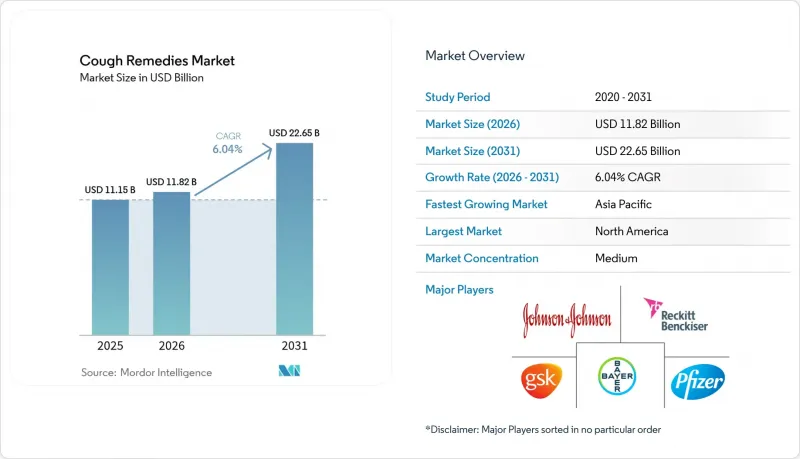
기침약 시장 규모는 2025년 111억 5,000만 달러에서 2026년에는 118억 2,000만 달러로 확대되어 2026년부터 2031년까지 CAGR 6.04%로 성장을 지속하여, 2031년에는 226억 5,000만 달러에 이를 것으로 예측됩니다.
본 보고서는 제품 유형(진해제, 거담제, 점액용해제 등), 제형(시럽/링크토스, 정제 및 캡슐 등), 연령대(소아·청소년, 성인, 고령자),유통 채널(소매 약국 등), 지역(북미, 유럽, 아시아태평양 등)에 따라 분류되어 있습니다. 시장 예측은 금액(달러) 기준으로 제시되어 있습니다.
전 세계 기침약 시장 동향 및 인사이트
전 세계적으로 증가하는 호흡기 질환의 부담
2023년에는 5억 6,900만 명 이상이 만성 호흡기 질환을 앓고 있으며, 호흡기 감염증은 여전히 전 세계 4위의 사망 원인입니다. 델리나 베이징과 같은 대도시의 대기 오염은 만성 폐쇄성 폐질환(COPD) 및 천식 발병률을 높이고 있으며, 한편 유럽과 일본의 고령화로 인해 장기적인 기침 관리가 필요한 인구층이 확대되고 있습니다. 제약사들은 부작용을 줄이기 위해 기존 제품의 처방을 재검토하거나, 알레르기성 비염 및 바이러스 감염 후의 자극에 대처하는 복합 증상 치료제를 출시하는 등으로 이에 대응하고 있으며, 그 결과 1회 발병당 지출이 증가하고 있습니다.
일반의약품에 대한 접근성 확대
규제 당국은 과밀 상태에 놓인 진료소의 부담을 줄이는 수단으로서, 약사의 지도 하에 OTC(일반의약품)에 대한 접근성을 점점 더 중요하게 여기고 있습니다. 미국 식품의약국(FDA)은 2024년에 일부 기관지 확장제 흡입기에 대해 처방전 없이 판매할 수 있도록 승인했으며, 일본 후생노동성도 2025년에 OTC용 거담제의 적용 범위를 확대했습니다. 진입 장벽이 낮아짐에 따라 제네릭 의약품 시장 출시 기간이 단축되어, 제조업체는 의사를 대상으로 한 영업 활동에서 소비자 중심의 디지털 캠페인으로 마케팅 예산을 전환할 수 있게 됩니다.
오피오이드 및 코데인 함유 제제에 대한 안전성 우려
FDA 및 유럽 규제 당국은 코데인이 함유된 기침 시럽의 오용 및 호흡 억제 사례가 잇따라 보고됨에 따라 경고를 강화했습니다. 그 결과, 2025년에는 영국과 독일의 여러 소매업체에서 해당 제품을 매장에서 철수시켰습니다. 덱스트로메토르판은 오피오이드가 아니지만, 청소년들의 남용 사례가 발생함에 따라 현재 미국 여러 주에서 연령 제한법이 적용되고 있습니다. 각 제약사는 꿀을 기반으로 한 진해제나 식물 유래 대체제로의 전환을 가속화하고 있지만, 그 유효성에 대한 증거 기준에 대해서는 여전히 논의가 이어지고 있습니다.
부문 분석
기관지 확장제는 연평균 성장률(CAGR) 8.54%를 나타낼 것으로 예측되며, 이는 기침약 시장 전체의 성장률을 크게 상회하는 속도입니다. 일본과 한국에서 저용량 β-작동제 흡입기에 대한 일반의약품(OTC) 승인으로 인해, COPD 환자들은 의료기관을 방문하지 않고도 경미한 증상 악화를 관리할 수 있게 되었으며, 기존에는 처방전이 필요했던 제품군이 소매 시장으로 이동하고 있습니다. 거담제는 2025년 매출의 32.65%를 차지하며, 구아이페네신 시럽과 감초, 담쟁이 등 허브 계열 제품이 시장을 주도하고 있습니다. 진해제는 코데인 관련 역풍에 직면해 있으며, 꿀, 마시멜로, 기타 천연 성분을 활용한 처방 재검토가 진행되고 있습니다. 소매업체들이 제한된 진열 공간 내에서 여러 증상에 대응할 수 있는 SKU를 선호함에 따라, 감기·기침 복합 팩이 급증하고 있습니다.
2차적인 영향으로는 덱스트로메토르판용 남용 방지 폴리머와 야간 혈중 농도를 안정화시키는 서방형 비드 기술에 대한 연구 개발이 활발해지고 있다는 점을 들 수 있습니다. 포지셔닝의 차이는 명확합니다. 증거 기반의 기관지 확장제나 점액 용해제는 의사의 지지를 받는 반면, 식물 유래의 거담제나 진해제는 건강 지향적인 소비자를 끌어들이고 있습니다. 이 두 고객층 모두를 아우르는 유연한 브랜드 구조는 전략적 필수 요건이 되어가고 있습니다.
2025년에도 기침약 시장 중 시럽제가 여전히 39.54%를 차지하고 있지만, 어린이를 위한 향이 약 복용에 대한 거부감을 완화시켜 젤리나 츄어블 제제 시장은 연평균 8.76%의 성장이 예상됩니다. 정제 및 캡슐은 휴대 편의성이 약효 발현의 느린 점을 보완해 주기 때문에 성인용 사용에서 주류를 이루고 있으며, 목캔디는 목을 진정시키는 멘톨이나 벤조카인을 찾는 틈새 시장을 충족시키고 있습니다. 속용해형 허브 필름 스트립은 인도와 동남아시아 일부 지역에서 소아용으로 승인되었으며, 설하 흡수(혀 밑 흡수)가 가능해 삼킬 필요가 없습니다.
투자 모멘텀은 견조합니다. 레킷 벤키저(Reckitt Benckiser)는 2025년에 새로운 구미 제조 라인을 가동할 예정이며, 헬레온(Heleon)은 자사 브랜드 ‘로비타신(Robitacin)’을 위한 구강 내 분해 정제의 시험 생산을 진행했습니다. 각 브랜드사가 전문적인 제조를 외부에 위탁하는 가운데, 펙틴 기반 및 비건 젤라틴에 대한 전문 지식을 갖춘 수탁 제조업체들은 높은 평가를 받고 있습니다.
지역별 분석
북미는 2025년 전 세계 매출의 42.76%를 차지했습니다. 이는 의료 지출의 높은 탄력성, 유서 깊은 브랜드에 대한 충성도, 그리고 광범위한 약국 네트워크에 힘입은 결과입니다. 이 지역은 포화 상태에 가까워지고 있어 성장이 폭발적이기보다는 꾸준한 양상을 보이고 있지만, 천연 유래 성분의 혁신과 디지털 생태계와의 연계가 고가 대의 유지에 기여하고 있습니다. FDA가 OTC 기관지 확장제를 승인함에 따라, 그동안 접근하기 어려웠던 2차 예방 부문이 열렸으며, 한편 캐나다에서는 특정 기침 시럽이 공적 의약품 보험 제도의 적용 대상이 됨에 따라 저소득층의 접근성이 확대되었습니다.
아시아태평양은 가장 빠르게 성장하고 있는 지역으로, 2031년까지 연평균 성장률(CAGR) 7.54%를 나타낼 것으로 예측되며, 현재 기침약 시장 전체 매출에서 차지하는 점유율을 확대되고 있습니다. 도시 지역의 대기 오염과 스마트폰 보급이 발병률 증가와 디지털 우선 구매 행태를 모두 부추기고 있습니다. 중국의 양극화된 구조로 인해 농촌 지역에서는 전통 중국 의학(TCM)이 지배적인 반면, 도시 지역의 밀레니얼 세대는 서양의 합성 의약품을 선호합니다. 인도에서는 아유르베다의 주요 기업들이 농촌 지역의 유통망 강점을 활용하는 반면, 다국적 기업들은 주요 도시의 전자상거래 성장에 주력하고 있습니다. 성숙한 시장인 일본과 한국에서는 고령의 COPD 환자 증가와 특정 OTC 호흡기 치료제 비용을 보상하는 국민건강보험 제도 덕분에 수요가 증가하고 있습니다. 아세안(ASEAN) 국가들의 규제 차이는 여전히 제품 등록을 복잡하게 만들고 있지만, 현재 진행 중인 규제 조화 노력 덕분에 3년 이내에 역내 제품 출시가 더욱 원활해질 전망입니다.
유럽 시장에서는 엄격한 의약품 안전성 감시와, 특히 독일에서 볼 수 있는 확고한 약초 요법의 전통이 융합되어 있습니다. 독일에서는 담쟁이 잎이나 타임 시럽이 합성 의약품 브랜드와 나란히 매대에 진열되어 있습니다. 유럽의약품청(EMA)이 2025년에 코데인 규제를 강화함에 따라 기존 제품의 수명 주기가 단축되었고, 판매량은 천연 유래 제품이나 복합 팩으로 이동했습니다. 남미 및 중동 및 아프리카는 현재로서는 여전히 시장 기여도가 낮지만, 걸프협력회의(GCC) 내 소매망 확대와 메르코수르(Mercosur)의 규제 조화가 중기적인 성장 가속화의 기반을 마련하고 있습니다. 브라질과 아르헨티나의 환율 변동으로 인해, 현지 제조업체들은 수입품에 비해 가격 면에서 우위를 점하고 있습니다. 한편, 아프리카에서는 인프라 부족과 위조품 위험을 동시에 회피하기 위한 새로운 온라인 약국 모델이 부상하고 있습니다.
기타 혜택:
- 엑셀 형식 시장 예측(ME) 시트
- 3개월간의 애널리스트 지원
자주 묻는 질문
목차
제1장 서론
제2장 조사 방법
제3장 주요 요약
제4장 시장 구도
제5장 시장 규모와 성장 예측
제6장 경쟁 구도
제7장 시장 기회와 향후 전망
JHS 26.09.11According to Mordor Intelligence, the cough remedies market size is expected to grow from USD 11.15 billion in 2025 to USD 11.82 billion in 2026 and is forecast to reach USD 22.65 billion by 2031 at 6.04% CAGR over 2026-2031.
This report is Segmented by Product Type (Antitussives, Expectorants, Mucolytics, and More), Dosage Form (Syrup/Linctus, Tablets & Capsules, and More), Age Group (Pediatrics & Adolescents, Adults, and Geriatrics), Distribution Channel (Retail Pharmacies, and More), and Geography (North America, Europe, Asia-Pacific, and More). The Market Forecasts are Provided in Terms of Value (USD).
Global Cough Remedies Market Trends and Insights
Growing Global Burden of Respiratory Diseases
More than 569 million people lived with chronic respiratory ailments in 2023, and respiratory infections remained the fourth-leading global cause of mortality. Urban air pollution in megacities such as Delhi and Beijing is driving up COPD and asthma incidence, while aging populations in Europe and Japan are expanding the pool of people requiring long-term cough control. Drug makers are answering by reformulating legacy products to limit side effects and by launching multi-symptom combinations that address allergic rhinitis or post-viral irritation, thereby increasing per-episode spending.
Expanding Over-The-Counter Drug Accessibility
Regulators increasingly view pharmacist-guided OTC access as a path to relieve overstretched clinics. The U.S. Food and Drug Administration authorized several bronchodilator inhalers for non-prescription sale in 2024, and Japan's health ministry broadened OTC expectorant categories in 2025. Lower barriers cut time-to-market for generics and let manufacturers divert marketing budgets from physician detailing to consumer-centric digital campaigns.
Safety Concerns Around Opioid- and Codeine-Based Formulations
The FDA and European regulators tightened warnings on codeine cough syrups after sustained reports of misuse and respiratory depression, culminating in shelf withdrawals by several U.K. and German retailers in 2025. Dextromethorphan, though non-opioid, now faces age-restriction laws in multiple U.S. states due to adolescent abuse cases. Manufacturers are accelerating pivots to honey-based suppressants and botanical alternatives, although evidence standards remain under debate.
Other drivers and restraints analyzed in the detailed report include:
- Growth of E-Pharmacies and Digital Retail Platforms
- Adoption of AI-Based Symptom-Triage Apps Driving Targeted Self-Medication
- Supply-Chain Vulnerability to Climate-Related Botanical Shortages
For complete list of drivers and restraints, kindly check the Table Of Contents.
Segment Analysis
Bronchodilators are projected to rise at a 8.54% CAGR, well above the overall cough remedies market. OTC approval of low-dose beta-agonist inhalers in Japan and South Korea lets COPD patients manage mild flare-ups without clinic visits, moving a traditionally prescription category into retail space. Expectorants accounted for 32.65% of 2025 revenue, led by guaifenesin syrups and herbal variants such as licorice and ivy. Antitussives face codeine-related headwinds, prompting reformulation with honey, marshmallow, and other naturals. Combination cold-and-cough packs are proliferating as retailers favor SKUs that deliver multi-symptom coverage within limited shelf space.
Second-order impacts include rising R&D around abuse-deterrent polymers for dextromethorphan and extended-release bead technology that keeps blood levels stable overnight. Differential positioning is clear: evidence-backed bronchodilators and mucolytics appeal to physicians, whereas botanically formulated expectorants and antitussives attract wellness-oriented consumers. Flexible brand architecture that addresses both cohorts is becoming a strategic necessity.
Syrups still accounted for 39.54% of the cough remedies market in 2025, yet gummy and chewable formats are forecast to expand by 8.76% annually as child-friendly flavors curb dosing resistance. Tablets and capsules dominate adult usage because portability offsets slower onset, and lozenges fill the niche for throat-soothing menthol or benzocaine. Rapid-dissolve herbal film strips have received pediatric approvals in India and parts of Southeast Asia, offering sublingual uptake and eliminating the need to swallow.
Investment momentum is strong: Reckitt Benckiser commissioned new gummy lines in 2025, and Haleon piloted orally disintegrating tablets for its Robitussin franchise. Contract manufacturers with expertise in pectin-based or vegan gelatin command premium valuations as brands outsource specialized production.
Complete Report Scope:
- By Product Type
- Antitussives (Opioid & Non-Opioid)
- Expectorants
- Mucolytics
- Bronchodilators
- Antihistamines
- Decongestants
- Combination Medications
- Other Product Types
- By Dosage Form
- Syrup / Linctus
- Tablets & Capsules
- Lozenges / Pastilles
- Nasal Drops / Sprays
- Gummies & Confectionery
- Balms / Inhalers
- By Age Group
- Pediatrics & Adolescents (Below 18 Years)
- Adults (18-60 Years)
- Geriatrics (Above 60 Years)
- By Distribution Channel
- Retail Pharmacies
- Hospital / Clinic Pharmacies
- Online / E-Pharmacies
- Geography
- North America
- United States
- Canada
- Mexico
- Europe
- Germany
- United Kingdom
- France
- Italy
- Spain
- Rest of Europe
- Asia-Pacific
- China
- Japan
- India
- Australia
- South Korea
- Rest of Asia-Pacific
- Middle East & Africa
- GCC
- South Africa
- Rest of Middle East & Africa
- South America
- Brazil
- Argentina
- Rest of South America
- North America
Geography Analysis
North America generated 42.76% of global revenue in 2025, underpinned by high health-spending elasticity, brand loyalty to heritage labels, and extensive pharmacy networks. Growth is steady rather than explosive as the region approaches saturation, yet innovation in naturals and digital-ecosystem tie-ins helps sustain premium price points. The FDA's move to allow OTC bronchodilators opened a previously out-of-reach secondary prevention segment, while Canada's inclusion of certain cough syrups in public drug plans widened access for low-income groups.
Asia-Pacific is the fastest-expanding region, projected to grow at a 7.54% CAGR to 2031, and now contributes a rising share of total cough remedies market revenue. Urban air pollution and smartphone ubiquity spur both incidence and digital-first purchasing behaviors. China's dual structure separates traditional Chinese medicine (TCM) dominance in rural areas from Western synthetic medicine preferred by urban millennials. In India, Ayurvedic leaders leverage rural distribution muscle, while multinationals cluster around e-commerce growth in metros. Mature Japan and South Korea see demand lift from aging COPD patients and national insurance systems that reimburse select OTC respiratory therapies. Regulatory heterogeneity across ASEAN continues to complicate product registration, but ongoing harmonization efforts promise smoother pan-regional launches within three years.
Europe's scene blends strict pharmacovigilance with a strong herbal tradition, especially in Germany, where ivy leaf and thyme syrups share shelf space with synthetic brands. The European Medicines Agency's 2025 clampdown on codeine shortened the lifecycles of legacy products, shifting volume to naturals and combination packs. South America and the Middle East & Africa remain smaller contributors today, yet Gulf Cooperation Council retail expansion and Mercosur regulatory alignment are setting a foundation for mid-term acceleration. Currency volatility in Brazil and Argentina gives domestic producers a price advantage over imports, while Africa's nascent e-pharmacy models aim to bypass infrastructure gaps and counterfeit risks alike.
- AstraZeneca
- Bayer
- Boehringer Ingelheim
- Boiron Group
- Church & Dwight Co.
- Cipla
- Dabur
- Engelhard Arzneimittel GmbH & Co. KG
- GlaxoSmithKline
- Haleon Plc
- Himalaya Wellness Co.
- Hisamitsu Pharmaceutical Co.
- Johnson & Johnson
- Novartis SA
- Otsuka Pharmaceutical Co.
- Perrigo Company
- Pfizer
- Prestige Consumer Healthcare
- Procter & Gamble
- Reckitt Benckiser Group
- Sanofi
- Sun Pharmaceuticals Industries
- Takeda Pharmaceutical Co.
- Tris Pharma Inc.
- Viatris
Additional Benefits:
- The market estimate (ME) sheet in Excel format
- 3 months of analyst support
TABLE OF CONTENTS
1 Introduction
- 1.1 Study Assumptions & Market Definition
- 1.2 Scope Of The Study
2 Research Methodology
3 Executive Summary
4 Market Landscape
- 4.1 Market Overview
- 4.2 Market Drivers
- 4.2.1 Growing Global Burden of Respiratory Diseases
- 4.2.2 Expanding Over-The-Counter Drug Accessibility
- 4.2.3 Rising Consumer Preference for Self-Care Healthcare
- 4.2.4 Growth of E-Pharmacies and Digital Retail Platforms
- 4.2.5 Adoption of AI-Based Symptom-Triage Apps Driving Targeted Self-Medication
- 4.2.6 Emergence of Rapid-Dissolve Herbal Film Strips for Pediatrics
- 4.3 Market Restraints
- 4.3.1 Stringent Regulatory Framework for Active Pharmaceutical Ingredients
- 4.3.2 Safety Concerns Around Opioid- and Codeine-Based Formulations
- 4.3.3 Supply-Chain Vulnerability to Climate-Related Botanical Shortages
- 4.3.4 Rising Consumer Skepticism Toward Synthetic Cough Suppressants
- 4.4 Value / Supply-Chain Analysis
- 4.5 Regulatory Landscape
- 4.6 Technological Outlook
- 4.7 Porter's Five Forces Analysis
- 4.7.1 Threat Of New Entrants
- 4.7.2 Bargaining Power Of Buyers
- 4.7.3 Bargaining Power Of Suppliers
- 4.7.4 Threat Of Substitutes
- 4.7.5 Competitive Rivalry
5 Market Size & Growth Forecasts (Value, USD)
- 5.1 By Product Type
- 5.1.1 Antitussives (Opioid & Non-Opioid)
- 5.1.2 Expectorants
- 5.1.3 Mucolytics
- 5.1.4 Bronchodilators
- 5.1.5 Antihistamines
- 5.1.6 Decongestants
- 5.1.7 Combination Medications
- 5.1.8 Other Product Types
- 5.2 By Dosage Form
- 5.2.1 Syrup / Linctus
- 5.2.2 Tablets & Capsules
- 5.2.3 Lozenges / Pastilles
- 5.2.4 Nasal Drops / Sprays
- 5.2.5 Gummies & Confectionery
- 5.2.6 Balms / Inhalers
- 5.3 By Age Group
- 5.3.1 Pediatrics & Adolescents (Below 18 Years)
- 5.3.2 Adults (18-60 Years)
- 5.3.3 Geriatrics (Above 60 Years)
- 5.4 By Distribution Channel
- 5.4.1 Retail Pharmacies
- 5.4.2 Hospital / Clinic Pharmacies
- 5.4.3 Online / E-Pharmacies
- 5.5 Geography
- 5.5.1 North America
- 5.5.1.1 United States
- 5.5.1.2 Canada
- 5.5.1.3 Mexico
- 5.5.2 Europe
- 5.5.2.1 Germany
- 5.5.2.2 United Kingdom
- 5.5.2.3 France
- 5.5.2.4 Italy
- 5.5.2.5 Spain
- 5.5.2.6 Rest of Europe
- 5.5.3 Asia-Pacific
- 5.5.3.1 China
- 5.5.3.2 Japan
- 5.5.3.3 India
- 5.5.3.4 Australia
- 5.5.3.5 South Korea
- 5.5.3.6 Rest of Asia-Pacific
- 5.5.4 Middle East & Africa
- 5.5.4.1 GCC
- 5.5.4.2 South Africa
- 5.5.4.3 Rest of Middle East & Africa
- 5.5.5 South America
- 5.5.5.1 Brazil
- 5.5.5.2 Argentina
- 5.5.5.3 Rest of South America
- 5.5.1 North America
6 Competitive Landscape
- 6.1 Market Concentration
- 6.2 Market Share Analysis
- 6.3 Company Profiles {(Includes Global Level Overview, Market Level Overview, Core Segments, Financials as Available, Strategic Information, Market Rank/Share for Key Companies, Products & Services, and Recent Developments)}
- 6.3.1 AstraZeneca Plc
- 6.3.2 Bayer AG
- 6.3.3 Boehringer Ingelheim GmbH
- 6.3.4 Boiron Group
- 6.3.5 Church & Dwight Co.
- 6.3.6 Cipla
- 6.3.7 Dabur
- 6.3.8 Engelhard Arzneimittel GmbH & Co. KG
- 6.3.9 GSK Plc
- 6.3.10 Haleon Plc
- 6.3.11 Himalaya Wellness Co.
- 6.3.12 Hisamitsu Pharmaceutical Co.
- 6.3.13 Johnson & Johnson
- 6.3.14 Novartis SA
- 6.3.15 Otsuka Pharmaceutical Co.
- 6.3.16 Perrigo Company Plc
- 6.3.17 Pfizer Inc.
- 6.3.18 Prestige Consumer Healthcare Inc.
- 6.3.19 Procter & Gamble Co.
- 6.3.20 Reckitt Benckiser Group Plc
- 6.3.21 Sanofi S.A
- 6.3.22 Sun Pharmaceutical Industries Ltd.
- 6.3.23 Takeda Pharmaceutical Co.
- 6.3.24 Tris Pharma Inc.
- 6.3.25 Viatris Inc.
7 Market Opportunities & Future Outlook
- 7.1 White-Space & Unmet-Need Assessment


