|
시장보고서
상품코드
2124030
포장용 폼 시장 : 점유율 분석, 업계 동향과 통계, 성장 예측(2026-2031년)Packaging Foams - Market Share Analysis, Industry Trends & Statistics, Growth Forecasts (2026 - 2031) |
||||||
 Mordor Intelligence
Mordor Intelligence에 의하면, 포장용 폼 시장 규모는 2025년에 122억 2,000만 달러로 평가되었고 예측 기간(2026-2031년)에서 CAGR 4.45%로 확대되어 2026년 127억 6,000만 달러에서 2031년에는 158억 7,000만 달러에 이를 것으로 추정되고 있습니다.
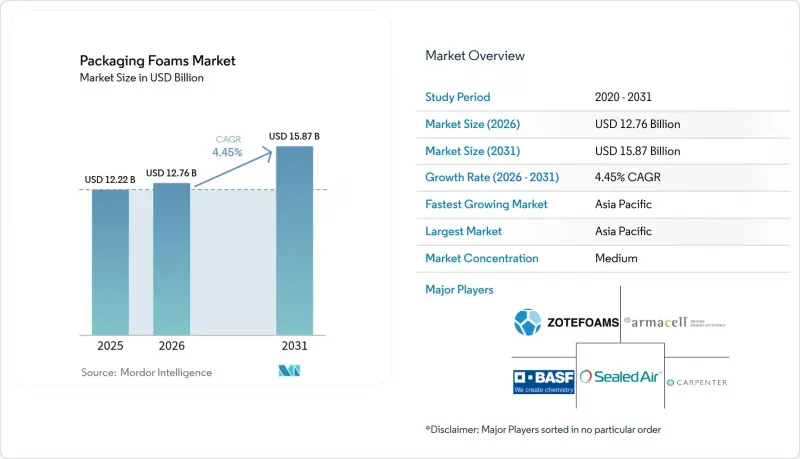
본 보고서는 소재(폴리스티렌, 폴리우레탄, 폴리올레핀, 기타 소재), 구조(플렉서블, 리지드), 용도(식품 포장, 산업용 포장), 지역(아시아태평양, 북미, 유럽, 남미, 중동 및 아프리카)별로 분류되어 있습니다. 시장 전망은 금액(달러) 기준으로 제시되어 있습니다.
전 세계 포장용 폼 시장 동향 및 인사이트
전자상거래의 확대가 운송용 보호 발포재 수요를 견인
자동화된 주문 처리 네트워크는 깨지기 쉬운 전자 기기나 개인 위생 용품을 자주 포함하는 증가하는 소포 처리량을 감당하고 있습니다. 사업자들은 플라스틱 에어백 대신 충격을 흡수하고 압축에 강하며 재활용 목표를 충족하도록 설계된 발포재 인서트를 채택하고 있습니다. 택배업체의 부피 중량 과금 제도로 인해, 제품을 보호하면서도 운송비를 절감할 수 있는 얇고 가벼운 완충재의 사용이 촉진되고 있습니다. 머신러닝을 활용한 설계 플랫폼은 최적의 크기의 발포재 인서트를 생성하여 화주에게 최대 25%의 운송 비용 절감을 실현하고 있습니다. 전자기기 브랜드 소유자들은 보증 요건을 충족하기 위해 정전기 방전(ESD) 보호 기능이 통합된 폴리우레탄, 폴리에틸렌, EVA 폼을 지정하고 있습니다. 2024년 이후 북미에서의 도입이 가속화되고 있으며, 동남아시아의 전자상거래 급속한 확장과 더불어, 콤팩트하고 지속 가능한 완충 솔루션을 선호하는 지역의 발송량이 증가하고 있습니다.
아시아의 24시간 식품 배달 붐으로 인해 단열 발포 팩이 필요해지고 있습니다.
앱 기반 식품 배달 플랫폼은 하루 중 언제든지 배송이 가능한 시간대를 약속하고 있으며, 기후 조건이 변화함에 따라 온도 관리가 중요시되고 있습니다. 이에 따라 사업자들은 반사 필름이나 상변화 삽입물을 결합한 다층 구조의 발포재 팩을 채택하여, 최대 24시간 동안 식품 온도를 목표값에서 ±2°C 이내로 유지하고 있습니다. 베트남의 일회용 폴리스티렌에 대한 과세 및 향후 시행될 플라스틱 금지 조치로 인해 바이오 유래 단열재로 전환이 진행되고 있으며, 공급업체들은 규제를 준수하는 폴리올레핀 및 셀룰로오스 발포재의 인증 취득을 서둘러야 하는 상황입니다. 중국의 규제 당국은 식품 접촉 재료에 대한 용출 시험을 엄격화하여, VOC(휘발성 유기 화합물)가 적고 잔류 모노머 함량이 최소화 된 배합에 대한 수요를 높이고 있습니다. 싱가포르에서는 식품청이 정한 100°C를 초과하는 온도 기준에 따라, 공급업체는 따뜻한 음식 이용 사례에서 발포 용기의 안전성을 검증할 의무가 있습니다. 이러한 지침은 아시아 전역의 급성장하는 음식 배달 네트워크 전반에 걸쳐 규정을 준수하는 고품질 솔루션의 보급을 촉진하고 있습니다.
도시 차원의 일회용 폴리스티렌 금지
지자체 차원의 규제는 발포 폴리스티렌으로 만든 식품 용품을 제한하고, 바이오 제품과의 경쟁력을 높이는 친환경 요금 제도를 시행함으로써 소재 전환을 가속화하고 있습니다. 캘리포니아주에서는 SNAP(지속 가능한 농업 프로그램)에 따라 발포 쿠션재에 포함된 특정 수소불화탄소의 사용 금지 조치로 인해 폴리스티렌의 경쟁력이 더욱 약화되고 있습니다. EU가 지원하는 ‘PolyStyreneLoop’ 시설은 용해 재활용 경로의 유효성을 입증하고 있지만, 여전히 비용이 많이 드는 수거 시스템이 필요하여 가공업체의 부담을 가중시키고 있습니다. 베트남이 2026년부터 2031년까지 단계적으로 시행할 플라스틱 금지 조치는 재활용 및 퇴비화가 가능한 발포재로의 지역적 전환을 더욱 가속화하고 있습니다. 현지 규제가 확대되는 가운데, 포장 제조업체들은 시장 접근성을 유지하고 규정 준수 위험을 완화하기 위해 제품 포트폴리오 다각화를 추진하고 있습니다.
부문 분석
폴리우레탄은 2025년 기준 포장용 폼 시장의 50.98% 점유율을 차지하고 있으며, 확립된 공급망과 완충재 및 단열재 모두에 적합한 유연한 밀도 범위의 장점을 활용하고 있습니다. 한편, 폴리올레핀은 플라스틱세 면제 요건을 충족하는 재생 소재를 최대 95%까지 포함하는 배합에 힘입어 2031년까지 연평균 성장률(CAGR) 5.43%로 수요가 확대될 것으로 전망됩니다. 리그닌 강화 폼 등 바이오 폴리우레탄에 대한 조사에 따르면, 열전도율 0.0289 W/m*K를 유지하고 있지만, 온실가스 감축 목표를 달성하는 동시에 미래의 성장 가능성을 시사하고 있습니다. 폴리스티렌에 대한 규제 압박으로 인해 그 생산량은 감소 추세를 보이고 있지만, EU 일부 지역에서는 용해 재활용 프로젝트를 통해 그 속도가 완화될 가능성이 있습니다. 하이드로플루오로올레핀 발포제를 활용한 특수 페놀계 발포체는 지구 온난화 지수가 낮은 점이 중요시되는 고온 콜드체인 포장 분야에서 두각을 나타내고 있습니다.
포장용 폼 시장에서 폴리우레탄 부문은 상당한 성장이 예상되는 한편, 폴리올레핀 하위 부문도 예측 기간 동안 현저한 확장을 이룰 것으로 전망됩니다. 이러한 동향은 탄소 강도를 낮추고, 재활용성을 향상시키며, 사용 후 제품 유래 소재 사용에 관한 브랜드 소유자의 공약에 부합하는 화학 소재로의 완만하지만 실질적인 전환을 부각시키고 있습니다. 새로운 바이오 폴리올 생산 능력이 가동되기 시작함에 따라, 배합 제조업체들은 비용 측면에서 점진적인 격차 해소를 예상하고 있으며, 이는 예측 기간 후반에 대체를 가속화할 가능성이 있습니다.
지역별 분석
아시아태평양은 견고한 전자상거래 생태계, 급성장하는 음식 배달 서비스, 그리고 콜드체인 백신 공급 능력에 대한 정부 투자의 뒷받침을 받아 40.10%의 점유율과 5.56%의 예측 연평균 성장률(CAGR)로 선두를 차지하고 있습니다. 중국은 국내 재활용 목표를 설정하고 있음에도 불구하고 여전히 폴리스티렌의 주요 수입국으로 남아 있어, 이 원자재에 대한 지역적 수요가 얼마나 강한지를 여실히 보여주고 있습니다. 베트남의 일회용 스티로폼에 대한 과세는 동남아시아에서 폴리올레핀 및 버섯 유래 발포재로 대체하는 움직임을 가속화하고 있는 반면, 일본과 한국에서는 GWP(지구온난화지수) 감축을 목적으로 수소 발포 폴리우레탄의 도입이 진행되고 있습니다.
북미는 첨단 물류 인프라와 주요 소매업체들의 적극적인 지속가능성 전략에 힘입어 포장용 폼 시장에서 큰 점유율을 차지하고 있습니다. 2024년 아마존이 에어필로우 사용을 중단함에 따라 공급 기반은 재활용 가능한 완충재로 전환되었으며, 대량 생산의 확대가 입증되었습니다. 누리온(Nurion)사의 위스콘신주 사업 확장은 보호 성능을 유지하면서 운송 비용을 절감하는 경량 충전재에 대한 현지 수요를 반영하고 있습니다. 연방 정부의 차세대 발포제에 대한 SNAP 승인은 바이오 및 저 GWP 화학 물질에 대한 규제적 확실성을 제공합니다.
유럽은 원자재 비용 급등과 엄격한 화학 물질 규제에 직면해 있음에도 불구하고, 바이오 혁신 및 순환 경제 시범 사업의 중심지로 계속 자리 잡고 있습니다. 독일에서 스토라 엔소(Stora Enso)가 진행한 ‘파피라(Papira)’ 시험은 가구 및 가전 분야에서 EPS를 대체할 수 있는 셀룰로오스 폼에 대한 시장 수요를 입증하고 있습니다. 이 지역이 스티렌의 순수출국에서 순수입국으로 전환된 사실은 가격 변동을 초래하는 구조적인 공급 문제를 여실히 드러내고 있습니다. 동유럽의 가공업체들은 일회용 제품에 관한 지침을 준수하기 위해 성형 펄프의 형태를 점점 더 모색하고 있는 한편, 특수 단열재 분야에서는 틈새 시장인 EPS 수요를 유지하고 있습니다.
남미, 중동 및 아프리카는 세계 시장 점유율은 미미하지만 그 비중을 확대되고 있습니다. 브라질에서는 전자상거래의 가속화에 따라 전자기기 분야에서 경량 PE 폼의 채택이 진행되고 있습니다. 한편, 걸프협력회의(GCC) 회원국에서는 사막 기후 하에서 백신 운송에 폴리우레탄 단열재가 채택되고 있습니다. 다자간 기부자들에 의한 공동 자금 지원을 받은 아프리카의 백신 물류 투자에서는 고온 환경에서도 성능을 유지할 수 있는 재활용 가능한 경질 폼이 우선적으로 채택되고 있어, 향후 수요 증가를 위한 기반이 마련되고 있습니다.
기타 혜택:
- 엑셀 형식 시장 예측(ME) 시트
- 3개월간의 애널리스트 지원
자주 묻는 질문
목차
제1장 서론
제2장 조사 방법
제3장 주요 요약
제4장 시장 구도
제5장 시장 규모와 성장 예측
제6장 경쟁 구도
제7장 시장 기회와 향후 전망
JHS 26.09.07According to Mordor Intelligence, the packaging foams market size was valued at USD 12.22 billion in 2025 and estimated to grow from USD 12.76 billion in 2026 to reach USD 15.87 billion by 2031, at a CAGR of 4.45% during the forecast period (2026-2031).
This report is Segmented by Material (Polystyrene, Polyurethane, Polyolefin, Other Materials), Structure (Flexible, Rigid), Application (Food Packaging, Industrial Packaging), and Geography (Asia-Pacific, North America, Europe, South America, Middle East and Africa). The Market Forecasts are Provided in Terms of Value (USD).
Global Packaging Foams Market Trends and Insights
Rising E-commerce Led Demand for Protective Shipping Foam
Automated fulfillment networks handle rising parcel volumes that frequently contain fragile electronics and personal-care items. Operators replace plastic air pillows with engineered foam inserts that absorb shock, resist compression, and meet recycling targets. Dimensional-weight pricing by parcel carriers incentivizes thinner, lightweight cushions that cut freight charges while protecting products. Machine-learning design platforms generate right-sized foam interiors and deliver up to 25% transport savings for shippers. Electronics brand owners specify polyurethane, polyethylene, and EVA foams with embedded ESD protection to maintain warranty compliance. North American adoption has accelerated since 2024 and parallels rapid e-commerce expansion in Southeast Asia, boosting regional shipment volumes that favor compact, sustainable cushioning solutions.
24-Hour Food-Delivery Boom in Asia Requiring Insulated Foam Packs
App-based food aggregators promise full-day delivery windows that stress temperature management across variable climates. Operators therefore adopt multi-layered foam packs integrating reflective films and phase-change inserts that keep meals within 2 °C of target for up to 24 hours. Vietnam's single-use polystyrene taxes and upcoming plastic bans provoke a pivot toward bio-derived insulation formats, pushing suppliers to qualify compliant polyolefin or cellulose foams. Chinese regulators have tightened migration testing for food-contact materials, reinforcing demand for formulations with low VOC and minimal residual monomer content. In Singapore, temperature thresholds above 100 °C outlined by the Food Agency oblige suppliers to validate foam container safety across hot-food use cases. These directives collectively advance premium, regulation-ready solutions across Asia's fast-growing meal-delivery networks.
City-Level Bans on Single-Use Polystyrene
Municipal restrictions accelerate material transition by limiting expanded-polystyrene foodservice items and enforcing eco-fee structures that raise cost parity with bio-based formats. California's SNAP-aligned prohibitions on specific hydrofluorocarbons in foam cushions further reduce polystyrene competitiveness. The EU-backed PolyStyreneLoop facility validates dissolution recycling routes but still requires costly collection systems, adding complexity for converters Vietnam's staged plastic bans from 2026-2031 intensify regional momentum toward recyclable and compostable foams. As local mandates broaden, packaging producers diversify portfolios to preserve market access and mitigate compliance risks.
Other drivers and restraints analyzed in the detailed report include:
- Logistics Lightweighting Initiatives to Cut Freight Costs
- Rapid Adoption of Bio-Based Polyols for Low-Carbon Foams
- Styrene & Isocyanate Price Volatility
For complete list of drivers and restraints, kindly check the Table Of Contents.
Segment Analysis
Polyurethane held 50.98% of the packaging foam market share in 2025, benefiting from well-established supply chains and adaptable density ranges that suit both cushioning and insulation. Polyolefin, however, is projected to capture expanding demand with a 5.43% CAGR through 2031, supported by formulations containing up to 95% recycled content that comply with plastic-tax exemptions. Bio-based polyurethane research-such as lignin-reinforced foams retaining 0.0289 W/m*K thermal conductivity-indicates future growth potential while addressing greenhouse-gas goals. Regulatory pressure on polystyrene deepens its volume decline, although dissolution recycling projects may moderate the pace in select EU regions. Specialty phenolic foams leveraging hydrofluoroolefin blowing agents emerge in high-temperature cold-chain packaging where low global-warming potential is valuable.
The polyurethane segment of the packaging foam market is anticipated to achieve significant growth, while the polyolefin sub-segment is expected to witness notable expansion over the forecast period. These trajectories underscore a gradual but material shift toward chemistries that lower carbon intensity, improve recyclability, and align with brand-owner pledges on post-consumer content. As new bio-polyol capacity comes onstream, formulators anticipate incremental cost parity that could accelerate substitution in the outer years of the forecast.
Complete Report Scope:
- By Material
- Polystyrene
- Polyurethane
- Polyolefin
- Other Materials
- By Structure
- Flexible
- Rigid
- By Application
- Food Packaging
- Industrial Packaging
- Transportation Components
- Electrical and Electronics
- Personal Care
- Pharmaceutical
- Other Industrial Packaging
- By Geography
- Asia-Pacific
- China
- India
- Japan
- South Korea
- Rest of Asia-Pacific
- North America
- United States
- Canada
- Mexico
- Europe
- Germany
- United Kingdom
- France
- Italy
- Russia
- Rest of Europe
- South America
- Brazil
- Argentina
- Rest of South America
- Middle East and Africa
- Saudi Arabia
- United Arab Emirates
- South Africa
- Rest of Middle East and Africa
- Asia-Pacific
Geography Analysis
Asia-Pacific leads with 40.10% share and a forecast 5.56% CAGR, propelled by robust e-commerce ecosystems, burgeoning meal-delivery services, and government investment in cold-chain vaccine capacity. Despite setting domestic recycling targets, China remains a significant importer of polystyrene, emphasizing strong regional demand for the raw material. Vietnam's taxation of single-use styrofoam accelerates substitution toward polyolefin and mushroom-derived foams in Southeast Asia, while Japan and South Korea pursue hydrogen-blown polyurethane for lower GWP profiles.
North America commands a sizable slice of the packaging foam market, supported by sophisticated fulfillment infrastructure and aggressive sustainability roadmaps by leading retailers. Amazon's exit from air pillows in 2024 nudged the supply base toward recyclable cushions and validated high-volume production scaling. Nouryon's Wisconsin expansion reflects local demand for lightweight fillers that cut freight intensity while maintaining protective performance. Federal SNAP approvals of next-generation blowing agents provide regulatory certainty for bio-based and low-GWP chemistries.
Europe grapples with elevated feedstock costs and strict chemical regulations, yet remains a hotspot for bio-innovation and circular-economy pilots. Stora Enso's Papira trials in Germany confirm market appetite for cellulose foams capable of replacing EPS across furniture and consumer-electronics channels. The region's transition from net exporter to importer of styrene highlights structural supply challenges driving volatility. Eastern European converters increasingly explore molded-pulp formats to comply with single-use directives, while maintaining niche EPS demand in specialty insulation.
South America, the Middle East, and Africa contribute modest but rising shares to the global footprint. Brazil's e-commerce acceleration fosters adoption of lightweight PE foams in electronics, whereas Gulf Cooperation Council countries apply polyurethane insulation for vaccine transport across desert climates. Africa's vaccine logistics investments, co-funded by multilateral donors, prioritize recyclable rigid foams that sustain performance in high-temperature corridors, laying groundwork for future demand expansion.
- Alleguard
- Armacell
- Atlas Roofing Corporation
- BASF SE
- Berry Global Inc.
- Borealis GmbH
- Carpenter Engineered Foams Belgium BV
- Dart Container Corporation
- Dow
- EFP, LLC.
- Huntsman International LLC
- JSP
- Novapor Hans Lau (GmbH & Co) KG
- Pregis LLC
- Sealed Air
- TotalEnergies
- Williams Products
- Zotefoams PLC
Additional Benefits:
- The market estimate (ME) sheet in Excel format
- 3 months of analyst support
TABLE OF CONTENTS
1 Introduction
- 1.1 Study Assumptions and Market Definition
- 1.2 Scope of the Study
2 Research Methodology
3 Executive Summary
4 Market Landscape
- 4.1 Market Overview
- 4.2 Market Drivers
- 4.2.1 Rising e-commerce led demand for protective shipping foam
- 4.2.2 24-hour food-delivery boom in Asia requiring insulated foam packs
- 4.2.3 Logistics lightweighting initiatives to cut freight costs
- 4.2.4 Rapid adoption of bio-based polyols for low-carbon foams
- 4.2.5 Cold-chain vaccine infrastructure build-out in emerging markets
- 4.3 Market Restraints
- 4.3.1 City-level bans on single-use polystyrene
- 4.3.2 Styrene and isocyanate price volatility
- 4.3.3 Rapid advances in molded-pulp and mushroom packaging substitutes
- 4.4 Value Chain Analysis
- 4.5 Porter's Five Forces
- 4.5.1 Bargaining Power of Suppliers
- 4.5.2 Bargaining Power of Buyers
- 4.5.3 Threat of New Entrants
- 4.5.4 Threat of Substitutes
- 4.5.5 Degree of Competition
5 Market Size and Growth Forecasts (Value)
- 5.1 By Material
- 5.1.1 Polystyrene
- 5.1.2 Polyurethane
- 5.1.3 Polyolefin
- 5.1.4 Other Materials
- 5.2 By Structure
- 5.2.1 Flexible
- 5.2.2 Rigid
- 5.3 By Application
- 5.3.1 Food Packaging
- 5.3.2 Industrial Packaging
- 5.3.2.1 Transportation Components
- 5.3.2.2 Electrical and Electronics
- 5.3.2.3 Personal Care
- 5.3.2.4 Pharmaceutical
- 5.3.2.5 Other Industrial Packaging
- 5.4 By Geography
- 5.4.1 Asia-Pacific
- 5.4.1.1 China
- 5.4.1.2 India
- 5.4.1.3 Japan
- 5.4.1.4 South Korea
- 5.4.1.5 Rest of Asia-Pacific
- 5.4.2 North America
- 5.4.2.1 United States
- 5.4.2.2 Canada
- 5.4.2.3 Mexico
- 5.4.3 Europe
- 5.4.3.1 Germany
- 5.4.3.2 United Kingdom
- 5.4.3.3 France
- 5.4.3.4 Italy
- 5.4.3.5 Russia
- 5.4.3.6 Rest of Europe
- 5.4.4 South America
- 5.4.4.1 Brazil
- 5.4.4.2 Argentina
- 5.4.4.3 Rest of South America
- 5.4.5 Middle East and Africa
- 5.4.5.1 Saudi Arabia
- 5.4.5.2 United Arab Emirates
- 5.4.5.3 South Africa
- 5.4.5.4 Rest of Middle East and Africa
- 5.4.1 Asia-Pacific
6 Competitive Landscape
- 6.1 Market Concentration
- 6.2 Strategic Moves
- 6.3 Market Share(%)/ Ranking Analysis
- 6.4 Company Profiles (includes Global level Overview, Market level overview, Core Segments, Financials as available, Strategic Information, Market Rank/Share for key companies, Products and Services, and Recent Developments)
- 6.4.1 Alleguard
- 6.4.2 Armacell
- 6.4.3 Atlas Roofing Corporation
- 6.4.4 BASF SE
- 6.4.5 Berry Global Inc.
- 6.4.6 Borealis GmbH
- 6.4.7 Carpenter Engineered Foams Belgium BV
- 6.4.8 Dart Container Corporation
- 6.4.9 Dow
- 6.4.10 EFP, LLC.
- 6.4.11 Huntsman International LLC
- 6.4.12 JSP
- 6.4.13 Novapor Hans Lau (GmbH & Co) KG
- 6.4.14 Pregis LLC
- 6.4.15 Sealed Air
- 6.4.16 TotalEnergies
- 6.4.17 Williams Products
- 6.4.18 Zotefoams PLC
7 Market Opportunities and Future Outlook
- 7.1 White-space and Unmet-need Assessment