|
시장보고서
상품코드
2124417
플라스틱 사출 성형 시장 : 점유율 분석, 업계 동향과 통계, 성장 예측(2026-2031년)Plastics Injection Molding - Market Share Analysis, Industry Trends & Statistics, Growth Forecasts (2026 - 2031) |
||||||
 Mordor Intelligence
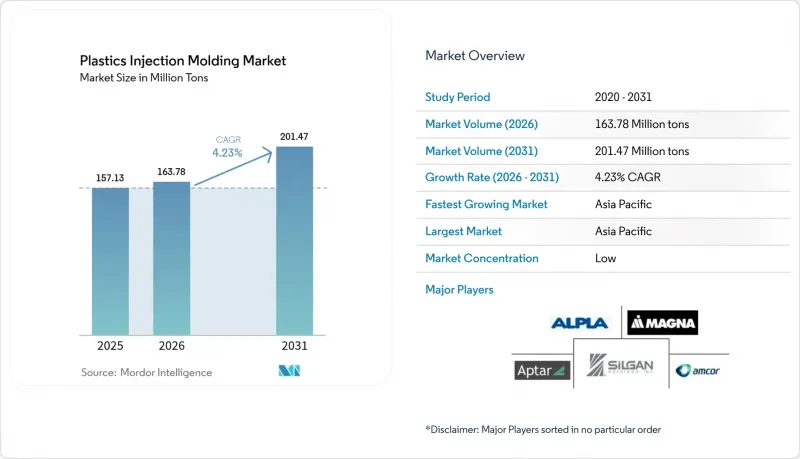
Mordor Intelligence에 의하면, 플라스틱 사출 성형 시장 규모는 2025년에 1억 5,713만 톤으로 평가되어 2026년 1억 6,378만 톤에서 2031년까지 2억 147만 톤에 이를 것으로 예측되며, 예측 기간(2026-2031년) CAGR은 4.23%를 나타낼 전망입니다.
본 보고서는 원료 유형별(폴리프로필렌, 아크릴로니트릴-부타디엔-스티렌(ABS), 폴리스티렌, 폴리에틸렌, 폴리염화비닐(PVC), 기타), 용도별(포장, 건축 및 건설, 소비재, 전자기기, 자동차 및 운송 산업, 헬스케어, 기타), 지역별(아시아태평양, 북미, 유럽, 남미, 중동 및 아프리카)로 분류되어 있습니다.
전 세계 플라스틱 사출 성형 시장 동향 및 인사이트
전자상거래로 인한 포장 수요의 급증
소포 처리량의 폭발적인 증가로 인해 내구성이 있으면서도 가벼운 보호 솔루션에 대한 수요가 높아지고 있으며, 브랜드 소유자들은 강도를 저하시키지 않으면서 재료 사용량을 최소화하는 단일 소재인 폴리에틸렌 및 폴리프로필렌 포장재의 사용을 지정하고 있습니다. 2025년에 발효될 EU의 포장 및 포장 폐기물 규정(PPWR)은 2030년까지 PET 식품 포장에 30%의 재활용 소재 함유를 의무화하고 있어, 높은 재활용률을 가진 혼합물에 대응하기 위한 금형 및 공정 매개변수의 재설계가 가속화되고 있습니다. 미국에서는 14개 주에서 도입된 확대 생산자 책임(EPR) 제도에 따른 수수료가 친환경 설계를 장려하고, 첨단 수지 회수 라인을 갖춘 컨버터를 우대하는 추가적인 비용 신호로 작용하고 있습니다. 이러한 규제의 시너지 효과로 플라스틱 사출 성형 시장의 생산량은 확대되고 있으며, 특히 얇은 두께의 용기 및 캡 부문에서는 사이클 타임 단축을 통해 원자재 절약과 생산성 향상이 실현되고 있습니다. 선진 성형 제조업체들은 선별 작업의 효율화를 위해 인몰드 라벨링 및 디지털 워터마크 기술을 채택하고 있으며, 이를 통해 사용 후 수지의 확보 가능성이 높아져 원료의 안정적인 공급이 보장되고 있습니다.
자동차 및 전기차(EV)의 경량화 요구 사항
각 자동차 제조업체는 엄격한 차량 평균 CO₂ 배출량 목표를 달성하고 전기차의 주행 거리를 극대화하기 위해 플라스틱으로의 대체를 가속화하고 있습니다. 테슬라의 ‘기가캐스팅(Giga Casting)’ 전략은 대형 알루미늄 주조 부품이 부품 수를 줄이는 한편, 주조 구조와 일체화되는 사출 성형된 내외장 트림에 대한 수요를 동시에 확대하고 있음을 보여줍니다. 각 배터리 제조업체들은 난연성 샌드위치 구조의 벽면을 갖춘 열가소성 수지 하우징을 모색하고 있으며, 이는 강철 대체품에 비해 차량 1대당 최대 40kg의 경량화를 실현합니다. 이러한 변화는 엥겔(Engel)사의 고전압 배터리 하우징 프로토타입에서 잘 드러납니다. ISO 14040에 따른 수명 주기 평가가 소재 선정에 점점 더 큰 영향을 미치고 있으며, 다중 금속 조립체보다 재활용 가능한 수지가 우선시되고 있습니다. 이러한 추세로 인해 폴리아미드, 폴리카보네이트, 재생 폴리프로필렌과 같은 엔지니어링 등급 폴리머에 대한 수요가 증가하고 있으며, 차량당 사용량 증가와 새로운 EV 플랫폼용 금형 수요의 지속을 통해 플라스틱 사출 성형 시장의 가치가 확대되고 있습니다.
원유 가격에 연동되는 수지 가격 변동
지정학적 혼란으로 인해 원유 벤치마크 가격이 변동함에 따라, 폴리에틸렌과 폴리프로필렌의 현물 가격이 상승했습니다. 2025년에 도입된 미국의 관세로 인해 일부 수지 등급의 입고 비용이 10-15% 상승한 반면, 중국공급 과잉(추가 생산 능력 500만 톤으로 추정)이 아시아 지역의 시세를 끌어내려 지역 간 차익 거래 스프레드를 확대시켰습니다. 수지 판매업체들은 전례 없는 불확실성을 지적하고 있으며, 성형업체의 82%가 가격 급등에 대비해 다중 조달 전략을 추구하고 있습니다. 이익률 변동은 장기적인 금형 투자를 주저하게 만들고, 플라스틱 사출 성형 시장 전체의 생산 능력 확충 장벽을 높여, 가공업체들이 헤지 상품이나 배합 가격 계약으로 눈을 돌리게 하고 있습니다.
부문 분석
폴리에틸렌은 2025년 플라스틱 사출 성형 시장에서 36.05%라는 압도적인 점유율을 확보하며, 재활용 재료 함유율 의무화로 인해 재활용성 측면에서 우위가 강화됨에 따라 2031년까지 연평균 성장률(CAGR) 5.02%를 기록할 전망입니다. 이러한 주도적 지위는 얇은 두께의 포장재, 뚜껑 및 마개 시스템, 그리고 해당 수지의 내화학성을 활용한 신흥 자동차용 연료전지 부품에 의해 뒷받침되고 있습니다. 폴리프로필렌은 높은 열변형 온도와 강성 대 중량 비율을 활용하여 자동차 내장 트림, HVAC 하우징, 가전 부품 분야에서 폴리에틸렌에 근소한 차이로 뒤를 잇고 있습니다. 아크릴로니트릴-부타디엔-스티렌(ABS)은 가전제품 케이스 분야에서 틈새 시장 지위를 유지하고 있는 반면, 폴리스티렌은 규제 강화로 인해 일회용 식기 시장에서 구조적인 축소를 겪고 있습니다.
탈중합 및 용매를 통한 정제가 가능한 첨단 재활용 시설 덕분에 사용 후 폴리에틸렌의 품질이 향상되어, 버진 수지를 그대로 대체할 수 있게 되었으며, 이는 컨버터의 Scope 3 배출량 감축으로 이어지고 있습니다. 폴리카보네이트는 헤드램프 렌즈나 투명 보호 쉴드 분야에서 꾸준히 채택되고 있으며, 일부 자동차 모델에서는 무거운 유리 대신 얇은 유리가 채택되고 있습니다. 피마자유로 제조되는 바이오 폴리아미드는 고유한 난연성과 낮은 탄소 강도로 인해 엔진룸 내 부품에서 주목을 받고 있습니다. 이러한 소재 수준의 변화는 플라스틱 사출 성형 시장의 다양화를 한층 더 심화시키는 동시에, 고객의 환경·사회·지배구조(ESG) 목표 달성을 지원하고 있습니다.
지역별 분석
아시아태평양은 2025년 플라스틱 사출 성형 시장의 34.10%를 차지하고 있으며, 중국, 인도, 동남아시아가 전자 및 자동차 생산을 확대함에 따라 2031년까지 연평균 성장률(CAGR) 5.24%로 성장하고 있습니다. 정부의 인센티브, 낮은 인건비, 하류 조립 공장과 인접한 지리적 이점이 생산 능력 확충을 뒷받침하고 있습니다. 일본에서는 80% 이상의 공장에서 디지털 트윈과 탄소 발자국 대시보드를 활용하여 생산성과 지속가능성을 높이고 있습니다. 북미에서는 리쇼어링과 니어쇼어링의 혜택을 받고 있으며, 멕시코는 2023년에 439억 달러의 외국인 직접 투자(FDI)를 유치하여, 이는 자동차 내장재용 금형 수입 및 턴키 방식의 생산 셀 도입을 뒷받침하고 있습니다.
미국은 1조 4,000억 달러 규모의 재산업화 계획을 통해 반도체, 전기차 배터리, 의료기기 생산 능력을 지원하고 있으며, 이에 따라 국내 수지 수요가 확대될 전망입니다. 캐나다 온타리오주에 위치한 금형 제조 클러스터는 소비자용 포장 프로그램을 위해 다중 캐비티 금형을 지속적으로 공급하고 있으나, 임금 프리미엄으로 인해 자동화가 고도화되고 있습니다.
유럽의 각 컨버터 기업들은 2030년까지 PET 포장재에 30%의 재활용 소재 함유율을 의무화하는 PPWR 요건을 충족하기 위해, 탈중합 및 용매 기반 정제 플랜트에 대한 투자를 추진하고 있습니다. 독일의 뛰어난 엔지니어링 기술은 고급차용 고도 다성분 성형을 뒷받침하고 있는 반면, 프랑스에서는 소비자의 환경 의식 고조에 발맞추어 바이오 화장품 포장재 생산을 확대되고 있습니다. 남미는 브라질의 자동차 수요에 의존하고 있으며, 현지 조달률에 관한 규제로 인해 국내 플라스틱 부품 생산 확대가 촉진되고 있습니다.
중동 및 아프리카에서는 사우디아라비아의 폴리머 하류 부문에 대한 투자와, 현지 부품 생산 촉진을 목적으로 한 남아프리카공화국의 금형 지원 제도를 통해 시장이 확대되고 있습니다. 이러한 다양한 지역 동향이 맞물려 플라스틱 사출 성형 시장의 지리적 범위를 넓히고 있습니다.
기타 혜택
- 엑셀 형식 시장 예측(ME) 시트
- 3개월간의 애널리스트 지원
자주 묻는 질문
목차
제1장 서론
제2장 조사 방법
제3장 주요 요약
제4장 시장 구도
제5장 시장 규모와 성장 예측
제6장 경쟁 구도
제7장 시장 기회와 향후 전망
JHSAccording to Mordor Intelligence, the plastics injection molding market size was valued at USD 157.13 million tons in 2025 and estimated to grow from USD 163.78 million tons in 2026 to reach USD 201.47 million tons by 2031, at a CAGR of 4.23% during the forecast period (2026-2031).
This report is Segmented by Raw Material Type (Polypropylene, Acrylonitrile Butadiene Styrene, Polystyrene, Polyethylene, Polyvinyl Chloride, and More), Application (Packaging, Building and Construction, Consumer Goods, Electronics, Automotive and Transportation, Healthcare, and Other Applications), and Geography (Asia-Pacific, North America, Europe, South America, and Middle-East and Africa).
Global Plastics Injection Molding Market Trends and Insights
Surge in E-commerce-Driven Packaging Demand
Explosive parcel volumes have heightened requirements for durable yet lightweight protective solutions, prompting brand owners to specify mono-material polyethylene and polypropylene packages that minimize material use without compromising strength. The EU Packaging and Packaging Waste Regulation (PPWR), effective 2025, mandates 30% recycled content in PET food packaging by 2030, accelerating redesign of tooling and process parameters to handle higher-recycled blends. U.S. Extended Producer Responsibility (EPR) fees across 14 states create an additional cost signal that rewards eco-modulated designs and favors converters with advanced resin reclamation lines. These converging mandates bolster volume growth in the plastics injection molding market, particularly in thin-wall container and closure segments where cycle-time reductions deliver material savings and higher throughput. Progressive molders are adopting in-mold labeling and digital watermarking to streamline sorting, increasing the likelihood of post-consumer resin availability and ensuring feedstock continuity.
Lightweighting Requirements in Automotive and EVs
Automotive OEMs have intensified plastics substitution to achieve stringent fleet-average CO2 targets and maximize EV range. Tesla's gigacasting strategy showcases how large aluminum castings reduce part counts, but it simultaneously expands demand for injection-molded interior and exterior trims that integrate with cast structures. Battery manufacturers are exploring thermoplastic housings with flame-retardant sandwich walls that cut up to 40 kg per vehicle compared with steel alternatives, a shift exemplified by Engel's high-voltage battery enclosure prototype. ISO 14040 life-cycle assessments increasingly influence material choices, favoring recyclable resins over multi-material metal assemblies. These trends elevate engineering-grade polymers such as polyamide, polycarbonate and recycled polypropylene, widening the value pool of the plastics injection molding market through higher content per vehicle and sustained tooling demand for new EV platforms.
Volatile Crude-Oil-Linked Resin Pricing
Polyethylene and polypropylene spot prices rose as crude benchmarks responded to geopolitical disruptions. U.S. tariffs introduced in 2025 raised landed costs of some resin grades by 10-15%, while Chinese oversupply, estimated at an additional 5 million tons of capacity, depressed Asian quotes and widened inter-regional arbitrage spreads. Resin distributors cite unprecedented uncertainty, with 82% of converters pursuing multisourcing strategies to guard against price spikes. Margin volatility discourages long-term tooling commitments, raising the hurdle rate for capacity additions across the plastics injection molding market and nudging processors toward hedging instruments and formula-pricing contracts.
Other drivers and restraints analyzed in the detailed report include:
- Growing Need for Single-Use Medical Disposables
- OEM Adoption of Injection-Molded EV Battery Housings
- Tightening Global Anti-Plastic Regulations
For complete list of drivers and restraints, kindly check the Table Of Contents.
Segment Analysis
Polyethylene secured a commanding 36.05% share of the plastics injection molding market in 2025 and is on track for a 5.02% CAGR through 2031 as recycled-content mandates reinforce its recyclability advantage. This leadership is fueled by thin-wall packaging, cap-and-closure systems and emerging automotive fuel-cell components that capitalize on the resin's chemical resistance. Polypropylene follows closely in interior automotive trims, HVAC housings and appliance parts, leveraging high heat deflection and stiffness-to-weight ratios. Acrylonitrile butadiene styrene retains niche in consumer electronics casings, while polystyrene faces structural decline in single-use cutlery amid regulatory crackdowns.
Advanced recycling facilities capable of depolymerization and solvent-based purification are improving the quality of post-consumer polyethylene, enabling drop-in replacement for virgin resin and lowering scope-3 emissions for converters. Polycarbonate uptake advances steadily in headlamp lenses and transparent protective shields, with thin-gauge glazing options replacing heavier glass in certain automotive models. Bio-based polyamides produced from castor-bean oil are gaining interest in under-hood parts due to inherent flame retardancy and lower carbon intensity. These material-level shifts deepen the diversification of the plastics injection molding market while supporting clients' environmental, social and governance (ESG) objectives.
Complete Report Scope:
- By Raw Material Type
- Polypropylene
- Acrylonitrile Butadiene Styrene (ABS)
- Polystyrene
- Polyethylene
- Polyvinyl Chloride (PVC)
- Polycarbonate
- Polyamide
- Other Raw Materials
- By Application
- Packaging
- Building and Construction
- Consumer Goods
- Electronics
- Automotive and Transportation
- Healthcare
- Other Applications
- By Geography
- Asia-Pacific
- China
- India
- Japan
- South Korea
- Rest of Asia-Pacific
- North America
- United States
- Canada
- Mexico
- Europe
- Germany
- United Kingdom
- France
- Italy
- Russia
- Rest of Europe
- South America
- Brazil
- Argentina
- Rest of South America
- Middle-East and Africa
- Saudi Arabia
- South Africa
- Rest of Middle-East and Africa
- Asia-Pacific
Geography Analysis
Asia-Pacific held 34.10% of the plastics injection molding market in 2025 and is expanding at a 5.24% CAGR to 2031 as China, India, and Southeast Asia scale electronics and automotive output. Government incentives, lower labor costs, and proximity to downstream assembly plants underpin capacity additions. Japan is leveraging digital twins and carbon-footprint dashboards across more than 80% of factories to heighten productivity and sustainability. North America benefits from reshoring and nearshoring, with Mexico securing USD 43.9 billion in FDI during 2023 that spurs tooling imports and turnkey cell installations for automotive interiors.
The United States' USD 1.4 trillion reindustrialization plan supports semiconductor, EV battery and medical-device capacity that will boost domestic resin offtake. Canada's mold-making clusters in Ontario continue to supply high-cavitation tools for consumer-packaging programs, though wage premiums encourage higher degrees of automation.
European converters are investing in depolymerization and solvent-based purification plants to meet PPWR requirements for 30% recycled content in PET packaging by 2030. Germany's engineering prowess underpins advanced multi-component molding for premium vehicles, while France scales bio-based cosmetic packaging aligned with consumer eco-preferences. South America depends on Brazilian automotive demand, with localized content rules compelling higher domestic plastic part production.
The Middle East and Africa are expanding through Saudi Arabia's polymer downstream investments and South Africa's tooling grant scheme aimed at stimulating localized part production. These diverse regional dynamics collectively broaden the geographic footprint of the plastics injection molding market.
- ALPLA
- Amcor PLC
- Antolin
- AptarGroup, Inc.
- BERICAP
- CVA Plastics
- EVCO Plastics
- FORVIA Faurecia
- HTI Plastics
- Husky Technologies
- IAC Group
- Magna International Inc.
- Marelli Holdings Co. Ltd
- Naber Plastics BV
- Quantum Plastics
- SCHAUENBURG Industrietechnik
- SEKISUI CHEMICAL CO., LTD.
- Silgan Holdings Inc.
- The Rodon Group
- TOYOTA BOSHOKU CORPORATION
Additional Benefits:
- The market estimate (ME) sheet in Excel format
- 3 months of analyst support
TABLE OF CONTENTS
1 Introduction
- 1.1 Study Assumptions and Market Definition
- 1.2 Scope of the Study
2 Research Methodology
3 Executive Summary
4 Market Landscape
- 4.1 Market Overview
- 4.2 Market Drivers
- 4.2.1 Surge in E-Commerce?Driven Packaging Demand
- 4.2.2 Lightweighting Requirements in Automotive and EVs
- 4.2.3 Growing Need for Single-Use Medical Disposables
- 4.2.4 Industrialisation in APAC Electronics Manufacturing
- 4.2.5 OEM Adoption of Injection-Molded EV Battery Housings
- 4.3 Market Restraints
- 4.3.1 Volatile Crude-Oil-Linked Resin Pricing
- 4.3.2 Tightening Global Anti-Plastic Regulations
- 4.3.3 Cap-Ex and Skills Gap for All-Electric High-Tonnage Presses
- 4.4 Value Chain Analysis
- 4.5 Porter's Five Forces
- 4.5.1 Bargaining Power of Suppliers
- 4.5.2 Bargaining Power of Buyers
- 4.5.3 Threat of New Entrants
- 4.5.4 Threat of Substitutes
- 4.5.5 Degree of Competition
5 Market Size and Growth Forecasts (Volume)
- 5.1 By Raw Material Type
- 5.1.1 Polypropylene
- 5.1.2 Acrylonitrile Butadiene Styrene (ABS)
- 5.1.3 Polystyrene
- 5.1.4 Polyethylene
- 5.1.5 Polyvinyl Chloride (PVC)
- 5.1.6 Polycarbonate
- 5.1.7 Polyamide
- 5.1.8 Other Raw Materials
- 5.2 By Application
- 5.2.1 Packaging
- 5.2.2 Building and Construction
- 5.2.3 Consumer Goods
- 5.2.4 Electronics
- 5.2.5 Automotive and Transportation
- 5.2.6 Healthcare
- 5.2.7 Other Applications
- 5.3 By Geography
- 5.3.1 Asia-Pacific
- 5.3.1.1 China
- 5.3.1.2 India
- 5.3.1.3 Japan
- 5.3.1.4 South Korea
- 5.3.1.5 Rest of Asia-Pacific
- 5.3.2 North America
- 5.3.2.1 United States
- 5.3.2.2 Canada
- 5.3.2.3 Mexico
- 5.3.3 Europe
- 5.3.3.1 Germany
- 5.3.3.2 United Kingdom
- 5.3.3.3 France
- 5.3.3.4 Italy
- 5.3.3.5 Russia
- 5.3.3.6 Rest of Europe
- 5.3.4 South America
- 5.3.4.1 Brazil
- 5.3.4.2 Argentina
- 5.3.4.3 Rest of South America
- 5.3.5 Middle-East and Africa
- 5.3.5.1 Saudi Arabia
- 5.3.5.2 South Africa
- 5.3.5.3 Rest of Middle-East and Africa
- 5.3.1 Asia-Pacific
6 Competitive Landscape
- 6.1 Market Concentration
- 6.2 Strategic Moves
- 6.3 Market Share (%)/Ranking Analysis
- 6.4 Company Profiles (includes Global level overview, Market level overview, Core Segments, Financials as available, Strategic Information, Market Rank/Share, Products and Services, Recent Developments)
- 6.4.1 ALPLA
- 6.4.2 Amcor PLC
- 6.4.3 Antolin
- 6.4.4 AptarGroup, Inc.
- 6.4.5 BERICAP
- 6.4.6 CVA Plastics
- 6.4.7 EVCO Plastics
- 6.4.8 FORVIA Faurecia
- 6.4.9 HTI Plastics
- 6.4.10 Husky Technologies
- 6.4.11 IAC Group
- 6.4.12 Magna International Inc.
- 6.4.13 Marelli Holdings Co. Ltd
- 6.4.14 Naber Plastics BV
- 6.4.15 Quantum Plastics
- 6.4.16 SCHAUENBURG Industrietechnik
- 6.4.17 SEKISUI CHEMICAL CO., LTD.
- 6.4.18 Silgan Holdings Inc.
- 6.4.19 The Rodon Group
- 6.4.20 TOYOTA BOSHOKU CORPORATION
7 Market Opportunities and Future Outlook
- 7.1 White-space and Unmet-Need Assessment