|
시장보고서
상품코드
2124649
열전사 라벨 : 시장 점유율 분석, 업계 동향 및 통계, 성장 예측(2026-2031년)Thermal Transfer Label - Market Share Analysis, Industry Trends & Statistics, Growth Forecasts (2026 - 2031) |
||||||
 Mordor Intelligence
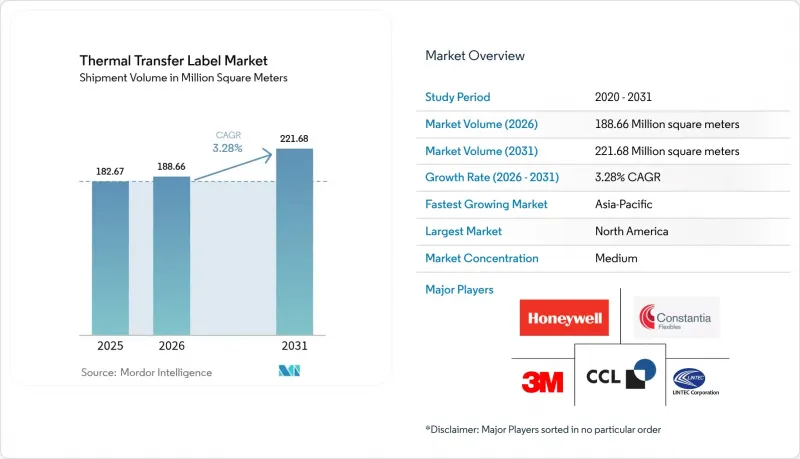
Mordor Intelligence에 의하면, 열전사 라벨 시장 규모는 2025년 1억 8,267만 m2로 평가되었습니다. 2026년에는 1억 8,866만 m2로 확대되어 2026년부터 2031년에 걸쳐 CAGR 3.28%로 성장을 지속하여, 2031년에는 2억 2,168만 m2에 이를 것으로 예측됩니다.
본 보고서는 소재별(종이, 폴리에스터(PET) 등), 리본 유형별(풀 왁스,왁스·레진, 풀레진), 접착제 유형별(영구형, 박리 가능형 등), 최종 사용자 산업별(식품 및 음료, 의료 및 제약, 공업 제품 등), 지역별(북미, 유럽 등)로 분류되어 있습니다. 시장 예측은 수량(백만 제곱미터) 단위로 제시되어 있습니다.
세계의 열전사 라벨 시장 동향 및 인사이트
의료 분야에서의 단일 투여 및 검체 추적 의무화
2024년에 시행된 ‘의약품 공급망 보안법’의 주요 요건에 따라, 모든 처방약 포장에는 유통 및 보관 과정 전반에 걸쳐 판독 가능한 표준화된 숫자 식별자를 기재해야 합니다. 따라서 제약사는 인쇄된 코드가 멸균 처리나 콜드체인의 온도 편차를 견딜 수 있는 내구성이 뛰어난 열전사 리본을 지정하고 있습니다. 카디널 헬스(Cardinal Health)와 같은 위탁 포장 업체들은 매달 수백만 개의 단일 투여용 포장을 처리하는 설비에 일련번호 부여 모듈을 통합하고 있습니다. 검사 기관 네트워크도 검체 식별에 있어 유사한 기준을 채택하고 있으며, 이로 인해 열전사 라벨 시장은 진단용 바이알 및 슬라이드 추적 분야로 확대되고 있습니다. 새로운 디지털 디스플레이 라벨은 상태 정보를 표시하지만, 규제 대상 워크플로우 내에서는 열전사를 통한 하드카피 백업이 여전히 의무화되어 있습니다. 이러한 변화로 인해 새로운 기준 수요가 정착되면서, 에탄올 및 오토클레이브 처리를 견딜 수 있는 수지 함량이 높은 리본에 대한 수요가 증가하고 있습니다.
고온 전자기기 제조 라인에서의 폴리에스테르 라벨 채택
무연 솔더와 미세 피치 부품의 채택으로 인해, 인쇄 회로 기판은 260°C에 가까운 리플로우 온도에 노출되게 되었습니다. 150°C까지의 내열성을 갖춘 폴리에스테르 라벨은 웨이브 납땜이나 세척 시에도 추적성 데이터를 보호하는 반면, 프리미엄 폴리이미드 라벨은 300°C에 달하는 항공우주 및 자동차 업계의 열 프로파일도 견딜 수 있습니다. 현재 아시아의 제조 공장에서는 이러한 기판에 동등한 내열성을 갖춘 RFID 인레이를 결합하는 추세가 진행되고 있으며, 리본의 수지 조성은 실리콘 개질 수지 및 세라믹 충전 수지로 전환되고 있습니다. Brady Corporation의 가혹한 환경용 폴리에스테르 시리즈는 자외선 저항성과 용제 저항성을 추가로 갖추고 있어, 현재 요구되는 내열성, 내화학성 및 실외 내구성의 융합을 구현하고 있습니다. 따라서 고온 전자기기 시장의 성장에 힘입어 열전사 라벨 시장은 평균 연평균 성장률(CAGR)을 상회하는 성장률을 보이고 있습니다.
특수 수지 가격 변동
리본 기판 비용의 대부분은 폴리에틸렌 및 폴리프로필렌 원자재비가 차지합니다. 최근 공급 차질이 발생했을 때 특수 수지 할증료가 40% 급등하자, 이익률이 낮은 가공업체들은 재고 확보를 주저했습니다. 열전사 라벨에는 균일한 코팅 점도가 요구되기 때문에 제조업체는 최종 사용자의 인쇄 프로파일을 재인증하지 않고는 단순히 저렴한 대체품으로 전환할 수 없습니다. 북미 공급업체들은 셰일 가스로 인한 가격 우위를 누리고 있지만, 유럽의 가공업체들은 에너지 비용 급등과 엄격한 탄소세에 직면해 있어 이로 인해 이익률이 더욱 압박받고 있습니다. 헤지나 다중 공급처 조달과 같은 전략을 통해 위험은 완화되고 있지만, 빈번한 가격 재협상으로 인해 고객들의 장기 계약 체결 의욕이 꺾이면서 열전사 라벨 시장의 성장이 둔화되고 있습니다.
부문별 분석
종이는 비용이 저렴하고 배송용 판지 라벨로 쉽게 구할 수 있기 때문에 2025년 열전사 라벨 시장 점유율의 47.86%를 차지했습니다. 이 부문의 출하량은 소포 증가에 따라 계속 확대되고 있지만, 가격에 대한 민감성이 수익 성장을 제한하고 있습니다. 폴리프로필렌은 화학약품용 드럼통, 오일 필터, 의약품 바이알이 내습성 필름으로 전환됨에 따라 2031년까지 연평균 성장률(CAGR) 7.15%를 나타낼 것으로 예측됩니다. 폴리에틸렌은 압축 가능한 포장재를 뒷받침하고 있지만, 그 성장률은 한 자릿수 중반으로 비교적 완만합니다. 폴리에스테르와 폴리이미드는 고온 전자기기 하위 부문의 기반이 되고 있어, 규모는 작지만 수익성이 높은 분야를 차지하고 있습니다. 웨스턴 미시간 대학교가 개발한 재펄프화 가능한 실리콘 이형 라이너 기술은 종이의 재활용성을 높이는 것을 목적으로 하고 있어, 종이의 우위를 장기화시킬 가능성이 있습니다. 각 컨버터 기업들이 기업의 지속가능성 목표에 부합함에 따라 모든 기재에서 재생 소재 사용 시험이 진행되고 있으며, 열전사 라벨 시장의 소재 선정에 있어 환경 성능이 경제성과 맞먹는 수준에 도달했음이 나타나고 있습니다.
비용 효율을 중시하는 물류 분야에서 종이의 우위는 앞으로도 지속될 것이지만, 규제 변경에 따라 프리미엄층의 구성은 재편되고 있습니다. 의약품 일련번호 부여 규제로 인해 오토클레이브나 극저온 조건을 견딜 수 있는 기판이 필요해지면서, 코팅된 합성 필름의 점유율이 확대되고 있습니다. 전자기기 조립 제조업체들은 플럭스 용제에 견딜 수 있는 UL 인증 폴리에스테르 소재를 강력히 요구하고 있습니다. DNP의 V300 수지 리본은 이러한 매체의 90%에서 인쇄가 인증되어, 호환성 향상을 통해 컨버터의 재고 관리를 간소화하는 좋은 사례가 되고 있습니다. 따라서 소재 공급업체는 열전사 라벨 시장에서 가치를 확보하기 위해 종이 생산 능력과 수익성이 높은 합성 소재에 대한 투자 간의 균형을 맞추어야 합니다.
2025년, 풀 왁스 리본은 방대한 출하 및 재고 태그 수요를 충족시키며 열전사 라벨 시장 규모의 41.85%를 차지했습니다. 그러나 고온 및 용제를 많이 사용하는 환경으로 인해 풀 레진 등급은 연평균 성장률(CAGR) 6.21%로 성장을 지속하고 있습니다. 왁스-레진 하이브리드는 적당한 가격 차이로 내스크래치성을 제공함으로써 그 격차를 메우고 있으며, 자동차 부품 유통 및 화학약품 창고 라벨 분야에서 인기를 얻고 있습니다. DNP의 리본 구조는 백코트, 필름, 프라이머, 잉크, 오버코트의 5가지 설계된 층으로 구성되어 있으며, 각 층은 열 분산과 프린트 헤드 보호를 위해 최적화되어 있습니다. ARMOR-IIMAK의 무용제 코팅 공정은 VOC 배출량을 줄이고, 리본 제조 공장을 ISO 14001 표준에 부합하게 하며, 구매자들이 점점 더 요구하는 지속가능성 노력을 강화하고 있습니다.
전자, 항공우주, 의료기기 제조의 성장에 따라 수지에 대한 수요도 증가하고 있습니다. 웨이브 납땜 라인에서는 260°C에서의 반복 사이클 후에도 인쇄 농도가 유지되어야 하는데, 이는 왁스 기반 화학 조성으로는 실현할 수 없는 성능입니다. 각 컨버터 업체들은 이소프로파일 알코올을 이용한 닦아내기 시험에서 바코드 판독성이 장기간 유지된다는 점을 입증함으로써 업셀링을 도모하고 있습니다. 한편, 가격을 중시하는 물류 사업자들은 노출 위험이 최소한인 골판지 상자에 대해서는 여전히 왁스를 지정하고 있습니다. 이러한 양극화로 인해 왁스의 판매량은 높은 수준을 유지하고 있지만, 열전사 라벨 시장에서의 수익원은 고성능 수지 제품으로 이동하고 있습니다.
지역별 분석
북미는 FDA의 엄격한 일련번호 부여 규제와 확대되는 전자상거래 인프라를 배경으로, 2025년 열전사 라벨 시장 점유율의 35.10%를 차지했습니다. 미국의 소포 배송업체들은 매일 수억 장의 라벨을 인쇄하고 있으며, 신뢰할 수 있는 기계 판독 기능을 통해 인력 감축을 추진하고 있습니다. 캐나다와 멕시코에서는 자동차 VIN(차량 식별 번호) 및 국경을 넘는 규정 준수 대응에 따른 수요가 더해져 수요가 더욱 안정화되고 있습니다. Zebra Technologies는 2025년 1분기에 11.3%의 순매출 성장을 기록하며 13억 800만 달러를 달성했습니다. 이는 자동화 예산이 소모품에 대한 안정적인 수요로 어떻게 연결되는지를 보여줍니다. 완만한 GDP 성장으로 인해 판매량 확대는 제한적이지만, 규제 강화로 인해 해당 지역의 열전사 라벨 시장은 높은 하한선을 유지하고 있습니다.
아시아태평양은 내열성 기질이 필요한 중국, 한국, 대만의 전자 산업 클러스터에 힘입어 2031년까지 6.92%라는 가장 높은 연평균 성장률(CAGR)을 달성할 것으로 예측됩니다. 인도의 백신 및 제네릭 의약품 수출 붐이 시리얼화 시스템 도입을 가속화하는 한편, 아세안(ASEAN)의 주요 전자상거래 기업들은 완전 자동화된 풀필먼트 허브에 대한 투자를 추진하고 있습니다. DNP Imagingcomm Asia는 리드타임 단축과 환율 변동 위험을 헤지하기 위해 현지 리본 코팅 라인을 확충하고 있습니다. 이 지역에서는 생산 능력과 가격이 중요시되지만, 폴리에스터 및 수지 제품으로의 가치 전환에 힘입어 매출 성장률은 평방미터당 성장률을 상회하는 속도로 확대되고 있습니다.
유럽에서는 엄격한 포장 폐기물 규제와 라이너리스화 도입에 있어 주도적인 역할 사이의 균형을 모색하고 있습니다. CELAB-Europe은 2025년까지 박리 라이너의 재활용률 75%를 기록했으으며, 각 컨버터 기업들에게 재활용 가능한 형태나 라이너리스 형태의 시범 도입을 촉구했습니다. 독일과 이탈리아에서는 내구성이 높은 식별 정보가 필요한 자동차 및 식품 기계의 수출이 견조한 추세를 보이는 반면, 프랑스와 영국에서는 화장품 및 주류 분야의 위조 방지 대책이 강화되고 있습니다. 러시아에서는 제재의 영향으로 출하량이 감소하고 있지만, 걸프 국가들이 의약품 허브를 구축하고 있어 중동 수요는 증가하고 있습니다. 아프리카의 성장은 초기 단계이지만, 농업 수출 분야에서 추적 가능한 콜드체인 라벨이 요구되고 있으므로 장래성은 높다고 할 수 있습니다. 브라질을 필두로 한 남미에서는 사탕수수 유래 에탄올용 드럼 라벨과 냉동용 접착제에 의존하는 쇠고기 수출이 시장을 주도하고 있습니다. 이러한 동향이 맞물려 열전사 라벨 시장 전반에서 지역 특유의 혁신이 활발히 추진되고 있습니다.
기타 혜택 :
- 엑셀 형식 시장 예측(ME) 시트
- 3개월간의 애널리스트 지원
자주 묻는 질문
목차
제1장 서론
제2장 조사 방법
제3장 주요 요약
제4장 시장 구도
제5장 시장 규모 및 성장 예측
제6장 경쟁 구도
제7장 시장 기회 및 향후 전망
KTH 26.09.14According to Mordor Intelligence, the thermal transfer label market size is expected to grow from 182.67 million m2 in 2025 to 188.66 million m2 in 2026 and is forecast to reach 221.68 million m2 by 2031 at 3.28% CAGR over 2026-2031.
This report is Segmented by Material (Paper, Polyester (PET), and More), Ribbon Type (Full Wax, Wax-Resin, Full Resin), Adhesive Type (Permanent, Removable, and More), End-User Industry (Food and Beverages, Healthcare and Pharmaceuticals, Industrial Goods, and More), and Geography (North America, Europe, and More). The Market Forecasts are Provided in Terms of Volume (Million Square Meters).
Global Thermal Transfer Label Market Trends and Insights
Healthcare Unit-Dose and Specimen-Tracking Mandates
Drug Supply Chain Security Act milestones that took effect in 2024 require every prescription package to carry a standardized numerical identifier that remains legible through distribution and storage. Pharmaceutical lines therefore specify high-durability thermal transfer ribbons whose printed codes withstand sterilization and cold-chain excursions. Contract packagers such as Cardinal Health integrate serialization modules into equipment that processes millions of unit doses each month. Laboratory networks embrace the same standards for specimen identification, extending the thermal transfer label market into diagnostic vials and slide tracking. Emerging digital display labels offer status readouts, yet thermal transfer remains the mandated hard-copy backup inside regulated workflows. The shift locks in new baseline volumes and amplifies demand for resin-rich ribbons able to resist ethanol and autoclave cycles.
Polyester Label Uptake in High-Temperature Electronics Lines
Lead-free solder and finer pitch components expose printed circuit boards to reflow temperatures near 260 °C. Polyester labels rated to 150 °C protect traceability data during wave solder and cleaning, while premium polyimide formats survive 300 °C aerospace and automotive profiles. Asian fabs now combine these substrates with RFID inlays that endure the same heat, pushing ribbon chemistry toward silicone-modified and ceramic-filled resins. Brady Corporation's harsh-environment polyester series further adds UV and solvent resistance, illustrating the blend of thermal, chemical, and outdoor safeguards now expected. Growth in high-temperature electronics therefore lifts the thermal transfer label market above the average CAGR.
Volatility in Specialty Resin Pricing
Polyethylene and polypropylene feedstocks account for most ribbon base film costs. When specialty resin surcharges spiked 40% during recent supply disruptions, converters with thin margins hesitated to hold inventory. Thermal transfer labels require uniform coating viscosity, so producers cannot simply downgrade to cheaper alternatives without requalifying end-user print profiles. North American suppliers enjoy shale-based gas price advantages, but European processors face higher energy bills and aggressive carbon taxes that further compress margins. Hedging and multi-sourcing strategies mitigate risk, yet frequent price renegotiations dampen customer willingness to lock in long-term contracts, tempering expansion of the thermal transfer label market.
Other drivers and restraints analyzed in the detailed report include:
- E-Commerce Fulfilment Automation (Barcode and RFID Upgrades)
- Adoption of Liner-Free TT Media in Quick-Service Restaurants
- Shift to Eco-Solvent Inkjet in Short-Run Packaging
For complete list of drivers and restraints, kindly check the Table Of Contents.
Segment Analysis
Paper accounted for 47.86% of the thermal transfer label market share in 2025, thanks to its low cost and ready availability for shipping carton labels. The segment's volume continues to expand alongside parcel growth, but price sensitivity limits revenue growth. Polypropylene is forecast at a 7.15% CAGR through 2031 as chemical drums, oil filters, and pharmaceutical vials migrate to moisture-resistant films. Polyethylene supports squeezable packaging, albeit at slower mid-single-digit rates. Polyester and polyimide, together, represent a smaller yet lucrative slice, as they anchor the high-temperature electronics sub-sector. Repulpable silicone release liner technology from Western Michigan University aims to boost paper's recyclability credentials, potentially prolonging its dominance. Recycled-content trials advance across all substrates as converters align with corporate sustainability goals, indicating that environmental performance now rivals economics in material selection within the thermal transfer label market.
Paper's primacy in cost-driven logistics will persist, but regulatory change reshapes the premium tiers. Pharmaceutical serialization rules necessitate substrates that handle autoclave and cryogenic conditions, tilting share toward coated synthetic films. Electronics assemblers insist on UL-recognized polyester able to survive flux solvents. DNP's V300 resin ribbon, certified to print on 90% of these media, illustrates cross-compatibility gains that simplify converter inventories. Material suppliers must therefore balance paper capacity with investment in higher-margin synthetics to capture value in the thermal transfer label market.
Full wax ribbons supplied 41.85% of the thermal transfer label market size in 2025, as they cater to the vast shipping and inventory tag base. Yet high-temperature and solvent-rich environments fuel a 6.21% CAGR for full resin grades. Wax-resin hybrids bridge the gap by offering scratch resistance at a moderate premium, making them popular in automotive parts distribution and for chemical warehouse labels. DNP ribbon architecture reveals five engineered layers backcoat, film, primer, ink, overcoat each tuned for heat dispersion and print head protection. Solvent-free coating processes from ARMOR-IIMAK reduce VOC emissions, aligning ribbon plants with ISO 14001 standards and bolstering the sustainability narrative that buyers increasingly demand.
Demand for resin escalates in parallel with the growth of electronics, aerospace, and medical instrument manufacturing. Wave soldering lines require print darkness retention after multiple 260 °C cycles, a capability that surpasses the capabilities of wax-based chemistry. Converters upsell by demonstrating lifetime barcode readability under isopropyl alcohol wipe tests. Meanwhile, price-conscious logistics operators continue to specify wax for cartons where exposure risks are minimal. This bifurcation keeps wax volumes high but shifts profit pools toward advanced resin within the thermal transfer label market.
Complete Report Scope:
- By Material
- Paper
- Polyester (PET)
- Polypropylene (PP)
- Polyethylene (PE)
- Other Materials
- By Ribbon Type
- Full Wax
- Wax-Resin
- Full Resin
- By Adhesive Type
- Permanent
- Removable
- Freezer-grade
- High-Tack / Specialty
- By End-user Industry
- Food and Beverages
- Healthcare and Pharmaceuticals
- Logistics and Transportation
- Industrial Goods
- Semiconductor and Electronics
- Other End-user Industry
- By Geography
- North America
- United States
- Canada
- Mexico
- Europe
- Germany
- United Kingdom
- France
- Italy
- Spain
- Russia
- Rest of Europe
- Asia-Pacific
- China
- India
- Japan
- South Korea
- Australia and New Zealand
- Rest of Asia-Pacific
- Middle East and Africa
- Middle East
- United Arab Emirates
- Saudi Arabia
- Turkey
- Rest of Middle East
- Africa
- South Africa
- Nigeria
- Egypt
- Rest of Africa
- Middle East
- South America
- Brazil
- Argentina
- Rest of South America
- North America
Geography Analysis
North America commanded 35.10% of the thermal transfer label market share in 2025 on the back of strict FDA serialization and expansive e-commerce infrastructure. United States parcel carriers print hundreds of millions of labels daily, driving head-count reductions through reliable machine readability. Canada and Mexico add automotive VIN and cross-border compliance volumes, further stabilizing demand. Zebra Technologies reported 11.3% net sales growth to USD 1,308 million in Q1 2025, demonstrating how automation budgets translate into steady consumable demand. Moderate GDP growth limits unit expansion, yet regulatory rigidity preserves a high floor for the regional thermal transfer label market.
The Asia-Pacific region is projected to deliver the highest 6.92% CAGR to 2031, driven by electronics clusters in China, South Korea, and Taiwan that require heat-resistant substrates. India's vaccine and generic drug export boom accelerates serialization installations, while ASEAN e-commerce giants invest in fully automated fulfillment hubs. DNP Imagingcomm Asia scales local ribbon coating lines to shorten lead times and hedge currency swings. The region prioritizes capacity and price, yet value migration to polyester and resin products elevates revenue faster than square-meter growth.
Europe balances stringent packaging waste rules with leadership in liner-free adoption. CELAB-Europe targets a 75% recycling rate for release liners by 2025, pushing converters to trial recyclable or linerless formats. Germany and Italy sustain automotive and food machinery exports that require durable identification, while France and the United Kingdom enforce counterfeit deterrence in cosmetics and spirits. Russia's volumes contract due to sanctions, but Middle East demand rises as Gulf states build pharmaceutical hubs. Africa's growth is nascent but promising where agriculture exports call for traceable cold-chain labeling. South America, led by Brazil, captures sugarcane ethanol drum labels and beef exports that rely on freezer-grade adhesives. Together these dynamics keep geography-specific innovation active across the thermal transfer label market.
- CCL Industries
- 3M
- Lintec
- Constantia Flexibles
- Honeywell International
- Ricoh
- Zebra Technologies
- SATO Holdings
- Avery Dennison
- Brady Corporation
- Brother Industries
- Seiko Epson
- TSC Auto ID
- BIXOLON
- ARMOR-IIMAK
- DNP Imagingcomm
- ITW Labels
- RRD
- Weber Packaging Solutions
- UPM Raflatac
Additional Benefits:
- The market estimate (ME) sheet in Excel format
- 3 months of analyst support
TABLE OF CONTENTS
1 INTRODUCTION
- 1.1 Study Assumptions and Market Definition
- 1.2 Scope of the Study
2 RESEARCH METHODOLOGY
3 EXECUTIVE SUMMARY
4 MARKET LANDSCAPE
- 4.1 Market Overview
- 4.2 Market Drivers
- 4.2.1 Healthcare unit-dose and specimen-tracking mandates
- 4.2.2 Polyester label uptake in high-temperature electronics lines
- 4.2.3 E-commerce fulfilment automation (barcode and RFID upgrades)
- 4.2.4 Adoption of liner-free TT media in quick-service restaurants
- 4.2.5 Blockchain-ready "smart labels" for anti-counterfeit traceability
- 4.3 Market Restraints
- 4.3.1 Volatility in specialty resin pricing
- 4.3.2 Shift to eco-solvent inkjet in short-run packaging
- 4.3.3 Recycling bottlenecks for siliconised release liners
- 4.4 Supply-Chain Analysis
- 4.5 Regulatory Landscape
- 4.6 Technological Outlook
- 4.7 Porter's Five Forces Analysis
- 4.7.1 Threat of New Entrants
- 4.7.2 Bargaining Power of Buyers
- 4.7.3 Bargaining Power of Suppliers
- 4.7.4 Threat of Substitutes
- 4.7.5 Competitive Rivalry
5 MARKET SIZE AND GROWTH FORECASTS (VOLUME)
- 5.1 By Material
- 5.1.1 Paper
- 5.1.2 Polyester (PET)
- 5.1.3 Polypropylene (PP)
- 5.1.4 Polyethylene (PE)
- 5.1.5 Other Materials
- 5.2 By Ribbon Type
- 5.2.1 Full Wax
- 5.2.2 Wax-Resin
- 5.2.3 Full Resin
- 5.3 By Adhesive Type
- 5.3.1 Permanent
- 5.3.2 Removable
- 5.3.3 Freezer-grade
- 5.3.4 High-Tack / Specialty
- 5.4 By End-user Industry
- 5.4.1 Food and Beverages
- 5.4.2 Healthcare and Pharmaceuticals
- 5.4.3 Logistics and Transportation
- 5.4.4 Industrial Goods
- 5.4.5 Semiconductor and Electronics
- 5.4.6 Other End-user Industry
- 5.5 By Geography
- 5.5.1 North America
- 5.5.1.1 United States
- 5.5.1.2 Canada
- 5.5.1.3 Mexico
- 5.5.2 Europe
- 5.5.2.1 Germany
- 5.5.2.2 United Kingdom
- 5.5.2.3 France
- 5.5.2.4 Italy
- 5.5.2.5 Spain
- 5.5.2.6 Russia
- 5.5.2.7 Rest of Europe
- 5.5.3 Asia-Pacific
- 5.5.3.1 China
- 5.5.3.2 India
- 5.5.3.3 Japan
- 5.5.3.4 South Korea
- 5.5.3.5 Australia and New Zealand
- 5.5.3.6 Rest of Asia-Pacific
- 5.5.4 Middle East and Africa
- 5.5.4.1 Middle East
- 5.5.4.1.1 United Arab Emirates
- 5.5.4.1.2 Saudi Arabia
- 5.5.4.1.3 Turkey
- 5.5.4.1.4 Rest of Middle East
- 5.5.4.2 Africa
- 5.5.4.2.1 South Africa
- 5.5.4.2.2 Nigeria
- 5.5.4.2.3 Egypt
- 5.5.4.2.4 Rest of Africa
- 5.5.4.1 Middle East
- 5.5.5 South America
- 5.5.5.1 Brazil
- 5.5.5.2 Argentina
- 5.5.5.3 Rest of South America
- 5.5.1 North America
6 COMPETITIVE LANDSCAPE
- 6.1 Market Concentration
- 6.2 Strategic Moves
- 6.3 Market Share Analysis
- 6.4 Company Profiles (includes Global overview, Market overview, Core segments, Financials, Strategic info, Market share, Products and Services, Recent Developments)
- 6.4.1 CCL Industries
- 6.4.2 3M
- 6.4.3 Lintec
- 6.4.4 Constantia Flexibles
- 6.4.5 Honeywell International
- 6.4.6 Ricoh
- 6.4.7 Zebra Technologies
- 6.4.8 SATO Holdings
- 6.4.9 Avery Dennison
- 6.4.10 Brady Corporation
- 6.4.11 Brother Industries
- 6.4.12 Seiko Epson
- 6.4.13 TSC Auto ID
- 6.4.14 BIXOLON
- 6.4.15 ARMOR-IIMAK
- 6.4.16 DNP Imagingcomm
- 6.4.17 ITW Labels
- 6.4.18 RRD
- 6.4.19 Weber Packaging Solutions
- 6.4.20 UPM Raflatac
7 MARKET OPPORTUNITIES AND FUTURE OUTLOOK
- 7.1 White-space and Unmet-Need Assessment