|
시장보고서
상품코드
2124656
미국의 알루미늄 음료 캔 시장 : 시장 점유율 분석, 업계 동향 및 통계, 성장 예측(2026-2031년)United States Aluminum Beverage Cans - Market Share Analysis, Industry Trends & Statistics, Growth Forecasts (2026 - 2031) |
||||||
 Mordor Intelligence
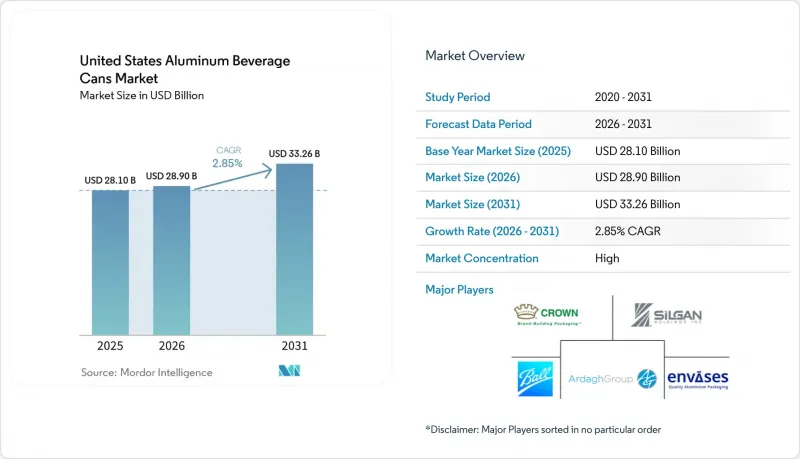
Mordor Intelligence에 의하면, 2026년 미국 알루미늄 음료 캔 시장 규모는 289억 달러로 추정되고, 2025년 281억 달러에서 확대해, 2031년에는 332억 6,000만 달러에 이를 것으로 예측됩니다.
2026-2031년 연평균 성장률(CAGR)은 2.85%를 나타낼 전망입니다.
본 보고서는 유형별(2피스 드로우 앤 아이언(D 및 I), 3피스 용접), 음료 유형별(탄산 청량음료, 맥주, 향이 첨가된 주류/하드 셀처, 에너지 드링크 등), 캔 크기별(12온스 이하, 12-16온스, 16-24온스, 24온스 초과), 유통 채널별(직접 판매 및 간접 판매)로 분류되어 있습니다. 시장 전망은 금액(달러) 기준으로 제시되어 있습니다.
미국의 알루미늄 음료 캔 시장 동향 및 인사이트
무알코올 음료 제조업체 수요 증가
에너지 드링크 및 RTD(Ready-to-Drink) 커피 브랜드는 유통 기한 연장과 브랜드 차별화를 위해 알루미늄 용기를 선호하고 있습니다. 레드불(Red Bull)사의 피닉스 복합 시설에서는 캔 제조와 음료 충진을 통합한 ‘스루 더 월(Through the Wall)’ 방식을 채택하고 있으며, 이를 통해 물류 비용을 절감하는 동시에 자사 고유의 250ml 규격을 보호하고 있습니다. 전국 소매업체들에 따르면, 알루미늄 용기는 진열 가격을 6-8% 인상시키는 효과가 있어, 이를 통해 기능성 음료 제조업체들은 치열한 경쟁 속에서도 이익률을 유지할 수 있게 되었습니다. RTD(즉석 음용) 차 제조업체들도 마찬가지로 알루미늄의 차광성을 활용함으로써 PET에 비해 콜드체인 비용을 25% 절감하고 있습니다. 이러한 용기의 장점은 2027년까지의 압연 강판 계약을 확정하는 확고한 구매 약속으로 이어지고 있습니다. 수요가 에너지 드링크에서 스포츠 영양 음료로 확대됨에 따라, 소규모 충전 업체들은 캔 생산량이 연간 5% 더 증가할 것으로 전망하고 있습니다.
크래프트 맥주와 하드 셀처 신제품 출시 급증
하드 셀처의 세련된 12온스 패키지는 2024년에 여러 브랜드가 향이 첨가된 알코올 음료 판매에서 두 자릿수 시장 점유율을 달성함에 따라 패키징의 표준이 되었습니다. 한때 병에 의존하던 수제 맥주 양조장들은 볼(Ball)과 같은 대형 가공업체들이 소량 그래픽 인쇄 및 얇은 재질을 제공하기 시작함에 따라 캔으로의 전환을 추진했습니다. 그러나 2024년에는 계약 물량이 모두 배정되면서 현물 구매자들은 최대 60%의 할증 가격을 지불해야 하는 상황이 발생했고, 많은 소규모 양조장들은 유통업체가 관리하는 재고 완충분을 확보할 수밖에 없게 되었습니다. 생산 능력 확충이 진행됨에 따라 가격 차이는 점차 줄어들고 있지만, 소비자들이 캔을 ‘신선도’나 ‘재활용성’과 연관 짓는 경향이 있어 세련된 16온스 포맷이 신제품 출시에서 여전히 주류를 이루고 있습니다. 알코올이 함유된 스파클링 티와 증류주 기반의 RTD(즉석 음료)가 하드 셀처의 마케팅 전략을 모방하고 있기 때문에 이러한 추세는 앞으로도 지속될 것으로 보입니다.
PET 경량화 및 테더드 캡 규제 대응
경쟁하는 PET 병 공급업체들은 2024년에 단위당 수지 사용량을 최대 10% 줄여, 캔과의 납품 비용 격차를 좁혔습니다. 유럽에서 테더 캡의 의무화를 계기로, 전 세계 음료 다국적 기업들이 지역에 관계없이 채택 가능한 범용 캡 시스템 개발을 추진하고 있으며, 소비자의 수용이 확대되면 캔의 판매량에 위협이 될 가능성이 있습니다. 주 차원의 확대된 생산자 책임(EPR) 법에 따라 모든 포장재에 추가적인 규정 준수 비용이 발생하게 되지만, 알루미늄의 30일 평균 재활용 주기는 여전히 우위를 점하고 있습니다. PET의 부상에 대응하기 위해 캔 제조업체들은 더 얇은 두께에 대한 테스트를 진행하고 있으며, 무게를 늘리지 않으면서도 매장에서 브랜드의 임팩트를 유지할 수 있는 인쇄 가능한 엠보싱 가공을 모색하고 있습니다.
부문 분석
2025년, 미국의 알루미늄 음료 캔 시장에서 2피스 방식의 드로우 앤 아이언(D&I) 캔은 시장 점유율의 88.35%를 차지했으며, 성능 향상으로 인해 이 부문은 2031년까지 연평균 성장률(CAGR) 3.58%로 확대될 것으로 예측됩니다. 볼(Ball)사의 ‘STARcan’ 시리즈는 기존의 D&I 설계에 비해 이미 최대 8%의 경량화를 실현하여, 금속 가격 급등에 따라 이익률 향상에 기여하고 있습니다. 바닥부의 압축 및 합금 개량을 통한 단계적인 경량화로, 고속 충전에 필요한 상부 하중 강도를 유지하면서도 재료 소비량을 줄이고 있습니다. 현재, 내장된 비전 시스템이 성형된 모든 쉘을 검사하여 불량률을 100만 개당 50개 미만으로 억제함으로써 스크랩을 최소화하고 있습니다.
3피스 용접 캔은 독특한 형태를 선호하는 특수 음료용 틈새 시장으로 남아 있지만, FDA의 PFAS 단계적 폐지 조치로 인해 코팅 재설계가 시급해지면서 그 쇠퇴가 가속화될 가능성이 있습니다. 용접식 캔의 생산 사이클 시간은 고속 D&I 라인에 비해 여전히 약 30% 더 느려, 대량 생산하는 음료 제조업체들이 이를 채택하는 데 걸림돌이 되고 있습니다. 그렇지만 일부 수제 음료 제조업체는 복고풍 브랜딩 효과를 노리고 3피스 캔을 선택하고 있으며, 개발 중인 항공우주 등급 코팅을 통해 산성 주스 블렌드의 유통 기한이 연장될 가능성이 있습니다. 그러나 D&I 프레스에 필요한 설비 투자는 여전히 소규모 충전 업체들에게 장벽이 되고 있어, 용접식 캔 수요는 제한된 분야에 머물러 있습니다.
하드 셀처 제품군의 확장을 필두로 한 향이 첨가된 알코올 음료는 연평균 성장률(CAGR) 3.95%를 나타낼 것으로 예측되며, 2031년까지 주력 상품인 맥주의 판매량을 계속 앞지를 전망입니다. 세련된 12온스 패키지는 소매점에서 시각적 차별화를 강력하게 부각시키는 동시에, 소량 섭취를 선호하는 칼로리를 신경 쓰는 소비자의 요구도 충족시키고 있습니다. 탄산 청량음료는 폭넓은 소비자 기반을 유지하고 있지만, 그 성장률은 에너지, 면역력 향상, 수분 보충 등의 효과를 내세우는 기능성 음료 카테고리에는 미치지 못하는 상황입니다.
RTD(즉석 음용) 커피와 홍차는 알루미늄의 산소 및 빛 차단성을 활용하여, 과거에는 비용이 많이 드는 냉장 운송이 필요했던 제품을 상온에서 운송할 수 있게 해줍니다. 니트로 커피의 성장에 따라, 가압식 알루미늄 용기는 안정적인 크레마를 만들어내며, 독립 로스터와 지역 캔 제조업체간의 제휴를 촉진하고 있습니다. 에너지 드링크는 16온스 용량으로 판매량 증가세를 유지하고 있으며, 무광 마감이나 질감 마감으로 강렬한 인상을 주는 브랜딩에서 알루미늄의 역할을 확고히 하고 있습니다. 캔 내막 화학 기술의 혁신으로 인해 낮은 pH의 감귤류 혼합물도 처리할 수 있게 되어, 캔에 담긴 주스 칵테일의 가능성이 넓어지고 있습니다.
기타 혜택 :
- 엑셀 형식 시장 예측(ME) 시트
- 3개월간의 애널리스트 지원
자주 묻는 질문
목차
제1장 서론
제2장 조사 방법
제3장 주요 요약
제4장 시장 구도
제5장 시장 규모 및 성장 예측
제6장 경쟁 구도
제7장 시장 기회 및 향후 전망
AJY 26.09.15According to Mordor Intelligence, the United States aluminum beverage cans market size in 2026 is estimated at USD 28.9 billion, growing from 2025 value of USD 28.10 billion with 2031 projections showing USD 33.26 billion, growing at 2.85% CAGR over 2026-2031.
This report is Segmented by Type (Two-Piece Draw-And-Iron D and I, and Three-Piece Welded), Beverage Types (Carbonated Soft Drinks, Beer, Flavoured Alcoholic Drinks/Hard Seltzer, Energy Drinks, and More), Can Size (<=12 Oz, 12-16 Oz, 16-24 Oz, >24 Oz), Distribution Channel (Direct Sales, and Indirect Sales). The Market Forecasts are Provided in Terms of Value (USD).
United States Aluminum Beverage Cans Market Trends and Insights
Growing Demand from Non-Alcoholic Beverage Producers
Energy drink and ready-to-drink coffee brands favor aluminum formats to boost shelf life and brand differentiation. Red Bull's Phoenix complex runs a through-the-wall setup that merges can making with beverage filling, trimming logistics costs, and protecting its proprietary 250 ml format. National retailers report that aluminum containers lift premium shelf pricing by 6-8%, allowing functional beverage makers to maintain margins despite stiff competition. RTD tea producers similarly leverage aluminum's light barrier to save 25% in cold-chain expenses compared with PET. These format advantages are translating into firm purchase commitments that lock in rolled sheet contracts through 2027. As demand widens beyond energy drinks into sports nutrition beverages, small fillers expect can volumes to rise another 5% annually.
Surge in Craft Beer and Hard Seltzer Launches
Hard seltzer's sleek 12 oz profile became a packaging standard after multiple brands captured double-digit share in flavored alcohol sales during 2024. Craft breweries that once relied on bottles migrated to cans as large converters like Ball offered short-run graphics and lighter gauge material. However, spot buyers paid up to 60% premiums in 2024 when contract volumes were fully allocated, forcing many small breweries to secure distributor-managed inventory buffers. With capacity additions coming online, price gaps are narrowing, yet sleek and 16 oz formats continue to dominate new product launches as consumers associate cans with freshness and recyclability. The trend is likely to persist as alcoholic sparkling teas and spirit-based RTDs replicate hard seltzer's marketing playbook.
PET Lightweighting and Tethered-Cap Compliance
Competing PET bottle suppliers trimmed resin by up to 10% per unit in 2024, narrowing the delivered-cost gap with cans. European tethered-cap mandates inspired a pipeline of universal lid systems that global beverage multinationals could adopt across regions, threatening can volumes if consumer acceptance grows. State-level extended producer responsibility legislation will add further compliance costs to all packaging materials, though aluminum's 30-day average recycling loop remains an advantage. To counter PET's advances, can makers are testing even thinner gauges and exploring printable embossing to maintain brand shelf impact without extra weight.
Other drivers and restraints analyzed in the detailed report include:
- Corporate ESG Targets Favoring Infinitely Recyclable Packaging
- Aluminum Smelter Capacity Expansions in North America
- Domestic Aluminum Price Volatility from Section 232 Tariffs
For complete list of drivers and restraints, kindly check the Table Of Contents.
Segment Analysis
Two-piece draw-and-iron cans accounted for 88.35% of the United States aluminum beverage cans market share in 2025, and performance gains should lift this segment at a 3.58% CAGR to 2031. Ball's STARcan family already delivers up to 8% weight savings versus legacy D and I designs, reinforcing margins as metal premiums rise. Incremental lightweighting through base compression and alloy refinements reduces material consumption while preserving the top-load strength required for high-speed filling. Embedded vision systems now inspect every formed shell, cutting defect rates below 50 parts per million and minimizing scrap.
Three-piece welded cans remain a niche for specialty beverages that favor distinctive shapes, yet the FDA's PFAS phase-out will drive coating redesign and could accelerate their decline. Production cycle times for welded formats remain roughly 30% slower than high-speed D and I lines, discouraging volume beverages from adopting them. Nonetheless, select craft producers opt for three-piece to create retro branding cues, and aerospace-grade coatings under development may extend shelf life for acidic juice blends. Capital requirements for D and I presses, however, still deter small fillers, leaving limited pockets of demand for welded cans.
Flavored alcoholic beverages, led by hard seltzer line extensions, are forecast to post a 3.95% CAGR and will continue outpacing core beer volumes through 2031. Sleek 12-oz formats deliver strong visual differentiation at retail while catering to calorie-conscious consumers who prefer smaller serving sizes. Carbonated soft drinks retain a broad consumption base, but growth trails functional beverage categories that promise energy, immunity, or hydration benefits.
RTD coffee and tea exploit aluminum's barrier to oxygen and light, allowing ambient shipping for products that once required costly refrigeration. As nitro coffee grows, pressurized aluminum containers provide consistent crema, sparking partnerships between independent roasters and regional canners. Energy drinks sustain volume growth in 16 oz sizes, cementing aluminum's role in high-impact branding with matte and textured finishes. Innovations in can lining chemistry now tolerate low-pH citrus mixes, opening potential for canned juice cocktails.
Complete Report Scope:
- By Material Type
- Aluminium
- Steel
- By Can Structure
- Two-Piece
- Three-Piece
- Monobloc Aerosol
- By Capacity / Size
- <=12 oz
- 250-500 ml
- 500-1,000 ml
- >1,000 ml
- By Manufacturing Process
- Drawn and Ironed (DandI)
- Drawn and Redrawn (DRD)
- Impact Extrusion
- By End-User Industry
- Food
- Beverage
- Personal Care and Cosmetics
- Pharmaceuticals
- Paints and Industrial Chemicals
- Automotive Fluids and Lubricants
- Other End-User Industry
List of Companies Covered in this Report:
- Crown Holdings, Inc.
- Ball Corporation
- Silgan Holdings Inc.
- Mauser Packaging Solutions Holding Company
- Ardagh Metal Packaging S.A.
- DS Containers, LLC
- CCL Industries Inc. (CCL Container division)
- Independent Can Company
- Tecnocap S.p.A.
- CAN-PACK S.A.
- Allstate Can Corporation
- Envases Universales Group
- Trivium Packaging B.V.
- Greif, Inc.
- Toyo Seikan Group Holdings, Ltd.
- Montebello Packaging Inc.
- Berlin Packaging LLC
- TricorBraun Inc.
- Crown Cork and Seal USA, Inc.
- Metal Container Corporation
Additional Benefits:
- The market estimate (ME) sheet in Excel format
- 3 months of analyst support
TABLE OF CONTENTS
1 INTRODUCTION
- 1.1 Study Assumptions and Market Definition
- 1.2 Scope of the Study
2 RESEARCH METHODOLOGY
3 EXECUTIVE SUMMARY
4 MARKET LANDSCAPE
- 4.1 Market Drivers
- 4.1.1 High recyclability rates of metal packaging
- 4.1.2 Convenience and extended shelf life offered by canned foods
- 4.1.3 Craft-beer and RTD beverage boom boosting can demand
- 4.1.4 Regulatory push for sustainable, single-material packaging
- 4.1.5 Lightweighting innovations lowering per-unit can cost
- 4.1.6 Brand-owner circular-packaging pledges securing can volumes
- 4.2 Market Restraints
- 4.2.1 Proliferation of alternate packaging formats (PET, pouches)
- 4.2.2 Volatility in aluminum and steel input prices
- 4.2.3 BPA-substitute migration concerns affecting consumer trust
- 4.2.4 Domestic can-sheet capacity constraints creating supply risk
- 4.3 Industry Value Chain Analysis
- 4.4 Porter's Five Forces Analysis
- 4.4.1 Bargaining Power of Suppliers
- 4.4.2 Bargaining Power of Buyers
- 4.4.3 Threat of New Entrants
- 4.4.4 Threat of Substitutes
- 4.4.5 Intensity of Competitive Rivalry
- 4.5 The Impact of Macroeconomic Factors on the Market
- 4.6 Regulatory Landscape
- 4.7 Technological Outlook
5 MARKET SIZE AND GROWTH FORECASTS (VALUE)
- 5.1 By Material Type
- 5.1.1 Aluminium
- 5.1.2 Steel
- 5.2 By Can Structure
- 5.2.1 Two-Piece
- 5.2.2 Three-Piece
- 5.2.3 Monobloc Aerosol
- 5.3 By Capacity / Size
- 5.3.1 <=12 oz
- 5.3.2 250-500 ml
- 5.3.3 500-1,000 ml
- 5.3.4 >1,000 ml
- 5.4 By Manufacturing Process
- 5.4.1 Drawn and Ironed (DandI)
- 5.4.2 Drawn and Redrawn (DRD)
- 5.4.3 Impact Extrusion
- 5.5 By End-User Industry
- 5.5.1 Food
- 5.5.2 Beverage
- 5.5.3 Personal Care and Cosmetics
- 5.5.4 Pharmaceuticals
- 5.5.5 Paints and Industrial Chemicals
- 5.5.6 Automotive Fluids and Lubricants
- 5.5.7 Other End-User Industry
6 COMPETITIVE LANDSCAPE
- 6.1 Market Concentration
- 6.2 Strategic Moves
- 6.3 Market Share Analysis
- 6.4 Company Profiles (includes Global-level Overview, Market-level Overview, Core Segments, Financials as available, Strategic Information, Market Rank/Share, Products and Services, and Recent Developments)
- 6.4.1 Crown Holdings, Inc.
- 6.4.2 Ball Corporation
- 6.4.3 Silgan Holdings Inc.
- 6.4.4 Mauser Packaging Solutions Holding Company
- 6.4.5 Ardagh Metal Packaging S.A.
- 6.4.6 DS Containers, LLC
- 6.4.7 CCL Industries Inc. (CCL Container division)
- 6.4.8 Independent Can Company
- 6.4.9 Tecnocap S.p.A.
- 6.4.10 CAN-PACK S.A.
- 6.4.11 Allstate Can Corporation
- 6.4.12 Envases Universales Group
- 6.4.13 Trivium Packaging B.V.
- 6.4.14 Greif, Inc.
- 6.4.15 Toyo Seikan Group Holdings, Ltd.
- 6.4.16 Montebello Packaging Inc.
- 6.4.17 Berlin Packaging LLC
- 6.4.18 TricorBraun Inc.
- 6.4.19 Crown Cork and Seal USA, Inc.
- 6.4.20 Metal Container Corporation
7 MARKET OPPORTUNITIES AND FUTURE OUTLOOK
- 7.1 White-space and Unmet-need Assessment