
|
시장보고서
상품코드
2124678
중동의 항공기 MRO 시장 : 시장 점유율 분석, 업계 동향 및 통계, 성장 예측(2026-2031년)Middle East Aircraft MRO - Market Share Analysis, Industry Trends & Statistics, Growth Forecasts (2026 - 2031) |
||||||
 Mordor Intelligence
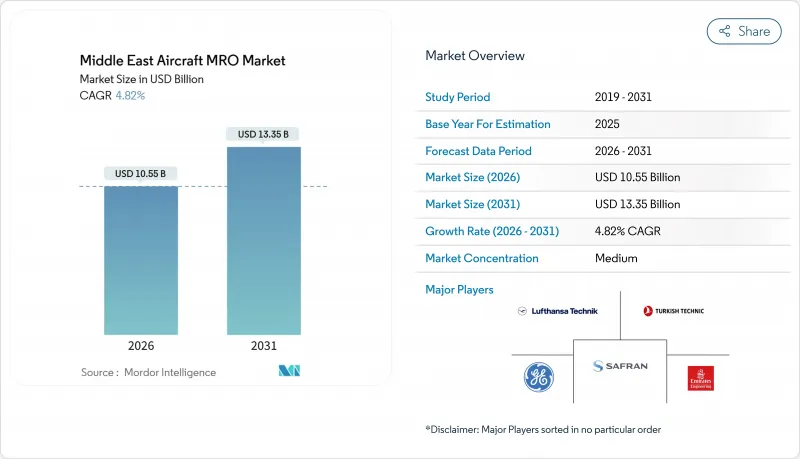
Mordor Intelligence에 의하면, 중동의 항공기 MRO 시장 규모는 2026년에 105억 5,000만 달러로 추정되고, 2031년까지 133억 5,000만 달러에 이를 것으로 예측되며, 예측 기간 중 연평균 복합 성장률(CAGR)은 4.82%로 성장이 전망됩니다.
본 보고서는 MRO 유형별(기체 중정비, 엔진, 부품 등), 항공기 등급별(고정익기 및 회전익기), 용도별(민간 여객기, 민간 화물기/화물 수송기 등), 서비스 제공업체별(항공사 산하 MRO 등), 지역별(사우디아라비아, 아랍에미리트, 카타르, 쿠웨이트 등)로 분류되어 있습니다. 시장 예측은 금액(달러) 기준으로 제시되어 있습니다.
중동의 항공기 MRO 시장 동향 및 인사이트
GCC 국가들의 국영 항공사 기단 확충 계획이 중정비 수요를 끌어올리고 있습니다.
사우디아는 2030년까지 200대 규모의 기단을 구축하는 것을 목표로, 2024년에 A320 계열 항공기 105대, 2025년에 B787-9 기종 39대를 발주했습니다. 이러한 기체 인도에 따라 중정비 주기가 단축되어, 중동 항공기 MRO 시장에는 연간 약 120건의 추가 기체 점검 수요가 발생할 것으로 전망됩니다. 에미레이트 항공이 2024년에 사상 최대 규모인 B777-8 화물기 90대를 발주함에 따라, 2027년 두바이 월드 센트럴에서 가동을 시작할 예정인 9억 5,000만 달러 규모의 복합 시설에 와이드바디기 전용 정비 베이 2기가 필요하게 됩니다. 카타르항공은 2025년에 A350-1000 및 B777-9의 C 점검 주기를 18개월에서 14개월로 단축하고, 튀르키예시 테크닉(Turkish Technic) 및 조람코(Joramco)에 오버플로 계약을 부여함으로써, 지역 내 제3자 업체의 비즈니스 기회를 확대했습니다. 에티하드 엔지니어링의 ‘알 마사’ 프로그램은 새로 인수한 아부다비 항공의 라인 스테이션을 통합함으로써 와이드바디 항공기 처리 능력을 총 25% 증가시키고, 수익을 두 배로 늘리는 것을 목표로 하고 있습니다.
사우디아라비아와 UAE 공항의 민영화가 제3자 MRO 업체에 비즈니스 기회를 창출하고 있습니다.
사우디아라비아 민간항공총국의 정책 틀에 따라 독립형 격납고에 대한 장기 토지 임대가 허용됨에 따라, 사우디아 테크닉(Saudia Technic)의 오랜 독점 체제에 종지부가 찍혔으며, 2030년까지 중정비 작업의 약 15%가 항공사 외 정비 공장으로 재분배될 전망입니다. 공공투자기금(PIF)이 제다의 MRO 빌리지에 15억 달러를 투자함에 따라, 제3자 사업자에게 10개의 새로운 정비 베이가 제공될 예정이며, 2027년에 완공될 전망입니다. UAE에서는 무바달라 산하의 사나드사가 엔진 정비 계약 확대에 따라 아시아나항공 및 유럽의 리스 회사와 계약을 체결한 결과, 2024년 상반기에 23억 AED(6억 2,628만 달러)의 매출을 기록했습니다. 두바이 공항 공사는 두바이 사우스에 위치한 120만 제곱피트 규모의 부지를 IER MRO 인더스트리즈에 배정했습니다. 이 회사가 건설할 13억 달러 규모의 시설에는 2027년까지 LEAP 엔진용 테스트 셀 2기가 설치될 전망입니다.
숙련 기술자 부족으로 두바이와 리야드에서 인건비 상승
2025년, 두바이의 EASA B1/B2 정비사 결원율은 22%에 달했고, 월급은 7,000달러를 넘어섰으며, 독립 정비 공장의 이익률은 200베이시스포인트 압박을 받았습니다. (3) 에티하드 엔지니어링이 GE 및 루프트한자 테크닉과 공동으로 운영하는 3자 간 아카데미는 2027년에 첫 200명의 아랍에미리트(UAE)인 기술자를 배출할 예정이지만, 그때까지는 단기적인 인력 공급 공백이 발생할 것입니다. 사우디아라비아의 연수 프로그램에는 연간 150명의 학생이 입학하고 있지만, 2년 이내에 GCAA(사우디아라비아 민간항공청) 면허를 취득할 수 있는 비율은 40% 미만에 그치고 있어, 이것이 임금 상승에 박차를 가하고 있습니다. UAE의 군용 회전익기 전문 기술자의 월급은 7,400달러에 달하며, 이는 해당 전문 지식의 희소성을 반영하고 있습니다.
부문 분석
항공기 운항 중단 기간을 단축하기 위해 운항사가 모듈식 정비 전략을 채택함에 따라, 부품 정비는 2031년까지 연평균 성장률(CAGR) 5.38%로 확대되어 MRO 유형 중 가장 빠른 성장률을 보일 전망입니다. 중동 항공기 MRO 시장에서 2025년 매출의 46.73%를 엔진 정비가 차지한 것으로 평가되었으며, 이러한 점유율은 1회 정비 입고당 800만 달러를 초과하기도 하는 LEAP 및 GTF 엔진의 오버홀에 기인합니다. OEM의 재인도 주기가 길어짐에 따라 추가 지출은 랜딩 기어, 항공 전자 장비, APU의 정밀 정비로 이동하고 있습니다. 이 분야에서는 에티하드 엔지니어링과 루프트한자 테크닉이 체결한 5년 간의 부품 지원 계약을 통해 연간 1억 2,000만 달러의 수익이 창출되고 있습니다. 에미레이트 항공의 항공기 공급 센터는 12,000개의 라인 교체 가능 유닛(LRU)을 재고로 보유하고 있으며, 24시간 이내의 턴어라운드를 실현하여 카타르 항공 및 튀르키예 항공으로부터 계약을 수주하고 있습니다.
항공기 중정비 및 라인 정비를 합치면 2025년 지출의 35%를 차지했으며, 와이드바디 항공기 작업은 3만-5만 노동 시간이 소요되는 프로젝트를 처리하는 이스탄불, 제다, 두바이의 격납고에 집중되어 있습니다. 여객기를 화물기(P2F)로 개조하거나 객실을 개조하는 작업은 급성장하는 틈새 시장을 형성하고 있습니다. 이스라엘 에어로스페이스 인더스트리즈는 2024년 중동 항공사들을 대상으로 18건의 P2F 프로젝트를 완료하여, 각 프로젝트당 800만-1,200만 달러의 수익을 올렸습니다. LCC의 정기 정비 아웃소싱으로 인해 연간 2억 달러가 독립 정비 거점으로 재분배되면서, 중동 항공기 MRO 시장의 구조적 변화가 가속화되고 있습니다.
2025년 수익의 91.14%는 고정익 항공기가 차지했으나, 사우디아라비아와 UAE가 군용 및 해양 에너지용 헬리콥터 기단을 확대하고 있어 회전익 항공기 부문은 2031년까지 연평균 성장률(CAGR) 6.65%를 나타낼 것으로 예측됩니다. 사우디아라비아의 60대 UH-60M 블랙호크 계약에는 현지 정비 공장에서의 10년간 유지보수(4억 달러 상당)가 포함되어 있는 반면,아부다비 항공(Abu Dhabi Aviation)은 AW139, S-92, H225 기단을 정비하는 회전익기 전용 센터를 운영하고 있습니다. LCC(저비용 항공사)의 성장에 힘입어 고정익 항공기 지출에서는 나로우드바디 기종이 계속해서 주류를 차지하고 있지만, 와이드바디 기종의 대형 정비 작업은 2025년 1분기에 22대를 수용한 튀르키예 테크닉의 이스탄불 거점에 집중되어 있습니다.
지역 제트기 및 터보프롭기의 지출 비율은 5% 미만에 그치고 있는데, 이는 GCC 지역 내 노선에서 더 대형의 협폭기로의 교체가 진행되고 있음을 반영합니다. 회전익 항공기 수요는 특수 공구나 OEM과의 제휴에 의존하고 있기 때문에 서비스 제공업체의 진입이 제한되어, 극소수의 정비 공장에 시장 점유율이 집중되어 있습니다. 이로 인해 중동 항공기 MRO 시장에서는 이 틈새 분야에서 더 높은 이익률을 기대할 수 있는 상황입니다.
기타 혜택 :
- 엑셀 형식 시장 예측(ME) 시트
- 3개월간의 애널리스트 지원
자주 묻는 질문
목차
제1장 서론
제2장 조사 방법
제3장 주요 요약
제4장 시장 구도
제5장 시장 규모 및 성장 예측
제6장 경쟁 구도
제7장 시장 기회 및 향후 전망
AJY 26.09.15According to Mordor Intelligence, the Middle East aircraft MRO market size stands at USD 10.55 billion in 2026 and is projected to reach USD 13.35 billion by 2031, reflecting a 4.82% CAGR over the forecast period.
This report is Segmented by MRO Type (Airframe Heavy Maintenance, Engine, Components, and More), Aircraft Class (Fixed Wing and Rotary Wing), Application (Commercial Passenger, Commercial Cargo/Freighter, and More), Service Provider (Airline-Affiliated MRO, and More), and Geography (Saudi Arabia, United Arab Emirates, Qatar, Kuwait, and More). The Market Forecasts are Provided in Terms of Value (USD).
Middle East Aircraft MRO Market Trends and Insights
National-Carrier Fleet Expansion Programs in GCC Boosting Heavy-Check Demand
Saudia ordered 105 A320-family aircraft in 2024 and 39 B787-9s in 2025, aiming for a 200-unit fleet by 2030; these deliveries compress heavy-check intervals and inject an estimated 120 additional airframe checks per year into the Middle East aircraft MRO market. Emirates' record order for 90 B777-8 freighters in 2024 will require two dedicated widebody bays at a USD 950 million complex coming online at Dubai World Central in 2027. Qatar Airways adjusted the C-check frequency for its A350-1000s and B777-9s from 18 months to 14 months in 2025 and awarded overflow contracts to Turkish Technic and Joramco, thereby expanding regional third-party opportunities. Etihad Engineering's Al Massar program aims to double revenue by integrating newly acquired Abu Dhabi Aviation line stations, which collectively increase widebody throughput by 25%.
Privatization of Saudi and UAE Airports Creating Third-Party MRO Opportunities
Saudi Arabia's General Authority of Civil Aviation framework now permits long-term land leases for independent hangars, ending the historic monopoly of Saudia Technic and reallocating roughly 15% of heavy-check volume toward non-airline shops by 2030. The Public Investment Fund's USD 1.5 billion infusion into Jeddah's MRO Village extends 10 new bays to third-party operators scheduled for completion in 2027. In the UAE, Mubadala's Sanad logged AED 2.3 billion (USD 626.28 million) revenue in H1 2024 after onboarding Asiana Airlines and European lessors under an expanded engine-maintenance contract. Dubai Airports Authority has allocated 1.2 million square feet at Dubai South to IER MRO Industries, whose USD 1.3 billion facility is expected to feature twin LEAP-capable test cells by 2027.
Skilled-Technician Shortage Elevating Labor Costs in Dubai and Riyadh
Vacancy rates for EASA B1/B2 mechanics reached 22% in Dubai in 2025, pushing monthly wages above USD 7,000 and squeezing independent shop margins by 200 basis points.[3] Etihad Engineering's tri-party academy with GE and Lufthansa Technik will graduate its first 200 Emirati technicians in 2027, leaving a near-term supply gap. Saudi training programs enroll 150 students annually, yet fewer than 40% secure GCAA licenses within two years, compounding wage inflation. Military rotary-wing specialists in the UAE command a monthly salary of USD 7,400, reflecting the scarcity of their expertise.
Other drivers and restraints analyzed in the detailed report include:
- Ramp-Up of LEAP and GTF Engine Fleets Necessitating New Engine Shops
- Digital Twin Adoption Reducing Turnaround Time and Increasing Shop-Visit Volume
- Prolonged Redelivery Delays at OEM Shops Limiting Aftermarket Share
For complete list of drivers and restraints, kindly check the Table Of Contents.
Segment Analysis
Component maintenance will grow at a 5.38% CAGR through 2031, the fastest among MRO types, as operators adopt modular repair strategies to cut aircraft-on-ground durations. Engine work held 46.73% of 2025 revenue within the Middle East aircraft MRO market, a share tied to LEAP and GTF overhauls that can exceed USD 8 million per shop visit. Prolonged OEM redelivery cycles shift incremental spend toward landing gear, avionics, and APU overhaul, where Etihad Engineering's five-year component-support deal with Lufthansa Technik generates USD 120 million in annual revenue. Emirates' Aviation Supply Centre stocks 12,000 line-replaceable units (LRUs) and offers 24-hour turnaround, attracting contracts from Qatar Airways and Turkish Airlines.
Airframe heavy checks and line maintenance together account for 35% of the 2025 spend, with widebody work concentrated in Istanbul, Jeddah, and Dubai hangars that handle 30,000 to 50,000 labor-hour events. Passenger-to-freighter (P2F) conversions and cabin retrofits form a fast-growing niche; Israel Aerospace Industries completed 18 P2F projects in 2024 for Middle East carriers, each adding USD 8 million to USD 12 million in revenue. Line-maintenance outsourcing by LCCs redistributes USD 200 million annually toward independent stations, accelerating the shift in the Middle East aircraft MRO market.
Fixed-wing platforms controlled 91.14% of 2025 revenue, while rotary-wing work is projected to grow at a 6.65% CAGR through 2031, as Saudi Arabia and the UAE expand their military and offshore-energy helicopter fleets. Saudi contracts for 60 UH-60M Black Hawks include 10 years of sustainment worth USD 400 million to local shops, while Abu Dhabi Aviation operates a dedicated rotary-wing center servicing AW139, S-92, and H225 fleets. Narrowbody jets continue to dominate fixed-wing spending, driven by LCC growth, whereas widebody heavy checks cluster at Turkish Technic's Istanbul base, which inducted 22 units in Q1 2025.
Regional jets and turboprops account for less than 5% of the spend, reflecting retirements in favor of larger narrowbody aircraft on intra-GCC routes. Rotary-wing demand relies on specialized tooling and OEM partnerships, limiting provider participation and concentrating share among a handful of shops, which positions the Middle East aircraft MRO market for higher margins in this niche.
Complete Report Scope:
- By MRO Type
- Airframe Heavy Maintenance
- Engine
- Components
- Line and Routine Checks
- Modifications and Upgrades
- By Aircraft Class
- Fixed Wing
- Rotary Wing
- By Application
- Commercial Passenger
- Commercial Cargo/Freighter
- Military Aviation
- General Aviation
- By Service Provider
- Airline-affiliated MRO
- Independent Third-party MRO
- OEM-Captive MRO
- Military Depots
- By Geography
- Saudi Arabia
- United Arab Emirates
- Qatar
- Kuwait
- Bahrain
- Oman
- Jordan
- Turkey
- Egypt
List of Companies Covered in this Report:
- Safran S.A.
- General Electric Company
- Rolls-Royce plc
- RTX Corporation
- Lufthansa Technik AG
- Turkish Technic Inc.
- Saudia Technic
- Etihad Airways Engineering L.L.C
- Emirates Engineering (Emirates Group)
- FL Technics (Avia Solutions Group)
- ExecuJet MRO Services (Pty) Ltd.
- Joramco
- Sanad (Mubadala Company)
- Honeywell International Inc.
- Textron Inc.
- Jordan Aeronautical-systems Company (JAC)
- Wallan Aviation
- KH Aviation
- Mukamalah Aviation Company limited (Aloula Aviation)
- AeroGulf Services
Additional Benefits:
- The market estimate (ME) sheet in Excel format
- 3 months of analyst support
TABLE OF CONTENTS
1 INTRODUCTION
- 1.1 Study Assumptions and Market Definition
- 1.2 Scope of the Study
2 RESEARCH METHODOLOGY
3 EXECUTIVE SUMMARY
4 MARKET LANDSCAPE
- 4.1 Market Overview
- 4.2 Market Drivers
- 4.2.1 National-carrier fleet expansion programs in GCC boosting heavy-check demand
- 4.2.2 Privatization of Saudi and UAE airports creating third-party MRO opportunities
- 4.2.3 Ramp-up of LEAP and GTF engine fleets necessitating new engine shops
- 4.2.4 Digital twin adoption reducing turnaround time and increasing shop-visit volume
- 4.2.5 Emergence of LCCs driving line-maintenance outsourcing
- 4.2.6 Military offset policies pushing OEMs to localize component repair
- 4.3 Market Restraints
- 4.3.1 Skilled-technician shortage elevating labor costs in Dubai and Riyadh
- 4.3.2 Prolonged redelivery delays at OEM shops limiting aftermarket share
- 4.3.3 Political instability in levant impacting widebody utilization rates
- 4.3.4 High capex for engine test cells deterring independent entrants
- 4.4 Value Chain Analysis
- 4.5 Regulatory Outlook
- 4.6 Technological Outlook
- 4.7 Porter's Five Forces Analysis
- 4.7.1 Bargaining Power of Suppliers
- 4.7.2 Bargaining Power of Buyers/Consumers
- 4.7.3 Threat of New Entrants
- 4.7.4 Threat of Substitute Products
- 4.7.5 Competitive Rivalry
5 MARKET SIZE AND GROWTH FORECASTS (VALUE)
- 5.1 By MRO Type
- 5.1.1 Airframe Heavy Maintenance
- 5.1.2 Engine
- 5.1.3 Components
- 5.1.4 Line and Routine Checks
- 5.1.5 Modifications and Upgrades
- 5.2 By Aircraft Class
- 5.2.1 Fixed Wing
- 5.2.2 Rotary Wing
- 5.3 By Application
- 5.3.1 Commercial Passenger
- 5.3.2 Commercial Cargo/Freighter
- 5.3.3 Military Aviation
- 5.3.4 General Aviation
- 5.4 By Service Provider
- 5.4.1 Airline-affiliated MRO
- 5.4.2 Independent Third-party MRO
- 5.4.3 OEM-Captive MRO
- 5.4.4 Military Depots
- 5.5 By Geography
- 5.5.1 Saudi Arabia
- 5.5.2 United Arab Emirates
- 5.5.3 Qatar
- 5.5.4 Kuwait
- 5.5.5 Bahrain
- 5.5.6 Oman
- 5.5.7 Jordan
- 5.5.8 Turkey
- 5.5.9 Egypt
6 COMPETITIVE LANDSCAPE
- 6.1 Market Concentration
- 6.2 Strategic Moves
- 6.3 Market Share Analysis
- 6.4 Company Profiles (includes Global level Overview, Market level overview, Core Segments, Financials as available, Strategic Information, Market Rank/Share for key companies, Products and Services, and Recent Developments)
- 6.4.1 Safran S.A.
- 6.4.2 General Electric Company
- 6.4.3 Rolls-Royce plc
- 6.4.4 RTX Corporation
- 6.4.5 Lufthansa Technik AG
- 6.4.6 Turkish Technic Inc.
- 6.4.7 Saudia Technic
- 6.4.8 Etihad Airways Engineering L.L.C
- 6.4.9 Emirates Engineering (Emirates Group)
- 6.4.10 FL Technics (Avia Solutions Group)
- 6.4.11 ExecuJet MRO Services (Pty) Ltd.
- 6.4.12 Joramco
- 6.4.13 Sanad (Mubadala Company)
- 6.4.14 Honeywell International Inc.
- 6.4.15 Textron Inc.
- 6.4.16 Jordan Aeronautical-systems Company (JAC)
- 6.4.17 Wallan Aviation
- 6.4.18 KH Aviation
- 6.4.19 Mukamalah Aviation Company limited (Aloula Aviation)
- 6.4.20 AeroGulf Services
7 MARKET OPPORTUNITIES AND FUTURE OUTLOOK
- 7.1 White-space and Unmet-need Assessment