|
시장보고서
상품코드
2124747
북미의 수축 필름 및 스트레치 필름 : 시장 점유율 분석, 업계 동향과 통계, 성장 예측(2026-2031년)North America Shrink And Stretch Film - Market Share Analysis, Industry Trends & Statistics, Growth Forecasts (2026 - 2031) |
||||||
 Mordor Intelligence
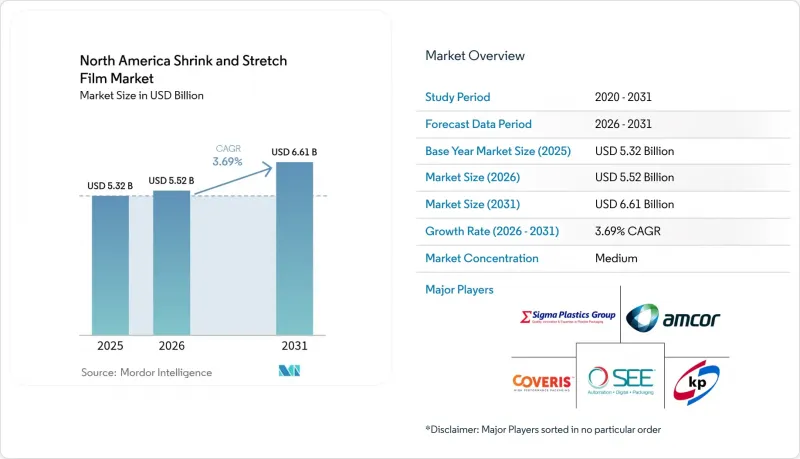
Mordor Intelligence에 의하면, 북미의 수축 필름 및 스트레치 필름 시장 규모는 2025년 53억 2,000만 달러에서 2026년에는 55억 2,000만 달러에 이르고, 2026-2031년 CAGR 3.69%로 성장을 지속하여 2031년에는 66억 1,000만 달러에 달할 것으로 예측됩니다.
본 보고서는 제품 유형(식품, 랩, 슬리브 라벨, 백 및 파우치), 소재(LDPE, LLDPE, PVC, PET 등),최종 이용 산업(식품 및 음료, 소비재, 의약품 및 헬스케어 등), 포장 용도(팔레트 유닛화, 번들링 및 멀티팩 등), 그리고 국가별로 분류되어 있습니다. 시장 예측은 금액(달러) 기준으로 제시되어 있습니다.
북미의 수축 필름 및 스트레치 필름 시장 동향과 인사이트
전자상거래 주문 처리 붐이 팔레트 랩 사용량을 끌어올리고 있다.
온라인 소매의 강력한 확장은 북미의 수축 필름 및 스트레치 필름 시장을 지속적으로 변화시키고 있으며, 풀필먼트 시설에서는 시간당 60개 이상의 팔레트에 대해 안정적인 성능을 발휘하는 기계용 스트레치 필름이 요구되고 있습니다. 아마존이 미국과 캐나다에 15곳의 새로운 센터를 건설할 계획이며, 월마트가 42억 달러를 투자해 물류 시설을 현대화하는 것은 SKU가 혼합된 팔레트 적재 시 자동 스트레치 후드가 스파이럴 랩보다 뛰어난 성능을 발휘하고 있음을 여실히 보여줍니다. 현장에서 7층 구성의 배합을 미세 조정할 수 있는 컨버터는 작업자가 필름 낭비와 가동 중단 시간을 줄일 수 있도록 지원함으로써 수주를 확보하고 있습니다. 적재물의 안정성에 대한 요구 사항 또한 바코드 스캔에 필요한 투명성을 유지하면서 내천자성을 갖춘 필름의 경쟁력을 높여주고 있습니다. 중서부 및 남서부 창고 회랑에 인접한 지역의 필름 공장은 리드 타임을 단축하고 운송비 할증료를 경감함으로써 경쟁력을 높이고 있습니다.
가공식품 및 냉동식품의 성장이 소매용 수축 필름 수요를 견인
편의식 수요의 가속화로 2024년 미국의 냉동식품 매출은 8.2% 증가했으며, 콜드체인의 온도 변동을 견딜 수 있는 소매용 수축 슬리브의 수주를 끌어올렸습니다. 음료 병입 업체들도 마찬가지로 FDA 지침을 충족하기 위해 위조 방지 밴드를 채택하고 있으며, 각 컨버터 업체들은 미싱선이 들어간 찢어내기 스트립이 장착된 다층 슬리브 개발을 추진하고 있습니다. 신제품 시장 출시 속도가 빨라지는 가운데, 라벨에는 워시오프 잉크의 채택이 요구되고 있습니다. 예를 들어, Klockner Pentaplast사의 ‘SmartCycle’ 슬리브는 PET 재활용 처리 중에도 라벨이 벗겨지지 않고 남아 있도록 설계되었습니다. 이러한 동향으로 인해 지속가능성에 대한 관심이 높아지는 와중에도 북미의 수축 필름 및 스트레치 필름 시장은 안정성을 유지하고 있습니다. 이는 재활용 가능한 배리어 구조가 유통 기한을 희생하지 않으면서도 소매업체의 요구 사항을 충족하게 되었기 때문입니다.
변동이 심한 폴리에틸렌 및 PVC 수지 가격
2024년, 원료 공급 부족과 운송 병목 현상을 배경으로 북미의 폴리에틸렌 현물 가격은 40%나 변동하여, 소폭의 이익으로 대량 판매를 추구하는 비즈니스 모델에 의존하는 컨버터의 이익률을 압박했습니다. 또한, PVC 수지 가격은 전년 대비 35% 급등하여 고투명 수축 슬리브의 경쟁력을 약화시키고 있습니다. 대규모 수직 통합 기업은 선물 계약을 통해 재고 위험을 헤지하고 있지만, 중소규모 변환 업체는 추가 비용을 신속하게 전가하지 못해 운전 자금 부족을 초래하고 있습니다. 이러한 예측 불가능한 원자재 가격 변동으로 인해 새로운 압출 라인에 대한 설비 투자가 주춤해지면서, 북미 수축·신축 필름 시장의 단기적인 확장에 제동이 걸리고 있습니다.
부문 분석
2025년, 스트레치 랩은 북미 수축·스트레치 필름 시장 점유율의 51.35%를 차지하며, 기존 창고에서 팔레트 적재물을 고정하는 용도로 확고히 자리 잡은 것으로 드러났습니다. 스트레치 랩과 관련된 북미 수축·스트레치 필름 시장 규모는 박막화와 자동화가 기초 수요를 뒷받침함에 따라 2031년까지 연평균 성장률(CAGR) 약 3.08%로 완만하게 확대될 것으로 예측됩니다. 한편, 로봇 팔레타이저에서는 균일한 장력과 필름의 통기성이 요구되기 때문에 스트레치 후드는 3.74%라는 더 높은 연평균 성장률(CAGR)을 기록하고 있습니다. 시그마 플라스틱 그룹이 2024년에 스탈워트사의 스트레치 필름 자산을 인수한 것은 공급 체계를 강화함과 동시에 대량 생산 SKU에 대한 전략적 집중을 시사합니다. 슬리브 라벨 및 백 부문은 지속가능성 측면에서 역풍에 직면하고 있지만, 위조 방지 기능과 재활용 가능한 PET를 지원하는 혁신 기술을 통해 일정한 활로를 찾고 있습니다.
도입 곡선에 따르면, 연간 팔레트 처리량이 30만 개를 초과하면 대량 취급 업체의 경우 푸드(Food)에 대한 설비 투자가 정당화된다는 것이 나타납니다. 푸드는 뛰어난 내천자성을 갖추고 있어 재포장 수고를 최소화하지만, 필름 단가가 높기 때문에 중소규모 화주들 사이에서의 보급은 제한적입니다. 슬리브 라벨 구매자들은 ‘병에서 병으로(Bottle-to-Bottle)’ PET 지침을 준수하는 워시오프 코팅을 점점 더 많이 지정하고 있으며, 이로 인해 컨버터들은 무용제 그라비아 잉크로 전환해야 하는 압박을 받고 있습니다. 주 정부의 과징금이 급등하는 가운데, 특수 육류 가공업체를 위한 퇴비화 가능한 셀룰로오스계 수축 백에 대한 관심이 높아지고 있어, 북미의 수축 필름 및 스트레치 필름 시장에 차별화된 새로운 길이 열리고 있습니다.
LLDPE는 높은 성장률과 인열 강도가 1톤 팔레트용 기계 감기에 적합하기 때문에 2025년에도 62.35%의 점유율을 유지했습니다. 그러나 Nova Chemicals사가 35% PCR LLDPE 블렌드에 대해 FDA의 식품 접촉 허가를 획득한 데 힘입어, 재활용 수지 및 바이오 수지는 3.99%의 연평균 성장률(CAGR)로 성장하고 있으며, 이는 소재 옵션 중 가장 빠른 속도입니다. 북미 수축·신축 필름 시장에서 PCR 등급이 차지하는 시장 규모는 여전히 작지만, 압출 성형 시 처리 능력 저하를 상쇄하는 프리미엄 가격 책정의 혜택을 누리고 있습니다.
PVC의 광학적 투명성은 곡면이 있는 음료 용기용 고수축 슬리브 라벨에서 여전히 중요성을 유지하고 있지만, 그 염소 함량은 규제 당국의 감시 대상이 되어 매립 폐기물 감축을 저해하고 있습니다. PET 수축 필름은 내 스크래치성과 산소 차단성이 필요한 고급 의약품 분야의 주력 제품으로 자리 잡고 있으며, 그 비용 구조를 정당화하고 있습니다. PFAS의 단계적 폐지가 임박함에 따라, 불소를 포함하지 않는 마찰 저감제에 대한 연구가 진행되고 있습니다. 한편, 2027년까지 재활용 소재 함유율 25%를 달성하겠다는 공약을 이행하고자 하는 통합형 컨버터들 사이에서는 산업 폐기물의 재활용 루프가 주목받고 있습니다.
기타 혜택:
- 엑셀 형식 시장 예측(ME) 시트
- 3개월간의 애널리스트 지원
자주 묻는 질문
목차
제1장 서론
제2장 조사 방법
제3장 주요 요약
제4장 시장 구도
제5장 시장 규모와 성장 예측
제6장 경쟁 구도
제7장 시장 기회와 향후 전망
LSH 26.09.14According to Mordor Intelligence, the North America shrink and stretch film market size is expected to grow from USD 5.32 billion in 2025 to USD 5.52 billion in 2026 and is forecast to reach USD 6.61 billion by 2031 at 3.69% CAGR over 2026-2031.
This report is Segmented by Product Type (Hoods, Wraps, Sleeve Labels, Bags and Pouches), Material (LDPE, LLDPE, PVC, PET, and More), End-Use Industry (Food and Beverage, Consumer Goods, Pharmaceutical and Healthcare, and More), Packaging Application (Pallet Unitization, Bundling and Multipack, and More), and Country. The Market Forecasts are Provided in Terms of Value (USD).
North America Shrink And Stretch Film Market Trends and Insights
E-Commerce Fulfillment Boom Raises Pallet-Wrap Usage
Robust online retail expansion continues to transform the North America shrink and stretch film market, with fulfillment campuses demanding machine-grade stretch films that deliver repeatable performance at 60-plus pallets per hour. Amazon's plan for 15 new U.S. and Canadian centers and Walmart's USD 4.2 billion logistics upgrade highlight how automated stretch hoods now outperform spiral wraps for mixed-SKU pallet loads. Converters able to fine-tune seven-layer formulations onsite win contracts by helping operators cut film waste and downtime. Load-stability requirements also favor puncture-resistant films that maintain clarity for barcode scanning. Regional film plants near Midwestern and Southwestern warehouse corridors shorten lead times and mitigate freight surcharges, strengthening competitive positions.
Growth of Processed and Frozen Foods Drives Retail Shrink Film
Accelerating demand for convenience meals sustained an 8.2% rise in U.S. frozen food sales during 2024, lifting orders for retail shrink sleeves that tolerate cold-chain temperature swings. Beverage bottlers likewise adopt tamper-evident bands to satisfy FDA guidance, pushing converters toward multilayer sleeves with perforated tear strips. Product-launch velocity compels labels to integrate wash-off inks, as seen in Klockner Pentaplast's SmartCycle sleeves that remain attached during PET reclamation. These developments reinforce the North America shrink and stretch film market's stability even amid sustainability scrutiny, because recyclable barrier structures now address retailer mandates without sacrificing shelf life.
Volatile Polyethylene and PVC Resin Prices
North American spot polyethylene values swung 40% during 2024 amid feedstock outages and shipping bottlenecks, squeezing converter margins that hinge on thin unit economics. PVC resin spiked 35% year-over-year, eroding the competitiveness of high-clarity shrink sleeves. Large vertically integrated players hedge inventory with forward contracts, but smaller converters struggle to pass through surcharges promptly, eroding working-capital positions. These unpredictable inputs slow capital spending on new extrusion lines, tempering near-term expansion of the North America shrink and stretch film market.
Other drivers and restraints analyzed in the detailed report include:
- Warehouse Automation Prefers Stretch Hoods for Load Stability
- Tamper-Evident Regulations in Pharma and Beverages
- Stringent Single-Use-Plastic Legislation in U.S. States and Canada
For complete list of drivers and restraints, kindly check the Table Of Contents.
Segment Analysis
Stretch wraps secured 51.35% of the North America shrink and stretch film market share in 2025, underscoring their entrenched use for pallet load containment in conventional warehouses. The North America shrink and stretch film market size tied to stretch wraps is forecast to edge forward at roughly 3.08% CAGR through 2031 as downgauging and automation sustain baseline demand. Parallelly, stretch hoods record a stronger 3.74% CAGR as robotic palletizers require uniform tension and film breathability. Sigma Plastics Group's 2024 purchase of Stalwart's stretch-film assets bolsters supply depth and signals strategic concentration around high-run SKUs. Sleeve labels and bags segments confront greater sustainability headwinds yet find respite in tamper-evident and recyclable PET-compatible innovations.
Adoption curves demonstrate that high-volume distributors justify hood capital expenditures once yearly pallet throughput exceeds 300,000. Hoods deliver superior puncture resistance that minimizes rewrap labor, although higher unit film cost restricts penetration among small to mid-sized shippers. Sleeve label buyers increasingly specify wash-off coatings that meet bottle-to-bottle PET guidelines, pushing converters toward solvent-free gravure inks. As state fees escalate, interest grows in compostable cellulosic shrink bags for specialty meat processors, adding differentiated avenues to the North America shrink and stretch film market.
LLDPE retained a 62.35% share during 2025 as its high elongation and tear strength suit machine wraps for 1-ton pallets. Recycled and bio-based resins, however, are advancing at a 3.99% CAGR, the fastest among material options, aided by Nova Chemicals securing FDA food-contact clearance for 35% PCR LLDPE blends. The North America shrink and stretch film market size attributable to PCR grades remains modest yet enjoys premium pricing that offsets throughput de-rates during extrusion.
PVC's optical clarity maintains relevance for high-shrink sleeve labels on contoured beverage containers, though its chlorine content draws regulatory scrutiny and hinders landfill diversion. PET shrink films anchor premium pharmaceuticals that demand scuff resistance and oxygen barrier, justifying their cost profile. The imminent PFAS phase-outs push research toward fluorine-free friction reducers, while post-industrial scrap recycling loops gain traction among integrated converters striving to meet 25% recycled-content pledges by 2027.
Complete Report Scope:
- By Product Type
- Hoods
- Wraps (Machine and Hand)
- Sleeve Labels
- Bags and Pouches
- By Material
- LDPE
- LLDPE
- PVC
- PET
- Recycled and Bio-based Resins
- By End-use Industry
- Food and Beverage
- Consumer Goods
- Pharmaceutical and Healthcare
- Industrial and Logistics
- E-commerce Fulfilment Centers
- By Packaging Application
- Pallet Unitization
- Bundling and Multipack
- Tamper-evident Sleeve Labeling
- Secondary Retail Packaging
- By Country
- United States
- Canada
- Mexico
List of Companies Covered in this Report:
- Sigma Plastics Group LLC
- Amcor Group GmbH
- Sealed Air Corporation
- Intertape Polymer Group Inc.
- Dow Inc.
- Taghleef Industries LLC
- Klockner Pentaplast Group
- Transcontinental Inc.
- Paragon Films Inc.
- AEP Industries Inc.
- Coveris Holdings S.A.
- Clysar LLC
- Winpak Ltd.
- Jindal Films Americas LLC
- Poly-America L.P.
- Revolution Company
- Charter Next Generation Inc.
- FlexSol Packaging Corp.
- Bollore Inc. (Bolphane USA)
- Hood Packaging Corporation
- Uflex Limited
- Bemis Company LLC
- Sigma Stretch Film Corp.
Additional Benefits:
- The market estimate (ME) sheet in Excel format
- 3 months of analyst support
TABLE OF CONTENTS
1 INTRODUCTION
- 1.1 Study Assumptions and Market Definition
- 1.2 Scope of the Study
2 RESEARCH METHODOLOGY
3 EXECUTIVE SUMMARY
4 MARKET LANDSCAPE
- 4.1 Market Overview
- 4.2 Market Drivers
- 4.2.1 E-commerce fulfilment boom raises pallet-wrap usage
- 4.2.2 Growth of processed and frozen foods drives retail shrink film
- 4.2.3 Warehouse automation prefers stretch hoods for load stability
- 4.2.4 Tamper-evident regulations in pharma and beverages
- 4.2.5 Surge in Mexico near-shoring boosting cross-border pallet traffic
- 4.2.6 Cold-chain cannabis logistics adopting downgauged stretch film
- 4.3 Market Restraints
- 4.3.1 Volatile polyethylene and PVC resin prices
- 4.3.2 Stringent single-use-plastic legislation in U.S. states and Canada
- 4.3.3 Post-consumer recycled (PCR) supply shortage limits film output
- 4.3.4 Patent litigation slowing seven-layer film commercialisation
- 4.4 Value / Supply-Chain Analysis
- 4.5 Regulatory Landscape
- 4.6 Technological Outlook
- 4.7 Porter's Five Forces Analysis
- 4.7.1 Threat of New Entrants
- 4.7.2 Bargaining Power of Suppliers
- 4.7.3 Bargaining Power of Buyers
- 4.7.4 Threat of Substitutes
- 4.7.5 Competitive Rivalry
- 4.8 Shrink and Stretch Film Pricing Analysis
5 MARKET SIZE AND GROWTH FORECASTS (VALUE)
- 5.1 By Product Type
- 5.1.1 Hoods
- 5.1.2 Wraps (Machine and Hand)
- 5.1.3 Sleeve Labels
- 5.1.4 Bags and Pouches
- 5.2 By Material
- 5.2.1 LDPE
- 5.2.2 LLDPE
- 5.2.3 PVC
- 5.2.4 PET
- 5.2.5 Recycled and Bio-based Resins
- 5.3 By End-use Industry
- 5.3.1 Food and Beverage
- 5.3.2 Consumer Goods
- 5.3.3 Pharmaceutical and Healthcare
- 5.3.4 Industrial and Logistics
- 5.3.5 E-commerce Fulfilment Centers
- 5.4 By Packaging Application
- 5.4.1 Pallet Unitization
- 5.4.2 Bundling and Multipack
- 5.4.3 Tamper-evident Sleeve Labeling
- 5.4.4 Secondary Retail Packaging
- 5.5 By Country
- 5.5.1 United States
- 5.5.2 Canada
- 5.5.3 Mexico
6 COMPETITIVE LANDSCAPE
- 6.1 Market Concentration
- 6.2 Strategic Moves
- 6.3 Market Share Analysis
- 6.4 Company Profiles (includes Global level Overview, Market level overview, Core Segments, Financials as available, Strategic Information, Market Rank/Share for key companies, Products and Services, and Recent Developments)
- 6.4.1 Sigma Plastics Group LLC
- 6.4.2 Amcor Group GmbH
- 6.4.3 Sealed Air Corporation
- 6.4.4 Intertape Polymer Group Inc.
- 6.4.5 Dow Inc.
- 6.4.6 Taghleef Industries LLC
- 6.4.7 Klockner Pentaplast Group
- 6.4.8 Transcontinental Inc.
- 6.4.9 Paragon Films Inc.
- 6.4.10 AEP Industries Inc.
- 6.4.11 Coveris Holdings S.A.
- 6.4.12 Clysar LLC
- 6.4.13 Winpak Ltd.
- 6.4.14 Jindal Films Americas LLC
- 6.4.15 Poly-America L.P.
- 6.4.16 Revolution Company
- 6.4.17 Charter Next Generation Inc.
- 6.4.18 FlexSol Packaging Corp.
- 6.4.19 Bollore Inc. (Bolphane USA)
- 6.4.20 Hood Packaging Corporation
- 6.4.21 Uflex Limited
- 6.4.22 Bemis Company LLC
- 6.4.23 Sigma Stretch Film Corp.
7 MARKET OPPORTUNITIES AND FUTURE OUTLOOK
- 7.1 White-space and Unmet-need Assessment