

|
시장보고서
상품코드
2154209
그린 및 바이오 유래 플라스틱 첨가제 : 시장 점유율 분석, 업계 동향과 통계, 성장 예측(2026-2031년)Green and Bio-based Plastic Additives - Market Share Analysis, Industry Trends & Statistics, Growth Forecasts (2026 - 2031) |
||||||
 Mordor Intelligence
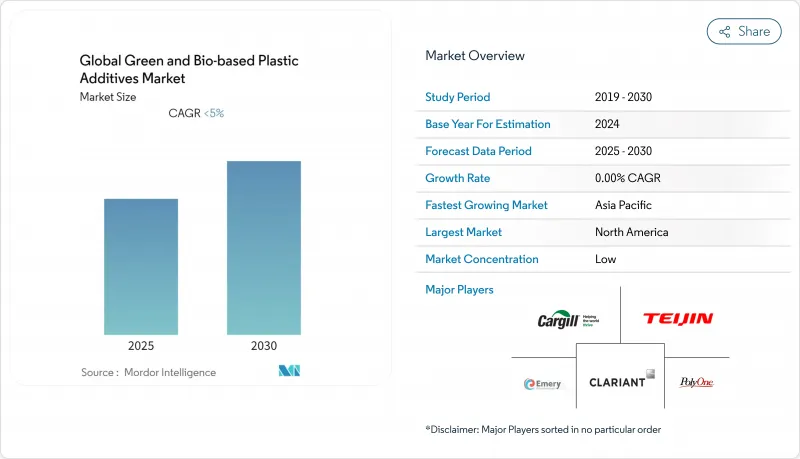
에 따르면 그린 및 바이오 기반 플라스틱 첨가제 시장 규모는 2025년에 31억 2,000만 달러로 평가되며, 2026년 33억 4,000만 달러에서 2031년까지 47억 2,000만 달러에 달할 것으로 예측되고 있으며, 예측 기간(2026-2031년)에 CAGR은 7.15%에 달할 전망입니다.
전 세계 친환경 및 바이오 기반 플라스틱 첨가제 시장의 동향 및 인사이트
프탈레이트 및 할로겐계 화학물질 규제에 따른 대체
규제에 따른 대체는 친환경 및 바이오 기반 플라스틱 첨가제 시장의 수요를 견인하는 핵심 요인입니다. 2025년 12월 31일, 미국 환경보호청(EPA)은 유해물질 규제법(TSCA)에 따라 부틸벤질프탈레이트, 디부틸프탈레이트, 디시클로헥실프탈레이트, 디에틸헥실프탈레이트, 그리고 디이소부틸프탈레이트의 특정 사용 조건을 규제할 의향을 발표했습니다. EPA는 디에틸헥실프탈레이트에 대해 근로자에게 부당한 위험을 초래하는 10가지 사용 조건과 환경적 위험을 초래하는 20가지 사용 조건을 특정했습니다. 유럽에서는 가소화된 소비재에서 중량비 0.1%를 초과하는 농도의 디에틸헥실프탈레이트, 디부틸프탈레이트, 부틸벤질프탈레이트 및 디이소부틸프탈레이트가 규제 대상입니다. 또한 독일에서는 2025년 1월, 프탈레이트 에스테르의 대체재를 포함한 바이오 유래 첨가제의 개발 및 산업적 활용을 위한 자금 지원 공모를 시작했습니다. 이러한 노력으로 인해 규제 대상 화학 물질을 사용하지 않으면서도 성능 및 규정 준수 요건을 충족할 수 있는 배합의 가치가 높아지고 있습니다.
지속가능한 식품 및 E-Commerce용 포장 시장의 성장
포장은 친환경 및 바이오 기반 플라스틱 첨가제 시장에서 가장 큰 최종사용자 분야이며, 2025년에는 시장 점유율의 52.38%를 차지할 것으로 전망됩니다. 식품 접촉용 포장에 대한 요건에서는 순도, 이온 이동 거동 및 문서화된 재료 구성이 더욱 중요시되고 있습니다. 2025년 2월에 발효되며, 2026년 8월 12일부터 적용되는 ‘포장 및 포장 폐기물 규정’은 유럽연합(EU) 전역의 순환형 포장 요건에 대한 보다 견고한 정책적 기반을 확립하는 것입니다. 브랜드 소유주들은 또한 재생 가능 성분에 대한 기대를 수지부터 첨가제 시스템으로 확대하고 있으며, 이는 ‘국제 지속가능성 및 탄소 인증 PLUS(ISCC PLUS)’, ‘REDcert2’ 또는 ASTM 인터내셔널(ASTM) D6866 인증 문서를 기반으로 한 제품을 지원하는 것입니다. BASF는 2026년 7월, 건축용 도료용 REDcert2 인증 바이오매스 밸런스 첨가제 라인업을 확충하며, 인증 제품이 제한적인 특수 제품이 아닌 드롭인 대체재로 자리매김하고 있음을 보여주었습니다. 클라리안트(CLARIANT)는 특정 식품 접촉 용도의 ‘리코케어 RBW 비타(Licocare RBW Vita)’ 쌀겨 왁스 첨가제에 대해 2026년 2월 유럽연합 집행위원회의 승인을, 2026년 5월에는 미국 식품의약국(FDA)의 허가를 획득했습니다.
원료의 확보 가능성과 가격 변동
원료의 확보 가능성과 가격 변동성은 여전히 친환경 및 바이오 기반 플라스틱 첨가제 시장에 직접적인 제약 요인으로 작용하고 있습니다. 동물성 지방, 사용 후 식용유 및 기타 재생 가능 원료는 연료 및 화학 제품의 밸류체인에서도 사용되고 있으며, 공급을 둘러싼 경쟁이 발생하고 있습니다. 안정적인 조달이 필요한 점은 특히 식물성 오일이나 폐기물 유래 오일에 의존하는 오일케미칼계 가소제 및 안정제에서 두드러집니다. 카길(Cargill)은 최대 100%의 바이오 유래 유기 탄소를 함유한 제품으로 ‘Vikoflex’ 바이오 유래 가소제 시리즈를 출시하며, 이 분야에서 농업 원료에 대한 접근성이 수행하는 역할을 부각시키고 있습니다. 비용의 불확실성은 생산 능력 확충을 지연시키거나, 첨가제 제조사와 원료 공급업체 간의 장기 공급 계약을 필요로 할 가능성이 있습니다. 또한 구매자가 비용 상승분을 공급망을 통해 전가할 수 있는 능력이 제한적인 경우, 화석 유래 대체품과의 가격 차이를 확대시키는 요인이 될 수도 있습니다.
부문 분석
2025년, 바이오 기반 플라스틱 첨가제는 시장 매출의 71.56%를 차지할 것으로 예상되며, 폴리염화비닐, 폴리올레핀, 바이오폴리머 분야에서 오랫동안 상업적으로 활용되어 왔습니다. ASTM D6866 시험은 구매자에게 생물 유래 탄소 함량을 입증할 수 있는 수단을 제공하며, 재생 가능 성분 함량 주장을 지원합니다. 카길(Cargill)사는 최대 100%의 바이오 기반 유기 탄소를 함유한 ‘Vikoflex’ 에폭시화 에스테르 가소제를 공급하고 있습니다. 확립된 가공 데이터를 보유한 공급업체는 배합이 정의된 성능 요건을 충족해야 하는 경우, 가공업체에 더 높은 신뢰성을 제공할 수 있습니다. 이러한 요인들이 친환경 및 바이오 기반 플라스틱 첨가제 시장에서 카길사의 선도적인 입지를 지원하고 있습니다.
친환경 플라스틱 첨가제 시장은 2031년까지 연평균 성장률(CAGR) 7.93%로 확대될 것으로 예측됩니다. 이 범주에는 재생 가능 원료를 포함한 소재 외에도 저독성, 할로겐 프리, 재활용 소재와의 호환성, 그리고 저탄소 배합이 포함됩니다. 식품 접촉 용도나 의료 분야의 구매자는 재생 가능 탄소 인증을 우선시하는 경향이 있는 반면, 전자기기나 전기자동차 용도에서는 할로겐 프리 특성이나 낮은 발연 밀도를 더 중요하게 여길 가능성이 있습니다. BASF는 2026년 5월, 10%-17%의 할로겐 프리 난연제를 포함하는 바이오 기반 반방향족 코폴리아미드 조성물에 관한 특허를 공개했습니다. 친환경 및 바이오 기반 플라스틱 첨가제 시장은 단일 배합으로 인증 요건과 성능 요건을 모두 충족할 수 있는 제품으로 전환되고 있습니다.
지역별 분석
아시아태평양은 2025년 시장 매출의 36.24%를 차지하고 있으며, 2031년까지 연평균 성장률(CAGR) 8.11%로 확대될 것으로 예측됩니다. 이 지역의 친환경 및 바이오 기반 플라스틱 첨가제 시장은 대규모 플라스틱 가공 능력과 유해 첨가물, 식품 접촉 재료, 순환형 포장에 관한 요건의 변화가 맞물려 형성되고 있습니다. 중국에서는 플라스틱 제품에 포함된 유해 물질의 감축이 진행되고 있으며, 인도에서는 프탈레이트를 사용하지 않는 아동용 제품 및 플라스틱 폐기물 관리에 관한 규격이 강화되고 있습니다. 일본의 ‘플라스틱 자원 순환법’은 포장재 및 전자기기 분야의 배합 재검토를 촉진하고 있습니다. 한국에서는 식품 접촉 재료에 대한 이온 이동량 제한이 적용되고 있으며, 이로 인해 이온 이동 프로파일이 확립된 첨가제에 대한 수요가 지원되고 있습니다.
아시아태평양의 친환경 및 바이오 기반 플라스틱 첨가제 시장은 고객들이 규모 확대와 규정 준수 지원을 필요로 하고 있으며, 공급업체들의 관심을 끌고 있습니다. 클라리언트(Clariant)는 상하이에서 개최된 ‘CHINAPLAS 2026’에서 자사의 ‘Licocare RBW Vita’ 포트폴리오와 현재 진행 중인 열가소성 폴리우레탄 개발에 대해 발표했습니다. BASF도 같은 행사에서 ‘Ultrason P 3010 BMB’를 발표했습니다. 북미에서는 5유형의 프탈레이트에 대한 미국의 규제 제정 계획이 건설, 산업 및 소비자용 분야의 배합 결정에 영향을 미칠 것으로 예상됩니다. BASF는 2026년 3월, 루이지애나주 가이스마르에서 바이오매스 밸런스형 폴리에테르 폴리올의 상업 생산을 시작했으며, 2026년 4월에는 북미 시장을 대상으로 바이오매스 밸런스형 스프레이 폴리우레탄 폼용 이소시아네이트 제품을 출시했습니다.
유럽에서는 ‘포장 및 포장 폐기물에 관한 규정’과 일부 프탈레이트 에스테르류에 대한 규제로 인해 수요가 형성되고 있습니다. 이 지역의 친환경 및 바이오 기반 플라스틱 첨가제 시장은 순환성, 식품 접촉, 추적성 요건을 동시에 충족해야 합니다. 남미, 중동 및 아프리카 및 유럽의 소규모 시장은 여전히 수요의 초기 단계에 있는 지역이지만, 브라질의 바이오연료 정책은 원료 개발을 지원하고 있으며, 사우디아라비아는 유지 화학 원료와 관련된 특수 화학 제품에 대한 투자를 지원하고 있습니다. 현지 규제가 마찬가지로 강화되기 전에, 글로벌 브랜드의 사양이 이러한 지역에서 수요를 창출할 가능성이 있습니다.
기타 혜택:
- 엑셀 형식의 시장 예측(ME) 시트
- 3개월간의 애널리스트 지원
목차
제1장 서론
- 조사 전제조건과 시장 정의
- 조사 범위
제2장 조사 방법
제3장 개요
제4장 시장 구도
- 시장 개요
- 시장 성장 촉진요인
- 시장 성장 억제요인
- 밸류체인 분석
- Porter's Five Forces 분석
- 기술 전망
제5장 시장 규모와 성장 예측
- 제품별
- 기능 유형별
- 최종사용자 산업별
- 지역별
- 아시아태평양
- 중국
- 인도
- 일본
- 한국
- ASEAN 국가
- 기타 아시아태평양 국가
- 북미
- 미국
- 캐나다
- 멕시코
- 유럽
- 독일
- 영국
- 프랑스
- 이탈리아
- 북유럽 국가
- 기타 유럽 국가
- 남미
- 브라질
- 아르헨티나
- 기타 남미 국가
- 중동 및 아프리카
- 사우디아라비아
- 남아프리카공화국
- 기타 중동 및 아프리카 국가
- 아시아태평양
제6장 경쟁 구도
- 시장 집중도
- 전략적 동향
- 시장 점유율·순위 분석
- 기업 개요
- ADEKA CORPORATION
- Avient Corporation
- BASF
- Cargill, Incorporated
- CLARIANT
- Corbion N.V.
- Croda International Plc
- DIC Corporation
- Dow
- Emery Oleochemicals
- Evonik Industries AG
- LANXESS
- Matrica S.p.A.
- NatureWorks LLC
- Solvay
제7장 시장 기회와 향후 전망
KSAAccording to Mordor Intelligence, the green and Bio-Based Plastic Additives Market size was valued at USD 3.12 billion in 2025 and is estimated to grow from USD 3.34 billion in 2026 to reach USD 4.72 billion by 2031, at a CAGR of 7.15% during the forecast period (2026-2031).
Global Green and Bio-based Plastic Additives Market Trends and Insights
Regulatory Substitution of Phthalates and Halogenated Chemistries
Regulatory substitution is a central demand driver for the green and bio-based plastic additives market. On December 31, 2025, the U.S. Environmental Protection Agency announced its intent to regulate specific conditions of use for butyl benzyl phthalate, dibutyl phthalate, dicyclohexyl phthalate, diethylhexyl phthalate, and diisobutyl phthalate under the Toxic Substances Control Act. The agency identified 10 conditions of use with unreasonable worker risk and 20 with environmental risk for diethylhexyl phthalate. In Europe, restrictions cover diethylhexyl phthalate, dibutyl phthalate, butyl benzyl phthalate, and diisobutyl phthalate at concentrations above 0.1% by weight in plasticized consumer articles. Germany also opened a January 2025 funding call for the development and industrial use of bio-based additives, including phthalate substitution. These actions increase the value of formulations that can meet performance and compliance requirements without restricted chemistries.
Growth of Sustainable Food and E-Commerce Packaging
Packaging is the largest end-user area in the green and bio-based plastic additives market, accounting for 52.38% of the market share in 2025. Food-contact packaging requirements place greater emphasis on purity, migration behavior, and documented material composition. The Packaging and Packaging Waste Regulation entered into force in February 2025 and applies from August 12, 2026, adding a stronger policy basis for circular packaging requirements across the European Union. Brand owners are also extending renewable-content expectations from resins to additive systems, which favors products supported by International Sustainability and Carbon Certification PLUS (ISCC PLUS), REDcert2, or ASTM International (ASTM) D6866 documentation. BASF expanded its REDcert2-certified biomass-balance additives range for architectural coatings in July 2026, showing how certified products are being positioned as drop-in options rather than narrow specialty offerings. CLARIANT received European Commission approval in February 2026 and Food and Drug Administration authorization in May 2026 for Licocare RBW Vita rice bran wax additives in specified food-contact applications.
Feedstock Availability and Price Volatility
Feedstock availability and price volatility remain a direct restraint on the green and bio-based plastic additives market. Animal fats, used cooking oil, and other renewable feedstocks are also used in fuel and chemical value chains, which create competition for supply. The need for stable sourcing is particularly relevant for oleochemical plasticizers and stabilizers that depend on vegetable or waste-derived oils. Cargill, Incorporated supports its Vikoflex bio-based plasticizer range with products that contain up to 100% bio-based organic carbon, illustrating the role of agricultural feedstock access in this field. Cost uncertainty can delay capacity additions or require longer-term supply agreements between additive producers and feedstock providers. It can also widen the price gap with fossil-derived alternatives when buyers have limited ability to pass higher costs through the supply chain.
Other drivers and restraints analyzed in the detailed report include:
- Recycled-Content Processing and Circularity Requirements
- Qualification of Bio-Based Additives in Medical Devices
- Qualification Cycles, Performance Parity Requirements
For complete list of drivers and restraints, kindly check the Table Of Contents.
Segment Analysis
Bio-based plastic additives held 71.56% of the market revenue in 2025 and had longer commercial use across polyvinyl chloride, polyolefins, and biopolymers. ASTM D6866 testing gives buyers a method to document biogenic carbon content, which supports renewable-content claims. Cargill, Incorporated offers Vikoflex epoxidized ester plasticizers with up to 100% bio-based organic carbon. Suppliers with established processing data can offer converters more confidence when a formulation must meet defined performance requirements. These factors support their leading position in the green and bio-based plastic additives market.
Green plastic additives are projected to advance at a 7.93% CAGR through 2031. This category includes lower-toxicity, halogen-free, recyclate-compatible, and lower-carbon formulations, alongside materials with renewable content. Food-contact and medical buyers may prioritize renewable-carbon certification, while electronics and electric vehicle applications may place greater weight on halogen-free properties and low smoke density. BASF published a May 2026 patent for a bio-based semi-aromatic copolyamide composition containing 10% to 17% halogen-free flame retardant. The green and bio-based plastic additives market is moving toward products that can address both certification and performance requirements in one formulation.
Complete Report Scope:
- By Product Basis
- Bio-Based Plastic Additives
- Green Plastic Additives
- By Functionality Type
- Plasticizers
- Antimicrobial Agents
- Antistatic Agents
- Flame Retardants
- Stabilizers
- Reinforcing Agents
- Other Functionality Types
- By End-User Industry
- Packaging
- Electronics
- Medical Devices
- Textiles
- Consumer Goods
- Other End-User Industries
- By Geography
- Asia-Pacific
- China
- India
- Japan
- South Korea
- ASEAN Countries
- Rest of Asia-Pacific
- North America
- United States
- Canada
- Mexico
- Europe
- Germany
- United Kingdom
- France
- Italy
- NORDIC Countries
- Rest of Europe
- South America
- Brazil
- Argentina
- Rest of South America
- Middle East and Africa
- Saudi Arabia
- South Africa
- Rest of Middle East and Africa
- Asia-Pacific
Geography Analysis
Asia-Pacific held 36.24% of the market revenue in 2025 and is projected to advance at an 8.11% CAGR through 2031. The green and bio-based plastic additives market in the region combines large plastics-processing capacity with changing requirements for hazardous additives, food-contact materials, and circular packaging. China is reducing hazardous materials in plastic products, while India is tightening specifications for phthalate-free children's products and plastic-waste management. Japan's Plastic Resource Circulation Act supports reformulation across packaging and electronics. South Korea applies migration limits for food-contact materials, which supports demand for additives with established migration profiles.
The green and bio-based plastic additives market in Asia-Pacific attracts supplier activity because customers need scale and compliance support. CLARIANT presented its Licocare RBW Vita portfolio and ongoing thermoplastic polyurethane development at CHINAPLAS 2026 in Shanghai. BASF presented Ultrason P 3010 BMB at the same event. In North America, planned U.S. rulemaking on 5 phthalates is expected to influence formulation decisions in construction, industrial, and consumer applications. BASF began commercial production of biomass-balance polyether polyols at Geismar, Louisiana, in March 2026 and introduced a biomass-balance spray polyurethane foam isocyanate product for North America in April 2026.
Europe has demand shaped by the Packaging and Packaging Waste Regulation and restrictions on several phthalates. The green and bio-based plastic additives market in the region must meet circularity, food-contact, and traceability requirements at the same time. South America, the Middle East and Africa, and smaller European markets remain earlier-stage demand areas, although Brazil's biofuels policy supports feedstock development and Saudi Arabia is supporting specialty chemical investment near oleochemical feedstocks. Global brand specifications can create demand in these regions before local rules become equally stringent.
- ADEKA CORPORATION
- Avient Corporation
- BASF
- Cargill, Incorporated
- CLARIANT
- Corbion N.V.
- Croda International Plc
- DIC Corporation
- Dow
- Emery Oleochemicals
- Evonik Industries AG
- LANXESS
- Matrica S.p.A.
- NatureWorks LLC
- Solvay
Additional Benefits:
- The market estimate (ME) sheet in Excel format
- 3 months of analyst support
TABLE OF CONTENTS
1 Introduction
- 1.1 Study Assumptions and Market Definition
- 1.2 Scope of the Study
2 Research Methodology
3 Executive Summary
4 Market Landscape
- 4.1 Market Overview
- 4.2 Market Drivers
- 4.2.1 Regulatory Substitution of Phthalates and Halogenated Chemistries
- 4.2.2 Brand-Led Demand for Verified Renewable Content
- 4.2.3 Growth of Sustainable Food and E-Commerce Packaging
- 4.2.4 Qualification of Bio-Based Additives in Medical Devices
- 4.2.5 Recycled-Content Processing and Circularity Requirements
- 4.3 Market Restraints
- 4.3.1 Feedstock Availability and Price Volatility
- 4.3.2 Qualification Cycles and Performance Parity Requirements
- 4.3.3 Additive Compatibility Constraints in Recycling Streams
- 4.4 Value Chain Analysis
- 4.5 Porter's Five Forces Analysis
- 4.5.1 Threat of New Entrants
- 4.5.2 Bargaining Power of Suppliers
- 4.5.3 Bargaining Power of Buyers
- 4.5.4 Threat of Substitutes
- 4.5.5 Competitive Rivalry
- 4.6 Technological Outlook
5 Market Size and Growth Forecasts (Value)
- 5.1 By Product Basis
- 5.1.1 Bio-Based Plastic Additives
- 5.1.2 Green Plastic Additives
- 5.2 By Functionality Type
- 5.2.1 Plasticizers
- 5.2.2 Antimicrobial Agents
- 5.2.3 Antistatic Agents
- 5.2.4 Flame Retardants
- 5.2.5 Stabilizers
- 5.2.6 Reinforcing Agents
- 5.2.7 Other Functionality Types
- 5.3 By End-User Industry
- 5.3.1 Packaging
- 5.3.2 Electronics
- 5.3.3 Medical Devices
- 5.3.4 Textiles
- 5.3.5 Consumer Goods
- 5.3.6 Other End-User Industries
- 5.4 By Geography
- 5.4.1 Asia-Pacific
- 5.4.1.1 China
- 5.4.1.2 India
- 5.4.1.3 Japan
- 5.4.1.4 South Korea
- 5.4.1.5 ASEAN Countries
- 5.4.1.6 Rest of Asia-Pacific
- 5.4.2 North America
- 5.4.2.1 United States
- 5.4.2.2 Canada
- 5.4.2.3 Mexico
- 5.4.3 Europe
- 5.4.3.1 Germany
- 5.4.3.2 United Kingdom
- 5.4.3.3 France
- 5.4.3.4 Italy
- 5.4.3.5 NORDIC Countries
- 5.4.3.6 Rest of Europe
- 5.4.4 South America
- 5.4.4.1 Brazil
- 5.4.4.2 Argentina
- 5.4.4.3 Rest of South America
- 5.4.5 Middle East and Africa
- 5.4.5.1 Saudi Arabia
- 5.4.5.2 South Africa
- 5.4.5.3 Rest of Middle East and Africa
- 5.4.1 Asia-Pacific
6 Competitive Landscape
- 6.1 Market Concentration
- 6.2 Strategic Moves
- 6.3 Market Share (%)/Ranking Analysis
- 6.4 Company Profiles (includes Global Overview, Market Overview, Core Segments, Financials as available, Strategic Information, Products and Services, and Recent Developments)
- 6.4.1 ADEKA CORPORATION
- 6.4.2 Avient Corporation
- 6.4.3 BASF
- 6.4.4 Cargill, Incorporated
- 6.4.5 CLARIANT
- 6.4.6 Corbion N.V.
- 6.4.7 Croda International Plc
- 6.4.8 DIC Corporation
- 6.4.9 Dow
- 6.4.10 Emery Oleochemicals
- 6.4.11 Evonik Industries AG
- 6.4.12 LANXESS
- 6.4.13 Matrica S.p.A.
- 6.4.14 NatureWorks LLC
- 6.4.15 Solvay
7 Market Opportunities and Future Outlook
- 7.1 White-Space and Unmet-Need Assessment


