

|
시장보고서
상품코드
2154410
반려동물용 특수 의약품 : 시장 점유율 분석, 업계 동향과 통계, 성장 예측(2026-2031년)Companion Animal Specialty Drugs - Market Share Analysis, Industry Trends & Statistics, Growth Forecasts (2026 - 2031) |
||||||
 Mordor Intelligence
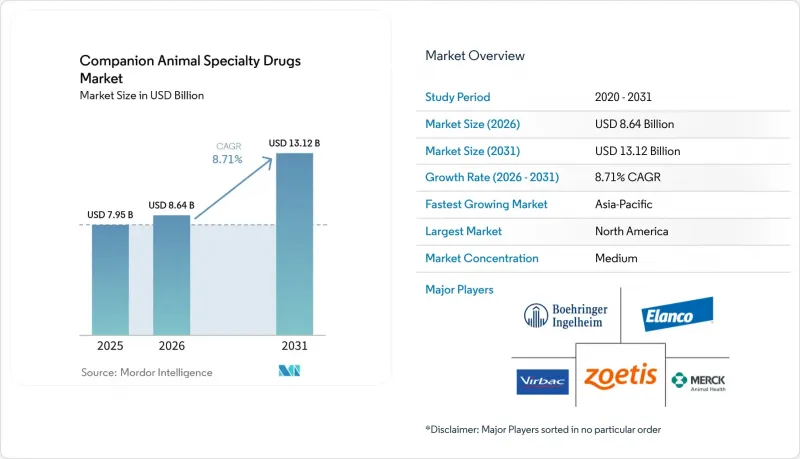
에 따르면 반려동물용 전문 의약품 시장 규모는 2025년 79억 5,000만 달러에서 2026년에는 86억 4,000만 달러로 확대하며, 2026-2031년에 CAGR 8.71%로 추이하며, 2031년에는 131억 2,000만 달러에 달할 것으로 예측됩니다.
전 세계 반려동물용 전문 의약품 시장의 동향 및 인사이트
반려동물의 ‘인간화’와 케어의 프리미엄화
반려동물 주인들은 인간의 헬스케어와 유사한 수준의 케어를 선택하는 경향이 강해지고 있습니다. 2025년, 미국 가구의 53%(7,100만 가구)가 개를 기르고 있으며,개 주인들의 지출 중 29%를 수의학 치료비가 차지하고 있으며, 이는 개별 지출 항목 중 가장 큰 비중을 차지하고 있습니다. 또한 2025년 미국의 고양이 사육률은 전년 대비 5% 증가하여, 전문적인 치료를 필요로 할 가능성이 있는 반려인층이 더욱 확대되었습니다. 이러한 경향은 만성 통증이나 피부 질환, 기타 지속적인 관리가 필요한 질환을 치료하는 의약품에 대한 수용을 촉진하고 있습니다. 반려동물용 전문 의약품 시장에서는 이로 인해 프리미엄 치료 선택이 동물의 생애 주기 전체와 더욱 밀접하게 연결될 것입니다. 또한 제품의 편의성에만 의존하는 것이 아니라 수의사를 통해 의미 있는 임상적 효과를 입증할 수 있는 제조사가 우위를 점하게 될 것입니다.
고령화되는 반려동물과 만성질환 관리
현재 수의학 수요 중 반복적인 모니터링이나 치료가 필요한 질환이 차지하는 비중이 증가하고 있습니다. 통증 관리, 피부과, 순환기과, 신장 관리는 모두 개와 고양이가 나이를 먹음에 따라 더욱 흔해지는 질환을 다루는 분야입니다. 독일에서는 통증 관리용 동물용 전문 의약품의 매출이 증가하고 있습니다. 이는 만성질환 관리 수요가 이미 확립된 치료 분야뿐만 아니라 새로운 치료법도 지원하고 있음을 보여줍니다. 따라서 임상적 후속 관리가 일상적인 질환 관리의 일부가 됨에 따라 반려동물용 전문 의약품 시장은 혜택을 받게 될 것입니다. 또한 정기적인 재처방은 일회성 단기 치료 과정에 비해 동물병원과 제약사에게 더 안정적인 처방 수익을 가져다줄 가능성이 있습니다.
고액의 치료비와 반려인의 경제적 부담
경제적 부담은 첨단 치료 도입에 있으며, 가장 시급한 제약 요인입니다. 2026년, 조사 대상인 미국 수의사의 81%가 2025년에 반려인의 가격 민감도가 2024년에 비해 높아졌다고 보고했으며, 이는 이전 비교 시의 72%를 상회하는 수치입니다. 수의 의료비 급등으로 인해 반려인은 긴급성이 없다고 판단되는 진단이나 치료를 미루거나 거절할 가능성이 있습니다. 이로 인해 특히 보험 적용이 되지 않는 경우, 임상적 필요성과 실제로 시행되는 치료 사이에 격차가 발생합니다. 반려동물 전문 의약품 시장은 고부가가치 케어 분야에서 여전히 성장 여지가 있지만, 그 고객층은 지불 능력이 높은 반려인들 사이에 집중될 가능성이 있습니다. 보험 적용 범위 확대와 자금 조달 옵션 확충을 통해 이러한 장벽은 완화될 것이지만, 2025년 시점에 보험 적용률은 여전히 낮은 수준에 머물러 있었습니다.
부문 분석
2025년 시점에 전문 소분자 의약품은 반려동물용 전문 의약품 시장 규모의 28.31%를 차지했습니다. 이러한 위상은 피부과 및 통증 관리 분야에서 JAK 억제제, 비스테로이드성 항염증약(NSAID), 기타 표적 경구약의 사용이 정착되었음을 반영한 것입니다. 엘란코(Elanco)사의 ‘젠렐리아’(개 아토피성 피부염 치료제인 아브로시티닙)는 2025년 12월까지 미국 수의과 클리닉의 50%에서 사용되었습니다. 또한 미국 JAK 부문에서 두 자릿수 점유율을 기록했으며, 일본에서는 30% 이상의 점유율을 확보했습니다. 독일에서는 2025년에 3가지 새로운 유효 성분이 반려동물 분야에 진입했습니다. 여기에는 알레르기성 또는 아토피성 피부염 치료용 JAK 억제제 2종과 분리불안 관리에 사용되는 플루옥세틴이 포함됩니다.
장시간 작용형 주사제는 2026-2031년에 연평균 성장률(CAGR) 11.58%로 성장할 것으로 예측됩니다. 이러한 치료법은 퇴행성 관절염으로 인한 통증, 피부 질환, 신장 질환 및 종양 치료를 위한 정기적인 내원을 통해 반려동물용 전문 의약품 산업을 지원하고 있습니다. 바이오의약품, 모노클로널 항체 및 전문 백신은 그 밖의 중요한 제품군으로 계속해서 자리매김하고 있습니다. 지속형 주사제의 가치는 그 투여 패턴에 있습니다. 수의 의료팀이 치료를 시행하고 내원시 환자의 상태를 평가할 수 있기 때문입니다. ‘BRAVECTO QUANTUM’은 2026년 3월 FDA의 적응증 확대로 인해 1회 주사로 12개월간 진드기 구제가 가능해짐으로써, 이 제형의 상업적 중요성을 입증하고 있습니다. 이 제형은 투여 누락의 위험을 줄이는 동시에, 동물병원이 투여 및 사후 관리에서 직접적인 역할을 수행할 수 있게 해줍니다.
2025년에는 피부과·면역학이 36.24%의 점유율을 차지하며, 반려동물용 전문 의약품 시장에서 가장 큰 치료 분야가 되었습니다. 바이오의약품에 대한 장기간의 투자로 인해 아토피성 피부염과 알레르기성 피부 질환은 보다 일관되게 치료되는 만성질환이 되었습니다. 종양학, 내분비학·대사 질환, 그리고 신경학·행동 건강은 점유율은 작지만 향후 발전 가능성이 있는 분야입니다. 또한 가정 환경에서 장기간 지낸 결과 분리 불안을 보이는 경향이 나타난 동물과 관련하여 행동 치료에 대한 수요는 여전히 존재하고 있습니다.
순환기·신장 질환 분야는 2031년까지 연평균 성장률(CAGR) 10.22%로 성장할 것으로 예측됩니다. 이러한 성장은 피부과나 통증 관리에 비해 투자가 적었던 질환을 대상으로 한 제품 파이프라인을 반영한 것입니다. TriviumVet사는 고양이 비대성 심근증에 대해 최초로 조건부 승인을 받은 의약품인 펠리신-CA1(시롤리무스 서방정)에 대해 FDA로부터 조건부 승인을 획득하고, 2025년 여름 미국에서 출시했습니다. Zoetis사는 신장 질환, 종양학 및 순환기학 분야가 합계 50억 달러 이상의 잠재 시장 규모(TAP)를 차지할 것으로 전망하고 있습니다. 따라서 반려동물용 전문 의약품 시장은 이러한 질환 영역의 신제품으로부터 혜택을 받을 가능성이 있습니다. 다만, 해당 분야의 임상 경로는 피부과에 비해 아직 성숙도가 낮은 상태입니다.
지역별 분석
2025년, 북미는 반려동물용 전문 의약품 시장의 41.61%를 차지했습니다. 이 지역은 높은 수의 의료비에 더해 전문 소개 병원 인프라가 잘 갖춰져 있으며, JAK 억제제 및 항신경성장인자 모노클로널 항체의 보급이 광범위하게 이루어졌습니다. 조에티스(Zoetis)는 2025년 미국에서 50억 9,700만 달러의 매출을 기록했으며, 그 중 83%를 반려동물 사업이 차지했습니다. 엘란코(Elanco)는 4개 사업 부문 모두에서 환율 변동 영향을 제외한 유기적 매출이 9% 증가했다고 보고했으며, 이 회사의 JAK 억제제는 2025년 말까지 미국 동물병원의 50%에서 채택되었습니다. 2025년, 북미의 반려동물 보험 총 보험료 수입은 62억 달러에 달했으며, 보험에 가입한 반려동물 수는 760만 마리에 달했습니다. 캐나다에서는 고용주가 제공하는 복리후생을 통해 보험 보급이 확대되고 있습니다. 멕시코는 여전히 초기 단계에 있지만, 도시 지역의 수요와 미국 수의과 진료소와의 근접성이 향후 고가 치료제의 도입을 지원하고 있습니다.
유럽은 반려동물 전용 의약품 시장에서 지역별 2위의 규모를 차지했습니다. 2025년, 독일에서 BFT의 피부 질환 치료제 및 순환기 계통 의약품 매출은 각각 8.0% 및 8.2% 증가했습니다. 영국에서는 현재 수의약품청(VMD)을 통한 독자적인 승인 절차가 채택되고 있습니다. ‘포르텔라’는 2026년 7월 영국에서 승인을 획득했으며, ‘레니비아’는 2026년 5월에 승인되었습니다. 독일과 프랑스가 유럽내 프리미엄 가격 책정을 주도하는 한편, 스페인과 이탈리아에서는 보험 이용 증가에 따라 전문 의약품 시장이 발전하고 있습니다.
아시아태평양은 2031년까지 연평균 성장률(CAGR) 10.25%로 성장할 것으로 예상되며, 이는 반려동물용 전문 의약품 시장에서 지역별 가장 높은 성장률입니다. 일본의 반려동물 고령화는 북미에서 이전에 나타났던 패턴과 유사한 만성질환에 대한 수요를 지원하고 있습니다. 한국의 항균제 감시 시스템과 일본 농림수산성의 일원화된 승인 절차는 프리미엄 치료제를 위한 확립된 규제 환경을 제공하고 있습니다. 중국에서는 2025년에 189건의 반려동물용 의약품 승인이 기록되었으나, 현지에서 수입 대체 움직임이 다국적 기업의 매출에 영향을 미쳤기 때문에 조에티스는 같은 해 중국내 매출이 16% 감소했다고 보고했습니다. 인도와 호주는 도시 지역의 반려동물 사육 보급, 수의학 인프라, 전문의 소개 네트워크를 통해 새로운 성장 동력으로 부상하고 있습니다. 브라질은 2025년에 Zoetis에 3억 9,300만 달러의 매출을 가져다주며, 라틴아메리카에서 이 회사의 두 번째로 큰 수익 기반이 되었습니다. GCC 국가, 남아프리카공화국, 아르헨티나, 브라질은 보험 제도와 전문 의료 체계가 아직 발전 단계에 있는 소규모 시장으로 남아 있습니다.
기타 혜택:
- 엑셀 형식의 시장 예측(ME) 시트
- 3개월간의 애널리스트 지원
자주 묻는 질문
목차
제1장 서론
- 조사 전제조건과 시장 정의
- 조사 범위
제2장 조사 방법
제3장 개요
제4장 시장 구도
- 시장 개요
- 시장 성장 촉진요인
- 시장 성장 억제요인
- 공급망 분석
- 규제 상황
- Porter's Five Forces 분석
제5장 시장 규모와 성장 예측
- 제품 유형별
- 치료 영역별
- 동물 유형별
- 투여 경로별
- 유통 채널별
- 지역별
- 북미
- 미국
- 캐나다
- 멕시코
- 유럽
- 독일
- 영국
- 프랑스
- 이탈리아
- 스페인
- 기타 유럽 국가
- 아시아태평양
- 중국
- 일본
- 인도
- 호주
- 한국
- 기타 아시아태평양 국가
- 중동 및 아프리카
- GCC
- 남아프리카공화국
- 기타 중동 및 아프리카 국가
- 남미
- 브라질
- 아르헨티나
- 기타 남미 국가
- 북미
제6장 경쟁 구도
- 시장 집중도
- 시장 점유율 분석
- 기업 개요
- Animalcare Group plc
- Bimeda Animal Health
- Boehringer Ingelheim Animal Health
- Ceva Sante Animale
- Chanelle Pharma
- Dechra Pharmaceuticals Limited
- Elanco Animal Health Incorporated
- ELIAS Animal Health
- KRKA, d. d., Novo mesto
- Merck Animal Health
- Nextmune
- Norbrook Laboratories Limited
- Ourofino Saude Animal Participacoes S.A.
- Phibro Animal Health Corporation
- Vetoquinol S.A.
- Virbac SA
- Vivesto AB
- Zoetis Inc.
제7장 시장 기회와 향후 전망
KSAAccording to Mordor Intelligence, the companion animal specialty drugs market size is expected to grow from USD 7.95 billion in 2025 to USD 8.64 billion in 2026 and is forecast to reach USD 13.12 billion by 2031 at 8.71% CAGR over 2026-2031.
Global Companion Animal Specialty Drugs Market Trends and Insights
Pet Humanization and Premiumization of Care
Pet owners are increasingly making care choices that resemble those made for human health conditions. Dog ownership reached 53% of U.S. households in 2025, or 71 million households, and veterinary care accounted for 29% of dog-owner spending, the largest individual spending category. Cat ownership increased 5% year over year in the United States in 2025, adding a larger group of owners who may seek specialized treatment. This behavior supports acceptance of medicines that address persistent pain, skin disease, and other conditions that need continuing care. For the companion animal specialty drugs market, this makes premium treatment decisions more closely tied to the animal's full life cycle. It also favors manufacturers that can show meaningful clinical benefits through the veterinarian rather than relying on product convenience alone.
Aging Pets and Chronic Disease Management
A larger share of veterinary demand now concerns conditions that need repeated monitoring and treatment. Pain management, dermatology, cardiology, and renal care each address diseases that become more common as dogs and cats age. In Germany, pharmaceutical specialty sales for pain-control medications are rising. These show that chronic-care demand supports established treatment categories as well as newer therapies. The companion animal specialty drugs market, therefore, benefits when clinical follow-up becomes part of routine disease management. Scheduled re-dosing can also create more consistent prescription revenue for clinics and manufacturers than a single short treatment course.
High Treatment Cost and Owner Affordability
Affordability is the most immediate constraint on premium treatment adoption. In 2026, 81% of surveyed U.S. veterinarians reported that clients had become more price-sensitive in 2025 than in 2024, compared with 72% in the preceding comparison. Higher veterinary costs can lead owners to delay diagnostics or decline therapies that are not viewed as urgent. This creates a gap between clinical need and completed treatment, especially when insurance coverage is absent. The companion animal specialty drugs market can still grow within higher-value care, but its customer base may become more concentrated among owners with a stronger ability to pay. Broader insurance coverage and financing options would reduce this barrier, although coverage remained low in 2025.
Other drivers and restraints analyzed in the detailed report include:
- Veterinary Biologics and Long-Acting Therapies
- Pet Insurance and Structured Financing
- Regulatory and Pharmacovigilance Complexity
For complete list of drivers and restraints, kindly check the Table Of Contents.
Segment Analysis
Specialty Small-Molecule Drugs held 28.31% of the companion animal specialty drugs market size in 2025. Their position reflected the established use of JAK inhibitors, nonsteroidal anti-inflammatory drugs, and other targeted oral medicines in dermatology and pain management. Elanco's Zenrelia, an abrocitinib treatment for canine atopic dermatitis, was used in 50% of U.S. veterinary clinics by December 2025. It also held a double-digit share of the U.S. JAK category and more than 30% share in Japan. In Germany, 3 new active substances entered the companion animal segment in 2025, including 2 JAK inhibitors for allergic or atopic dermatitis and fluoxetine for separation-anxiety management.
Long-Acting Injectable Therapies are forecast to grow at an 11.58% CAGR from 2026 to 2031. These therapies support the companion animal specialty drugs industry through recurring clinic visits for osteoarthritis pain, dermatology, renal disease, and oncology treatment. Biologics, Monoclonal Antibodies, and Specialty Vaccines remain other important product groups. The value of long-acting injections lies in their dosing pattern, because the veterinary team administers the treatment and can assess the patient during the visit. BRAVECTO QUANTUM shows the commercial relevance of this format because its expanded March 2026 FDA label added 12-month tick control with a single injection. This format can reduce missed-dose risk while giving clinics a direct role in administration and follow-up.
Dermatology and Immunology held 36.24% share in 2025, making it the largest therapeutic area in the companion animal specialty drugs market. Years of investment in biologics have made atopic dermatitis and allergic skin disease more consistently treated chronic conditions. Oncology, Endocrinology and Metabolic Disease, and Neurology and Behavioral Health represented smaller positions with room to develop. Behavioral treatment demand also remains tied to animals that developed separation-anxiety patterns after long periods in domestic settings.
Cardiology and Renal Disease is forecast to grow at a 10.22% CAGR through 2031. This growth reflects a product pipeline directed at conditions that have received less investment than dermatology and pain. TriviumVet received FDA conditional approval for felycin-CA1, or sirolimus delayed-release tablets, the first drug conditionally approved for feline hypertrophic cardiomyopathy, and launched it in the United States in the summer of 2025. Zoetis has identified renal disease, oncology, and cardiology as representing more than USD 5 billion in total addressable potential. The companion animal specialty drugs market may therefore gain from new products in these conditions, even as their clinical pathways remain less mature than dermatology.
Complete Report Scope:
- By Product Type
- Biologics and Monoclonal Antibodies
- Specialty Small-Molecule Drugs
- Long-Acting Injectable Therapies
- Specialty Vaccines
- Other Specialty Product Types
- By Therapeutic Area
- Dermatology and Immunology
- Pain and Osteoarthritis
- Oncology
- Cardiology and Renal Disease
- Endocrinology and Metabolic Disease
- Neurology and Behavioral Health
- Other Therapeutic Areas
- By Animal Type
- Dogs
- Cats
- Horses
- Other Companion Animal Types
- By Route of Administration
- Oral
- Injectable
- Topical and Otic
- Other Routes of Administration
- By Distribution Channel
- Veterinary Hospitals and Clinics
- Retail Pharmacies
- Online and E-Commerce Pharmacies
- Other Distribution Channels
- By Geography
- North America
- United States
- Canada
- Mexico
- Europe
- Germany
- United Kingdom
- France
- Italy
- Spain
- Rest of Europe
- Asia-Pacific
- China
- Japan
- India
- Australia
- South Korea
- Rest of Asia-Pacific
- Middle East and Africa
- GCC
- South Africa
- Rest of Middle East and Africa
- South America
- Brazil
- Argentina
- Rest of South America
- North America
Geography Analysis
North America held 41.61% of the companion animal specialty drugs market in 2025. The region combined high veterinary spending with a large base of specialist referral hospitals and broad uptake of JAK inhibitors and anti-nerve growth factor monoclonal antibodies. Zoetis generated USD 5.097 billion in U.S. revenue in 2025, with 83% from companion animals. Elanco reported 9% organic constant-currency revenue growth across all 4 business quadrants, and its JAK inhibitor was used in 50% of U.S. clinics by year-end 2025. North American pet insurance gross written premiums reached USD 6.2 billion in 2025, while insured pets totaled 7.6 million. Canada is showing greater insurance adoption through employer-sponsored benefits. Mexico remains at an earlier stage, but urban demand and proximity to U.S. veterinary practices support future premium therapy adoption.
Europe held the second-largest regional position in the companion animal specialty drugs market. BFT Skin disease treatments and cardiovascular medicines increased 8.0% and 8.2%, respectively, in Germany during 2025. The United Kingdom now follows its own approval pathway through the Veterinary Medicines Directorate. Portela received United Kingdom approval in July 2026, and Lenivia received approval in May 2026. Germany and France shape premium pricing in Europe, while Spain and Italy are developing specialty markets with rising insurance use.
Asia-Pacific is forecast to grow at a 10.25% CAGR through 2031, the fastest regional rate in the companion animal specialty drugs market. Japan's aging pet population supports chronic disease demand that resembles earlier patterns in North America. South Korea's antimicrobial surveillance system and Japan's centralized Ministry of Agriculture, Forestry, and Fisheries approval pathway provide established regulatory settings for premium therapies. China recorded 189 pet drug approvals in 2025, although Zoetis reported a 16% decline in China revenue that year as local import substitution affected multinational sales. India and Australia are emerging contributors through urban pet ownership, veterinary infrastructure, and specialist referral networks. Brazil generated USD 393 million for Zoetis in 2025 and remained its second-largest Latin American revenue base. The GCC, South Africa, Argentina, and Brazil remain smaller markets with developing insurance and specialty care capacity.
- Animalcare Group plc
- Bimeda Animal Health
- Boehringer Ingelheim
- Ceva
- Chanelle Pharma
- Dechra Pharmaceuticals Limited
- Elanco
- ELIAS Animal Health
- KRKA, d. d., Novo mesto
- Merck
- Nextmune
- Norbrook Laboratories Limited
- Ourofino Saude Animal Participacoes S.A.
- Phibro Animal Health
- Vetoquinol
- Virbac
- Vivesto AB
- Zoetis
Additional Benefits:
- The market estimate (ME) sheet in Excel format
- 3 months of analyst support
TABLE OF CONTENTS
1 Introduction
- 1.1 Study Assumptions and Market Definition
- 1.2 Scope of the Study
2 Research Methodology
3 Executive Summary
4 Market Landscape
- 4.1 Market Overview
- 4.2 Market Drivers
- 4.2.1 Pet Humanization and Premiumization of Care
- 4.2.2 Aging Pets and Chronic Disease Management
- 4.2.3 Veterinary Biologics and Long-Acting Therapies
- 4.2.4 Pet Insurance and Structured Financing
- 4.2.5 Cat-Specific Therapeutic Innovation
- 4.2.6 Specialist Referral and Integrated Diagnostics
- 4.3 Market Restraints
- 4.3.1 High Treatment Cost and Owner Affordability
- 4.3.2 Regulatory and Pharmacovigilance Complexity
- 4.3.3 Manufacturing and Cold-Chain Constraints
- 4.3.4 Antimicrobial and Antiparasitic Resistance Stewardship
- 4.4 Supply-Chain Analysis
- 4.5 Regulatory Landscape
- 4.6 Porter's Five Forces Analysis
- 4.6.1 Bargaining Power of Suppliers
- 4.6.2 Bargaining Power of Buyers
- 4.6.3 Threat of New Entrants
- 4.6.4 Threat of Substitutes
- 4.6.5 Competitive Rivalry
5 Market Size & Growth Forecasts (Value, USD)
- 5.1 By Product Type
- 5.1.1 Biologics and Monoclonal Antibodies
- 5.1.2 Specialty Small-Molecule Drugs
- 5.1.3 Long-Acting Injectable Therapies
- 5.1.4 Specialty Vaccines
- 5.1.5 Other Specialty Product Types
- 5.2 By Therapeutic Area
- 5.2.1 Dermatology and Immunology
- 5.2.2 Pain and Osteoarthritis
- 5.2.3 Oncology
- 5.2.4 Cardiology and Renal Disease
- 5.2.5 Endocrinology and Metabolic Disease
- 5.2.6 Neurology and Behavioral Health
- 5.2.7 Other Therapeutic Areas
- 5.3 By Animal Type
- 5.3.1 Dogs
- 5.3.2 Cats
- 5.3.3 Horses
- 5.3.4 Other Companion Animal Types
- 5.4 By Route of Administration
- 5.4.1 Oral
- 5.4.2 Injectable
- 5.4.3 Topical and Otic
- 5.4.4 Other Routes of Administration
- 5.5 By Distribution Channel
- 5.5.1 Veterinary Hospitals and Clinics
- 5.5.2 Retail Pharmacies
- 5.5.3 Online and E-Commerce Pharmacies
- 5.5.4 Other Distribution Channels
- 5.6 By Geography
- 5.6.1 North America
- 5.6.1.1 United States
- 5.6.1.2 Canada
- 5.6.1.3 Mexico
- 5.6.2 Europe
- 5.6.2.1 Germany
- 5.6.2.2 United Kingdom
- 5.6.2.3 France
- 5.6.2.4 Italy
- 5.6.2.5 Spain
- 5.6.2.6 Rest of Europe
- 5.6.3 Asia-Pacific
- 5.6.3.1 China
- 5.6.3.2 Japan
- 5.6.3.3 India
- 5.6.3.4 Australia
- 5.6.3.5 South Korea
- 5.6.3.6 Rest of Asia-Pacific
- 5.6.4 Middle East and Africa
- 5.6.4.1 GCC
- 5.6.4.2 South Africa
- 5.6.4.3 Rest of Middle East and Africa
- 5.6.5 South America
- 5.6.5.1 Brazil
- 5.6.5.2 Argentina
- 5.6.5.3 Rest of South America
- 5.6.1 North America
6 Competitive Landscape
- 6.1 Market Concentration
- 6.2 Market Share Analysis
- 6.3 Company Profiles (includes Global Level Overview, Market Level Overview, Core Segments, Financials as available, Strategic Information, Market Rank/Share, Products and Services, Recent Developments)
- 6.3.1 Animalcare Group plc
- 6.3.2 Bimeda Animal Health
- 6.3.3 Boehringer Ingelheim Animal Health
- 6.3.4 Ceva Sante Animale
- 6.3.5 Chanelle Pharma
- 6.3.6 Dechra Pharmaceuticals Limited
- 6.3.7 Elanco Animal Health Incorporated
- 6.3.8 ELIAS Animal Health
- 6.3.9 KRKA, d. d., Novo mesto
- 6.3.10 Merck Animal Health
- 6.3.11 Nextmune
- 6.3.12 Norbrook Laboratories Limited
- 6.3.13 Ourofino Saude Animal Participacoes S.A.
- 6.3.14 Phibro Animal Health Corporation
- 6.3.15 Vetoquinol S.A.
- 6.3.16 Virbac SA
- 6.3.17 Vivesto AB
- 6.3.18 Zoetis Inc.
7 Market Opportunities and Future Outlook
- 7.1 White-Space and Unmet-Need Assessment


