

|
시장보고서
상품코드
2155322
흡입 항생제 : 시장 점유율 분석, 업계 동향과 통계, 성장 예측(2026-2031년)Inhaled Antibiotics - Market Share Analysis, Industry Trends & Statistics, Growth Forecasts (2026 - 2031) |
||||||
 Mordor Intelligence
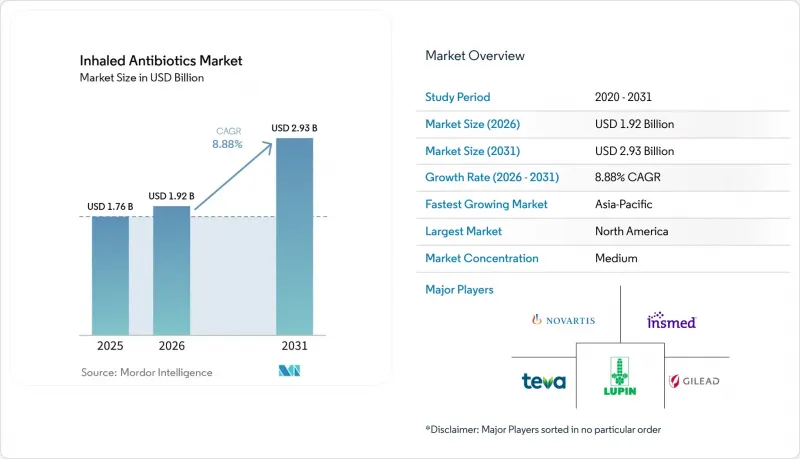
에 따르면 흡입용 항생제 시장 규모는 2025년에 17억 6,000만 달러로 평가되며, 2026년 19억 2,000만 달러에서 2031년까지 29억 3,000만 달러에 달할 것으로 예측되고 있으며, 예측 기간(2026-2031년)에 CAGR은 8.88%에 달할 전망입니다.
전 세계 흡입용 항생제 시장의 동향 및 인사이트
낭포성 섬유증 및 기관지확장증 환자 수 증가
낭포성 섬유증 및 비낭포성 섬유증성 기관지확장증은 흡입용 항생제 시장의 주요 수요 요인으로 계속 작용하고 있습니다. 낭포성 섬유증은 전 세계에서 7만 명의 환자에게 영향을 미치고 있는 반면, 비낭포성 섬유성 기관지확장증의 보고된 유병률은 진단 방법 및 지역에 따라 다르지만, 인구 10만 명당 8.2-52건에 달합니다. 고해상도 컴퓨터 단층촬영(HRCT)의 이용 확대에 따라 특히 진단 역량이 확대되고 있는 아시아와 라틴아메리카에서 그동안 진단되지 않았던 사례들이 확인되고 있습니다. 이러한 추세로 인해 전문의의 평가와 장기적인 호흡기 관리가 필요한 환자층이 확대되고 있습니다.
잔본(Zambon)사가 실시한 제3상 PROMIS-I 임상시험에는 비-CF(낭포성 섬유증) 기관지확장증 환자 377명이 등록되었습니다. 본 임상시험에서는 I-neb 시스템을 통해 투여된 흡입용 콜리스티메테이트 나트륨으로 인해 연간 폐 증상 악화가 39% 감소하고, 중증 악화가 59% 감소한 것으로 보고되었습니다. 이러한 결과는 이 환자군에 대한 대규모 이중 맹검 위약 대조 임상시험을 통해 얻은 근거를 제공합니다. 유럽호흡기학회 및 영국흉부학회의 지침에서는 적절한 기관지확장증 환자에 대한 항생제의 적정 사용과 흡입 요법을 연관 짓고 있으며, 재발성 감염이나 만성 보균 상태에서 본 약제의 사용을 지지하고 있습니다.
약제 내성 폐감염의 증가와 조기 발견
항생제 내성 문제로 인해 폐에 직접 치료제를 전달하는 항생제에 대한 관심이 높아지고 있습니다. WHO의 2025년 감시 보고서는 2016-2023년까지 110개국에서 보고된 사례를 포괄하고 있으며, 카르바페넴 내성 녹농균(P. aeruginosa)에 대한 내성 문제가 여전히 우려되고 있음을 강조하고 있습니다. 이 균은 병원내 폐렴 및 인공호흡기 관련 폐렴에서 흔히 발견되는 그람 음성 병원체입니다. 조기 미생물학적 동정을 통해 임상의는 원인균 및 폐내 감염 부위에 맞춰 치료를 진행할 수 있게 됩니다.
2025년 네트워크 메타분석에 따르면 네뷸라이저를 통한 토브라마이신 투여는 중증이 아닌 인공호흡기 관련 폐렴에서 임상적 회복을 개선하며, 전신 투여 대체요법과 비교했을 때 위험비는 1.7, 95% 신뢰구간은 1.1-2.7이었다고 보고되었습니다. WHO의 AwaRe 지침은 의료 시스템 전반에 걸쳐 적절한 항생제 선택과 사용을 지원하고 있습니다. 그 결과, 병원 처방집 위원회는 만성 폐감염에 대해 비경구 투여 및 흡입 요법 요법을 보다 면밀히 평가할 가능성이 있습니다. 장기간의 흡입용 항균제 사용은 내성균의 선별에 기여할 가능성이 있지만, 현재 이용 가능한 근거만으로는 현행 치료 지침을 변경해야 한다는 점을 시사하지는 않습니다.
치료비, 보험 급여 제한, 그리고 제한된 근거
높은 치료비로 인해 미국 이외의 지역에서는 브랜드 흡입용 항생제에 대한 접근이 제한되어 있었습니다. ARIKAYCE의 연간 치료비는 수만 달러에 달했습니다. 각국의 의료제도와 공립 병원의 처방집에서는 엄격한 경제적 기준이 적용되어, 보험 적용 대상은 첨부 문서에 승인된 제한된 환자 집단으로만 국한되었습니다. 그 결과, 임상적으로 적격한 환자 중 일부는 보험 환급 요건을 충족하지 못했습니다. 2025년 중국에서 실시된 분석에 따르면 기관지확장증 환자에서 흡입용 토브라마이신 용액은 네뷸라이저 투여용 콜리스티메타트 나트륨에 비해 경제적으로 우월한 것으로 나타났습니다. 환자 1인당 순이익은 1만 4,776위안에서 4만 7,361위안(2,045달러에서 6,554달러) 사이였습니다. 이 분석에서는 브랜드 전문 의약품이 아닌 제네릭 가격의 토브라마이신이 사용되었습니다. 의료기술평가(HTA) 절차로 인해 일부 국가에서는 도입이 12-24개월 지연되었습니다. 또한 난치성이 아닌 감염증에 대한 일상적인 사용에 관한 근거가 제한적이었기 때문에 특히 유럽 및 아시아태평양(APAC)에서 약제 리스트 등재에 대한 신중한 태도가 강화되었습니다.
부문 분석
2025년에는 에어로졸 제제 또는 정량 분무식 흡입기 제제가 제품 유형 부문의 38.56%를 차지했습니다. 이 점유율은 병원 및 전문 의료 시설에 널리 구축된 네뷸라이저 인프라를 반영한 것입니다. 토브라마이신이나 콜리스티메타트 나트륨과 같은 기존 약물은 다량의 약물을 필요로 하지만, 네뷸라이저를 사용하면 강한 흡기 노력이나 숨 참기 없이도 투여할 수 있습니다. 이러한 특성은 폐 기능이 현저히 저하된 환자에게 여전히 중요합니다.
드라이 파우더 부문은 2031년까지 연평균 성장률(CAGR) 10.55%로 성장할 것으로 예측됩니다. 2025년에 소아를 대상으로 한 연구에 따르면 Cyclops 기기를 통해 투여된 드라이 파우더 형태의 토브라마이신이 6세에서 18세 사이의 낭포성 섬유증 환자들에게서 양호한 내약성을 보인 것으로 밝혀졌습니다. 이 연구에서는 FEV1의 유의한 저하는 관찰되지 않았으며, 경미한 이상반응이 보고된 것 외에 네뷸라이저 투여에 비해 전신 노출량이 낮은 것으로 나타났습니다. 이러한 연구 결과는 휴대 가능한 장기 치료법에 대한 수요를 지원합니다. 스프레이 제제나 네뷸라이저용 용액은 휴대성보다는 약물전달량의 많음이나 신속한 치료가 우선시되는 급성기 및 중환자 치료 현장에서 여전히 중요한 역할을 하고 있습니다. 가압식 정량 흡입기(MDI)는 1회 흡입시 투여되는 약물량이 일반적으로 1mg 미만이기 때문에 그 역할은 제한적입니다. 이 용량은 수백 밀리그램이 필요한 항생제 투여 계획에는 적합하지 않습니다. 흡입용 항생제 시장의 제품 구성은 앞으로도 임상 현장의 상황과 투여량 요건을 계속 반영할 것입니다.
2025년 시점에 아미노글리코사이드계 항생제는 약물 분류별 부문의 58.67%를 차지했습니다. 토브라마이신 흡입액은 낭포성 섬유증에서 상당한 처방 실적을 보유하고 있으며, 여러 용량이 마련되어 있습니다. 2025년 10월, Ritedose사는 토브라마이신 흡입액 제네릭 의약품에 대해 FDA 승인을 획득하여, 적격 환자에 대한 제네릭 의약품 선택의 폭이 확대되었습니다. 아미노글리코사이드계 항생제는 낭포성 섬유증, 기관지확장증 및 비결핵성 항산균(NTM) 폐질환에서 여전히 중요한 위치를 차지하고 있습니다.
2025년 체계적 문헌인사이트에서는 아미카신 리포솜, 토브라마이신, 아즈트레오남 리신, 레보플록사신 및 콜리스틴을 비교했습니다. 그 결과, 이 5가지 약물 모두 대상인 낭포성 섬유증 및 기관지확장증 환자 집단에서 가래내 세균 밀도를 감소시키는 것으로 밝혀졌습니다. 또한 이 문헌인사이트에서는 각 약물 간의 배양 음성화율에 유의미한 차이가 확인되지 않았습니다. 효능이 동등한 경우, 투여 부담을 줄이거나 특정 임상적 요구에 부응하는 제품이 선택되게 되며, 이에 따라 기기의 설계나 제형 형태가 더욱 중요해질 가능성이 있습니다.
지역별 분석
2025년, 북미는 지역별 부문의 38.78%를 차지했습니다. 이는 승인된 치료법의 폭넓은 기반과 확립된 전문의의 처방 관행에 힘입은 결과입니다. FDA의 희귀질환 치료제 지정은 희귀 호흡기 질환에 대한 개발 및 승인 절차를 강화하여 미국의 흡입용 항생제 시장을 지원하고 있습니다. 또한 이 지역에는 토브라마이신 및 아즈트레오남의 제네릭 의약품을 통한 확고한 치료 기반이 마련되어 있습니다. 인스메드(Insmith)에 따르면 2026년 상반기 미국내 ‘ARIKAYCE’의 매출은 1억 3,310만 달러로, 2025년 상반기의 1억 3,300만 달러와 거의 비슷한 수준이었습니다. 캐나다에서는 등록 시스템과 연계된 낭포성 섬유증 처방을 통해 시장에 기여하고 있지만, 멕시코에서는 전문 의료 인프라와 접근성이 제한적이어서 그 기여도는 비교적 적습니다. 2026년 7월에 제출된 ‘ARIKAYCE’의 sNDA가 승인되면, 적격 환자층이 확대될 가능성이 있습니다.
유럽에는 첨단 호흡기 센터가 존재하지만, 국가에 따라 접근성은 다릅니다. 독일, 영국, 프랑스, 이탈리아, 스페인이 해당 지역내 처방량을 주도하고 있습니다. ‘ARIKAYCE 리포솜 590mg 네뷸라이저용 분산액’은 유럽에서 낭포성 섬유증(CF)을 동반하지 않는 기관지확장증에 따른 MAC 폐질환에 대해 승인되었습니다. 유럽의약품청(EMA)이 집중 승인 절차를 제공하고 있는 반면, 각국의 보험 급여 협상 및 지급 기관의 결정이 시장 접근성에 영향을 미치고 있습니다. 독일의 AMNOG 절차는 영국의 NICE 심사 절차보다 신속하게 전문의에게 접근할 수 있게 해 주며, 이것이 처방량 차이의 한 원인이 되고 있습니다. 또한 유럽의 호흡기 전문 기관에서는 기관지확장증 및 비결핵성 항산균(NTM) 감염증에 대한 치료 지침도 마련되어 있습니다. 사바라(Sabara)사의 ‘몰브리비(MOLBREEVI)’ 판매 승인 신청에 대해서는 2027년 1분기에 CHMP(유럽의약품위원회)의 결정이 내려질 전망이며, 이는 흡입형 폐 치료제 분야의 파이프라인 활동이 지속되고 있음을 보여줍니다.
아시아태평양은 2031년까지 연평균 성장률(CAGR) 12.72%로 성장할 것으로 예측됩니다. 중국과 인도에서는 전문 의료 서비스 및 고해상도 컴퓨터 단층촬영(CT)의 이용이 확대되고, 낭포성 섬유증(CF) 이외의 기관지확장증 사례의 식별이 개선됨에 따라 대규모 시장 기회가 창출되고 있습니다. WHO의 감시 보고서에 따르면 이 지역 전체의 병원내 감염에서 녹농균(P. aeruginosa)의 높은 약물 내성이 확인되었습니다. 일본은 ARIKAYCE의 PMDA 승인 및 비결핵성 항산균(NTM)에 대한 높은 인지도에 힘입어, 여전히 성숙한 고부가가치 시장으로 자리 잡고 있습니다.
기타 혜택:
- 엑셀 형식의 시장 예측(ME) 시트
- 3개월간의 애널리스트 지원
자주 묻는 질문
목차
제1장 서론
- 조사 전제조건과 시장 정의
- 조사 범위
제2장 조사 방법
제3장 개요
제4장 시장 구도
- 시장 개요
- 시장 성장 촉진요인
- 시장 성장 억제요인
- 밸류·공급망 분석
- 규제 상황
- 기술 전망
- Porter's Five Forces 분석
제5장 시장 규모와 성장 예측
- 제품 유형별
- 약제 클래스별
- 적응증별
- 최종사용자별
- 유통 채널별
- 지역별
- 북미
- 미국
- 캐나다
- 멕시코
- 유럽
- 독일
- 영국
- 프랑스
- 이탈리아
- 스페인
- 기타 유럽 국가
- 아시아태평양
- 중국
- 인도
- 일본
- 호주
- 한국
- 기타 아시아태평양 국가
- 중동 및 아프리카
- GCC
- 남아프리카공화국
- 기타 중동 및 아프리카 국가
- 남미
- 브라질
- 아르헨티나
- 기타 남미 국가
- 북미
제6장 경쟁 구도
- 시장 집중도
- 시장 점유율 분석
- 기업 개요
- Altan Pharma Limited
- Aradigm Corporation
- Bayer AG
- Chiesi Farmaceutici S.p.A.
- Cipla Limited
- Gilead Sciences, Inc.
- Insmed Incorporated
- Joincare Pharmaceutical Group Industry Co., Ltd.
- Kindeva Drug Delivery L.P.
- Lupin Limited
- Novartis AG
- PARI Pharma GmbH
- Pfizer Inc.
- Pharmaxis Ltd.
- Pulmatrix, Inc.
- Savara Inc.
- Spexis AG
- Teva Pharmaceutical Industries Ltd.
- Viatris Inc.
- Viatris Specialty LLC
- Zambon S.p.A.
제7장 시장 기회와 향후 전망
KSA 26.10.28According to Mordor Intelligence, the inhaled antibiotics market size was valued at USD 1.76 billion in 2025 and is estimated to grow from USD 1.92 billion in 2026 to reach USD 2.93 billion by 2031, at a CAGR of 8.88% during the forecast period (2026-2031).
Global Inhaled Antibiotics Market Trends and Insights
Growing Cystic Fibrosis and Bronchiectasis Burden
Cystic fibrosis and non-CF bronchiectasis remain key demand drivers for the inhaled antibiotics market. Cystic fibrosis affects 70,000 patients globally, while the reported incidence of non-CF bronchiectasis ranges from 8.2 to 52 cases per 100,000 people, depending on diagnostic practices and region. Increased use of high-resolution computed tomography identifies previously undiagnosed cases, particularly in Asia and Latin America, where diagnostic capacity is expanding. This trend broadens the patient pool requiring specialist assessment and long-term respiratory management.
Zambon's Phase 3 PROMIS-I study enrolled 377 patients with non-CF bronchiectasis. The study reported a 39% reduction in annual pulmonary exacerbations and a 59% reduction in severe exacerbations with inhaled colistimethate sodium delivered through the I-neb system. These results provided large-scale, double-blind, placebo-controlled evidence for this patient group. European Respiratory Society and British Thoracic Society guidance links antibiotic stewardship with inhaled therapy for suitable bronchiectasis patients, supporting its use in recurrent infections and chronic colonization.
Rising Drug-Resistant Pulmonary Infections and Earlier Detection
Antimicrobial resistance is increasing interest in antibiotics that deliver treatment directly to the lungs. The WHO 2025 surveillance report covered cases reported by 110 countries from 2016 through 2023 and highlighted continued resistance concerns for carbapenem-resistant P. aeruginosa. This organism is a common Gram-negative pathogen in hospital-acquired and ventilator-associated pneumonia. Earlier microbiological identification enables clinicians to align treatment with the causative organism and the pulmonary site of infection.
A 2025 network meta-analysis reported that nebulized tobramycin improved clinical recovery in non-severe ventilator-associated pneumonia, with a risk ratio of 1.7 and a 95% confidence interval of 1.1 to 2.7 compared with systemic alternatives. WHO AWaRe guidance supports appropriate antibiotic selection and use across health systems. Consequently, hospital formulary committees may evaluate parenteral and inhaled regimens more closely for chronic pulmonary infections. While long-term inhaled antibiotic use may contribute to resistance selection, the available evidence does not indicate a change in current treatment guidance.
Treatment Cost, Reimbursement Restrictions, and Limited Evidence
High treatment costs limited access to branded inhaled antibiotics outside the United States. Annual ARIKAYCE therapy costs reached the high tens of thousands of dollars. National health systems and public hospital formularies applied stringent economic thresholds and restricted coverage to narrow, label-approved populations. Consequently, some clinically eligible patients did not meet reimbursement requirements. A 2025 Chinese analysis found inhaled tobramycin inhalation solution economically dominant over nebulized colistimethate sodium for bronchiectasis patients. Net benefit per patient ranged from CNY 14,776 to CNY 47,361 (USD 2,045 to USD 6,554). The analysis used generic-priced tobramycin rather than branded specialty medicines. Health technology assessment processes delayed access by 12 to 24 months in some countries, while limited routine-use evidence in non-refractory infections increased formulary caution, particularly in Europe and APAC.
Other drivers and restraints analyzed in the detailed report include:
- Improved Nebulizer and Dry-Powder Delivery Technologies
- Expanded Use in Refractory NTM Lung Disease and Lower Systemic Exposure
- Bronchospasm, Airway Irritation, and Treatment Burden
For complete list of drivers and restraints, kindly check the Table Of Contents.
Segment Analysis
Aerosol or metered-dose inhaler formulations accounted for 38.56% of the product type segment in 2025. This share reflected the extensive nebulizer infrastructure across hospitals and specialty care settings. Established agents, including tobramycin and colistimethate sodium, require substantial drug loads that nebulizers can deliver without strong inspiratory effort or breath-hold coordination. These characteristics remain relevant for patients with severely reduced lung function.
The dry-powder segment is forecast to grow at a CAGR of 10.55% through 2031. A 2025 pediatric study found that dry-powder tobramycin delivered through the Cyclops device was well tolerated among cystic fibrosis patients aged 6 to 18 years. The study reported no significant decline in FEV1, mild adverse events, and lower systemic exposure than nebulized delivery. These findings support the demand for portable long-term treatment options. Spray formulations and nebulized solutions remain relevant in acute and intensive care settings, where high drug delivery volumes and rapid treatment take priority over portability. Pressurized metered-dose inhalers have a narrower role because each puff generally delivers less than 1 mg of drug. This dose is unsuitable for antibiotic regimens requiring several hundred milligrams. The Inhaled Antibiotics Market product mix will continue to reflect clinical settings and dose requirements.
Aminoglycosides held 58.67% of the drug class segment in 2025. Tobramycin inhalation solution has a substantial prescription base in cystic fibrosis and is available in several strengths. Ritedose received FDA approval for a generic tobramycin inhalation solution in October 2025, expanding generic options for eligible patients. Aminoglycosides remain important across cystic fibrosis, bronchiectasis, and NTM lung disease.
A 2025 systematic review compared amikacin liposome, tobramycin, aztreonam lysine, levofloxacin, and colistin. It found that all five agents reduced sputum bacterial density among relevant cystic fibrosis and bronchiectasis populations. The review found no significant difference in culture conversion among the agents. When efficacy is comparable, device design and formulation may become more important, favoring products that reduce administration burden or address specific clinical needs.
Complete Report Scope:
- By Product Type
- Aerosol or Metered-Dose Inhaler
- Dry-Powder Formulation
- Spray Formulation
- Nebulized Antibiotic Solution
- By Drug Class
- Aminoglycosides
- Fluoroquinolones
- Monobactams
- Polymyxins
- Macrolides
- Other Drug Classes
- By Indication
- Cystic Fibrosis
- Pneumonia
- Bronchitis
- Chronic Obstructive Pulmonary Disease With Bacterial Infection
- Asthma
- Other Respiratory Infections
- By End User
- Hospitals
- Specialty Clinics
- Respiratory Care Centers
- Ambulatory Care Centers
- Homecare Providers
- Others
- By Distribution Channel
- Hospital Pharmacies
- Retail Pharmacies
- Online Pharmacies
- Specialty Pharmacies
- Others
- By Geography
- North America
- United States
- Canada
- Mexico
- Europe
- Germany
- United Kingdom
- France
- Italy
- Spain
- Rest of Europe
- Asia-Pacific
- China
- India
- Japan
- Australia
- South Korea
- Rest of Asia-Pacific
- Middle East and Africa
- GCC
- South Africa
- Rest of Middle East and Africa
- South America
- Brazil
- Argentina
- Rest of South America
- North America
Geography Analysis
North America accounted for 38.78% of the geographic segment in 2025, supported by a broad base of approved therapies and established specialty prescribing. FDA orphan-drug designations strengthened the development and approval pathway for rare respiratory conditions, supporting the Inhaled Antibiotics Market in the United States. The region also has an established generic tobramycin and aztreonam treatment base. Insmed reported USD 133.1 million in U.S. ARIKAYCE revenue in the first half of 2026, compared with USD 133.0 million in the first half of 2025. Canada contributes through registry-linked cystic fibrosis prescribing, while Mexico has a smaller contribution due to limited specialty infrastructure and access. The July 2026 ARIKAYCE sNDA could expand the eligible patient population if approved.
Europe has advanced respiratory centers, although access varies across countries. Germany, the United Kingdom, France, Italy, and Spain lead regional prescribing volumes. ARIKAYCE Liposomal 590 mg Nebulizer Dispersion is approved in Europe for MAC lung disease in non-CF bronchiectasis. While the European Medicines Agency provides a centralized authorization process, national reimbursement negotiations and payer decisions influence market access. Germany's AMNOG process has supported faster specialist access than the United Kingdom's NICE review process, contributing to differences in prescription volumes. European respiratory institutions also develop treatment guidance for bronchiectasis and NTM. Savara's MOLBREEVI marketing authorization application is expected to receive a CHMP decision in the first quarter of 2027, indicating continued pipeline activity in inhaled pulmonary therapies.
Asia-Pacific is forecast to grow at a CAGR of 12.72% through 2031. China and India offer significant volume opportunities as specialist care and high-resolution computed tomography use expand, improving the identification of non-CF bronchiectasis cases. WHO surveillance reported high P. aeruginosa resistance in hospital-acquired infections across the region. Japan remains a mature, high-value market, supported by PMDA approval for ARIKAYCE and strong NTM awareness.
- Altan Pharma Limited
- Aradigm
- Bayer
- Chiesi Farmaceutici
- Cipla
- Gilead Sciences
- Insmed
- Joincare Pharmaceutical Group Industry Co., Ltd.
- Kindeva Drug Delivery
- Lupin
- Novartis
- PARI Pharma GmbH
- Pfizer
- Pharmaxis Ltd.
- Pulmatrix, Inc.
- Savara Inc.
- Spexis AG
- Teva Pharmaceutical Industries
- Viatris
- Viatris Specialty LLC
- Zambon S.p.A.
Additional Benefits:
- The market estimate (ME) sheet in Excel format
- 3 months of analyst support
TABLE OF CONTENTS
1 INTRODUCTION
- 1.1 Study Assumptions and Market Definition
- 1.2 Scope of the Study
2 RESEARCH METHODOLOGY
3 EXECUTIVE SUMMARY
4 MARKET LANDSCAPE
- 4.1 Market Overview
- 4.2 Market Drivers
- 4.2.1 Rising Burden of Cystic Fibrosis and Bronchiectasis
- 4.2.2 Increasing Prevalence of Drug-Resistant Pulmonary Infections
- 4.2.3 Expansion of Inhaled Antibiotic Use in Refractory Nontuberculous Mycobacterial Lung Disease
- 4.2.4 Advances in Nebulizer and Dry-Powder Delivery Technologies
- 4.2.5 Earlier Microbiological Detection Enabling Targeted Pulmonary Therapy
- 4.2.6 Reduced Systemic Exposure Through Lung-Localized Antibiotic Delivery
- 4.3 Market Restraints
- 4.3.1 Bronchospasm and Local Airway Irritation
- 4.3.2 High Treatment Cost and Reimbursement Restrictions
- 4.3.3 Device-Dependent Adherence and Treatment-Burden Challenges
- 4.3.4 Limited Evidence for Routine Use in Non-Refractory Infections
- 4.4 Value/Supply-Chain Analysis
- 4.5 Regulatory Landscape
- 4.6 Technological Outlook
- 4.7 Porter's Five Forces Analysis
- 4.7.1 Bargaining Power of Suppliers
- 4.7.2 Bargaining Power of Buyers
- 4.7.3 Threat of New Entrants
- 4.7.4 Threat of Substitutes
- 4.7.5 Competitive Rivalry
5 MARKET SIZE AND GROWTH FORECASTS (VALUE, USD)
- 5.1 By Product Type
- 5.1.1 Aerosol or Metered-Dose Inhaler
- 5.1.2 Dry-Powder Formulation
- 5.1.3 Spray Formulation
- 5.1.4 Nebulized Antibiotic Solution
- 5.2 By Drug Class
- 5.2.1 Aminoglycosides
- 5.2.2 Fluoroquinolones
- 5.2.3 Monobactams
- 5.2.4 Polymyxins
- 5.2.5 Macrolides
- 5.2.6 Other Drug Classes
- 5.3 By Indication
- 5.3.1 Cystic Fibrosis
- 5.3.2 Pneumonia
- 5.3.3 Bronchitis
- 5.3.4 Chronic Obstructive Pulmonary Disease With Bacterial Infection
- 5.3.5 Asthma
- 5.3.6 Other Respiratory Infections
- 5.4 By End User
- 5.4.1 Hospitals
- 5.4.2 Specialty Clinics
- 5.4.3 Respiratory Care Centers
- 5.4.4 Ambulatory Care Centers
- 5.4.5 Homecare Providers
- 5.4.6 Others
- 5.5 By Distribution Channel
- 5.5.1 Hospital Pharmacies
- 5.5.2 Retail Pharmacies
- 5.5.3 Online Pharmacies
- 5.5.4 Specialty Pharmacies
- 5.5.5 Others
- 5.6 By Geography
- 5.6.1 North America
- 5.6.1.1 United States
- 5.6.1.2 Canada
- 5.6.1.3 Mexico
- 5.6.2 Europe
- 5.6.2.1 Germany
- 5.6.2.2 United Kingdom
- 5.6.2.3 France
- 5.6.2.4 Italy
- 5.6.2.5 Spain
- 5.6.2.6 Rest of Europe
- 5.6.3 Asia-Pacific
- 5.6.3.1 China
- 5.6.3.2 India
- 5.6.3.3 Japan
- 5.6.3.4 Australia
- 5.6.3.5 South Korea
- 5.6.3.6 Rest of Asia-Pacific
- 5.6.4 Middle East and Africa
- 5.6.4.1 GCC
- 5.6.4.2 South Africa
- 5.6.4.3 Rest of Middle East and Africa
- 5.6.5 South America
- 5.6.5.1 Brazil
- 5.6.5.2 Argentina
- 5.6.5.3 Rest of South America
- 5.6.1 North America
6 COMPETITIVE LANDSCAPE
- 6.1 Market Concentration
- 6.2 Market Share Analysis
- 6.3 Company Profiles (includes Global Level Overview, Market Level Overview, Core Segments, Financials as available, Strategic Information, Market Rank/Share, Products and Services, Recent Developments)
- 6.3.1 Altan Pharma Limited
- 6.3.2 Aradigm Corporation
- 6.3.3 Bayer AG
- 6.3.4 Chiesi Farmaceutici S.p.A.
- 6.3.5 Cipla Limited
- 6.3.6 Gilead Sciences, Inc.
- 6.3.7 Insmed Incorporated
- 6.3.8 Joincare Pharmaceutical Group Industry Co., Ltd.
- 6.3.9 Kindeva Drug Delivery L.P.
- 6.3.10 Lupin Limited
- 6.3.11 Novartis AG
- 6.3.12 PARI Pharma GmbH
- 6.3.13 Pfizer Inc.
- 6.3.14 Pharmaxis Ltd.
- 6.3.15 Pulmatrix, Inc.
- 6.3.16 Savara Inc.
- 6.3.17 Spexis AG
- 6.3.18 Teva Pharmaceutical Industries Ltd.
- 6.3.19 Viatris Inc.
- 6.3.20 Viatris Specialty LLC
- 6.3.21 Zambon S.p.A.
7 MARKET OPPORTUNITIES AND FUTURE OUTLOOK
- 7.1 White-Space and Unmet-Need Assessment


