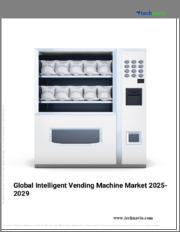
|
시장보고서
상품코드
1525935
지능형 자동판매기 시장 : 산업 분석, 규모, 점유율, 성장, 동향, 예측(2024-2033년)Intelligent Vending Machine Market: Global Industry Analysis, Size, Share, Growth, Trends, and Forecast, 2024-2033 |
||||||

Persistence Market Research는 최근 지능형 자동판매기 세계 시장에 대한 종합 보고서를 발표했습니다. 이 보고서는 시장 성장 촉진요인, 동향, 기회 및 과제를 포함한 중요한 시장 역학을 철저히 평가하고 시장 구조에 대한 자세한 통찰력을 제공합니다.
주요 인사이트 지능형 자동판매기 시장
- 시장 규모(2024E) : 280억 3,660만
- 예측 시장 규모(2033F) : 831억 1,050만 달러
- 세계 시장 성장률(CAGR 2024 to 2033) : 12.8%
지능형 자동판매기 시장 - 조사 범위
지능형 자동판매기는 IoT, AI, 머신러닝 등의 첨단 기술을 통합하여 사용자 경험 향상, 실시간 데이터 분석 및 자동 재고 관리를 제공합니다. 이러한 자동판매기는 소매, 교통허브, 병원, 교육기관, 기업 사무실 등 다양한 용도에 대응해, 간식이나 음료로부터 전자기기나 의약품까지 폭넓은 상품을 제공합니다. 시장 성장의 원동력은 편의성을 요구하는 소비자 요구 증가, 판매 기술의 진보, 현금없는 결제 시스템의 통합, 업무 효율성 및 고객 만족도의 향상입니다.
시장 성장 촉진요인
세계의 지능형 자동판매기 시장은 기계의 기능성과 고객 참여를 높이는 소매 환경에서 IoT와 AI 기술의 채택 확대 등 몇 가지 중요한 요인에 의해 추진되고 있습니다. 현금없는 거래 동향 증가와 모바일 지갑 및 비접촉 카드와 같은 디지털 결제 시스템의 통합은 시장 확대의 원동력이되었습니다. 또한, 자동판매기의 건강하고 유기적인 제품에 대한 수요 증가는 소비자의 선호와 일치하여 시장 성장을 가속합니다. 원격 모니터링과 예지 보전과 같은 기술적 진보는 기계의 신뢰성을 향상시키고, 다운타임을 줄이고, 다양한 분야에서 시장 도입을 촉진하고 있습니다.
시장 성장 억제요인
유망한 성장이 예상되는 지능형 자동판매기 시장은 초기 투자 비용의 높이, 기술적 복잡성, 사이버 보안 문제 등의 문제에 직면하고 있습니다. 첨단기술의 통합에는 상당한 자본지출이 필요하며, 중소기업에게는 장벽이 될 수 있습니다. 또한 이러한 기술적으로 고급 기계를 관리하고 유지하는 복잡성으로 인해 전문 기술과 교육이 필요하며 운영 비용이 증가할 수 있습니다. 데이터 유출 및 해킹을 포함한 사이버 보안 위협은 지능형 자동 판매 시스템의 무결성과 신뢰성에 위험을 초래하기 때문에 강력한 보안 대책과 프로토콜이 필요합니다.
시장 기회
지능형 자동판매기 시장은 기술 혁신, 소비자 선호도의 진화, 애플리케이션 확대로 큰 성장 기회를 제공합니다. 맞춤형 사용자 경험과 타겟팅된 마케팅을 위한 AI와 머신러닝의 통합은 고객 만족도와 충성도를 높입니다. 게다가 대중교통 허브, 병원, 교육기관 등 기존과는 다른 환경에서 지능형 판매 솔루션을 채택하면 시장 범위를 넓히고 기술 혁신을 자극합니다. 전략적 파트너십, R&D 투자, 사용자 친화적이고 비용 효율적인 판매 솔루션의 도입은 새로운 기회를 활용하고 역동적인 판매 경기장에서 시장 리더십을 유지하는 데 필수적입니다.
이 보고서에서 다루는 주요 질문
- 세계의 지능형 자동판매기 시장의 성장을 가속하는 주요 요인은?
- 다양한 분야에서 지능형 자동판매기의 도입을 촉진하는 기술과 용도는 무엇인가?
- 기술의 진보는 지능형 자동판매기 시장 경쟁 구도를 어떻게 바꾸고 있는가?
- 지능형 자동판매기 시장에 기여하는 주요 기업은 누군가와 시장의 관련성을 유지하기 위해 어떤 전략을 채택하고 있는가?
- 세계의 지능형 자동판매기 시장의 새로운 동향과 장래성은?
목차
제1장 주요 요약
제2장 시장 개요
- 시장 범위/분류
- 시장의 정의/범위/제한
제3장 주요 시장 동향
- 시장에 영향을 주는 주요 동향
- 제품 혁신/개발 동향
제4장 가격 분석
- 제품 유형별 가격 분석
- 평균 가격 분석 벤치마크
제5장 세계의 지능형 자동판매기 시장 수요(백만 달러) 분석
- 과거 시장 매출(백만 달러) 분석, 2019-2023년
- 현재 및 장래 시장 매출(백만 달러) 예측, 2024-2033년
- 전년대비 성장 동향 분석
- 절대 수익 기회
제6장 시장 배경
- 거시경제 요인
- 예측 요인- 관련성과 영향
- 밸류체인
- COVID-19 위기- 영향 평가
- 시장 역학
제7장 세계의 지능형 자동판매기 시장 분석 : 기계 유형별
- 소개/주요 조사 결과
- 시장 규모(백만 달러)의 과거 분석, 기계 유형별, 2019-2023년
- 현재 및 장래 시장 규모(백만 달러) 분석과 예측, 기계 유형별, 2024-2033년
- 자립형 지능형 자동판매기
- 벽걸이형 지능형 자동판매기
- 기계 유형별 시장의 매력 분석
제8장 세계의 지능형 자동판매기 시장 분석 : 제품 유형별
- 소개/주요 조사 결과
- 시장 규모(백만 달러)의 과거 분석, 제품 유형별, 2019-2023년
- 현재 및 장래 시장 규모(백만 달러) 분석과 예측, 제품 유형별, 2024-2033년
- 포장 식품과 스낵용 지능형 자동판매기
- 음료용 지능형 자동판매기
- 식품 및 음료 복합형 지능형 자동판매기
- 의료용품 및 위생용품용 지능형 자동판매기
- 기타
- 제품 유형별 시장의 매력 분석
제9장 세계의 지능형 자동판매기 시장 분석 : 용도별
- 소개/주요 조사 결과
- 시장 규모(백만 달러)의 과거 분석, 용도별, 2019-2023년
- 현재 및 장래 시장 규모(백만 달러) 분석과 예측, 용도별, 2024-2033년
- 병원 및 진료소용 지능형 자동판매기
- 호텔 및 레스토랑용 지능형 자동판매기
- 쇼핑몰이나 소매점용 지능형 자동판매기
- 공항 및 철도역용 지능형 자동판매기
- 기업 및 오피스용 지능형 자동판매기
- 학술기관용 지능형 자동판매기
- 기타
- 용도별 시장의 매력 분석
제10장 세계의 지능형 자동판매기 시장 분석 : 지역별
- 소개/주요 조사 결과
- 시장 규모(백만 달러)의 과거 분석, 지역별, 2019-2023년
- 현재 및 장래 시장 규모(백만 달러) 분석과 예측, 지역별, 2024-2033년
- 북미
- 라틴아메리카
- 유럽
- 동아시아
- 남아시아태평양
- 중동 및 아프리카
- 지역별 시장의 매력 분석
제11장 북미의 지능형 자동판매기 시장 분석
제12장 라틴아메리카의 지능형 자동판매기 시장 분석
제13장 유럽의 지능형 자동판매기 시장 분석
제14장 남아시아·태평양 지역의 지능형 자동판매기 시장 분석
제15장 동아시아의 지능형 자동판매기 시장 분석
제16장 중동 및 아프리카의 지능형 자동판매기 시장 분석
제17장 주요 국가별 지능형 자동판매기 시장 분석
- 미국
- 캐나다
- 멕시코
- 브라질
- 독일
- 이탈리아
- 프랑스
- 영국
- 스페인
- 베네룩스
- 러시아
- 기타 유럽
- 중국
- 일본
- 한국
- 인도
- 말레이시아
- 인도네시아
- 싱가포르
- 호주 및 뉴질랜드
- GCC 국가
- 터키
- 남아프리카
- 기타 중동 및 아프리카
제18장 시장 구조 분석
- 기업 Tier별 시장 분석
- 주요 기업의 시장 점유율 분석
- 시장현재분석
제19장 경쟁 분석
- 경쟁 대시보드
- 경쟁 벤치마킹
- 경쟁의 상세
- Fuji Electric Co., Ltd.
- Royal Vendors, Inc.
- Crane Merchandising Systems
- Sanden Holdings Corporation
- N&W Global Vending SpA
- Seaga
- FAS International SPA
- Rhea Vendors Group Spa
- Azkoyen Group
- Sielaff GmbH &Co. KG Company Snapshot
- Automated Merchandising Systems Inc.
- Bianchi Industry Spa
- Jofemar Corporation
- Continental Vending Inc.
- Automatic Vending Specialists
제20장 사용된 전제조건과 약어
제21장 조사 방법
JHS 24.08.14Persistence Market Research has recently released a comprehensive report on the worldwide market for intelligent vending machines. The report offers a thorough assessment of crucial market dynamics, including drivers, trends, opportunities, and challenges, providing detailed insights into the market structure.
Key Insights: Intelligent Vending Machine Market
- Market Size (2024E): USD 28036.6 Mn
- Projected Market Value (2033F): USD 83110.5 Mn
- Global Market Growth Rate (CAGR 2024 to 2033): 12.8%
Intelligent Vending Machine Market - Report Scope
Intelligent vending machines integrate advanced technologies such as IoT, AI, and machine learning to provide enhanced user experiences, real-time data analytics, and automated inventory management. These machines cater to diverse applications, including retail, transportation hubs, hospitals, educational institutions, and corporate offices, offering a wide range of products from snacks and beverages to electronics and pharmaceuticals. Market growth is driven by increasing consumer demand for convenience, advancements in vending technology, and the integration of cashless payment systems, enhancing operational efficiency and customer satisfaction.
Market Growth Drivers
The global intelligent vending machine market is propelled by several key factors, including the growing adoption of IoT and AI technologies in retail environments, which enhance machine functionality and customer engagement. The rising trend of cashless transactions and the integration of digital payment systems, such as mobile wallets and contactless cards, drive market expansion. Additionally, the increasing demand for healthy and organic products in vending machines aligns with consumer preferences, promoting market growth. Technological advancements, such as remote monitoring and predictive maintenance, improve machine reliability and reduce downtime, fostering market adoption across various sectors.
Market Restraints
Despite promising growth prospects, the intelligent vending machine market faces challenges related to high initial investment costs, technical complexities, and cybersecurity concerns. The integration of advanced technologies requires substantial capital expenditure, which may pose a barrier for small and medium-sized enterprises. Additionally, the complexity of managing and maintaining these technologically advanced machines necessitates specialized skills and training, potentially increasing operational costs. Cybersecurity threats, including data breaches and hacking, pose risks to the integrity and reliability of intelligent vending systems, necessitating robust security measures and protocols.
Market Opportunities
The intelligent vending machine market presents significant growth opportunities driven by technological innovations, evolving consumer preferences, and expanding applications. The integration of AI and machine learning for personalized user experiences and targeted marketing enhances customer satisfaction and loyalty. Furthermore, the adoption of intelligent vending solutions in non-traditional settings, such as public transportation hubs, hospitals, and educational institutions, broadens market scope and stimulates innovation. Strategic partnerships, investment in research and development, and the introduction of user-friendly, cost-effective vending solutions are essential to capitalize on emerging opportunities and sustain market leadership in the dynamic vending landscape.
Key Questions Answered in the Report
- What are the primary factors driving the growth of the intelligent vending machine market globally?
- Which technologies and applications are driving intelligent vending adoption across different sectors?
- How are technological advancements reshaping the competitive landscape of the intelligent vending machine market?
- Who are the key players contributing to the intelligent vending machine market, and what strategies are they employing to maintain market relevance?
- What are the emerging trends and future prospects in the global intelligent vending machine market?
Competitive Intelligence and Business Strategy
Leading players in the global intelligent vending machine market, including Azkoyen Group, Fuji Electric Co., Ltd., and Crane Merchandising Systems, focus on innovation, product differentiation, and strategic partnerships to gain a competitive edge. These companies invest in R&D to develop advanced vending solutions, including IoT-enabled machines, AI-powered interfaces, and integrated payment systems, catering to diverse consumer needs and operational requirements. Collaborations with technology providers, retail chains, and regulatory agencies facilitate market access and promote technology adoption. Moreover, emphasis on consumer insights, data analytics, and personalized services fosters market growth and enhances customer experiences in the rapidly evolving vending landscape.
Key Companies Profiled
- Fuji Electric Co., Ltd.
- Royal Vendors, Inc.
- Crane Merchandising Systems
- Sanden Holdings Corporation
- N&W Global Vending S.p.A.
- Seaga
- FAS International S.P.A.
- Rhea Vendors Group Spa
- Azkoyen Group
- Sielaff GmbH & Co. KG Company Snapshot
- Automated Merchandising Systems Inc.
- Bianchi Industry Spa
- Jofemar Corporation
- Continental Vending Inc.
- Automatic Vending Specialists
Key Segments of Intelligent Vending Machines Market Industry Research
By Machine Type:
- Free-Standing
- Wall-Mounted
By Product Type:
- Packaged Food & Snacks
- Beverages
- Combination (Food & Beverages)
- Medical Supplies & Hygiene Products
By Application:
- Hospitals & Clinics
- Hotels & Restaurants
- Malls & Retail Stores
- Airports & Railways Stations
- Corporates & Offices
- Academic Institutions
By Region:
- North America
- Latin America
- Europe
- East Asia
- South Asia Pacific
- Middle East and Africa
Table of Contents
1. Executive Summary
- 1.1. Global Market Outlook
- 1.2. Demand Side Trends
- 1.3. Supply Side Trends
- 1.4. Analysis and Recommendations
2. Market Overview
- 2.1. Market Coverage / Taxonomy
- 2.2. Market Definition / Scope / Limitations
3. Key Market Trends
- 3.1. Key Trends Impacting the Market
- 3.2. Product Innovation / Development Trends
4. Pricing Analysis
- 4.1. Pricing Analysis, By Product Type
- 4.2. Average Pricing Analysis Benchmark
5. Global Intelligent Vending Machines Market Demand (in Value in US$ Mn) Analysis 2019-2023 and Forecast, 2024-2033
- 5.1. Historical Market Value (US$ Mn) Analysis, 2019-2023
- 5.2. Current and Future Market Value (US$ Mn) Projections, 2024-2033
- 5.2.1. Y-o-Y Growth Trend Analysis
- 5.2.2. Absolute $ Opportunity Analysis
6. Market Background
- 6.1. Macro-Economic Factors
- 6.2. Forecast Factors - Relevance & Impact
- 6.3. Value Chain
- 6.4. COVID-19 Crisis - Impact Assessment
- 6.4.1. Current Statistics
- 6.4.2. Short-Mid-Long Term Outlook
- 6.4.3. Likely Rebound
- 6.5. Market Dynamics
- 6.5.1. Drivers
- 6.5.2. Restraints
- 6.5.3. Opportunities
7. Global Intelligent Vending Machines Market Analysis 2019-2023 and Forecast 2024-2033, by Machine Type
- 7.1. Introduction / Key Findings
- 7.2. Historical Market Size (US$ Mn) Analysis By Machine Type, 2019-2023
- 7.3. Current and Future Market Size (US$ Mn) Analysis and Forecast By Machine Type, 2024-2033
- 7.3.1. Free-Standing Intelligent Vending Machines
- 7.3.2. Wall-Mounted Intelligent Vending Machines
- 7.4. Market Attractiveness Analysis By Machine Type
8. Global Intelligent Vending Machines Market Analysis 2019-2023 and Forecast 2024-2033, by Product Type
- 8.1. Introduction / Key Findings
- 8.2. Historical Market Size (US$ Mn) Analysis By Product Type, 2019-2023
- 8.3. Current and Future Market Size (US$ Mn) Analysis and Forecast By Product Type, 2024-2033
- 8.3.1. Intelligent Vending Machines for Packaged Food & Snacks
- 8.3.2. Intelligent Vending Machines for Beverages
- 8.3.3. Combination (Food & Beverages) Intelligent Vending Machines
- 8.3.4. Intelligent Vending Machines for Medical Supplies & Hygiene Products
- 8.3.5. Others
- 8.4. Market Attractiveness Analysis By Product Type
9. Global Intelligent Vending Machines Market Analysis 2019-2023 and Forecast 2024-2033, by Application
- 9.1. Introduction / Key Findings
- 9.2. Historical Market Size (US$ Mn) Analysis By Application, 2019-2023
- 9.3. Current and Future Market Size (US$ Mn) Analysis and Forecast By Application, 2024-2033
- 9.3.1. Intelligent Vending Machines for Hospitals & Clinics
- 9.3.2. Intelligent Vending Machines for Hotels & Restaurants
- 9.3.3. Intelligent Vending Machines for Malls & Retail Stores
- 9.3.4. Intelligent Vending Machines for Airports & Railways Stations
- 9.3.5. Intelligent Vending Machines for Corporates & Offices
- 9.3.6. Intelligent Vending Machines for Academic Institutions
- 9.3.7. Others
- 9.4. Market Attractiveness Analysis By Application
10. Global Intelligent Vending Machines Market Analysis 2019-2023 and Forecast 2024-2033, by Region
- 10.1. Introduction / Key Findings
- 10.2. Historical Market Size (US$ Mn) Analysis By Region, 2019-2023
- 10.3. Current and Future Market Size (US$ Mn) Analysis and Forecast By Region, 2024-2033
- 10.3.1. North America
- 10.3.2. Latin America
- 10.3.3. Europe
- 10.3.4. East Asia
- 10.3.5. South Asia Pacific
- 10.3.6. Middle East and Africa
- 10.4. Market Attractiveness Analysis By Region
11. North America Intelligent Vending Machines Market Analysis 2019-2023 and Forecast 2024-2033
- 11.1. Introduction
- 11.2. Historical Market Size (US$ Mn) Trend Analysis By Market Taxonomy, 2019-2023
- 11.3. Current and Future Market Size (US$ Mn) Forecast By Market Taxonomy, 2024-2033
- 11.3.1. By Machine Type
- 11.3.2. By Product Type
- 11.3.3. By Application
- 11.3.4. By Country
- 11.3.4.1. U.S.
- 11.3.4.2. Canada
- 11.4. Market Attractiveness Analysis
- 11.4.1. By Machine Type
- 11.4.2. By Product Type
- 11.4.3. By Application
- 11.4.4. By Country
12. Latin America Intelligent Vending Machines Market Analysis 2019-2023 and Forecast 2024-2033
- 12.1. Introduction
- 12.2. Historical Market Size (US$ Mn) Trend Analysis By Market Taxonomy, 2019-2023
- 12.3. Current and Future Market Size (US$ Mn) Forecast By Market Taxonomy, 2024-2033
- 12.3.1. By Machine Type
- 12.3.2. By Product Type
- 12.3.3. By Application
- 12.3.4. By Country
- 12.3.4.1. Brazil
- 12.3.4.2. Mexico
- 12.3.4.3. Rest of Latin America
- 12.4. Market Attractiveness Analysis
- 12.4.1. By Machine Type
- 12.4.2. By Product Type
- 12.4.3. By Application
- 12.4.4. By Country
13. Europe Intelligent Vending Machines Market Analysis 2019-2023 and Forecast 2024-2033
- 13.1. Introduction
- 13.2. Historical Market Size (US$ Mn) Trend Analysis By Market Taxonomy, 2019-2023
- 13.3. Current and Future Market Size (US$ Mn) Forecast By Market Taxonomy, 2024-2033
- 13.3.1. By Machine Type
- 13.3.2. By Product Type
- 13.3.3. By Application
- 13.3.4. By Country
- 13.3.4.1. Germany
- 13.3.4.2. Italy
- 13.3.4.3. France
- 13.3.4.4. U.K.
- 13.3.4.5. Spain
- 13.3.4.6. BENELUX
- 13.3.4.7. Russia
- 13.3.4.8. Rest of Europe
- 13.4. Market Attractiveness Analysis
- 13.4.1. By Machine Type
- 13.4.2. By Product Type
- 13.4.3. By Application
- 13.4.4. By Country
14. South Asia & Pacific Intelligent Vending Machines Market Analysis 2019-2023 and Forecast 2024-2033
- 14.1. Introduction
- 14.2. Historical Market Size (US$ Mn) Trend Analysis By Market Taxonomy, 2019-2023
- 14.3. Current and Future Market Size (US$ Mn) Forecast By Market Taxonomy, 2024-2033
- 14.3.1. By Machine Type
- 14.3.2. By Product Type
- 14.3.3. By Application
- 14.3.4. By Country
- 14.3.4.1. India
- 14.3.4.2. Indonesia
- 14.3.4.3. Malaysia
- 14.3.4.4. Singapore
- 14.3.4.5. Australia & New Zealand
- 14.3.4.6. Rest of South Asia and Pacific
- 14.4. Market Attractiveness Analysis
- 14.4.1. By Machine Type
- 14.4.2. By Product Type
- 14.4.3. By Application
- 14.4.4. By Country
15. East Asia Intelligent Vending Machines Market Analysis 2019-2023 and Forecast 2024-2033
- 15.1. Introduction
- 15.2. Historical Market Size (US$ Mn) Trend Analysis By Market Taxonomy, 2019-2023
- 15.3. Current and Future Market Size (US$ Mn) Forecast By Market Taxonomy, 2024-2033
- 15.3.1. By Machine Type
- 15.3.2. By Product Type
- 15.3.3. By Application
- 15.3.4. By Country
- 15.3.4.1. China
- 15.3.4.2. Japan
- 15.3.4.3. South Korea
- 15.4. Market Attractiveness Analysis
- 15.4.1. By Machine Type
- 15.4.2. By Product Type
- 15.4.3. By Application
- 15.4.4. By Country
16. Middle East and Africa Intelligent Vending Machines Market Analysis 2019-2023 and Forecast 2024-2033
- 16.1. Introduction
- 16.2. Historical Market Size (US$ Mn) Trend Analysis By Market Taxonomy, 2019-2023
- 16.3. Current and Future Market Size (US$ Mn) Forecast By Market Taxonomy, 2024-2033
- 16.3.1. By Machine Type
- 16.3.2. By Product Type
- 16.3.3. By Application
- 16.3.4. By Country
- 16.3.4.1. GCC Countries
- 16.3.4.2. Turkey
- 16.3.4.3. South Africa
- 16.3.4.4. Rest of Middle East and Africa
- 16.4. Market Attractiveness Analysis
- 16.4.1. By Machine Type
- 16.4.2. By Product Type
- 16.4.3. By Application
- 16.4.4. By Country
17. Key Countries Analysis- Intelligent Vending Machines Market
- 17.1. U.S. Intelligent Vending Machines Market Analysis
- 17.1.1. By Machine Type
- 17.1.2. By Product Type
- 17.1.3. By Application
- 17.2. Canada Intelligent Vending Machines Market Analysis
- 17.2.1. By Machine Type
- 17.2.2. By Product Type
- 17.2.3. By Application
- 17.3. Mexico Intelligent Vending Machines Market Analysis
- 17.3.1. By Machine Type
- 17.3.2. By Product Type
- 17.3.3. By Application
- 17.4. Brazil Intelligent Vending Machines Market Analysis
- 17.4.1. By Machine Type
- 17.4.2. By Product Type
- 17.4.3. By Application
- 17.5. Germany Intelligent Vending Machines Market Analysis
- 17.5.1. By Machine Type
- 17.5.2. By Product Type
- 17.5.3. By Application
- 17.6. Italy Intelligent Vending Machines Market Analysis
- 17.6.1. By Machine Type
- 17.6.2. By Product Type
- 17.6.3. By Application
- 17.7. France Intelligent Vending Machines Market Analysis
- 17.7.1. By Machine Type
- 17.7.2. By Product Type
- 17.7.3. By Application
- 17.8. U.K. Intelligent Vending Machines Market Analysis
- 17.8.1. By Machine Type
- 17.8.2. By Product Type
- 17.8.3. By Application
- 17.9. Spain Intelligent Vending Machines Market Analysis
- 17.9.1. By Machine Type
- 17.9.2. By Product Type
- 17.9.3. By Application
- 17.10. BENELUX Intelligent Vending Machines Market Analysis
- 17.10.1. By Machine Type
- 17.10.2. By Product Type
- 17.10.3. By Application
- 17.11. Russia Intelligent Vending Machines Market Analysis
- 17.11.1. By Machine Type
- 17.11.2. By Product Type
- 17.11.3. By Application
- 17.12. Rest of Europe Intelligent Vending Machines Market Analysis
- 17.12.1. By Machine Type
- 17.12.2. By Product Type
- 17.12.3. By Application
- 17.13. China Intelligent Vending Machines Market Analysis
- 17.13.1. By Machine Type
- 17.13.2. By Product Type
- 17.13.3. By Application
- 17.14. Japan Intelligent Vending Machines Market Analysis
- 17.14.1. By Machine Type
- 17.14.2. By Product Type
- 17.14.3. By Application
- 17.15. South Korea Intelligent Vending Machines Market Analysis
- 17.15.1. By Machine Type
- 17.15.2. By Product Type
- 17.15.3. By Application
- 17.16. India Intelligent Vending Machines Market Analysis
- 17.16.1. By Machine Type
- 17.16.2. By Product Type
- 17.16.3. By Application
- 17.17. Malaysia Intelligent Vending Machines Market Analysis
- 17.17.1. By Machine Type
- 17.17.2. By Product Type
- 17.17.3. By Application
- 17.18. Indonesia Intelligent Vending Machines Market Analysis
- 17.18.1. By Machine Type
- 17.18.2. By Product Type
- 17.18.3. By Application
- 17.19. Singapore Intelligent Vending Machines Market Analysis
- 17.19.1. By Machine Type
- 17.19.2. By Product Type
- 17.19.3. By Application
- 17.20. Australia and New Zealand Intelligent Vending Machines Market Analysis
- 17.20.1. By Machine Type
- 17.20.2. By Product Type
- 17.20.3. By Application
- 17.21. GCC Countries Intelligent Vending Machines Market Analysis
- 17.21.1. By Machine Type
- 17.21.2. By Product Type
- 17.21.3. By Application
- 17.22. Turkey Intelligent Vending Machines Market Analysis
- 17.22.1. By Machine Type
- 17.22.2. By Product Type
- 17.22.3. By Application
- 17.23. South Africa Intelligent Vending Machines Market Analysis
- 17.23.1. By Machine Type
- 17.23.2. By Product Type
- 17.23.3. By Application
- 17.24. Rest of Middle East and Africa Intelligent Vending Machines Market Analysis
- 17.24.1. By Machine Type
- 17.24.2. By Product Type
- 17.24.3. By Application
18. Market Structure Analysis
- 18.1. Market Analysis by Tier of Companies
- 18.2. Market Share Analysis of Top Players
- 18.3. Market Presence Analysis
19. Competition Analysis
- 19.1. Competition Dashboard
- 19.2. Competition Benchmarking
- 19.3. Competition Deep Dive
- 19.3.1. Fuji Electric Co., Ltd.
- 19.3.1.1. Business Overview
- 19.3.1.2. Product Portfolio
- 19.3.1.3. Profitability by Market Segments (Business Segments/Region)
- 19.3.1.4. Key Strategy & Developments
- 19.3.2. Royal Vendors, Inc.
- 19.3.2.1. Business Overview
- 19.3.2.2. Product Portfolio
- 19.3.2.3. Profitability by Market Segments (Business Segments/Region)
- 19.3.2.4. Key Strategy & Developments
- 19.3.3. Crane Merchandising Systems
- 19.3.3.1. Business Overview
- 19.3.3.2. Product Portfolio
- 19.3.3.3. Profitability by Market Segments (Business Segments/Region)
- 19.3.3.4. Key Strategy & Developments
- 19.3.4. Sanden Holdings Corporation
- 19.3.4.1. Business Overview
- 19.3.4.2. Product Portfolio
- 19.3.4.3. Profitability by Market Segments (Business Segments/Region)
- 19.3.4.4. Key Strategy & Developments
- 19.3.5. N&W Global Vending S.p.A.
- 19.3.5.1. Business Overview
- 19.3.5.2. Product Portfolio
- 19.3.5.3. Profitability by Market Segments (Business Segments/Region)
- 19.3.5.4. Key Strategy & Developments
- 19.3.6. Seaga
- 19.3.6.1. Business Overview
- 19.3.6.2. Product Portfolio
- 19.3.6.3. Profitability by Market Segments (Business Segments/Region)
- 19.3.6.4. Key Strategy & Developments
- 19.3.7. FAS International S.P.A.
- 19.3.7.1. Business Overview
- 19.3.7.2. Product Portfolio
- 19.3.7.3. Profitability by Market Segments (Business Segments/Region)
- 19.3.7.4. Key Strategy & Developments
- 19.3.8. Rhea Vendors Group Spa
- 19.3.8.1. Business Overview
- 19.3.8.2. Product Portfolio
- 19.3.8.3. Profitability by Market Segments (Business Segments/Region)
- 19.3.8.4. Key Strategy & Developments
- 19.3.9. Azkoyen Group
- 19.3.9.1. Business Overview
- 19.3.9.2. Product Portfolio
- 19.3.9.3. Profitability by Market Segments (Business Segments/Region)
- 19.3.9.4. Key Strategy & Developments
- 19.3.10. Sielaff GmbH & Co. KG Company Snapshot
- 19.3.10.1. Business Overview
- 19.3.10.2. Product Portfolio
- 19.3.10.3. Profitability by Market Segments (Business Segments/Region)
- 19.3.10.4. Key Strategy & Developments
- 19.3.11. Automated Merchandising Systems Inc.
- 19.3.11.1. Business Overview
- 19.3.11.2. Product Portfolio
- 19.3.11.3. Profitability by Market Segments (Business Segments/Region)
- 19.3.11.4. Key Strategy & Developments
- 19.3.12. Bianchi Industry Spa
- 19.3.12.1. Business Overview
- 19.3.12.2. Product Portfolio
- 19.3.12.3. Profitability by Market Segments (Business Segments/Region)
- 19.3.12.4. Key Strategy & Developments
- 19.3.13. Jofemar Corporation
- 19.3.13.1. Business Overview
- 19.3.13.2. Product Portfolio
- 19.3.13.3. Profitability by Market Segments (Business Segments/Region)
- 19.3.13.4. Key Strategy & Developments
- 19.3.14. Continental Vending Inc.
- 19.3.14.1. Business Overview
- 19.3.14.2. Product Portfolio
- 19.3.14.3. Profitability by Market Segments (Business Segments/Region)
- 19.3.14.4. Key Strategy & Developments
- 19.3.15. Automatic Vending Specialists
- 19.3.15.1. Business Overview
- 19.3.15.2. Product Portfolio
- 19.3.15.3. Profitability by Market Segments (Business Segments/Region)
- 19.3.15.4. Key Strategy & Developments
- 19.3.1. Fuji Electric Co., Ltd.