|
시장보고서
상품코드
1867593
외골격 로봇 : 시장 점유율과 순위, 전체 판매량 및 수요 예측(2025-2031년)Exoskeleton Robot - Global Market Share and Ranking, Overall Sales and Demand Forecast 2025-2031 |
||||||
 QYResearch
세계의 외골격 로봇 시장 규모는 2024년에 4억 1,700만 달러로 평가되었고, 2025-2031년의 예측 기간에 CAGR 19.7%로 성장하여 2031년까지 15억 600만 달러로 확대될 것으로 예측됩니다.
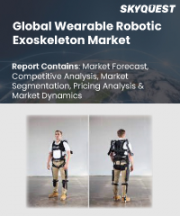
외골격 로봇은 인간의 골격 및 근육 시스템의 구조와 기능을 모방하도록 설계된 착용형 전기기계 시스템입니다. 이러한 장치는 신체 능력 향상, 부하 스트레스 감소, 재활 실현 또는 이동 능력 강화를 통해 사용자를 지원합니다. 로봇공학, 센서 피드백, 생체역학, 인체공학을 통합한 외골격 로봇은 의료 재활, 산업 노동 지원, 군사 훈련, 노인 간호 등 다양한 분야에 도입되고 있습니다. 일반적으로 액티브 시스템(모터나 유압에 의한 구동)과 패시브 시스템(기계적 최적화에 의존)으로 분류됩니다. 인공지능과 인간-기계 상호작용의 급속한 발전과 함께 외골격은 연구용 프로토타입에서 상업적으로 실현 가능한 솔루션으로 진화하여 지능형 웨어러블 기술의 미래를 형성하고 있습니다.
고령화 사회의 진전, 재활 수요의 확대, 산업 환경에서의 인간 보조 장치 수요 증가에 따라 외골격 로봇은 산업 전반으로 확대되는 황금기를 맞이하고 있습니다. 전 세계적으로 의료 서비스 제공업체들은 보행 훈련용 및 신경 보조용 외골격의 채택을 가속화하고 있으며, 재활 시설에 도입이 확대되고 있습니다. 제조 및 물류 분야에서는 인력 부족과 높은 산업재해율로 인해 산업용 외골격이 인체공학 대책의 핵심 요소로 자리매김하고 있습니다. 한편, 여러 국가의 국방 예산 증가는 군용 웨어러블 로봇 기술에 대한 투자를 촉진하고 있습니다. 기술적으로는 경량 소재, AI 기반 동작 인식, 고밀도 배터리의 혁신이 실용성과 경제성의 한계를 뛰어넘어 새로운 상업화의 물결을 일으키고 있습니다.
이러한 잠재력에도 불구하고 외골격 로봇 산업은 심각한 장벽에 직면해 있습니다. 고토크 모터, 정밀 센서 등 수입 부품에 대한 의존도가 높은 제조비용이 주요 원인으로 작용하여 보급에 걸림돌이 되고 있습니다. 다양한 응용 시나리오는 다양한 성능 및 안전 요구 사항을 부과하는 반면, 표준화된 프로토콜과 적응형 설계의 부족은 확장성을 제한하고 있습니다. 의료 분야에서는 긴 검증 주기와 엄격한 규제 절차로 인해 시장 출시가 지연되고 있습니다. 또한, 투자자들의 관심은 높지만, 많은 스타트업 기업들은 상품화 갭에 빠져 제품이 아직 실용화 단계에 이르지 못하고, 수익화 진척도 늦어 보조금이나 정부 보조금에 의존할 수밖에 없는 상황입니다.
외골격 장치에 대한 수요는 단일 이용 사례에서 다중 시나리오 통합으로 진화하고 있습니다. 의료 분야에서는 보행 훈련을 넘어 뇌졸중, 마비, 파킨슨병 환자를 위한 장기 사용에 대한 관심이 높아지고 있으며, 디지털 치료 및 원격 모니터링 플랫폼과 함께 사용하는 것이 일반적입니다. 산업 분야의 구매 담당자들은 육체적으로 가혹한 작업을 위해 외골격 장비를 조달 계획에 포함시키는 경우가 증가하고 있으며, 효율성과 안전성 두 가지 측면 모두에 초점을 맞추었습니다. 노인요양 시장에서도 거동이 불편한 재가 거동불편자를 위한 경량화된 보조모델이 모색되고 있습니다. 국제적으로 미국, 일본, EU 등 시장에서는 보험 환급 정책이 보다 지원적인 방향으로 변화하고 있으며, 이는 기관과 소비자의 보다 광범위한 도입을 가능하게 하고 있습니다.
이 보고서는 외골격 로봇 세계 시장에 대한 종합적인 분석을 제공하는 것을 목표로 합니다. 총매출액, 주요 기업의 시장 점유율과 순위에 초점을 맞추어 지역별, 국가별, 유형별, 용도별 외골격 로봇 시장 분석을 제공합니다.
외골격 로봇 시장 규모, 추정 및 예측은 2024년을 기준 연도로 하여 2020년부터 2031년까지의 과거 데이터와 예측 데이터를 기반으로 한 매출액으로 제시되었습니다. 정량적 분석과 정성적 분석을 통해 독자들이 비즈니스/성장 전략을 수립하고, 시장 경쟁 구도를 평가하고, 현재 시장에서의 자사 포지셔닝을 분석하고, 외골격 로봇에 대한 정보에 입각한 비즈니스 의사결정을 내리는데 도움을 드리고자 합니다.
시장 세분화
기업별
- Cyberdyne
- Hocoma
- ReWalk Robotics
- Ekso Bionics
- LockHeed Martin
- Parker Hannifin
- Interactive Motion Technologies
- Panasonic
- Myomo
- B-TEMIA Inc.
- Alter G
- US Bionics
- Parker Hannifin
- ATOUN Inc.
- Daiya Industry
- Bioservo Technologies
유형별 부문
- 하반신
- 상반신
- 전신
용도별 부문
- 의료
- 방위
- 산업
지역별
- 북미
- 미국
- 캐나다
- 아시아태평양
- 중국
- 일본
- 한국
- 동남아시아
- 인도
- 호주
- 기타 아시아태평양
- 유럽
- 독일
- 프랑스
- 영국
- 이탈리아
- 네덜란드
- 북유럽 국가
- 기타 유럽
- 라틴아메리카
- 멕시코
- 브라질
- 기타 라틴아메리카
- 중동 및 아프리카
- 튀르키예
- 사우디아라비아
- 아랍에미리트(UAE)
- 기타 중동 및 아프리카
자주 묻는 질문
The global market for Exoskeleton Robot was estimated to be worth US$ 417 million in 2024 and is forecast to a readjusted size of US$ 1506 million by 2031 with a CAGR of 19.7% during the forecast period 2025-2031.
Exoskeleton robots are wearable electromechanical systems designed to mimic the structure and function of the human skeletal and muscular system. These devices assist users by enhancing physical capabilities, reducing load stress, enabling rehabilitation, or augmenting mobility. Integrating robotics, sensor feedback, biomechanics, and ergonomics, exoskeleton robots are deployed across diverse domains such as medical rehabilitation, industrial labor support, military training, and elderly care. They are generally categorized into active systems (powered by motors or hydraulics) and passive systems (relying on mechanical optimization). With the rapid development of artificial intelligence and human-machine interaction, exoskeletons are evolving from research prototypes to commercially viable solutions, shaping the future of intelligent wearable technologies.
With aging populations, growing rehabilitation needs, and rising demand for human-assistive devices in industrial environments, exoskeleton robots are entering a golden era of cross-sector expansion. Globally, healthcare providers are increasingly adopting gait training and neuro-assistive exoskeletons, accelerating their integration into rehabilitation clinics. In manufacturing and logistics, labor shortages and high workplace injury rates have made industrial exoskeletons a core component of ergonomic interventions. Meanwhile, rising defense budgets in several countries are driving investment in military-grade wearable robotics. On the technology front, innovations in lightweight materials, AI-driven motion recognition, and high-density batteries are pushing the boundaries of usability and affordability, fueling a new wave of commercialization.
Despite its potential, the exoskeleton robot industry faces significant barriers. High production costs-largely due to reliance on imported components like high-torque motors and precision sensors-hinder mass adoption. Varying application scenarios impose diverse performance and safety requirements, yet the lack of standardized protocols and adaptable designs constrains scalability. In the medical segment, long validation cycles and strict regulatory pathways delay market readiness. Furthermore, while investor enthusiasm is notable, many startups remain trapped in a commercialization gap, with products not yet viable and revenues slow to materialize-leaving them dependent on grants and government subsidies.
Demand for exoskeletons is evolving from single-use cases toward multi-scenario integration. In the medical field, interest is expanding beyond gait training to long-term use for stroke, paralysis, and Parkinson's patients-often in combination with digital therapy and remote monitoring platforms. Industrial buyers are increasingly incorporating exoskeletons into procurement plans for physically demanding roles, focusing on both efficiency and safety. The elderly care market is also exploring lightweight assistive models tailored to mobility-impaired individuals at home. Internationally, insurance reimbursement policies in markets such as the US, Japan, and EU are becoming more supportive, unlocking broader institutional and consumer adoption.
This report aims to provide a comprehensive presentation of the global market for Exoskeleton Robot, focusing on the total sales revenue, key companies market share and ranking, together with an analysis of Exoskeleton Robot by region & country, by Type, and by Application.
The Exoskeleton Robot market size, estimations, and forecasts are provided in terms of sales revenue ($ millions), considering 2024 as the base year, with history and forecast data for the period from 2020 to 2031. With both quantitative and qualitative analysis, to help readers develop business/growth strategies, assess the market competitive situation, analyze their position in the current marketplace, and make informed business decisions regarding Exoskeleton Robot.
Market Segmentation
By Company
- Cyberdyne
- Hocoma
- ReWalk Robotics
- Ekso Bionics
- LockHeed Martin
- Parker Hannifin
- Interactive Motion Technologies
- Panasonic
- Myomo
- B-TEMIA Inc.
- Alter G
- US Bionics
- Parker Hannifin
- ATOUN Inc.
- Daiya Industry
- Bioservo Technologies
Segment by Type
- Lower
- Upper
- Full Body
Segment by Application
- Healthcare
- Defense
- Industrial
By Region
- North America
- United States
- Canada
- Asia-Pacific
- China
- Japan
- South Korea
- Southeast Asia
- India
- Australia
- Rest of Asia-Pacific
- Europe
- Germany
- France
- U.K.
- Italy
- Netherlands
- Nordic Countries
- Rest of Europe
- Latin America
- Mexico
- Brazil
- Rest of Latin America
- Middle East & Africa
- Turkey
- Saudi Arabia
- UAE
- Rest of MEA
Chapter Outline
Chapter 1: Introduces the report scope of the report, global total market size. This chapter also provides the market dynamics, latest developments of the market, the driving factors and restrictive factors of the market, the challenges and risks faced by manufacturers in the industry, and the analysis of relevant policies in the industry.
Chapter 2: Detailed analysis of Exoskeleton Robot company competitive landscape, revenue market share, latest development plan, merger, and acquisition information, etc.
Chapter 3: Provides the analysis of various market segments by Type, covering the market size and development potential of each market segment, to help readers find the blue ocean market in different market segments.
Chapter 4: Provides the analysis of various market segments by Application, covering the market size and development potential of each market segment, to help readers find the blue ocean market in different downstream markets.
Chapter 5: Revenue of Exoskeleton Robot in regional level. It provides a quantitative analysis of the market size and development potential of each region and introduces the market development, future development prospects, market space, and market size of each country in the world.
Chapter 6: Revenue of Exoskeleton Robot in country level. It provides sigmate data by Type, and by Application for each country/region.
Chapter 7: Provides profiles of key players, introducing the basic situation of the main companies in the market in detail, including product revenue, gross margin, product introduction, recent development, etc.
Chapter 8: Analysis of industrial chain, including the upstream and downstream of the industry.
Chapter 9: Conclusion.
Table of Contents
1 Market Overview
- 1.1 Exoskeleton Robot Product Introduction
- 1.2 Global Exoskeleton Robot Market Size Forecast (2020-2031)
- 1.3 Exoskeleton Robot Market Trends & Drivers
- 1.3.1 Exoskeleton Robot Industry Trends
- 1.3.2 Exoskeleton Robot Market Drivers & Opportunity
- 1.3.3 Exoskeleton Robot Market Challenges
- 1.3.4 Exoskeleton Robot Market Restraints
- 1.4 Assumptions and Limitations
- 1.5 Study Objectives
- 1.6 Years Considered
2 Competitive Analysis by Company
- 2.1 Global Exoskeleton Robot Players Revenue Ranking (2024)
- 2.2 Global Exoskeleton Robot Revenue by Company (2020-2025)
- 2.3 Key Companies Exoskeleton Robot Manufacturing Base Distribution and Headquarters
- 2.4 Key Companies Exoskeleton Robot Product Offered
- 2.5 Key Companies Time to Begin Mass Production of Exoskeleton Robot
- 2.6 Exoskeleton Robot Market Competitive Analysis
- 2.6.1 Exoskeleton Robot Market Concentration Rate (2020-2025)
- 2.6.2 Global 5 and 10 Largest Companies by Exoskeleton Robot Revenue in 2024
- 2.6.3 Global Top Companies by Company Type (Tier 1, Tier 2, and Tier 3) & (based on the Revenue in Exoskeleton Robot as of 2024)
- 2.7 Mergers & Acquisitions, Expansion
3 Segmentation by Type
- 3.1 Introduction by Type
- 3.1.1 Lower
- 3.1.2 Upper
- 3.1.3 Full Body
- 3.2 Global Exoskeleton Robot Sales Value by Type
- 3.2.1 Global Exoskeleton Robot Sales Value by Type (2020 VS 2024 VS 2031)
- 3.2.2 Global Exoskeleton Robot Sales Value, by Type (2020-2031)
- 3.2.3 Global Exoskeleton Robot Sales Value, by Type (%) (2020-2031)
4 Segmentation by Application
- 4.1 Introduction by Application
- 4.1.1 Healthcare
- 4.1.2 Defense
- 4.1.3 Industrial
- 4.2 Global Exoskeleton Robot Sales Value by Application
- 4.2.1 Global Exoskeleton Robot Sales Value by Application (2020 VS 2024 VS 2031)
- 4.2.2 Global Exoskeleton Robot Sales Value, by Application (2020-2031)
- 4.2.3 Global Exoskeleton Robot Sales Value, by Application (%) (2020-2031)
5 Segmentation by Region
- 5.1 Global Exoskeleton Robot Sales Value by Region
- 5.1.1 Global Exoskeleton Robot Sales Value by Region: 2020 VS 2024 VS 2031
- 5.1.2 Global Exoskeleton Robot Sales Value by Region (2020-2025)
- 5.1.3 Global Exoskeleton Robot Sales Value by Region (2026-2031)
- 5.1.4 Global Exoskeleton Robot Sales Value by Region (%), (2020-2031)
- 5.2 North America
- 5.2.1 North America Exoskeleton Robot Sales Value, 2020-2031
- 5.2.2 North America Exoskeleton Robot Sales Value by Country (%), 2024 VS 2031
- 5.3 Europe
- 5.3.1 Europe Exoskeleton Robot Sales Value, 2020-2031
- 5.3.2 Europe Exoskeleton Robot Sales Value by Country (%), 2024 VS 2031
- 5.4 Asia Pacific
- 5.4.1 Asia Pacific Exoskeleton Robot Sales Value, 2020-2031
- 5.4.2 Asia Pacific Exoskeleton Robot Sales Value by Region (%), 2024 VS 2031
- 5.5 South America
- 5.5.1 South America Exoskeleton Robot Sales Value, 2020-2031
- 5.5.2 South America Exoskeleton Robot Sales Value by Country (%), 2024 VS 2031
- 5.6 Middle East & Africa
- 5.6.1 Middle East & Africa Exoskeleton Robot Sales Value, 2020-2031
- 5.6.2 Middle East & Africa Exoskeleton Robot Sales Value by Country (%), 2024 VS 2031
6 Segmentation by Key Countries/Regions
- 6.1 Key Countries/Regions Exoskeleton Robot Sales Value Growth Trends, 2020 VS 2024 VS 2031
- 6.2 Key Countries/Regions Exoskeleton Robot Sales Value, 2020-2031
- 6.3 United States
- 6.3.1 United States Exoskeleton Robot Sales Value, 2020-2031
- 6.3.2 United States Exoskeleton Robot Sales Value by Type (%), 2024 VS 2031
- 6.3.3 United States Exoskeleton Robot Sales Value by Application, 2024 VS 2031
- 6.4 Europe
- 6.4.1 Europe Exoskeleton Robot Sales Value, 2020-2031
- 6.4.2 Europe Exoskeleton Robot Sales Value by Type (%), 2024 VS 2031
- 6.4.3 Europe Exoskeleton Robot Sales Value by Application, 2024 VS 2031
- 6.5 China
- 6.5.1 China Exoskeleton Robot Sales Value, 2020-2031
- 6.5.2 China Exoskeleton Robot Sales Value by Type (%), 2024 VS 2031
- 6.5.3 China Exoskeleton Robot Sales Value by Application, 2024 VS 2031
- 6.6 Japan
- 6.6.1 Japan Exoskeleton Robot Sales Value, 2020-2031
- 6.6.2 Japan Exoskeleton Robot Sales Value by Type (%), 2024 VS 2031
- 6.6.3 Japan Exoskeleton Robot Sales Value by Application, 2024 VS 2031
- 6.7 South Korea
- 6.7.1 South Korea Exoskeleton Robot Sales Value, 2020-2031
- 6.7.2 South Korea Exoskeleton Robot Sales Value by Type (%), 2024 VS 2031
- 6.7.3 South Korea Exoskeleton Robot Sales Value by Application, 2024 VS 2031
- 6.8 Southeast Asia
- 6.8.1 Southeast Asia Exoskeleton Robot Sales Value, 2020-2031
- 6.8.2 Southeast Asia Exoskeleton Robot Sales Value by Type (%), 2024 VS 2031
- 6.8.3 Southeast Asia Exoskeleton Robot Sales Value by Application, 2024 VS 2031
- 6.9 India
- 6.9.1 India Exoskeleton Robot Sales Value, 2020-2031
- 6.9.2 India Exoskeleton Robot Sales Value by Type (%), 2024 VS 2031
- 6.9.3 India Exoskeleton Robot Sales Value by Application, 2024 VS 2031
7 Company Profiles
- 7.1 Cyberdyne
- 7.1.1 Cyberdyne Profile
- 7.1.2 Cyberdyne Main Business
- 7.1.3 Cyberdyne Exoskeleton Robot Products, Services and Solutions
- 7.1.4 Cyberdyne Exoskeleton Robot Revenue (US$ Million) & (2020-2025)
- 7.1.5 Cyberdyne Recent Developments
- 7.2 Hocoma
- 7.2.1 Hocoma Profile
- 7.2.2 Hocoma Main Business
- 7.2.3 Hocoma Exoskeleton Robot Products, Services and Solutions
- 7.2.4 Hocoma Exoskeleton Robot Revenue (US$ Million) & (2020-2025)
- 7.2.5 Hocoma Recent Developments
- 7.3 ReWalk Robotics
- 7.3.1 ReWalk Robotics Profile
- 7.3.2 ReWalk Robotics Main Business
- 7.3.3 ReWalk Robotics Exoskeleton Robot Products, Services and Solutions
- 7.3.4 ReWalk Robotics Exoskeleton Robot Revenue (US$ Million) & (2020-2025)
- 7.3.5 ReWalk Robotics Recent Developments
- 7.4 Ekso Bionics
- 7.4.1 Ekso Bionics Profile
- 7.4.2 Ekso Bionics Main Business
- 7.4.3 Ekso Bionics Exoskeleton Robot Products, Services and Solutions
- 7.4.4 Ekso Bionics Exoskeleton Robot Revenue (US$ Million) & (2020-2025)
- 7.4.5 Ekso Bionics Recent Developments
- 7.5 LockHeed Martin
- 7.5.1 LockHeed Martin Profile
- 7.5.2 LockHeed Martin Main Business
- 7.5.3 LockHeed Martin Exoskeleton Robot Products, Services and Solutions
- 7.5.4 LockHeed Martin Exoskeleton Robot Revenue (US$ Million) & (2020-2025)
- 7.5.5 LockHeed Martin Recent Developments
- 7.6 Parker Hannifin
- 7.6.1 Parker Hannifin Profile
- 7.6.2 Parker Hannifin Main Business
- 7.6.3 Parker Hannifin Exoskeleton Robot Products, Services and Solutions
- 7.6.4 Parker Hannifin Exoskeleton Robot Revenue (US$ Million) & (2020-2025)
- 7.6.5 Parker Hannifin Recent Developments
- 7.7 Interactive Motion Technologies
- 7.7.1 Interactive Motion Technologies Profile
- 7.7.2 Interactive Motion Technologies Main Business
- 7.7.3 Interactive Motion Technologies Exoskeleton Robot Products, Services and Solutions
- 7.7.4 Interactive Motion Technologies Exoskeleton Robot Revenue (US$ Million) & (2020-2025)
- 7.7.5 Interactive Motion Technologies Recent Developments
- 7.8 Panasonic
- 7.8.1 Panasonic Profile
- 7.8.2 Panasonic Main Business
- 7.8.3 Panasonic Exoskeleton Robot Products, Services and Solutions
- 7.8.4 Panasonic Exoskeleton Robot Revenue (US$ Million) & (2020-2025)
- 7.8.5 Panasonic Recent Developments
- 7.9 Myomo
- 7.9.1 Myomo Profile
- 7.9.2 Myomo Main Business
- 7.9.3 Myomo Exoskeleton Robot Products, Services and Solutions
- 7.9.4 Myomo Exoskeleton Robot Revenue (US$ Million) & (2020-2025)
- 7.9.5 Myomo Recent Developments
- 7.10 B-TEMIA Inc.
- 7.10.1 B-TEMIA Inc. Profile
- 7.10.2 B-TEMIA Inc. Main Business
- 7.10.3 B-TEMIA Inc. Exoskeleton Robot Products, Services and Solutions
- 7.10.4 B-TEMIA Inc. Exoskeleton Robot Revenue (US$ Million) & (2020-2025)
- 7.10.5 B-TEMIA Inc. Recent Developments
- 7.11 Alter G
- 7.11.1 Alter G Profile
- 7.11.2 Alter G Main Business
- 7.11.3 Alter G Exoskeleton Robot Products, Services and Solutions
- 7.11.4 Alter G Exoskeleton Robot Revenue (US$ Million) & (2020-2025)
- 7.11.5 Alter G Recent Developments
- 7.12 US Bionics
- 7.12.1 US Bionics Profile
- 7.12.2 US Bionics Main Business
- 7.12.3 US Bionics Exoskeleton Robot Products, Services and Solutions
- 7.12.4 US Bionics Exoskeleton Robot Revenue (US$ Million) & (2020-2025)
- 7.12.5 US Bionics Recent Developments
- 7.13 Parker Hannifin
- 7.13.1 Parker Hannifin Profile
- 7.13.2 Parker Hannifin Main Business
- 7.13.3 Parker Hannifin Exoskeleton Robot Products, Services and Solutions
- 7.13.4 Parker Hannifin Exoskeleton Robot Revenue (US$ Million) & (2020-2025)
- 7.13.5 Parker Hannifin Recent Developments
- 7.14 ATOUN Inc.
- 7.14.1 ATOUN Inc. Profile
- 7.14.2 ATOUN Inc. Main Business
- 7.14.3 ATOUN Inc. Exoskeleton Robot Products, Services and Solutions
- 7.14.4 ATOUN Inc. Exoskeleton Robot Revenue (US$ Million) & (2020-2025)
- 7.14.5 ATOUN Inc. Recent Developments
- 7.15 Daiya Industry
- 7.15.1 Daiya Industry Profile
- 7.15.2 Daiya Industry Main Business
- 7.15.3 Daiya Industry Exoskeleton Robot Products, Services and Solutions
- 7.15.4 Daiya Industry Exoskeleton Robot Revenue (US$ Million) & (2020-2025)
- 7.15.5 Daiya Industry Recent Developments
- 7.16 Bioservo Technologies
- 7.16.1 Bioservo Technologies Profile
- 7.16.2 Bioservo Technologies Main Business
- 7.16.3 Bioservo Technologies Exoskeleton Robot Products, Services and Solutions
- 7.16.4 Bioservo Technologies Exoskeleton Robot Revenue (US$ Million) & (2020-2025)
- 7.16.5 Bioservo Technologies Recent Developments
8 Industry Chain Analysis
- 8.1 Exoskeleton Robot Industrial Chain
- 8.2 Exoskeleton Robot Upstream Analysis
- 8.2.1 Key Raw Materials
- 8.2.2 Raw Materials Key Suppliers
- 8.2.3 Manufacturing Cost Structure
- 8.3 Midstream Analysis
- 8.4 Downstream Analysis (Customers Analysis)
- 8.5 Sales Model and Sales Channels
- 8.5.1 Exoskeleton Robot Sales Model
- 8.5.2 Sales Channel
- 8.5.3 Exoskeleton Robot Distributors
9 Research Findings and Conclusion
10 Appendix
- 10.1 Research Methodology
- 10.1.1 Methodology/Research Approach
- 10.1.1.1 Research Programs/Design
- 10.1.1.2 Market Size Estimation
- 10.1.1.3 Market Breakdown and Data Triangulation
- 10.1.2 Data Source
- 10.1.2.1 Secondary Sources
- 10.1.2.2 Primary Sources
- 10.1.1 Methodology/Research Approach
- 10.2 Author Details
- 10.3 Disclaimer