|
시장보고서
상품코드
1979425
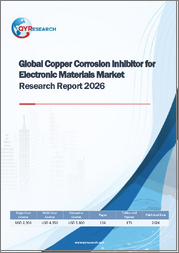
전자재료용 구리 부식 방지제 시장 조사 보고서(2026년)Global Copper Corrosion Inhibitor for Electronic Materials Market Research Report 2026 |
||||||
 QYResearch
전자재료용 구리 부식 방지제는 일반적인 방청 첨가제가 아니고, 본질적으로 신뢰성을 실현하는 기능성 화학제품입니다.
상업적으로 인쇄 회로 기판(PCB) 및 기판 제조, 커넥터 및 단자, 산업용 전자 제품, 보관, 운송, 현장 유지 보수에서 구리 및 구리 합금의 접합부를 보호하기 위해 채택되었습니다. 그 가치 제안은 산화, 황 공격, 습기에 의한 부식 억제뿐만 아니라 전도성 유지, 접촉 저항 안정성, 조립 호환성 및 서비스 수명 보장에도 있습니다. 제품 구조 측면에서 볼 때, 시장은 현재 BTA, TTA, MBT로 대표되는 고전적 화학 기술과 VCI/VpCI 스프레이, 이미터, 패키징 솔루션 등 용도 특화형 독자 시스템이라는 두 가지 주요 경로로 명확하게 분류됩니다. 전자는 전자재료용 구리 부식방지제의 화학적 기반이 되고 있으며, 후자는 업계가 통합 보호 플랫폼으로 전환하고 있음을 보여줍니다.
시장은 구조적으로 건전한 기반에서 성장하고 있지만, 성장의 원동력은 순수한 가격 상승이 아닌 수요 증가와 제품 구성의 고도화에 있습니다. 전자재료용 구리 부식방지제의 세계 판매량은 2025년 11,324톤, 8,164만 달러에 달할 것으로 예측됩니다. 2026년 시장 규모는 1,2,212톤, 9,773만 달러로 예측되며, 2032년까지 1,7,414톤, 1억 4,257만 달러로 더욱 확대될 것으로 예측됩니다. 2026년부터 2032년까지 수량 CAGR은 약 6.1%, 매출 CAGR은 약 6.5%입니다. 매출 성장률은 수량 성장률을 소폭 상회하고 있어 프리미엄화 진행과 용도 구성의 개선을 시사하고 있으나, 급격한 가격 사이클의 변동은 보이지 않고 있습니다. 2025년 실적치를 기준으로 톤당 평균 수익은 약 7,209달러이며, 2026년 예상치에서 2032년 예상치까지 톤당 암묵적 가격 상승폭은 제한적일 것으로 예측됩니다. 이는 전자재료용 구리 부식방지제가 여전히 전자기기의 다양한 이용 사례에서 보급 확대에 힘입어 시장 침투와 판매량 확대가 주요 성장 요인으로 작용하고 있음을 보여줍니다.
경쟁 구도는 인지도가 높은 주요 기업과 다수의 틈새 시장 기업이 공존하는 구조입니다. 2025년 기준 판매량 기준 상위 5개사(Northern Technologies International Corporation, Cortec Corporation, Magna Chemical Group, Intertape Polymer Group, Intertape Polymer Group, Shandong Taihe Water Treatment Technologies)가 세계 판매량의 49.3%, 세계 매출의 57.0%를 차지했습니다. 노던 테크놀로지스 인터내셔널이 단독으로 18.3%의 수량 점유율과 23.4%의 매출 점유율을 차지했으며, 콜텍은 각각 14.5%와 17.6%의 점유율을 기록했습니다. 여기서 두 가지 결론을 도출할 수 있습니다. 첫째, 전자재료용 구리 부식방지제 시장은 2025년 기준 '기타' 카테고리가 여전히 시장 판매량의 45.1%를 차지하고 있어 아직 과점화되지 않은 상태입니다. 둘째, 수익 집중도는 판매량 집중도보다 높으며, 이는 주요 공급업체가 중소 공급업체보다 프리미엄 배합 기술, 응용 엔지니어링, 전자기기 적합성, 현장 서비스 지향적 솔루션을 더 효과적으로 수익화하고 있음을 보여줍니다. 전략적으로 북미의 주요 기업들은 자체 개발한 VCI/VpCI 스프레이, 이미터, 보호포장 분야에서 강점을 발휘하고 있습니다. 한편, Shandong Taihe Water Treatment Technologies와 Kanghua Chemical과 같은 중국 공급업체들은 BTA, TTA, MBT 및 관련 유도체 및 염계 제품 공급으로 존재감을 높이고 있습니다.
카테고리 구조는 트리아졸계 화학물질이 여전히 시장을 독점하고 있는 반면, 독자적인 블렌딩이 더 높은 성장층이라는 것을 보여줍니다. 2025년 기준 벤조트리아졸이 49.1%, 트릴트리아졸이 29.3%, 메르캅토벤조티아졸이 10.6%, 기타가 10.9%를 차지했습니다. BTA와 TTA를 합치면 시장 규모의 78.4%를 차지하며, 전자재료용 구리 부식 억제제의 주류 상업적 기반이 여전히 트리아졸계 화학을 핵심으로 하고 있음을 보여줍니다. 2026년부터 2032년까지 물량 기준 CAGR은 BTA와 TTA가 약 6.1%, MBT가 약 5.0%, 기타가 7.3%로 예측됩니다. 이는 시장이 전통적인 구리 부식 방지제 화학에서 벗어나지 않을 것이며, 점진적인 성장과 수익률 확대는 혼합 배합제, 기상 보호, 즉시 사용 가능한 전자 장비 스프레이, 저 잔류 보호 필름, 시스템 수준의 보호 패키지에서 점점 더 많이 발생할 것임을 시사합니다.
용도별 구성을 보면, 산업용 전자기기와 PCB/기판이 수량 기준의 핵심을 형성하고 있으며, 커넥터/부품은 고부가가치 신뢰성 틈새 시장으로 자리매김하고 있습니다. 2025년 기준, 산업용 전자기기가 세계 수량의 36.5%, PCB 및 기판이 34.6%, 커넥터 및 부품이 17.4%, 기타가 11.6%를 차지했습니다. 산업용 전자기기와 PCB/기판을 합친 비중은 수량 기준 71.0%, 매출 기준 약 73.9%를 차지했습니다. 2026년부터 2032년까지 산업용 전자기기가 핵심 시장에서 가장 높은 성장률(약 6.9%)을 보이며 PCB 및 기판(5.6%), 커넥터 및 부품(5.9%)을 상회할 것으로 예측됩니다. 이는 전자재료용 구리 부식방지제가 제조단계의 화학제품에서 캐비닛, 정션박스, 릴레이, 센서, 현장 설치형 전자기기, 유지보수 작업 등 보다 광범위한 신뢰성 재료로 확대되고 있음을 보여줍니다. 커넥터 및 부품은 톤수 기준으로는 규모가 작지만, 접촉 신뢰성, 부식 마모, 장기적인 신호 또는 전력 연속성에 직접적으로 관련되어 있기 때문에 일반적으로 더 높은 인증 기준과 견고한 가격 책정이 요구됩니다.
지역별로는 아시아태평양 수요 집중과 북미, 동아시아에 분산된 공급 기반이 특징이며, 증산 능력은 동쪽으로 이동하고 있습니다. 2025년 기준 아시아태평양은 전 세계 소비량의 58.1%를 차지하여 북미(20.4%), 유럽(17.2%)을 크게 상회하며 전자재료용 구리 부식방지제의 주요 수요처로 자리매김하고 있습니다. 2026년부터 2032년까지 아시아태평양의 소비량은 약 7.6% 성장할 것으로 예상되며, 이는 유럽의 5.0%, 북미의 2.1%를 상회하는 속도입니다. 생산 측면에서는 2025년 생산량에서 북미가 41.3%, 중국이 18.0%, 일본-한국-대만 합계가 약 22.5%를 차지할 것으로 보입니다. 2026년부터 2032년까지 중국의 생산량은 약 9.1%로 가장 높은 CAGR을 보일 것이며, 대만이 6.4%, 한국이 5.9%로 그 뒤를 이을 것으로 예측됩니다. 이는 미래 공급 증가와 미래 최종 수요 모두 동아시아에 점점 더 집중되는 시장을 시사합니다. 공개된 업계 정보에 따르면, 일부 자동차, 산업 및 가전 분야의 불균등성에도 불구하고 AI 인프라, HBM, 고급 패키징, 첨단 로직에 대한 투자는 팹 및 백엔드 확장을 계속 지원하고 있습니다. 그 결과, 전자재료용 구리 부식방지제의 상업적 기회는 더욱 선택적으로 변하고 있으며, 현지 공급 체계, 기술 지원 및 용도별 적합성 평가에 대한 의존도가 높아지고 있습니다.
조사 범위
본 보고서는 전자재료용 구리 부식방지제 세계 시장에 대해 정량적, 정성적 분석을 겸비한 종합적인 제시를 목적으로 합니다. 본 보고서가 전자재료용 구리 부식방지제 관련 사업/성장 전략 수립, 시장 경쟁 구도 평가, 현재 시장에서의 자사 포지셔닝 분석, 그리고 정보에 입각한 사업 의사결정에 도움이 되기를 바랍니다.
전자재료용 구리 부식방지제 세계 시장에 대해 정량적 및 정성적 분석을 통해 종합적인 개요를 제공하며, 독자들이 성장 전략을 수립하고, 경쟁 구도를 평가하며, 현재 시장에서의 위치를 분석하고, 전자재료용 구리 부식방지제에 관한 정보에 입각한 비즈니스 의사결정을 내릴 수 있도록 도와드립니다. 비즈니스 의사결정을 할 수 있도록 도와드립니다. 이 보고서는 전자재료용 구리 부식 억제제 시장 규모, 추정치, 예측치를 생산/출하량(톤) 및 수익(백만 달러)으로 제공하며, 2025년을 기준 연도로, 2021년에서 2032년까지의 과거 데이터와 예측 데이터를 제공합니다.
이 보고서는 전자재료용 구리 부식방지제 세계 시장을 종합적으로 분류하고 있습니다. 지역별, 유형별, 용도별, 기업별 시장 규모도 제공합니다.
이 보고서는 경쟁 구도, 주요 경쟁사 및 시장 순위를 프로파일링하고, 기술 동향과 신제품 개발에 대해 논의하여 보다 심층적인 인사이트를 제공합니다.
이 보고서는 전자재료용 구리 부식 억제제 제조업체, 신규 진출기업 및 업계 가치사슬 전반의 기업들에게 전체 시장과 그 하위 부문의 수익, 생산량, 평균 가격에 대한 정보를 기업별, 제품 유형별, 용도별, 지역별, 지역별 정보를 제공합니다.
시장 세분화
기업별
- Northern Technologies International Corporation(NTIC)
- Cortec Corporation
- Magna Chemical Group
- Intertape Polymer Group(IPG)
- S-Subtle Microelectronics Incorporated
- Shandong Taihe Water Treatment Technologies
- Kanghua Chemical
유형별 부문
- Benzotriazole (BTA)
- Tolyltriazole (TTA)
- Mercaptobenzothiazole (MBT)
- 기타
용도별 부문
- PCB 및 기판
- 산업용 전자기기
- 커넥터 및 부품
- 기타
지역별 생산
- 북미
- 유럽
- 중국
- 일본
- 한국
- 대만
지역별 소비량
- 북미
- 미국
- 캐나다
- 아시아태평양
- 중국
- 일본
- 한국
- 대만
- 동남아시아
- 인도
- 유럽
- 독일
- 프랑스
- 영국
- 이탈리아
- 러시아
- 기타 유럽 국가
- 라틴아메리카, 중동 및 아프리카
- 멕시코
- 브라질
- GCC 국가
자주 묻는 질문
Copper Corrosion Inhibitor for Electronic Materials is fundamentally a reliability-enabling functional chemistry rather than a generic anti-rust additive. In commercial terms, Copper Corrosion Inhibitor for Electronic Materials is deployed to protect copper and copper-alloy interfaces across PCB and substrate manufacturing, connectors and terminals, industrial electronics, storage, transport, and field maintenance. The value proposition is not limited to suppressing oxidation, sulfur attack, and humidity-driven corrosion; it also lies in preserving conductivity, contact-resistance stability, assembly compatibility, and service life. From a product architecture standpoint, the market is now clearly organized around two major routes: classical chemistries represented by BTA, TTA, and MBT, and application-engineered proprietary systems such as VCI/VpCI sprays, emitters, and packaging solutions. The former remains the chemical backbone of Copper Corrosion Inhibitor for Electronic Materials, while the latter represents the industry's migration toward integrated protection platforms.
The market is expanding on a structurally healthy basis, but the growth engine is demand expansion and mix upgrade rather than pure price inflation. Global sales of Copper Corrosion Inhibitor for Electronic Materials reached 11,324 tons and USD 81.64 million in 2025. The market is estimated at 12,212 tons and USD 97.73 million in 2026E and is projected to rise further to 17,414 tons and USD 142.57 million by 2032F. Based on 2026-2032, volume CAGR is about 6.1% and revenue CAGR about 6.5%. Revenue growth modestly outpaces volume, indicating some premiumization and application mix improvement, but not a sharp pricing cycle. Using 2025 actuals, average revenue per ton stands at roughly USD 7,209, while the increase in implied price per ton from 2026E to 2032F remains limited. This indicates that Copper Corrosion Inhibitor for Electronic Materials is still primarily a penetration and volume story, supported by broader adoption across electronics use cases.
The competitive landscape combines recognizable leaders with a sizeable long tail. In 2025, the top five suppliers by volume - Northern Technologies International Corporation, Cortec Corporation, Magna Chemical Group, Intertape Polymer Group, and Shandong Taihe Water Treatment Technologies - accounted for 49.3% of global sales volume and 57.0% of global revenue. Northern Technologies International Corporation alone held 18.3% of volume and 23.4% of revenue, while Cortec Corporation held 14.5% and 17.6%, respectively. Two conclusions follow. First, Copper Corrosion Inhibitor for Electronic Materials is not yet a tightly consolidated oligopoly, as the "Others" category still represented 45.1% of market volume in 2025. Second, revenue concentration is higher than volume concentration, which indicates that the leading vendors monetize premium formulations, application engineering, electronics compatibility, and field-service-oriented solutions more effectively than smaller suppliers. Strategically, North American leaders are stronger in proprietary VCI/VpCI sprays, emitters, and protective packaging, while Chinese suppliers such as Shandong Taihe Water Treatment Technologies and Kanghua Chemical are more visible in BTA, TTA, MBT, and related derivative or salt-based product supply.
The category structure confirms that triazole-based chemistries still dominate the market, while proprietary blends are the higher-growth layer. In 2025, Benzotriazole represented 49.1% of global volume, Tolyltriazole 29.3%, Mercaptobenzothiazole 10.6%, and Others 10.9%. Combined, BTA and TTA accounted for 78.4% of market volume, confirming that the mainstream commercial foundation of Copper Corrosion Inhibitor for Electronic Materials remains centered on triazole chemistry. Looking from 2026 to 2032, volume CAGR is approximately 6.1% for both BTA and TTA, around 5.0% for MBT, and 7.3% for Others. This suggests that the market will not move away from classical copper corrosion inhibitor chemistry, but incremental growth and margin expansion will increasingly come from blended formulations, vapor-phase protection, ready-to-use electronics sprays, low-residue protective films, and system-level protection packages.
The application structure shows that industrial electronics and PCB & substrates form the volume core, while connectors & components remain a high-value reliability niche. In 2025, Industrial Electronics accounted for 36.5% of global volume, PCB & Substrates for 34.6%, Connectors & Components for 17.4%, and Others for 11.6%. Industrial electronics plus PCB/substrates together represented 71.0% of volume and nearly 73.9% of revenue. From 2026 to 2032, Industrial Electronics delivers the fastest core-market growth at roughly 6.9%, ahead of PCB & Substrates at 5.6% and Connectors & Components at 5.9%. This indicates that Copper Corrosion Inhibitor for Electronic Materials is expanding beyond a manufacturing-stage chemistry into a broader reliability material for cabinets, junction boxes, relays, sensors, field-installed electronics, and maintenance operations. Connectors and components remain smaller by tonnage, but they typically command higher qualification thresholds and stronger pricing because they are tied directly to contact integrity, corrosion wear, and long-term signal or power continuity.
The regional picture is defined by Asia-Pacific demand concentration and a supply base distributed across North America and East Asia, with incremental capacity shifting eastward. In 2025, Asia-Pacific accounted for 58.1% of global consumption, compared with 20.4% for North America and 17.2% for Europe, establishing Asia-Pacific as the primary demand center for Copper Corrosion Inhibitor for Electronic Materials. On a 2026-2032 basis, Asia-Pacific consumption is projected to grow at about 7.6%, faster than Europe at 5.0% and North America at 2.1%. On the production side, North America represented 41.3% of 2025 output, China 18.0%, and Japan, South Korea, and Taiwan together about 22.5%. From 2026 to 2032, China shows the fastest production CAGR at roughly 9.1%, followed by Taiwan at 6.4% and South Korea at 5.9%. This points to a market in which future supply additions and future end-demand are both increasingly concentrated in East Asia. Public industry information also indicates that AI infrastructure, HBM, advanced packaging, and leading-edge logic investment continue to support fab and back-end expansion, even as parts of automotive, industrial, and consumer electronics remain uneven. As a result, commercial opportunity in Copper Corrosion Inhibitor for Electronic Materials is becoming more selective and more dependent on local fulfillment, technical support, and application-specific qualification.
Report Scope
This report aims to provide a comprehensive presentation of the global market for Copper Corrosion Inhibitor for Electronic Materials, with both quantitative and qualitative analysis, to help readers develop business/growth strategies, assess the market competitive situation, analyze their position in the current marketplace, and make informed business decisions regarding Copper Corrosion Inhibitor for Electronic Materials.
This report delivers a comprehensive overview of the global Copper Corrosion Inhibitor for Electronic Materials market, with both quantitative and qualitative analyses, to help readers develop growth strategies, assess the competitive landscape, evaluate their position in the current market, and make informed business decisions regarding Copper Corrosion Inhibitor for Electronic Materials. The Copper Corrosion Inhibitor for Electronic Materials market size, estimates, and forecasts are provided in terms of output/shipments (Tons) and revenue (US$ millions), with 2025 as the base year and historical and forecast data for 2021-2032.
The report segments the global Copper Corrosion Inhibitor for Electronic Materials market comprehensively. Regional market sizes by Type, by Application, and by company are also provided.
For deeper insight, the report profiles the competitive landscape, key competitors, and their respective market rankings, and discusses technological trends and new product developments.
This report will assist Copper Corrosion Inhibitor for Electronic Materials manufacturers, new entrants, and companies across the industry value chain with information on revenues, production, and average prices for the overall market and its sub-segments, by company, by Type, by Application, and by region.
Market Segmentation
By Company
- Northern Technologies International Corporation (NTIC)
- Cortec Corporation
- Magna Chemical Group
- Intertape Polymer Group (IPG)
- S-Subtle Microelectronics Incorporated
- Shandong Taihe Water Treatment Technologies
- Kanghua Chemical
Segment by Type
- Benzotriazole (BTA)
- Tolyltriazole (TTA)
- Mercaptobenzothiazole (MBT)
- Others
Segment by Application
- PCB & Substrates
- Industrial Electronics
- Connectors & Components
- Others
Production by Region
- North America
- Europe
- China
- Japan
- South Korea
- Taiwan
Consumption by Region
- North America
- U.S.
- Canada
- Asia-Pacific
- China
- Japan
- South Korea
- Taiwan
- Southeast Asia
- India
- Europe
- Germany
- France
- U.K.
- Italy
- Russia
- Rest of Europe
- Latin America, Middle East & Africa
- Mexico
- Brazil
- GCC Countries
Chapter Outline
Chapter 1: Defines the scope of the report and presents an executive summary of market segments (by Type, by Application, etc.), including the size of each segment and its future growth potential. It offers a high-level view of the current market and its likely evolution in the short, medium, and long term.
Chapter 2: Provides a detailed analysis of the competitive landscape for Copper Corrosion Inhibitor for Electronic Materials manufacturers, including prices, production, value-based market shares, latest development plans, and information on mergers and acquisitions.
Chapter 3: Examines Copper Corrosion Inhibitor for Electronic Materials production/output and value by region and country, providing a quantitative assessment of market size and growth potential for each region over the next six years.
Chapter 4: Analyzes Copper Corrosion Inhibitor for Electronic Materials consumption at the regional and country levels. It quantifies market size and growth potential for each region and its key countries, and outlines market development, outlook, addressable space, and national production.
Chapter 5: Analyzes market segments by Type, covering the size and growth potential of each segment to help readers identify "blue ocean" opportunities.
Chapter 6: Analyzes market segments by Application, covering the size and growth potential of each segment to help readers identify "blue ocean" opportunities in downstream markets.
Chapter 7: Profiles key players, detailing the fundamentals of major companies, including product production/output, value, price, gross margin, product portfolio/introductions, and recent developments.
Chapter 8: Reviews the industry value chain, including upstream and downstream segments.
Chapter 9: Discusses market dynamics and recent developments, including drivers, restraints, challenges and risks for manufacturers, U.S. Tariffs and relevant policy analysis.
Chapter 10: Summarizes the key findings and conclusions of the report.
Table of Contents
1 Copper Corrosion Inhibitor for Electronic Materials Market Overview
- 1.1 Product Definition
- 1.2 Copper Corrosion Inhibitor for Electronic Materials by Type
- 1.2.1 Global Copper Corrosion Inhibitor for Electronic Materials Market Value Growth Rate Analysis by Type: 2025 vs 2032
- 1.2.2 Benzotriazole (BTA)
- 1.2.3 Tolyltriazole (TTA)
- 1.2.4 Mercaptobenzothiazole (MBT)
- 1.2.5 Others
- 1.3 Copper Corrosion Inhibitor for Electronic Materials by Application
- 1.3.1 Global Copper Corrosion Inhibitor for Electronic Materials Market Value Growth Rate Analysis by Application: 2025 vs 2032
- 1.3.2 PCB & Substrates
- 1.3.3 Industrial Electronics
- 1.3.4 Connectors & Components
- 1.3.5 Others
- 1.4 Global Market Growth Prospects
- 1.4.1 Global Copper Corrosion Inhibitor for Electronic Materials Production Value Estimates and Forecasts (2021-2032)
- 1.4.2 Global Copper Corrosion Inhibitor for Electronic Materials Production Capacity Estimates and Forecasts (2021-2032)
- 1.4.3 Global Copper Corrosion Inhibitor for Electronic Materials Production Estimates and Forecasts (2021-2032)
- 1.4.4 Global Copper Corrosion Inhibitor for Electronic Materials Market Average Price Estimates and Forecasts (2021-2032)
- 1.5 Assumptions and Limitations
2 Market Competition by Manufacturers
- 2.1 Global Copper Corrosion Inhibitor for Electronic Materials Production Market Share by Manufacturers (2021-2026)
- 2.2 Global Copper Corrosion Inhibitor for Electronic Materials Production Value Market Share by Manufacturers (2021-2026)
- 2.3 Global Key Players of Copper Corrosion Inhibitor for Electronic Materials, Industry Ranking, 2025 vs 2026
- 2.4 Global Copper Corrosion Inhibitor for Electronic Materials Market Share by Company Tier (Tier 1, Tier 2, and Tier 3)
- 2.5 Global Copper Corrosion Inhibitor for Electronic Materials Average Price by Manufacturers (2021-2026)
- 2.6 Global Key Manufacturers of Copper Corrosion Inhibitor for Electronic Materials, Manufacturing Footprints and Headquarters
- 2.7 Global Key Manufacturers of Copper Corrosion Inhibitor for Electronic Materials, Product Offerings and Applications
- 2.8 Global Key Manufacturers of Copper Corrosion Inhibitor for Electronic Materials, Date of Entry into the Industry
- 2.9 Global Copper Corrosion Inhibitor for Electronic Materials Market Competitive Situation and Trends
- 2.9.1 Global Copper Corrosion Inhibitor for Electronic Materials Market Concentration Rate
- 2.9.2 Top 3 and Top 5 Global Copper Corrosion Inhibitor for Electronic Materials Players Market Share by Revenue
3 Copper Corrosion Inhibitor for Electronic Materials Production by Region
- 3.1 Global Copper Corrosion Inhibitor for Electronic Materials Production Value Estimates and Forecasts by Region: 2021 vs 2025 vs 2032
- 3.2 Global Copper Corrosion Inhibitor for Electronic Materials Production Value by Region (2021-2032)
- 3.2.1 Global Copper Corrosion Inhibitor for Electronic Materials Production Value Market Share by Region (2021-2026)
- 3.2.2 Global Forecasted Production Value of Copper Corrosion Inhibitor for Electronic Materials by Region (2027-2032)
- 3.3 Global Copper Corrosion Inhibitor for Electronic Materials Production Estimates and Forecasts by Region: 2021 vs 2025 vs 2032
- 3.4 Global Copper Corrosion Inhibitor for Electronic Materials Production by Region (2021-2032)
- 3.4.1 Global Copper Corrosion Inhibitor for Electronic Materials Production Market Share by Region (2021-2026)
- 3.4.2 Global Forecasted Production of Copper Corrosion Inhibitor for Electronic Materials by Region (2027-2032)
- 3.5 Global Copper Corrosion Inhibitor for Electronic Materials Market Price Analysis by Region (2021-2032)
- 3.6 Global Copper Corrosion Inhibitor for Electronic Materials Production, Value, and Year-over-Year Growth
- 3.6.1 North America Copper Corrosion Inhibitor for Electronic Materials Production Value Estimates and Forecasts (2021-2032)
- 3.6.2 Europe Copper Corrosion Inhibitor for Electronic Materials Production Value Estimates and Forecasts (2021-2032)
- 3.6.3 China Copper Corrosion Inhibitor for Electronic Materials Production Value Estimates and Forecasts (2021-2032)
- 3.6.4 Japan Copper Corrosion Inhibitor for Electronic Materials Production Value Estimates and Forecasts (2021-2032)
- 3.6.5 South Korea Copper Corrosion Inhibitor for Electronic Materials Production Value Estimates and Forecasts (2021-2032)
- 3.6.6 Taiwan Copper Corrosion Inhibitor for Electronic Materials Production Value Estimates and Forecasts (2021-2032)
4 Copper Corrosion Inhibitor for Electronic Materials Consumption by Region
- 4.1 Global Copper Corrosion Inhibitor for Electronic Materials Consumption Estimates and Forecasts by Region: 2021 vs 2025 vs 2032
- 4.2 Global Copper Corrosion Inhibitor for Electronic Materials Consumption by Region (2021-2032)
- 4.2.1 Global Copper Corrosion Inhibitor for Electronic Materials Consumption by Region (2021-2026)
- 4.2.2 Global Copper Corrosion Inhibitor for Electronic Materials Forecasted Consumption by Region (2027-2032)
- 4.3 North America
- 4.3.1 North America Copper Corrosion Inhibitor for Electronic Materials Consumption Growth Rate by Country: 2021 vs 2025 vs 2032
- 4.3.2 North America Copper Corrosion Inhibitor for Electronic Materials Consumption by Country (2021-2032)
- 4.3.3 U.S.
- 4.3.4 Canada
- 4.4 Europe
- 4.4.1 Europe Copper Corrosion Inhibitor for Electronic Materials Consumption Growth Rate by Country: 2021 vs 2025 vs 2032
- 4.4.2 Europe Copper Corrosion Inhibitor for Electronic Materials Consumption by Country (2021-2032)
- 4.4.3 Germany
- 4.4.4 France
- 4.4.5 U.K.
- 4.4.6 Italy
- 4.4.7 Russia
- 4.5 Asia Pacific
- 4.5.1 Asia Pacific Copper Corrosion Inhibitor for Electronic Materials Consumption Growth Rate by Country: 2021 vs 2025 vs 2032
- 4.5.2 Asia Pacific Copper Corrosion Inhibitor for Electronic Materials Consumption by Region (2021-2032)
- 4.5.3 China
- 4.5.4 Japan
- 4.5.5 South Korea
- 4.5.6 Taiwan
- 4.5.7 Southeast Asia
- 4.5.8 India
- 4.6 Latin America
- 4.6.1 Latin America Copper Corrosion Inhibitor for Electronic Materials Consumption Growth Rate by Country: 2021 vs 2025 vs 2032
- 4.6.2 Latin America Copper Corrosion Inhibitor for Electronic Materials Consumption by Country (2021-2032)
- 4.6.3 Mexico
- 4.6.4 Brazil
- 4.7 Middle East & Africa
5 Segment by Type
- 5.1 Global Copper Corrosion Inhibitor for Electronic Materials Production by Type (2021-2032)
- 5.1.1 Global Copper Corrosion Inhibitor for Electronic Materials Production by Type (2021-2026)
- 5.1.2 Global Copper Corrosion Inhibitor for Electronic Materials Production by Type (2027-2032)
- 5.1.3 Global Copper Corrosion Inhibitor for Electronic Materials Production Market Share by Type (2021-2032)
- 5.2 Global Copper Corrosion Inhibitor for Electronic Materials Production Value by Type (2021-2032)
- 5.2.1 Global Copper Corrosion Inhibitor for Electronic Materials Production Value by Type (2021-2026)
- 5.2.2 Global Copper Corrosion Inhibitor for Electronic Materials Production Value by Type (2027-2032)
- 5.2.3 Global Copper Corrosion Inhibitor for Electronic Materials Production Value Market Share by Type (2021-2032)
- 5.3 Global Copper Corrosion Inhibitor for Electronic Materials Price by Type (2021-2032)
6 Segment by Application
- 6.1 Global Copper Corrosion Inhibitor for Electronic Materials Production by Application (2021-2032)
- 6.1.1 Global Copper Corrosion Inhibitor for Electronic Materials Production by Application (2021-2026)
- 6.1.2 Global Copper Corrosion Inhibitor for Electronic Materials Production by Application (2027-2032)
- 6.1.3 Global Copper Corrosion Inhibitor for Electronic Materials Production Market Share by Application (2021-2032)
- 6.2 Global Copper Corrosion Inhibitor for Electronic Materials Production Value by Application (2021-2032)
- 6.2.1 Global Copper Corrosion Inhibitor for Electronic Materials Production Value by Application (2021-2026)
- 6.2.2 Global Copper Corrosion Inhibitor for Electronic Materials Production Value by Application (2027-2032)
- 6.2.3 Global Copper Corrosion Inhibitor for Electronic Materials Production Value Market Share by Application (2021-2032)
- 6.3 Global Copper Corrosion Inhibitor for Electronic Materials Price by Application (2021-2032)
7 Key Companies Profiled
- 7.1 Northern Technologies International Corporation (NTIC)
- 7.1.1 Northern Technologies International Corporation (NTIC) Copper Corrosion Inhibitor for Electronic Materials Company Information
- 7.1.2 Northern Technologies International Corporation (NTIC) Copper Corrosion Inhibitor for Electronic Materials Product Portfolio
- 7.1.3 Northern Technologies International Corporation (NTIC) Copper Corrosion Inhibitor for Electronic Materials Production, Value, Price, and Gross Margin (2021-2026)
- 7.1.4 Northern Technologies International Corporation (NTIC) Main Business and Markets Served
- 7.1.5 Northern Technologies International Corporation (NTIC) Recent Developments/Updates
- 7.2 Cortec Corporation
- 7.2.1 Cortec Corporation Copper Corrosion Inhibitor for Electronic Materials Company Information
- 7.2.2 Cortec Corporation Copper Corrosion Inhibitor for Electronic Materials Product Portfolio
- 7.2.3 Cortec Corporation Copper Corrosion Inhibitor for Electronic Materials Production, Value, Price, and Gross Margin (2021-2026)
- 7.2.4 Cortec Corporation Main Business and Markets Served
- 7.2.5 Cortec Corporation Recent Developments/Updates
- 7.3 Magna Chemical Group
- 7.3.1 Magna Chemical Group Copper Corrosion Inhibitor for Electronic Materials Company Information
- 7.3.2 Magna Chemical Group Copper Corrosion Inhibitor for Electronic Materials Product Portfolio
- 7.3.3 Magna Chemical Group Copper Corrosion Inhibitor for Electronic Materials Production, Value, Price, and Gross Margin (2021-2026)
- 7.3.4 Magna Chemical Group Main Business and Markets Served
- 7.4 Intertape Polymer Group (IPG)
- 7.4.1 Intertape Polymer Group (IPG) Copper Corrosion Inhibitor for Electronic Materials Company Information
- 7.4.2 Intertape Polymer Group (IPG) Copper Corrosion Inhibitor for Electronic Materials Product Portfolio
- 7.4.3 Intertape Polymer Group (IPG) Copper Corrosion Inhibitor for Electronic Materials Production, Value, Price, and Gross Margin (2021-2026)
- 7.4.4 Intertape Polymer Group (IPG) Main Business and Markets Served
- 7.4.5 Intertape Polymer Group (IPG) Recent Developments/Updates
- 7.5 S-Subtle Microelectronics Incorporated
- 7.5.1 S-Subtle Microelectronics Incorporated Copper Corrosion Inhibitor for Electronic Materials Company Information
- 7.5.2 S-Subtle Microelectronics Incorporated Copper Corrosion Inhibitor for Electronic Materials Product Portfolio
- 7.5.3 S-Subtle Microelectronics Incorporated Copper Corrosion Inhibitor for Electronic Materials Production, Value, Price, and Gross Margin (2021-2026)
- 7.5.4 S-Subtle Microelectronics Incorporated Main Business and Markets Served
- 7.5.5 S-Subtle Microelectronics Incorporated Recent Developments/Updates
- 7.6 Shandong Taihe Water Treatment Technologies
- 7.6.1 Shandong Taihe Water Treatment Technologies Copper Corrosion Inhibitor for Electronic Materials Company Information
- 7.6.2 Shandong Taihe Water Treatment Technologies Copper Corrosion Inhibitor for Electronic Materials Product Portfolio
- 7.6.3 Shandong Taihe Water Treatment Technologies Copper Corrosion Inhibitor for Electronic Materials Production, Value, Price, and Gross Margin (2021-2026)
- 7.6.4 Shandong Taihe Water Treatment Technologies Main Business and Markets Served
- 7.6.5 Shandong Taihe Water Treatment Technologies Recent Developments/Updates
- 7.7 Kanghua Chemical
- 7.7.1 Kanghua Chemical Copper Corrosion Inhibitor for Electronic Materials Company Information
- 7.7.2 Kanghua Chemical Copper Corrosion Inhibitor for Electronic Materials Product Portfolio
- 7.7.3 Kanghua Chemical Copper Corrosion Inhibitor for Electronic Materials Production, Value, Price, and Gross Margin (2021-2026)
- 7.7.4 Kanghua Chemical Main Business and Markets Served
- 7.7.5 Kanghua Chemical Recent Developments/Updates
8 Industry Chain and Sales Channels Analysis
- 8.1 Copper Corrosion Inhibitor for Electronic Materials Industry Chain Analysis
- 8.2 Copper Corrosion Inhibitor for Electronic Materials Raw Material Supply Analysis
- 8.2.1 Key Raw Materials
- 8.2.2 Key Suppliers of Raw Materials
- 8.3 Copper Corrosion Inhibitor for Electronic Materials Production Modes and Processes
- 8.4 Copper Corrosion Inhibitor for Electronic Materials Sales and Marketing
- 8.4.1 Copper Corrosion Inhibitor for Electronic Materials Sales Channels
- 8.4.2 Copper Corrosion Inhibitor for Electronic Materials Distributors
- 8.5 Copper Corrosion Inhibitor for Electronic Materials Customer Analysis
9 Copper Corrosion Inhibitor for Electronic Materials Market Dynamics
- 9.1 Copper Corrosion Inhibitor for Electronic Materials Industry Trends
- 9.2 Copper Corrosion Inhibitor for Electronic Materials Market Drivers
- 9.3 Copper Corrosion Inhibitor for Electronic Materials Market Challenges
- 9.4 Copper Corrosion Inhibitor for Electronic Materials Market Restraints
- 9.5 Impact of U.S. Tariffs
10 Research Findings and Conclusion
11 Methodology and Data Source
- 11.1 Methodology/Research Approach
- 11.1.1 Research Programs/Design
- 11.1.2 Market Size Estimation
- 11.1.3 Market Breakdown and Data Triangulation
- 11.2 Data Source
- 11.2.1 Secondary Sources
- 11.2.2 Primary Sources
- 11.3 Author List
- 11.4 Disclaimer