

|
시장보고서
상품코드
1993588
양자암호 시장(-2035년) : 오퍼링 유형별, 서비스 유형별, 컴포넌트별, 도입 프로토콜별, 응용 분야별, 최종 용도 산업별, 기업 형태별 및 지역별 내역 - 업계 동향과 세계 예측Quantum Cryptography Market, till 2035: Distribution by Type of Offering, Type of Service, Component, Deployment Protocol, Application Area, End Use Industry, Type of Enterprise, and Geographical Regions: Industry Trends and Global Forecasts |
||||||

양자암호화폐 시장 전망
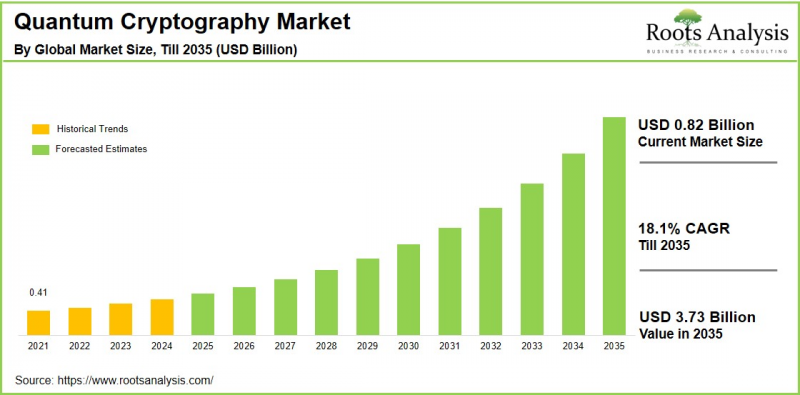
세계의 양자암호 시장 규모는 2035년까지 CAGR 18.1%로 확대하며, 현재 8억 2,000만 달러에서 2035년에는 37억 3,000만 달러에 달할 것으로 추정되고 있습니다.
양자암호는 중첩, 양자 얽힘과 같은 양자 역학의 원리를 활용하여 근본적으로 안전한 통신을 실현하는 진보된 보안 패러다임입니다. 보안을 계산의 복잡성에 의존하는 기존 암호화 시스템과 달리, 양자암호는 물리 법칙을 통해 보호를 보장하므로 도청 시도는 본질적으로 감지할 수 있습니다. 가장 대표적인 응용 사례는 양자키 전달(QKD)로, 이를 통해 두 당사자가 안전성을 증명할 수 있는 암호키를 생성하고 공유할 수 있습니다.
지속적인 기술 발전, 사이버 보안 요구 사항 증가, 공공 및 민간 부문의 투자 확대로 인해 예측 기간 중 양자암호 시장의 성장이 크게 가속화될 것으로 예측됩니다.
경영진을 위한 전략적 인사이트
양자암호화폐 시장 성장을 촉진하는 주요 시장 성장 촉진요인들
양자암호 시장은 전 세계에서 사이버 공격의 발생 빈도와 고도화에 따라 첨단 보안성을 갖춘 통신 시스템에 대한 수요가 증가함에 따라 주도되고 있습니다. 금융, 정부, 의료 등 주요 분야에서는 '지금 수집하고 나중에 해독하는' 전략을 포함한 고도화된 위협을 완화하기 위해 양자 내성 솔루션을 도입하는 사례가 늘고 있습니다. 이와 함께 지속적인 기술 발전으로 양자 키 전달 시스템의 성능과 상업적 실현 가능성이 향상되어 실험실 연구에서 실제 환경으로의 배포가 촉진되고 있습니다. 또한 정부의 막대한 투자와 기술 프로바이더, 학계, 규제 당국 간의 전략적 제휴는 혁신을 가속화하고, 업계 표준을 확립하며, 전문 인력 풀을 강화하는 등 시장의 지속적인 확장을 지원하고 있습니다.
양자암호화폐 시장 - 동종업계의 기업 경쟁 구도
세계 양자암호 화폐 시장의 경쟁 환경은 다양한 산업 분야에 걸쳐 전문적인 솔루션 및 서비스를 제공하는 기존 기술 프로바이더와 신흥 혁신가들이 모두 존재한다는 특징이 있습니다. 현재 이 시장은 주로 Alea Quantum Technologies, Applied Quantum, Crypta Labs 등의 기업을 포함한 중소기업이 점유하고 있습니다.
구성 요소 측면에서 광자 소스와 양자 키 전달(QKD) 시스템이 안전한 양자 통신을 실현하는 데 중요한 역할을 하므로 솔루션 제공 업체는 주로 고급 하드웨어 제품에 집중하고 있습니다. 또한 약 44%의 진출기업이 소프트웨어 솔루션을 제공하고 있으며, 이는 기존 IT 인프라와 원활하게 통합할 수 있는 확장 가능한 암호화 알고리즘에 대한 수요가 증가하고 있음을 반영합니다. 특히 주목할 만한 점은 솔루션 프로바이더의 50%가 BB84 프로토콜을 채택하고 있다는 점입니다. 이는 이미 검증된 양자 보안 프레임워크와 실시간 도청 감지 기능 덕분입니다.
양자암호화의 진화 - 업계의 새로운 동향
양자암호 시장의 새로운 동향은 기존 광섬유 시스템과의 통합과 지상 통신의 거리 제한을 극복하기 위한 위성 기반 QKD(양자 키 분배)를 포함한 QKD 네트워크의 지속적인 확장 및 배포를 들 수 있습니다. 이를 통해 보다 광범위한 지역적 범위에서 안전한 통신이 가능합니다. 또한 양자암호 메커니즘과 고전 암호 및 포스트 양자암호(PQC)를 결합한 하이브리드 보안 아키텍처도 주목받고 있습니다. 또한 양자 하드웨어 구성 요소의 소형화 및 비용 절감 추세로 인해 양자 하드웨어 구성요소의 소형화 및 비용 절감으로 인해 광범위한 상업적 도입에 대한 장벽이 낮아지고 있습니다.
또한 양자암호와 블록체인 및 기타 첨단 디지털 프레임워크와의 통합이 새로운 응용 분야로 부상하고 있으며, 분산 시스템 전반에서 데이터의 무결성과 기밀성을 강화하는 데 기여하고 있습니다.
지역별 분석 - 북미가 양자암호 화폐 시장을 주도하고 있습니다.
당사의 분석에 따르면 올해 북미 양자암호 화폐 시장이 가장 큰 점유율을 차지했습니다. 이는 이 지역의 탄탄한 기술 생태계, 강력한 R&D 역량, 지속적인 정부 지원, 금융 및 국방 등 핵심 분야에서의 조기 도입에 기인합니다. 또한 민관 파트너십이 구축되어 지역 전체의 혁신과 상용화를 더욱 가속화하고 있습니다.
양자암호화폐 시장의 주요 이슈
양자암호화폐 시장은 광범위한 보급과 확장성을 저해할 수 있는 몇 가지 구조적, 기술적 과제에 직면해 있습니다. 주요 과제 중 하나는 보편적으로 받아들여지는 표준, 상호 운용 가능한 프로토콜 및 공식적인 인증 프레임워크의 부족입니다. 이러한 격차는 벤더 간 상호운용성을 제한하고, 통합 비용을 상승시키며, 조달 기간을 연장시켜 시장 확장을 지연시키고 있습니다. 또한 광자 손실, 사이드 채널 공격에 대한 취약성, 환경적 요인에 의한 간섭과 같은 하드웨어와 관련된 실용적인 취약점이 운영상의 위험을 초래하고 있습니다. 이러한 문제는 양자 시스템의 이론적 보안 이점을 훼손할 수 있으며, 지속적인 기술 개선과 엄격한 품질 보증이 필요합니다.
또한 표준화된 장비가 제한적이고 기존 IT 인프라와의 통합이 미흡한 등 성숙한 상용 생태계의 부재는 기업에게 운영상의 복잡성과 불확실성을 야기하고 있습니다.
양자암호화폐 시장 : 주요 시장 세분화
제공 제품 유형
- 양자키 배송
- 양자 난수 생성
- 소프트웨어
- 서비스
서비스 유형
- 컨설팅
- 도입 및 통합
- 지원 및 유지보수
구성 요소
- 하드웨어
- 소프트웨어
도입 프로토콜
- BB84 프로토콜
- TSL/SSL 프로토콜
응용 분야
- 애플리케이션 보안
- 클라우드 보안
- 데이터베이스 보안
- 네트워크 보안
최종 사용 산업
- BFSI
- 에너지 및 유틸리티
- 정부
- 의료
- IT 및 통신
- 기타
기업형태
- 대기업
- 중소기업
지역
- 북미
- 북미
- 아시아태평양
- 라틴아메리카
- 중동 및 아프리카
양자암호화폐 시장 주요 기업 사례
- Crypto Quantique
- IonQ
- NEC
- NuCrypt
- QNu Labs
- Qrypt
- QuantumGate(VentureOne의 자회사)
- QuantumX
- QuintessenceLabs
- qutools
- Toshiba
양자암호화 시장 : 보고서의 범위
본 양자암호화폐 시장 보고서는 다음과 같은 각 섹션에 대한 인사이트을 제공합니다.
- 시장 규모 및 기회 분석 : 양자암호 화폐 시장에 대한 상세한 분석으로,(A) 제공 형태,(B) 서비스 유형,(C) 구성 요소,(D) 도입 프로토콜,(E) 응용 분야,(F) 최종 사용 산업,(G) 기업 형태,(H) 지역적 지역 등 주요 시장 부문에 초점을 맞추었습니다. 주요 시장 부문.
- 경쟁 구도:(A) 설립 연도,(B) 기업 규모,(C) 본사 소재지,(D) 소유 구조 등 관련 매개 변수를 기반으로 양자암호 화폐 시장에 진출한 기업을 종합적으로 분석합니다.
- 기업 개요: 양자암호 시장에 진출한 주요 기업의 상세 프로파일로,(A) 본사 소재지,(B) 기업 규모,(C) 기업 미션,(D) 사업 범위,(E) 경영진,(F) 연락처,(G) 재무 정보,(H) 사업 부문,(I) 제품 및 기술 포트폴리오,(J) 최근 동향 및 정보, 미래 전망에 대한 정보를 제공합니다. 최근 동향 및 정보에 입각한 미래 전망에 대한 자세한 정보를 제공합니다.
- 특허 분석 : 양자암호화 분야에서 출원 및 등록된 특허에 대해(A) 특허 유형,(B) 특허 공개 연도,(C) 특허 경과 기간,(D) 주요 기업 등 관련 파라미터를 기반으로 인사이트 분석을 수행합니다.
- 최근 동향 : 양자암호화폐 시장의 최근 동향에 대한 개요와 함께(A) 추진 연도,(B) 추진 방식,(C) 지역적 분포,(D) 가장 활발하게 참여하는 기업 등 관련 파라미터를 기반으로 한 분석을 제공합니다.
목차
제1장 프로젝트 개요
제2장 조사 방법
제3장 시장 역학
제4장 거시경제 지표
제5장 개요
제6장 서론
제7장 규제 시나리오
제8장 밸류체인 분석
제9장 양자암호 솔루션/서비스 프로바이더 시장 구도
제10장 기업의 경쟁력 분석
제11장 기업 개요
제12장 승리을 위한 중요한 전략
제13장 SWOT 분석
제14장 Porter's Five Forces 분석
제15장 메가 트렌드
제16장 특허 분석
제17장 최근 동향
제18장 시장 영향 분석
제19장 세계의 양자암호 시장
제20장 오퍼링 유형별 시장 기회
제21장 서비스 유형별 시장 기회
제22장 컴포넌트별 시장 기회
제23장 도입 프로토콜별 시장 기회
제24장 응용 분야별 시장 기회
제25장 최종 용도 산업별 시장 기회
제26장 기업 형태별 시장 기회
제27장 지역적 지역별 시장 기회
제28장 시장 기회 분석 : 북미
제29장 시장 기회 분석 : 유럽
제30장 시장 기회 분석 : 아시아태평양
제31장 시장 기회 분석 : 중동 및 아프리카
제32장 시장 기회 분석 : 라틴아메리카
제33장 결론
제34장 부록 I : 표형식 데이터
제35장 부록 II : 기업 및 조직 리스트
KSA 26.04.16Quantum Cryptography Market Outlook
As per Roots Analysis, the global quantum cryptography market size is estimated to grow from USD 0.82 billion in current year to USD 3.73 billion by 2035, at a CAGR of 18.1% during the forecast period, till 2035.
Quantum cryptography is an advanced security paradigm that leverages the principles of quantum mechanics, such as superposition and entanglement, to enable fundamentally secure communication. Unlike classical cryptographic systems, which rely on computational complexity for security, quantum cryptography ensures protection through the laws of physics, making any eavesdropping attempt inherently detectable. The most prominent application is Quantum Key Distribution (QKD), which allows two parties to generate and share encryption keys with provable security.
Ongoing technological advancements, escalating cybersecurity requirements, and expanding public - private investments are expected to significantly accelerate the growth of the quantum cryptography market during the forecast period.
Strategic Insights for Senior Leaders
Key Drivers Propelling Growth of Quantum Cryptography Market
The quantum cryptography market is propelled by the rising need for highly secure communication systems amid the rising incidence and advancements of global cyberattacks. Critical sectors such as finance, government, and healthcare are increasingly adopting quantum-safe solutions to mitigate advanced threats, including "harvest-now, decrypt-later" strategies. In parallel, continuous technological advancements are enhancing the performance and commercial feasibility of quantum key distribution systems, facilitating their transition from laboratory research to real-world deployment. Further, substantial government investments and strategic collaborations among technology providers, academic institutions, and regulatory bodies are accelerating innovation, establishing industry standards, and strengthening the specialized talent pool, collectively supporting sustained market expansion.
Quantum Cryptography Market: Competitive Landscape of Companies in this Industry
The competitive landscape of the global quantum cryptography market is characterized by the presence of both established technology providers and emerging innovators delivering specialized solutions and services across diverse industry verticals. At present, the market is largely dominated by small and mid-sized enterprises, including companies such as Alea Quantum Technologies, Applied Quantum, and Crypta Labs.
In terms of components, solution providers primarily focus on advanced hardware offerings, given the critical role of photon sources and Quantum Key Distribution (QKD) systems in enabling secure quantum communications. Further, approximately 44% of the players provide software solutions, reflecting the increasing demand for scalable cryptographic algorithms that seamlessly integrate with existing IT infrastructures. Notably, 50% of the solution providers deploy BB84 protocol, owing to its validated quantum security framework and real-time eavesdropping detection capabilities.
Quantum Cryptography Evolution: Emerging Trends in the Industry
Emerging trends in the quantum cryptography market include the continued expansion and deployment of Quantum Key Distribution (QKD) networks, including integration with existing optical fiber systems and satellite-based QKD to overcome terrestrial range limitations. This enables secure communications over wider geographic spans. Additionally, hybrid security architectures that combine quantum cryptographic mechanisms with classical and post-quantum cryptography (PQC) are gaining traction. There is also an upcoming trend towards miniaturization and cost reduction of quantum hardware components which is lowering barriers to broader commercial adoption.
Moreover, the integration of quantum cryptography with blockchain and other advanced digital frameworks is emerging as a novel application area, enhancing data integrity and confidentiality across decentralized systems.
Regional Analysis: North America Lead the Quantum Cryptography Market
According to our analysis, in the current year, the quantum cryptography market in North America captures the largest share. This is attributed to its robust technological ecosystem, strong research and development capabilities, sustained government backing, early adoption across critical sectors such as finance and defense. Additionally, well-established public-private partnerships further accelerate innovation and commercialization across the region.
Key Challenges in Quantum Cryptography Market
The quantum cryptography market faces several structural and technological challenges that may hinder widespread adoption and scalability. A key challenge is the lack of universally accepted standards, interoperable protocols, and formal certification frameworks. These gaps limit vendor interoperability, elevate integration costs, and extend procurement timelines, thereby slowing market expansion. In addition, practical hardware-related vulnerabilities, such as photon losses, susceptibility to side-channel attacks, and environmental disturbances pose operational risks. Such challenges can compromise the theoretical security advantages of quantum systems, necessitating continuous technological refinement and rigorous quality assurance.
Further, the absence of a mature commercial ecosystem, characterized by limited standardized equipment and inadequate integration with existing IT infrastructure, creates operational complexities and uncertainty for enterprises.
Quantum Cryptography Market: Key Market Segmentation
Type of Offering
- Quantum Key Distribution
- Quantum Random Number Generation
- Software
- Services
Type of Service
- Consulting
- Deployment and Integration
- Support and Maintenance
Component
- Hardware
- Software
Deployment Protocol
- BB84 Protocol
- TSL/SSL Protocol
Application Area
- Application Security
- Cloud Security
- Database Security
- Network Security
End Use Industry
- BFSI
- Energy & Utilities
- Government
- Healthcare
- IT and Telecom
- Others
Type of Enterprise
- Large Enterprises
- Small and Medium Enterprises
Geographical Regions
- North America
- Europe
- Asia-Pacific
- Latin America
- Middle East and Africa
Example Players in Quantum Cryptography Market
- Crypto Quantique
- IonQ
- NEC
- NuCrypt
- QNu Labs
- Qrypt
- QuantumGate (a part of VentureOne)
- QuantumX
- QuintessenceLabs
- qutools
- Toshiba
Quantum cryptography Market: Report Coverage
The report on the quantum cryptography market features insights on various sections, including:
- Market Sizing and Opportunity Analysis: An in-depth analysis of the quantum cryptography market, focusing on key market segments, including [A] type of offering, [B] type of service, [C] component, [D] deployment protocol, [E] application area, [F] end use industry, [G] type of enterprise, and [H] geographical regions.
- Competitive Landscape: A comprehensive analysis of the companies engaged in the quantum cryptography market, based on several relevant parameters, such as [A] year of establishment, [B] company size, [C] location of headquarters and [D] ownership structure.
- Company Profiles: Elaborate profiles of prominent players engaged in the quantum cryptography market, providing details on [A] location of headquarters, [B] company size, [C] company mission, [D] company footprint, [E] management team, [F] contact details, [G] financial information, [H] operating business segments, [I] product / technology portfolio, [J] recent developments, and an informed future outlook.
- Patent Analysis: An insightful analysis of patents filed / granted in the quantum cryptography domain, based on relevant parameters, including [A] type of patent, [B] patent publication year, [C] patent age and [D] leading players.
- Recent Developments: An overview of the recent developments made in the quantum cryptography market, along with analysis based on relevant parameters, including [A] year of initiative, [B] type of initiative, [C] geographical distribution and [D] most active players.
Key Questions Answered in this Report
- What is the current and future market size?
- Who are the leading companies in this market?
- What are the growth drivers that are likely to influence the evolution of this market?
- What are the key partnership and funding trends shaping this industry?
- Which region is likely to grow at higher CAGR till 2035?
- How is the current and future market opportunity likely to be distributed across key market segments?
Reasons to Buy this Report
- Detailed Market Analysis: The report provides a comprehensive market analysis, offering detailed revenue projections of the overall market and its specific sub-segments. This information is valuable to both established market leaders and emerging entrants.
- In-depth Analysis of Trends: Stakeholders can leverage the report to gain a deeper understanding of the competitive dynamics within the market. Each report maps ecosystem activity across partnerships, funding, and patent landscapes to reveal growth hotspots and white spaces in the industry.
- Opinion of Industry Experts: The report features extensive interviews and surveys with key opinion leaders and industry experts to validate market trends mentioned in the report.
- Decision-ready Deliverables: The report offers stakeholders with strategic frameworks (Porter's Five Forces, value chain, SWOT), and complimentary Excel / slide packs with customization support.
Additional Benefits
- Complimentary Dynamic Excel Dashboards for Analytical Modules
- Exclusive 15% Free Content Customization
- Personalized Interactive Report Walkthrough with Our Expert Research Team
- Free Report Updates for Versions Older than 6-12 Months
TABLE OF CONTENTS
1. PROJECT OVERVIEW
- 1.1. Context
- 1.2. Project Objectives
2. RESEARCH METHODOLOGY
- 2.1. Chapter Overview
- 2.2. Research Assumptions
- 2.2.1. Market Landscape and Market Trends
- 2.2.2. Market Forecast and Opportunity Analysis
- 2.2.3. Comparative Analysis
- 2.3. Database Building
- 2.3.1. Data Collection
- 2.3.2. Data Validation
- 2.3.3. Data Analysis
- 2.4. Project Methodology
- 2.4.1. Secondary Research
- 2.4.1.1. Annual Reports
- 2.4.1.2. Academic Research Papers
- 2.4.1.3. Company Websites
- 2.4.1.4. Investor Presentations
- 2.4.1.5. Regulatory Filings
- 2.4.1.6. White Papers
- 2.4.1.7. Industry Publications
- 2.4.1.8. Conferences and Seminars
- 2.4.1.9. Government Portals
- 2.4.1.10. Media and Press Releases
- 2.4.1.11. Newsletters
- 2.4.1.12. Industry Databases
- 2.4.1.13. Roots Proprietary Databases
- 2.4.1.14. Paid Databases and Sources
- 2.4.1.15. Social Media Portals
- 2.4.1.16. Other Secondary Sources
- 2.4.2. Primary Research
- 2.4.2.1. Types of Primary Research
- 2.4.2.1.1. Qualitative Research
- 2.4.2.1.2. Quantitative Research
- 2.4.2.1.3. Hybrid Approach
- 2.4.2.2. Advantages of Primary Research
- 2.4.2.3. Techniques for Primary Research
- 2.4.2.3.1. Interviews
- 2.4.2.3.2. Surveys
- 2.4.2.3.3. Focus Groups
- 2.4.2.3.4. Observational Research
- 2.4.2.3.5. Social Media Interactions
- 2.4.2.4. Key Opinion Leaders Considered in Primary Research
- 2.4.2.4.1. Company Executives (CXOs)
- 2.4.2.4.2. Board of Directors
- 2.4.2.4.3. Company Presidents and Vice Presidents
- 2.4.2.4.4. Research and Development Heads
- 2.4.2.4.5. Technical Experts
- 2.4.2.4.6. Subject Matter Experts
- 2.4.2.4.7. Scientists
- 2.4.2.4.8. Doctors and Other Healthcare Providers
- 2.4.2.5. Ethics and Integrity
- 2.4.2.5.1. Research Ethics
- 2.4.2.5.2. Data Integrity
- 2.4.2.1. Types of Primary Research
- 2.4.3. Analytical Tools and Databases
- 2.4.1. Secondary Research
- 2.5. Robust Quality Control
3. MARKET DYNAMICS
- 3.1. Chapter Overview
- 3.2. Forecast Methodology
- 3.2.1. Top-down Approach
- 3.2.2. Bottom-up Approach
- 3.2.3. Hybrid Approach
- 3.3. Market Assessment Framework
- 3.3.1. Total Addressable Market (TAM)
- 3.3.2. Serviceable Addressable Market (SAM)
- 3.3.3. Serviceable Obtainable Market (SOM)
- 3.3.4. Currently Acquired Market (CAM)
- 3.4. Forecasting Tools and Techniques
- 3.4.1. Qualitative Forecasting
- 3.4.2. Correlation
- 3.4.3. Regression
- 3.4.4. Extrapolation
- 3.4.5. Convergence
- 3.4.6. Sensitivity Analysis
- 3.4.7. Scenario Planning
- 3.4.8. Data Visualization
- 3.4.9. Time Series Analysis
- 3.4.10. Forecast Error Analysis
- 3.5. Key Considerations
- 3.5.1. Demographics
- 3.5.2. Government Regulations
- 3.5.3. Reimbursement Scenarios
- 3.5.4. Market Access
- 3.5.5. Supply Chain
- 3.5.6. Industry Consolidation
- 3.5.7. Pandemic / Unforeseen Disruptions Impact
- 3.6. Limitations
4. MACRO-ECONOMIC INDICATORS
- 4.1. Chapter Overview
- 4.2. Market Dynamics
- 4.2.1. Time Period
- 4.2.1.1. Historical Trends
- 4.2.1.2. Current and Forecasted Estimates
- 4.2.2. Currency Coverage
- 4.2.2.1. Major Currencies Affecting the Market
- 4.2.2.2. Factors Affecting Currency Fluctuations
- 4.2.2.3. Impact of Currency Fluctuations on the Industry
- 4.2.3. Foreign Currency Exchange Rate
- 4.2.3.1. Impact of Foreign Exchange Rate Volatility on the Market
- 4.2.3.2. Strategies for Mitigating Foreign Exchange Risk
- 4.2.4. Recession
- 4.2.4.1. Assessment of Current Economic Conditions and Potential Impact on the Market
- 4.2.4.2. Historical Analysis of Past Recessions and Lessons Learnt
- 4.2.5. Inflation
- 4.2.5.1. Measurement and Analysis of Inflationary Pressures in the Economy
- 4.2.5.2. Potential Impact of Inflation on the Market Evolution
- 4.2.6. Interest Rates
- 4.2.6.1. Interest Rates and Their Impact on the Market
- 4.2.6.2. Strategies for Managing Interest Rate Risk
- 4.2.7. Commodity Flow Analysis
- 4.2.7.1. Type of Commodity
- 4.2.7.2. Origins and Destinations
- 4.2.7.3. Values and Weights
- 4.2.7.4. Modes of Transportation
- 4.2.8. Global Trade Dynamics
- 4.2.8.1. Import Scenario
- 4.2.8.2. Export Scenario
- 4.2.8.3. Trade Policies
- 4.2.8.4. Strategies for Mitigating the Risks Associated with Trade Barriers
- 4.2.8.5. Impact of Trade Barriers on the Market
- 4.2.9. War Impact Analysis
- 4.2.9.1. Russian-Ukraine War
- 4.2.9.2. Israel-Hamas War
- 4.2.10. COVID Impact / Related Factors
- 4.2.10.1. Global Economic Impact
- 4.2.10.2. Industry-specific Impact
- 4.2.10.3. Government Response and Stimulus Measures
- 4.2.10.4. Future Outlook and Adaptation Strategies
- 4.2.11. Other Indicators
- 4.2.11.1. Fiscal Policy
- 4.2.11.2. Consumer Spending
- 4.2.11.3. Gross Domestic Product (GDP)
- 4.2.11.4. Employment
- 4.2.11.5. Taxes
- 4.2.11.6. Stock Market Performance
- 4.2.11.7. Cross-Border Dynamics
- 4.2.1. Time Period
- 4.3. Conclusion
5. EXECUTIVE SUMMARY
6. INTRODUCTION
- 6.1. Overview of Quantum Cryptography
- 6.2. Core Principles of Quantum Cryptography
- 6.3. Need for Quantum Cryptography Solutions and Services
- 6.4. Key Advantages of Quantum Cryptography
- 6.5. Key Challenges associated with Quantum Cryptography
- 6.5. Future Trends in Quantum Cryptography Industry
7. REGULATORY SCENARIO
8. VALUE CHAIN ANALYSIS
- 8.1. Value Chain Analysis: Brief Overview of Processes and Stakeholders Involved
- 8.2. Value Chain Analysis: Schematic Representation of Quantum Cryptography Process
- 8.3. Value Chain Analysis: Key Challenges and Mitigation Strategies in Quantum Cryptography Deployment
9. QUANTUM CRYPTOGRAPHY SOLUTION / SERVICE PROVIDERS MARKET LANDSCAPE
- 9.1. Methodology and Key Parameters
- 9.2. Analysis by Year of Establishment
- 9.3. Analysis by Company Size
- 9.4. Analysis by Location of Headquarters
- 9.5. Analysis by Type of Offering
- 9.6. Analysis by Type of Solution
- 9.7. Analysis by Type of Service
- 9.8. Analysis by Component
- 9.9. Analysis by Deployment Protocol
- 9.10. Analysis by End use Industry
10. COMPANY COMPETITIVENESS ANALYSIS
- 10.1. Methodology and Scoring Criteria
- 10.2. Established Quantum Cryptography Solution / Service Providers
- 10.3. Quantum Cryptography Start-ups
11. COMPANY PROFILES
- 11.1. Chapter Overview
- 11.2. Toshiba*
- 11.2.1. Company Details
- 11.2.2. Quantum Cryptography Portfolio
- 11.2.3. Initiatives in the Quantum Cryptography Market
- 11.2.4. Future Outlook
- 11.3. IonQ
- 11.4. Qutools
- 11.5. QuintessenceLabs
- 11.6. NEC
- 11.7. NuCrypt
- 11.8. QNu Labs
- 11.9. QuantumX
- 11.10. Crypto Quantique
- 11.11. QuantumGate
- 11.12. Qrypt
- Similar details are presented for other companies mentioned below (based on information in the public domain)
12. KEY WINNING STRATEGIES
13. SWOT ANALYSIS
14. PORTER'S FIVE FORCES ANALYSIS
15. MEGA TRENDS
16. PATENT ANALYSIS
- 16.1. Scope and Methodology
- 16.2. Key Parameters
- 16.3. Quantum Cryptography: Patent Analysis
- 16.3.1. Analysis by Application Year
- 16.3.2. Analysis by Type of Patent
- 16.3.3. Analysis by Patent Jurisdiction
- 16.3.4. Analysis by Publication Year
- 16.3.5. Analysis by Type of Patent and Patent Publication Year
- 16.3.6. Analysis by Type of Applicant
- 16.3.7. Most Active Players: Analysis by Number of Patents
- 16.3.8. Leading Individual Patent Assignees: Analysis by Number of Patents
- 16.3.9. Analysis by Patent Age
- 16.3.10. Patent Valuation
17. RECENT DEVELOPMENTS
- 17.1. Partnership Models
- 17.1.1 Quantum Cryptography: Recent Partnerships and Collaborations
- 17.1.1.1. Analysis by Year of Partnership
- 17.1.1.2. Analysis by Type of Partnership
- 17.1.1.3. Analysis by Year and Type of Partnership
- 17.1.1.4. Most Active Players: Distribution by Number of Partnerships
- 17.1.1.5. Local and International Agreements
- 17.1.1.6. Intercontinental and Intracontinental Deals
- 17.1.1 Quantum Cryptography: Recent Partnerships and Collaborations
- 17.2. Funding Models
- 17.2.1. Quantum Cryptography: Recent Funding and Investments
- 17.2.1.1. Analysis by Year of Funding
- 17.2.1.2. Analysis of Funding Instances by Type of Funding
- 17.2.1.3. Analysis of Funding Instances by Year and Type of Funding
- 17.2.1.4. Analysis of Amount Invested by Type of Funding
- 17.2.1.5. Analysis of Funding Instances by Country
- 17.2.1.6. Most Active Players: Analysis by Amount Raised
- 17.2.2. Summary and Key Takeaways
- 17.2.1. Quantum Cryptography: Recent Funding and Investments
- 17.3. Expansion Models
- 17.3.1. Quantum Cryptography: Recent Expansions
- 17.3.1.1. Analysis by Year of Expansion
- 17.3.1.2. Analysis of Type of Expansion
- 17.3.1.3. Analysis of Year and Type of Expansion
- 17.3.1.4. Analysis by Focus Area
- 17.3.1.5. Most Active Players: Distribution by Number of Expansions
- 17.3.1. Quantum Cryptography: Recent Expansions
18. MARKET IMPACT ANALYSIS
- 18.1. Market Drivers
- 18.2. Market Restraints
- 18.3. Market Opportunities
- 18.4. Market Challenges
19. GLOBAL QUANTUM CRYPTOGRAPHY MARKET
- 19.1. Key Assumptions and Methodology
- 19.2. Global Quantum Cryptography Market, Historical Trends (Since 2021) and Forecasted Estimates (Till 2035)
- 19.2.1. Scenario Analysis
- 19.2.1.1. Conservative Scenario
- 19.2.1.2. Optimistic Scenario
- 19.2.1. Scenario Analysis
- 19.3. Key Market Segmentations
20. MARKET OPPORTUNITIES BASED ON TYPE OF OFFERING
- 20.1. Key Assumptions and Methodology
- 20.2. Quantum Cryptography Market, by Type of Offering
- 20.2.1. Quantum Cryptography Market for Quantum Key Distribution, Historical Trends (Since 2021) and Forecasted Estimates (Till 2035)
- 20.2.2. Quantum Cryptography Market for Quantum Random Number Generation, Historical Trends (Since 2021) and Forecasted Estimates (Till 2035)
- 20.2.2. Quantum Cryptography Market for Software, Historical Trends (Since 2021) and Forecasted Estimates (Till 2035)
- 20.2.2. Quantum Cryptography Market for Services, Historical Trends (Since 2021) and Forecasted Estimates (Till 2035)
- 20.3. Data Triangulation and Validation
21. MARKET OPPORTUNITIES BASED ON TYPE OF SERVICE
- 21.1. Key Assumptions and Methodology
- 21.2. Quantum Cryptography Market, by Type of Service
- 21.2.1. Quantum Cryptography Market for Consulting, Historical Trends (Since 2021) and Forecasted Estimates (Till 2035)
- 21.2.2. Quantum Cryptography Market for Deployment and Integration, Historical Trends (Since 2021) and Forecasted Estimates (Till 2035)
- 21.2.3. Quantum Cryptography Market for Support and Maintenance, Historical Trends (Since 2021) and Forecasted Estimates (Till 2035)
- 21.3. Data Triangulation and Validation
22. MARKET OPPORTUNITIES BASED ON COMPONENT
- 22.1. Key Assumptions and Methodology
- 22.2. Quantum Cryptography Market, by Component
- 22.2.1. Quantum Cryptography Market for Hardware, Historical Trends (Since 2021) and Forecasted Estimates (Till 2035)
- 22.2.2. Quantum Cryptography Market for Software, Historical Trends (Since 2021) and Forecasted Estimates (Till 2035)
- 22.3. Data Triangulation and Validation
23. MARKET OPPORTUNITIES BASED ON DEPLOYMENT PROTOCOL
- 23.1. Key Assumptions and Methodology
- 23.2. Quantum Cryptography Market, by Deployment Protocol
- 23.2.1. Quantum Cryptography Market for BB84 Protocol, Historical Trends (Since 2021) and Forecasted Estimates (Till 2035)
- 23.2.2. Quantum Cryptography Market for TSL/SSL Protocol, Historical Trends (Since 2021) and Forecasted Estimates (Till 2035)
- 23.3. Data Triangulation and Validation
24. MARKET OPPORTUNITIES BASED ON APPLICATION AREA
- 24.1. Key Assumptions and Methodology
- 24.2. Quantum Cryptography Market, by Application Area
- 22.2.1. Quantum Cryptography Market for Network Security, Historical Trends (Since 2021) and Forecasted Estimates (Till 2035)
- 24.2.2. Quantum Cryptography Market for Cloud Security, Historical Trends (Since 2021) and Forecasted Estimates (Till 2035)
- 24.2.3. Quantum Cryptography Market for Application Security, Historical Trends (Since 2021) and Forecasted Estimates (Till 2035)
- 24.2.4. Quantum Cryptography Market for Database Security, Historical Trends (Since 2021) and Forecasted Estimates (Till 2035)
- 24.3. Data Triangulation and Validation
25. MARKET OPPORTUNITIES BASED ON END USE INDUSTRY
- 25.1. Key Assumptions and Methodology
- 25.2. Quantum Cryptography Market, by End Use Industry
- 22.2.1. Quantum Cryptography Market for Government, Historical Trends (Since 2021) and Forecasted Estimates (Till 2035)
- 25.2.2. Quantum Cryptography Market for BFSI, Historical Trends (Since 2021) and Forecasted Estimates (Till 2035)
- 25.2.3. Quantum Cryptography Market for Energy and Utilities, Historical Trends (Since 2021) and Forecasted Estimates (Till 2035)
- 25.2.4. Quantum Cryptography Market for IT and Telecom, Historical Trends (Since 2021) and Forecasted Estimates (Till 2035)
- 25.2.4. Quantum Cryptography Market for Healthcare, Historical Trends (Since 2021) and Forecasted Estimates (Till 2035)
- 25.2.4. Quantum Cryptography Market for Others, Historical Trends (Since 2021) and Forecasted Estimates (Till 2035)
- 25.3. Data Triangulation and Validation
26. MARKET OPPORTUNITIES BASED ON TYPE OF ENTERPRISE
- 26.1. Key Assumptions and Methodology
- 26.2. Quantum Cryptography Market, by Type of Enterprise
- 22.2.1. Quantum Cryptography Market for Large Enterprise, Historical Trends (Since 2021) and Forecasted Estimates (Till 2035)
- 26.2.2. Quantum Cryptography Market for Small and Mid-sized Enterprise, Historical Trends (Since 2021) and Forecasted Estimates (Till 2035)
- 26.3. Data Triangulation and Validation
27. MARKET OPPORTUNITIES BASED ON GEOGRAPHICAL REGIONS
- 27.1. Key Assumptions and Methodology
- 27.2. Quantum Cryptography Market, by Geographical Regions
- 27.2.1. Quantum Cryptography Market in North America, Historical Trends (Since 2021) and Forecasted Estimates (Till 2035)
- 27.2.2. Quantum Cryptography Market in Europe, Historical Trends (Since 2021) and Forecasted Estimates (Till 2035)
- 27.2.3. Quantum Cryptography Market in Asia-Pacific, Historical Trends (Since 2021) and Forecasted Estimates (Till 2035)
- 27.2.4. Quantum Cryptography Market in Middle East and Africa, Historical Trends (Since 2021) and Forecasted Estimates (Till 2035)
- 27.2.5. Quantum Cryptography Market in Latin America, Historical Trends (Since 2021) and Forecasted Estimates (Till 2035)
- 27.3. Quantum Cryptography Market, by Geographical Regions: Market Dynamics Assessment
- 27.3.1. Market Movement Analysis
- 27.3.2. Penetration Growth (P-G) Matrix
28. MARKET OPPORTUNITY ANALYSIS: NORTH AMERICA**
- 28.1. Quantum Cryptography Market in North America: Distribution by Type of Offering
- 28.1.1. Quantum Cryptography Market in North America for Quantum Key Distribution, Historical Trends (Since 2021) and Forecasted Estimates (Till 2035)
- 28.1.2. Quantum Cryptography Market in North America for Quantum Random Number Generation, Historical Trends (Since 2021) and Forecasted Estimates (Till 2035)
- 28.1.3. Quantum Cryptography Market in North America for Software, Historical Trends (Since 2021) and Forecasted Estimates (Till 2035)
- 28.1.4. Quantum Cryptography Market in North America for Service, Historical Trends (Since 2021) and Forecasted Estimates (Till 2035)
- 28.2. Quantum Cryptography Market in North America: Distribution by Type of Service
- 28.2.1. Quantum Cryptography Market in North America for Consulting, Historical Trends (Since 2021) and Forecasted Estimates (Till 2035)
- 28.2.2. Quantum Cryptography Market in North America for Deployment and Integration, Historical Trends (Since 2021) and Forecasted Estimates (Till 2035)
- 28.2.3. Quantum Cryptography Market in North America for Support and Maintenance, Historical Trends (Since 2021) and Forecasted Estimates (Till 2035)
- 28.3. Quantum Cryptography Market in North America: Distribution by Component
- 28.3.1. Quantum Cryptography Market in North America for Hardware, Historical Trends (Since 2021) and Forecasted Estimates (Till 2035)
- 28.3.2. Quantum Cryptography Market in North America for Software, Historical Trends (Since 2021) and Forecasted Estimates (Till 2035)
- 28.4. Quantum Cryptography Market in North America: Distribution by Deployment Protocol
- 28.4.1. Quantum Cryptography Market in North America for BB84 Protocol, Historical Trends (Since 2021) and Forecasted Estimates (Till 2035)
- 28.4.2. Quantum Cryptography Market in North America for TSL/SSL Protocol, Historical Trends (Since 2021) and Forecasted Estimates (Till 2035)
- 28.5. Quantum Cryptography Market in North America: Distribution by Application Area
- 28.5.1. Quantum Cryptography Market in North America for Network Security, Historical Trends (Since 2021) and Forecasted Estimates (Till 2035)
- 28.5.2. Quantum Cryptography Market in North America for Cloud Security, Historical Trends (Since 2021) and Forecasted Estimates (Till 2035)
- 28.5.3. Quantum Cryptography Market in North America for Application Security, Historical Trends (Since 2021) and Forecasted Estimates (Till 2035)
- 28.5.4. Quantum Cryptography Market in North America for Database Security, Historical Trends (Since 2021) and Forecasted Estimates (Till 2035)
- 28.6. Quantum Cryptography Market in North America: Distribution by End Use Industry
- 28.6.1. Quantum Cryptography Market in North America for Government, Historical Trends (Since 2021) and Forecasted Estimates (Till 2035)
- 28.6.2. Quantum Cryptography Market in North America for BFSI, Historical Trends (Since 2021) and Forecasted Estimates (Till 2035)
- 28.6.3. Quantum Cryptography Market in North America for Energy and Utilities, Historical Trends (Since 2021) and Forecasted Estimates (Till 2035)
- 28.6.4. Quantum Cryptography Market in North America for IT and Telecom, Historical Trends (Since 2021) and Forecasted Estimates (Till 2035)
- 28.6.5. Quantum Cryptography Market in North America for Healthcare, Historical Trends (Since 2021) and Forecasted Estimates (Till 2035)
- 28.6.6. Quantum Cryptography Market in North America for Others, Historical Trends (Since 2021) and Forecasted Estimates (Till 2035)
- 28.7. Quantum Cryptography Market in North America: Distribution by Type of Enterprise
- 28.7.1. Quantum Cryptography Market in North America for Large Enterprise, Historical Trends (Since 2021) and Forecasted Estimates (Till 2035)
- 28.7.2. Quantum Cryptography Market in North America for Small and Mid-sized Enterprises, Historical Trends (Since 2021) and Forecasted Estimates (Till 2035)
29. MARKET OPPORTUNITY ANALYSIS: EUROPE
- 29.1. Quantum Cryptography Market in Europe: Distribution by Type of Offering
- 29.1.1. Quantum Cryptography Market in Europe for Quantum Key Distribution, Historical Trends (Since 2021) and Forecasted Estimates (Till 2035)
- 29.1.2. Quantum Cryptography Market in Europe for Quantum Random Number Generation, Historical Trends (Since 2021) and Forecasted Estimates (Till 2035)
- 29.1.3. Quantum Cryptography Market in Europe for Software, Historical Trends (Since 2021) and Forecasted Estimates (Till 2035)
- 29.1.4. Quantum Cryptography Market in Europe for Service, Historical Trends (Since 2021) and Forecasted Estimates (Till 2035)
- 29.2. Quantum Cryptography Market in Europe: Distribution by Type of Service
- 29.2.1. Quantum Cryptography Market in Europe for Consulting, Historical Trends (Since 2021) and Forecasted Estimates (Till 2035)
- 29.2.2. Quantum Cryptography Market in Europe for Deployment and Integration, Historical Trends (Since 2021) and Forecasted Estimates (Till 2035)
- 29.2.3. Quantum Cryptography Market in Europe for Support and Maintenance, Historical Trends (Since 2021) and Forecasted Estimates (Till 2035)
- 29.3. Quantum Cryptography Market in Europe: Distribution by Component
- 29.3.1. Quantum Cryptography Market in Europe for Hardware, Historical Trends (Since 2021) and Forecasted Estimates (Till 2035)
- 29.3.2. Quantum Cryptography Market in Europe for Software, Historical Trends (Since 2021) and Forecasted Estimates (Till 2035)
- 29.4. Quantum Cryptography Market in Europe: Distribution by Deployment Protocol
- 29.4.1. Quantum Cryptography Market in Europe for BB84 Protocol, Historical Trends (Since 2021) and Forecasted Estimates (Till 2035)
- 29.4.2. Quantum Cryptography Market in Europe for TSL/SSL Protocol, Historical Trends (Since 2021) and Forecasted Estimates (Till 2035)
- 29.5. Quantum Cryptography Market in Europe: Distribution by Application Area
- 29.5.1. Quantum Cryptography Market in Europe for Network Security, Historical Trends (Since 2021) and Forecasted Estimates (Till 2035)
- 29.5.2. Quantum Cryptography Market in Europe for Cloud Security, Historical Trends (Since 2021) and Forecasted Estimates (Till 2035)
- 29.5.3. Quantum Cryptography Market in Europe for Application Security, Historical Trends (Since 2021) and Forecasted Estimates (Till 2035)
- 29.5.4. Quantum Cryptography Market in Europe for Database Security, Historical Trends (Since 2021) and Forecasted Estimates (Till 2035)
- 29.6. Quantum Cryptography Market in Europe: Distribution by End Use Industry
- 29.6.1. Quantum Cryptography Market in Europe for Government, Historical Trends (Since 2021) and Forecasted Estimates (Till 2035)
- 29.6.2. Quantum Cryptography Market in Europe for BFSI, Historical Trends (Since 2021) and Forecasted Estimates (Till 2035)
- 29.6.3. Quantum Cryptography Market in Europe for Energy and Utilities, Historical Trends (Since 2021) and Forecasted Estimates (Till 2035)
- 29.6.4. Quantum Cryptography Market in Europe for IT and Telecom, Historical Trends (Since 2021) and Forecasted Estimates (Till 2035)
- 29.6.5. Quantum Cryptography Market in Europe for Healthcare, Historical Trends (Since 2021) and Forecasted Estimates (Till 2035)
- 29.6.6. Quantum Cryptography Market in Europe for Others, Historical Trends (Since 2021) and Forecasted Estimates (Till 2035)
- 29.7. Quantum Cryptography Market in Europe: Distribution by Type of Enterprise
- 29.7.1. Quantum Cryptography Market in Europe for Large Enterprise, Historical Trends (Since 2021) and Forecasted Estimates (Till 2035)
- 29.7.2. Quantum Cryptography Market in Europe for Small and Mid-sized Enterprises, Historical Trends (Since 2021) and Forecasted Estimates (Till 2035)
30. MARKET OPPORTUNITY ANALYSIS: ASIA-PACIFIC
- 30.1. Quantum Cryptography Market in Asia-Pacific: Distribution by Type of Offering
- 30.1.1. Quantum Cryptography Market in Asia-Pacific for Quantum Key Distribution, Historical Trends (Since 2021) and Forecasted Estimates (Till 2035)
- 30.1.2. Quantum Cryptography Market in Asia-Pacific for Quantum Random Number Generation, Historical Trends (Since 2021) and Forecasted Estimates (Till 2035)
- 30.1.3. Quantum Cryptography Market in Asia-Pacific for Software, Historical Trends (Since 2021) and Forecasted Estimates (Till 2035)
- 30.1.4. Quantum Cryptography Market in Asia-Pacific for Service, Historical Trends (Since 2021) and Forecasted Estimates (Till 2035)
- 30.2. Quantum Cryptography Market in Asia-Pacific: Distribution by Type of Service
- 30.2.1. Quantum Cryptography Market in Asia-Pacific for Consulting, Historical Trends (Since 2021) and Forecasted Estimates (Till 2035)
- 30.2.2. Quantum Cryptography Market in Asia-Pacific for Deployment and Integration, Historical Trends (Since 2021) and Forecasted Estimates (Till 2035)
- 30.2.3. Quantum Cryptography Market in Asia-Pacific for Support and Maintenance, Historical Trends (Since 2021) and Forecasted Estimates (Till 2035)
- 30.3. Quantum Cryptography Market in Asia-Pacific: Distribution by Component
- 30.3.1. Quantum Cryptography Market in Asia-Pacific for Hardware, Historical Trends (Since 2021) and Forecasted Estimates (Till 2035)
- 30.3.2. Quantum Cryptography Market in Asia-Pacific for Software, Historical Trends (Since 2021) and Forecasted Estimates (Till 2035)
- 30.4. Quantum Cryptography Market in Asia-Pacific: Distribution by Deployment Protocol
- 30.4.1. Quantum Cryptography Market in Asia-Pacific for BB84 Protocol, Historical Trends (Since 2021) and Forecasted Estimates (Till 2035)
- 30.4.2. Quantum Cryptography Market in Asia-Pacific for TSL/SSL Protocol, Historical Trends (Since 2021) and Forecasted Estimates (Till 2035)
- 30.5. Quantum Cryptography Market in Asia-Pacific: Distribution by Application Area
- 30.5.1. Quantum Cryptography Market in Asia-Pacific for Network Security, Historical Trends (Since 2021) and Forecasted Estimates (Till 2035)
- 30.5.2. Quantum Cryptography Market in Asia-Pacific for Cloud Security, Historical Trends (Since 2021) and Forecasted Estimates (Till 2035)
- 30.5.3. Quantum Cryptography Market in Asia-Pacific for Application Security, Historical Trends (Since 2021) and Forecasted Estimates (Till 2035)
- 30.5.4. Quantum Cryptography Market in Asia-Pacific for Database Security, Historical Trends (Since 2021) and Forecasted Estimates (Till 2035)
- 30.6. Quantum Cryptography Market in Asia-Pacific: Distribution by End Use Industry
- 30.6.1. Quantum Cryptography Market in Asia-Pacific for Government, Historical Trends (Since 2021) and Forecasted Estimates (Till 2035)
- 30.6.2. Quantum Cryptography Market in Asia-Pacific for BFSI, Historical Trends (Since 2021) and Forecasted Estimates (Till 2035)
- 30.6.3. Quantum Cryptography Market in Asia-Pacific for Energy and Utilities, Historical Trends (Since 2021) and Forecasted Estimates (Till 2035)
- 30.6.4. Quantum Cryptography Market in Asia-Pacific for IT and Telecom, Historical Trends (Since 2021) and Forecasted Estimates (Till 2035)
- 30.6.5. Quantum Cryptography Market in Asia-Pacific for Healthcare, Historical Trends (Since 2021) and Forecasted Estimates (Till 2035)
- 30.6.6. Quantum Cryptography Market in Asia-Pacific for Others, Historical Trends (Since 2021) and Forecasted Estimates (Till 2035)
- 30.7. Quantum Cryptography Market in Asia-Pacific: Distribution by Type of Enterprise
- 30.7.1. Quantum Cryptography Market in Asia-Pacific for Large Enterprise, Historical Trends (Since 2021) and Forecasted Estimates (Till 2035)
- 30.7.2. Quantum Cryptography Market in Asia-Pacific for Small and Mid-sized Enterprises, Historical Trends (Since 2021) and Forecasted Estimates (Till 2035)
31. MARKET OPPORTUNITY ANALYSIS: MIDDLE EAST AND AFRICA
- 31.1. Quantum Cryptography Market in Middle East and Africa: Distribution by Type of Offering
- 31.1.1. Quantum Cryptography Market in Middle East and Africa for Quantum Key Distribution, Historical Trends (Since 2021) and Forecasted Estimates (Till 2035)
- 31.1.2. Quantum Cryptography Market in Middle East and Africa for Quantum Random Number Generation, Historical Trends (Since 2021) and Forecasted Estimates (Till 2035)
- 31.1.3. Quantum Cryptography Market in Middle East and Africa for Software, Historical Trends (Since 2021) and Forecasted Estimates (Till 2035)
- 31.1.4. Quantum Cryptography Market in Middle East and Africa for Service, Historical Trends (Since 2021) and Forecasted Estimates (Till 2035)
- 31.2. Quantum Cryptography Market in Middle East and Africa: Distribution by Type of Service
- 31.2.1. Quantum Cryptography Market in Middle East and Africa for Consulting, Historical Trends (Since 2021) and Forecasted Estimates (Till 2035)
- 31.2.2. Quantum Cryptography Market in Middle East and Africa for Deployment and Integration, Historical Trends (Since 2021) and Forecasted Estimates (Till 2035)
- 31.2.3. Quantum Cryptography Market in Middle East and Africa for Support and Maintenance, Historical Trends (Since 2021) and Forecasted Estimates (Till 2035)
- 31.3. Quantum Cryptography Market in Middle East and Africa: Distribution by Component
- 31.3.1. Quantum Cryptography Market in Middle East and Africa for Hardware, Historical Trends (Since 2021) and Forecasted Estimates (Till 2035)
- 31.3.2. Quantum Cryptography Market in Middle East and Africa for Software, Historical Trends (Since 2021) and Forecasted Estimates (Till 2035)
- 31.4. Quantum Cryptography Market in Middle East and Africa: Distribution by Deployment Protocol
- 31.4.1. Quantum Cryptography Market in Middle East and Africa for BB84 Protocol, Historical Trends (Since 2021) and Forecasted Estimates (Till 2035)
- 31.4.2. Quantum Cryptography Market in Middle East and Africa for TSL/SSL Protocol, Historical Trends (Since 2021) and Forecasted Estimates (Till 2035)
- 31.5. Quantum Cryptography Market in Middle East and Africa: Distribution by Application Area
- 31.5.1. Quantum Cryptography Market in Middle East and Africa for Network Security, Historical Trends (Since 2021) and Forecasted Estimates (Till 2035)
- 31.5.2. Quantum Cryptography Market in Middle East and Africa for Cloud Security, Historical Trends (Since 2021) and Forecasted Estimates (Till 2035)
- 31.5.3. Quantum Cryptography Market in Middle East and Africa for Application Security, Historical Trends (Since 2021) and Forecasted Estimates (Till 2035)
- 31.5.4. Quantum Cryptography Market in Middle East and Africa for Database Security, Historical Trends (Since 2021) and Forecasted Estimates (Till 2035)
- 31.6. Quantum Cryptography Market in Middle East and Africa: Distribution by End Use Industry
- 31.6.1. Quantum Cryptography Market in Middle East and Africa for Government, Historical Trends (Since 2021) and Forecasted Estimates (Till 2035)
- 31.6.2. Quantum Cryptography Market in Middle East and Africa for BFSI, Historical Trends (Since 2021) and Forecasted Estimates (Till 2035)
- 31.6.3. Quantum Cryptography Market in Middle East and Africa for Energy and Utilities, Historical Trends (Since 2021) and Forecasted Estimates (Till 2035)
- 31.6.4. Quantum Cryptography Market in Middle East and Africa for IT and Telecom, Historical Trends (Since 2021) and Forecasted Estimates (Till 2035)
- 31.6.5. Quantum Cryptography Market in Middle East and Africa for Healthcare, Historical Trends (Since 2021) and Forecasted Estimates (Till 2035)
- 31.6.6. Quantum Cryptography Market in Middle East and Africa for Others, Historical Trends (Since 2021) and Forecasted Estimates (Till 2035)
- 31.7. Quantum Cryptography Market in Middle East and Africa: Distribution by Type of Enterprise
- 31.7.1. Quantum Cryptography Market in Middle East and Africa for Large Enterprise, Historical Trends (Since 2021) and Forecasted Estimates (Till 2035)
- 31.7.2. Quantum Cryptography Market in Middle East and Africa for Small and Mid-sized Enterprises, Historical Trends (Since 2021) and Forecasted Estimates (Till 2035)
32. MARKET OPPORTUNITY ANALYSIS: LATIN AMERICA
- 32.1. Quantum Cryptography Market in Latin America: Distribution by Type of Offering
- 32.1.1. Quantum Cryptography Market in Latin America for Quantum Key Distribution, Historical Trends (Since 2021) and Forecasted Estimates (Till 2035)
- 32.1.2. Quantum Cryptography Market in Latin America for Quantum Random Number Generation, Historical Trends (Since 2021) and Forecasted Estimates (Till 2035)
- 32.1.3. Quantum Cryptography Market in Latin America for Software, Historical Trends (Since 2021) and Forecasted Estimates (Till 2035)
- 32.1.4. Quantum Cryptography Market in Latin America for Service, Historical Trends (Since 2021) and Forecasted Estimates (Till 2035)
- 32.2. Quantum Cryptography Market in Latin America: Distribution by Type of Service
- 32.2.1. Quantum Cryptography Market in Latin America for Consulting, Historical Trends (Since 2021) and Forecasted Estimates (Till 2035)
- 32.2.2. Quantum Cryptography Market in Latin America for Deployment and Integration, Historical Trends (Since 2021) and Forecasted Estimates (Till 2035)
- 32.2.3. Quantum Cryptography Market in Latin America for Support and Maintenance, Historical Trends (Since 2021) and Forecasted Estimates (Till 2035)
- 32.3. Quantum Cryptography Market in Latin America: Distribution by Component
- 32.3.1. Quantum Cryptography Market in Latin America for Hardware, Historical Trends (Since 2021) and Forecasted Estimates (Till 2035)
- 32.3.2. Quantum Cryptography Market in Latin America for Software, Historical Trends (Since 2021) and Forecasted Estimates (Till 2035)
- 32.4. Quantum Cryptography Market in Latin America: Distribution by Deployment Protocol
- 32.4.1. Quantum Cryptography Market in Latin America for BB84 Protocol, Historical Trends (Since 2021) and Forecasted Estimates (Till 2035)
- 32.4.2. Quantum Cryptography Market in Latin America for TSL/SSL Protocol, Historical Trends (Since 2021) and Forecasted Estimates (Till 2035)
- 32.5. Quantum Cryptography Market in Latin America: Distribution by Application Area
- 32.5.1. Quantum Cryptography Market in Latin America for Network Security, Historical Trends (Since 2021) and Forecasted Estimates (Till 2035)
- 32.5.2. Quantum Cryptography Market in Latin America for Cloud Security, Historical Trends (Since 2021) and Forecasted Estimates (Till 2035)
- 32.5.3. Quantum Cryptography Market in Latin America for Application Security, Historical Trends (Since 2021) and Forecasted Estimates (Till 2035)
- 32.5.4. Quantum Cryptography Market in Latin America for Database Security, Historical Trends (Since 2021) and Forecasted Estimates (Till 2035)
- 32.6. Quantum Cryptography Market in Latin America: Distribution by End Use Industry
- 32.6.1. Quantum Cryptography Market in Latin America for Government, Historical Trends (Since 2021) and Forecasted Estimates (Till 2035)
- 32.6.2. Quantum Cryptography Market in Latin America for BFSI, Historical Trends (Since 2021) and Forecasted Estimates (Till 2035)
- 32.6.3. Quantum Cryptography Market in Latin America for Energy and Utilities, Historical Trends (Since 2021) and Forecasted Estimates (Till 2035)
- 32.6.4. Quantum Cryptography Market in Latin America for IT and Telecom, Historical Trends (Since 2021) and Forecasted Estimates (Till 2035)
- 32.6.5. Quantum Cryptography Market in Latin America for Healthcare, Historical Trends (Since 2021) and Forecasted Estimates (Till 2035)
- 32.6.6. Quantum Cryptography Market in Latin America for Others, Historical Trends (Since 2021) and Forecasted Estimates (Till 2035)
- 32.7. Quantum Cryptography Market in Latin America: Distribution by Type of Enterprise
- 32.7.1. Quantum Cryptography Market in Latin America for Large Enterprise, Historical Trends (Since 2021) and Forecasted Estimates (Till 2035)
- 32.7.2. Quantum Cryptography Market in Latin America for Small and Mid-sized Enterprises, Historical Trends (Since 2021) and Forecasted Estimates (Till 2035)


