|
시장보고서
상품코드
2055609
RTP(Rapid Transfer Port) 시장 : 베타 솔루션 유형, 이송물 물리 상태, 최종사용자, 지역, 주요 기업 동향, 예측(-2035년)Rapid Transfer Port Market by Type of Beta Solution Offered, Physical State of Transferring Material, End User, Geographical Regions and Leading Players - Trends and Forecast Till 2035 |
||||||

RTP(Rapid Transfer Port) 시장 : 개요
RTP(Rapid Transfer Port) 시장 규모는 2035년까지 CAGR 7.3%로 확대되어 현재 2억 8,300만 달러에서 2035년에는 5억 3,100만 달러에 이를 것으로 추정되고 있습니다.
RTP(Rapid Transfer Port) 시장 : 성장 및 동향
지난 10년 동안 바이오의약품, 세포 및 유전자 치료, 고활성 의약품 원료(HPAPI)의 발전에 힘입어 제약 업계에서는 혁신이 급속도로 가속화되었습니다. 무균 주사제와 견고한 무균 제조 공정에 대한 수요가 증가함에 따라, 이러한 추세는 효과적인 오염 관리 전략의 필요성을 더욱 강조하고 있습니다. 그러나 무균 공정의 복잡성, 특히 아이솔레이터, 제한 접근 장벽 시스템(RABS), 클린룸 환경 내에서의 자재 이송 시 무균성 확보와 관련하여 여전히 중요한 과제가 남아 있습니다.
이에 대응하여 제약 기업들은 제조 공정에 RTP(Rapid Transfer Port)를 점점 더 많이 도입하고 있습니다. 정밀하게 설계된 알파 구성 요소와 베타 구성 요소로 구성된 이 시스템들은 아이솔레이터나 RABS의 무균성을 훼손하지 않으면서, 안전하고 누출 없는 원료 이송을 가능하게 합니다. 특히, 시장은 일회용 베타백과 자동 포트 시스템으로 전환되고 있으며, 이는 인적 개입을 줄이고 멸균 검증 프로세스를 효율화합니다.
차단 기능 외에도, RTP 기술은 현재 라인 전환 시간 단축 및 소량, 맞춤형 생산에 대응할 수 있게 함으로써, 제조 운영의 유연성 향상에 중요한 역할을 담당하고 있습니다. 또한, 재료 과학, 로봇식 글러브리스 아이솔레이터, Pharma 4.0에 대응하는 디지털 모니터링 시스템 분야의 혁신에 힘입어 무균 제조 분야는 급속히 발전하고 있습니다. 이러한 발전은 새로운 기회를 가져다주는 한편, 기계적 복잡성도 증가시키고 있으며, 엄격한 규제 요건을 충족하기 위해서는 검증된 고신뢰성 이송 솔루션이 필요합니다. 첨단 배리어 기술과 차세대 RTP 인터페이스의 융합은 고활성, 무균 치료제의 안전한 공급을 확보하는 데 있어 매우 중요하며, 점점 더 엄격해지는 규제 환경 속에서 궁극적으로 환자의 치료 성과 향상으로 이어질 것으로 기대됩니다.
성장의 원동력: 시장 확대를 이끄는 전략적 요인
RTP 시장은 제약 제조 분야에서 일회용 기술의 도입 확대와 폐쇄형 시스템 공정으로의 전환을 배경으로 급속한 성장을 이루고 있습니다. 베타백, 일회용 인터페이스, 이송 키트 등 일회용 RTP 구성 요소를 통합함으로써 세척 및 검증 요건이 대폭 완화되는 동시에 교차 오염 위험도 최소화됩니다. 또한, 이러한 솔루션은 특히 세포 및 유전자 치료 및 고활성 API 제조 분야에서 보다 신속하고 유연한 배치 전환을 가능하게 합니다.
이러한 변화는 무균 환경에서의 자동화와 인적 개입 감소에 대한 업계의 관심이 높아짐에 따라 더욱 가속화되고 있습니다. 또한, 무균 공정 기술의 발전으로 인해 RTP 시스템과 로봇 기술 및 첨단 도킹 장치를 통합할 수 있게 되어, 정밀하게 제어되는 저접촉 조작이 실현되고 있습니다. 이러한 발전은 종합적으로 무균성 확보를 강화하고, 업무 효율을 높이며, 인체공학적 위험 및 안전 위험을 줄이고, 처리량을 증가시킴으로써, 확장 가능하고 비용 효율적이며 규정 준수를 충족하는 제조 공정의 실현이라는 업계 전반의 목표를 뒷받침하고 있습니다.
시장의 과제: 진전을 가로막는 중대한 장벽
한편, RTP 시장은 주로 무균 의약품 제조의 복잡성으로 인해 발생하는 몇 가지 과제에 직면해 있습니다. 도입 및 검증에 드는 막대한 비용은 특히 중소기업에게 큰 장벽이 되고 있으며, 또한 엄격한 규제 요건은 시장 출시까지의 기간을 연장하고 운영상의 부담을 가중시키고 있습니다. 또한, 아이솔레이터, RABS 및 기존 클린룸 인프라와의 기술적 통합은 특히 기존 시설의 경우 어려울 수 있습니다. 벤더 간 표준화의 부재는 상호 운용성을 더욱 제한하고, 벤더에 대한 의존성을 초래합니다. 게다가 지속적인 유지보수 요구 사항과 숙련된 인력의 필요성은 운영 비용과 복잡성을 가중시킵니다. 마지막으로, 일회용 및 일회성 이송 기술과의 경쟁에 더해, 지속가능성에 대한 우려가 시장 역학을 변화시키고 있으며, 이는 기존 RTP 도입에 압박을 가하고 있습니다.
래피드 트랜스퍼 포트 시장
시장 규모 및 기회 분석은 다음 매개변수를 기준으로 세분화되어 있습니다.
베타 솔루션 유형별
- 일회용 베타백
- 재사용 가능 베타 컨테이너
이송물의 물리적 상태별
- 고체 이송
- 액체 이송
- 분말 이송
- 기타
최종 사용자별
- 제약회사
- CMO
지역별
- 북미
- 유럽
- 아시아태평양
- 라틴아메리카
- 중동 및 북아프리카
고속 전송 포트 시장 : 주요 부문
일회용 베타백이 주요 부문으로 부상하고 있습니다.
일회용 베타백은 RTP 시장을 주도하고 있으며, 올해 전체 시장 점유율의 약 55%를 차지하고 있습니다. 이러한 장점은 주로 기존 스테인리스 캐니스터에 필요한 세척, 멸균, 재검증과 같은 시간과 비용이 소요되는 공정을 생략할 수 있다는 점에 기인합니다. 또한, 일회용 베타백은 예측 기간 동안 더 높은 연평균 성장률(CAGR)을 보일 것으로 예측됩니다.
고체 이송이 RTP 업계를 주도하고 있습니다.
고체 이송 부문은 현재 전체 시장의 약 55%를 차지하고 있습니다. 이러한 우위는 액체나 분말의 이송과 비교했을 때, RTP 시스템을 통해 처리되는 스토퍼, 플런저, 씰, 캡 등의 고체 부품의 양이 현저히 많기 때문입니다. 각 생산 배치마다 아이솔레이터 내에 수천 개의 무균 부품을 도입해야 한다는 점을 고려할 때, 고체 이송용 RTP는 무균 제조 워크플로우에서 중요한 운영 기반 역할을 하고 있습니다. 향후, 액체 이송 부문은 예측 기간 동안 견조한 성장이 예상됩니다. 이러한 성장은 고도로 정밀하고 오염이 없는 무균 충전, 마감 및 후공정 공정이 필요한 바이오의약품, 주사제, 백신 및 비경구용 의약품에 대한 수요 증가에 힘입어 이루어지고 있습니다.
아시아태평양이 전체 시장을 주도하고 있습니다.
아시아태평양은 RTP 시장을 주도하고 있으며, 총 매출 점유율의 약 40%를 차지하고 있습니다. 이러한 선도적 지위는 특히 중국과 인도에서의 제약 생산 능력의 강력한 확장에 힘입어, 높은 격리 성능을 갖춘 무균 이송 솔루션이 필요한 첨단 치료법에 대한 수요 증가에 힘입어 유지되고 있습니다. 또한, 일본과 한국은 무균 의약품, 바이오의약품, 주사제, 세포 및 유전자 치료제, 고활성 의약품 원료(HPAPI) 생산 분야의 세계적인 주요 허브로 부상하고 있습니다. 이러한 제조 환경의 변화는 해당 지역 전체에서 RTP 기술의 도입을 더욱 가속화하고 있습니다.
북미와 유럽도 RTP 시장의 성장을 주도하고 있습니다.
북미와 유럽은 바이오의약품 제조 거점이 고밀도로 집적되어 있고 일회용 기술이 급속히 보급됨에 따라, RTP 시장의 성장을 주도하는 데 있어 매우 중요한 역할을 하고 있습니다. 이러한 추세는 주로 FDA 지침 및 EU GMP 부속서 1의 무균 기준을 포함한 엄격한 규제 요건을 준수해야 한다는 점에 기인합니다.
본 보고서에서는 전 세계 래피드 트랜스퍼 포트(RTP) 시장을 조사했으며, 시장 개요, 배경, 시장 영향요인 분석, 시장 규모 추이 및 전망, 각종 분류별 상세 분석, 경쟁 현황, 주요 기업 프로파일 등을 정리했습니다.
RTP 시장 : 주요 기업 사례
- ABC Transfer
- AGIC Capital
- Amira
- AnalytiChem UK(Cherwell Laboratories)
- Aseptic Technologies(SKAN)
- ATEC Pharmatechnik
- AUSTAR
- AVM Extraordinary Intelligent Control Equipment
- Benchmark Products
- BioPharm Dynamics
- Cape Europe
- castus
목차
제1장 배경
제2장 조사 방법
제3장 시장 역학
제4장 거시경제 지표
제5장 주요 요약
제6장 서론
제7장 시장 구도
제8장 기업 경쟁력 분석
제9장 파트너십과 협력 관계
제10장 세계의 RTP(Rapid Transfer Port) 시장
제11장 RTP(Rapid Transfer Port) 시장 : 베타 솔루션 유형별
제12장 RTP(Rapid Transfer Port) 시장 : 이송물 물리 상태별
제13장 RTP(Rapid Transfer Port) 시장 : 최종사용자별
제14장 RTP(Rapid Transfer Port) 시장 : 지역별
제15장 시장 기회 분석 : 북미
제16장 시장 기회 분석 : 유럽
제17장 시장 기회 분석 : 아시아태평양
제18장 시장 기회 분석 : 라틴아메리카
제19장 시장 기회 분석 : 중동, 북아프리카
제20장 RTP(Rapid Transfer Port) 시장 : 주요 기업별
제21장 결론
제22장 경영 임원 인사이트
제23장 부록 I : 표 형식 데이터
제24장 부록 II : 기업 및 조직 리스트
LSH 26.06.19Rapid Transfer Port Market: Overview
As per Roots Analysis, the rapid transfer port is estimated to grow from USD 283 million in the current year to USD 531 million by 2035, at a CAGR of 7.3% during the forecast period, till 2035.
Rapid Transfer Port Market: Growth and Trends
Over the past decade, the pharmaceutical industry has experienced a significant surge in innovation, driven by advancements in biologics, cell and gene therapies, and high-potency active pharmaceutical ingredients (HPAPIs). Coupled with the increasing demand for sterile injectables and robust aseptic manufacturing processes, this trend has intensified the need for effective contamination control strategies. However, a key challenge persists in the complexity of aseptic processing, particularly in ensuring sterility during material transfers within isolators, restricted access barrier systems (RABS), and cleanroom environments.
In response, pharmaceutical companies are increasingly integrating high-performance rapid transfer ports (RTPs) into their manufacturing operations. These systems, defined by precision-engineered alpha and beta components, enable secure and leak-free transfer of materials without compromising the sterile integrity of isolators or RABS. Notably, the market is shifting toward single-use beta bags and automated port systems, which reduce human intervention and streamline sterilization validation processes.
Beyond containment, RTP technology now plays a critical role in enhancing operational agility by facilitating faster line changeovers and supporting small-batch, personalized manufacturing. Further, the aseptic manufacturing landscape is evolving rapidly, driven by innovations in material science, robotic gloveless isolators, and Pharma 4.0-enabled digital monitoring systems. While these advancements unlock new opportunities, they also introduce increased mechanical complexity, necessitating validated, high-integrity transfer solutions to meet stringent regulatory requirements. The convergence of advanced barrier technologies and next-generation RTP interface will be pivotal in ensuring the safe delivery of high-potency and sterile therapies, ultimately improving patient outcomes in an increasingly rigorous regulatory environment.
Growth Drivers: Strategic Enablers of Market Expansion
The rapid transfer port (RTP) market is witnessing accelerated growth, driven by the increasing adoption of single-use technologies and the transition toward closed-system processing in pharmaceutical manufacturing. The integration of disposable RTP components, such as beta bags, single-use interfaces, and transfer kits, has significantly reduced cleaning and validation requirements while minimizing cross-contamination risks. Additionally, these solutions enable faster and more flexible batch changeovers, particularly in cell and gene therapy and high-potency API production.
This shift is further reinforced by industry's increasing focus on automation and reduced human intervention in aseptic environments. Moreover, advancements in aseptic processing technologies have enabled the integration of RTP systems with robotics and sophisticated docking mechanisms, facilitating highly controlled and low-touch operations. Collectively, these developments are enhancing sterility assurance, improving operational efficiency, reducing ergonomic and safety risks, and increasing throughput, thereby supporting the broader industry objective of achieving scalable, cost-effective, and compliant manufacturing processes.
Market Challenges: Critical Barriers Impeding Progress
The rapid transfer port (RTP) market faces several challenges primarily driven by the complexity of aseptic pharmaceutical manufacturing. High implementation and validation costs act as significant barriers, particularly for small and mid-sized companies, while stringent regulatory requirements increase time-to-market and operational burden. Additionally, technical integration with isolators, RABS, and existing cleanroom infrastructure can be difficult, especially in legacy facilities. The lack of standardization across vendors further limits interoperability and leads to vendor dependency. Moreover, ongoing maintenance requirements and the need for a skilled workforce add to operational costs and complexity. Finally, growing competition from single-use and disposable transfer technologies, along with sustainability concerns, is reshaping market dynamics and pressuring traditional RTP adoption.
Rapid Transfer Port Market: Key Insights
The report delves into the current state of the rapid transfer port and identifies potential growth opportunities within industry. Some key findings from the report include:
- Rapid transfer ports have become essential in pharmaceutical manufacturing, streamlining aseptic material transfer workflows, enhancing sterility assurance, and minimizing downtime in fill-finish and containment operations.
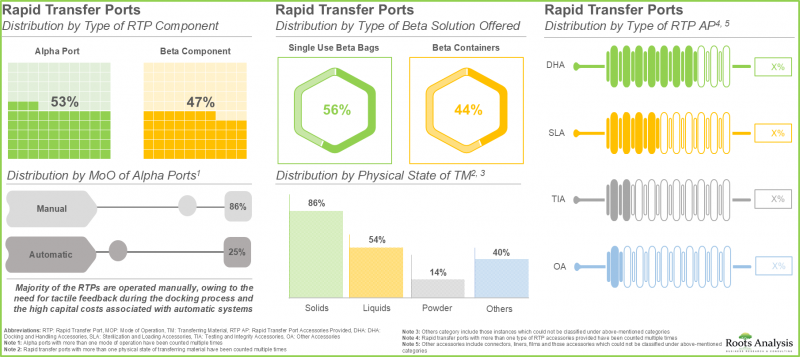
- Presently, close to 55 rapid transfer ports are being offered by various players; alpha ports (~55%) emerged as the most prominent type of component, followed by beta components (~50%).
- Close to 90% of the rapid transfer ports feature manual operation, highlighting the preference for simpler designs; notably, 70% of the companies offer docking and handling accessories for their rapid transfer ports.
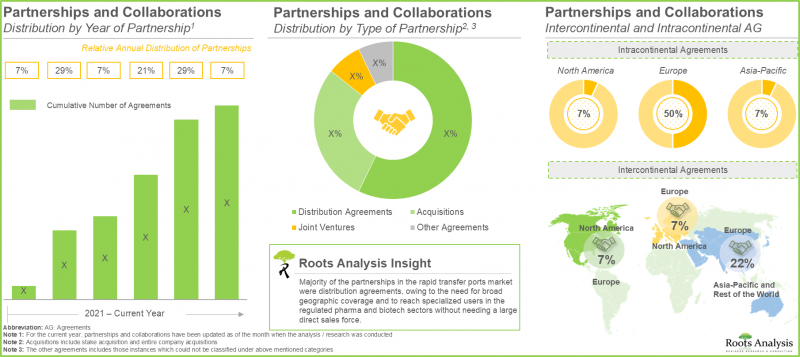
- Around 40% of the agreements in the rapid transfer port domain were inked in the last two years; notably, majority (>40%) of the deals were inked by the players headquartered in France.
- With an aim to expand the rapid transfer port capabilities, the companies have undertaken strategic acquisitions in the recent past, focusing on enhancing sterile, high-containment and aseptic transfer systems.
- Ongoing shift towards rapid transfer ports have proven useful in the safe and effective transfer of high value biologics; these are anticipated to drive the rapid transfer ports market in future.
- Rapid transfer ports market is poised for substantial growth in the coming years, driven by the rising biologics manufacturing and a shift toward single-use systems for enhanced sterility and contamination control.
- Asia-Pacific is expected to capture a significant market share of the overall rapid transfer ports market in the current year, driven by ongoing expansion in pharmaceutical manufacturing.
- Driven by the rapid technological advancements within rapid transfer ports by prominent players in the US, the market is expected to grow at CAGR of 6.9%.
Rapid Transfer Port Market
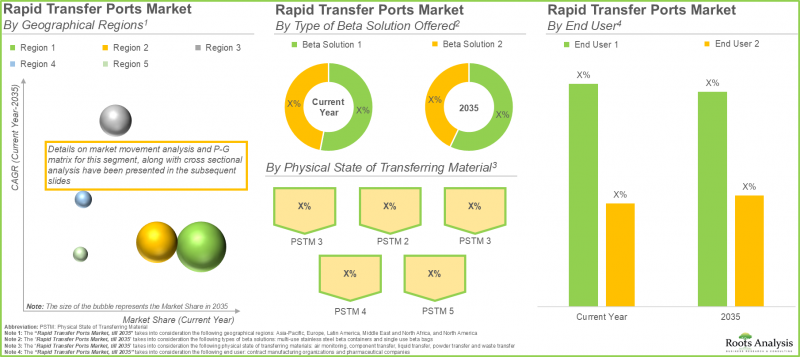
The market sizing and opportunity analysis has been segmented across the following parameters:
By Type of Beta Solution Offered
- Single Use Beta Bags
- Reusable Beta Container
By Physical State of Transferring Material
- Solid Transfer
- Liquid Transfer
- Powder Transfer
- Others
By End User
- Pharmaceutical Companies
- Contract Manufacturing Organizations
By Geographical Regions
- North America
- Europe
- Asia-Pacific
- Latin America
- Middle East and North Africa
Rapid Transfer Port Market: Key Segments
Single-use Beta Bags are emerging as the leading segment in the Rapid Transfer Port
Single-use beta bags lead the rapid transfer port market, accounting for approximately 55% of the total market share in the current year. This dominance is primarily driven by their ability to eliminate the time- and cost-intensive processes associated with cleaning, sterilization, and revalidation required for traditional stainless-steel canisters. Furthermore, single-use beta bags are expected to register a higher CAGR over the forecast period.
Solid Transfer is Driving the Rapid Transfer Port Industry
According to the rapid transfer port market forecast, the solid transfer segment currently accounts for approximately 55% of the total market share. This dominance is attributed to the significantly higher volume of solid components such as stoppers, plungers, seals, and caps handled through RTP systems compared to liquid or powder transfers. Given that each production batch requires the introduction of thousands of sterile components into isolators, solid transfer RTPs serve as a critical operational backbone within aseptic manufacturing workflows. In future, the liquid transfer segment is expected to witness robust growth over the forecast period. This growth is driven by the increasing demand for biologics, injectables, vaccines, and parenteral drugs, which require highly precise and contamination-free aseptic fill-finish and downstream processing.
Asia-Pacific Dominates the Overall Market
The Asia-Pacific region dominates the rapid transfer port market, accounting for approximately 40% of the total revenue share. This leadership is driven by the strong expansion of pharmaceutical manufacturing capabilities, particularly in China and India, supported by increasing demand for advanced therapies that require high-containment aseptic transfer solutions. In addition, Japan and South Korea are emerging as key global hubs for the production of sterile drugs, biologics, injectables, cell and gene therapies, and high-potency active pharmaceutical ingredients (HPAPIs). This evolving manufacturing landscape is further accelerating the adoption of RTP technologies across the region.
North America and Europe Propel Growth in the Rapid Transfer Port Market
North America and Europe are playing a critical role in driving the growth of the rapid transfer port market, supported by a high concentration of biopharmaceutical manufacturing hubs and the rapid adoption of single-use technologies. This trend is largely driven by the need to comply with stringent regulatory requirements, including FDA guidelines and EU GMP Annex 1 sterility standards.
Example Players in Rapid Transfer Port Market
- ABC Transfer
- AGIC Capital
- Amira
- AnalytiChem UK (formerly known as Cherwell Laboratories)
- Aseptic Technologies (acquired by SKAN)
- ATEC Pharmatechnik
- AUSTAR
- AVM Extraordinary Intelligent Control Equipment
- Benchmark Products
- BioPharm Dynamics
- Cape Europe
- castus
Rapid Transfer Port Market: Research Coverage
- Market Sizing and Opportunity Analysis: The report features an in-depth analysis of the medical device contract manufacturing market, focusing on key market segments, including [A] type of beta solution offered [B] physical state of transferring material, [C] end user, and [D] geographical regions.
- Rapid Transfer Port Market Landscape: A detailed assessment of the overall rapid transfer port market landscape, along with information on several relevant parameters, such as [A] type of rapid transfer port component, [B] mode of operation of alpha ports, [C] type of opening for alpha ports, [D] type of beta solution offered, [E] format of beta solution offered, [F] rapid transfer port diameter, [G] type of product transferred, [H] physical state of transferring material, [I] type of RTP accessories provided, [J] year of establishment, [K] company size (based on employee count) and [L] location of headquarters.
- Company Competitiveness Analysis: An in-depth company competitiveness analysis of rapid transfer port companies based on various relevant parameters, such as [A] company strength, [B] portfolio strength and [C] portfolio diversity.
- Partnerships and Collaborations: A detailed analysis of the partnerships and collaborations based on various parameters, such as [A] year of partnership, [B] type of partnership, [C] type of rapid transfer port system, [D] most active players (in terms of number of partnerships), [E] geographical analysis and [F] acquisition analysis based on type of acquisition, parent company type and key value drivers.
Key Questions Answered in this Report
- Which are the leading companies in the rapid transfer port market?
- Which region dominates the rapid transfer port market?
- What are the key trends observed in the rapid transfer port market?
- What factors are likely to influence the evolution of this market?
- What are the primary challenges faced by rapid transfer port providers?
- What is the current and future market size?
- What is the CAGR of this market?
- How is the current and future market opportunity likely to be distributed across key market segments?
Reasons to Buy this Report
- The report provides a comprehensive market analysis, offering detailed revenue projections of the overall market and its specific sub-segments. This information is valuable to both established market leaders and emerging entrants.
- The report offers stakeholders a comprehensive overview of the market, including key drivers, barriers, opportunities, and challenges. This information empowers stakeholders to stay abreast of market trends and make data-driven decisions to capitalize on growth prospects.
- The report can aid businesses in identifying future opportunities in any sector. It also helps in understanding if those opportunities are worth pursuing.
- The report helps in identifying customer demand by understanding the needs, preferences, and behavior of the target audience in order to tailor products or services effectively.
- The report equips new entrants with requisite information regarding a particular market to help them build successful business strategies.
- The report allows for more effective communication with the audience and in building strong business relations.
Additional Benefits
- Complimentary Excel Data Packs for all Analytical Modules in the Report
- 15% Free Content Customization
- Detailed Report Walkthrough Session with Research Team
- Free Updated report if the report is 6-12 months old or older
TABLE OF CONTENTS
1. BACKGROUND
- 1.1. Context
- 1.2. Project Objectives
2. RESEARCH METHODOLOGY
- 2.1. Chapter Overview
- 2.2. Research Assumptions
- 2.2.1. Market Landscape and Market Trends
- 2.2.2. Market Forecast and Opportunity Analysis
- 2.2.3. Comparative Analysis
- 2.3. Database Building
- 2.3.1. Data Collection
- 2.3.2. Data Validation
- 2.3.3. Data Analysis
- 2.4. Project Methodology
- 2.4.1. Secondary Research
- 2.4.1.1. Annual Reports
- 2.4.1.2. Academic Research Papers
- 2.4.1.3. Company Websites
- 2.4.1.4. Investor Presentations
- 2.4.1.5. Regulatory Filings
- 2.4.1.6. White Papers
- 2.4.1.7. Industry Publications
- 2.4.1.8. Conferences and Seminars
- 2.4.1.9. Government Portals
- 2.4.1.10. Media and Press Releases
- 2.4.1.11. Newsletters
- 2.4.1.12. Industry Databases
- 2.4.1.13. Roots Proprietary Databases
- 2.4.1.14. Paid Databases and Sources
- 2.4.1.15. Social Media Portals
- 2.4.1.16. Other Secondary Sources
- 2.4.2. Primary Research
- 2.4.2.1. Types of Primary Research
- 2.4.2.1.1. Qualitative Research
- 2.4.2.1.2. Quantitative Research
- 2.4.2.1.3. Hybrid Approach
- 2.4.2.2. Advantages of Primary Research
- 2.4.2.3. Techniques for Primary Research
- 2.4.2.3.1. Interviews
- 2.4.2.3.2. Surveys
- 2.4.2.3.3. Focus Groups
- 2.4.2.3.4. Observational Research
- 2.4.2.3.5. Social Media Interactions
- 2.4.2.4. Key Opinion Leaders Considered in Primary Research
- 2.4.2.4.1. Company Executives (CXOs)
- 2.4.2.4.2. Board of Directors
- 2.4.2.4.3. Company Presidents and Vice Presidents
- 2.4.2.4.4. Research and Development Heads
- 2.4.2.4.5. Technical Experts
- 2.4.2.4.6. Subject Matter Experts
- 2.4.2.4.7. Scientists
- 2.4.2.4.8. Doctors and Other Healthcare Providers
- 2.4.2.5. Ethics and Integrity
- 2.4.2.5.1. Research Ethics
- 2.4.2.5.2. Data Integrity
- 2.4.2.1. Types of Primary Research
- 2.4.3. Analytical Tools and Databases
- 2.4.1. Secondary Research
- 2.5. Robust Quality Control
3. MARKET DYNAMICS
- 3.1. Chapter Overview
- 3.2. Forecast Methodology
- 3.2.1. Top-down Approach
- 3.2.2. Bottom-up Approach
- 3.2.3. Hybrid Approach
- 3.3. Market Assessment Framework
- 3.3.1. Total Addressable Market (TAM)
- 3.3.2. Serviceable Addressable Market (SAM)
- 3.3.3. Serviceable Obtainable Market (SOM)
- 3.3.4. Currently Acquired Market (CAM)
- 3.4. Forecasting Tools and Techniques
- 3.4.1. Qualitative Forecasting
- 3.4.2. Correlation
- 3.4.3. Regression
- 3.4.4. Extrapolation
- 3.4.5. Convergence
- 3.4.6. Sensitivity Analysis
- 3.4.7. Scenario Planning
- 3.4.8. Data Visualization
- 3.4.9. Time Series Analysis
- 3.4.10. Forecast Error Analysis
- 3.5. Key Considerations
- 3.5.1. Demographics
- 3.5.2. Government Regulations
- 3.5.3. Reimbursement Scenarios
- 3.5.4. Market Access
- 3.5.5. Supply Chain
- 3.5.6. Industry Consolidation
- 3.5.7. Pandemic / Unforeseen Disruptions Impact
- 3.6. Limitations
4. MACRO-ECONOMIC INDICATORS
- 4.1. Chapter Overview
- 4.2. Market Dynamics
- 4.2.1. Time Period
- 4.2.1.1. Historical Trends
- 4.2.1.2. Current and Forecasted Estimates
- 4.2.2. Currency Coverage
- 4.2.2.1. Major Currencies Affecting the Market
- 4.2.2.2. Factors Affecting Currency Fluctuations in the Industry
- 4.2.2.3. Impact of Currency Fluctuations on the Industry
- 4.2.3. Foreign Currency Exchange Rate
- 4.2.3.1. Impact of Foreign Exchange Rate Volatility on the Market
- 4.2.3.2. Strategies for Mitigating Foreign Exchange Risk
- 4.2.4. Recession
- 4.2.4.1. Assessment of Current Economic Conditions and Potential Impact on the Market
- 4.2.4.2. Historical Analysis of Past Recessions and Lessons Learnt
- 4.2.5. Inflation
- 4.2.5.1. Measurement and Analysis of Inflationary Pressures in the Economy
- 4.2.5.2. Potential Impact of Inflation on the Market Evolution
- 4.2.6. Interest Rates
- 4.2.6.1. Interest Rates and Their Impact on the Market
- 4.2.6.2. Strategies for Managing Interest Rate Risk
- 4.2.7. Commodity Flow Analysis
- 4.2.7.1. Type of Commodity
- 4.2.7.2. Origins and Destinations
- 4.2.7.3. Values and Weights
- 4.2.7.4. Modes of Transportation
- 4.2.8. Global Trade Dynamics
- 4.2.8.1. Import Scenario
- 4.2.8.2. Export Scenario
- 4.2.8.3. Trade Policies
- 4.2.8.4. Strategies for Mitigating the Risks Associated with Trade Barriers
- 4.2.8.5. Impact of Trade Barriers on the Market
- 4.2.9. War Impact Analysis
- 4.2.9.1. Russian-Ukraine War
- 4.2.9.2. Israel-Hamas War
- 4.2.10. COVID Impact / Related Factors
- 4.2.10.1. Global Economic Impact
- 4.2.10.2. Industry-specific Impact
- 4.2.10.3. Government Response and Stimulus Measures
- 4.2.10.4. Future Outlook and Adaptation Strategies
- 4.2.11. Other Indicators
- 4.2.11.1. Fiscal Policy
- 4.2.11.2. Consumer Spending
- 4.2.11.3. Gross Domestic Product
- 4.2.11.4. Employment
- 4.2.11.5. Taxes
- 4.2.11.6. Stock Market Performance
- 4.2.11.7. Cross Border Dynamics
- 4.2.1. Time Period
- 4.3. Conclusion
5. EXECUTIVE SUMMARY
- 5.1. Chapter Overview
- 5.2. Executive Summary: Market Landscape
- 5.3. Executive Summary: Market Trends
- 5.4. Executive Summary: Market Forecast and Opportunity Analysis
6. INTRODUCTION
- 6.1. Overview of Rapid Transfer Ports
- 6.2. Elements of Rapid Transfer Ports
- 6.3. Advantages Rapid Transfer Ports
- 6.4. Applications of Rapid Transfer Ports
- 6.5. Challenges associated with Rapid Transfer Ports
- 6.6. Future Perspectives
7. MARKET LANDSCAPE
- 7.1. Rapid Transfer Ports: Overall Market Landscape
- 7.1.1. Analysis by Type of Rapid Transfer Port Component
- 7.1.2. Analysis by Mode of Operation of Alpha Ports
- 7.1.3. Analysis by Type of Opening for Alpha Ports
- 7.1.4. Analysis by Type of Beta Solution Offered
- 7.1.5. Analysis by Format of Beta Solution Offered
- 7.1.6. Analysis by Rapid Transfer Port Diameter
- 7.1.7. Analysis by Type of Product Transferred
- 7.1.8. Analysis by Physical State of Transferring Material
- 7.1.9. Analysis by Rapid Transfer Port Accessories Provided
- 7.2. Rapid Transfer Port Companies: Market Landscape
- 7.2.1. Analysis by Year of Establishment
- 7.2.2. Analysis by Company Size
- 7.2.3. Analysis by Location of Headquarters
- 7.2.4. Most Active Players: Analysis by Number of Products Offered
8. COMPANY COMPETITIVENESS ANALYSIS
- 8.1. Methodology and Key Parameters
- 8.2. Scoring Criteria
- 8.3. Peer Groups
- 8.3.1. Overview of Peer Groups
- 8.4. Rapid Transfer Ports: Company Competitiveness Analysis
- 8.4.1. Rapid Transfer Port Companies Offering Alpha Ports (Peer Group 1)
- 8.4.2. Rapid Transfer Port Companies Offering Beta Components (Peer Group 2)
- 8.4.3. Leading Rapid Transfer Port Companies Offering both Alpha Ports and Beta Components
9. PARTNERSHIPS AND COLLABORATIONS
- 9.1. Chapter Overview
- 9.2. Partnership Models
- 9.3. Rapid Transfer Port Companies: Partnerships and Collaborations
- 9.3.1. Analysis by Year of Partnership
- 9.3.2. Analysis by Type of Partnership
- 9.3.3. Analysis by Year and Type of Partnership
- 9.3.4. Analysis by Type of Rapid Transfer Port System
- 9.3.5. Most Active Players: Analysis by Number of Agreements Inked
- 9.3.6. Analysis by Geography
- 9.3.6.1. Local and International Agreements
- 9.3.6.2. Intracontinental and Intercontinental Agreements
- 9.4. Acquisition Models
- 9.4.1. Analysis by Type of Acquisition
- 9.4.2. Ownership Change Matrix
- 9.4.3. Key Value Drivers
10. GLOBAL RAPID TRANSFER PORTS MARKET
- 10.1. Chapter Overview
- 10.2. Assumptions and Methodology
- 10.3. Global Rapid Transfer Ports Market: Historical Trends (Since 2022) and Forecasted Estimates (Till 2035)
- 10.3.1. Scenario Analysis
- 10.3.1.1. Conservative Scenario
- 10.3.1.2. Optimistic Scenario
- 10.3.1. Scenario Analysis
- 10.4. Key Market Segments
11. RAPID TRANSFER PORTS MARKET, BY TYPE OF BETA SOLUTION OFFERED
- 11.1. Chapter Overview
- 11.2. Assumptions and Methodology
- 11.3. Rapid Transfer Ports Market: Distribution by Type of Beta Solution Offered
- 11.3.1. Rapid Transfer Ports Market for Single Use Beta Bags: Historical Trends (Since 2022) and Forecasted Estimates (Till 2035)
- 11.3.1.1. Rapid Transfer Ports Market for Ready to Use (gamma): Historical Trends (Since 2022) and Forecasted Estimates (Till 2035)
- 11.3.1.2. Rapid Transfer Ports Market for Ready to Sterilize (steam): Historical Trends (Since 2022) and Forecasted Estimates (Till 2035)
- 11.3.2. Rapid Transfer Ports Market for Reusable Beta Containers: Historical Trends (Since 2022) and Forecasted Estimates (Till 2035)
- 11.3.1. Rapid Transfer Ports Market for Single Use Beta Bags: Historical Trends (Since 2022) and Forecasted Estimates (Till 2035)
- 11.4. Data Triangulation and Validation
12. RAPID TRANSFER PORTS MARKET, BY PHYSICAL STATE OF TRANSFERRING MATERIAL
- 12.1. Chapter Overview
- 12.2. Assumptions and Methodology
- 12.3. Rapid Transfer Ports Market: Distribution by Physical State of Transferring Material
- 12.3.1. Rapid Transfer Ports Market for Solid Transfer: Historical Trends (Since 2022) and Forecasted Estimates (Till 2035)
- 12.3.2. Rapid Transfer Ports Market for Liquid Transfer: Historical Trends (Since 2022) and Forecasted Estimates (Till 2035)
- 12.3.3. Rapid Transfer Ports Market for Powder Transfer: Historical Trends (Since 2022) and Forecasted Estimates (Till 2035)
- 12.3.4. Rapid Transfer Ports Market for Others: Historical Trends (Since 2022) and Forecasted Estimates (Till 2035)
- 12.4. Data Triangulation and Validation
13. RAPID TRANSFER PORTS MARKET, BY END USER
- 13.1. Chapter Overview
- 13.2. Assumptions and Methodology
- 13.3. Rapid Transfer Ports Market: Distribution by End User
- 13.3.1. Rapid Transfer Ports Market for Pharmaceutical Companies: Historical Trends (Since 2022) and Forecasted Estimates (Till 2035)
- 13.3.2. Rapid Transfer Ports Market for Contract Manufacturing Organizations: Historical Trends (Since 2022) and Forecasted Estimates (Till 2035)
- 13.4. Data Triangulation and Validation
14. RAPID TRANSFER PORTS MARKET, BY GEOGRAPHICAL REGIONS
- 14.1. Chapter Overview
- 14.2. Assumptions and Methodology
- 14.3. Rapid Transfer Ports Market: Distribution by Geographical Regions
- 14.3.1. Rapid Transfer Ports Market in North America: Historical Trends (Since 2022) and Forecasted Estimates (Till 2035)
- 14.3.2. Rapid Transfer Ports Market in Europe: Historical Trends (Since 2022) and Forecasted Estimates (Till 2035)
- 14.3.3. Rapid Transfer Ports Market in Asia-Pacific: Historical Trends (Since 2022) and Forecasted Estimates (Till 2035)
- 14.3.4. Rapid Transfer Ports Market in Latin America: Historical Trends (Since 2022) and Forecasted Estimates (Till 2035)
- 14.3.5. Rapid Transfer Ports Market in Middle East and North Africa: Historical Trends (Since 2022) and Forecasted Estimates (Till 2035)
- 14.4. Data Triangulation and Validation
15. MARKET OPPORTUNITY ANALYSIS: NORTH AMERICA**
- 15.1. Rapid Transfer Ports Market in North America: Distribution by Type of Beta Solution Offered
- 15.1.1. Rapid Transfer Ports Market in North America for Single Use Beta Bags: Historical Trends (Since 2022) and Forecasted Estimates (Till 2035)
- 15.1.1.1. Rapid Transfer Ports Market in North America for Ready to Use (gamma): Historical Trends (Since 2022) and Forecasted Estimates (Till 2035)
- 15.1.1.2. Rapid Transfer Ports Market in North America for Ready to Sterilize (steam): Historical Trends (Since 2022) and Forecasted Estimates (Till 2035)
- 15.1.2. Rapid Transfer Ports Market in North America for Reusable Beta Containers: Historical Trends (Since 2022) and Forecasted Estimates (Till 2035)
- 15.1.1. Rapid Transfer Ports Market in North America for Single Use Beta Bags: Historical Trends (Since 2022) and Forecasted Estimates (Till 2035)
- 15.2. Rapid Transfer Ports Market in North America: Distribution by Physical State of Transferring Material
- 15.2.1. Rapid Transfer Ports Market in North America for Solid Transfer: Historical Trends (Since 2022) and Forecasted Estimates (Till 2035)
- 15.2.2. Rapid Transfer Ports Market in North America for Liquid Transfer: Historical Trends (Since 2022) and Forecasted Estimates (Till 2035)
- 15.2.3. Rapid Transfer Ports Market in North America for Powder Transfer: Historical Trends (Since 2022) and Forecasted Estimates (Till 2035)
- 15.2.4. Rapid Transfer Ports Market in North America for Others: Historical Trends (Since 2022) and Forecasted Estimates (Till 2035)
- 15.3. Rapid Transfer Ports Market in North America: Distribution by End User
- 15.3.1. Rapid Transfer Ports Market in North America for Pharmaceutical Companies: Historical Trends (Since 2022) and Forecasted Estimates (Till 2035)
- 15.3.2. Rapid Transfer Ports Market in North America for Contract Manufacturing Organizations: Historical Trends (Since 2022) and Forecasted Estimates (Till 2035)
16. MARKET OPPORTUNITY ANALYSIS: EUROPE**
- 16.1. Rapid Transfer Ports Market in Europe: Distribution by Type of Beta Solution Offered
- 16.1.1. Rapid Transfer Ports Market in Europe for Single Use Beta Bags: Historical Trends (Since 2022) and Forecasted Estimates (Till 2035)
- 16.1.1.1. Rapid Transfer Ports Market in Europe for Ready to Use (gamma): Historical Trends (Since 2022) and Forecasted Estimates (Till 2035)
- 16.1.1.2. Rapid Transfer Ports Market in Europe for Ready to Sterilize (steam): Historical Trends (Since 2022) and Forecasted Estimates (Till 2035)
- 16.1.2. Rapid Transfer Ports Market in Europe for Reusable Beta Containers: Historical Trends (Since 2022) and Forecasted Estimates (Till 2035)
- 16.1.1. Rapid Transfer Ports Market in Europe for Single Use Beta Bags: Historical Trends (Since 2022) and Forecasted Estimates (Till 2035)
- 16.2. Rapid Transfer Ports Market in Europe: Distribution by Physical State of Transferring Material
- 16.2.1. Rapid Transfer Ports Market in Europe for Solid Transfer: Historical Trends (Since 2022) and Forecasted Estimates (Till 2035)
- 16.2.2. Rapid Transfer Ports Market in Europe for Liquid Transfer: Historical Trends (Since 2022) and Forecasted Estimates (Till 2035)
- 16.2.3. Rapid Transfer Ports Market in Europe for Powder Transfer: Historical Trends (Since 2022) and Forecasted Estimates (Till 2035)
- 16.2.4. Rapid Transfer Ports Market in Europe for Others: Historical Trends (Since 2022) and Forecasted Estimates (Till 2035)
- 16.3. Rapid Transfer Ports Market in Europe: Distribution by End User
- 16.3.1. Rapid Transfer Ports Market in Europe for Pharmaceutical Companies: Historical Trends (Since 2022) and Forecasted Estimates (Till 2035)
- 16.3.2. Rapid Transfer Ports Market in Europe for Contract Manufacturing Organizations: Historical Trends (Since 2022) and Forecasted Estimates (Till 2035)
17. MARKET OPPORTUNITY ANALYSIS: ASIA-PACIFIC**
- 17.1. Rapid Transfer Ports Market in Asia-Pacific: Distribution by Type of Beta Solution Offered
- 17.1.1. Rapid Transfer Ports Market in Asia-Pacific for Single Use Beta Bags: Historical Trends (Since 2022) and Forecasted Estimates (Till 2035)
- 17.1.1.1. Rapid Transfer Ports Market in Asia-Pacific for Ready to Use (gamma): Historical Trends (Since 2022) and Forecasted Estimates (Till 2035)
- 17.1.1.2. Rapid Transfer Ports Market in Asia-Pacific for Ready to Sterilize (steam): Historical Trends (Since 2022) and Forecasted Estimates (Till 2035)
- 17.1.2. Rapid Transfer Ports Market in Asia-Pacific for Reusable Beta Containers: Historical Trends (Since 2022) and Forecasted Estimates (Till 2035)
- 17.1.1. Rapid Transfer Ports Market in Asia-Pacific for Single Use Beta Bags: Historical Trends (Since 2022) and Forecasted Estimates (Till 2035)
- 17.2. Rapid Transfer Ports Market in Asia-Pacific: Distribution by Physical State of Transferring Material
- 17.2.1. Rapid Transfer Ports Market in Asia-Pacific for Solid Transfer: Historical Trends (Since 2022) and Forecasted Estimates (Till 2035)
- 17.2.2. Rapid Transfer Ports Market in Asia-Pacific for Liquid Transfer: Historical Trends (Since 2022) and Forecasted Estimates (Till 2035)
- 17.2.3. Rapid Transfer Ports Market in Asia-Pacific for Powder Transfer: Historical Trends (Since 2022) and Forecasted Estimates (Till 2035)
- 17.2.4. Rapid Transfer Ports Market in Asia-Pacific for Others: Historical Trends (Since 2022) and Forecasted Estimates (Till 2035)
- 17.3. Rapid Transfer Ports Market in Asia-Pacific: Distribution by End User
- 17.3.1. Rapid Transfer Ports Market in Asia-Pacific for Pharmaceutical Companies: Historical Trends (Since 2022) and Forecasted Estimates (Till 2035)
- 17.3.2. Rapid Transfer Ports Market in Asia-Pacific for Contract Manufacturing Organizations: Historical Trends (Since 2022) and Forecasted Estimates (Till 2035)
18. MARKET OPPORTUNITY ANALYSIS: LATIN AMERICA**
- 18.1. Rapid Transfer Ports Market in Latin America: Distribution by Type of Beta Solution Offered
- 18.1.1. Rapid Transfer Ports Market in Latin America for Single Use Beta Bags: Historical Trends (Since 2022) and Forecasted Estimates (Till 2035)
- 18.1.1.1. Rapid Transfer Ports Market in Latin America for Ready to Use (gamma): Historical Trends (Since 2022) and Forecasted Estimates (Till 2035)
- 18.1.1.2. Rapid Transfer Ports Market in Latin America for Ready to Sterilize (steam): Historical Trends (Since 2022) and Forecasted Estimates (Till 2035)
- 18.1.2. Rapid Transfer Ports Market in Latin America for Reusable Beta Containers: Historical Trends (Since 2022) and Forecasted Estimates (Till 2035)
- 18.1.1. Rapid Transfer Ports Market in Latin America for Single Use Beta Bags: Historical Trends (Since 2022) and Forecasted Estimates (Till 2035)
- 18.2. Rapid Transfer Ports Market in Latin America: Distribution by Physical State of Transferring Material
- 18.2.1. Rapid Transfer Ports Market in Latin America for Solid Transfer: Historical Trends (Since 2022) and Forecasted Estimates (Till 2035)
- 18.2.2. Rapid Transfer Ports Market in Latin America for Liquid Transfer: Historical Trends (Since 2022) and Forecasted Estimates (Till 2035)
- 18.2.3. Rapid Transfer Ports Market in Latin America for Powder Transfer: Historical Trends (Since 2022) and Forecasted Estimates (Till 2035)
- 18.2.4. Rapid Transfer Ports Market in Latin America for Others: Historical Trends (Since 2022) and Forecasted Estimates (Till 2035)
- 18.3. Rapid Transfer Ports Market in Latin America: Distribution by End User
- 18.3.1. Rapid Transfer Ports Market in Latin America for Pharmaceutical Companies: Historical Trends (Since 2022) and Forecasted Estimates (Till 2035)
- 18.3.2. Rapid Transfer Ports Market in Latin America for Contract Manufacturing Organizations: Historical Trends (Since 2022) and Forecasted Estimates (Till 2035)
19. MARKET OPPORTUNITY ANALYSIS: MIDDLE EAST AND NORTH AFRICA**
- 19.1. Rapid Transfer Ports Market in Middle East and North Africa: Distribution by Type of Beta Solution Offered
- 19.1.1. Rapid Transfer Ports Market in Middle East and North Africa for Single Use Beta Bags: Historical Trends (Since 2022) and Forecasted Estimates (Till 2035)
- 19.1.1.1. Rapid Transfer Ports Market in Middle East and North Africa for Ready to Use (gamma): Historical Trends (Since 2022) and Forecasted Estimates (Till 2035)
- 19.1.1.2. Rapid Transfer Ports Market in Middle East and North Africa for Ready to Sterilize (steam): Historical Trends (Since 2022) and Forecasted Estimates (Till 2035)
- 19.1.2. Rapid Transfer Ports Market in Middle East and North Africa for Reusable Beta Containers: Historical Trends (Since 2022) and Forecasted Estimates (Till 2035)
- 19.1.1. Rapid Transfer Ports Market in Middle East and North Africa for Single Use Beta Bags: Historical Trends (Since 2022) and Forecasted Estimates (Till 2035)
- 19.2. Rapid Transfer Ports Market in Middle East and North Africa: Distribution by Physical State of Transferring Material
- 19.2.1. Rapid Transfer Ports Market in Middle East and North Africa for Solid Transfer: Historical Trends (Since 2022) and Forecasted Estimates (Till 2035)
- 19.2.2. Rapid Transfer Ports Market in Middle East and North Africa for Liquid Transfer: Historical Trends (Since 2022) and Forecasted Estimates (Till 2035)
- 19.2.3. Rapid Transfer Ports Market in Middle East and North Africa for Powder Transfer: Historical Trends (Since 2022) and Forecasted Estimates (Till 2035)
- 19.2.4. Rapid Transfer Ports Market in Middle East and North Africa for Others: Historical Trends (Since 2022) and Forecasted Estimates (Till 2035)
- 19.3. Rapid Transfer Ports Market in Middle East and North Africa: Distribution by End User
- 19.3.1. Rapid Transfer Ports Market in Middle East and North Africa for Pharmaceutical Companies: Historical Trends (Since 2022) and Forecasted Estimates (Till 2035)
- 19.3.2. Rapid Transfer Ports Market in Middle East and North Africa for Contract Manufacturing Organizations: Historical Trends (Since 2022) and Forecasted Estimates (Till 2035)
- *Detailed segment-wise distribution across individual regions is available in supporting excel data packs
20. RAPID TRANSFER PORTS MARKET, BY LEADING PLAYERS
- 20.1. Chapter Overview
- 20.2. Key Parameters and Methodology
- 20.3. Leading Rapid Transfer Port Companies