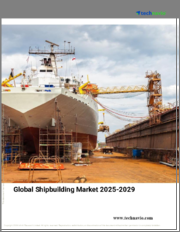
|
시장보고서
상품코드
1901965
조선 시장 규모, 점유율, 성장 분석 : 선박 유형별, 제조 공정별, 추진 방식별, 최종사용자별, 지역별 - 업계 예측(2026-2033년)Shipbuilding Market Size, Share, and Growth Analysis, By Ship Type (Cargo Ships, Container Ships), By Process (Designing, Production Planning), By Propulsion, By End-User, By Region - Industry Forecast 2026-2033 |
||||||

조선 시장 규모는 2024년에 1,234억 3,000만 달러로 평가되었고, 2025년 1,288억 6,000만 달러에서 2033년까지 1,818억 5,000만 달러로 성장할 전망이며, 예측 기간(2026-2033년) CAGR은 4.4%를 보일 것으로 예측됩니다.
조선 산업은 철강, 목재, 복합재료 등을 이용한 대형 외항선박의 건조뿐만 아니라 돛, 전자기기 등 보조 항해장비의 생산도 포함합니다. 중국은 CGT(Compensated Gross Tonnage) 기준 연간 수주량에서 선두를 달리고 있으며, 특히 신흥국의 인구 증가에 따라 저렴한 해상 운송에 대한 수요가 꾸준히 증가하고 있습니다. 이 수요는 지속 가능한 성장과 공정한 무역 유통을 뒷받침하는 것입니다. 현대 조선에서는 조립식 부품의 활용이 확대되고 있으며, 조선소에서의 효율적인 조립을 가능하게 하고, 중요 시스템의 사전 설치를 촉진하고 있습니다. 세계 무역량의 대부분이 해상 운송에 의존하고 있는 상황에서 해상 운송은 화물 운송에 있어 가장 비용 효율적인 선택이며, 특히 유럽연합(EU) 내외의 국제 무역 역학에서 매우 중요한 역할을 강조하고 있습니다.
조선 시장 활성화 요인
세계 선박의 노후화가 진행됨에 따라 선박의 갱신과 현대화의 필요성이 크게 증가하고 있습니다. 선박의 수명이 다하면 효율성이 떨어지고 유지보수 비용이 증가하는 경향이 있습니다. 이에 따라 선주 및 운항사들은 연료 효율성 향상, 최첨단 기술 도입, 최신 환경기준에 부합하는 신조 선박에 대한 투자를 더욱 적극적으로 고려하고 있습니다. 노후 선박의 퇴역과 현대식 대체 선박에 대한 투자에 대한 필요성은 이해관계자들이 운항 성능을 최적화하고 해양 산업에서 진화하는 규정을 준수하기 위해 새로운 선박 건조에 대한 수요를 촉진하고 있습니다.
조선시장 성장 억제요인
조선업은 수요 증가와 침체가 번갈아 가며 나타나는 뚜렷한 주기적 변동성을 경험합니다. 세계 무역 동향, 경제 전반의 건전성, 금융시장의 불안정성 등의 변동은 조선 수주량에 직접적인 영향을 미칩니다. 그 결과, 공급이 수요를 초과하는 과잉 생산 능력의 상황이 발생할 수 있습니다. 이러한 상황에서 조선업체는 경쟁 심화에 직면하고, 가격 경쟁이 치열해져 결국 이윤율이 압박을 받게 됩니다. 따라서 조선 시장의 지속적인 성장과 수익성 확보를 위해서는 이러한 불안정한 상황을 극복해야 합니다.
조선시장 동향
조선 시장에서는 각국이 해양 안보 강화를 위해 현대화 및 함대 갱신을 우선시하는 가운데, 첨단 해군 및 군용 선박에 대한 수요가 두드러진 추세를 보이고 있습니다. 잠수함, 항공모함, 기타 방어용 함정 등 다양한 해군 역량에 대한 투자가 증가하고 있으며, 이는 지정학적 긴장과 해군 우위에 대한 전략적 초점을 반영하고 있습니다. 이러한 해군 조선 계약의 급증은 특히 방위비 지출이 큰 국가들에서 두드러진 영향을 미치며 국내 산업을 지원하고 혁신을 촉진하고 있습니다. 각국이 해양에서의 이익을 확보하기 위해 노력하는 가운데, 조선 시장의 성장이 예상되며, 국방 전략에서 조선의 중요한 역할이 부각되고 있습니다.
자주 묻는 질문
목차
서론
- 조사 목적
- 조사 범위
- 정의
조사 방법
- 정보 조달
- 2차와 1차 데이터 방법
- 시장 규모 예측
- 시장 전제조건과 제한
주요 요약
- 세계 시장 전망
- 공급과 수요 동향 분석
- 부문별 기회 분석
시장 역학과 전망
- 시장 규모
- 시장 역학
- 성장 촉진요인과 기회
- 성장 억제요인과 과제
- Porter의 Five Forces 분석
주요 시장 인사이트
- 중요 성공 요인
- 경쟁 정도
- 주요 투자 기회
- 시장 생태계
- 시장의 매력 지수(2025년)
- PESTEL 분석
- 거시경제 지표
- 밸류체인 분석
- 가격 분석
- 사례 연구
- 규제 상황
세계의 조선 시장 규모 : 선박 유형별&CAGR(2026-2033)
- 화물선
- 컨테이너선
- 탱커
- 여객선
- 군함
- 해양구조물용 선박
세계의 조선 시장 규모 : 프로세스별&CAGR(2026-2033)
- 설계
- 생산 계획
- 절단 및 가공
- 조립 및 출시
- 장비 설치
세계의 조선 시장 규모 : 추진력별&CAGR(2026-2033)
- 기존 추진(디젤 엔진)
- 가스 터빈 추진
- 원자력 추진
- 전기 및 하이브리드
세계의 조선 시장 규모 : 최종사용자별&CAGR(2026-2033)
- 상업
- 군
세계의 조선 시장 규모&CAGR(2026-2033)
- 북미
- 미국
- 캐나다
- 유럽
- 독일
- 스페인
- 프랑스
- 영국
- 이탈리아
- 기타 유럽
- 아시아태평양
- 중국
- 인도
- 일본
- 한국
- 기타 아시아태평양
- 라틴아메리카
- 브라질
- 기타 라틴아메리카
- 중동 및 아프리카
- GCC 국가
- 남아프리카공화국
- 기타 중동 및 아프리카
경쟁 정보
- 주요 5개사 비교
- 주요 기업의 시장 포지셔닝(2025년)
- 주요 시장 기업이 채택한 전략
- 최근 시장 동향
- 기업의 시장 점유율 분석(2025년)
- 주요 기업 개요
- 기업 상세
- 제품 포트폴리오 분석
- 기업 부문별 점유율 분석
- 매출 전년대비 비교(2023-2025년)
주요 기업 개요
- Hyundai Heavy Industries(South Korea)
- China State Shipbuilding Corporation(China)
- Fincantieri S.p.A.(Italy)
- Samsung Heavy Industries(South Korea)
- Hanwha Ocean(South Korea)
- Imabari Shipbuilding(Japan)
- JSC United Shipbuilding Corporation(Russia)
- Sumitomo Heavy Industries(Japan)
- Mitsubishi Heavy Industries(Japan)
- Mazagon Dock Limited(India)
- Cochin Shipyard Limited(India)
- Harland & Wolff(UK)
- K Shipbuilding(South Korea)
- Austal USA(USA)
- Damen Shipyards Group(Netherlands)
- Naval Group(France)
- Thyssenkrupp Marine Systems(Germany)
- Seatrium Ltd.(Singapore)
- CSBC Corporation, Taiwan(Taiwan)
- Zamil Offshore Services Company(Saudi Arabia)
결론과 제안
LSH 26.01.27Shipbuilding Market size was valued at USD 123.43 Billion in 2024 and is poised to grow from USD 128.86 Billion in 2025 to USD 181.85 Billion by 2033, growing at a CAGR of 4.4% during the forecast period (2026-2033).
The shipbuilding industry encompasses the construction of large seagoing vessels using materials like steel, wood, and composites, alongside the production of auxiliary nautical equipment, such as sails and electronics. China has emerged as a leader in compensated gross tonnage (CGT) annual orders, highlighting the robust demand for affordable maritime transport, particularly in growing populations of emerging nations. This demand supports sustainable growth and equitable trade distribution. Modern shipbuilding increasingly utilizes prefabricated components, enabling efficient assembly at shipyards and facilitating the pre-installation of critical systems. With a significant portion of global commerce transported by sea, shipping remains the most cost-effective option for moving goods, underscoring its pivotal role in international trade dynamics, especially within and beyond the European Union.
Top-down and bottom-up approaches were used to estimate and validate the size of the Shipbuilding market and to estimate the size of various other dependent submarkets. The research methodology used to estimate the market size includes the following details: The key players in the market were identified through secondary research, and their market shares in the respective regions were determined through primary and secondary research. This entire procedure includes the study of the annual and financial reports of the top market players and extensive interviews for key insights from industry leaders such as CEOs, VPs, directors, and marketing executives. All percentage shares split, and breakdowns were determined using secondary sources and verified through Primary sources. All possible parameters that affect the markets covered in this research study have been accounted for, viewed in extensive detail, verified through primary research, and analyzed to get the final quantitative and qualitative data.
Shipbuilding Market Segments Analysis
Global Shipbuilding Market is segmented by Ship Type, Process, Propulsion, End-User and region. Based on Ship Type, the market is segmented into Cargo Ships, Container Ships, Tankers, Passenger Ships, Naval Ships and Offshore Vessels. Based on Process, the market is segmented into Designing, Production Planning, Cutting and Processing, Assembling and Launching and Outfitting. Based on Propulsion, the market is segmented into Conventional Propulsion (Diesel Engines), Gas Turbine Propulsion, Nuclear Propulsion and Electric and Hybrid Propulsion. Based on End-User, the market is segmented into Commercial and Military. Based on region, the market is segmented into North America, Europe, Asia Pacific, Latin America and Middle East & Africa.
Driver of the Shipbuilding Market
The ongoing aging of the global fleet of ships creates a significant need for replacement and modernization. As vessels reach the end of their operational lifespan, they tend to become less efficient and increasingly expensive to maintain. Shipowners and operators are, therefore, more inclined to invest in newly built ships that incorporate enhanced fuel efficiency, cutting-edge technologies, and compliance with the latest environmental standards. This necessity to retire outdated ships and invest in modern alternatives fuels the demand for new ship construction, as stakeholders seek to optimize operational performance and adhere to evolving regulations in the maritime industry.
Restraints in the Shipbuilding Market
The shipbuilding sector experiences significant cyclical fluctuations, characterized by alternating phases of high demand and downturns. Variations in global trade dynamics, overall economic health, and instabilities in financial markets can directly influence the volume of shipbuilding orders. Consequently, this can result in overcapacity situations where supply exceeds demand. Such scenarios force shipbuilders to contend with heightened competition, leading to aggressive pricing strategies and ultimately squeezing profit margins. As a result, the industry must navigate these turbulent conditions, which pose challenges to sustained growth and profitability within the shipbuilding market.
Market Trends of the Shipbuilding Market
The shipbuilding market is witnessing a pronounced trend driven by the demand for advanced naval and military vessels as nations prioritize modernization and fleet renewal to enhance maritime security. Investment in a diverse array of naval capabilities, including submarines, aircraft carriers, and other defense-oriented ships, is on the rise, reflecting geopolitical tensions and a strategic focus on naval dominance. This surge in naval shipbuilding contracts is particularly impactful in countries with significant defense spending, supporting local industries and fostering innovation. As nations secure their maritime interests, the shipbuilding market is set to grow, underscoring its essential role in national defense strategies.
Table of Contents
Introduction
- Objectives of the Study
- Scope of the Report
- Definitions
Research Methodology
- Information Procurement
- Secondary & Primary Data Methods
- Market Size Estimation
- Market Assumptions & Limitations
Executive Summary
- Global Market Outlook
- Supply & Demand Trend Analysis
- Segmental Opportunity Analysis
Market Dynamics & Outlook
- Market Overview
- Market Size
- Market Dynamics
- Drivers & Opportunities
- Restraints & Challenges
- Porters Analysis
- Competitive rivalry
- Threat of substitute
- Bargaining power of buyers
- Threat of new entrants
- Bargaining power of suppliers
Key Market Insights
- Key Success Factors
- Degree of Competition
- Top Investment Pockets
- Market Ecosystem
- Market Attractiveness Index, 2025
- PESTEL Analysis
- Macro-Economic Indicators
- Value Chain Analysis
- Pricing Analysis
- Case Studies
- Regulatory Landscape
Global Shipbuilding Market Size by Ship Type & CAGR (2026-2033)
- Market Overview
- Cargo Ships
- Container Ships
- Tankers
- Passenger Ships
- Naval Ships
- Offshore Vessels
Global Shipbuilding Market Size by Process & CAGR (2026-2033)
- Market Overview
- Designing
- Production Planning
- Cutting and Processing
- Assembling and Launching
- Outfitting
Global Shipbuilding Market Size by Propulsion & CAGR (2026-2033)
- Market Overview
- Conventional Propulsion (Diesel Engines)
- Gas Turbine Propulsion
- Nuclear Propulsion
- Electric and Hybrid Propulsion
Global Shipbuilding Market Size by End-User & CAGR (2026-2033)
- Market Overview
- Commercial
- Military
Global Shipbuilding Market Size & CAGR (2026-2033)
- North America (Ship Type, Process, Propulsion, End-User)
- US
- Canada
- Europe (Ship Type, Process, Propulsion, End-User)
- Germany
- Spain
- France
- UK
- Italy
- Rest of Europe
- Asia Pacific (Ship Type, Process, Propulsion, End-User)
- China
- India
- Japan
- South Korea
- Rest of Asia-Pacific
- Latin America (Ship Type, Process, Propulsion, End-User)
- Brazil
- Rest of Latin America
- Middle East & Africa (Ship Type, Process, Propulsion, End-User)
- GCC Countries
- South Africa
- Rest of Middle East & Africa
Competitive Intelligence
- Top 5 Player Comparison
- Market Positioning of Key Players, 2025
- Strategies Adopted by Key Market Players
- Recent Developments in the Market
- Company Market Share Analysis, 2025
- Company Profiles of All Key Players
- Company Details
- Product Portfolio Analysis
- Company's Segmental Share Analysis
- Revenue Y-O-Y Comparison (2023-2025)
Key Company Profiles
- Hyundai Heavy Industries (South Korea)
- Company Overview
- Business Segment Overview
- Financial Updates
- Key Developments
- China State Shipbuilding Corporation (China)
- Company Overview
- Business Segment Overview
- Financial Updates
- Key Developments
- Fincantieri S.p.A. (Italy)
- Company Overview
- Business Segment Overview
- Financial Updates
- Key Developments
- Samsung Heavy Industries (South Korea)
- Company Overview
- Business Segment Overview
- Financial Updates
- Key Developments
- Hanwha Ocean (South Korea)
- Company Overview
- Business Segment Overview
- Financial Updates
- Key Developments
- Imabari Shipbuilding (Japan)
- Company Overview
- Business Segment Overview
- Financial Updates
- Key Developments
- JSC United Shipbuilding Corporation (Russia)
- Company Overview
- Business Segment Overview
- Financial Updates
- Key Developments
- Sumitomo Heavy Industries (Japan)
- Company Overview
- Business Segment Overview
- Financial Updates
- Key Developments
- Mitsubishi Heavy Industries (Japan)
- Company Overview
- Business Segment Overview
- Financial Updates
- Key Developments
- Mazagon Dock Limited (India)
- Company Overview
- Business Segment Overview
- Financial Updates
- Key Developments
- Cochin Shipyard Limited (India)
- Company Overview
- Business Segment Overview
- Financial Updates
- Key Developments
- Harland & Wolff (UK)
- Company Overview
- Business Segment Overview
- Financial Updates
- Key Developments
- K Shipbuilding (South Korea)
- Company Overview
- Business Segment Overview
- Financial Updates
- Key Developments
- Austal USA (USA)
- Company Overview
- Business Segment Overview
- Financial Updates
- Key Developments
- Damen Shipyards Group (Netherlands)
- Company Overview
- Business Segment Overview
- Financial Updates
- Key Developments
- Naval Group (France)
- Company Overview
- Business Segment Overview
- Financial Updates
- Key Developments
- Thyssenkrupp Marine Systems (Germany)
- Company Overview
- Business Segment Overview
- Financial Updates
- Key Developments
- Seatrium Ltd. (Singapore)
- Company Overview
- Business Segment Overview
- Financial Updates
- Key Developments
- CSBC Corporation, Taiwan (Taiwan)
- Company Overview
- Business Segment Overview
- Financial Updates
- Key Developments
- Zamil Offshore Services Company (Saudi Arabia)
- Company Overview
- Business Segment Overview
- Financial Updates
- Key Developments