|
시장보고서
상품코드
1896826
의약품 중간체 시장 규모, 점유율, 성장 분석 : 제품별, 카테고리별, 용도별, 최종사용자별, 지역별 - 업계 예측(2026-2033년)Pharmaceutical Intermediates Market Size, Share, and Growth Analysis, By Product, By Category, By Application, By End User, By Region - Industry Forecast 2026-2033 |
||||||

의약품 중간체 시장 규모는 2024년에 392억 3,000만 달러로 평가되었으며, 2025년 417억 3,000만 달러에서 2033년까지 683억 9,000만 달러로 성장할 전망입니다. 예측 기간(2026-2033년) 동안 CAGR은 6.37%로 예측됩니다.
의약품 중간체 시장은 원료의약품 생산의 원료로서, 특히 합성 과정에서 의약품 유효성분(API)의 형성에 중요한 역할을 하고 있습니다. 이러한 중간체는 주로 석탄 타르, 석유와 같은 고품질 기본 성분에서 얻어지며, 의약품 및 화장품 분야 모두에 광범위하게 응용되고 있습니다. 이 시장은 첨단 치료법 및 맞춤형 의료 트렌드에 힘입어 API 수요 증가에 힘입어 성장하고 있습니다. 그러나 바이오의약품의 높은 비용과 API 생산을 위한 막대한 자본 투자 등의 문제가 성장 가능성을 제한할 수 있습니다. 그럼에도 불구하고, 제조 기술의 발전과 연구개발에 대한 투자 증가는 큰 기회를 개척하고 가까운 장래에 의약품 중간체 시장 상황을 강화할 것으로 예상됩니다.
의약품 중간체 시장 촉진요인
만성질환 유병률의 증가와 전 세계 고령화 인구의 증가는 만성질환 관리를 위한 의약품 제제에 사용되는 의약품 중간체 수요 확대에 크게 기여하고 있습니다. 당뇨병을 비롯한 만성질환 환자 수가 증가함에 따라 헬스케어 분야에서는 효과적인 치료법 개발이 시급한 실정입니다. 인구의 상당수가 만성질환의 영향을 받고 있는 현실을 감안할 때, 혁신적인 제약 솔루션에 대한 수요가 매우 높다는 것은 분명합니다. 이러한 추세는 증가하는 수요에 대응하기 위한 중간체 시장의 성장을 견인하고 있습니다.
의약품 중간체 시장 억제요인
바이오의약품을 획득하는 데 드는 막대한 비용은 세계 의약품 중간체 시장 발전에 큰 도전이 되고 있습니다. 또한, 원료의약품(API) 제조에 필요한 막대한 자본 투자도 시장 확대를 저해하는 요인으로 작용하고 있습니다. 이러한 재정적 장벽은 다양한 이해관계자들에게 장애가 되고, 업계 내 혁신과 효과적인 경쟁 능력을 제한할 수 있습니다. 그 결과, 의약품 중간체 시장 전체의 성장 궤도에 부정적인 영향을 미칠 수 있으며, 신규 진입 기업과 기존 기업 모두에게 기회가 제한될 수 있습니다. 보다 견고한 시장 환경을 조성하기 위해서는 이러한 경제적 제약에 대한 대응이 매우 중요합니다.
의약품 중간체 시장 동향
의약품 중간체 시장의 두드러진 동향으로 만성 심혈관질환의 유병률 증가를 들 수 있습니다. 이는 전 세계 헬스케어에 큰 부담을 주고 있습니다. 심부전 및 허혈성 심장 질환과 같은 심장 질환에 대한 우려가 높아지면서 효과적인 치료법 개발을 촉진하는 혁신적인 의약품 중간체에 대한 수요가 증가하고 있습니다. 허혈성 심장질환이 전 세계적으로 수백만 명에게 영향을 미치고 있는 가운데, 제약사들은 약물의 효능과 안전성을 향상시키는 특수한 중간체를 생산하기 위해 연구개발에 대한 투자를 확대하고 있습니다. 이러한 급증하는 수요는 제조업체들에게 수익성 높은 기회를 제공하는 동시에 심혈관질환과 관련된 증가하는 의료 문제를 해결하기 위한 제약 기술 발전의 중요성을 강조하고 있습니다.
자주 묻는 질문
목차
소개
- 조사 목적
- 조사 범위
- 정의
조사 방법
- 정보 조달
- 2차와 1차 데이터 방법
- 시장 규모 예측
- 시장 가정과 제한
주요 요약
- 세계 시장 전망
- 공급과 수요 동향 분석
- 부문별 기회 분석
시장 역학과 전망
- 시장 규모
- 시장 역학
- 성장 촉진요인과 기회
- 성장 억제요인과 과제
- Porters 분석
주요 시장 인사이트
- 핵심성공요인
- 경쟁 정도
- 주요 투자 기회
- 시장 생태계
- 시장 매력 지수(2025년)
- PESTEL 분석
- 거시경제 지표
- 밸류체인 분석
- 가격 분석
- 규제 분석
- 특허 분석
- 사례 연구 분석
세계의 의약품 중간체 시장 규모 : 제품별 & CAGR(2026-2033)
- 화학 중간체
- 의약품 원료 중간체
- 키랄 중간체
- 비키랄 중간체
- 커스텀 중간체
세계의 의약품 중간체 시장 규모 : 카테고리별 & CAGR(2026-2033)
- 브랜드 의약품 중간체
- 제네릭 의약품 중간체
세계의 의약품 중간체 시장 규모 : 용도별 & CAGR(2026-2033)
- 진통제
- 항염증제
- 순환기계 약제
- 항당뇨병제
- 항균제
- 항암제
- 기타
세계의 의약품 중간체 시장 규모 : 최종사용자별 & CAGR(2026-2033)
- 바이오테크놀러지 및 제약 기업
- 조사 연구소
- CMOS/CROS
세계의 의약품 중간체 시장 규모 & CAGR(2026-2033)
- 북미
- 미국
- 캐나다
- 유럽
- 독일
- 스페인
- 프랑스
- 영국
- 이탈리아
- 기타 유럽
- 아시아태평양
- 중국
- 인도
- 일본
- 한국
- 기타 아시아태평양
- 라틴아메리카
- 브라질
- 기타 라틴아메리카
- 중동 및 아프리카
- GCC 국가
- 남아프리카공화국
- 기타 중동 및 아프리카
경쟁 정보
- 상위 5개사의 비교
- 주요 기업의 시장 포지셔닝(2025년)
- 주요 시장 기업이 채용한 전략
- 최근의 시장 동향
- 기업의 시장 점유율 분석(2025년)
- 주요 기업 개요
- 기업 상세
- 제품 포트폴리오 분석
- 기업 부문별 점유율 분석
- 매출 전년비 비교(2021-2023)
주요 기업 개요
- BASF SE(Germany)
- Sanofi SA(France)
- Thermo Fisher Scientific Inc.(US)
- Merck KGaA(Germany)
- Dishman Carbogen Amcis Ltd.(India)
- Evonik Industries AG(Germany)
- Arkema Inc.(France)
- Lonza Group AG(Switzerland)
- Wuxi AppTec Co., Ltd.(China)
- Aurobindo Pharma Limited(India)
- Lianhe Chemical Technology Co., Ltd.(China)
- Cambrex Corporation(US)
- Vertellus Holdings LLC(US)
- Hovione LLC(Portugal)
- Hikal Ltd.(India)
- Codexis Inc.(US)
- Aceto Corporation(US)
- Interchem Corporation(US)
- Midas Pharma GmbH(Germany)
- Arbiom(US)
결론과 제안
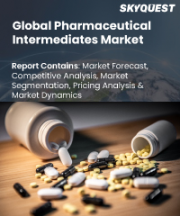
KSM 26.01.08Pharmaceutical Intermediates Market size was valued at USD 39.23 Billion in 2024 and is poised to grow from USD 41.73 Billion in 2025 to USD 68.39 Billion by 2033, growing at a CAGR of 6.37% during the forecast period (2026-2033).
The pharmaceutical intermediates market plays a crucial role as raw materials in the production of bulk drugs, particularly in forming active pharmaceutical ingredients (APIs) during synthesis. These intermediates, often derived from high-quality basic components like coal tar and petroleum, find extensive application in both pharmaceutical and cosmetic sectors. The market is driven by rising demand for APIs, fueled by trends in advanced therapies and personalized medicine. However, challenges such as high costs of biopharmaceutical drugs and significant capital investments for API production may limit growth potential. Nevertheless, advancements in manufacturing technologies and increased investment in research and development are set to unlock substantial opportunities, enhancing the market landscape for pharmaceutical intermediates in the near future.
Top-down and bottom-up approaches were used to estimate and validate the size of the Pharmaceutical Intermediates market and to estimate the size of various other dependent submarkets. The research methodology used to estimate the market size includes the following details: The key players in the market were identified through secondary research, and their market shares in the respective regions were determined through primary and secondary research. This entire procedure includes the study of the annual and financial reports of the top market players and extensive interviews for key insights from industry leaders such as CEOs, VPs, directors, and marketing executives. All percentage shares split, and breakdowns were determined using secondary sources and verified through Primary sources. All possible parameters that affect the markets covered in this research study have been accounted for, viewed in extensive detail, verified through primary research, and analyzed to get the final quantitative and qualitative data.
Pharmaceutical Intermediates Market Segments Analysis
Global Pharmaceutical Intermediates Market is segmented by product, category, application, end user and region. Based on product, the market is segmented into chemical intermediates, bulk drug intermediates, chiral intermediates, achiral intermediates and custom intermediates. Based on category, the market is segmented into branded drug intermediates and generic drug intermediates. Based on application, the market is segmented into analgesics, anti-inflammatory drug, cardiovascular drugs, anti-diabetic drugs, antimicrobial drugs, anti-cancer drugs and others. Based on end user, the market is segmented into biotech and pharma companies, research laboratory and CMOS/CROS. Based on region, the market is segmented into North America, Europe, Asia Pacific, Latin America and Middle East & Africa.
Driver of the Pharmaceutical Intermediates Market
The rising prevalence of chronic diseases, coupled with a growing elderly population around the globe, significantly contributes to the escalating demand for pharmaceutical intermediates used in drug formulations for chronic disease management. As more individuals are diagnosed with conditions such as diabetes and other chronic ailments, the healthcare sector faces increasing pressure to develop effective treatment options. This trend highlights the urgent need for innovative pharmaceutical solutions, as a substantial portion of the population is affected by chronic illnesses. Consequently, these dynamics are propelling the growth of the pharmaceutical intermediates market to meet this rising demand.
Restraints in the Pharmaceutical Intermediates Market
The significant expenses tied to acquiring biopharmaceutical drugs present a considerable challenge for the advancement of the global pharmaceutical intermediates market. Additionally, the substantial capital investments necessary for the manufacturing of active pharmaceutical ingredients (APIs) further hinder market expansion. These financial barriers create obstacles for various stakeholders, potentially limiting their ability to innovate and compete effectively within the industry. As a result, the overall growth trajectory of the pharmaceutical intermediates market may be adversely affected, restricting opportunities for new entrants and established companies alike. Addressing these economic constraints will be crucial for promoting a more robust market environment.
Market Trends of the Pharmaceutical Intermediates Market
A notable trend in the pharmaceutical intermediates market is the escalating prevalence of chronic cardiovascular diseases, which significantly strains global healthcare systems. Growing concerns over heart conditions like heart failure and ischemic heart disease drive demand for innovative pharmaceutical intermediates that facilitate the development of effective treatments. As ischemic heart disease affects millions worldwide, pharmaceutical companies are increasingly investing in research and development to produce specialized intermediates that enhance drug efficacy and safety. This burgeoning demand presents lucrative opportunities for manufacturers while underscoring the importance of advancements in pharmaceutical technologies to address escalating healthcare challenges associated with cardiovascular diseases.
Table of Contents
Introduction
- Objectives of the Study
- Scope of the Report
- Definitions
Research Methodology
- Information Procurement
- Secondary & Primary Data Methods
- Market Size Estimation
- Market Assumptions & Limitations
Executive Summary
- Global Market Outlook
- Supply & Demand Trend Analysis
- Segmental Opportunity Analysis
Market Dynamics & Outlook
- Market Overview
- Market Size
- Market Dynamics
- Drivers & Opportunities
- Restraints & Challenges
- Porters Analysis
- Competitive rivalry
- Threat of substitute
- Bargaining power of buyers
- Threat of new entrants
- Bargaining power of suppliers
Key Market Insights
- Key Success Factors
- Degree of Competition
- Top Investment Pockets
- Market Ecosystem
- Market Attractiveness Index, 2025
- PESTEL Analysis
- Macro-Economic Indicators
- Value Chain Analysis
- Pricing Analysis
- Regulatory Analysis
- Patent Analysis
- Case Study Analysis
Global Pharmaceutical Intermediates Market Size by Product & CAGR (2026-2033)
- Market Overview
- Chemical Intermediates
- Bulk Drug Intermediates
- Chiral Intermediates
- Achiral Intermediates
- Custom Intermediates
Global Pharmaceutical Intermediates Market Size by Category & CAGR (2026-2033)
- Market Overview
- Branded Drug Intermediates
- Generic Drug Intermediates
Global Pharmaceutical Intermediates Market Size by Application & CAGR (2026-2033)
- Market Overview
- Analgesics
- Anti-Inflammatory Drug
- Cardiovascular Drugs
- Anti-Diabetic Drugs
- Antimicrobial Drugs
- Anti-Cancer Drugs
- Others
Global Pharmaceutical Intermediates Market Size by End User & CAGR (2026-2033)
- Market Overview
- Biotech And Pharma Companies
- Research Laboratory
- CMOS/CROS
Global Pharmaceutical Intermediates Market Size & CAGR (2026-2033)
- North America (Product, Category, Application, End User)
- USA
- Canada
- Europe (Product, Category, Application, End User)
- Germany
- Spain
- France
- UK
- Italy
- Rest of Europe
- Asia Pacific (Product, Category, Application, End User)
- China
- India
- Japan
- South Korea
- Rest of Asia-Pacific
- Latin America (Product, Category, Application, End User)
- Brazil
- Rest of Latin America
- Middle East & Africa (Product, Category, Application, End User)
- GCC Countries
- South Africa
- Rest of Middle East & Africa
Competitive Intelligence
- Top 5 Player Comparison
- Market Positioning of Key Players, 2025
- Strategies Adopted by Key Market Players
- Recent Developments in the Market
- Company Market Share Analysis, 2025
- Company Profiles of All Key Players
- Company Details
- Product Portfolio Analysis
- Company's Segmental Share Analysis
- Revenue Y-O-Y Comparison (2021-2023)
Key Company Profiles
- BASF SE (Germany)
- Company Overview
- Business Segment Overview
- Financial Updates
- Key Developments
- Sanofi SA (France)
- Company Overview
- Business Segment Overview
- Financial Updates
- Key Developments
- Thermo Fisher Scientific Inc. (US)
- Company Overview
- Business Segment Overview
- Financial Updates
- Key Developments
- Merck KGaA (Germany)
- Company Overview
- Business Segment Overview
- Financial Updates
- Key Developments
- Dishman Carbogen Amcis Ltd. (India)
- Company Overview
- Business Segment Overview
- Financial Updates
- Key Developments
- Evonik Industries AG (Germany)
- Company Overview
- Business Segment Overview
- Financial Updates
- Key Developments
- Arkema Inc. (France)
- Company Overview
- Business Segment Overview
- Financial Updates
- Key Developments
- Lonza Group AG (Switzerland)
- Company Overview
- Business Segment Overview
- Financial Updates
- Key Developments
- Wuxi AppTec Co., Ltd. (China)
- Company Overview
- Business Segment Overview
- Financial Updates
- Key Developments
- Aurobindo Pharma Limited (India)
- Company Overview
- Business Segment Overview
- Financial Updates
- Key Developments
- Lianhe Chemical Technology Co., Ltd. (China)
- Company Overview
- Business Segment Overview
- Financial Updates
- Key Developments
- Cambrex Corporation (US)
- Company Overview
- Business Segment Overview
- Financial Updates
- Key Developments
- Vertellus Holdings LLC (US)
- Company Overview
- Business Segment Overview
- Financial Updates
- Key Developments
- Hovione LLC (Portugal)
- Company Overview
- Business Segment Overview
- Financial Updates
- Key Developments
- Hikal Ltd. (India)
- Company Overview
- Business Segment Overview
- Financial Updates
- Key Developments
- Codexis Inc. (US)
- Company Overview
- Business Segment Overview
- Financial Updates
- Key Developments
- Aceto Corporation (US)
- Company Overview
- Business Segment Overview
- Financial Updates
- Key Developments
- Interchem Corporation (US)
- Company Overview
- Business Segment Overview
- Financial Updates
- Key Developments
- Midas Pharma GmbH (Germany)
- Company Overview
- Business Segment Overview
- Financial Updates
- Key Developments
- Arbiom (US)
- Company Overview
- Business Segment Overview
- Financial Updates
- Key Developments