|
시장보고서
상품코드
1898692
자동차 노크 센서 시장 규모, 점유율 및 성장 분석 : 유형별, 용도별, 기술별, 제품 유형별, 최종사용자별, 유통 채널별, 차종별, 추진 방식별, 지역별 - 업계 예측(2026-2033년)Automotive Knock Sensor Market Size, Share, and Growth Analysis, By Type, By Application, By Technology, By Product Type, By End User, By Distribution Channel, By Vehicle Type, By Propulsion, By Region - Industry Forecast 2026-2033 |
||||||

자동차용 노크 센서 시장 규모는 2024년에 99억 5,000만 달러로 평가되며, 2025년 104억 5,000만 달러에서 2033년까지 154억 4,000만 달러로 성장할 전망입니다. 예측 기간(2026-2033년)의 CAGR은 5%로 예측됩니다.
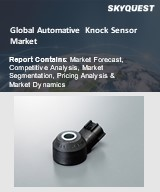
자동차 노크 센서는 일반적으로 엔진 블록 또는 실린더 헤드에 장착되며, 연소실내 노크음을 감지하여 엔진 성능 향상에 중요한 역할을 합니다. 압전소자를 이용한 이 센서는 이상 연소로 인한 진동에 반응하여 전기 신호를 생성하고, 엔진이 그에 따라 타이밍을 조정할 수 있도록 합니다. 엔진의 노킹을 적절히 감지하고 관리함으로써 잠재적인 고장을 예방하고 엔진의 수명을 크게 연장할 수 있습니다. 승용차와 상용차 모두에서 첨단 센서에 대한 수요 증가가 시장 성장을 주도하고 있으며, 저렴한 가격의 자율주행 기술 개발 및 공공 투자가 이를 지원하고 있습니다. 그러나 소프트웨어 문제, 높은 인프라 비용 등의 문제로 인해 확장을 제한할 수 있습니다. 자동차 제조업체와 기술 프로바이더 간의 협력은 새로운 기회를 가져오고, 정부의 구상은 첨단 감지 기술을 통해 차량 안전을 촉진하고 있습니다.
자동차 노크 센서 시장 성장 촉진요인
세계 자동차 노크 센서 시장은 각국 정부의 엄격한 배기가스 규제에 의해 크게 견인되고 있습니다. 이러한 규제로 인해 제조업체들은 질소산화물(NOx)과 같은 유해 물질을 포함한 유해 오염물질 배출량을 줄이고, 연료 효율이 높은 엔진을 설계해야 하는 상황에 처해 있습니다. 각국 정부가 환경 문제에 대응하기 위해 배출가스 규제를 지속적으로 강화하는 가운데, 노크 센서 수요는 증가할 것으로 예측됩니다. 이러한 규제 압력은 엔진 설계의 혁신을 촉진할 뿐만 아니라 자동차 기술 전반의 효율성과 지속가능성을 향상시켜 자동차 산업에서 노크 센서 시장의 성장에 기여하고 있습니다.
자동차용 노크 센서 시장 성장 억제요인
자동차 노크 센서 시장이 직면한 두드러진 과제는 신흥 지역에서 이 기술에 대한 이해와 보급이 제한적이라는 점입니다. 이들 지역에서는 기술 도입이나 인지도에서 선진국에 비해 뒤처지는 경우가 많습니다. 그 결과, 소비자의 취향에 부합하고 엄격한 배기가스 규제를 충족하는 첨단 엔진 시스템에 대한 수요가 현저히 낮아지고 있습니다. 이러한 지식과 수용성의 격차는 자동차 노크 센서 시장 침투를 방해하고, 결국 이 분야의 전반적인 성장 잠재력을 제한하고 있습니다. 개발도상국 시장에서 이 기술의 인지도 향상과 통합이 이루어지지 않는다면, 자동차 노크 센서 산업의 성장은 계속 억제될 것입니다.
자동차용 노크 센서 시장 동향
자동차용 노크 센서 시장에서는 첨단 센서 기술의 통합이 진행되어 정확도, 감도, 응답 시간이 향상되는 두드러진 추세를 볼 수 있습니다. 각 제조업체들은 디지털 신호 처리, 인공지능 알고리즘, 다중 주파수 감지 등의 혁신 기술을 적극적으로 채택하여 첨단 노크 센서 솔루션을 개발하고 있습니다. 이러한 진화는 다양한 운전 조건에서 엔진 노킹을 정확하게 식별하고 억제하는 능력을 향상시킬 뿐만 아니라, 엔진 성능 향상, 연비 효율 개선, 배기가스 제어 강화에도 기여합니다. 그 결과, 이러한 첨단 노크 센서에 대한 수요가 증가할 것으로 예상되며, 자동차 산업의 기술 혁신과 경쟁을 촉진할 것으로 기대됩니다.
자주 묻는 질문
목차
서론
- 조사의 목적
- 조사 범위
- 정의
조사 방법
- 정보 조달
- 2차와 1차 데이터 방법
- 시장 규모 예측
- 시장 전제조건과 제한
개요
- 세계 시장 전망
- 공급과 수요 동향 분석
- 부문별 기회 분석
시장 역학과 전망
- 시장 규모
- 시장 역학
- 촉진요인과 기회
- 억제요인과 과제
- Porter의 산업 분석과 영향
주요 시장 인사이트
- 주요 성공 요인
- 경쟁의 정도
- 주요 투자 기회
- 시장 에코시스템
- 규제 상황
- 특허 분석
- 밸류체인 분석
- 사례 연구 분석
- 고객과 구매 기준 분석
- PESTEL 분석
- 거시경제 지표
- 무역 분석
- 시장의 매력 지수
- 가격 분석
자동차 노크 센서 시장 규모 : 유형별 & CAGR(2026-2033)
- 선형 주파수 센서
- 와이드 레인지 주파수 센서
자동차 노크 센서 시장 규모 : 용도별 & CAGR(2026-2033)
- 단기통 엔진
- 다기통 엔진
자동차 노크 센서 시장 규모 : 기술별 & CAGR(2026-2033)
- 압전식 센서
- MEMS 센서
- 기타
자동차 노크 센서 시장 규모 : 제품 유형별 & CAGR(2026-2033)
- 1 회로
- 2 회로
- 4 회로
- 6 회로
- 기타
자동차 노크 센서 시장 규모 : 최종사용자별 & CAGR(2026-2033)
- OEM(Original Equipment Manufacturer)
- 애프터마켓
자동차 노크 센서 시장 규모 : 유통 채널별 & CAGR(2026-2033)
- 오프라인
- 온라인
자동차 노크 센서 시장 규모 : 차종별 & CAGR(2026-2033)
- 승용차
- 상용차
자동차 노크 센서 시장 규모 : 추진력별 & CAGR(2026-2033)
- 가솔린
- 디젤
- 전기자동차 및 하이브리드차
자동차 노크 센서 시장 규모 & CAGR(2026-2033)
- 북미
- 미국
- 캐나다
- 유럽
- 영국
- 독일
- 스페인
- 프랑스
- 이탈리아
- 기타 유럽 지역
- 아시아태평양
- 중국
- 인도
- 일본
- 한국
- 기타 아시아태평양
- 라틴아메리카
- 브라질
- 기타 라틴아메리카 지역
- 중동 및 아프리카
- GCC 국가
- 남아프리카공화국
- 기타 중동 및 아프리카
경쟁 정보
- 상위 5사의 비교
- 주요 기업의 시장 포지셔닝(2025년)
- 주요 시장 기업이 채택한 전략
- 최근 시장 동향
- 기업의 시장 점유율 분석(2025년)
- 주요 기업의 기업 개요
- 기업의 상세
- 제품 포트폴리오 분석
- 기업의 부문별 점유율 분석
- 매출의 전년대비 비교(2021-2023)
주요 기업 개요
- Robert Bosch GmbH
- Continental AG
- Denso Corporation
- Delphi Technologies
- Hitachi Automotive Systems
- NGK Spark Plug Co., Ltd.
- Sensata Technologies
- Standard Motor Products
- Walker Products
- ACDelco
- Bosch Mobility Solutions
- Mitsubishi Electric Corporation
- Infineon Technologies AG
- Hella GmbH & Co. KGaA
- Valeo
- ZF Friedrichshafen AG
- BorgWarner Inc.
- Analog Devices, Inc.
- CTS Corporation
- Melexis
결론과 제안
KSA 26.01.15Automotive Knock Sensor Market size was valued at USD 9.95 Billion in 2024 and is poised to grow from USD 10.45 Billion in 2025 to USD 15.44 Billion by 2033, growing at a CAGR of 5% during the forecast period (2026-2033).
The automotive knock sensor plays a crucial role in enhancing engine performance by detecting knocking sounds within combustion chambers, typically mounted on the engine block or cylinder head. Utilizing piezoelectric components, these sensors generate an electric signal in response to vibrations caused by detonation, allowing the engine to adjust timing accordingly. Proper detection and management of engine knock can significantly extend engine lifespan by preventing potential failures. Increasing demand for advanced sensors in both passenger and commercial vehicles is driving market growth, bolstered by developments in affordable autonomous vehicle technologies and public investments. However, challenges such as software issues and high infrastructure costs may limit expansion. Collaborations between automakers and technology providers present new opportunities, while government initiatives promote vehicle safety through enhanced sensing technologies.
Top-down and bottom-up approaches were used to estimate and validate the size of the Automotive Knock Sensor market and to estimate the size of various other dependent submarkets. The research methodology used to estimate the market size includes the following details: The key players in the market were identified through secondary research, and their market shares in the respective regions were determined through primary and secondary research. This entire procedure includes the study of the annual and financial reports of the top market players and extensive interviews for key insights from industry leaders such as CEOs, VPs, directors, and marketing executives. All percentage shares split, and breakdowns were determined using secondary sources and verified through Primary sources. All possible parameters that affect the markets covered in this research study have been accounted for, viewed in extensive detail, verified through primary research, and analyzed to get the final quantitative and qualitative data.
Automotive Knock Sensor Market Segments Analysis
Global Automotive Knock Sensor Market is segmented by type, application, technology, product type, end user, distribution channel, vehicle type, propulsion and region. Based on type, the market is segmented into linear frequency sensor and wide range frequency sensor. Based on application, the market is segmented into single cylinder engines and multi cylinder engines. Based on technology, the market is segmented into piezoelectric sensors, mems sensors and others. Based on product type, the market is segmented into 1 circuit, 2 circuit, 4 circuit, 6 circuit and others. Based on end user, the market is segmented into OEM (original equipment manufacturer) and aftermarket. Based on distribution channel, the market is segmented into offline and online. Based on vehicle type, the market is segmented into passenger cars and commercial vehicles. Based on propulsion, the market is segmented into gasoline, diesel and electric & hybrid. Based on region, the market is segmented into North America, Europe, Asia Pacific, Latin America and Middle East & and Africa.
Driver of the Automotive Knock Sensor Market
The global automotive knock sensor market is significantly driven by stringent emission standards implemented by governments worldwide. These regulations compel manufacturers to design engines that are more fuel-efficient and produce lower levels of harmful pollutants, including hazardous substances like nitrogen oxides (NOx). As governments consistently strengthen their emission policies to address environmental concerns, the demand for knock sensors is expected to rise. This regulatory pressure not only fosters innovation in engine design but also enhances the overall efficiency and sustainability of automotive technologies, thereby contributing to the growth of the knock sensor market in the automotive industry.
Restraints in the Automotive Knock Sensor Market
A notable challenge facing the automotive knock sensor market is the limited understanding and uptake of this technology in emerging regions. These areas often trail behind developed nations when it comes to technological adoption and awareness. As a result, the demand for advanced engine systems that align with consumer preferences and meet stringent emission regulations is considerably weaker. This gap in knowledge and acceptance hinders the market penetration of automotive knock sensors, ultimately constraining the overall growth potential within this sector. Without greater awareness and integration of this technology in developing markets, the expansion of the automotive knock sensor industry remains impeded.
Market Trends of the Automotive Knock Sensor Market
The automotive knock sensor market is witnessing a significant trend towards the integration of advanced sensor technologies, enhancing precision, sensitivity, and response times. Manufacturers are increasingly adopting innovations like digital signal processing, artificial intelligence algorithms, and multi-frequency detection to develop sophisticated knock sensor solutions. This evolution not only enhances the ability to accurately identify and mitigate engine knock across various operating conditions but also contributes to improved engine performance, fuel efficiency, and emissions control. As a result, the demand for these advanced knock sensors is expected to grow, driving innovation and competition within the automotive industry.
Table of Contents
Introduction
- Objectives of the Study
- Scope of the Report
- Definitions
Research Methodology
- Information Procurement
- Secondary & Primary Data Methods
- Market Size Estimation
- Market Assumptions & Limitations
Executive Summary
- Global Market Outlook
- Supply & Demand Trend Analysis
- Segmental Opportunity Analysis
Market Dynamics & Outlook
- Market Overview
- Market Size
- Market Dynamics
- Driver & Opportunities
- Restraints & Challenges
- Porters Analysis & Impact
- Competitive rivalry
- Threat of substitute
- Bargaining power of buyers
- Threat of new entrants
- Bargaining power of suppliers
Key Market Insights
- Key Success Factors
- Degree of Competition
- Top Investment Pockets
- Market Ecosystem
- Regulatory Landscape
- Patent Analysis
- Value Chain Analysis
- Case Study Analysis
- Customer & Buying Criteria Analysis
- PESTEL Analysis
- Macro-Economic Indicators
- Trade Analysis
- Market Attractiveness Index
- Pricing Analysis
Automotive Knock Sensor Market Size by Type & CAGR (2026-2033)
- Market Overview
- Linear Frequency Sensor
- Wide Range Frequency Sensor
Automotive Knock Sensor Market Size by Application & CAGR (2026-2033)
- Market Overview
- Single Cylinder Engines
- Multi Cylinder Engines
Automotive Knock Sensor Market Size by Technology & CAGR (2026-2033)
- Market Overview
- Piezoelectric Sensors
- MEMS Sensors
- Others
Automotive Knock Sensor Market Size by Product Type & CAGR (2026-2033)
- Market Overview
- 1 Circuit
- 2 Circuit
- 4 Circuit
- 6 Circuit
- Other
Automotive Knock Sensor Market Size by End User & CAGR (2026-2033)
- Market Overview
- OEM (Original Equipment Manufacturer)
- Aftermarket
Automotive Knock Sensor Market Size by Distribution Channel & CAGR (2026-2033)
- Market Overview
- Offline
- Online
Automotive Knock Sensor Market Size by Vehicle Type & CAGR (2026-2033)
- Market Overview
- Passenger Cars
- Commercial Vehicles
Automotive Knock Sensor Market Size by Propulsion & CAGR (2026-2033)
- Market Overview
- Gasoline
- Diesel
- Electric & Hybrid
Automotive Knock Sensor Market Size & CAGR (2026-2033)
- North America, (Type, Application, Technology, Product Type, End User, Distribution Channel, Vehicle Type, Propulsion)
- US
- Canada
- Europe, (Type, Application, Technology, Product Type, End User, Distribution Channel, Vehicle Type, Propulsion)
- UK
- Germany
- Spain
- France
- Italy
- Rest of Europe
- Asia-Pacific, (Type, Application, Technology, Product Type, End User, Distribution Channel, Vehicle Type, Propulsion)
- China
- India
- Japan
- South Korea
- Rest of Asia Pacific
- Latin America, (Type, Application, Technology, Product Type, End User, Distribution Channel, Vehicle Type, Propulsion)
- Brazil
- Rest of Latin America
- Middle East & Africa, (Type, Application, Technology, Product Type, End User, Distribution Channel, Vehicle Type, Propulsion)
- GCC Countries
- South Africa
- Rest of Middle East & Africa
Competitive Intelligence
- Top 5 Player Comparison
- Market Positioning of Key Players, 2025
- Strategies Adopted by Key Market Players
- Recent Developments in the Market
- Company Market Share Analysis, 2025
- Company Profiles of All Key Players
- Company Details
- Product Portfolio Analysis
- Company's Segmental Share Analysis
- Revenue Y-O-Y Comparison (2021-2023)
Key Company Profiles
- Robert Bosch GmbH
- Company Overview
- Business Segment Overview
- Financial Updates
- Key Developments
- Continental AG
- Company Overview
- Business Segment Overview
- Financial Updates
- Key Developments
- Denso Corporation
- Company Overview
- Business Segment Overview
- Financial Updates
- Key Developments
- Delphi Technologies
- Company Overview
- Business Segment Overview
- Financial Updates
- Key Developments
- Hitachi Automotive Systems
- Company Overview
- Business Segment Overview
- Financial Updates
- Key Developments
- NGK Spark Plug Co., Ltd.
- Company Overview
- Business Segment Overview
- Financial Updates
- Key Developments
- Sensata Technologies
- Company Overview
- Business Segment Overview
- Financial Updates
- Key Developments
- Standard Motor Products
- Company Overview
- Business Segment Overview
- Financial Updates
- Key Developments
- Walker Products
- Company Overview
- Business Segment Overview
- Financial Updates
- Key Developments
- ACDelco
- Company Overview
- Business Segment Overview
- Financial Updates
- Key Developments
- Bosch Mobility Solutions
- Company Overview
- Business Segment Overview
- Financial Updates
- Key Developments
- Mitsubishi Electric Corporation
- Company Overview
- Business Segment Overview
- Financial Updates
- Key Developments
- Infineon Technologies AG
- Company Overview
- Business Segment Overview
- Financial Updates
- Key Developments
- Hella GmbH & Co. KGaA
- Company Overview
- Business Segment Overview
- Financial Updates
- Key Developments
- Valeo
- Company Overview
- Business Segment Overview
- Financial Updates
- Key Developments
- ZF Friedrichshafen AG
- Company Overview
- Business Segment Overview
- Financial Updates
- Key Developments
- BorgWarner Inc.
- Company Overview
- Business Segment Overview
- Financial Updates
- Key Developments
- Analog Devices, Inc.
- Company Overview
- Business Segment Overview
- Financial Updates
- Key Developments
- CTS Corporation
- Company Overview
- Business Segment Overview
- Financial Updates
- Key Developments
- Melexis
- Company Overview
- Business Segment Overview
- Financial Updates
- Key Developments