|
시장보고서
상품코드
1899393
천연 식품 착색료 시장 규모, 점유율, 성장 분석 : 원료별, 용도별, 형태별, 유통경로별, 지역별 - 업계 예측(2026-2033년)Natural Food Colors Market Size, Share, and Growth Analysis, By Ingredients (Beta-carotene, Lycopene), By Application (Bakery & Confectionery, Beverages), By Form, By Distribution Channel, By Region - Industry Forecast 2026-2033 |
||||||

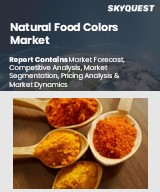
천연 식품 착색료 시장 규모는 2024년에 28억 4,000만 달러로 평가되었고, 2025년 31억 달러에서 2033년까지 62억 7,000만 달러로 성장할 전망이며, 예측 기간(2026년-2033년) CAGR은 9.2%를 보일 것으로 예측됩니다.
천연 식용색소 시장은 건강에 대한 인식이 높아지고 식품의 천연 소재에 대한 선호도가 높아지면서 성장이 예상되고 있습니다. 이러한 추세는 기능성 식음료의 소비 증가와 클린 라벨 제품에 대한 수요 증가에 따라 더욱 가속화되고 있습니다. 또한, 비거니즘의 부상과 식물성 식단에 대한 관심이 높아지면서 시장 전망을 더욱 밝게 하고 있습니다. 특히 유럽의 유기농 식품으로의 전환은 천연 식용 색소 공급업체에게 큰 기회를 가져다 줄 것입니다. 이러한 유리한 조건에도 불구하고, 높은 비용, 제한된 색상 선택, 짧은 유통기한, 원자재 공급 문제 등은 이 분야 기업의 성장을 저해하는 요인으로 작용할 수 있습니다.
천연 식용 색소 시장 성장 촉진요인
합성 식용 색소가 건강에 미치는 위험에 대한 인식이 높아짐에 따라 천연 식용 색소에 대한 수요가 크게 증가할 것으로 예측됩니다. 소비자들의 건강에 대한 인식이 높아지면서 카로티노이드, 스피루리나, 비트 추출물 등 보다 안전한 대안을 제공하는 대안에 대한 선호도가 높아지고 있습니다. 이러한 천연 소재로의 전환은 식품 표시 및 원료 조달의 투명성에 대한 소비자 트렌드를 반영하고 있습니다. 이에 따라 식음료 업계에서는 진화하는 소비자 의식에 따라 보다 건강하고 자연스러운 제품 제공에 대한 요구에 부응하기 위해 천연 식용 색소 채택이 증가할 것으로 예측됩니다.
천연 식용 색소 시장 성장 억제요인
천연 식용 색소 시장은 합성 대체품에 비해 높은 비용이라는 심각한 제약에 직면해 있습니다. 이러한 가격 문제는 고가의 원재료 사용과 더불어 생산 비용 증가에 기여하는 고도의 제조 및 추출 공정에 기인합니다. 그 결과, 최종 사용자는 수익성 저하를 경험하고 천연 식용 색소에 대한 투자 의욕을 저해할 수 있습니다. 이러한 경제적 장벽은 제조업체와 소비자가 보다 경제적인 선택을 선호하는 경향이 있기 때문에 결국 판매량 감소로 이어져 천연 식용 색소 시장의 성장 잠재력을 제한할 수 있습니다.
천연 식용 색소 시장 동향
천연 식용색소 시장은 합성첨가물이 없는 클린 라벨 제품을 찾는 소비자가 증가함에 따라 비건 및 식물성 식품 트렌드에 점점 더 부합하고 있습니다. 이 분야의 기업들은 천연색소와 동물실험을 하지 않는 친환경 제품에 대한 수요와의 시너지를 인식하고 비건 및 식물성 식품 제조업체와의 전략적 제휴를 추진하고 있습니다. 건강과 지속가능성에 대한 소비자의 인식이 높아지는 가운데, 천연 식용 색소는 원료의 투명성 기준을 준수하면서 제품 가치를 높이고자 하는 제조업체에게 이상적인 솔루션을 제공합니다. 이 협력은 시장 기회를 확대할 뿐만 아니라 윤리적 조달과 건강 지향적 소비에 대한 노력을 강화할 것입니다.
자주 묻는 질문
목차
서론
- 조사 목적
- 조사 범위
- 정의
조사 방법
- 정보 조달
- 2차와 1차 데이터 방법
- 시장 규모 예측
- 시장 전제조건과 제한
주요 요약
- 세계 시장 전망
- 공급과 수요 동향 분석
- 부문별 기회 분석
시장 역학과 전망
- 시장 규모
- 시장 역학
- 성장 촉진요인과 기회
- 성장 억제요인과 과제
- Porter의 Five Forces 분석
주요 시장 인사이트
- 중요 성공 요인
- 경쟁 정도
- 주요 투자 기회
- 시장 생태계
- 시장의 매력 지수(2025년)
- PESTEL 분석
- 거시경제 지표
- 밸류체인 분석
- 가격 분석
세계의 천연 식품 착색료 시장 규모 : 원료별&CAGR(2026-2033)
- Beta-carotene
- Lycopene
- Curcumin
- Anthocyanin
- Carmine
- Copper Chlorophyllin
- Paprika
- Betanin
- Riboflavin
- Blue Spirulina
- Caramel
- Annatto
- 기타
세계의 천연 식품 착색료 시장 규모 : 용도별&CAGR(2026-2033)
- 베이커리 및 제과
- 음료
- 유제품 및 냉동식품
- 육류
- 유지류
- 과일 및 채소
- 대체육 및 식물 유래육
- 반려동물 사료
세계의 천연 식품 착색료 시장 규모 : 형태별&CAGR(2026-2033)
- 액체
- 분말
- 겔
세계의 천연 식품 착색료 시장 규모 : 유통 채널별&CAGR(2026-2033)
- 하이퍼마켓 및 슈퍼마켓
- 기존 점포
- 온라인
- 기타
세계의 천연 식품 착색료 시장 규모&CAGR(2026-2033)
- 북미
- 미국
- 캐나다
- 유럽
- 독일
- 스페인
- 프랑스
- 영국
- 이탈리아
- 기타 유럽
- 아시아태평양
- 중국
- 인도
- 일본
- 한국
- 기타 아시아태평양
- 라틴아메리카
- 브라질
- 기타 라틴아메리카
- 중동 및 아프리카
- GCC 국가
- 남아프리카공화국
- 기타 중동 및 아프리카
경쟁 정보
- 주요 5개사 비교
- 주요 기업의 시장 포지셔닝(2025년)
- 주요 시장 기업이 채택한 전략
- 최근 시장 동향
- 기업의 시장 점유율 분석(2025년)
- 주요 기업 개요
- 기업 상세
- 제품 포트폴리오 분석
- 기업 부문별 점유율 분석
- 매출 전년대비 비교(2023-2025년)
주요 기업 개요
- DDW, The Color House(USA)
- Chr. Hansen Holding A/S(Denmark)
- GNT Group B.V.(Netherlands)
- Sensient Technologies Corporation(USA)
- Naturex S.A.(France)
- Kalsec Inc.(USA)
- ADM Wild Europe GmbH & Co. KG(Germany)
- Dohler GmbH(Germany)
- Roha Dyechem Pvt. Ltd.(India)
- FMC Corporation(USA)
- Plant Lipids Private Limited(India)
- San-Ei Gen F.F.I., Inc.(Japan)
- Sethness Products Company(USA)
- Ingredients Inc.(USA)
- Phytosynthese(France)
- Holland Colours NV(Netherlands)
- Secna Natural Ingredients Group S.L.(Spain)
- Guangzhou Wisdom Food Ingredients Co., Ltd.(China)
- Zhejiang Rainbow Biotechnology Co., Ltd.(China)
결론과 제안
LSH 26.01.12Natural Food Colors Market size was valued at USD 2.84 Billion in 2024 and is poised to grow from USD 3.1 Billion in 2025 to USD 6.27 Billion by 2033, growing at a CAGR of 9.2% during the forecast period (2026-2033).
The natural food colors market is poised for growth, driven by heightened health consciousness and a growing preference for natural ingredients in food products. This trend is further fueled by the increasing consumption of functional foods and beverages, as well as a demand for clean-label options. Additionally, the rise of veganism and the growing interest in plant-based diets are set to enhance market prospects. The global shift toward organic food, particularly in Europe, presents significant opportunities for suppliers of natural food colors. Despite these favorable conditions, challenges such as high costs, limited color options, shorter shelf lives, and raw material supply issues may hinder growth for companies in this sector.
Top-down and bottom-up approaches were used to estimate and validate the size of the Natural Food Colors market and to estimate the size of various other dependent submarkets. The research methodology used to estimate the market size includes the following details: The key players in the market were identified through secondary research, and their market shares in the respective regions were determined through primary and secondary research. This entire procedure includes the study of the annual and financial reports of the top market players and extensive interviews for key insights from industry leaders such as CEOs, VPs, directors, and marketing executives. All percentage shares split, and breakdowns were determined using secondary sources and verified through Primary sources. All possible parameters that affect the markets covered in this research study have been accounted for, viewed in extensive detail, verified through primary research, and analyzed to get the final quantitative and qualitative data.
Natural Food Colors Market Segments Analysis
Global Natural Food Colors Market is segmented by Ingredients, Application, Form, Distribution Channel and region. Based on Ingredients, the market is segmented into Beta-carotene, Lycopene, Curcumin, Anthocyanin, Carmine, Copper Chlorophyllin, Paprika, Betanin, Riboflavin, Blue Spirulina, Caramel, Annatto and Others. Based on Application, the market is segmented into Bakery & Confectionery, Beverages, Dairy & Frozen Products, Meat Products, Oils & Fats, Fruits & Vegetables, Meat Alternatives/Plant-based Meat and Pet Food. Based on Form, the market is segmented into Liquid, Powder and Gel. Based on Distribution Channel, the market is segmented into Hypermarkets and Supermarkets, Conventional Store, Online and Others. Based on region, the market is segmented into North America, Europe, Asia Pacific, Latin America and Middle East & Africa.
Driver of the Natural Food Colors Market
The increasing recognition of the health risks posed by synthetic food colors is expected to significantly enhance the demand for natural food colors. As consumers become more health-conscious, there is a rising preference for options like carotenoids, spirulina, and beet extracts, which offer safer alternatives. This shift towards natural ingredients reflects a broader consumer trend toward transparency in food labeling and ingredient sourcing. As a result, natural food colors are likely to see increased adoption within the food and beverage sectors, as manufacturers respond to the desire for healthier, more natural product offerings that resonate with the evolving consumer mindset.
Restraints in the Natural Food Colors Market
The natural food colors market faces a significant restraint due to the higher costs associated with these products compared to synthetic alternatives. This pricing challenge stems from the utilization of costly raw materials, coupled with sophisticated manufacturing and extraction processes that contribute to increased production expenses. As a result, end users experience reduced profitability, which can hinder their willingness to invest in natural food colors. This financial barrier may ultimately lead to a decline in sales, as manufacturers and consumers often prefer more economical options, thereby limiting the growth potential of the natural food colors segment in the market.
Market Trends of the Natural Food Colors Market
The Natural Food Colors market is increasingly aligning with the rising trend of veganism and plant-based foods, as consumers seek clean label options free from synthetic additives. Companies in this sector are strategically partnering with vegan and plant-based food manufacturers, recognizing the synergy between natural colorants and the demand for cruelty-free, environmentally friendly products. As consumer awareness regarding health and sustainability grows, natural food colors provide an ideal solution for manufacturers looking to enhance their offerings while ensuring compliance with ingredient transparency standards. This collaboration not only broadens market opportunities but also reinforces commitments to ethical sourcing and health-conscious consumption.
Table of Contents
Introduction
- Objectives of the Study
- Scope of the Report
- Definitions
Research Methodology
- Information Procurement
- Secondary & Primary Data Methods
- Market Size Estimation
- Market Assumptions & Limitations
Executive Summary
- Global Market Outlook
- Supply & Demand Trend Analysis
- Segmental Opportunity Analysis
Market Dynamics & Outlook
- Market Overview
- Market Size
- Market Dynamics
- Drivers & Opportunities
- Restraints & Challenges
- Porters Analysis
- Competitive rivalry
- Threat of substitute
- Bargaining power of buyers
- Threat of new entrants
- Bargaining power of suppliers
Key Market Insights
- Key Success Factors
- Degree of Competition
- Top Investment Pockets
- Market Ecosystem
- Market Attractiveness Index, 2025
- PESTEL Analysis
- Macro-Economic Indicators
- Value Chain Analysis
- Pricing Analysis
Global Natural Food Colors Market Size by Ingredients & CAGR (2026-2033)
- Market Overview
- Beta-carotene
- Lycopene
- Curcumin
- Anthocyanin
- Carmine
- Copper Chlorophyllin
- Paprika
- Betanin
- Riboflavin
- Blue Spirulina
- Caramel
- Annatto
- Others
Global Natural Food Colors Market Size by Application & CAGR (2026-2033)
- Market Overview
- Bakery & Confectionery
- Beverages
- Dairy & Frozen Products
- Meat Products
- Oils & Fats
- Fruits & Vegetables
- Meat Alternatives/Plant-based Meat
- Pet Food
Global Natural Food Colors Market Size by Form & CAGR (2026-2033)
- Market Overview
- Liquid
- Powder
- Gel
Global Natural Food Colors Market Size by Distribution Channel & CAGR (2026-2033)
- Market Overview
- Hypermarkets and Supermarkets
- Conventional Store
- Online
- Others
Global Natural Food Colors Market Size & CAGR (2026-2033)
- North America (Ingredients, Application, Form, Distribution Channel)
- US
- Canada
- Europe (Ingredients, Application, Form, Distribution Channel)
- Germany
- Spain
- France
- UK
- Italy
- Rest of Europe
- Asia Pacific (Ingredients, Application, Form, Distribution Channel)
- China
- India
- Japan
- South Korea
- Rest of Asia-Pacific
- Latin America (Ingredients, Application, Form, Distribution Channel)
- Brazil
- Rest of Latin America
- Middle East & Africa (Ingredients, Application, Form, Distribution Channel)
- GCC Countries
- South Africa
- Rest of Middle East & Africa
Competitive Intelligence
- Top 5 Player Comparison
- Market Positioning of Key Players, 2025
- Strategies Adopted by Key Market Players
- Recent Developments in the Market
- Company Market Share Analysis, 2025
- Company Profiles of All Key Players
- Company Details
- Product Portfolio Analysis
- Company's Segmental Share Analysis
- Revenue Y-O-Y Comparison (2023-2025)
Key Company Profiles
- DDW, The Color House (USA)
- Company Overview
- Business Segment Overview
- Financial Updates
- Key Developments
- Chr. Hansen Holding A/S (Denmark)
- Company Overview
- Business Segment Overview
- Financial Updates
- Key Developments
- GNT Group B.V. (Netherlands)
- Company Overview
- Business Segment Overview
- Financial Updates
- Key Developments
- Sensient Technologies Corporation (USA)
- Company Overview
- Business Segment Overview
- Financial Updates
- Key Developments
- Naturex S.A. (France)
- Company Overview
- Business Segment Overview
- Financial Updates
- Key Developments
- Kalsec Inc. (USA)
- Company Overview
- Business Segment Overview
- Financial Updates
- Key Developments
- ADM Wild Europe GmbH & Co. KG (Germany)
- Company Overview
- Business Segment Overview
- Financial Updates
- Key Developments
- Dohler GmbH (Germany)
- Company Overview
- Business Segment Overview
- Financial Updates
- Key Developments
- Roha Dyechem Pvt. Ltd. (India)
- Company Overview
- Business Segment Overview
- Financial Updates
- Key Developments
- FMC Corporation (USA)
- Company Overview
- Business Segment Overview
- Financial Updates
- Key Developments
- Plant Lipids Private Limited (India)
- Company Overview
- Business Segment Overview
- Financial Updates
- Key Developments
- San-Ei Gen F.F.I., Inc. (Japan)
- Company Overview
- Business Segment Overview
- Financial Updates
- Key Developments
- Sethness Products Company (USA)
- Company Overview
- Business Segment Overview
- Financial Updates
- Key Developments
- Ingredients Inc. (USA)
- Company Overview
- Business Segment Overview
- Financial Updates
- Key Developments
- Phytosynthese (France)
- Company Overview
- Business Segment Overview
- Financial Updates
- Key Developments
- Holland Colours NV (Netherlands)
- Company Overview
- Business Segment Overview
- Financial Updates
- Key Developments
- Secna Natural Ingredients Group S.L. (Spain)
- Company Overview
- Business Segment Overview
- Financial Updates
- Key Developments
- Guangzhou Wisdom Food Ingredients Co., Ltd. (China)
- Company Overview
- Business Segment Overview
- Financial Updates
- Key Developments
- Zhejiang Rainbow Biotechnology Co., Ltd. (China)
- Company Overview
- Business Segment Overview
- Financial Updates
- Key Developments