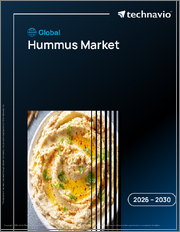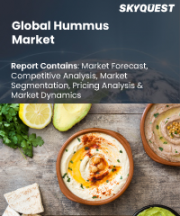
|
시장보고서
상품코드
1905915
후무스 시장 규모, 점유율, 성장 분석 : 제품 유형별, 포장 유형별, 유통 채널별, 원재료 유형별, 용도별, 지역별 - 업계 예측(2026-2033년)Hummus Market Size, Share, and Growth Analysis, By Product Type, By Packaging Type, By Distribution Channel, By Ingredients Type, By Application, By Region - Industry Forecast 2026-2033 |
||||||

후무스 시장 규모는 2024년에 41억 3,000만 달러로 평가되었으며, 2025년 47억 4,000만 달러에서 2033년까지 141억 9,000만 달러로 성장할 전망입니다. 예측 기간(2026-2033년) 동안 CAGR은 14.7%로 예측됩니다.
병아리콩, 타히니, 올리브 오일, 마늘, 레몬즙을 주원료로 한 풍미 가득한 딥 또는 스프레드인 후무스는 건강 효과와 다양한 요리 용도로 활용도가 높아 인기가 급상승하고 있습니다. 피타빵과의 궁합도 뛰어나며, 균형 잡힌 맛과 영양을 제공하기 때문에 건강을 중시하는 소비자들에게 매력적인 선택이 될 수 있습니다. 영양가 높은 스낵과 딥에 대한 수요 증가는 특히 중소규모의 기업들에게 시장 기회를 열어주고 있습니다. 대형 식품업체들이 수요를 따라잡기 위해 고군분투하고 있는 가운데, 단백질, 비타민, 미네랄이 풍부한 후무스는 근육, 뼈, 피부 건강 유지에 도움을 줄 뿐만 아니라 콜레스테롤 관리에도 기여합니다. 폭넓은 가용성과 다양한 요리를 보완할 수 있는 능력은 시장 성장을 더욱 촉진하고 전 세계적으로 선호되는 간식으로서의 입지를 확고히 하고 있습니다.
후무스 시장 촉진요인
후무스의 수요 증가는 단백질, 식이섬유, 항산화제, 필수 비타민을 포함한 풍부한 영양 성분에 기인합니다. 이동 중에도 간편하게 섭취하거나 식사 대용으로 건강한 간식을 찾는 소비자들이 늘어나면서 후무스가 선호되는 식품으로 떠올랐습니다. 이러한 경향은 식품 선택에 있어 건강과 웰빙을 중시하는 젊은 층, 특히 밀레니얼 세대에서 두드러지게 나타나고 있습니다. 건강에 대한 관심이 높아짐에 따라 영양을 잃지 않으면서도 만족감을 얻을 수 있는 음식에 대한 관심이 높아지면서 오늘날 시장에서 후무스는 영양가 높고 다양한 용도로 사용할 수 있는 간식 대용품으로 더욱 매력적으로 다가오고 있습니다.
후무스 시장 억제요인
후무스 시장이 직면한 큰 과제 중 하나는 잦은 제품 리콜입니다. 이는 소비자의 우려를 불러일으키고 전체 시장 성장에 영향을 미치고 있습니다. 오염사고가 발생함에 따라 기업들은 소비자 안전을 위해 자발적으로 제품 회수 조치를 취하고 있으며, 이는 브랜드 평가와 소비자 신뢰에 영향을 미치고 있습니다. 이러한 리콜 사례는 업계에서 엄격한 식품 안전 기준을 준수하는 것이 얼마나 중요한지 다시 한 번 강조하고 있습니다. 이러한 사건으로 인한 영향은 직접적인 금전적 손실에 그치지 않고, 소비자들이 후무스 제품 구매를 주저할 수 있으며, 그 결과 판매 감소 및 제조업체의 시장 확대에 대한 신중한 태도로 이어질 수 있습니다.
후무스 시장 동향
후무스 시장은 특히 선진국을 중심으로 비건 채식주의와 식물성 식단의 인기가 높아짐에 따라 눈에 띄는 상승세를 보이고 있습니다. 동물 복지와 환경적 지속가능성에 대한 소비자의 인식이 높아지면서 식물성 식품에 대한 수요가 급증하고 있습니다. 다양한 활용도와 건강 효과로 유명한 후무스는 영양가 높고 풍미 가득한 딥을 찾는 소비자들 사이에서 인기 있는 선택지로 떠오르고 있습니다. 이러한 식습관의 변화는 전 세계 후무스의 판매량을 끌어올리며 가정과 외식업계의 스테디셀러로 자리매김하고 있습니다. 비건 운동의 지속적인 확대는 후무스 시장의 매력을 더욱 높여 성장 가능성을 더욱 넓힐 것으로 예상됩니다.
자주 묻는 질문
목차
소개
- 조사 목적
- 조사 범위
- 정의
조사 방법
- 정보 조달
- 2차와 1차 데이터 방법
- 시장 규모 예측
- 시장 가정과 제한
주요 요약
- 세계 시장 전망
- 공급과 수요 동향 분석
- 부문별 기회 분석
시장 역학과 전망
- 시장 규모
- 시장 역학
- 성장 촉진요인과 기회
- 성장 억제요인과 과제
- Porters 분석과 영향
주요 시장 인사이트
- 핵심성공요인
- 경쟁 정도
- 주요 투자 기회
- 시장 생태계
- 시장 매력 지수(2025년)
- PESTEL 분석
- 거시경제 지표
- 밸류체인 분석
- 가격 분석
- 규제 상황
- 특허 분석
- 사례 연구
- 고객과 구매 기준 분석
세계의 후무스 시장 규모 : 제품 유형별 & CAGR(2026-2033년)
- 클래식 후무스
- 가향 후무스
- 레드 페퍼
- 걀릭
- 블랙 올리브
- 기타
세계의 후무스 시장 규모 : 포장 유형별 & CAGR(2026-2033년)
- 통
- 단지
- 병
- 기타
세계의 후무스 시장 규모 : 유통 채널별 & CAGR(2026-2033년)
- 슈퍼마켓
- 편의점
- 식료품점
- 온라인 소매업체
- 기타
세계의 후무스 시장 규모 : 원재료 유형별 & CAGR(2026-2033년)
- 병아리콩
- 타히니
- 올리브 오일
- 레몬즙
- 마늘
- 기타
세계의 후무스 시장 규모 : 용도별 & CAGR(2026-2033년)
- 소스 및 딥
- 스프레드
- 기타
세계의 후무스 시장 규모 : 지역별 & CAGR(2026-2033년)
- 북미
- 미국
- 캐나다
- 유럽
- 영국
- 독일
- 스페인
- 프랑스
- 이탈리아
- 기타 유럽
- 아시아태평양
- 중국
- 인도
- 일본
- 한국
- 기타 아시아태평양
- 라틴아메리카
- 브라질
- 기타 라틴아메리카
- 중동 및 아프리카
- GCC 국가
- 남아프리카공화국
- 기타 중동 및 아프리카
경쟁 정보
- 상위 5개사의 비교
- 주요 기업의 시장 포지셔닝(2025년)
- 주요 시장 기업이 채용한 전략
- 최근의 시장 동향
- 기업의 시장 점유율 분석(2025년)
- 주요 기업 개요
- 기업 상세
- 제품 포트폴리오 분석
- 기업 부문별 점유율 분석
- 매출 전년비 비교(2021-2023년)
주요 기업 개요
- Sabra Dipping Co., LLC
- Strauss Group
- Tribe Hummus
- Boar's Head Provision Co., Inc.
- Hope Foods, LLC
- Hummus Goodness
- Obour Foods
- Cedar's Mediterranean Foods, Inc.
- Fountain of Health
- Hannah International Foods
- Athenos
- Yorgo's Foods Inc.
- Pita Pal Industries Inc.
- Sonny & Joe's
- Wild Garden
결론과 제안
KSM 26.01.23Hummus Market size was valued at USD 4.13 Billion in 2024 and is poised to grow from USD 4.74 Billion in 2025 to USD 14.19 Billion by 2033, growing at a CAGR of 14.7% during the forecast period (2026-2033).
Hummus, a savory dip or spread made primarily from chickpeas, tahini, olive oil, garlic, and lemon juice, has experienced a surge in popularity due to its health benefits and versatility in culinary applications. Pairing beautifully with pita bread, it offers a balanced flavor and nutrition, making it an attractive choice for health-conscious consumers. The increasing demand for nutrient-dense snacks and dips has opened up market opportunities, particularly for smaller companies as larger food producers struggle to keep pace. Rich in proteins, vitamins, and minerals, hummus not only aids in muscle, bone, and skin health but also helps in managing cholesterol. Its wide availability and ability to enhance various dishes further drive its market growth, solidifying its status as a preferred snack globally.
Top-down and bottom-up approaches were used to estimate and validate the size of the Hummus market and to estimate the size of various other dependent submarkets. The research methodology used to estimate the market size includes the following details: The key players in the market were identified through secondary research, and their market shares in the respective regions were determined through primary and secondary research. This entire procedure includes the study of the annual and financial reports of the top market players and extensive interviews for key insights from industry leaders such as CEOs, VPs, directors, and marketing executives. All percentage shares split, and breakdowns were determined using secondary sources and verified through Primary sources. All possible parameters that affect the markets covered in this research study have been accounted for, viewed in extensive detail, verified through primary research, and analyzed to get the final quantitative and qualitative data.
Hummus Market Segments Analysis
Global Hummus Market is segmented by product type, packaging type, distribution channel, ingredients type, application and region. Based on product type, the market is segmented into classic hummus and flavored hummus (red pepper, garlic, black olive, others). Based on packaging type, the market is segmented into tubs, jars, bottles and others. Based on distribution channel, the market is segmented into supermarkets, convenience stores, grocery stores, online retailers and others. Based on ingredients, the market is segmented into chickpeas, tahini, olive oil, lemon juice, garlic and others. Based on application, the market is segmented into sauces and dips, spreads and others. Based on region, the market is segmented into North America, Europe, Asia Pacific, Latin America and Middle East & Africa.
Driver of the Hummus Market
The rising demand for hummus can be attributed to its rich nutritional profile, which includes proteins, fiber, antioxidants, and essential vitamins. As consumers increasingly seek out healthy snack options that are convenient for both on-the-go consumption and meal replacements, hummus has emerged as a favored choice. This trend is particularly pronounced among younger demographics, especially millennials, who prioritize health and wellness in their food selections. The health-conscious shift in consumer behavior emphasizes indulgence without compromising nutritional value, further propelling the appeal of hummus as a wholesome and versatile snack alternative in today's market.
Restraints in the Hummus Market
One of the significant challenges facing the hummus market is the prevalence of product recalls, which have raised concerns among consumers and affected overall market growth. Incidents involving contamination have led to companies taking proactive measures to recall products to ensure consumer safety, thereby impacting brand reputation and consumer trust. Such recalls highlight the critical importance of adhering to stringent food safety standards within the industry. The repercussions of these events can extend beyond immediate financial losses, as consumers may become hesitant to purchase hummus products, resulting in decreased sales and a more cautious approach to market expansion for manufacturers.
Market Trends of the Hummus Market
The hummus market is experiencing a significant upward trend, driven by the rising popularity of veganism and plant-based diets, particularly in developed regions. As consumers become increasingly conscious of animal welfare and environmental sustainability, the demand for plant-based options has surged. Hummus, known for its versatility and health benefits, has emerged as a favored choice among consumers seeking nutritious, flavorful dips. This shift in dietary preferences is bolstering hummus sales globally, positioning it as a staple in both households and foodservice. The continued growth of the vegan movement is expected to further enhance the hummus market's appeal and expansion prospects.
Table of Contents
Introduction
- Objectives of the Study
- Scope of the Report
- Definitions
Research Methodology
- Information Procurement
- Secondary & Primary Data Methods
- Market Size Estimation
- Market Assumptions & Limitations
Executive Summary
- Global Market Outlook
- Supply & Demand Trend Analysis
- Segmental Opportunity Analysis
Market Dynamics & Outlook
- Market Overview
- Market Size
- Market Dynamics
- Driver & Opportunities
- Restraints & Challenges
- Porters Analysis & Impact
- Competitive rivalry
- Threat of substitute
- Bargaining power of buyers
- Threat of new entrants
- Bargaining power of suppliers
Key Market Insights
- Key Success Factors
- Degree of Competition
- Top Investment Pockets
- Market Ecosystem
- Market Attractiveness Index, 2025
- PESTEL Analysis
- Macro-Economic Indicators
- Value Chain Analysis
- Pricing Analysis
- Regulatory Landscape
- Patent Analysis
- Case Studies
- Customer & Buying Criteria Analysis
Global Hummus Market Size by Product Type & CAGR (2026-2033)
- Market Overview
- Classic Hummus
- Flavored Hummus
- Red Pepper
- Garlic
- Black Olive
- Others
Global Hummus Market Size by Packaging Type & CAGR (2026-2033)
- Market Overview
- Tubs
- Jars
- Bottles
- Others
Global Hummus Market Size by Distribution Channel & CAGR (2026-2033)
- Market Overview
- Supermarkets
- Convenience Stores
- Grocery Stores
- Online Retailers
- Others
Global Hummus Market Size by Ingredients Type & CAGR (2026-2033)
- Market Overview
- Chickpeas
- Tahini
- Olive Oil
- Lemon Juice
- Garlic
- Others
Global Hummus Market Size by Application & CAGR (2026-2033)
- Market Overview
- Sauces and Dips
- Spreads
- Others
Global Hummus Market Size & CAGR (2026-2033)
- North America, (Product Type, Packaging Type, Distribution Channel, Ingredients Type, Application)
- US
- Canada
- Europe, (Product Type, Packaging Type, Distribution Channel, Ingredients Type, Application)
- UK
- Germany
- Spain
- France
- Italy
- Rest of Europe
- Asia-Pacific, (Product Type, Packaging Type, Distribution Channel, Ingredients Type, Application)
- China
- India
- Japan
- South Korea
- Rest of Asia Pacific
- Latin America, (Product Type, Packaging Type, Distribution Channel, Ingredients Type, Application)
- Brazil
- Rest of Latin America
- Middle East & Africa, (Product Type, Packaging Type, Distribution Channel, Ingredients Type, Application)
- GCC Countries
- South Africa
- Rest of Middle East & Africa
Competitive Intelligence
- Top 5 Player Comparison
- Market Positioning of Key Players, 2025
- Strategies Adopted by Key Market Players
- Recent Developments in the Market
- Company Market Share Analysis, 2025
- Company Profiles of All Key Players
- Company Details
- Product Portfolio Analysis
- Company's Segmental Share Analysis
- Revenue Y-O-Y Comparison (2021-2023)
Key Company Profiles
- Sabra Dipping Co., LLC
- Company Overview
- Business Segment Overview
- Financial Updates
- Key Developments
- Strauss Group
- Company Overview
- Business Segment Overview
- Financial Updates
- Key Developments
- Tribe Hummus
- Company Overview
- Business Segment Overview
- Financial Updates
- Key Developments
- Boar's Head Provision Co., Inc.
- Company Overview
- Business Segment Overview
- Financial Updates
- Key Developments
- Hope Foods, LLC
- Company Overview
- Business Segment Overview
- Financial Updates
- Key Developments
- Hummus Goodness
- Company Overview
- Business Segment Overview
- Financial Updates
- Key Developments
- Obour Foods
- Company Overview
- Business Segment Overview
- Financial Updates
- Key Developments
- Cedar's Mediterranean Foods, Inc.
- Company Overview
- Business Segment Overview
- Financial Updates
- Key Developments
- Fountain of Health
- Company Overview
- Business Segment Overview
- Financial Updates
- Key Developments
- Hannah International Foods
- Company Overview
- Business Segment Overview
- Financial Updates
- Key Developments
- Athenos
- Company Overview
- Business Segment Overview
- Financial Updates
- Key Developments
- Yorgo's Foods Inc.
- Company Overview
- Business Segment Overview
- Financial Updates
- Key Developments
- Pita Pal Industries Inc.
- Company Overview
- Business Segment Overview
- Financial Updates
- Key Developments
- Sonny & Joe's
- Company Overview
- Business Segment Overview
- Financial Updates
- Key Developments
- Wild Garden
- Company Overview
- Business Segment Overview
- Financial Updates
- Key Developments