|
시장보고서
상품코드
1964456
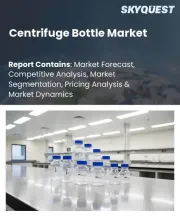
원심분리용 병 시장 규모, 점유율, 성장 분석 : 제품 유형별, 설계 유형별, 용량 사이즈별, 최종사용자별, 판매 채널별, 지역별 - 업계 예측(2026-2033년)Centrifuge Bottle Market Size, Share, and Growth Analysis, By Product Type (Polypropylene Bottles, Polycarbonate Bottles), By Design Type, By Capacity Size, By End User, By Sales Channel, By Region - Industry Forecast 2026-2033 |
||||||

세계의 원심분리용 병 시장 규모는 2024년에 3억 5,410만 달러로 평가되었으며, 2025년 3억 8,243만 달러에서 2033년까지 7억 785만 달러로 성장할 전망입니다. 예측 기간(2026-2033년) 동안 CAGR은 8.0%로 예측됩니다.
원심분리용 병 시장은 주로 생물 의학 연구 및 진단 테스트의 발전으로 인해 고처리량 시료 처리에 대한 수요가 지속적으로 증가함에 따라 주도되고 있습니다. 이러한 특수 실험실 소모품은 임상 실험실 및 의약품 개발에서 시료의 무결성을 유지하고 작업자의 안전을 보장하는 데 필수적입니다. 유리에서 폴리머로의 전환은 오염 문제를 해결하고 처리 효율을 향상시키는 데 매우 중요합니다. 바이오 안전에 대한 규제 기준이 강화되면서 변조 방지 캡, 내화학성 소재 등 혁신적인 기능을 갖춘 인증된 원심분리용 병에 대한 수요가 증가하고 있습니다. 또한, 제조 공정의 자동화는 생산 효율성과 일관성을 향상시키고 오염 위험을 크게 줄이며 예측 가능한 공급을 보장합니다. 이는 하이스루풋 환경의 요구에 부합하는 것입니다.
세계 원심분리용 병 시장의 촉진요인
전 세계적으로 바이오의약품 및 백신에 대한 수요가 증가함에 따라 효과적이고 확장 가능한 정화 및 분리 공정의 필요성이 크게 증가하여 다양한 생산 워크플로우에서 원심분리용 병이 필수적인 요소로 자리 잡게 되었습니다. 제조업체들은 신뢰할 수 있는 성능을 보장하고, 다운타임을 최소화하며, 기존 다운스트림 시스템과 원활하게 통합할 수 있는 장비를 점점 더 우선순위에 두고 있으며, 이는 혁신적인 원심분리기 소모품 조달 선택에 영향을 미치고 있습니다. 또한, 원심분리용 병은 무균 일회용 사용을 쉽게 실현하고 세척이 용이하다는 특성은 운영 적응성을 높이고 오염 위험을 줄입니다. 이러한 움직임은 제품 개발 프로세스의 신속화를 목표로 하는 수탁 제조업체 및 사내 생산 시설의 채용 확대를 촉진하고 있습니다.
세계 원심분리용 병 시장의 억제요인
세계 원심분리용 병 시장은 멸균, 재료 추적성, 일회용 검증에 대한 엄격한 규제 요건으로 인해 심각한 도전에 직면해 있습니다. 이러한 규제는 특히 소규모 공급업체에게 컴플라이언스 증명이라는 큰 의무를 부과하고 있으며, 조달 주기가 길어지고 진입장벽이 높아지는 결과를 초래하고 있습니다. 상세한 문서화의 필요성, 재료 변경 관리 프로토콜 준수, 철저한 공정 적격성 확인은 제품 개발 및 검증을 더욱 복잡하게 만듭니다. 그 결과, 구매자는 규제 준수에 대한 신뢰할 수 있는 실적을 보유한 기존 공급업체를 선호하는 경향이 있으며, 새로운 또는 보다 비용 효율적인 원심분리용 병의 대안을 고려하는 것을 꺼려하는 경우가 많습니다.
세계 원심분리용 병 시장 동향
전 세계 원심분리용 병 시장에서는 지속가능성을 향한 큰 전환이 일어나고 있습니다. 제조업체들은 제품 수명주기 전반에 걸쳐 환경 부하를 최소화하기 위해 친환경 소재와 혁신적인 디자인을 우선시하는 경향이 강해지고 있습니다. 이러한 추세는 재활용 가능한 폴리머를 사용하거나 오염 제거 및 재사용이 용이하도록 간소화된 설계가 특징입니다. 구매자의 눈높이가 높아짐에 따라 추적 가능한 공급망과 지속가능성 인증을 보유한 공급업체를 적극적으로 찾는 움직임이 확산되고 있습니다. 이러한 변화하는 환경은 재료 과학자와 OEM(Original Equipment Manufacturers)의 협력을 촉진하여 엄격한 성능 요건을 충족할 뿐만 아니라 기업의 지속가능성 목표와 친환경 실험실 소모품에 대한 수요 증가에 부합하는 제품 개발을 촉진하고 있습니다.
자주 묻는 질문
목차
소개
조사 방법
주요 요약
시장 역학과 전망
주요 시장 인사이트
세계의 원심분리용 병 시장 규모 : 제품 유형별 & CAGR(2026-2033년)
세계의 원심분리용 병 시장 규모 : 설계 유형별 & CAGR(2026-2033년)
세계의 원심분리용 병 시장 규모 : 용량 사이즈별 & CAGR(2026-2033년)
세계의 원심분리용 병 시장 규모 : 최종사용자별 & CAGR(2026-2033년)
세계의 원심분리용 병 시장 규모 : 판매 채널별 & CAGR(2026-2033년)
세계의 원심분리용 병 시장 규모 & CAGR(2026-2033년)
경쟁 정보
주요 기업 개요
결론과 제안
KSM 26.03.23Global Centrifuge Bottle Market size was valued at USD 354.1 Million in 2024 and is poised to grow from USD 382.43 Million in 2025 to USD 707.85 Million by 2033, growing at a CAGR of 8.0% during the forecast period (2026-2033).
The centrifuge bottle market is fundamentally driven by advancements in biomedical research and diagnostic testing, as the need for high-throughput sample processing continues to rise. These specialized lab consumables are essential for maintaining sample integrity and ensuring operator safety in clinical laboratories and pharmaceutical development. The shift from glass to polymeric designs has been crucial in addressing contamination issues and enhancing throughput efficiency. As regulatory standards tighten around biosafety, there is an increased demand for certified centrifuge bottles equipped with innovative features, such as tamper-evident caps and chemically resistant materials. Additionally, automation in manufacturing processes enhances production efficiency and consistency, significantly reducing contamination risks and ensuring predictable supply, which aligns well with the needs of high-throughput environments.
Top-down and bottom-up approaches were used to estimate and validate the size of the Global Centrifuge Bottle market and to estimate the size of various other dependent submarkets. The research methodology used to estimate the market size includes the following details: The key players in the market were identified through secondary research, and their market shares in the respective regions were determined through primary and secondary research. This entire procedure includes the study of the annual and financial reports of the top market players and extensive interviews for key insights from industry leaders such as CEOs, VPs, directors, and marketing executives. All percentage shares split, and breakdowns were determined using secondary sources and verified through Primary sources. All possible parameters that affect the markets covered in this research study have been accounted for, viewed in extensive detail, verified through primary research, and analyzed to get the final quantitative and qualitative data.
Global Centrifuge Bottle Market Segments Analysis
Global centrifuge bottle market is segmented by product type, design type, capacity size, end user, sales channel and region. Based on product type, the market is segmented into Polypropylene Bottles, Polycarbonate Bottles, Glass Bottles and Others. Based on design type, the market is segmented into Conical Centrifuge Bottle and Round Centrifuge Bottle. Based on capacity size, the market is segmented into 50ml - 100ml, 100ml - 250ml and Above 250ml. Based on end user, the market is segmented into Healthcare and Research Facilities. Based on sales channel, the market is segmented into Online Sales, Offline Retail and Direct Sales. Based on region, the market is segmented into North America, Europe, Asia Pacific, Latin America and Middle East & Africa.
Driver of the Global Centrifuge Bottle Market
The escalating worldwide demand for biologics and vaccines has significantly heightened the need for effective and scalable clarification and separation processes, rendering centrifuge bottles essential in various production workflows. Manufacturers are increasingly prioritizing equipment that ensures reliable performance, minimizes downtime, and seamlessly integrates with established downstream systems, influencing procurement choices toward innovative centrifuge consumables. Furthermore, the capability of centrifuge bottles to facilitate sterile single-use applications or to be easily cleaned enhances operational adaptability and lowers contamination risks. This dynamic fosters increased adoption among contract manufacturers and internal production facilities, all aiming to expedite product development processes.
Restraints in the Global Centrifuge Bottle Market
The Global Centrifuge Bottle market faces significant challenges due to stringent regulatory requirements pertaining to sterilization, material traceability, and validation for single use. These regulations impose a considerable obligation on manufacturers to prove compliance, resulting in prolonged procurement cycles and heightened barriers to entry, especially for smaller suppliers. The necessity for extensive documentation, adherence to material change control protocols, and thorough process qualification adds additional layers of complexity to product development and validation. Consequently, buyers tend to prefer established vendors with a reliable track record in regulatory compliance, often leading to reluctance in exploring newer or more cost-effective centrifuge bottle alternatives.
Market Trends of the Global Centrifuge Bottle Market
The Global Centrifuge Bottle market is witnessing a significant shift towards sustainability, with manufacturers increasingly prioritizing eco-friendly materials and innovative designs to minimize environmental impact throughout the product lifecycle. This trend is characterized by the adoption of recyclable polymers and streamlined designs that facilitate easy decontamination and reuse. As buyers become more discerning, they are actively seeking suppliers with traceable supply chains and sustainability certifications. This evolving landscape fosters collaboration between material scientists and original equipment manufacturers (OEMs) to create products that not only meet stringent performance requirements but also align with broader corporate sustainability goals and the growing demand for environmentally responsible laboratory consumables.
Table of Contents
Introduction
- Objectives of the Study
- Market Definition & Scope
Research Methodology
- Research Process
- Secondary & Primary Data Methods
- Market Size Estimation Methods
Executive Summary
- Global Market Outlook
- Key Market Highlights
- Segmental Overview
- Competition Overview
Market Dynamics & Outlook
- Macro-Economic Indicators
- Drivers & Opportunities
- Restraints & Challenges
- Supply Side Trends
- Demand Side Trends
- Porters Analysis & Impact
- Competitive Rivalry
- Threat of Substitute
- Bargaining Power of Buyers
- Threat of New Entrants
- Bargaining Power of Suppliers
Key Market Insights
- Key Success Factors
- Market Impacting Factors
- Top Investment Pockets
- Ecosystem Mapping
- Market Attractiveness Index 2025
- PESTEL Analysis
- Regulatory Landscape
Global Centrifuge Bottle Market Size by Product Type & CAGR (2026-2033)
- Market Overview
- Polypropylene Bottles
- Polycarbonate Bottles
- Glass Bottles
- Others
Global Centrifuge Bottle Market Size by Design Type & CAGR (2026-2033)
- Market Overview
- Conical Centrifuge Bottle
- Round Centrifuge Bottle
Global Centrifuge Bottle Market Size by Capacity Size & CAGR (2026-2033)
- Market Overview
- 50ml - 100ml
- 100ml - 250ml
- Above 250ml
Global Centrifuge Bottle Market Size by End User & CAGR (2026-2033)
- Market Overview
- Healthcare
- Hospitals
- Diagnostic Labs
- Research Facilities
- Academic Institutions
- Private Research Labs
Global Centrifuge Bottle Market Size by Sales Channel & CAGR (2026-2033)
- Market Overview
- Online Sales
- Offline Retail
- Direct Sales
Global Centrifuge Bottle Market Size & CAGR (2026-2033)
- North America (Product Type, Design Type, Capacity Size, End User, Sales Channel)
- US
- Canada
- Europe (Product Type, Design Type, Capacity Size, End User, Sales Channel)
- Germany
- Spain
- France
- UK
- Italy
- Rest of Europe
- Asia Pacific (Product Type, Design Type, Capacity Size, End User, Sales Channel)
- China
- India
- Japan
- South Korea
- Rest of Asia-Pacific
- Latin America (Product Type, Design Type, Capacity Size, End User, Sales Channel)
- Mexico
- Brazil
- Rest of Latin America
- Middle East & Africa (Product Type, Design Type, Capacity Size, End User, Sales Channel)
- GCC Countries
- South Africa
- Rest of Middle East & Africa
Competitive Intelligence
- Top 5 Player Comparison
- Market Positioning of Key Players, 2025
- Strategies Adopted by Key Market Players
- Recent Developments in the Market
- Company Market Share Analysis, 2025
- Company Profiles of All Key Players
- Company Details
- Product Portfolio Analysis
- Company's Segmental Share Analysis
- Revenue Y-O-Y Comparison (2023-2025)
Key Company Profiles
- Thermo Fisher Scientific
- Company Overview
- Business Segment Overview
- Financial Updates
- Key Developments
- Corning Incorporated
- Company Overview
- Business Segment Overview
- Financial Updates
- Key Developments
- Eppendorf AG
- Company Overview
- Business Segment Overview
- Financial Updates
- Key Developments
- VWR International, LLC
- Company Overview
- Business Segment Overview
- Financial Updates
- Key Developments
- Sartorius AG
- Company Overview
- Business Segment Overview
- Financial Updates
- Key Developments
- Sigma-Aldrich Corporation
- Company Overview
- Business Segment Overview
- Financial Updates
- Key Developments
- Fisher Scientific
- Company Overview
- Business Segment Overview
- Financial Updates
- Key Developments
- Greiner Bio-One
- Company Overview
- Business Segment Overview
- Financial Updates
- Key Developments
- PerkinElmer, Inc.
- Company Overview
- Business Segment Overview
- Financial Updates
- Key Developments
- Beckman Coulter, Inc.
- Company Overview
- Business Segment Overview
- Financial Updates
- Key Developments
- Axygen Scientific
- Company Overview
- Business Segment Overview
- Financial Updates
- Key Developments
- Bio-Rad Laboratories, Inc.
- Company Overview
- Business Segment Overview
- Financial Updates
- Key Developments
- MIDSCI
- Company Overview
- Business Segment Overview
- Financial Updates
- Key Developments
- Starlab International GmbH
- Company Overview
- Business Segment Overview
- Financial Updates
- Key Developments
- Falcon Plastics, Inc.
- Company Overview
- Business Segment Overview
- Financial Updates
- Key Developments
- NEST Biotechnology
- Company Overview
- Business Segment Overview
- Financial Updates
- Key Developments
- Occhio srl
- Company Overview
- Business Segment Overview
- Financial Updates
- Key Developments
- Labcon North America
- Company Overview
- Business Segment Overview
- Financial Updates
- Key Developments
- Eisco Scientific
- Company Overview
- Business Segment Overview
- Financial Updates
- Key Developments
- Harten's Plastics
- Company Overview
- Business Segment Overview
- Financial Updates
- Key Developments