|
시장보고서
상품코드
2035526
배터리 플레이트 시장 규모, 점유율, 성장 분석 : 제품 유형별, 배터리 유형별, 용도별, 유통 채널별, 지역별 - 업계 예측(2026-2033년)Battery Plate Market Size, Share, and Growth Analysis, By Product Type (Flat Plate, Tubular Plate), By Battery Type (Lead-Acid Batteries, Lithium-Ion Batteries), By Application, By Distribution Channel, By Region - Industry Forecast 2026-2033 |
||||||

세계의 배터리 플레이트 시장 규모는 2024년에 28억 3,000만 달러로 평가되었으며, 2025년 33억 달러에서 2033년까지 112억 7,000만 달러로 확대될 전망이며, 예측 기간(2026-2033년) 동안 CAGR 16.6%로 성장할 것으로 전망됩니다.
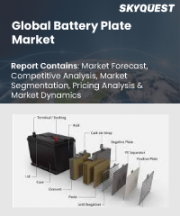
배터리 플레이트는 납축배터리의 기능에 있어 필수적인 구성요소이며, 활물질을 지지하면서 효율적인 전도성을 보장하는 격자형 구조로 작용합니다. 형성 과정에서 이 플레이트는 충전되고 산성 용액에 담그면 화학 반응이 촉진되어 발전으로 이어지는 화학 반응이 촉진됩니다. 특히, 배터리 플레이트는 자체 방전율이 낮고, 유지보수가 필요없고, 수명이 길다는 특징이 있습니다. 일반적으로 배터리 셀은 두 개의 납판(이산화 납 페이스트로 코팅된 양극판과 스펀지 모양의 납으로 만들어진 음극판)으로 구성되며, 이들은 절연재로 분리되어 있습니다. 이 모든 구성요소는 내구성이 뛰어난 플라스틱 케이스에 담겨 물과 황산으로 구성된 전해질에 담그면 에너지 저장 솔루션의 효율성이 강화됩니다.
세계 배터리 플레이트 시장 성장요인
1인당 GDP의 증가로 인해 전 세계적으로 가처분 소득이 크게 증가하여 자동차 판매량이 매년 증가하고 있습니다. 지속적인 산업 성장, 건설 활동 및 물류 업무의 활성화에 힘입어 자동차 수요가 상승세를 유지하면서 상용차 시장도 확대되고 있습니다. 이러한 자동차 거래의 급증은 주행거리 증가와 함께 OEM과 애프터마켓 모두에서 자동차 부품, 특히 배터리에 대한 수요를 증가시키고 있습니다. 그 결과, 이러한 자동차 판매량 증가 추세는 세계 배터리 플레이트 시장의 성장을 이끄는 주요 요인으로 작용하고 있습니다.
세계 배터리 플레이트 시장의 억제요인
세계 배터리 플레이트 시장은 성장을 저해하는 몇 가지 제약에 직면해 있습니다. 큰 과제 중 하나는 제조상의 결함 및 제조 외적인 요인으로 인한 제품 고장이며, 이는 물리적 손상, 마모 및 열화 등의 문제를 야기할 수 있습니다. 또한, 부적절한 액면 레벨과 잘못된 충전 방법을 포함한 불충분한 유지보수도 수명 단축의 한 원인이 되고 있습니다. 황산화, 전자기기에 장시간 전원을 공급하는 등의 요인도 배터리 성능을 더욱 떨어뜨립니다. 또한, 배터리 생산에 따른 높은 비용은 제조업체에게 큰 장벽이 되고 있으며, 혁신을 촉진하고 시장 수요에 효과적으로 대응할 수 있는 능력에 영향을 미치고 있습니다.
세계 배터리 플레이트 시장 동향
세계 배터리 플레이트 시장은 자동차 산업의 급속한 전동화 전환에 힘입어 견조한 성장세를 보이고 있습니다. 교통 관련 배출가스에 대한 환경적 우려가 높아지면서 소비자와 제조사 모두 저연비 차량과 전기자동차를 우선시하고 있습니다. 이러한 전동화에 대한 관심이 높아짐에 따라 OEM(주문자 상표 부착 생산업체)은 전기자동차 라인업 강화에 많은 투자를 하고 있으며, 이에 따라 대용량 배터리 솔루션에 대한 수요가 증가하고 있습니다. 그 결과, 배터리 제조업체들은 현대 전기자동차의 요구에 부응하기 위해 극판 수를 늘린 배터리를 개발 및 생산하고 있으며, 이는 전 세계 배터리 극판 시장의 확대를 촉진하고 있습니다.
자주 묻는 질문
목차
소개
조사 방법
주요 요약
시장 역학과 전망
주요 시장 인사이트
세계의 배터리 플레이트 시장 규모 : 제품 유형별
세계의 배터리 플레이트 시장 규모 : 배터리 유형별
세계의 배터리 플레이트 시장 규모 : 용도별
세계의 배터리 플레이트 시장 규모 : 유통 채널별
세계의 배터리 플레이트 시장 규모 : 지역별
경쟁 정보
주요 기업 개요
결론과 제안
KSM 26.05.27Global Battery Plate Market size was valued at USD 2.83 Billion in 2024 and is poised to grow from USD 3.3 Billion in 2025 to USD 11.27 Billion by 2033, growing at a CAGR of 16.6% during the forecast period (2026-2033).
Battery plates serve as essential components in the functioning of lead-acid batteries, acting as grid-like structures that support active materials while ensuring efficient electrical conduction. During the formation process, these plates are charged and placed in an acidic solution, facilitating chemical reactions that produce electricity. Notably, battery plates exhibit low self-discharge rates, demand minimal maintenance, and offer extended service life. Typically, a battery cell consists of two lead plates-one positive, coated with lead dioxide paste, and one negative, made of sponge lead-separated by an insulating material. All these components are housed within a durable plastic case and are subsequently immersed in an electrolyte solution composed of water and sulfuric acid, reinforcing the efficacy of energy storage solutions.
Top-down and bottom-up approaches were used to estimate and validate the size of the Global Battery Plate market and to estimate the size of various other dependent submarkets. The research methodology used to estimate the market size includes the following details: The key players in the market were identified through secondary research, and their market shares in the respective regions were determined through primary and secondary research. This entire procedure includes the study of the annual and financial reports of the top market players and extensive interviews for key insights from industry leaders such as CEOs, VPs, directors, and marketing executives. All percentage shares split, and breakdowns were determined using secondary sources and verified through Primary sources. All possible parameters that affect the markets covered in this research study have been accounted for, viewed in extensive detail, verified through primary research, and analyzed to get the final quantitative and qualitative data.
Global Battery Plate Market Segments Analysis
Global Battery Plate Market is segmented by Product Type, Battery Type, Application, Distribution Channel and region. Based on Product Type, the market is segmented into Flat Plate, Tubular Plate and Others. Based on Battery Type, the market is segmented into Lead-Acid Batteries, Lithium-Ion Batteries, Nickel-Based Batteries and Others. Based on Application, the market is segmented into Automotive, Industrial, Energy Storage Systems, Telecommunications and Others. Based on Distribution Channel, the market is segmented into Direct Sales, Distributors, Online and Others. Based on region, the market is segmented into North America, Europe, Asia Pacific, Latin America and Middle East & Africa.
Driver of the Global Battery Plate Market
The growing per capita GDP has significantly boosted disposable incomes across the globe, leading to an increase in vehicle sales annually. As automotive demand continues its upward trajectory, supported by ongoing industrial growth, construction activities, and heightened logistics operations, the market for commercial vehicles has also expanded. This surge in automobile transactions, coupled with the rising number of kilometers driven, is elevating the need for automotive components, especially batteries, from both original equipment manufacturers and the aftermarket. Consequently, this escalating vehicle sales trend is a key factor driving the growth of the global battery plate market.
Restraints in the Global Battery Plate Market
The Global Battery Plate market faces several constraints that hinder its growth. One significant challenge arises from product failures resulting from both manufacturing and non-manufacturing defects, which can lead to physical damage and issues such as wear and tear. Inadequate maintenance, including improper fluid levels and incorrect charging practices, also contributes to reduced lifespan. Factors like sulfation and leaving electronic accessories powered for prolonged durations further diminish battery performance. Additionally, the high costs associated with battery production pose a considerable barrier for manufacturers, impacting their ability to innovate and meet market demand effectively.
Market Trends of the Global Battery Plate Market
The Global Battery Plate market is experiencing robust growth driven by the escalating shift towards electrification in the automotive sector. Rising environmental concerns over transportation-related emissions are prompting both consumers and manufacturers to prioritize fuel-efficient and electric vehicles. This increased focus on electrification has led original equipment manufacturers (OEMs) to invest significantly in enhancing their electric vehicle offerings, resulting in a growing demand for high-capacity battery solutions. Consequently, battery manufacturers are innovating and producing batteries with an increased number of plates to meet the needs of modern electric vehicles, further bolstering the market for battery plates globally.
Table of Contents
Introduction
- Objectives of the Study
- Market Definition & Scope
Research Methodology
- Research Process
- Secondary & Primary Data Methods
- Market Size Estimation Methods
Executive Summary
- Global Market Outlook
- Key Market Highlights
- Segmental Overview
- Competition Overview
Market Dynamics & Outlook
- Macro-Economic Indicators
- Drivers & Opportunities
- Restraints & Challenges
- Supply Side Trends
- Demand Side Trends
- Porters Analysis & Impact
- Competitive Rivalry
- Threat of Substitute
- Bargaining Power of Buyers
- Threat of New Entrants
- Bargaining Power of Suppliers
Key Market Insights
- Key Success Factors
- Market Impacting Factors
- Top Investment Pockets
- Ecosystem Mapping
- Market Attractiveness Index 2025
- PESTEL Analysis
- Regulatory Landscape
- Pricing Analysis
Global Battery Plate Market Size by Product Type & CAGR (2026-2033)
- Market Overview
- Flat Plate
- Tubular Plate
- Others
Global Battery Plate Market Size by Battery Type & CAGR (2026-2033)
- Market Overview
- Lead-Acid Batteries
- Lithium-Ion Batteries
- Nickel-Based Batteries
- Others
Global Battery Plate Market Size by Application & CAGR (2026-2033)
- Market Overview
- Automotive
- Industrial
- Energy Storage Systems
- Telecommunications
- Others
Global Battery Plate Market Size by Distribution Channel & CAGR (2026-2033)
- Market Overview
- Direct Sales
- Distributors
- Online
- Others
Global Battery Plate Market Size & CAGR (2026-2033)
- North America (Product Type, Battery Type, Application, Distribution Channel)
- US
- Canada
- Europe (Product Type, Battery Type, Application, Distribution Channel)
- Germany
- Spain
- France
- UK
- Italy
- Rest of Europe
- Asia Pacific (Product Type, Battery Type, Application, Distribution Channel)
- China
- India
- Japan
- South Korea
- Rest of Asia-Pacific
- Latin America (Product Type, Battery Type, Application, Distribution Channel)
- Mexico
- Brazil
- Rest of Latin America
- Middle East & Africa (Product Type, Battery Type, Application, Distribution Channel)
- GCC Countries
- South Africa
- Rest of Middle East & Africa
Competitive Intelligence
- Top 5 Player Comparison
- Market Positioning of Key Players, 2025
- Strategies Adopted by Key Market Players
- Recent Developments in the Market
- Company Market Share Analysis, 2025
- Company Profiles of All Key Players
- Company Details
- Product Portfolio Analysis
- Company's Segmental Share Analysis
- Revenue Y-O-Y Comparison (2023-2025)
Key Company Profiles
- EnerSys
- Company Overview
- Business Segment Overview
- Financial Updates
- Key Developments
- Exide Industries Limited
- Company Overview
- Business Segment Overview
- Financial Updates
- Key Developments
- GS Yuasa Corporation
- Company Overview
- Business Segment Overview
- Financial Updates
- Key Developments
- East Penn Manufacturing Company
- Company Overview
- Business Segment Overview
- Financial Updates
- Key Developments
- Clarios International Inc.
- Company Overview
- Business Segment Overview
- Financial Updates
- Key Developments
- Amara Raja Energy & Mobility Limited
- Company Overview
- Business Segment Overview
- Financial Updates
- Key Developments
- Leoch International Technology Limited
- Company Overview
- Business Segment Overview
- Financial Updates
- Key Developments
- Narada Power Source Co., Ltd.
- Company Overview
- Business Segment Overview
- Financial Updates
- Key Developments
- Tianneng Power International Limited
- Company Overview
- Business Segment Overview
- Financial Updates
- Key Developments
- Chaowei Power Holdings Limited
- Company Overview
- Business Segment Overview
- Financial Updates
- Key Developments
- C&D Technologies, Inc.
- Company Overview
- Business Segment Overview
- Financial Updates
- Key Developments
- HOPPECKE Batterien GmbH & Co. KG
- Company Overview
- Business Segment Overview
- Financial Updates
- Key Developments
- Banner GmbH
- Company Overview
- Business Segment Overview
- Financial Updates
- Key Developments
- FIAMM Energy Technology S.p.A.
- Company Overview
- Business Segment Overview
- Financial Updates
- Key Developments
- Camel Group Co., Ltd.
- Company Overview
- Business Segment Overview
- Financial Updates
- Key Developments
- Shandong Sacred Sun Power Sources Co., Ltd.
- Company Overview
- Business Segment Overview
- Financial Updates
- Key Developments
- HBL Power Systems Limited
- Company Overview
- Business Segment Overview
- Financial Updates
- Key Developments
- Microtex Energy Private Limited
- Company Overview
- Business Segment Overview
- Financial Updates
- Key Developments
- Trojan Battery Company
- Company Overview
- Business Segment Overview
- Financial Updates
- Key Developments
- Crown Battery Manufacturing Company
- Company Overview
- Business Segment Overview
- Financial Updates
- Key Developments