
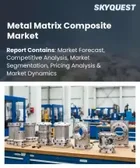
|
시장보고서
상품코드
2054106
금속 매트릭스 복합재료 시장 규모, 점유율, 성장 분석 : 매트릭스 재료별, 보강재별, 제조 공정별, 용도별, 최종 이용 산업별, 형태별, 지역별 - 업계 예측(2026-2033년)Metal Matrix Composite Market Size, Share, and Growth Analysis, By Matrix Material, By Reinforcement Material, By Production Process, By Application, By End User Industry, By Form, By Region - Industry Forecast 2026-2033 |
||||||

세계의 금속 매트릭스 복합재료(MMC) 시장 규모는 2024년에 8억 2,500만 달러로 평가되었으며, 2025년 8억 8,935만 달러에서 2033년까지 16억 2,190만 달러로 확대되어 예측 기간(2026-2033년) 동안 CAGR 7.8%로 성장할 것으로 전망됩니다.
금속 매트릭스 복합재료(MMC) 시장은 기존 금속을 크게 능가하는 우수한 기계적 특성으로 인해 성장세를 보이고 있습니다. 알루미늄, 마그네슘, 티타늄과 같은 금속 바인더와 세라믹 보강재를 결합한 이 소재들은 제조업체들이 항공우주 및 자동차 산업에 적합한 더 가볍고 내구성이 뛰어난 부품을 생산할 수 있게 해줍니다. 연비 규제가 강화되면서 OEM(주문자상표부착생산) 업체들이 열 관리 개선과 총중량 감소를 위한 혁신적인 솔루션을 모색하면서 MMC에 대한 수요가 증가하고 있습니다. 분말야금과 적층 가공(적층 가공)을 포함한 제조 기술의 발전으로 산업용 수준의 생산이 가능해지면서 경량 브레이크 로터, 방열판 등의 용도로의 응용이 가능해졌습니다. 이러한 진화하는 시장 환경은 생산 비용 절감과 전 세계 다양한 분야로의 적용 확대를 약속하는 광범위한 투자 기회를 제공하고 있습니다.
세계 금속 매트릭스 복합재료(MMC) 시장 촉진요인
세계 금속 매트릭스 복합재료(MMC) 시장은 항공우주, 자동차, 산업 장비 등의 산업에서 경량화 및 고강도 부품에 대한 절박한 요구에 의해 크게 영향을 받고 있습니다. 설계자와 제조업체는 운영상의 장점과 재료로서의 장점을 모두 갖춘 MMC에 점점 더 많은 관심을 기울이고 있습니다. 이러한 복합재료는 보다 효율적인 부품 생산, 수명 연장, 유지보수 요구사항 감소를 통해 엄격한 운영 표준을 준수할 수 있게 해줍니다. MMC에 대한 지지가 높아지는 배경에는 성능 측면에서의 기대치 충족, 기술 진보를 위한 투자 지원, 그리고 기존 금속으로 다양한 기능적 요구사항을 충족할 수 없는 분야에서의 MMC 적용이 촉진되고 있다는 점이 있습니다.
세계 금속 매트릭스 복합재료 시장의 억제요인
금속 매트릭스 복합재료의 제조는 복잡한 특성으로 인해 시장에서 광범위하게 보급하는 데 큰 도전이 따릅니다. 전문 장비, 엄격한 공정 관리, 고도로 숙련된 인력이 필요하기 때문에 전체 생산 배치에 걸쳐 보강재의 균일한 분포와 재료 특성의 일관성을 보장하는 것이 어렵습니다. 이러한 필수적인 운영 요건은 개발 기간을 연장하고 새로운 응용 분야로의 확장 프로세스를 복잡하게 만들 수 있으며, 그 결과 다양한 산업 분야의 기업들이 주력 제품에 금속 매트릭스 복합재를 채택하는 것을 주저하게 만드는 요인으로 작용하고 있습니다. 그 결과, 구매 행동은 보수적인 경향이 있으며, 종종 기존 재료를 선호하는 경향이 있어 신뢰성과 일관성이 매우 중요한 저수익 또는 대량 생산 시장에 금속 매트릭스 복합재료의 진입을 제한하는 장벽이 있습니다.
세계 금속 매트릭스 복합재료 시장 동향
세계 금속 매트릭스 복합재료 시장은 구조적 무결성 및 열적 성능에 영향을 미치지 않는 경량 부품에 대한 수요에 힘입어 괄목할 만한 성장을 보이고 있습니다. 항공우주, 자동차 등의 산업에서 금속 매트릭스 복합재료는 설계의 단순화, 가혹한 조건에서의 서비스 수명 향상, 첨단 연구 방법과의 일관성 등의 장점으로 인해 점점 더 많이 채택되고 있습니다. 이러한 추세는 지속가능성 및 라이프사이클 관리라는 종합적인 목표와 일치하며, 재료 과학자, 제조업체, 최종사용자 간의 협력 강화로 이어지고 있습니다. 양사는 협력하여 금속 매트릭스 복합재료의 용도별 장점을 입증하고 차세대 자동차 및 항공기의 혁신을 촉진하는 데 주력하고 있습니다.
자주 묻는 질문
목차
소개
조사 방법
주요 요약
시장 역학과 전망
주요 시장 인사이트
세계의 금속 매트릭스 복합재료 시장 규모 : 매트릭스 재료별
세계의 금속 매트릭스 복합재료 시장 규모 : 보강재별
세계의 금속 매트릭스 복합재료 시장 규모 : 생산 공정별
세계의 금속 매트릭스 복합재료 시장 규모 : 용도별
세계의 금속 매트릭스 복합재료 시장 규모 : 최종 이용 산업별
세계의 금속 매트릭스 복합재료 시장 규모 : 형태별
세계의 금속 매트릭스 복합재료 시장 규모 : 지역별
경쟁 정보
주요 기업 개요
결론과 제안
KSM 26.06.12Global Metal Matrix Composite Market size was valued at USD 825.0 Million in 2024 and is poised to grow from USD 889.35 Million in 2025 to USD 1621.9 Million by 2033, growing at a CAGR of 7.8% during the forecast period (2026-2033).
The market for metal matrix composites (MMCs) is gaining traction due to their exceptional mechanical properties, which significantly outperform traditional metals. Comprising a metal binder such as aluminum, magnesium, or titanium combined with ceramic reinforcements, these materials enable manufacturers to create lighter, more durable components suitable for industries like aerospace and automotive. The rise in stringent fuel economy regulations is driving demand for MMCs as Original Equipment Manufacturers (OEMs) seek innovative solutions to enhance thermal management and reduce overall weight. Advances in manufacturing techniques, including powder metallurgy and additive manufacturing, facilitate industrial-grade production, paving the way for applications like lightweight brake rotors and heat sinks. This evolving landscape presents vast opportunities for investment, promising reduced production costs and expanded usage in diverse sectors worldwide.
Top-down and bottom-up approaches were used to estimate and validate the size of the Global Metal Matrix Composite market and to estimate the size of various other dependent submarkets. The research methodology used to estimate the market size includes the following details: The key players in the market were identified through secondary research, and their market shares in the respective regions were determined through primary and secondary research. This entire procedure includes the study of the annual and financial reports of the top market players and extensive interviews for key insights from industry leaders such as CEOs, VPs, directors, and marketing executives. All percentage shares split, and breakdowns were determined using secondary sources and verified through Primary sources. All possible parameters that affect the markets covered in this research study have been accounted for, viewed in extensive detail, verified through primary research, and analyzed to get the final quantitative and qualitative data.
Global Metal Matrix Composite Market Segments Analysis
Global metal matrix composite market is segmented by matrix material, reinforcement material, production process, application, end user industry, form and region. Based on matrix material, the market is segmented into Aluminum Matrix Composites, Magnesium Matrix Composites, Titanium Matrix Composites, Copper Matrix Composites and Others. Based on reinforcement material, the market is segmented into Silicon Carbide, Alumina, Carbon Fiber, Boron Fiber and Others. Based on production process, the market is segmented into Powder Metallurgy, Liquid Metal Infiltration, Stir Casting, Squeeze Casting and Others. Based on application, the market is segmented into Automotive Components, Aerospace & Defense, Electronics & Thermal Management, Industrial Machinery, Energy & Power and Others. Based on end user industry, the market is segmented into Automotive, Aerospace & Defense, Electrical & Electronics, Industrial, Energy and Others. Based on form, the market is segmented into Sheets & Panels, Rods & Bars, Particulates and Others. Based on region, the market is segmented into North America, Europe, Asia Pacific, Latin America and Middle East & Africa.
Driver of the Global Metal Matrix Composite Market
The Global Metal Matrix Composite (MMC) market is significantly influenced by the pressing need for lightweight yet high-strength components within industries such as aerospace, automotive, and industrial equipment. Designers and manufacturers are increasingly turning to MMCs due to their ability to deliver both operational benefits and material advantages. These composites facilitate the production of more efficient components, extend working life, and reduce maintenance requirements, thereby enabling adherence to stringent operational standards. The growing support for MMCs stems from their alignment with performance expectations, investment backing for further advancements, and the encouragement of their application in areas where traditional metals fall short in meeting diverse functional requirements.
Restraints in the Global Metal Matrix Composite Market
The intricate nature of manufacturing metal matrix composites poses significant challenges for widespread market adoption. The necessity for specialized equipment, stringent process controls, and a highly skilled workforce complicates the achievement of uniform distribution of reinforcements and consistent material properties across production batches. These essential operational requirements can elongate development timelines and complicate the scaling process for new applications, leading to hesitation among companies in various industries to consider metal matrix composites for mainstream products. As a result, purchasing behaviors tend to be conservative, often favoring established materials and creating barriers that limit the entry of metal matrix composites into lower-margin or higher-volume markets where reliability and consistency are crucial.
Market Trends of the Global Metal Matrix Composite Market
The Global Metal Matrix Composite market is observing significant growth, fueled by the demand for lightweight components that do not compromise on structural integrity or thermal performance. Industries like aerospace and automotive are increasingly adopting metal matrix composites for their ability to consolidate designs, enhance service life under extreme conditions, and align with advanced manufacturing methodologies. This trend aligns with the overarching goals of sustainability and lifecycle management, leading to greater collaboration among material scientists, manufacturers, and end-users. Together, they are focused on validating the application-specific advantages of metal matrix composites, thereby driving innovation in next-generation vehicles and aircraft.
Table of Contents
Introduction
- Objectives of the Study
- Market Definition & Scope
Research Methodology
- Research Process
- Secondary & Primary Data Methods
- Market Size Estimation Methods
Executive Summary
- Global Market Outlook
- Key Market Highlights
- Segmental Overview
- Competition Overview
Market Dynamics & Outlook
- Macro-Economic Indicators
- Drivers & Opportunities
- Restraints & Challenges
- Supply Side Trends
- Demand Side Trends
- Porters Analysis & Impact
- Competitive Rivalry
- Threat of Substitute
- Bargaining Power of Buyers
- Threat of New Entrants
- Bargaining Power of Suppliers
Key Market Insights
- Key Success Factors
- Market Impacting Factors
- Top Investment Pockets
- Ecosystem Mapping
- Market Attractiveness Index 2025
- PESTEL Analysis
- Regulatory Landscape
- Value Chain Analysis
- Case Studies
- Raw Material Analysis
Global Metal Matrix Composite Market Size by Matrix Material & CAGR (2026-2033)
- Market Overview
- Aluminum Matrix Composites
- Magnesium Matrix Composites
- Titanium Matrix Composites
- Copper Matrix Composites
- Others
Global Metal Matrix Composite Market Size by Reinforcement Material & CAGR (2026-2033)
- Market Overview
- Silicon Carbide
- Alumina
- Carbon Fiber
- Boron Fiber
- Others
Global Metal Matrix Composite Market Size by Production Process & CAGR (2026-2033)
- Market Overview
- Powder Metallurgy
- Liquid Metal Infiltration
- Stir Casting
- Squeeze Casting
- Others
Global Metal Matrix Composite Market Size by Application & CAGR (2026-2033)
- Market Overview
- Automotive Components
- Aerospace & Defense
- Electronics & Thermal Management
- Industrial Machinery
- Energy & Power
- Others
Global Metal Matrix Composite Market Size by End User Industry & CAGR (2026-2033)
- Market Overview
- Automotive
- Aerospace & Defense
- Electrical & Electronics
- Industrial
- Energy
- Others
Global Metal Matrix Composite Market Size by Form & CAGR (2026-2033)
- Market Overview
- Sheets & Panels
- Rods & Bars
- Particulates
- Others
Global Metal Matrix Composite Market Size & CAGR (2026-2033)
- North America (Matrix Material, Reinforcement Material, Production Process, Application, End User Industry, Form)
- US
- Canada
- Europe (Matrix Material, Reinforcement Material, Production Process, Application, End User Industry, Form)
- Germany
- Spain
- France
- UK
- Italy
- Rest of Europe
- Asia Pacific (Matrix Material, Reinforcement Material, Production Process, Application, End User Industry, Form)
- China
- India
- Japan
- South Korea
- Rest of Asia-Pacific
- Latin America (Matrix Material, Reinforcement Material, Production Process, Application, End User Industry, Form)
- Mexico
- Brazil
- Rest of Latin America
- Middle East & Africa (Matrix Material, Reinforcement Material, Production Process, Application, End User Industry, Form)
- GCC Countries
- South Africa
- Rest of Middle East & Africa
Competitive Intelligence
- Top 5 Player Comparison
- Market Positioning of Key Players, 2025
- Strategies Adopted by Key Market Players
- Recent Developments in the Market
- Company Market Share Analysis, 2025
- Company Profiles of All Key Players
- Company Details
- Product Portfolio Analysis
- Company's Segmental Share Analysis
- Revenue Y-O-Y Comparison (2023-2025)
Key Company Profiles
- 3M
- Company Overview
- Business Segment Overview
- Financial Updates
- Key Developments
- Materion Corporation
- Company Overview
- Business Segment Overview
- Financial Updates
- Key Developments
- CPS Technologies
- Company Overview
- Business Segment Overview
- Financial Updates
- Key Developments
- Plansee Group
- Company Overview
- Business Segment Overview
- Financial Updates
- Key Developments
- GKN Aerospace
- Company Overview
- Business Segment Overview
- Financial Updates
- Key Developments
- DWA Aluminum Composites
- Company Overview
- Business Segment Overview
- Financial Updates
- Key Developments
- Denka Company
- Company Overview
- Business Segment Overview
- Financial Updates
- Key Developments
- Hitachi Metals
- Company Overview
- Business Segment Overview
- Financial Updates
- Key Developments
- TISICS
- Company Overview
- Business Segment Overview
- Financial Updates
- Key Developments
- SGL Carbon
- Company Overview
- Business Segment Overview
- Financial Updates
- Key Developments
- Sandvik
- Company Overview
- Business Segment Overview
- Financial Updates
- Key Developments
- AMETEK Specialty Metal Products
- Company Overview
- Business Segment Overview
- Financial Updates
- Key Developments
- Mitsubishi Materials
- Company Overview
- Business Segment Overview
- Financial Updates
- Key Developments
- FMW Composite Systems
- Company Overview
- Business Segment Overview
- Financial Updates
- Key Developments
- Alvant
- Company Overview
- Business Segment Overview
- Financial Updates
- Key Developments
- Ceratizit
- Company Overview
- Business Segment Overview
- Financial Updates
- Key Developments
- Performance Materials Corporation
- Company Overview
- Business Segment Overview
- Financial Updates
- Key Developments
- Hoganas
- Company Overview
- Business Segment Overview
- Financial Updates
- Key Developments
- ATI
- Company Overview
- Business Segment Overview
- Financial Updates
- Key Developments
- Kyocera Corporation
- Company Overview
- Business Segment Overview
- Financial Updates
- Key Developments


