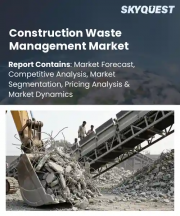
|
시장보고서
상품코드
2065372
건설 폐기물 관리 시장 규모, 점유율, 성장 분석 : 폐기물 유형별, 서비스 구성요소별, 발생원별, 지역별 - 업계 예측(2026-2033년)Construction Waste Management Market Size, Share, and Growth Analysis, By Material Stream (Concrete, Sand & Soil), By Service Component, By Origin Source, By Region - Industry Forecast 2026-2033 |
||||||

세계의 건설 폐기물 관리 시장 규모는 2024년에 2,395억 달러로 평가되었으며, 2025년 2,521억 9,000만 달러에서 2033년까지 3,812억 1,000만 달러로 확대되어 예측 기간(2026-2033년) 동안 CAGR 5.3%로 성장할 것으로 전망됩니다.
전 세계 건설 폐기물 관리 현황은 크게 변화하여, 단순한 규제 준수 문제에서 벗어나 다양한 이해관계자들에게 있어 핵심적인 우선 과제로 자리 잡고 있습니다. 건설 잔토의 수거, 선별, 재활용에 중점을 둔 이 업계는 현재 매립 처리에 대한 의존도를 낮추고, 자재 비용을 절감하며, 환경에 미치는 영향을 최소화하는 데 있어 매우 중요한 역할을 하고 있습니다. 자재 가격의 급등을 배경으로, 재활용 기술의 발전도 한몫하면서 건설사들은 현장에서의 분리수거, 조립식 건축, 순환형 조달과 같은 방안을 적극적으로 도입하고 있습니다. 이러한 노력은 지속가능성을 위한 노력을 강화할 뿐만 아니라, 기업의 환경 친화적 태도를 부각시키는 데에도 기여하고 있습니다. 이동식 분리수거 시설과 디지털 추적 시스템의 도입으로, 특히 영국과 아시아 등지에서 시장 투자와 혁신이 활발해지고 있으며, 이는 보다 지속가능한 건설의 미래를 이끌고 있습니다.
세계 건설 폐기물 관리 시장의 성장요인
전 세계 건설 폐기물 관리 시장은 폐기물 감축, 재활용, 처분과 같은 환경 문제에 초점을 맞춘 규제 체계의 영향을 크게 받고 있습니다. 이러한 규제는 도급업체, 개발업체, 폐기물 관리 전문가에게 명확한 규정 준수 요건을 제시함으로써, 체계적인 폐기물 관리 방식의 광범위한 도입을 촉진하고 있습니다. 그 결과, 허가 조건 및 보고 기준을 충족하기 위해 서비스 계약, 재활용 기술에 대한 투자, 그리고 선별 공정 강화에 대한 필요성이 높아지고 있습니다. 이해관계자들이 제재를 피하고 평판을 지키기 위해 규정 준수를 최우선으로 삼는 가운데, 종합적인 폐기물 관리 솔루션, 컨설팅 서비스, 그리고 지속가능한 전략을 효과적으로 실행하기 위한 민관 협력에 대한 수요가 높아지고 있습니다.
세계 건설 폐기물 관리 시장의 제약요인
전 세계 건설 폐기물 관리 시장은 재활용 시설, 첨단 분리 기술, 그리고 수거 물류와 관련된 막대한 초기 투자가 필요하기 때문에 상당한 과제에 직면해 있습니다. 이러한 재정적 부담은 폐기물 관리 솔루션 강화를 목표로 하는 서비스 제공업체, 지자체 및 계약업체에게 걸림돌이 되고 있습니다. 중소기업은 이러한 고액의 초기 비용 때문에 시장 진출이나 업무 개선에 어려움을 겪는 경우가 많으며, 또한 인프라 프로젝트에 대한 공공 자금 투입도 제한받고 있습니다. 그 결과, 이러한 자본 집약적인 환경은 종합적인 처리 네트워크 구축을 저해하고, 혁신적인 기술의 도입을 지연시키며, 궁극적으로는 각 지역에서 효율적인 대규모 건설 폐기물 관리 시스템을 활용할 수 있는 가능성을 제한하게 됩니다.
세계 건설 폐기물 관리 시장의 동향
전 세계 건설 폐기물 관리 시장에서는 순환형 자재의 통합을 향한 큰 변화가 나타나고 있으며, 재생 및 재활용된 건설자재가 주류 관행에 점점 더 많이 도입되고 있습니다. 이러한 추세는 해체를 염두에 둔 설계, 자재 패스포트, 공급업체 주도의 회수 모델과 같은 혁신적인 접근 방식을 통해 추진되고 있으며, 이는 개발사, 시공사, 공급업체 간의 협력을 촉진하고 있습니다. 재사용 가능한 구성 부품과 표준화된 접합부에 중점을 둠으로써, 이해관계자들은 자재 회수율 향상을 목표로 하여 내구성이 뛰어난 제품 생산으로 이어지도록 노력하고 있습니다. 그 결과, 이 시장의 발전은 2차 자재의 안정적인 공급을 확보할 뿐만 아니라, 처리된 폐기물의 가치를 높이고 건설 실무에서 지속가능성을 촉진하는 데에도 기여하고 있습니다.
자주 묻는 질문
목차
소개
조사 방법
주요 요약
시장 역학과 전망
주요 시장 인사이트
세계의 건설 폐기물 관리 시장 규모 : 폐기물 유형별
세계의 건설 폐기물 관리 시장 규모 : 서비스 구성요소별
세계의 건설 폐기물 관리 시장 규모 : 발생원별
세계의 건설 폐기물 관리 시장 규모 : 지역별
경쟁 정보
주요 기업 개요
결론과 제안
KSM 26.06.25Global Construction Waste Management Market size was valued at USD 239.5 Billion in 2024 and is poised to grow from USD 252.19 Billion in 2025 to USD 381.21 Billion by 2033, growing at a CAGR of 5.3% during the forecast period (2026-2033).
The landscape of global construction waste management has evolved significantly, shifting from a mere regulatory compliance issue to a core priority for various stakeholders. Focused on the collection, sorting, and recycling of construction debris, this industry now plays a vital role in reducing landfill reliance, cutting material costs, and minimizing environmental impact. Motivated by rising material prices and bolstered by advancements in recycling technologies, construction firms are embracing practices such as on-site sorting, prefabrication, and circular procurement. These initiatives not only enhance sustainability efforts but also strengthen companies' green credentials. With the integration of mobile sorting facilities and digital tracking systems, the market is witnessing increased investment and innovation, particularly in regions like the UK and Asia, driving a more sustainable construction future.
Top-down and bottom-up approaches were used to estimate and validate the size of the Global Construction Waste Management market and to estimate the size of various other dependent submarkets. The research methodology used to estimate the market size includes the following details: The key players in the market were identified through secondary research, and their market shares in the respective regions were determined through primary and secondary research. This entire procedure includes the study of the annual and financial reports of the top market players and extensive interviews for key insights from industry leaders such as CEOs, VPs, directors, and marketing executives. All percentage shares split, and breakdowns were determined using secondary sources and verified through Primary sources. All possible parameters that affect the markets covered in this research study have been accounted for, viewed in extensive detail, verified through primary research, and analyzed to get the final quantitative and qualitative data.
Global Construction Waste Management Market Segments Analysis
Global construction waste management market is segmented by material stream, service component, origin source and region. Based on material stream, the market is segmented into Concrete, Sand & Soil, Bricks & Masonry, Wood & Timber Products, Structural Metals, Drywall & Plasterboard and Others. Based on service component, the market is segmented into On-Site Segregation & Collection, Logistics & Hauling Services and Processing & Recycling Facilities. Based on origin source, the market is segmented into New Construction Projects and Renovation & Remodeling Projects. Based on region, the market is segmented into North America, Europe, Asia Pacific, Latin America and Middle East & Africa.
Driver of the Global Construction Waste Management Market
The Global Construction Waste Management market is significantly influenced by regulatory frameworks focused on environmental concerns such as waste reduction, recycling, and disposal. These regulations establish clear compliance requirements for contractors, developers, and waste management professionals, prompting widespread adoption of structured waste management practices. As a result, there is an increasing need for service contracts, investment in recycling technologies, and enhanced sorting processes to meet permit conditions and reporting standards. With stakeholders prioritizing compliance to avoid penalties and protect their reputations, there is a growing demand for comprehensive waste management solutions, consultancy services, and collaborative efforts between public and private sectors to implement sustainable strategies effectively.
Restraints in the Global Construction Waste Management Market
The Global Construction Waste Management market faces notable challenges due to substantial initial capital requirements associated with recycling facilities, advanced sorting technologies, and collection logistics. This financial burden acts as a barrier for service providers, municipalities, and contractors seeking to enhance their waste management solutions. Smaller firms often struggle to enter the market or improve their operations due to these high upfront costs, which also restrict public funding for infrastructure projects. Consequently, this capital-intensive environment hampers the establishment of comprehensive processing networks and slows the adoption of innovative technologies, ultimately limiting the availability of efficient large-scale construction waste management systems across various regions.
Market Trends of the Global Construction Waste Management Market
The Global Construction Waste Management market is witnessing a significant shift towards circular materials integration, where reclaimed and recycled construction materials are increasingly incorporated into mainstream practices. This trend is driven by innovative approaches such as design for deconstruction, material passports, and supplier take-back models that facilitate collaboration among developers, contractors, and suppliers. By focusing on reusable components and standardized connections, stakeholders aim to enhance the recoverability of materials, leading to the production of durable products. Consequently, this market evolution not only establishes a predictable supply of secondary materials but also elevates the value of processed waste, promoting sustainability in construction practices.
Table of Contents
Introduction
- Objectives of the Study
- Market Definition & Scope
Research Methodology
- Research Process
- Secondary & Primary Data Methods
- Market Size Estimation Methods
Executive Summary
- Global Market Outlook
- Key Market Highlights
- Segmental Overview
- Competition Overview
Market Dynamics & Outlook
- Macro-Economic Indicators
- Drivers & Opportunities
- Restraints & Challenges
- Supply Side Trends
- Demand Side Trends
- Porters Analysis & Impact
- Competitive Rivalry
- Threat of Substitute
- Bargaining Power of Buyers
- Threat of New Entrants
- Bargaining Power of Suppliers
Key Market Insights
- Key Success Factors
- Market Impacting Factors
- Top Investment Pockets
- Ecosystem Mapping
- Market Attractiveness Index 2025
- PESTEL Analysis
- Regulatory Landscape
Global Construction Waste Management Market Size by Material Stream & CAGR (2026-2033)
- Market Overview
- Concrete
- Sand & Soil
- Bricks & Masonry
- Wood & Timber Products
- Structural Metals
- Drywall & Plasterboard
- Others
Global Construction Waste Management Market Size by Service Component & CAGR (2026-2033)
- Market Overview
- On-Site Segregation & Collection
- Logistics & Hauling Services
- Processing & Recycling Facilities
Global Construction Waste Management Market Size by Origin Source & CAGR (2026-2033)
- Market Overview
- New Construction Projects
- Renovation & Remodeling Projects
Global Construction Waste Management Market Size & CAGR (2026-2033)
- North America (Material Stream, Service Component, Origin Source)
- US
- Canada
- Europe (Material Stream, Service Component, Origin Source)
- Germany
- Spain
- France
- UK
- Italy
- Rest of Europe
- Asia Pacific (Material Stream, Service Component, Origin Source)
- China
- India
- Japan
- South Korea
- Rest of Asia-Pacific
- Latin America (Material Stream, Service Component, Origin Source)
- Mexico
- Brazil
- Rest of Latin America
- Middle East & Africa (Material Stream, Service Component, Origin Source)
- GCC Countries
- South Africa
- Rest of Middle East & Africa
Competitive Intelligence
- Top 5 Player Comparison
- Market Positioning of Key Players, 2025
- Strategies Adopted by Key Market Players
- Recent Developments in the Market
- Company Market Share Analysis, 2025
- Company Profiles of All Key Players
- Company Details
- Product Portfolio Analysis
- Company's Segmental Share Analysis
- Revenue Y-O-Y Comparison (2023-2025)
Key Company Profiles
- Waste Management
- Company Overview
- Business Segment Overview
- Financial Updates
- Key Developments
- Republic Services
- Company Overview
- Business Segment Overview
- Financial Updates
- Key Developments
- Clean Harbors
- Company Overview
- Business Segment Overview
- Financial Updates
- Key Developments
- Waste Connections
- Company Overview
- Business Segment Overview
- Financial Updates
- Key Developments
- Suez SA
- Company Overview
- Business Segment Overview
- Financial Updates
- Key Developments
- Veolia Environnement
- Company Overview
- Business Segment Overview
- Financial Updates
- Key Developments
- Remondis SE
- Company Overview
- Business Segment Overview
- Financial Updates
- Key Developments
- Alba Group
- Company Overview
- Business Segment Overview
- Financial Updates
- Key Developments
- Biffa
- Company Overview
- Business Segment Overview
- Financial Updates
- Key Developments
- FCC Environment
- Company Overview
- Business Segment Overview
- Financial Updates
- Key Developments
- Renewi
- Company Overview
- Business Segment Overview
- Financial Updates
- Key Developments
- Covanta Holding Corporation
- Company Overview
- Business Segment Overview
- Financial Updates
- Key Developments
- Stericycle
- Company Overview
- Business Segment Overview
- Financial Updates
- Key Developments
- Casella Waste Systems
- Company Overview
- Business Segment Overview
- Financial Updates
- Key Developments
- Advanced Disposal Services
- Company Overview
- Business Segment Overview
- Financial Updates
- Key Developments
- Rumpke Waste & Recycling
- Company Overview
- Business Segment Overview
- Financial Updates
- Key Developments
- GFL Environmental
- Company Overview
- Business Segment Overview
- Financial Updates
- Key Developments
- Recology
- Company Overview
- Business Segment Overview
- Financial Updates
- Key Developments
- Texas Disposal Systems
- Company Overview
- Business Segment Overview
- Financial Updates
- Key Developments
- Harrison Industries
- Company Overview
- Business Segment Overview
- Financial Updates
- Key Developments