|
시장보고서
상품코드
2068930
자동차용 밸브 시장 규모, 점유율 및 성장 분석 : 밸브 기능별, 재질별, 차량 구동 방식별, 차량 클래스별, 공급 판매채널별, 지역별 - 업계 예측(2026-2033년)Automotive Valves Market Size, Share, and Growth Analysis, By Valve Functional Type, By Material Composition, By Vehicle Propulsion Architecture, By Vehicle Class Segment, By Supply Sales Channel, By Region - Industry Forecast 2026-2033 |
||||||

세계의 자동차용 밸브 시장 규모는 2024년에 259억 8,000만 달러로 평가되었고, 2025년 265억 8,000만 달러에서 2033년까지 318억 8,000만 달러로 성장하여 예측 기간(2026-2033년)에 CAGR 2.3%를 기록할 전망입니다.
흡기 밸브, 배기 밸브, 연료 밸브, 압력 조절 밸브 등을 아우르는 전 세계 자동차용 밸브 시장은 내연기관 및 전기 파워트레인 모두에서 유체의 흐름을 최적화하는 데 있어 매우 중요한 역할을 수행하고 있으며, 엄격한 규제 하에서 엔진의 효율, 배기가스 규제 준수 및 차량 성능에 직접적인 영향을 미치고 있습니다. 최근 동향으로는 전동화 파워트레인으로의 대폭적인 전환이 나타나고 있으며, 효과적인 열 관리 및 에너지 회생 시스템을 구현하기 위해서는 고도의 밸브 구동 기술이 요구되고 있습니다. 이에 따라 공급업체와의 관계에 새로운 변화가 일어나고 있으며, 혁신적인 설계가 요구되고 있습니다. 동시에, 자율주행의 등장으로 인해 첨단 유체 제어 시스템에 대한 수요가 증가하고 있으며, 작동 불량을 방지할 수 있는 고정밀 밸브의 필요성이 강조되고 있습니다. AI를 활용한 자동화는 설계 효율 향상, 실시간 품질 검사 확보, 예측 유지보수 촉진을 통해 이 분야에 혁명을 일으키고 있으며, 궁극적으로는 차량의 신뢰성을 높이고 밸브 제조업체를 위한 활기찬 시장을 조성하고 있습니다.
세계 자동차용 밸브 시장의 성장 요인
자동차 업계에서는 규제 요건과 소비자 수요를 충족하기 위해 연비 개선에 점점 더 주력하고 있으며, 이로 인해 제조업체들은 공기 유량과 연소 효율을 향상시키는 혁신적인 밸브 기술을 도입하도록 장려받고 있습니다. 이러한 첨단 밸브 덕분에 엔진은 기생 손실을 줄이면서 작동할 수 있게 되어, 더 가볍고 고효율적인 파워트레인의 개발이 촉진됩니다. 이러한 기술적 우위는 보다 친환경적인 차량을 향한 종합적인 움직임에 기여하고 있으며, 각 OEM 업체들이 고성능 밸브 솔루션을 선택하도록 하는 동기가 되고 있습니다. 그 결과, 이러한 추세는 세계 시장에서 자동차용 밸브에 대한 수요 증가를 뒷받침하고 있으며, 업계의 발전 과정에서 이러한 부품이 얼마나 중요한지를 여실히 보여주고 있습니다.
세계 자동차용 밸브 시장의 제약 요인
세계 자동차용 밸브 시장은 자동차 제조업체들에게 복잡한 후처리 시스템의 도입을 의무화하는 엄격한 배기가스 규제로 인해 현저한 과제에 직면해 있습니다. 이러한 시스템에는 대개 추가 밸브 어셈블리를 장착해야 하는데, 이는 설계를 복잡하게 할 뿐만 아니라 비용도 증가시킵니다. 각 제조업체들은 이러한 엄격한 성능 기준을 충족하는 신뢰성 높은 솔루션을 제공해야 하는 압박을 받고 있어, 개발 기간이 길어지는 경우가 적지 않습니다. 그 결과, 제품 출시가 지연되거나 설비 투자가 증가할 가능성이 있으며, 기업이 혁신적인 밸브 개발에서 규제 대응을 위한 노력으로 자원을 전환함에 따라 시장 성장 가능성이 제한될 우려가 있습니다. 게다가 인증 갱신이 지속적으로 필요함에 따라 공급망이 복잡해지고, 새로운 밸브 기술의 신속한 도입이 저해되고 있습니다.
세계 자동차용 밸브 시장 동향
세계 자동차용 밸브 시장에서는 차량 효율 향상과 배기가스 감축이라는 수요에 힘입어 첨단 소재 채택을 향한 뚜렷한 추세가 나타나고 있습니다. 각 제조업체들은 내구성을 확보하면서 성능을 최적화하기 위해 나노 코팅 강판나 알루미늄·마그네슘 합금 등, 경량이며 고강도인 복합재료와 합금을 점점 더 많이 활용하고 있습니다. 이러한 전환은 보다 광범위한 경량화 전략을 뒷받침할 뿐만 아니라, 전반적인 연비 효율을 향상시키고, 비용 효율이 높은 주행을 원하는 소비자 수요에 부응하는 것입니다. 원자재 공급업체와의 연구개발 제휴가 확대됨에 따라, 공급망은 혁신적인 가공 기술과 엄격한 품질 보증 절차를 도입하는 방향으로 진화하고 있으며, 이는 업계 표준 준수를 보장하는 동시에 경쟁 우위 확보를 촉진하고 있습니다.
자주 묻는 질문
목차
서론
조사 방법
주요 요약
시장 역학과 전망
주요 시장 인사이트
세계의 자동차용 밸브 시장 규모 : 밸브 기능 유형별
세계의 자동차용 밸브 시장 규모 : 재질 구성별
세계의 자동차용 밸브 시장 규모 : 차량 구동 방식별
세계의 자동차용 밸브 시장 규모 : 차종별 부문별
세계의 자동차용 밸브 시장 규모 : 공급 판매채널별
세계의 자동차용 밸브 시장 규모 : 지역별
경쟁 정보
주요 기업 개요
결론과 제안
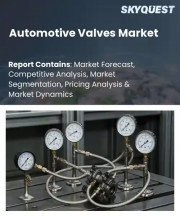
LSH 26.07.01Global Automotive Valves Market size was valued at USD 25.98 Billion in 2024 and is poised to grow from USD 26.58 Billion in 2025 to USD 31.88 Billion by 2033, growing at a CAGR of 2.3% during the forecast period (2026-2033).
The global automotive valves market, which encompasses intake, exhaust, fuel, and pressure-regulating valves, plays a crucial role in optimizing fluid flow for both internal-combustion and electric powertrains, directly influencing engine efficiency, emissions compliance, and vehicle performance amidst stringent regulations. Recent trends indicate a significant pivot towards electrified powertrains, necessitating advanced valve actuation for effective thermal management and energy recovery systems, prompting new dynamics in supplier relationships and innovative designs. Concurrently, the advent of autonomous driving is increasing demand for sophisticated fluid-control systems, emphasizing the need for precision valves that prevent operational failures. AI-driven automation is revolutionizing the sector by enhancing design efficiencies, ensuring real-time quality checks, and facilitating predictive maintenance, ultimately enhancing vehicle reliability and fostering a vibrant market for valve manufacturers.
Top-down and bottom-up approaches were used to estimate and validate the size of the Global Automotive Valves market and to estimate the size of various other dependent submarkets. The research methodology used to estimate the market size includes the following details: The key players in the market were identified through secondary research, and their market shares in the respective regions were determined through primary and secondary research. This entire procedure includes the study of the annual and financial reports of the top market players and extensive interviews for key insights from industry leaders such as CEOs, VPs, directors, and marketing executives. All percentage shares split, and breakdowns were determined using secondary sources and verified through Primary sources. All possible parameters that affect the markets covered in this research study have been accounted for, viewed in extensive detail, verified through primary research, and analyzed to get the final quantitative and qualitative data.
Global Automotive Valves Market Segments Analysis
Global automotive valves market is segmented by valve functional type, material composition, vehicle propulsion architecture, vehicle class segment, supply sales channel and region. Based on valve functional type, the market is segmented into Engine Valves, Solenoid Valves, Expansion Valves, Exhaust Gas Recirculation Valves, Pressure Control Valves and Others. Based on material composition, the market is segmented into Stainless Steel Valves, Titanium Alloys and Specialty Carbon Steels. Based on vehicle propulsion architecture, the market is segmented into Internal Combustion Engine Vehicles, Hybrid Electric Vehicles and Battery Electric Vehicles. Based on vehicle class segment, the market is segmented into Passenger Cars, Light Commercial Vehicles and Heavy Commercial Vehicles. Based on supply sales channel, the market is segmented into Original Equipment Manufacturer Fitted and Aftermarket Component Replacement. Based on region, the market is segmented into North America, Europe, Asia Pacific, Latin America and Middle East & Africa.
Driver of the Global Automotive Valves Market
The automotive sector is increasingly focusing on minimizing fuel consumption to satisfy regulatory requirements and consumer demands, which drives manufacturers to adopt innovative valve technologies that enhance airflow and combustion efficiency. These advanced valves allow engines to function with diminished parasitic losses, facilitating the creation of lighter and more efficient powertrains. This technological edge contributes to the overarching movement towards more environmentally friendly vehicles, motivating original equipment manufacturers to choose high-performance valve solutions. Consequently, this trend is fostering a rising demand for automotive valves in the global market, highlighting the importance of these components in the evolution of the industry.
Restraints in the Global Automotive Valves Market
The Global Automotive Valves market faces notable challenges due to stringent emissions regulations that require automotive manufacturers to implement complex after-treatment systems. These systems frequently necessitate the inclusion of additional valve assemblies, which not only complicate the design but also elevate costs. Manufacturers are under pressure to deliver reliable solutions that adhere to these demanding performance standards, often extending development timelines. As a result, product launches may be delayed and capital expenditures increased, limiting market growth potential as companies divert resources from innovative valve development to compliance-related efforts. Furthermore, the continuous need for certification updates complicates supply chains and hinders the swift adoption of new valve technologies.
Market Trends of the Global Automotive Valves Market
The Global Automotive Valves market is experiencing a notable trend toward the adoption of advanced materials, driven by the need for improved vehicle efficiency and lower emissions. Manufacturers are increasingly utilizing lightweight, high-strength composites and alloys, such as nano-coated steel and aluminum-magnesium blends, to optimize performance while ensuring durability. This transition not only supports broader weight reduction strategies but also enhances overall fuel economy, catering to consumer demand for more cost-effective operation. As research and development collaborations with material suppliers grow, the supply chain is evolving to incorporate innovative processing techniques and stringent quality assurance protocols, ensuring adherence to industry standards and fostering competitive advantage.
Table of Contents
Introduction
- Objectives of the Study
- Market Definition & Scope
Research Methodology
- Research Process
- Secondary & Primary Data Methods
- Market Size Estimation Methods
Executive Summary
- Global Market Outlook
- Key Market Highlights
- Segmental Overview
- Competition Overview
Market Dynamics & Outlook
- Macro-Economic Indicators
- Drivers & Opportunities
- Restraints & Challenges
- Supply Side Trends
- Demand Side Trends
- Porters Analysis & Impact
- Competitive Rivalry
- Threat of Substitute
- Bargaining Power of Buyers
- Threat of New Entrants
- Bargaining Power of Suppliers
Key Market Insights
- Key Success Factors
- Market Impacting Factors
- Top Investment Pockets
- Ecosystem Mapping
- Market Attractiveness Index 2025
- PESTEL Analysis
- Regulatory Landscape
Global Automotive Valves Market Size by Valve Functional Type & CAGR (2026-2033)
- Market Overview
- Engine Valves
- Intake Valves
- Exhaust Valves
- Solenoid Valves
- Expansion Valves
- Exhaust Gas Recirculation Valves
- Pressure Control Valves
- Others
Global Automotive Valves Market Size by Material Composition & CAGR (2026-2033)
- Market Overview
- Stainless Steel Valves
- Titanium Alloys
- Specialty Carbon Steels
Global Automotive Valves Market Size by Vehicle Propulsion Architecture & CAGR (2026-2033)
- Market Overview
- Internal Combustion Engine Vehicles
- Hybrid Electric Vehicles
- Battery Electric Vehicles
Global Automotive Valves Market Size by Vehicle Class Segment & CAGR (2026-2033)
- Market Overview
- Passenger Cars
- Light Commercial Vehicles
- Heavy Commercial Vehicles
Global Automotive Valves Market Size by Supply Sales Channel & CAGR (2026-2033)
- Market Overview
- Original Equipment Manufacturer Fitted
- Aftermarket Component Replacement
Global Automotive Valves Market Size & CAGR (2026-2033)
- North America (Valve Functional Type, Material Composition, Vehicle Propulsion Architecture, Vehicle Class Segment, Supply Sales Channel)
- US
- Canada
- Europe (Valve Functional Type, Material Composition, Vehicle Propulsion Architecture, Vehicle Class Segment, Supply Sales Channel)
- Germany
- Spain
- France
- UK
- Italy
- Rest of Europe
- Asia Pacific (Valve Functional Type, Material Composition, Vehicle Propulsion Architecture, Vehicle Class Segment, Supply Sales Channel)
- China
- India
- Japan
- South Korea
- Rest of Asia-Pacific
- Latin America (Valve Functional Type, Material Composition, Vehicle Propulsion Architecture, Vehicle Class Segment, Supply Sales Channel)
- Mexico
- Brazil
- Rest of Latin America
- Middle East & Africa (Valve Functional Type, Material Composition, Vehicle Propulsion Architecture, Vehicle Class Segment, Supply Sales Channel)
- GCC Countries
- South Africa
- Rest of Middle East & Africa
Competitive Intelligence
- Top 5 Player Comparison
- Market Positioning of Key Players, 2025
- Strategies Adopted by Key Market Players
- Recent Developments in the Market
- Company Market Share Analysis, 2025
- Company Profiles of All Key Players
- Company Details
- Product Portfolio Analysis
- Company's Segmental Share Analysis
- Revenue Y-O-Y Comparison (2023-2025)
Key Company Profiles
- Robert Bosch GmbH
- Company Overview
- Business Segment Overview
- Financial Updates
- Key Developments
- Continental AG
- Company Overview
- Business Segment Overview
- Financial Updates
- Key Developments
- BorgWarner Inc.
- Company Overview
- Business Segment Overview
- Financial Updates
- Key Developments
- Denso Corporation
- Company Overview
- Business Segment Overview
- Financial Updates
- Key Developments
- Aisin Corporation
- Company Overview
- Business Segment Overview
- Financial Updates
- Key Developments
- Eaton Corporation PLC
- Company Overview
- Business Segment Overview
- Financial Updates
- Key Developments
- MAHLE GmbH
- Company Overview
- Business Segment Overview
- Financial Updates
- Key Developments
- Valeo SE
- Company Overview
- Business Segment Overview
- Financial Updates
- Key Developments
- Hitachi Astemo Ltd.
- Company Overview
- Business Segment Overview
- Financial Updates
- Key Developments
- ZF Friedrichshafen AG
- Company Overview
- Business Segment Overview
- Financial Updates
- Key Developments
- Schrader International Inc.
- Company Overview
- Business Segment Overview
- Financial Updates
- Key Developments
- Federal Mogul Corporation
- Company Overview
- Business Segment Overview
- Financial Updates
- Key Developments
- Teneco Inc.
- Company Overview
- Business Segment Overview
- Financial Updates
- Key Developments
- Rheinmetall AG
- Company Overview
- Business Segment Overview
- Financial Updates
- Key Developments
- Kirchhoff Automotive GmbH
- Company Overview
- Business Segment Overview
- Financial Updates
- Key Developments
- Fawer Automotive Parts Co. Ltd.
- Company Overview
- Business Segment Overview
- Financial Updates
- Key Developments
- Sanden Corporation
- Company Overview
- Business Segment Overview
- Financial Updates
- Key Developments
- Anhui Zhongding Holding Group Co. Ltd.
- Company Overview
- Business Segment Overview
- Financial Updates
- Key Developments
- Nippon Thermostat Co. Ltd.
- Company Overview
- Business Segment Overview
- Financial Updates
- Key Developments
- Fujikoki Corporation
- Company Overview
- Business Segment Overview
- Financial Updates
- Key Developments