|
시장보고서
상품코드
2078480
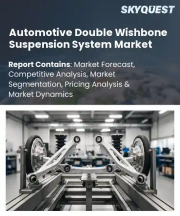
자동차용 더블 위시본 서스펜션 시스템 시장 규모, 점유율 및 성장 분석 : 구성부품별, 차종별, 판매채널별, 소재별, 유통 형태별, 지역별 - 업계 예측(2026-2033년)Automotive Double Wishbone Suspension System Market Size, Share, and Growth Analysis, By Component (Upper Control Arms, Lower Control Arms), By Vehicle Type, By Sales Channel, By Material, By Distribution, By Region - Industry Forecast 2026-2033 |
||||||

세계의 자동차용 더블 위시본 서스펜션 시스템 시장 규모는 2024년에 85억 2,000만 달러로 평가되었고, 2025년 90억 6,000만 달러에서 2033년까지 148억 5,000만 달러로 성장하여 예측 기간(2026-2033년)에 CAGR 6.32%를 기록할 전망입니다.
세계 자동차용 더블 위시본 서스펜션 시스템 시장은 차량의 주행 성능과 탑승자 안전성 향상에 대한 수요가 증가함에 따라 견조한 성장세를 보이고 있습니다. 소비자와 규제 당국 모두 최적의 핸들링 성능과 충돌 안전성을 중시하는 가운데, 이 시장에는 고성능 차량, 고급 SUV 및 전기차에 필수적인 OEM 및 애프터마켓 공급업체들이 포함되어 있습니다. 이러한 서스펜션 구조가 틈새 시장에서 주류로 진화하고 있는 배경에는 경량 소재와 제조 기술의 발전이 있습니다. 전자 액추에이터와 AI를 활용한 설계 통합을 통해 섀시 제어 성능이 향상되고 비서스펜션 질량이 감소함으로써, 코너링 그립력이 향상되고 타이어 마모가 줄어드는 효과가 있습니다. 프리미엄 차량과 경쟁 시장 모두에서 편안함과 성능에 대한 수요를 충족시키기 위해, 모듈식 조립 및 재료 공학 분야에서 공급업체들에게는 많은 비즈니스 기회가 존재합니다.
세계 자동차용 더블 위시본 서스펜션 시스템 시장의 성장 요인
세계 자동차용 더블 위시본 서스펜션 시스템 시장은 뛰어난 주행 경험을 추구하는 소비자의 요구를 충족시키기 위해 승차감과 핸들링 향상에 주력하는 자동차 제조업체들의 영향을 크게 받고 있습니다. 더블 위시본 서스펜션 시스템의 독자적인 기하학적 구조와 유연한 튜닝을 통해, 엔지니어들은 탑승자의 승차감을 저해하지 않으면서 캠버와 롤의 특성을 효과적으로 제어할 수 있게 됩니다. 이러한 ‘ 체감 품질”에 대한 철저한 고집 덕분에, 다양한 차종 부문, 특히 고가 모델에서 이러한 첨단 시스템의 도입이 확대되고 있습니다. 그 결과, 프리미엄 주행 역학을 우선시하는 플랫폼에 대한 투자와 표준화가 진행되고 있으며, 이는 자동차 업계에서 더블 위시본 서스펜션 시스템의 채택을 더욱 촉진하고 있습니다.
세계 자동차용 더블 위시본 서스펜션 시스템 시장의 제약 요인
더블 위시본식 서스펜션 시스템은 복잡한 설계와 높은 정밀도가 요구되기 때문에 생산 과정이 복잡해지고 재료 소비량이 증가하여, 보다 단순한 서스펜션 대안과 비교했을 때 제조 비용이 높아집니다. 이러한 재정적 부담은 플랫폼 할당과 관련된 의사결정에 영향을 미칩니다. 비용 효율을 중시하는 자동차 프로그램에서는 만족스러운 성능을 발휘하면서도 더 저렴한 시스템이 선택될 가능성이 있기 때문입니다. 그 결과, 대중 시장 부문에서 더블 위시본 구조의 채택이 제한적인 상황은 공급망 내의 비용 문제와 경쟁력 있는 차량 가격을 유지해야 한다는 요구로 인해 더욱 심각해지고 있습니다. 그 결과, 더블 위시본 시스템의 채택은 그러한 비용을 정당화할 수 있는 높은 이익률을 가진 차량으로 제한되는 경향이 있습니다.
세계 자동차용 더블 위시본 서스펜션 시스템 시장 동향
세계 자동차용 더블 위시본 서스펜션 시스템 시장에서는 공급업체와 OEM이 더블 위시본 구조를 점점 더 중시함에 따라, 차량 동역학 향상을 위한 뚜렷한 추세가 나타나고 있습니다. 이 서스펜션 설계는 특히 프리미엄 차량 및 고성능 차량 부문에서 횡방향 안정성과 조향 정밀도를 향상시키는 능력 덕분에 호평을 받고 있습니다. 맞춤형 설계를 중시하는 각 제조업체들은 타이어의 접지력을 높이고 예측 가능한 코너링 반응을 실현하기 위해 서스펜션의 운동학을 미세 조정하는 것을 목표로 하고 있습니다. 또한, 뛰어난 승차감을 추구하는 소비자 수요가 증가함에 따라 섀시, 타이어, 제어 시스템 분야의 엔지니어들 간의 협력이 더욱 긴밀해지고 있습니다. 승차감을 저해하지 않으면서도 세련된 핸들링이 필수적인 상황에서 더블 위시본 설계의 최적화된 통합은 자동차 업계에서 플랫폼 선정 및 공급업체와의 관계를 좌우하는 중요한 경쟁 우위로 부상하고 있습니다.
자주 묻는 질문
목차
서론
조사 방법
주요 요약
시장 역학과 전망
주요 시장 인사이트
세계의 자동차용 더블 위시본 서스펜션 시스템 시장 규모 : 컴포넌트별
세계의 자동차용 더블 위시본 서스펜션 시스템 시장 규모 : 차량 유형별
세계의 자동차용 더블 위시본 서스펜션 시스템 시장 규모 : 판매채널별
세계의 자동차용 더블 위시본 서스펜션 시스템 시장 규모 : 소재별
세계의 자동차용 더블 위시본 서스펜션 시스템 시장 규모 : 유통별
세계의 자동차용 더블 위시본 서스펜션 시스템 시장 규모 : 지역별
경쟁 정보
주요 기업 개요
결론과 제안
LSH 26.07.09Global Automotive Double Wishbone Suspension System Market size was valued at USD 8.52 Billion in 2024 and is poised to grow from USD 9.06 Billion in 2025 to USD 14.85 Billion by 2033, growing at a CAGR of 6.32% during the forecast period (2026-2033).
The global automotive double wishbone suspension system market is experiencing robust growth driven by increasing demands for enhanced vehicle dynamics and occupant safety. As both consumers and regulators focus on optimal handling and crash performance, the market encompasses OEM and aftermarket suppliers critical to high-performance vehicles, luxury SUVs, and electric models. The evolution of this suspension architecture from niche applications to mainstream adoption is fueled by advancements in lightweight materials and production techniques. The integration of electronic actuators and AI-driven designs allows for improved chassis control and reduced unsprung mass, leading to better cornering grip and decreased tire wear. Opportunities abound for suppliers in modular assemblies and materials engineering, responding to the need for comfort and performance in both premium vehicles and competitive racing environments.
Top-down and bottom-up approaches were used to estimate and validate the size of the Global Automotive Double Wishbone Suspension System market and to estimate the size of various other dependent submarkets. The research methodology used to estimate the market size includes the following details: The key players in the market were identified through secondary research, and their market shares in the respective regions were determined through primary and secondary research. This entire procedure includes the study of the annual and financial reports of the top market players and extensive interviews for key insights from industry leaders such as CEOs, VPs, directors, and marketing executives. All percentage shares split, and breakdowns were determined using secondary sources and verified through Primary sources. All possible parameters that affect the markets covered in this research study have been accounted for, viewed in extensive detail, verified through primary research, and analyzed to get the final quantitative and qualitative data.
Global Automotive Double Wishbone Suspension System Market Segments Analysis
Global automotive double wishbone suspension system market is segmented by component, vehicle type, sales channel, material, distribution and region. Based on component, the market is segmented into Upper Control Arms, Lower Control Arms, Ball Joints and Coilover Kits. Based on vehicle type, the market is segmented into Passenger Cars, Sports Cars and SUVs & Trucks. Based on sales channel, the market is segmented into OEM and Aftermarket. Based on material, the market is segmented into Steel and Aluminum Alloy. Based on distribution, the market is segmented into Direct to OEMs and Aftermarket Distributors. Based on region, the market is segmented into North America, Europe, Asia Pacific, Latin America and Middle East & Africa.
Driver of the Global Automotive Double Wishbone Suspension System Market
The Global Automotive Double Wishbone Suspension System market is significantly influenced by vehicle manufacturers focusing on enhancing ride comfort and handling to satisfy consumer demands for superior driving experiences. The unique geometry and adaptable tuning of double wishbone suspension systems empower engineers to effectively control camber and roll characteristics while ensuring passenger comfort remains intact. This commitment to perceived quality promotes the incorporation of these sophisticated systems across various vehicle segments, particularly among higher-value models. As a result, there is a growing investment and standardization in platforms prioritizing premium driving dynamics, further driving the adoption of double wishbone suspension systems within the automotive industry.
Restraints in the Global Automotive Double Wishbone Suspension System Market
The intricate design and precision required for double wishbone suspension systems lead to increased production complexity and material consumption, resulting in higher manufacturing costs compared to more straightforward suspension alternatives. This financial burden influences decisions regarding platform allocation, as automotive programs focused on cost efficiency may opt for less expensive systems that still deliver satisfactory performance. Consequently, the limited adoption of double wishbone architectures in mass-market segments is exacerbated by cost concerns within supply chains and the imperative to maintain competitive vehicle pricing. As a result, the utilization of double wishbone systems tends to be restricted to higher-margin vehicles where such costs can be warranted.
Market Trends of the Global Automotive Double Wishbone Suspension System Market
The Global Automotive Double Wishbone Suspension System market is witnessing a notable trend towards enhanced vehicle dynamics as suppliers and OEMs increasingly prioritize double wishbone architectures. This suspension design is favored for its ability to improve lateral stability and steering precision, particularly in premium and performance vehicle segments. With an emphasis on customizability, manufacturers aim to fine-tune suspension kinematics for better tire contact and predictable cornering responses. Furthermore, a growing consumer demand for distinguished ride experiences is fostering closer collaboration among chassis, tire, and control system engineers. As refined handling becomes essential without sacrificing comfort, the optimized integration of double wishbone designs is emerging as a key competitive advantage shaping platform selections and supplier relationships in the automotive industry.
Table of Contents
Introduction
- Objectives of the Study
- Market Definition & Scope
Research Methodology
- Research Process
- Secondary & Primary Data Methods
- Market Size Estimation Methods
Executive Summary
- Global Market Outlook
- Key Market Highlights
- Segmental Overview
- Competition Overview
Market Dynamics & Outlook
- Macro-Economic Indicators
- Drivers & Opportunities
- Restraints & Challenges
- Supply Side Trends
- Demand Side Trends
- Porters Analysis & Impact
- Competitive Rivalry
- Threat of Substitute
- Bargaining Power of Buyers
- Threat of New Entrants
- Bargaining Power of Suppliers
Key Market Insights
- Key Success Factors
- Market Impacting Factors
- Top Investment Pockets
- Ecosystem Mapping
- Market Attractiveness Index 2025
- PESTEL Analysis
- Regulatory Landscape
Global Automotive Double Wishbone Suspension System Market Size by Component & CAGR (2026-2033)
- Market Overview
- Upper Control Arms
- Lower Control Arms
- Ball Joints
- Coilover Kits
Global Automotive Double Wishbone Suspension System Market Size by Vehicle Type & CAGR (2026-2033)
- Market Overview
- Passenger Cars
- Sports Cars
- SUVs & Trucks
Global Automotive Double Wishbone Suspension System Market Size by Sales Channel & CAGR (2026-2033)
- Market Overview
- OEM
- Aftermarket
Global Automotive Double Wishbone Suspension System Market Size by Material & CAGR (2026-2033)
- Market Overview
- Steel
- Aluminum Alloy
Global Automotive Double Wishbone Suspension System Market Size by Distribution & CAGR (2026-2033)
- Market Overview
- Direct to OEMs
- Aftermarket Distributors
Global Automotive Double Wishbone Suspension System Market Size & CAGR (2026-2033)
- North America (Component, Vehicle Type, Sales Channel, Material, Distribution)
- US
- Canada
- Europe (Component, Vehicle Type, Sales Channel, Material, Distribution)
- Germany
- Spain
- France
- UK
- Italy
- Rest of Europe
- Asia Pacific (Component, Vehicle Type, Sales Channel, Material, Distribution)
- China
- India
- Japan
- South Korea
- Rest of Asia-Pacific
- Latin America (Component, Vehicle Type, Sales Channel, Material, Distribution)
- Mexico
- Brazil
- Rest of Latin America
- Middle East & Africa (Component, Vehicle Type, Sales Channel, Material, Distribution)
- GCC Countries
- South Africa
- Rest of Middle East & Africa
Competitive Intelligence
- Top 5 Player Comparison
- Market Positioning of Key Players, 2025
- Strategies Adopted by Key Market Players
- Recent Developments in the Market
- Company Market Share Analysis, 2025
- Company Profiles of All Key Players
- Company Details
- Product Portfolio Analysis
- Company's Segmental Share Analysis
- Revenue Y-O-Y Comparison (2023-2025)
Key Company Profiles
- Tenneco Inc. (Monroe)
- Company Overview
- Business Segment Overview
- Financial Updates
- Key Developments
- ZF Friedrichshafen
- Company Overview
- Business Segment Overview
- Financial Updates
- Key Developments
- Mando Corporation (HL Mando)
- Company Overview
- Business Segment Overview
- Financial Updates
- Key Developments
- JTEKT Corporation
- Company Overview
- Business Segment Overview
- Financial Updates
- Key Developments
- KYB Corporation
- Company Overview
- Business Segment Overview
- Financial Updates
- Key Developments
- Magneti Marelli (KKR)
- Company Overview
- Business Segment Overview
- Financial Updates
- Key Developments
- Multimatic Inc.
- Company Overview
- Business Segment Overview
- Financial Updates
- Key Developments
- Hendrickson International
- Company Overview
- Business Segment Overview
- Financial Updates
- Key Developments
- NHK Spring
- Company Overview
- Business Segment Overview
- Financial Updates
- Key Developments
- Chassix Holdings
- Company Overview
- Business Segment Overview
- Financial Updates
- Key Developments
- Shiloh Industries
- Company Overview
- Business Segment Overview
- Financial Updates
- Key Developments
- Metalform
- Company Overview
- Business Segment Overview
- Financial Updates
- Key Developments
- Tower International
- Company Overview
- Business Segment Overview
- Financial Updates
- Key Developments
- Martinrea International
- Company Overview
- Business Segment Overview
- Financial Updates
- Key Developments
- Yorozu Corporation
- Company Overview
- Business Segment Overview
- Financial Updates
- Key Developments
- Futaba Corporation
- Company Overview
- Business Segment Overview
- Financial Updates
- Key Developments
- Cosma International (Magna)
- Company Overview
- Business Segment Overview
- Financial Updates
- Key Developments
- Metalsa SA
- Company Overview
- Business Segment Overview
- Financial Updates
- Key Developments
- Rassini
- Company Overview
- Business Segment Overview
- Financial Updates
- Key Developments
- Bharat Forge Limited
- Company Overview
- Business Segment Overview
- Financial Updates
- Key Developments